

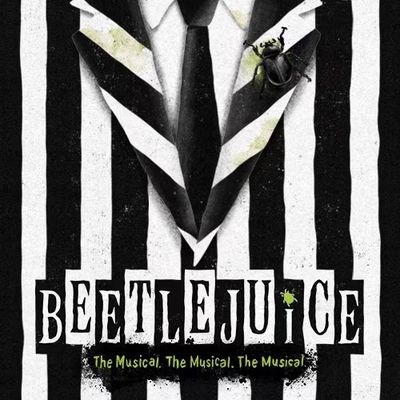
Part 1: I've said it before, and I've said it again... ensemble members, swings, and standbys have some of the hardest jobs on the stage. This episode with Ramone Owens, Elliott Mattox, and Dana Steingold (who is also the girl scout!) from the Beetlejuice ensemble continues to prove that point... Read More
From the show: The Theatre Podcast with Alan Seales
Guests

Featured Shows
About
Part 1: I've said it before, and I've said it again... ensemble members, swings, and standbys have some of the hardest jobs on the stage. This episode with Ramone Owens, Elliott Mattox, and Dana Steingold (who is also the girl scout!) from the Beetlejuice ensemble continues to prove that point.
Building off of the September Beetlejuice takeover, we're giving you one more episode featuring cast from this spooky production, just in time for Halloween!
Interview content begins at: 2:40.
Connect with them online:
- Ramone on IG: @ramonedeshon
- Elliot on IG: @elliottmattox and @equityonepodcast
- Dana on IG: @dsteinface
Connect with The Theatre Podcast:
- Support us on Patreon: Patreon.com/TheTheatrePodcast
- Twitter & Instagram: @theatre_podcastFacebook.com/OfficialTheatrePodcastTheTheatrePodcast.com
- Alan's personal Instagram: @alanseales
- Email me at feedback@thetheatrepodcast.com. I want to know what you think.
Thank you to our friends Jukebox The Ghost for our intro and outro music. You can find them on Instagram, Twitter, and Facebook @jukeboxtheghost or via the web via jukeboxtheghost.com.
A very special thanks to our patrons who help make this podcast possible!
Cheryl Hodges-Selden, Paul Seales, David Seales
If you would like to see your name in this show notes or get a shout out on the pod itself, visit ttp.fm/patreon to become a member and show your support!
Transcript
This transcript was automatically generated and might contain errors.
[2:40] Alan Seales: Welcome to The Theatre Podcast, intimate personal conversations with theater's biggest names. This episode is actually a special bonus episode continuing September's Beetlejuice Takeover, and I have the pleasure of talking to three of the amazing ensemble members from the show, Elliott Mattox, Ramone Owens, and Dana Steingold. Welcome to The Theatre Podcast.
[3:07] Elliott Mattox: Thank you.
[3:08] Ramone Owens: Thanks for having us.
[3:08] Alan Seales: Dana, did I say that? Steingold or Steingold?
[3:10] Dana Steingold: Steingold. You were right.
[3:11] Alan Seales: Cool, cool, cool. All right, so you guys are all part of the amazing ensemble that makes up this amazing show that is Beetlejuice. How many different roles do you all play?
[3:20] Elliott Mattox: I think I have like, what, like eight or nine costume changes, but I think some of them are the same costumes, so like seven, eight different characters.
[3:30] Ramone Owens: Yeah, about seven, eight different characters. Maybe costumes about four or five characters, yeah.
[3:36] Dana Steingold: And I basically just play the Girl Scout, but then I'm inside of a lot of boxes, puppeteering throughout the rest of the show.
[3:43] Alan Seales: I didn't even think about that. Yeah, the puppeteering. So they get ensemble. Do you have puppeteering experience?
[3:48] Dana Steingold: I do. I did Avenue Q for a year and a half.
[3:49] Alan Seales: Oh, right.
[3:50] Dana Steingold: Yeah, and I think it sort of came into play in development, and they thought like, oh, we could bring in puppets, and who might know how to use puppets? And then the second to last lab, Michael Curry said, hey, Dana, are you claustrophobic? And I said, no. And he was like, cool, cool. Come with me to the other room. And he was like, this is the box we're going to put you in.
[4:11] Alan Seales: So are you allowed to say what puppet you do?
[4:14] Dana Steingold: Yeah, I do the shrunken head, and I do the pig in the dinner party.
[4:17] Alan Seales: With the shrunken head, I thought that was on top of a person.
[4:19] Dana Steingold: It is.
[4:20] Alan Seales: It is, but it is puppeted.
[4:21] Dana Steingold: It's a puppet. It's like, almost like football gear that sits on my shoulders, and then it attaches to my head, and I operate all the movements. And then my lower half is obviously the remaining portion.
[4:32] Alan Seales: You've just blown my mind. Okay. And yeah, so you mentioned you're the Girl Scout. Is that one of your favorite roles?
[4:41] Dana Steingold: Well, it's my only role in this play. But yeah, no, it's been like kind of a dream to create something. And I think it's really rare that you get to go from like the very first reading, and you think you're doing something right, and you know, you hope, and then you get to see it all the way through to Broadway. That's, I think, pretty rare. So there's a handful of us, there's five of us who've been here since the first reading, I think. And that's been really, really fun.
[5:11] Alan Seales: Bailey and Ramone, have you guys been from the first reading? Or when did you get involved?
[5:14] Ramone Owens: I was involved from the first lab. So from the first lab, like two years ago, I've been with the show since then. So I came on later. There's, I'm the only person that came on at the lab and has been there through. So that's been a really cool experience too.
[5:34] Elliott Mattox: Yeah.
[5:35] Ramone Owens: And I joined for the DC out of town tryout last August.
[5:40] Alan Seales: Oh, so you've been pretty recent.
[5:42] Ramone Owens: Yeah, yeah. I'm pretty new to the experience.
[5:45] Alan Seales: Were they adding ensemble as they went? Or were there people that just didn't travel from the reading to the lab to DC and all that?
[5:53] Elliott Mattox: It was more the second scenario.
[5:54] Ramone Owens: Yeah, a little of both. I think they were sort of figuring out, as you do in development, coverage, and who had to be an internal cover, and what track would have to, you know, puppeteer, etc. And like, who would be how many vocal parts you need. So I think that sort of shifted, but I think it was a little of both.
[6:12] Alan Seales: Yeah.
[6:12] Ramone Owens: Well, that's cool. I guess, coming from the corporate background that I've got, I always think of like, it's so hard to get headcount. It's so hard to get extra staffing and grow your team. But it's like, when you're putting together a show, it's just something completely different. Like, oh, well, she's literally gonna be put in a box. She can't make it out of her shrunken head in time to get over there. All right, let's hire her.
[6:35] Elliott Mattox: And now something that is like, kind of cool, if you think about like the legacy of theater, like, for however long Beetlejuice runs, let's say 20 years is reasonable.
[6:45] Ramone Owens: Yeah.
[6:47] Elliott Mattox: Like, Dana's track will forever be based on Dana's stature, her skill sets. So they're always going to have to find someone like five foot that can puppet that can also play the Girl Scout and play Lydia.
[7:05] Ramone Owens: And cover Lydia. Yeah, it's really awfully specific at this point. But I'm sure as there always is 50 more people out there who could do it.
[7:14] Dana Steingold: Actually don't know what they're going to do when it's time to replace because everybody in our ensemble and cast is so specific. I tell my students all the time, like, you could walk in and sound great. But if you can't fit inside of this box, the job is not for you.
[7:30] Alan Seales: What do you teach?
[7:32] Dana Steingold: Oh, you know, master classes, I usually teach with a couple of other corporations that do theater arts education, usually.
[7:39] Ramone Owens: But you just always say, make sure you don't get you get muscular, but not too muscular, because you got to fit in a box.
[7:45] Dana Steingold: So many kids take it so personally about not getting parts and not getting jobs. I'm like, it's not about your talent. I'm like, you could again be so amazing. But if you can't fit in a box, you know, like...
[7:55] Elliott Mattox: And I think people also don't like to acknowledge luck, because it feels like it diminishes your abilities. But there's so much luck involved in this. Like, I always say it's such a miracle when you get a job because so many people in the room have to say yes and agree.
[8:08] Ramone Owens: Yeah.
[8:09] Elliott Mattox: And so I always try to, like, step away from it and just do my best.
[8:13] Ramone Owens: Yeah.
[8:13] Elliott Mattox: And then go away. It's harder sometimes than others.
[8:16] Dana Steingold: Yeah, there's a lot of stories that I hear from people on this podcast specifically that are just, they've gotten the roles when they don't care, if that makes sense.
[8:26] Ramone Owens: That usually happens.
[8:28] Elliott Mattox: Yeah.
[8:28] Dana Steingold: Yeah, like you go in, you go in, you're like, I just, I'm just gonna do my thing. You make your choices, you leave, and then that's what you get. But the ones you really, really want, that's the ones that you don't get, because you're not being authentic, I guess.
[8:41] Ramone Owens: Well, I think there's, I think there's a certain kind of like, some may say aloofness, but there's a certain kind of like, confidence and a, like a, you know, when you're being cast in a show, it's the Broadway shows cost millions and millions of dollars. So these people are trusting you with millions of dollars on your back. And if you have a nervous energy, or like, you have like a kind of desperate energy for something, then that does not give the people confidence to put their money on you. At the end of the day, they're investing, it's part of what they're putting together, and they want to trust you. And they want to make sure that like, when you have to learn a new number and a new dance in one day and do it that night, that you're not going to be a nervous wreck, that you're going to be calm, cool, and collected. So that like, that ease, I think, is what kind of that comes from, is like the not caring, it just comes off as an ease, a comfort, and a confidence.
[9:41] Dana Steingold: Yeah, especially when it's a new show, because a new show, you're really investing, you're going to be spending a long time with this group of people. And I will say this group is one of the most well put together, mild-mannered groups of energy. I would describe it as a lot of people who take their job seriously, but no one takes themselves too seriously, which is a really good balance, because everyone does the work and shows up and gives 100% every day. But also, we all laugh at ourselves a lot, and nobody takes themselves very seriously. It's also the nature of our show too, like it's so wacky, it's so crazy, you have to have a light spirit. And I think to bring that to work and just kind of, you know, take yourself out of it.
[10:25] Elliott Mattox: Yeah, makes it more fun.
[10:32] Ramone Owens: It's a literal show about death. Yeah, it seems like to continue to, what am I trying to say, in order to maintain the energy and the levity of everything, you have to be very serious, but if you get too serious, then it, you know, it's not fun anymore.
[10:48] Dana Steingold: Right. Well, I mean, I think you look at the show itself. It's these serious things that people deal with all the time, loss, feeling stuck in your life, you know, relationships, like being stuck, all these different things. And it's done with crude humor and inappropriate jokes and things that like, a lot of us use to deal with those things in real life. So if you're taking yourself too seriously, then you're not actually in the kind of environment of the show. And I think that that's a lot of what they did in like, putting this cast together, like so painstakingly.
[11:28] Ramone Owens: For years, if people didn't, you know, if that's why the cast changed so much, I think from the beginning of development to where we are now is that they really cared about putting the right kind of people.
[11:39] Dana Steingold: Yeah. Go ahead.
[11:46] Ramone Owens: Oh, I was gonna say it's wild, because all of us are so different, too. So to have so many different types of energies and people in one space that kind of work magic is pretty awesome. And I don't know how they did it.
[11:56] Elliott Mattox: And also, you guys are incredibly skilled, like as someone on the outside, who's not part of the greater dance ensemble, what all of you are doing is so insane.
[12:05] Ramone Owens: Oh, yeah.
[12:06] Elliott Mattox: And truly so unique. Yeah, it's what you were saying before, I don't know how they're going to replace any of you. Because I've never done a show I can I can honestly say with dancers who are also brilliant actors and comedians and physical comedians. It's like they're clowns. And you can't like I watch someone different every day, because everyone's doing such amazing and really layered work in ensemble dance numbers, which is not always I don't I don't think that's the norm.
[12:34] Dana Steingold: Right. But where did your where did your dance background come from? Like, tell me about your beginnings that you grew up, I think in the Midwest, Elliot.
[12:42] Elliott Mattox: Kind of Yeah, Kentucky, Kentucky is like a weird, like Midwest, Southern hybrid, like, geographically, it's the Midwest. But I would say like, the mindset is very much Southern there. So I feel like culturally, it's very Southern. But I grew up, I started dancing when I was like, I think in third grade is when I took my first dance class. And then just kind of like, caught the hang of it really quick, figured it out and dove in deep right away. So late, I think for some people, some people start when they're like, so young. But yeah, I kind of started at that sweet spot where I was like, I knew what
[13:23] Elliot Mattox: I knew kind of like what was going on. It was I didn't like waste any time with like tinker toe, like, just like, keep your kids busy for an hour, you know. So yeah, but I danced all through all through, you know, elementary, middle school, high school, and then had a lot of great dance training in college as well. Well, it was, I grew up in the South too, and it was frowned upon to do things in the arts. Sure. Yeah, I mean, definitely less opportunity there. I had to like research like, I had to go to the opportunities like it wasn't easy. Like I had to draw. It was like a half an hour to the dance studio and an hour to the performing arts school and all those kind of things were far away from me.
And so that makes you also like, decide if you want to take them seriously, because it's a lot of extra time and money. But yeah, I grew up in a small town where people either didn't get it, or they were fully supportive. So I was lucky to have both ends of the spectrum. So you know, for everyone that didn't get it, there were people that were seeing every recital I ever did, and showing their support and still do to this day. So you just gotta... Do you have any siblings?
[14:42] Ramone Owens: I do. I have an older brother and a younger sister.
[14:47] Elliot Mattox: And so you're right in the middle.
[14:49] Ramone Owens: Right in the middle. Were they supportive of your parents? Were they like, oh, I gotta do another hour drive? Or were they cool?
[14:52] Ramone Owens: No, my parents were completely and insanely supportive. Like they were, I don't know what possessed them to be as supportive as they were. But you know, my dad would wake up and take me to carpool at 6:30 before he went to work. I mean, it was wild how supportive they were. But I mean, the proof is in the pudding. I, you know, I, because of that, gained a lot of skill and work ethic early on. Because of their support, allowing me to gain that work ethic was due to them.
[15:26] Ramone Owens: Cool. And Ramon, you have a similar story?
[15:26] Ramone Owens: No, actually, I grew up in Los Angeles, born and raised. So I started doing theater in middle school. I was like, let me join the drama club. I did Hello, Dolly was our spring musical that year. Ramon loves Hello, Dolly. I literally quote Dolly Levi every day. Are you going to go see Carolee?
[15:47] Ramone Owens: I probably won't be able to see her, but I love her and I'm sure she's fabulous. But yeah, I just did the shows in middle school. In my middle school, we would go see shows at a high school performing arts high school in West LA, Hamilton High School, where I ended up going actually. They had a really great music academy. And I was there for the musical theater program, but you could choose so many other electives. So I ended up doing dance because I didn't want to take PE. And I knew that dance would help me like get better parts in the shows. So I ended up doing dance and choir and everything else really. Yeah, and it was pretty intense because our dance teacher at my high school was headmaster at Debbie Allen Dance Academy. So a lot of those students would come train at our high school. It was a public high school, public performing arts high school. So it was pretty intense.
[16:35] Ramone Owens: Yeah, and then from there, I applied to college and got into school for theater, had really intense dance training there, where I took my first ballet classes, actually. Yeah, and I guess the rest is history. Well, that's interesting. I guess on the West Coast, obviously, being in the arts is a little more accepted.
[16:52] Elliot Mattox: Yeah. I think I would be in a much different place if I was a kid that grew up on the West Coast instead of like in the South, because I fell prey to the stigma of like, he's dancing, he's right. Because I love to sing and dance and all that. And then the pressure, the social pressure I got, just made me go a different path. It was so wild, because my family, like my parents are from South Central LA and Compton. So it was definitely something that was totally alien to my parents. Like, what is he doing? You know, I'm sure they would talk in bed at night, like, what is he doing? I'm in my room singing like seven and a half cents. So like my family, my church, it was something that was not understood by them at all.
But walking into my high school, the first day of school, literally, I saw like, a white guy with dreadlocks, a black guy with a huge mohawk, like, girls making out, boys holding hands. I was 14 years old. And I was like, where am I? It was like a dream come true. It was just like that, quite honestly. So I was so embraced at school. And I found like a safe haven in performing arts in that school. Though my school is about an hour away, you know, I like lied and used someone's address and rode the school bus into the city every day. And it kind of worked out, you know. And even so, like going to the better dance studios, they were like deeper in Los Angeles. When my friends learned how to drive, my parents were really, I've got five siblings, mind you.
So my mom was really good with like, giving my friend $20 for gas money, you know. Like seriously, she like was dealing with everyone else. And you know, she was a soccer mom. So yeah, she was really good with just like, who can take you to class? Great, here's $20. Thank you so much, you know.
[18:47] Elliot Mattox: Oh, that's awesome. Are you older or younger in the line?
[18:50] Ramone Owens: I'm on the older side of the spectrum. I'm number two of six. So my youngest sibling right now is 15. And my older brother is about 17 months older than I am.
[18:59] Elliot Mattox: How old are you now?
[19:00] Ramone Owens: 30.
[19:00] Elliot Mattox: Wow. Okay, that's a big spread.
[19:02] Ramone Owens: No, it's a very large spread. My parents are retiring soon. And, you know, they've only got two more kids in the house. Yeah, I know.
[19:10] Alan Seales: Mom and dad.
[19:11] Ramone Owens: I know.
[19:12] Alan Seales: That's fun. Dana, what about you? Like, I'm curious to like where you got into puppetry as well. But when did you start?
[19:18] Dana Steingold: Oh, so I grew up in Detroit, well, a suburb of Detroit. And I think I just had a ton of energy. And it's honestly one of those classic stories of we were at a birthday party and a friend said, I'm going to audition for the King and I at the Jewish Community Center. You know, that classic story. And offensively, I thought I can be in the King and I. And I went to the audition. And my mom said she had no idea what I was going to sing. And I said, Don't worry, I've got this. And I walked in and I did an entire choreographed routine to part of the part of your world from the Little Mermaid. And I booked it. And I was Princess Ying Yaluk, which is honestly, like, I'm telling the story. And I recognize how offensive this is, but we were in a different time.
[20:07] Dana Steingold: We didn't know. We didn't know.
[20:09] Dana Steingold: And I remember like bowing the first time and I came off stage and I said, like, did you hear them clapping for me? My mom was like, I don't think that was just for you. But take that in. And then I just kind of never stopped. And eventually I found my way to a theater camp called Stage Door Manor in the Catskills that I begged my parents let me go to. And I remember like Ramon walking into high school. It was the first time I walked into a place where everybody was singing show tunes and everyone was so insanely gifted. And I had never heard other people sing like that truly. And to be around kindred spirits like that just sort of made me even more passionate about it. And any thought that I had that I wasn't going to do it was sort of put away.
And I just knew that's kind of how I was going to find my way. And then I went to NYU and I actually the puppetry thing came as a learned skill when I got cast in Avenue Q. It was not something I had learned previously, but I guess just had a slight affinity towards. I still would never call myself a true puppeteer in the way that I've seen many, many people. Rob McClure, for example, who was in our cast, played Princeton and also Trekkie, actually, another point. And he is an excellent, excellent puppeteer. It's watching him. When you see a real puppeteer do it, you're like, okay, that's not something I do. But I do possess a skill set, I suppose.
[21:47] Alan Seales: Oh, that's fun. Yeah. I didn't know that. I didn't know that. I guess I forgot that Rob was in Avenue Q as well. Yeah. Yeah. Yeah. And so speaking of Rob, you were saying he's the only one so far that's left the cast, right?
[21:58] Dana Steingold: Uh-huh. So far. Yeah. Yeah. He's going on to do Mrs. Doubtfire. Yes. Very exciting. Good for him. How close are all of you backstage? Are you friends outside of the stage and all that?
[22:10] Dana Steingold: Yeah. Yeah. Well, a lot of that came from when we went out of town to D.C. and we really were there and with each other all the time working on this thing, either rehearsing or when you're out of town with the show, you make your community with that show strengthens because you don't have your normal support group, your normal home base. So we really all connected, I think, on a deeper level in D.C. But also it's just kind of clicked. Yeah. It's a really easy group of people and building something is really intimate. Yeah. And you are sort of asked to trust each other in a very specific way very quickly because, like Elliot was speaking of before, there are numbers we spent redoing and redoing and redoing and we'd put it up that night and then we'd cut something and move it around.
And a lot of it, for example, in one of the numbers, The Netherworld, which got changed many, many times, I'm inside a box and I have no peripheral vision and I'm very close to the edge of the stage. So it's truly a trust exercise knowing that people are going to watch out for me and not, you know, bump into me. But I think we all kind of trusted each other. So everything worked out really, really well.
[23:29] Ramone Owens: Yeah. And good people there. Again, there are so many good, like, spirits in the building and it makes it just makes it fun and it makes a huge difference. It only takes one bad egg to like stir up a tornado. You know, we spend so many hours there and we spend we work so closely together that I again, I don't know how they managed to gather all these wonderful individuals for this show. A lot of luck. But yeah, yeah, truly.
[23:52] Alan Seales: And have you seen the movie, the Beetlejuice movie before?
[23:57] Ramone Owens: Of course. Yeah. I only I only watched it when I was auditioning for it. Really? Really? Yeah, because I didn't grow up on it. We didn't really like do my family didn't really do movies. That makes sense. Like we didn't really like watch movies. Yeah. And like if I grew up on movies, I grew up on like either Disney movies or literally MGM musicals. Like that's it. Like that's all I watched. So I don't I didn't really grow up watching Beetlejuice. And yeah, so I watched it kind of to get a sense of it. And I was like, this is weird. I did watch the cartoon growing up. Like there was a cartoon for a hot second. I remember more of that than the actual movie. I think it would come on Saturday morning. So my brother and I watched the cartoon and I watched the movie literally like a week before rehearsal started. I was like, let me just see what I'm about to get myself into.
[24:50] Elliot Mattox: You already signed your contract.
[24:50] Ramone Owens: Yeah, yeah, yeah, yeah. So you didn't use it for like audition material?
[24:56] Elliot Mattox: No, no. I got was definitely a lot different. Very different. Yeah. Also, I think our show is like inspired by. Yeah. Every, you know, the movie and a little bit the comic and you know, but I don't think it's a direct.
[25:08] Ramone Owens: No, yeah, no, it's totally reimagined. Yeah, it's only very much in a really positive way. In a way, I think a movie should be taken to the stage.
[25:12] Elliot Mattox: Yeah, yeah. I like to describe it as like, if Beetlejuice were writing his own star vehicle music.
[25:19] Ramone Owens: Yeah, yeah, it's very bad. Like it's not just like putting the movie on stage because nothing really happens in the movie. It's very atmospheric and very plot driven. And Beetlejuice is in it for about 15 minutes.
[25:36] Elliot Mattox: Yeah, yeah. And they gave it so much heart to which I love about the show.
[25:41] Ramone Owens: Yeah. And this is this. I mean, your show is more is more following Lydia.
[25:47] Elliot Mattox: Yeah, yeah. Which is unusual for the cartoon or the movie.
[25:52] Ramone Owens: Yeah, it's strange and unusual. If you will say. I was wondering how many like puns and reverses. He said earlier, he's like, there's so many good spirits in the in the show.
[26:12] Dana Steingold: Oh, my gosh. Yes. I mean, Dana, do you want to touch on this? You are? Absolutely. You're so many of them. You are the window into Presley Presley. So Presley and I spent a lot of time together. She's like my little sister because we both cover Lydia. So we spent understudy rehearsal time together. And also just I just adore her. I just think she is the most lovely child. And well, and in DC, you you were together a lot in the vocal booth.
[26:42] Dana Steingold: Yes, we were. That's really where it grew.
[26:45] Ramone Owens: She's introduced us in exchange for our guardianship to many things on social media and the internet that we did not know about. So she was like, you guys, there's this really cool new app. It's called TikTok. We're going to take it over. I said, I don't know what you mean. She's like, no, it's really cool. People are doing like Beetlejuice numbers on there. Like a lot of people are singing Girl Scout and a lot of people are doing dead mom and say my name. So she showed us these videos and I she said, oh, you should join. And I was like, I don't think I can join any more apps like this, but I will participate in anything that you want me to do. So we have these like three minutes in the vocal booth where it's Alex Brightman and Jill Abramovitz and Presley and I. And we let Presley pick whatever TikTok she wants and she has two minutes to teach it to us and then we just film it and whatever happens, happens.
And she started uploading them. And like little by little, I think as the cast album came out and the more popular that became and the show sort of started taking off, the more viewers we got. And all of a sudden, Presley had like two hundred thousand followers on TikTok and she went on for Lydia. She did one with Alex and has three million views.
[28:27] Elliot Mattox: Yeah. I saw that one.
[28:28] Ramone Owens: Yeah. And the thing that's cool about it is that it's just getting more and more people kind of interested in the show just because it's like people are interested in it and know about it, even if they're not theater people because of like certain like face filters that you can like switch to a crazy clown to yourself and people do that to say my name because it like is cool and works with the filter. So it's just like another like random, weird, like cult thing.
[28:54] Dana Steingold: Yeah. It's like finding a whole separate audience that I don't think we ever thought of. And honestly, it's so funny because I think people talk about how our show sort of like took a slow climb and we were like chugging up this mountain and we all loved the show and believed in the show and everyone who came to the show loved the show. But I think we were like fighting a little bit to share it with the world and convince people to come. And I think that for some reason, we underestimate the power of social media.
[29:23] Ramone Owens: Yeah.
[29:24] Dana Steingold: And with our show especially, we have a girl at the center who's a teenager. And I think that has drawn a whole different audience. And then all of us are pretty accessible when people send us messages like I always try to respond or like it. And I think people really underestimate how that's going to affect and continue to affect different shows and ticket sales. And I think we've only seen an upward trend of how powerful that will be. I mean, a big theme in the show is feeling invisible, feeling like no one can see you. And part of the social media phenomenon that's happening around musical theater is that you can find your tribe just like you walk into high school or like you walk into Stage Door Manor. And you can find people that you connect with on just something as simple as a show. And you can make an entire community based on this thing, which is like something really incredible.
[30:15] Ramone Owens: And I'm still wrapping my mind around as like an elder, like as a millennial.
[30:21] Dana Steingold: Yeah. Same.
[30:22] Ramone Owens: As someone who's out of that age bracket, like the people that come to the stage door dressed up and they were like, we met on Instagram. We love the show. And this girl dressed up as Lydia and their friend who they met in Wisconsin dressed as Beetlejuice and someone else dressed up as the Girl Scout. And they all met at the show and agreed to come to the city and like saved up so they could see the show together and like cosplay together. And the cosplay thing, too, I think has also been a whole separate entity. And I'm really excited about BroadwayCon because I feel like that's where we're really going to hit our stride.
[30:54] Dana Steingold: That is great.
[30:55] Elliot Mattox: Yeah, I got to start putting my costume together for BroadwayCon.
[30:59] Ramone Owens: Are you going to be the shrunken head?
[31:01] Dana Steingold: Well, I just need to stand on Dana's shoulders.
[31:04] Ramone Owens: Absolutely.
[31:05] Dana Steingold: I can do it.
[31:06] Elliot Mattox: You get to do like an Olsen twin.
[31:09] Ramone Owens: I'm very strong. I've got this.
[31:11] Dana Steingold: Yeah. Let us be a box. There was a whole song about a box at one point in Beetlejuice, so that song.
[31:21] Elliot Mattox: How much got changed?
[31:22] Ramone Owens: Everything.
[31:23] Elliot Mattox: Everything.
[31:24] Dana Steingold: Yeah.
[31:25] Ramone Owens: Well, this was a softball question. I know the answer to it because I'm talking with Alex Timbers. We talked about the mixed reviews that came out of DC.
[31:33] Elliot Mattox: Yes.
[31:34] Ramone Owens: Highs and lows.
[31:35] Elliot Mattox: Yeah.
[31:36] Ramone Owens: People either love it or hate it. And the show almost got completely reworked from top to bottom. And he was saying, too, that even the character of Beetlejuice was a little bit too much, and they brought him back, and they gave him some heart. And I mean, talk about your own, I mean, if you had any, like sort of the stress and anxiety of going through that time.
[31:55] Dana Steingold: Oh.
[31:58] Ramone Owens: Plenty.
[32:00] Dana Steingold: Well, so I think, I mean, I don't think this is really any secret. Like, one of the biggest changes that affected us as the ensemble was the changing of The Netherworld. So in DC, it was essentially, it was a boy band that their like sentence in The Netherworld was to welcome people to The Netherworld and explain kind of the rules, how everything worked. And it was a lot of fun to do. It was like a very fun number. And that had been one thing that had not changed since I started. It was always that. And it always got a huge response. People loved it. And so, same in DC, it seems like people were really responding to it. And then we did early rehearsals in January where they were like, we're going to try something different with The Netherworld. And it kind of like completely got scrapped. And there was a completely different concept, new number. And that was challenging.
[33:07] Elliot Mattox: Yeah.
[33:08] Ramone Owens: Yeah, that was challenging. Number one, it was, to be completely honest, it was a bit of an ego hit for you and the boy band.
[33:15] Elliot Mattox: For me.
[33:17] Ramone Owens: It was in the boy band. Me and Ramon were in the boy band. That's why the male ensemble was so heavy, too. It was like five guys.
[33:20] Elliot Mattox: Five guys that had to carry this boy band.
[33:25] Ramone Owens: Like major singing.
[33:26] Elliot Mattox: Yeah.
[33:27] Ramone Owens: So it was, you know, as those things always are, like if you have like a nice like little like feature, a fun thing to do and it gets taken away, that's like, you know, kind of a bummer. And then it just, the new number had to face a lot of challenges, either foreseen or unforeseen. And so that was a big test in my patience.
[33:48] Elliot Mattox: Yeah.
[33:49] Ramone Owens: I just kind of figured that one out. To really practice. Kind of like trusting that they know what's best for the show.
[33:58] Dana Steingold: And being willing to like be along for the ride, even if I am upset and stressed and all that stuff.
[34:05] Elliot Mattox: Yeah. I mean, was there ever any point when you guys are like, this isn't going to work?
[34:09] Ramone Owens: Oh.
[34:10] Dana Steingold: Yeah. It's one of those things where like we all are artists as well. We all like have seen shows. We kind of know like how a show is going to do based on our own experience.
[34:19] Elliot Mattox: Yeah.
[34:20] Ramone Owens: Oh, I don't know about this. Again, it's one of those things where you're like, I'm just here to do what I have to do and trust your vision, you know?
[34:26] Dana Steingold: We're the conduit for your work.
[34:28] Elliot Mattox: Yes.
[34:29] Ramone Owens: And I think that we were, you know, there were times where we got to voice our concerns. There were times where we just had to kind of stand back and be quiet and rehearse and do our thing. There's a lot of rehearsing in the lobby, figuring it out, making it happen. And I think it was also something too where like in the rehearsal room, we're in it in our normal clothes with no set, no lights, no any of the spectacle. And for something like The Netherworld, it really took what we were doing upstairs in like fluorescent light, like with the carpeting, to like a completely different level that none of us really could see. We were blind to it at that point, I think. So I think it really is a testament to our creatives and our producers for really like sticking to their guns on that and just trusting.
[35:22] Dana Steingold: And a lesson to me to try and always trust that everyone has the best interest of the show at heart.
[35:27] Ramone Owens: It was also one of those things where they were figuring it out as we were doing it. So whereas we had questions to justify certain things that we were doing, they didn't have answers yet. They're like, just figure it out and just go for it, you know?
[35:40] Dana Steingold: So that was pretty difficult trying to figure something out that wasn't a complete idea, if you will.
[35:46] Ramone Owens: Yeah.
[35:47] Dana Steingold: But just making it work because, you know, I'm here in the space and that's our job.
[35:50] Elliot Mattox: Yeah.
[35:51] Ramone Owens: You know, make it work. And I think anybody who does a new Broadway musical knows that the code for the upper lobby means you're completely reworking a number and nobody wants to go to the upper lobby.
[36:00] Dana Steingold: It's like going to the principal's office.
[36:03] Ramone Owens: When they're like, ensemble, you'll be in the upper lobby with Connor. So our joke, it kind of became this running joke where we'd be like, you'll be in the netherworld forever, which is like one of Juno's lines.
[36:20] Dana Steingold: But ultimately, I think we, yeah, we do all trust each other and we trusted and had faith in our creative team. But there were days where, like, you're under this lighting and you're upstairs and it's dim and you're like, I think my head's, I can't absorb anymore. I want to bang my head against a wall a little bit because I feel like we've been working on this one count of eight for four and a half hours. And what has actually changed? And then you're like, wait, what happened? And then, like, before you do it, you're like, am I doing the same thing I'm doing? I'm confused. Are we on version A or C?
[36:53] Elliot Mattox: Yeah.
[36:54] Ramone Owens: I was also doing hole 30 at the time, so I couldn't drink. And I don't recommend that. I don't recommend making a new musical without a vice. But I think every new musical goes through this and everybody has that. There's always one number or one thing. And what's interesting is I think it's normally the opening of Act One and the opening of Act Two, and those were never things that were a problem. So it was just we had this one thing. But I think ultimately we got to a place that is very, very successful.
[37:25] Dana Steingold: Yes, absolutely.
[37:27] Ramone Owens: It is the middle of Act Two also, so it kind of gets you over the hump of Act Two and to the end of the show. So I do understand that. I just want to stress for the people listening that when you're teching a show or when you're working a show or whatever, you're performing at night, but what you've rehearsed that day could be completely different.
[37:45] Elliot Mattox: So you're like, like you said, version B, right?
[37:49] Ramone Owens: Yeah.
[37:50] Elliot Mattox: Oh, that's previous, too.
[37:51] Ramone Owens: Right, so you're doing version B and rehearsing during the day, but you're doing A again at night, and then you have to do B the next night, but then rehearse for C the following morning. Because it has to get teched also. You have to remember before it goes on stage. So you're doing version A at night, you're rehearsing version B in the lobby, but it's not going in until the day after you tech it. So sometimes you have two different versions or three different versions, and you're not super sure which one's going on stage that evening.
[38:22] Dana Steingold: There was a moment when we were doing Creepy Old Guy, there was a dance break that got new music, and we learned new choreography for this dance, but I don't think the music was ready yet. And the information got passed to the ensemble that we were doing a certain version of the number.
[38:40] Ramone Owens: That we were doing the old version.
[38:41] Dana Steingold: Yeah, but the information didn't get passed to the orchestra. So literally, they're playing a shortened version of this dance break that we worked on earlier that we weren't doing that night. So literally, we're dancing, it's different music, it's maybe about four bars cut, and we all just kind of ran, and it gave us an A count to where we were supposed to just freeze. So everyone just kind of stopped and ran and tried their best to freeze on their number, but that was wild. Someone got stuck center stage, like in a spotlight. It was just madness.
[39:10] Ramone Owens: But that's also what makes it really fun, you know, because those are the things you remember, and at the time, it doesn't seem as funny, but like 10 minutes later, it's the funniest thing that's ever happened to you.
[39:28] Dana Steingold: Well, it helps get through previews when those kind of moments happen, because it's just like a catharsis of laughter and fun. And that we, again, don't take ourselves too seriously. We're making a musical at the end of the day, no one's gonna die. And there are days you're out there and you're saying lyrics, and you're like, are these lyrics? Is this the one I'm supposed to say today? Also, we were wearing skeleton masks, so you couldn't see our faces losing it.
[39:56] Alan Seales: Thanks for listening to Part 1 of this bonus episode with Elliot Mattox, Ramone Owens, and Dana Steingold from the Beetlejuice Ensemble. Stay tuned!
© Broadway Podcast Network, All Rights Reserved