

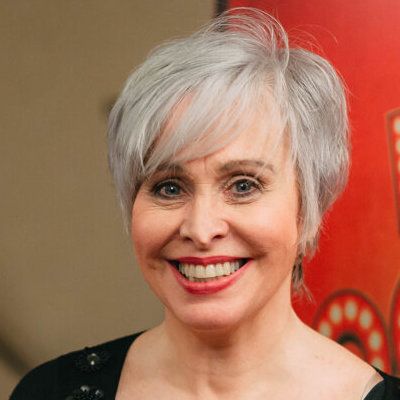
Nancy Opel has a long career spanning over three decades. She is now appearing on Broadway as Wicked’s Madame Morrible. She was nominated for the 2002 Tony Award for Best Leading Actress in a Musical and won an Obie as Penelope Pennywise in Urinetown... Read More
From the show: The Theatre Podcast with Alan Seales
Guests
Featured Shows


About
Nancy Opel has a long career spanning over three decades. She is now appearing on Broadway as Wicked’s Madame Morrible. She was nominated for the 2002 Tony Award for Best Leading Actress in a Musical and won an Obie as Penelope Pennywise in Urinetown. In addition, she was nominated for the 2015 Drama Desk Award for Outstanding Featured Actress in a Musical in Honeymoon in Vegas. Nancy has appeared in Evita, Teddy & Alice, Sunday in the Park with George, Anything Goes, Triumph of Love, 2004’s Fiddler on the Roof, Memphis, the 2014 revivial of Cinderella as Madame. She was also title character in the first national tour of The Drowsy Chaperone.
Connect with Nancy
- Twitter: @NancyOpel
- IG: @opelnyc
- Web http://www.nancyopel.com
Connect with The Theatre Podcast:
- Twitter & Instagram: @theatre_podcast
- Facebook.com/OfficialTheatrePodcast
- TheTheatrePodcast.com
- Alan’s personal Instagram: @alanseales
- Jillian’s personal Instagram: @jillianhochman
- Email us at feedback@thetheatrepodcast.com. We want to know what you think.
Thank you to our friends Jukebox The Ghost for our intro and outro music. You can find them on Instagram, Twitter, and Facebook @jukeboxtheghost or via the web via jukeboxtheghost.com.
Transcript
This transcript was automatically generated and might contain errors.
[0:01] Alan Seales: Welcome to the Theatre Podcast. Intimate personal conversations with theatre's biggest talents. I'm your host, Alan Seales. Our guest today has appeared on Broadway in Evita, Teddy and Alice, Sunday in the Park with George, Betty, Anything Goes, Triumph of Love, 2004's Fiddler on the Roof, Memphis, and even Cinderella was the title character in the first national tour of The Drowsy Chaperone. She's won an Obie. She's been Tony nominated for her role in Urinetown. I'm trying to think. It's too long and I'm trying to cut shit in my head.
[0:38] Nancy Opel: I know. I know. I know.
[0:40] Alan Seales: You've done too many things.
[0:41] Nancy Opel: I know.
[0:42] Alan Seales: You've done way too many things. I'm getting ready to do my 15th Broadway show.
[0:44] Nancy Opel: Hi.
[0:45] Alan Seales: Hi. I think that's our intro.
[0:48] Nancy Opel: Hi, sweetie.
[0:49] Alan Seales: Hi, sweetie. It's the best you can do. Come on. It's late.
[0:54] Nancy Opel: Listen, there's a lot of words. You've got a huge bio. How are you doing?
[0:58] Nancy Opel: I'm great. I'm doing way better than you right now because I remember what I did. Well, mostly anyway.
[1:05] Alan Seales: You were telling me you don't remember the other day.
[1:07] Nancy Opel: Well, you know what? I don't remember the other day, but I do remember a lot of stupid stuff that I've done.
[1:14] Alan Seales: Okay. Well, I hope you remember the answer to my first question. We'll start at the very origin of Nancy. What is Nancy? Where did you grow up? What is your background?
[1:22] Nancy Opel: Kansas City. Yeah, I grew up in Kansas City. And also, I grew up pre-internet, so I knew absolutely nothing, which in a way I think is kind of freeing and makes you bold, because you really don't know what's going on in the rest of the world. And I just wanted to be a teacher, really, when I was little. I wanted to teach school, and I kind of think maybe it was because the teacher stood in front of the class and everybody had to be quiet while she talked. I don't know. But I think it wasn't really until high school that I kind of started doing plays, but I still didn't think of it like it was going to be my career.
[1:59] Alan Seales: What did you want to teach?
[1:59] Nancy Opel: Probably grade school somewhere, because I loved all of my grade school teachers.
[2:04] Alan Seales: But you wanted to be up on the school, the school mom stage.
[2:08] Nancy Opel: Yeah, you know what? As I say, we grow as we get older. And I kind of went, hmm, is it possible that I could be an actor for a living? I mean, it really, truly didn't even occur to me. I thought there were movie stars, and that was it. I just didn't think of anything else. And so it was really not until high school that I sort of thought, you know what? Maybe I can kind of pursue this professionally. I don't know. And maybe I was probably junior in high school when I thought, do I need to go to, like, drama school or something? I mean, I was kind of slow, shall we say. Because, you know, kids now, I mean, you can watch a YouTube of any of your favorite musical theater people or whatever. I was still stuck with vinyl and listening to the records.
[3:00] Nancy Opel: I went to be in a Stephen Sondheim show. You listen to your little vinyl records before you go to sleep.
[3:03] Alan Seales: Well, how did you know about musical theater? Was your family involved or your friends or anything?
[3:07] Nancy Opel: No, my dad had a welding business. So we weren't exactly in the arts.
[3:12] Alan Seales: Right.
[3:13] Nancy Opel: No, not exactly in the arts. But, you know, I sort of fell in with the theater crowd in high school. Everybody's got a theater crowd, you know? And I did chorus. You know, I love to sing. So I did chorus and sang in the choir every year. Started doing shows my sophomore year because I didn't make the junior varsity cheerleading squad. And I thought, I'll audition for the play. So, yeah, so that's kind of the start of it.
[3:51] Alan Seales: Do you remember what the first play was?
[3:53] Nancy Opel: Yes, I do. And I can't actually believe I'm telling you this. It was a play called The Great Sebastians.
[4:01] Alan Seales: What was that about?
[4:03] Nancy Opel: It was about these people, a husband and wife team, that pretended to be mentalists. You know, like he would be somewhere and he would say, tell me quickly. And she'd say, key, because they had words that they would. So they were con artists.
[4:25] Nancy Opel: Yes, more or less. Yes, it was a play about con artists.
[4:29] Alan Seales: Wonderful.
[4:30] Nancy Opel: And I believe there was some sort of subplot that had to do with politics, but I don't remember that very well.
[4:37] Alan Seales: All right, so then.
[4:38] Nancy Opel: I remember an itchy blue net dress. That's what I remember.
[4:42] Alan Seales: Wonderful. And then got into Juilliard.
[4:45] Nancy Opel: Yeah.
[4:46] Alan Seales: How did that process go?
[4:47] Nancy Opel: Well, I have to really be honest when I say I made no plans for my career. Other people told me what to do. My friend, who is a great actor here in town, who I don't see enough of, his name is Henry Stram. And Henry and I went to high school together. And he would just say stuff like, you know, you really should audition for the play. You really should audition for the musical. You really should audition for Juilliard. You know, he was one of those people. It was just like he knew what was going on. And he would just say, you should go do this thing. And I would go, okay. And I would go try to do the thing. And luckily for me, it worked out. So that's how, I mean, I didn't even know about Juilliard until he told me about it.
[5:39] Alan Seales: What was your audition? What did you do?
[5:41] Nancy Opel: I did a piece from, I think it was called The Storm by Ostrovsky. And the other thing was, can't remember the name of it. It was by Farquhar. And it was a restoration comedy thing. So you were saying originally that, you know, kids back in the day didn't have, didn't have the YouTubes and the internet. There was nothing to look at. You had to go to the library or something to find something. So then you've been performing now for many decades, a wonderful career so far. What are the, what are some of the most significant changes that you've seen shift in the, in the industry?
[6:31] Nancy Opel: Let's see. Let's start, let's start at optimistic and then we'll move right into pessimism. Shall we?
[6:41] Alan Seales: Okay.
[6:43] Nancy Opel: Well, when I first started, you know, those were the days where everybody, I mean, everyone was kind of more naive, really. You know, I remember, I remember going to, to an audition for Evita, which was my first Broadway show. And I don't even know, I mean, it was so crazy. It's just like, I don't even know how I got on this stage because they used to do auditions on the stages of theaters back then. And I was on the stage of the Schubert theater with the chorus line mirrors behind me, the white line there. And I'm standing on it going, holy smokes. I mean, it was just like that in and of itself was like, I've made it. You know, you're auditioning on the stage. I go, I'm auditioning on the stage of a Broadway show.
And I remember going and it's like, I was, it was almost time for me to sing. And I was going, I went over to the side and we were kind of in a little, like in a little office over on the side of the Schubert theater. And there were some people sitting in there and Mandy Patinkin walked in and he goes, Hey, I'm looking for Hal Prince. And he looked at someone who is, was an assistant of an assistant. He goes, Hey, are you Hal Prince? And we all like, you know, because we're going like, you mean he's Hal Prince? He's like, he's like 23. Anyway, it was pretty cute. But, but like I said, I mean, it was just kind of like a different, it was like a different thing. People, people who were singers, did the singing track and people who were dancers did the dancing track and sort of never the twain shall meet.
You had a singing chorus and a dancing course because there were lots of people in shows back then. That's a major thing that's changed. There are half the amount of people in shows now, and they were supposed to be big shows. You know, you look and you say, wow, there's 26 people on that stage. And my first show had 45.
[8:43] Alan Seales: Wow.
[8:44] Nancy Opel: It's a huge difference. The first show I was in, we top ticket was $35.
[8:53] Alan Seales: Wow.
[8:54] Nancy Opel: And cats, when it opened, went up to 50 and we all just about dropped dead. And we said, who's going to pay that? Lots of people did. So stuff like that, you know, I mean, there's big changes in, in, in that way. And also there were, um, the people who were producing shows, they were the gentlemen producers back in the day. Do you know what I mean? They were like, um, the Schubert's. It was like two guys, you know, those kinds of, those kinds of people sort of knew the people in their shows, you know, like Jerry Schoenfeld. Jerry Schoenfeld would stop by the theater. He didn't, he wasn't a producer on, um, on Evita, but he was on Sunday in the park with George, which was my next show. And so he would like come in, you know, every so often and come and visit and say, how are you doing?
You know, I'm responsible for the fact that there is a shower in the booth theater. I mean, I don't know if it's still there, but they put one in because we were doing a musical and there, and it was never used as a musical house before. And I had to go like, Hey, I'm the deputy. We need to put a shower in. And they totally did. But those were the gentlemen producers who knew the people in the shows and actually seemed to care about the people in the shows. And, and I think that's a major change that it, because of how much money it costs to produce a show, there are just so many producers now. I mean, you see them, a giant gangs of producers, you know, get up on stages to, to accept Tony awards.
Cause that's just the way it is now. And so I think that you kind of lose that sort of connection of like, I know you're not really like my friend, friend necessarily, but you know, we are compatriots and we care about the same things and it's, and you don't feel that you're so bottom lined as sometimes you feel these days, you know?
[11:01] Alan Seales: Right.
[11:02] Nancy Opel: And so is that still on the optimistic end of the scale?
[11:04] Alan Seales: Um, no, I, I would say that's the part of it that is, is difficult. You know, that's the part of it that if I were just starting out, I think I might find that, um, a little sad, of course, if you don't know any better than maybe it doesn't make that much difference, you know, maybe, you know, ignorance is bliss.
[11:21] Nancy Opel: Right. But I, I notice it, you know, um, there are always lead producers on things and you feel like you, you know them, but it's just, everything is really so much more about money than it felt like back then. You know, for example, going back to Sunday in the park with George, I think they knew that they would never really make any money on that show, but they did it for the art. And I think that's another thing that's sort of changed. I don't know how many Broadway shows get produced. Cause they go, oh my gosh, this is going to be an artistic triumph and we'll probably never make a dime. I just don't think that, I just don't think that's in the equation anymore.
[12:01] Alan Seales: Well, you can't make a living if you're constantly losing money, I guess.
[12:05] Nancy Opel: No, you can't. So then throughout all of that, what's what's remained or I guess maybe what has even evolved that you love still about this?
[12:12] Nancy Opel: Okay. What has evolved is how, how freaking talented people are now. Not that people weren't talented when I started, but now because there's only 25 people in a show, guess who's dancing and singing.
[12:31] Nancy Opel: One person is doing the dancing and the singing, and they're doing it darned well too. You know, that's the thing. I mean, I think the training has... Because of that, it has evolved the training to a place where we never were. You know, it was rare to see someone who was a really amazing dancer and an amazing singer. And nowadays, everybody in a show is. You have to be. Everybody. And know four different tracks. Everybody. You know, I mean, they're just so good. They're just so good. I did Memphis for like a year and a half, and I replaced Cass Morgan. And when I first went to see the show, I went, oh, this is amazing. They're so good. And then when I went back and really started to study the show, because I had to watch it to learn it, I went, these people are killers.
Because they were not just like sort of good musical theater dancers. They were amazing. They were just amazing. You know, there was this one guy, like Darius Barnes, would just like do an aerial. And it was just like this, boom, do an aerial, land, and then like plant and do like eight pirouettes. And it was just like, do you know, he would just plant and he would just get slower and slower and slower and slower and slower. Stop for the next phrase. And you just watch that and you go, and I would watch it every night. I'd go to the side to watch those guys do their tricks that basically no one looked at because they were in the back. I mean, there were people who could see it, but they did it for fun.
And that's the stuff that I think, look at the people that are sort of being created by this climate. And that's the amazing thing. Do you think any of that has to do with the current rise of social media and how, I guess people, everybody seems to be competing with each other online? And I think at a young age before the professional, I guess I get your thoughts on this, before the professional side kicks in, do you think they're always trying to one up each other on an amateur level that kicks them into a professional level a little bit deeper?
[14:49] Alan Seales: I think it is more about what you have to be to be marketable. And that's more about what the market requires than what social media requires. I think that social media kind of goes along with the whole deal because it's just that everybody does it. And you go like, oh, well, so-and-so has 30,000 followers. Maybe I should have 30,000 followers too. But that's a whole other sort of set of skills that people are working on. They're becoming their own press agents because they can now, because they can. And they have platforms for it so they can be their own press agents. But it's kind of like a semi full-time job too. And I really am not certain that there's a definite sort of correlation. I think the only way you would say there might be a correlation is insofar as what casting directors are looking for.
Now that's a different thing because casting people may say, hey, here's girl A, here's girl B. They're both awesome. They've both done three Broadway shows and a tour. This girl has 50,000 Instagram followers. This girl has 3,000. Girl A is going to get it.
[16:18] Nancy Opel: Really? You think that has an influence?
[16:20] Alan Seales: Absolutely. Absolutely. Now, when you get to be my age, we old crones, if we've lasted this long, they don't care about that. I really don't think. I mean, it's just like, I'm still here. Yeah, I'm still alive. Yeah, I'm still in show business. And you just do what you do because I've done it a long time, like you said. But young people, I actually think if all things are equal, they will probably go with the person who's got following on social media.
[16:52] Nancy Opel: Wow. It didn't even occur to me.
[16:53] Alan Seales: Well, it should because I actually think it's a big deal. And in fact, I think it's even a bigger deal in TV and film.
[17:01] Nancy Opel: Yeah, that I can see. Yeah. Yeah. Well, bringing it back to you.
[17:05] Alan Seales: Yeah. Okay. Now you do a lot of coaching.
[17:08] Nancy Opel: Yeah.
[17:09] Alan Seales: You can tell me about that.
[17:10] Nancy Opel: Sure. I love to coach and mostly what I end up doing really is coaching people for auditions. So if someone gets some music and a few scenes to read for an audition, it would behoove them to come and speak to me about it. Because a lot of people, people are getting a little more savvy about it. But a lot of people only spend, they'll work and work and work on notes. They'll work and work and work and they'll go like, I want to make sure that that note is perfect. But then they kind of like, don't pay too much attention to their lines, to the sides. Which I think is a mistake because I actually think that's kind of the secret weapon. Oh, yeah. If you can act your way.
[18:06] Alan Seales: Well, it's really important. And a lot of people kind of don't spend the time they need to spend. They sort of think the muse is going to come down and hit them on the head when they walk in. And they're going to just get some kind of inspiration in the moment and they'll be able to come up with something. And I feel like what I do well is help someone create a roadmap through the scenes. So you're sort of hitting landmarks as you go. So you hit your beats. You go like, boom, boom, boom, I'm done. And I did it. I got where I needed to go. Because you can't just start and take a deep breath and go, let's hope the best. It just doesn't work out very well. So I think that's probably what I do best.
And also, I encourage people to choose boldly what they're going to do. Because an awful lot of folks say, oh, but if I make a really bold choice, if it's wrong, then they're not going to think I'm right for the part and whatever. I said, listen, here's the problem. In the first five seconds, you walk in that room. If you're wrong for it, they know already. It doesn't matter what you say. They're going to know if you're wrong for it. Just how right can you be? How right can you be? And you can't worry about you're too tall, you're too short, you're too fat, you're too old. Forget it. If you got in the room, you got to do what you got to do. And you're trying to be sort of neutral does not help you. Neutral means it neutralizes their interest in you. They're not going to care.
[19:48] Nancy Opel: So I always equate it with like going into an all white room with a white bucket of paint and a brush and very neatly repainting the room white. You go like, wow, you get neatness points. Very nice. Thank you. Thank you. Because that's what a lot of people do. They do kind of a really, really competent routine and leave the room. Whereas I honestly think what people are looking for, who are casting, they want to splash. Even if you kind of screw up some parts, just like I want to see like real crazy you humanity sort of out there so we can really see what you can do. And if it's not perfect, that's fine because it's an audition. You have a paper in your hand. Because when you try to be perfect and you do sort of this level thing of I've just done this perfectly, you've not shown them anything other than you color inside the lines.
[21:01] Alan Seales: So I want to quote you here. I found this quote online. You say, I try to teach my students to get out of their heads and into their instincts back to that spark that started them out in the first place.
[21:05] Nancy Opel: Yeah, that's really true. Because little kids, if you say to a little kid, be a leopard, be a lion, be a rhinoceros, be a T-Rex, a kid doesn't have to go like.
[21:20] Alan Seales: What's my motivation?
[21:25] Nancy Opel: Because you get up here. We've all been in school a long time and we all go to school where it says I take the SATs and all that stuff and I'm going to do my work and I'm going to be careful with my work. It just doesn't work so well when you try to do that with your acting. You've got to just go like, all right, what do you come up with just like in the spur of the moment? Do you have a feeling for it? And if you don't, it's probably because you've just had it sort of bred out of you and you've got to get back to that and go like, well, what do I feel like automatically about this? What is like me? Is there anything about this character that's like me? And you go, okay, that is. And then you don't try to homogenize it over and over again.
That's really the problem. People just kind of get to the place they go like, I'm afraid they want me to be this. And you go like, what do you want to be? Just you try to be it. Now it's true. Nobody's going to probably want to see you reinvent Laurie in Oklahoma necessarily, not completely, although it's being reinvented right now on off-Broadway. But the key really is to get back to the idea of sort of getting out of your ego and wondering what people think of you. And it's really, really hard to stay on your side of the table and not try to sit with the people watching you at the same time and try to figure out if you're doing well with them. Because that's where it all goes wrong is when you're feeling like you're kind of split.
You've got half your mind over there going, is this going over well? Which is why I always say, do not look at anyone in that room. I don't care if they've got the biggest smiles in the world. You're going to turn it into something else because we're all crazy. You're going to kind of turn in like, he was smiling at me, but I think he was stifling a yawn. It's just stupid crap like that you think in your head. That honestly, it's just better if you just go, I am living inside my sort of very safe glass bubble. And I'm going to do all of my stuff in here. And I'm going to do my lines for everybody. Now, this is not the way you do a show, but it is the way you do an audition because it's not safe to just sort of like, hey, everybody, I'm just hanging out with you.
And what are you thinking? Very rarely do you feel like there's a room that feels safe to do that. And I really mean that. You just go, because we're all paranoid and crazy. We're just crazy. And so, you see something and you go, oh, my God, they hate me. Oh, my God, they hate me. Or even worse, oh, my God, they love me. That's the bad one. You go like, yeah, nailed it. Don't hear another word.
[24:30] Alan Seales: So, do you teach your students to approach scripts, I guess, in their own way? Or do you give them sort of guidance based on how you feel it should go? Or do you help them to kind of discover their own?
[24:40] Nancy Opel: I totally, I totally give them guidance on how I think it should go, especially with comedy. I go, y'all, you got to serve the hors d'oeuvres. Those are your jokes. You've got to serve them. You can't like put the tray out and stick your fingers in the deviled eggs. No, it's true. Because there are people who...
[25:03] Nancy Opel: Comedy for the most part can't be sloppy. You know, normally if you're going in for like a play or... I mean, if you're going in for improv, it's a different thing. But if you're going in for a play or you're going in for a musical, even especially with a musical, because you have so much less dialogue to deal with. So you have to sort of be precise about the choices that you make. But you know, I will say sometimes I go, Hey, y'all, that's the joke. That right there, that was the joke. You missed it. That was the joke. And I imagine they're going to want you to recognize that that's the joke because then they'll think you're funny. And then you'll get the joke. And they'll think you're funny if you at least recognize it, you know, because it is all, I mean, I think that's the reason why I did so many David Ives plays because he's all musical.
His plays are all about music and timing. And well, my first show with him was all on the timing and it's absolutely true. It was all about timing because that's how he worked, you know? So really all comedy is timing, you know? And sometimes people just need a little, you know, be taken by the hand a little bit and say like, no, no, no, I mean like this, you know, like, like, like this. Are there ever people that come in and you're just, and you're like, I just don't think you're ever going to get this. I will never tell them that. And they always get better because sometimes they just don't see it. They just, they went, Oh, Oh my gosh. Yes, of course. And you know, sometimes someone needs license to, to go ahead and do that.
I go, you, you can be more bold. Go ahead and be more bold. You know, like I've, I've, well, sometimes it helps if you've seen a show already and they're, and they're doing like, um, uh, replacements. Cause then you, you really do know you're not flying blind on that. You go like, listen, this show, you need to be, this is very big stylistically, very big. So you've got to pump up the volume a little bit. Yeah. I guess. Is that something that you focus on too is filling shoes versus originating roles? Like there's a difference in how you approach the character. Um, if, if a show's already running, um, for the most part, it's probably best not to try to reinvent anything. If you kind of know the template that's working, you go like, can I, can I fit into that template?
And if you have any brains, you try to do that. I mean, unless you get some idea that someone says, you know what, they're really looking for something completely different, but you usually find that out from a manager or an agent or something, you know, you don't just sort of like go, you know what, I really think you should rewrite some of these lines. You're just not, you're not going to get anywhere with Hamilton. You know what I mean? You're like, Hey, you know, I really think that this would be better if you did this, you know? Okay. See ya. Um, but I've done both. I mean, I've originated stuff, which is a blast. Um, and I've replaced, which is also fun, but a different thing. It's, it's a different thing. And you, and it's smartest, honestly, if you park your ego by the door on a replacement because you're not reinventing the wheel.
[28:30] Nancy Opel: Yeah. Walk me through a, a standard day in the life of Nancy. Oh my gosh. I don't have any standard days. I really don't. They're not standard. I mean, I might, I might do, well it depends on the season. Cause if it's a busy season, I could be coaching a lot during a week, you know? And a lot for me if I'm doing a show would be like seven or eight coachings in a week, which doesn't sound like that much. But if you're doing a show at night and you've got that Wednesday matinee, a lot of times it it's plenty, you know, also depends on how hard of a sing it is for me. Like you're in town, it's a different, different sing than, you know, some things like, well, well I've been a beautiful before and that's, that's a non singing role.
So you don't have to really worry about that. You know, you just have to go Oy vey, Carol, don't be a writer. I guess that's a, yeah, it's a conservation of energy more or less. Yeah. Absolutely. So, you know, I do some of that. Um, I don't really audition that much anymore, but once again, that's cause, you know, I'm still around and I go, is that Nancy Opal still alive? Let's just throw her this one. Let's call her and see if she's interested in this. I mean, I do, I do on occasion, you know, still audition for stuff. I, I have auditioned for things recently. Um, and I don't mind it. It's not my favorite thing to do, but I've gotten better at it. Honestly, kind of better at it because I have sort of, I've sort of dissected it for other people.
So then it becomes a little more clear for me how I need to do it because it was very important to learn that thing about, you know what, try as hard as you can. Don't give yourself an out. A lot of people do because if you try as hard as you can and you still don't get cast, you have to face the inevitable question. Am I any good? And that's the question that a lot of people do not want to ask themselves, you know, they just don't want to ask themselves. And it's good because it's, it's, it's more existential than, am I right for this part? It's your whole career. It's everything. It's everything. It's everything. So I will say to people, do not get stuck in the trap of walking out of an audition and saying, Oh, but I was tired.
I was hung over. I was sick. I didn't have time to work on it. I was blah, blah, blah, blah, blah. You can think of a million reasons why, you know, you didn't do what you feel like you could do. The way you want to walk out of an audition is I did the very best I could do today, whatever that is, whatever it is. You know what? I nailed it the best I could nail it today. And then you can walk out and feel good about yourself. And whether you get it or not, you go like, that's up to you guys. If you want to use me, awesome. And if you don't, I still feel good about myself and I don't walk out going like, but that's, that's kind of the coward's way out. And kind of an easy way out because you can go like, Oh yeah, I was tired.
You know, or I felt sad or I, you know, or it was raining and you know, and I feel like I was getting a sore throat. You're going to have to do shows feeling all of that. All of those things, all of those things, if you get cast, all of those things. And I think that disappointing yourself in that way is sort of less terrifying than the existential thing of like, wow, maybe I just freaking suck. You know, cause people do get there, you know, they get to the place where they go like, Whoa, I really did do the best I could and I still didn't get it. And you have to be okay with that. That's the, that's the part where you're a grownup when you go like, I nailed it. Didn't get it, but that was a really good audition.
I've had lots of them like that. Well the whole business is rejection, you know, and I've had some that were like, Oh God, was I bad? Didn't try to be, you know, I mean thought I was doing everything I could, but man alive, I've had some or real howlers. Wow.
[32:53] Alan Seales: So you live in Midtown here.
[32:57] Nancy Opel: I do right here. We are. Yeah. We're in your living room right now recording this wonderfully. Um, and you live here with, uh, your daughter doesn't live here anymore. No, she's no, she has, she's flown the nest, my friend. So it's me and the poodle and the cat.
[33:11] Alan Seales: Poodle both, both very cute. And I was petting the cat a second ago.
[33:14] Nancy Opel: I know, but, but he gets nosy and bothers you while you, while you work.
[33:19] Alan Seales: Uh, and then what else do you do? You're a wonderful cook. I think last time I was here, you made me a pheasant. Was it a cooked? No, no, no, no. I know a pheasant. I don't do pheasant. I duck.
[33:26] Nancy Opel: Was it duck is my thing. Tiny little duck. Listen, ducks are great. It was wonderful. Whatever it was. Duck is a great duck. I don't know why I'm giving, I'm sure I'm giving dating advice to anyone. However, to some of your listeners, listen, learn how to learn how to roast a duck. I'm telling you, I'm telling you what, what a great date meal and it's so easy to make and people think you're like a genius. Seriously.
[34:01] Alan Seales: Well, I, I literally wrote great cook here in my notes.
[34:06] Nancy Opel: Because of my genius duck, which is really easy to make. Okay. Well, now you spoiled it for me. Well, movie magic. Hey, there's the cat. You're also fluent in Mandarin.
[34:09] Alan Seales: I'm not fluent. No, no, my daughter is.
[34:15] Nancy Opel: I'm not fluent. I can't stop playing with the screwdriver. No, I'm not fluent, but I do study. I, I plot along. I try real hard. I plot along at it. I actually, I actually, um, at some point if someone lets me, um, retire, I will, um, go back to, uh, go back to China and, and, and sit down and study for a while. I went a couple of years ago and studied and studied for a month, which I thought was amazing. And I would love to go back, you know, for an extended period of time, because at this point, you know, it's so hard when you're sitting in your living room trying to learn a foreign language, you know, I mean, I have a teacher who comes to my house and we, and we, and we practice and, you know, and I can kind of read and write.
I mean, like I could, you know, I could write, please help me. Please help me. You know, I'm, I'm, I'm locked in a, in a, in a, in a jail or something like that. You know, I could, I totally, I can do that and I could write it down. Um, but, um, I probably couldn't have like, you know, existential or political discussions with anyone. Um, and you know, there are things that just kind of, that kind of get to you with, with Mandarin, but Mandarin is a fascinatingly loosey goosey kind of language. It really is.
[35:40] Alan Seales: I know nothing about it.
[35:41] Nancy Opel: Well, it real, but it really is. It's kinda, it's, it's kinda a little bit on, on the loose side. Um, at least, um, like kind of grammar wise, it is kind of loose because there really aren't any tenses in Chinese. It's fascinating because I'll tell you what it, I think that all cultures really are kind of, are kind of based on, on, on the language that they speak in terms of how they like see the world. It's not just like, Oh, well I speak French. So I go around speaking French. It's, it's, it's something different than that. It's really about, it's really about the structure of the language. And I think that, that, and the fact that, that Chinese doesn't really have tenses makes it fascinating in terms of, of, of how they view time.
[36:38] Alan Seales: Oh, now you've got my mind all wandering.
[36:41] Nancy Opel: Oh, it should, it should wander. It should wander. Read a little bit about, about time and, and the Chinese language. It's, it's, it's fascinating because for one thing, I mean, they've been speaking Chinese for like 5,000 years, right. You know, um, the same language. Um, and it's, it's kind of interesting when you think about a, a, a culture that does not, I mean, they denote time, but it's not, it's not the way we do it. It's not the way a Western culture thinks about time or, or writes time or, you know, uses that in their grammar. It's completely different. Fascinating.
[37:21] Alan Seales: Which really makes for a different mindset.
[37:25] Nancy Opel: Yeah. Yeah. Let me put it this way. Chinese play the long game.
[37:35] Alan Seales: My next bullet point. Also, you're a photographer. You produce some of the most beautiful pictures I see online. How did you get into photography?
[37:41] Nancy Opel: I bought a camera to take my own headshots. Really? Not even kidding. Not kidding. It was, oh, I don't even know, maybe 2006 or something. I said, these people are buying these digital cameras. Well, I bet you I could do this. If you didn't have to pay to have them developed, like you're not buying film, and you're not having them developed, you go like, I could make a million really bad pictures. But if I make one good one, I've paid for my headshot. So, I got myself a little kit. And I went, okay, this is actually better than I thought it was going to be. This is really fun. You know, and I got myself a little, a little, you know, a little remote control.
[38:25] Alan Seales: So, have you been cast from your own headshot?
[38:29] Nancy Opel: Sure. Wow. That's great. A lot. Yeah. Most of well, I think until the most recent one, I have a I have a picture that someone took of me. And he did a great job. Michael Kushner took, he just called me up and said, Hey, Nancy, I want to take your pictures. And I went, great. And so he took a really, really cute picture of me that I'm now going to use. You're still alive. I'd like to take your picture. Yeah. Are you still alive? If you are, call me back. Call me back. Yeah, but he took a great, he took several great pictures of me. But there's one that I really, really like. It sort of looks like one of those Carol Burnett on a stool kind of a pictures, you know? No, you know what I mean? Like, you know, you just like kind of look cute and sort of quirky, but relatively attractive, you know, that kind of picture. So I like it. And so I'm going to use that. But the past, I don't know, 10 years, 11 years, I've just taken my own picture.
[39:35] Alan Seales: That's great. Yeah. And so then we're nearing the end of this episode here. I want you to give the big announcement of what you're working on, what you're about to go into next.
[39:42] Nancy Opel: Oh, and I, okay, I have been gunning for this for several years. Gunning meaning, you know, calling my manager and going, Could you get me an appointment for that show? And I had not been seen for lo these many years that it's been running on Broadway. Any ideas?
[40:01] Nancy Opel: Well, let me tell you, I am going to be playing Madame Morrible in Wicked.
[40:16] Alan Seales: Congratulations.
[40:17] Nancy Opel: Thank you. This is their 15th year. They're celebrating their 15th year, and this is my 15th Broadway show.
[40:27] Alan Seales: How kismet is that?
[40:28] Nancy Opel: Right? I agree with you. It really is. And so I'm really excited about it. I think it's the company's lovely and the costumes are lovely and filled to the brim theaters are lovely. It's all good.
[40:45] Alan Seales: A steady paycheck.
[40:46] Nancy Opel: A steady paycheck goes without saying is very lovely.
[40:50] Alan Seales: Yes. So then we've got a couple of standard closing questions here. Very basic stuff. What motivates you?
[40:55] Nancy Opel: I think I like having some place to go. Do you know, I like to see people and I like show people. Because they really are like no people, you know, they really are. You know, they're really great people. I feel like my daughter was kind of ruined by show people because she goes, Everybody else is great. Everybody else is kind of boring. It's really true.
[41:29] Alan Seales: I would agree.
[41:29] Nancy Opel: Because, you know, we tend to meet people who, I mean, on a certain level have a charisma. You know, I mean, I don't care who you're talking to. Somebody who's a dancer or a singer or an actor or, you know, just an amazing anything. They're interesting people. And they tend to be pretty bright. And they tend to be pretty like hooked into what's going on in the world. And I love all of that stuff. So I like having a place to go where I get to hang out with people like that, you know. And I also find for the most part that you find a lot of tolerance, kindness, compassion, um, um, encouragement to, to sort of, you know, like do your thing. And I think all those things are great. And I wish that, you know, it sort of happened in more of the rest of the world, too.
[42:30] Alan Seales: Yeah. What advice would you give to your younger self and younger people listening now starting out down a similar path?
[42:38] Nancy Opel: Um, don't drop the threads of connection to people. Don't drop the threads, keep them going. Um, and don't be afraid of that. There is nothing wrong or weird or creepy or anything about reaching out to someone. And if they don't want to be reached out to, you'll know that pretty quickly. But for the most part, people do want that. So don't drop the thread. And also don't drop the thread for yourself. Meaning don't get scared. Don't get scared. Just don't get scared. Because someone will say, oh, well, someone said to my in, in, in right here in my home, a couple of days ago, she said, oh, Nancy, I'm just, I just get so lazy. I said, you're not lazy. You're scared. You're scared. And you can't be.
[43:32] Alan Seales: Sounds like therapy.
[43:32] Nancy Opel: It's all therapy. Do you know how many times people cry here?
[43:36] Alan Seales: How many?
[43:37] Nancy Opel: Like almost, I would, I would say a few times a week, somebody cries.
[43:42] Alan Seales: I'm not, I'm not the same person, but.
[43:45] Nancy Opel: The same person comes in.
[43:46] Alan Seales: And the person is me.
[43:49] Nancy Opel: No, I mean, a lot of people do. And, and it, and it's really about. If you're, if you're kind of doing really good work, a lot of times it's kind of deep work. And a lot of times, like some little thing just kind of like gets opened up. And you go like, whoa, I wasn't expecting that. Do you know?
[44:05] Alan Seales: You have to feel safe.
[44:07] Nancy Opel: You know, for a little while I was doing, I was doing like a little weekly thing. And it was absolutely like for free, no pay, no anything. It was just me and some kids at Memphis all getting together. And I'd go like, you know what? I know you guys are scared sometimes of like long things of lines to read. And I said, let's do some Shakespeare sonnets. Let's do some Shakespeare stuff. Let's do, let's do some Shakespeare monologues. You know, because I said, if you feel like you got that, you got all the rest of this, you know, you've got all the rest of this, you know, sequence.
[44:45] Nancy Opel: Sure, I'll sew them on. I mean, you can do any, you can do any of that stuff.
[44:50] Alan Seales: Out damn spot.
[44:51] Nancy Opel: I mean, you can do any of that stuff. So, so a lot of, you know, during that time, I had such an interesting and sort of eye-opening situation with them. And I think they did too, you know, that they would go like, whoa, whoa, whoa. I wasn't expecting to, to like get there. I mean, I wasn't trying to, and it just sort of happened, you know? And so that kind of stuff I really, really love. I love to try to make someone feel like they can do it. That's, that to me is a goal in my life is to make people feel like, you know what? I can do this. You know, I can do this.
[45:33] Nancy Opel: And like the young lady I was talking to the other day, I just said, you absolutely cannot stop. Just don't stop, you know? And I know that it's, that it's frustrating sometimes because you go like, I feel like I'm just sort of like, sort of just like pressing my nose at the glass, you know, and trying to like see in. And you go, but you have to, that's, that's just what it is. That's just what it is. And if you get the foot in the door, then you get the foot in the door, but giving up isn't almost, it's almost never about laziness. It's almost always about being scared, you know? And, and you just have to like, she'd given me so many examples of people who had reached out to her, you know, said here, you know, maybe you could blah, blah, blah, blah, blah. Maybe you could do that. Send me a this, send me a that. I go, have you done this? Do you know? And they're like, no, because whatever I said, no, because, no, because, no, you just do it, you know?
[46:38] Nancy Opel: And because basically how to do it right is to just do it simple. And you just go like, you get up and you go, just don't think about that. Don't think about that thing. Because sometimes, you know, sometimes there are some, some performers who get ahead and do rather well for themselves. And they're kind of not that smart. And in a way, that was a great thing because they just go like, I go, I go, I go, I go, you know, I'm going to get up and go. And they're not, so they don't sort of talk themselves out of things. They just kind of like go full steam ahead, which sometimes is not a bad thing. I said, sometimes you just, you just have to don't stop for anything.
[47:20] Alan Seales: Yeah. If you could only see one show for the rest of your life, but you can see it as many times as you want.
[47:24] Nancy Opel: Oh, man.
[47:25] Alan Seales: Which show would you see?
[47:27] Nancy Opel: Oh, man. Oh, the look of anguish on your face.
[47:35] Nancy Opel: No, there is a real look of anguish because there's so many shows that, that have things about them that you go, it's, it's the visual of that. That is amazing, whatever it might be, you know, like, like an amazing visual thing that you see and you go like, oh, that is spectacular. And sometimes it's something else, you know, to be perfectly honest with you. When I went to see Hamilton, I thought, oh yeah, come on, prove it to me. Really? Really? Is it going to be that? Yeah, it is that good.
[48:14] Nancy Opel: Yep. Yeah, you know, the same way, you know, I was like, oh, sure. Oh my God. Oh, I cannot even believe I'm watching this. To me, it was just like the door opened and suddenly we were driving 175 miles an hour in a really hot car, do you know? I mean, that's what it felt like. It felt like the whole thing was just pasted against the wall until it was over, you know?
[48:40] Nancy Opel: So could I watch that over and over again? I probably could. I could be in Urinetown over and over and over again for the rest of my life.
[48:50] Alan Seales: Yeah, that was a great show.
[48:50] Nancy Opel: Because that's how much I loved it. I loved doing it. I thought it was an amazing show. And I think it's really, really, really, really pertinent, shall we say? As we melt, as the world melts around us.
[49:04] Alan Seales: Well, very good. So online, people can reach you via nancyopel.com.
[49:09] Nancy Opel: Yes, oh, I better do something about that. I've got to revamp that shiz.
[49:11] Alan Seales: How else can they find you?
[49:14] Nancy Opel: At Twitter, right? Are you an active?
[49:15] Nancy Opel: I'm kind of, kind of. I am a phlegmatic Twitterer.
[49:20] Nancy Opel: At Nancy Opel.
[49:22] Alan Seales: Yeah, I'm slightly better.
[49:23] Nancy Opel: I'm slightly better on Instagram. I think I'm Nancy Opel on Instagram.
[49:29] Alan Seales: I think so.
[49:30] Nancy Opel: Yeah, I think so.
[49:32] Alan Seales: All right, well, we'll go with that.
[49:32] Nancy Opel: Yeah.
[49:32] Alan Seales: Well, cool. Well, thank you so much.
[49:34] Nancy Opel: Thank you, it was really fun.
[49:35] Alan Seales: Yeah, this was great. Of course, this has been The Theatre Podcast. You can connect with me at Theatre underscore podcast on Instagram and Twitter. Even send some feedback through feedback at thetheatrepodcast.com. And of course, a big thank you to Jukebox the Ghost for the music that you hear, probably playing under me right now.
[49:57] Nancy Opel: Thank you so much.
[49:58] Alan Seales: Bye.
© Broadway Podcast Network, All Rights Reserved