

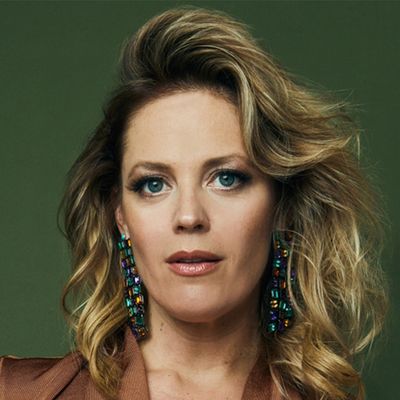
Starring as Mary Jane Healy in Jagged Little Pill, one of the biggest musicals on Broadway, Elizabeth Stanley leads audiences on an unforgettable journey of self-reflection and serious thought… 8 times a week... Read More
From the show: The Theatre Podcast with Alan Seales
Guests
Featured Shows
About
Starring as Mary Jane Healy in Jagged Little Pill, one of the biggest musicals on Broadway, Elizabeth Stanley leads audiences on an unforgettable journey of self-reflection and serious thought… 8 times a week.
She made her Broadway debut in the 2006 revival of Company, and has also starred on Broadway in Cry-Baby, Million Dollar Quartet, and On the Town. She was in the 2009 tour of Xanadu, and the 2015 tour of The Bridges of Madison County in addition to numerous TV credits such as Fringe, All My Children, The Affair, and The Get Down.
Elizabeth has a very open conversation about the effects of mental health portrayed in the show and to her personally. She has her routines that help her to step out of that dark headspace playing a character like Mary Jane Healy will sometimes leave you. Including different techniques she uses when walking off stage. She will leave you captivated listening to the podcast as much as you would be watching her on stage.
Connect with Elizabeth
- IG: @el.stans
Connect with The Theatre Podcast:
- Support us on Patreon: Patreon.com/TheTheatrePodcast
- Twitter & Instagram: @theatre_podcast
- Facebook.com/OfficialTheatrePodcast
- TheTheatrePodcast.com
- Alan's personal Instagram: @alanseales
- Email me at feedback@thetheatrepodcast.com. I want to know what you think.
Thank you to our friends Jukebox The Ghost for our intro and outro music. You can find them on Instagram, Twitter, and Facebook @jukeboxtheghost or via the web via jukeboxtheghost.com.
A very special thanks to our patrons who help make this podcast possible!
Cheryl Hodges-Selden, Paul Seales, David Seales
If you would like to see your name in this show notes or get a shout out on the pod itself, visit ttp.fm/patreon to become a member and show your support!
Transcript
This transcript was automatically generated and might contain errors.
[0:00] Alan Seales: Welcome to The Theatre Podcast, intimate personal conversations with theatre's biggest names.
[0:10] Alan Seales: This episode is with Elizabeth Stanley, who is taking on the lead role in Jagged Little Pill, which just opened on Broadway. This show is intense, people. It is so good. You have to go see it. It's a modern show with 25-year-old music. The soundtrack is from Alanis Morissette's Jagged Little Pill album that came out in the 90s, of course. And the songs have been reworked to be modernized, and it is just 100% relevant to society today. It gets deep, it gets heavy, it gets very, very sensitive and talks about topics that we all need to start really talking about. Director Diane Paulus, Elizabeth, was saying that Diane Paulus gave everyone an assignment to research as rehearsals began and allowed everyone to have a safe space to explore sensitive topics and talk about things in a way that everyone could feel comfortable with.
And the show has an intimacy director, Claire Worden, who was also intimacy director for Slave Play. And this is a new position that I think more and more shows are going to start having, and very well needed, because from the choreography and the blocking, it's all very, very explicit. And just to make real-life actors comfortable with doing these things and giving them a space to say what they were willing to do, Claire facilitates this kind of stuff. And the conversation is just incredible. Elizabeth's character itself, it goes to a deep, dark place every night. She was saying that she had to develop a ritual to become Elizabeth, to become herself again. After going deep into the psyche of her character, Mary Jane, she goes offstage and she shakes it out literally, and everybody knows just to leave her alone for a few minutes while she just comes back to normal.
Because otherwise, if she takes any of that home with her, it could really affect her. So I applaud her for being able to give herself to this character every night, and it's just incredible to watch. So I hope you all enjoy the conversation. Please follow me on Instagram and Twitter at theatre underscore podcast. Please tell your friend about the podcast, leave a rating, leave a review. Visit me online at ttp.fm. And now everyone, please enjoy this episode with Elizabeth Stanley. Here you go. One, two, three.
[2:31] Alan Seales: She made her Broadway debut in the 2006 revival of Company and has also starred in Broadway in Cry Baby, Million Dollar Quartet, and On the Town. She was in the 2009 tour of Xanadu, the 2015 tour of The Bridges of Madison County, in addition to numerous TV credits such as Fringe, which was one of my personal favorites, All My Children, The Affair, and The Get Down. Now on stage playing the leading role of Mary Jane Healy in Broadway's Jagged Little Pill, Elizabeth Stanley, welcome to The Theatre Podcast.
[2:59] Elizabeth Stanley: Heyo.
[3:00] Alan Seales: How you doing?
[3:01] Elizabeth Stanley: I'm great.
[3:02] Alan Seales: You found the place.
[3:03] Elizabeth Stanley: I did. Google Maps, thank you.
[3:06] Alan Seales: So where we start normally on this podcast is with your childhood. Let's go back to the beginning, little Elizabeth. Where were you born?
[3:15] Elizabeth Stanley: I was born in Cedar Rapids, Iowa.
[3:17] Alan Seales: Yeah.
[3:18] Elizabeth Stanley: I think this is the first of having someone from Iowa on the podcast.
[3:22] Alan Seales: Oh, really? Oh yeah. Well, I'm Midwestern through and through. Then we moved a couple times during my childhood and we ended up in Illinois by the time I was in middle school.
[3:33] Elizabeth Stanley: But like the sticks, not close to anything. Like the closest big city is St. Louis, Missouri, and that's like three hours away.
[3:38] Alan Seales: So, okay. St. Louis, I'm trying to picture. All right. So you were east of St. Louis?
[3:45] Elizabeth Stanley: I guess St. Louis has a lot of theater. There's a conservatory in St. Louis, yeah?
[3:51] Alan Seales: Sure.
[3:52] Elizabeth Stanley: Is it there?
[3:53] Alan Seales: I don't know.
[3:54] Elizabeth Stanley: I have to look this up.
[3:55] Alan Seales: St. Louis has a lot happening, but we didn't go there very often because there's like a three-hour drive, you know?
[4:03] Alan Seales: Well then where did the love for theater come from? What were your parents like?
[4:07] Elizabeth Stanley: My parents were amazing. They originally were both teachers and so they had a love for education and knew a thing or two about childhood psychology, I think, which is also so lucky as a kid of those people. My dad eventually became a businessman, but my mom was super keen to like anything that she saw her kids being interested in. It was like, okay, let's foster that. So the town that I lived in for most of my formative years was called Camp Point, Illinois. It's about a thousand people, but it's 30 miles from—
[4:40] Alan Seales: That's a tiny town.
[4:41] Elizabeth Stanley: It's tiny, just corn and cows. But it's like 30 miles from a slightly bigger town called Quincy, Illinois, which actually has a really good thriving arts program. So that's where I did all of my lessons in community theater and the like.
[4:57] Alan Seales: Well, lessons in community theater though, but what got you into that? Where did you start saying, I'm going to go audition for that play of whatever it is?
[5:05] Elizabeth Stanley: It was kind of slow burn. I mean, I always loved music. So that was kind of my way in. Like I started taking piano lessons when I was six and then loved singing and did stuff at church and whatever. And then I think some of my friends were like auditioning for a play at the community theater, like a children's theater thing. And I was like, okay, yeah, that'd be cool. And I think knowing that we could carpool the 30-mile drive made it more enticing to my family. So we did. And then through that circle, then I met like the people who became my voice teachers in my high school years.
[5:45] Alan Seales: How old were you when you first auditioned? Do you remember?
[5:49] Elizabeth Stanley: Like 12 or 13, probably.
[5:51] Alan Seales: Okay. So early teens. It wasn't like, you do it basically as a social activity. So you're doing it with your friends and your parents are like, we support you. Get out of the house. It's cool. We're cool.
[6:01] Elizabeth Stanley: Yeah. It was just sort of like, well, we'll see what this is. Yeah. My parents weren't supportive, but not pushy. Because I mean, I think like pushing your kids into the arts is like scary. They're very sensible people. So I think I feel lucky that they continued to support me pursuing the arts because I think that's a scary thing for parents who are not artists themselves to be like, sure, go to school and study this thing that probably you'll never make money doing is what most people think.
[6:33] Alan Seales: Right. Well then, okay. When did you figure out you could sing though? Was community theater always singing or were there plays? I mean, community theater, I guess, is a lot of singing.
[6:46] Elizabeth Stanley: It was a little bit of both. Yeah. I mostly did musicals and I was in like a little show choir for kids called Stage Kids. And so there was singing involved most of the time. And that was my initial love. I think that's even what I went to college for was to study vocal performance. I thought, oh, I'm gonna be an opera singer. That was like a... My high school voice teacher had had an opera career. And so she was the only professional artist that I really knew. And so I was like, oh, that's the prototype. I can copy her life and I'll do that. So my true love for being an actress didn't really come until later, like after college even. I think that even in college, because I was a voice major, the acting classes I took were not with theater majors. They were just like with the gen ed population who could take a theater credit to check off some kind of speech credit.
[7:46] Alan Seales: Right. And so I liked it, but I didn't get it.
[7:52] Elizabeth Stanley: Right. And it wasn't until I took acting classes after I'd lived in New York for a while that I was studying the same things that I learned in college. And I finally was like, oh, this makes sense now. And I love it. So you were already out of college before you decided that you wanted to act act versus just be a concert kind of singer?
[8:08] Elizabeth Stanley: No. I mean, I was always pursuing music theater, but I think I would have been very afraid to just do a play.
[8:17] Alan Seales: Oh really? Yeah.
[8:20] Elizabeth Stanley: Oh, because it was just relying so much on just being vulnerable and being open. I mean, yeah. I think I just didn't. I was intimidated by it because I hadn't auditioned for straight plays in college. I'd only done plays in my kid days at my community theater. And so I think the idea of like, I underestimated, I think, that you have to really be an actress to be able to do musicals because so many people tell us that you're not. So I think it was really empowering for me to study acting, to take acting class once I was in the city.
[8:57] Alan Seales: Was there ever a point in high school or middle school, I guess before you decided to go to college for voice, was there ever a point when you didn't know what to do when you were like, I'm going to be an economics major or I'll do computer science?
[9:09] Elizabeth Stanley: Yeah. Yeah. I mean, I think there were a lot of different things. Like randomly, I was like, maybe I'll be a dentist. That seems kind of interesting.
[9:17] Alan Seales: Oh, randomly?
[9:18] Elizabeth Stanley: So random, right? That's weird.
[9:20] Alan Seales: I think, side note, we're going to talk about dentistry for a second. I think looking in people's mouths all day is disgusting.
[9:24] Elizabeth Stanley: Yeah, right. I know. I don't know why I thought that was fine.
[9:26] Alan Seales: I don't. I mean, power to you, dentists. All the dentists out there who are listening to this right now, hey, thank you. Thank you for your profession.
[9:38] Elizabeth Stanley: Your health starts there.
[9:39] Alan Seales: Yes. Yes. I only recently started, recently in my adult years.
[9:43] Elizabeth Stanley: Oh, congrats. That's really exciting.
[9:45] Alan Seales: I know. It's not, what are those quip ads? It's not how, it's not what you floss. It's that you floss or it's not how you, whatever.
[9:51] Elizabeth Stanley: It's not what you find in there. It's that you found it. I don't know.
[9:55] Alan Seales: It's not yesterday's meal. It's that you don't, you fully digested it.
[9:59] Elizabeth Stanley: So, Jagged Little Pill just opened December 2019, a couple of weeks ago. And it is just, it's phenomenal. I post about it on my Instagram, my stories, whatever. And those posts are just, they get so much traction compared to all the other stuff that I post about.
[10:14] Alan Seales: Oh, wow.
[10:15] Elizabeth Stanley: And there's such a fervent fan base for this show. And it's surprising to me how popular it is right at opening, which we'll get to in a bit, but in a good way, surprising in a good way. But I want to know, take me back to the beginning of how did you get involved? What year was the first audition or the first time you got a script in your hands?
[10:38] Elizabeth Stanley: Yeah. It was two years ago, almost exactly this time. It was just before, the first lab that we did was just before Thanksgiving. And I got the audition. I was headed to my brother and sister-in-law's in Chicago who were having a baby shower and a housewarming the next day. And so they were like, this is a self-tape. It's due in a few days, but I had to do it the day I got it because I was leaving town. So I was like, okay.
[11:07] Elizabeth Stanley: Yeah. So that was really it. I mean, it's so strange. Some auditions you go in five or six times and the stakes get higher and higher. And this was a self-tape that I did in my spare bedroom. And there you have it. Yeah. So it was kind of bizarre in that way.
[11:27] Alan Seales: Okay. So I'm pointing out the timeline in my mind. So you had the 2015 tour, and then you got this audition in 2017. And then it's been two years of workshopping it.
[11:42] Elizabeth Stanley: That's right.
[11:43] Alan Seales: And it opened in Cambridge at the ART last year.
[11:48] Elizabeth Stanley: Yeah.
[11:49] Alan Seales: So, okay.
[11:50] Elizabeth Stanley: Technically a year and a half ago now.
[11:51] Alan Seales: Year and a half ago.
[11:52] Elizabeth Stanley: Yeah.
[11:53] Alan Seales: Right. And how long? I don't remember. How long between the ART out of town run and this one?
[12:00] Elizabeth Stanley: Yeah, like a year and a half because that was in the summertime. So it wasn't the summer of 2019, but the summer of 2018.
[12:05] Alan Seales: Okay. Okay. So that was a while back. But when you first... Well, I want to get into the differences, right? Because everything changes between the runs. But when you first got the script, when you were first like, okay, cool, I got this audition and you opened it, you're like...
[12:19] Elizabeth Stanley: Right. And Alanis Morissette musical.
[12:22] Elizabeth Stanley: I was suspicious. I don't know. Just because Alanis' music is...
[12:28] Elizabeth Stanley: So iconic and not something that, in my mind, was a direct match for Broadway. And I am not a giant fan of the Jukebox musical to begin with. So I was sort of like, okay, well, we'll see. I'll put myself, you know, record it and whatever. Like, and so it was kind of great that I think, you know, then I got it. And then I entered the lab with the same sort of attitude, like, with total curiosity. Like, cool, we'll see what this is. I'm so jazzed to be in the room with these people. Like, I have been wanting to work with Diane Paulus and Sidhi Labrisher-Cowrie. I didn't know before that, but he's the choreographer and he's insanely amazing. And Tom Kitt and Brian Perry and obviously Alanis. You know, so it was like a dream team of people in Diablo Cody. So that is what really enticed me.
[13:26] Elizabeth Stanley: Well, for me, when I first heard, oh, there's an Alanis Morissette musical on a Broadway trajectory, I was like, I questioned, my eyebrow went up and I said, oh, in a musical about Alanis Morissette. And I think maybe that's what a lot of people originally thought. But I want to read something I found online about the show. It says, The Heelys, which is your fictional family. It's not a show about Alanis Morissette at all. The Heelys appear to be a picture-perfect suburban family, but when the cracks beneath the surface begin to show, they must choose between maintaining the veneer or defiantly facing truths about themselves and the world around them. It's an original story.
[14:07] Alan Seales: That's right.
[14:10] Elizabeth Stanley: And that I think is, well, it's a deep original story, first of all, and we're gonna get into this.
[14:19] Alan Seales: Great.
[14:21] Elizabeth Stanley: But I guess, do you have any insight into the process of where the concept came from? Like, who was it that said, I want to make a musical about A, B, and C, but I want to set it to the soundtrack of this album that somehow changed my life or that means something to me?
[14:41] Elizabeth Stanley: I think the story goes, and I could be wrong, but one of our lead producers, Vivek Tiwari, is, I think it was his brainchild that this album would make an amazing story or musical. And so I think he first took it to Alanis, and it sort of kicked around. But I don't think it was until they brought on Tom Kitt, and then Tom Kitt reached out to Diablo Cody. And so it was really, I think, Diablo's brainchild of what the story has become.
[15:18] Alan Seales: Right.
[15:18] Elizabeth Stanley: And I know that she said, for her, it started with the song Mary Jane. That was so clear to her. She was like, I knew that this was a story about a woman named Mary Jane who was obsessed with keeping up appearances.
[15:32] Alan Seales: So Diablo Cody, for those who don't know, won an Oscar for winning the screenplay, writing the screenplay for Juno.
[15:38] Elizabeth Stanley: Yeah.
[15:39] Alan Seales: Which was a great movie as well. Is this, and I should know this, is this her first Broadway book that she's written?
[15:46] Elizabeth Stanley: Yeah.
[15:48] Alan Seales: Wow.
[15:48] Elizabeth Stanley: I know, right?
[15:49] Alan Seales: Right out of the gate.
[15:50] Elizabeth Stanley: Way to go. Way to nail that. But you know, she's so, I mean, I can't say enough great things about her. She's just like the coolest human being. But so humble, too. There were so many times throughout the process where she was like, I don't know, I've never written for Broadway. So like, yeah, okay, totally. Oh, I need to change that. I get it. Okay. You know, because she could have really had an ego and been like, I'm an award-winning screenwriter. So Broadway, whatever, you know, but she was so not like that. She was so game for the challenge of the newness of this.
[16:19] Alan Seales: Well, okay. So then your producer, did he reach out to Alanis or did he know Alanis already? Like when was she brought in?
[16:26] Elizabeth Stanley: I mean, I think it seems to me from the get-go. Yeah. That's what my understanding is that he reached out to her and sort of like, we're interested in doing this. And Alanis, I think my understanding is that she was intrigued because I think she's the kind of artist who's into having something be deepened and further interpreted, but she was not interested in having it be about her.
[16:50] Alan Seales: Right.
[16:51] Elizabeth Stanley: And she really wanted to make sure that the songs were saying something beyond what they had already said. So I think to have them just be a version of the music video on stage or, you know, I think something like that she wouldn't have been interested in, but I think having the songs be reinterpreted and made into this story, I think seems like she was really down.
[17:17] Alan Seales: Well, okay. So I was reading online, I was reading an article about that she sort of made this about modern day or the writing, the book is about modern day Alanis versus, you know, the album when it came out in 95 when I was personally 14 was about, you know, Alanis 25 years ago.
[17:41] Elizabeth Stanley: Yeah. I mean, she was so young when she wrote that album.
[17:44] Alan Seales: Right.
[17:44] Elizabeth Stanley: Incredible. And now she's a mom and then Diablo is a mom. And Diane's a mom. And so the three of them, three powerhouse women writing this story. And then of course, yeah, it makes sense to me now that it has to center around this mom telling the story about some really deep shit.
[18:03] Alan Seales: Yeah.
[18:04] Elizabeth Stanley: So let's get into some deep shit.
[18:06] Alan Seales: A deep dive.
[18:08] Elizabeth Stanley: I guess first of all, let me before I ask, before I get there, let me ask one more question is how familiar were you with the original album back in 95 or in that time frame?
[18:19] Elizabeth Stanley: I loved the album. I did not personally own it. I was on a tight budget. And so I didn't own very many CDs. It wasn't that cool. So I didn't know like Forgiven, for example, which is the song that I sing at the end of Act One, which is what I auditioned with. I didn't know that song. So I really kind of only knew that the hits that were like really being played nonstop on the radio, but I did love them.
[18:43] Alan Seales: Yeah. Okay. Okay. So it was interesting to me how in the show, it never felt like a song was out of place. I recognized that.
[18:52] Elizabeth Stanley: I love that.
[18:53] Alan Seales: I recognized that, okay, I've heard the song before, but it was a natural progression of the story, right? It didn't feel contrived in any way. And I especially love how Ironic makes fun of itself.
[19:05] Elizabeth Stanley: I know, right? So good. So good.
[19:07] Alan Seales: Yeah. But then when all of a sudden, like I tried not to read anything about it before I saw it. And I went in and I was, and I said, oh, okay, Elizabeth. All right. So Mary Jane, wait, is that when Atlantis is caught? Oh, oh, this isn't a show about Atlantis.
[19:23] Elizabeth Stanley: Yes, it really is.
[19:24] Alan Seales: Okay, cool. Let me reset, right?
[19:25] Elizabeth Stanley: Yep. Yeah.
[19:26] Alan Seales: And so I'm watching you and just watching this character that's perfectly put together, like, was it Westchester or Connecticut?
[19:34] Elizabeth Stanley: Connecticut.
[19:35] Alan Seales: It's vaguely Connecticut.
[19:35] Elizabeth Stanley: Yeah, Connecticut mom, perfect family, just start and begin to crumble. And I feel like why part of the show has immediately gotten a fan base is because due to a lot of the subject matter, which covers what? Sexual assault and sexuality and opioid addiction. And basically just kind of feeling like you don't belong. Have to keep up appearances. There's something to speak to everyone's fears.
[20:10] Elizabeth Stanley: Well, I mean, because every human being is suffering in some way every day, right? I mean, whether it's something tiny or something massive that you're just like getting through, but everyone has something. And so I think that this show really, it speaks to that truth.
[20:30] Alan Seales: Well, yeah, I agree. There is a truth. There's a truth for everybody. And when, gosh, at the end of it, and you're taking your bow and I can just, I'm looking at your face and curtain call and you are drained.
[20:45] Elizabeth Stanley: You're like, girl, you look tired.
[20:47] Alan Seales: I was like, she went there. Like you go there to this, your character is addicted to opioids.
[20:56] Elizabeth Stanley: Yeah.
[20:57] Alan Seales: And you go to this place eight times a week. And I walked out of there, I was like, how do you do that? How do you do that and not go insane in real life?
[21:12] Elizabeth Stanley: Yeah. I mean, I think a lot of, there's a lot of reasons how I stay sane. One is that very gratefully, the show is redemptive, right? It ends in a place where you feel like, okay, people survive. People go through a lot of shit and come out okay. I mean, sometimes it's really messy and really ugly, but that's actually what living truthfully is going to be, no matter how perfect you think someone's life is. There's crap going on. So I think you end in this place of recognizing that, which somehow feels hopeful.
[21:59] Elizabeth Stanley: But I'm also very actively aware. I mean, I've been in therapy for over a decade. I'm someone who's very into my own personal wellness, in air quotes. And so I guess from the get-go, I was very clear, even in rehearsal, if I'm doing a scene, the second we're done, boom, I'm back to being Elizabeth. You can't stay in this because that's not going to be a fun place to live or for anyone to be around you. So I just got used to rehearsing it that way. And so even now, there's some scenes that are really deep emotionally. As soon as I come off and I run into the wings, I just literally do a crazy dance and shake it off and try and be silly to kind of reset. I would feel self-conscious, but I think that's something that I have to get over really quickly.
[22:46] Elizabeth Stanley: Yeah, like just going off and just shaking. I mean, I like make a silly thing about it because we're all in it together also. Everyone in the show is on the journey. And it is a journey. And gosh, the whole cast is so, so good.
[23:03] Alan Seales: Aren't they incredible? I'm just like, who are you people?
[23:13] Elizabeth Stanley: I feel very humbled to be leading this ensemble because they're so, so good.
[23:19] Alan Seales: When you first saw the whole script, I mean, read through the whole script, I mean, I of course saw the finished product, but how much of it, was it always as direct of like, we're going to talk about rape and we're going to talk about white privilege and we're going to say these words and we're going to make the audience uncomfortable and bring them back?
[23:39] Elizabeth Stanley: I think yes. I mean, it has evolved, but I think like Diablo's writing style is so unapologetic in that way. I think she's really expert at sort of the dark comedy of like taking the things that make us feel uncomfy and allowing us to be able to cry and laugh at them. So I think it's always had that element to it. It's definitely evolved and had finesse and fine tuning and a lot of work has been put into how is it impacting people? How does it fall in people's ears? How does this go? But I would say that those qualities of it have always been there.
[24:23] Alan Seales: That's great. And when you first, when all the cast came together, when you were all in the room for the same time, was it awkward to start working through any of these scenes at all? I mean, because there's some intimate stuff and I know Claire Warden is one of the first intimacy directors that's on Broadway, period, but she's involved with this show. How was the subject matter first talked about as a cast? Because you have to become a family.
[24:56] Elizabeth Stanley: I think, bringing a company together, I think it's one of her greatest strengths as a director. So a couple things like, and maybe you've heard other actors who've worked with her before, but she gives you an assignment like the first week of rehearsal where you bring in a character presentation. Really? Yeah. So it's like an acting school exercise, which I love that shit. So I was like, I'm so here for this. Some people I think are like, are you kidding? But I'm like, I love it. And so that allowed each of us to bring in a piece of ourselves, I think. So that was like a great, and how it's also an awesome way for people who don't maybe have spoken lines in the show to, you get to know them more quickly in that way because you see them as an artist individually doing something as opposed to an ensemble.
So that was kind of step one. And then step two is that we all were assigned research projects. So anything that is covered in the show or anything that you felt comes up in the show for you, you are allowed to, invited to sign up. And then one afternoon a day, a week or whatever, everyone would give their presentation. So I did mine on transracial adoption and other people did theirs on opioid addiction or colorism. All the things that happened in the show, people talked about. And then that would open up the dialogue for the cast. So I think we really allowed room for discomfort and questioning. And there were definitely moments along the way of like, oh, I'm sorry, I didn't realize that. Or actually, hey, when you say that, that's a little, that's kind of offensive how that comes off. I've never been in a cast that was so just able to put that out there and then navigate through it.
[27:00] Alan Seales: Goodness. Yeah, I can imagine. Statistically, like as a dad now, what is it? It's like one in four kids has something bad, like sexually assaulted in some way before they're 18. And like one in three women is sexually assaulted in some form or another at any point in their lives. So you're sitting in a room and I mean, I'm looking at the cast, right? I'm thinking of this and I'm like, one third or a quarter of this cast has got their own trauma that they've dealt with or are still dealing with.
[27:27] Elizabeth Stanley: Right, right. And to be able to just go there every night for me is mind-blowing. It's so impressive.
[27:34] Alan Seales: Well, thanks. I mean, I feel so lucky. The theater lets you do that, right? I feel like so many other jobs, you do. You just have to be like, I'm fine because I don't want to make anyone else around me uncomfortable by actually saying what's going on with me, right? But I feel like it's a beautiful thing that I think in the theater, you can be like, my life is cray-cray right now. So I'm going to be cray-cray. So just help me out.
[27:57] Elizabeth Stanley: Yeah. Well, you bring it in. You bring you, like Elizabeth comes on stage with you a little bit. That's just, it has to.
[28:04] Alan Seales: Yeah, of course. Yeah. Obviously, it has to. But I mean, we've been talking about the sexual abuse aspect of this, but there's also adoption and coming to terms with that and not only adoption, but transracial adoption because your adopted daughter is a person of color. Right. And that's being dealt with. And she is also bisexual. Right. And dealing with discovering that. And there are so many layers that just get peeled back and peeled back. And I feel like all of this is, I mean, yeah, it took what a year and a half to bring it to Broadway for good reason. Because this, you got to shape all this.
[28:39] Elizabeth Stanley: Yeah. Yeah. Oh my goodness. So what changed between Boston and here? How was it different then?
[28:59] Elizabeth Stanley: I mean, in so many ways, it's exactly the same, but I think, I don't think it was as clear, like my character is a survivor of sexual assault. And I think that for me as my actor backstory, that is a large part of what contributed to opioids being quite addictive to my character. Because in research that I did, I read many articles, one that's coming to mind from the Times about a doctor that was working with people in recovery in Iowa, actually. And that she said like, I don't know, almost every patient that she had was a survivor of either sexual assault or sexual abuse. And so, I mean, they're not, it's not as if everyone that has become addicted to opioids has suffered that, but it does seem like it's not uncommon.
And so I think that then that contributes to, then when that element enters the story through her children's lives, it's very triggering for her. And I don't know that that was necessarily clear in Cambridge that, I don't know that the audience realized that I was a survivor of sexual assault, even though that's what I was playing. But I don't know that that was, I don't know that that was as clear. And so I think like that's something that they worked to bring to the forefront a bit more.
[30:33] Alan Seales: Oh, yeah. Like you legit just have a whole monologue about that now.
[30:39] Elizabeth Stanley: Yeah. Yeah. Oh, gosh, that completely would have been missing. And it's something, it was like that was sort of, it was in the show in a different way in one of the labs, and then it got kind of removed and moved around and they tried to have it be in there in a more subtle way, I think, in the show in Cambridge. And so I think they kind of found their way back to an earlier version in some ways.
[31:04] Alan Seales: Yeah. So things like that, I think, got finessed with like the storyline of like really, really just tightness. Same thing, like the character Bella, who is the character that suffers sexual assault within the story, I think it gave her more of a voice. I think in Cambridge, she was not as much of an active part of the story. People were talking about her and things that happened to her, but she wasn't as actively in the storyline, which I think they quickly realized like, oh, that's not good. We need her to have a voice. And then she gets, Catherine Gallagher gets one of the two original songs.
[31:40] Elizabeth Stanley: No, only one original song. I thought you had an original song. I do. There's two original songs in the show, but she sings one, I sing one.
[31:47] Alan Seales: Oh, yes. Okay, yeah.
[31:50] Elizabeth Stanley: Yeah, she gets one of the two.
[31:55] Alan Seales: Yeah, yeah, yeah, yeah, yeah. No, she's so fantastic.
[31:55] Elizabeth Stanley: I know. It's really creepy, isn't it?
[32:02] Alan Seales: It is. It is. Yeah, I guess Claire Warden was active on that rehearsal, those rehearsal days.
[32:06] Elizabeth Stanley: Yeah, yeah.
[32:14] Alan Seales: Yeah, it's a very powerful song. I'm not going to spoil it for anybody who hasn't seen it, but it left me... I mean, the show, like you said, it's very redeeming. It's redemptive for your character. I guess generally, as a member of society, it leaves me feeling a little bit generally uncomfortable. And I think that's probably on purpose in that your son, am I allowed to say this? He just kind of gets away with it, right? And that's messed up, but it happens every day. And I hate that.
[32:39] Elizabeth Stanley: Yeah. So, oh gosh. Yeah, so I left and I kind of felt icky. I loved it, loved the show. Of course, I'm happy that we watched this character that we're following throughout the story get back to a better place. But at the end, I was like, oh, shit. That really... It sits with me. It still does.
[33:08] Alan Seales: Oh, that's interesting. I mean, I think... Yeah, I don't know that I actively look at it like that. But I mean, that is one way of looking at it. And yeah, I mean, I think intentionally, they left a lot of the story somewhat unresolved because you can't tie this stuff up in a bow. But it's like, I think it feels... To me, it feels like, okay, there's progress in that her story is getting heard. There is a trial actually happening because those are things that usually don't happen. Particularly if the woman is not someone that comes from means.
[34:00] Elizabeth Stanley: Yeah. Yeah. So it's really... It's complicated.
[34:05] Alan Seales: Do you get any sort of different... I mean, I'm sure the stage door feedback is just all over the place. Like you were saying, there's different topics. There's sexuality and assault and being a survivor. Have you had people come up to you and tell you stories at the stage door at all?
[34:11] Elizabeth Stanley: Really? Yeah. On all of the above. People saying, I'm a survivor and thank you for telling my story. People saying, I'm a recovering addict. And that scene on the couch is the most accurate portrayal I've ever seen of what it feels like to be dealing with that. Or a transracial family saying, oh, this is my mom. I'm adopted. We've never seen a story about us. And some of those lines were exactly what I've heard before. And so it's very different than the average musicale at the stage door.
[35:01] Alan Seales: Oh, yeah. Gosh. Is that hard to leave behind too? Because you leave Mary Jane inside the theater. But when you're going outside, you are you. You're signing playbills. You're doing your thing. And then you have someone come up and they're like, oh, yeah, these bad things happened to me. Thank you. Thank you. Does that weigh on you at all?
[35:16] Elizabeth Stanley: Yeah. We had a lot of conversations about that in rehearsal because we knew from doing it in Cambridge that that was a small example probably of what we would experience when we brought the show in. And yeah, I mean, it does. I feel grateful that people feel like they can share that with me. So I guess I feel very moved by that. I haven't had anyone come up to me saying, I don't know what to do. I need help. And I think that would sit with me in a much heavier place. But I am not an expert. So I would certainly do what I could to point them to someone who could actually give them assistance. But yeah, I mean, it is. I mean, that's the world we live in. It's really sad. I mean, there's so much beauty in the world who does the things. There's so many people who are working really hard to be helpful.
[36:31] Alan Seales: Mm-hmm. But yeah, it's painful, I think, when we really look at the world and the things that we're doing to ourselves. Part of what I hope people listening, and if you've been listening for a long time, you hear me talk about this all the time, is mental health. That's one of my focuses in this podcast is I started seeing a therapist really seriously like a year and a half ago. And it's completely changed me. And it's contained my relationships and how I can talk with relative strangers and still have a good conversation and be vulnerable and not assume the worst, that they're thinking the worst about me, right?
[37:07] Elizabeth Stanley: Right, yeah. And the thing for me is that I just want people to be okay being honest and talking about it. Because I've heard... And actually, it was Tanya Pinkins who said,
[37:24] Elizabeth Stanley: Theater is good to allow people to practice empathy because you don't get to practice that like your brain does not form those connections unless you're in the moment. So you go to theater and you see that and your brain's like, okay, yeah, okay, I can see that modeled for me now. And that's great, right? So for me, it's seeing people come to terms with addiction, with their need for validation, with their need, like your character is coping. It's an unhealthy coping mechanism. And so being able to see, yes, that this is going to be detrimental or, hey, if I don't talk about this, then I'm going to get worse. Thank you for bringing up, he was a therapist for a decade, right? Yeah. I love her. She's so good.
[38:19] Alan Seales: Is it the same lady?
[38:20] Elizabeth Stanley: Yeah.
[38:20] Alan Seales: Wow.
[38:20] Elizabeth Stanley: I know. I got a good one. Yeah. So I don't think, I actually have a theory that I don't think you can be really successful on Broadway unless you are in therapy because you need to be able to just talk about how you really feel and be vulnerable or be okay knowing that not everyone's going to like you and being vulnerable.
[38:42] Alan Seales: Yeah. Yeah. I mean, when you really know yourself, then I think you can get out of your own way to create a character that's not you, right? Because you know, like, oh, I know I'm going to look at this this way, or I'm going to feel this way about these things, but that's me. Okay. So let me move aside and see what this character would do.
[39:00] Elizabeth Stanley: Yeah. Yeah. I've known many people who have confided in me, like more than I want to admit that they've had like past traumas and whatnot. And I'm like, well, you know, can you talk about it? Why don't you just talk about it? I'm like, no, no, I just, you know, I don't really feel comfortable. I'm like, but you can tell me, but you can't tell someone who's been trained to deal with this, or you can't tell somebody who could really make a difference. But now that I mean, telling me as a first step, I guess.
[39:27] Alan Seales: Yeah.
[39:28] Elizabeth Stanley: But it's baffling to me how much this exists and how uncomfortable people are. I mean, I think like a really big piece of me understanding this character is my dad who fought in Vietnam and certainly suffers PTSD, even though he is like a highly successful, wonderful person, great dad, like, you know, there are many people who fought in Vietnam who really didn't come back and like become the person that he was able to become because their trauma was like just overcame them. Right. And so I think, you know, especially for that generation, they're like, I'm fine.
[40:14] Alan Seales: Oh, yeah.
[40:15] Elizabeth Stanley: But like, he's not, you know, in a lot of ways, like he's not. And I think I see in him and through my own therapy and, you know, whatever, and like just aging and like me kind of understanding his humanity a bit more, it's like, I see that, like how hard it is to ask for help or to admit that you're maybe not okay. And it's so deep. It's so deep that you don't even see it. And that's why it's taken me as long as it did, because that behavior was modeled to me from my parents.
[40:48] Alan Seales: Right. Right.
[40:49] Elizabeth Stanley: And all the people that were around me when I was a young child, when things went bad, you just said, you're fine. You're fine. Get over it.
[40:56] Alan Seales: Yeah.
[40:57] Elizabeth Stanley: And it, yeah, it makes all the difference just to say, you know what? I'm just not feeling good today. I'm going to sit in this and I'm going to acknowledge it. And okay, now that I've said that, I even feel better immediately.
[41:11] Alan Seales: Right. Yeah. Yeah.
[41:13] Elizabeth Stanley: It's, oh, God, people go to therapy. Come on. I say that so much.
[41:16] Alan Seales: Oh, seriously. It is such a great investment, though. It really is. I mean, not only for understanding yourself, but for understanding the people in your life.
[41:23] Elizabeth Stanley: Oh, yeah.
[41:24] Alan Seales: Right. It just makes me be more compassionate to them.
[41:28] Elizabeth Stanley: You know what? One of my breakthroughs was realizing that there aren't really breakthroughs in that.
[41:37] Alan Seales: You'll just always be a mess.
[41:40] Elizabeth Stanley: Well, yes. Yes. It's not about curing. Well, there's no eureka moments. Well, sometimes there are.
[41:46] Alan Seales: You're not going to be fixed.
[41:47] Elizabeth Stanley: You're not going to be fixed. There's no like, all right, in the movies or TV, you just go and you're like, all right, I talked to a couple, I got therapists a couple times, and now I'm cool. I'm cool. Like, no, this, especially if you start later in life, it takes a long time to undo what is your hardcore wiring.
[42:04] Alan Seales: Right.
[42:05] Elizabeth Stanley: And, oh, gosh, I could go on and on about this, but this is a therapy podcast. I did say to my therapist, like, I don't know, a few years in, I was like, should I be concerned about myself? Like, I feel like I expected to be here like a couple years, you know? And she was like, you know, there's kind of two types of people that seek out therapy. Like, some people are really experiencing something very specific. They're getting divorced. They're having trouble conceiving. They lost a parent. You know, something that you really like, I need to talk to someone about this specific moment. And then they kind of are done with that. And they're ready to like, not be in therapy anymore. And then there are other people who are more, it sounds like you and I, on like the lifelong journey of curiosity about just continuing to maintain that part of our, you know, mental health and understanding ourselves and the world around us in a perhaps deeper way than the average bear. But, yeah, and it shows it's really just, I'm not crazy, everyone. Okay.
[43:00] Alan Seales: Okay.
[43:00] Elizabeth Stanley: Just so you know. If you listen to past interviews on this podcast, I go here with so many people because everybody loves talking about it. And then for the people who love to talk about it, it's such a...
[43:10] Alan Seales: I can keep going.
[43:10] Elizabeth Stanley: Oh, my God. Yeah.
[43:11] Alan Seales: Yeah, yeah.
[43:12] Elizabeth Stanley: Um, I have a Patreon account and everybody gets to send in questions if they have any.
[43:18] Alan Seales: Great.
[43:18] Elizabeth Stanley: So I got a question for you from one of my patrons.
[43:21] Alan Seales: Oh, okay.
[43:23] Elizabeth Stanley: It's just a very simple question. Is Diana in Next to Normal a dream role?
[43:26] Alan Seales: Oh, my God.
[43:28] Elizabeth Stanley: Um, yeah, of course. You know, I mean, I am a huge fan of Tom Kitt. So, um, I just, I think he's the greatest. And I, I love that score. And such an awesome role that is really complex.
[43:45] Alan Seales: Yeah.
[43:45] Elizabeth Stanley: Although I wouldn't want to, like, do it back to back with this. I would need, I think I need to do, like, a farce or something after this. Something that's really...
[43:52] Alan Seales: Yeah, this is heavy.
[43:53] Elizabeth Stanley: ...different.
[43:53] Alan Seales: Yeah.
[43:55] Elizabeth Stanley: Yeah, I agree. You gotta at least switch it up a little bit.
[43:59] Alan Seales: Yeah.
[44:00] Elizabeth Stanley: But, so we touched on this at the beginning, but you originally went into performing just to, like, be a concert soloist and do more singing, right?
[44:04] Elizabeth Stanley: Opera, to be clear.
[44:08] Alan Seales: Yeah, yeah.
[44:09] Elizabeth Stanley: But now, obviously, you're very successful as an actress and a singer on the Broadway stage. But in terms of your solo kind of thing, you do cabarets, yeah?
[44:21] Elizabeth Stanley: I do, yeah. And I love it. I mean, it's a completely different art form. I mean, not completely different, but, like, creating a one-woman show is, like, scary, but thrilling. And it does, to me, it feels like a throwback to, like, my college days or, like, my roots in the beginning of this, where it's, like, more about the music than when you're doing a musical, where I would really put the acting first. I feel like when you're doing a musical, like, the acting has to influence how you're singing.
[44:55] Alan Seales: Yes.
[44:57] Elizabeth Stanley: Whereas, like, when you're doing a cabaret, I think, like, people are, in some ways, coming to hear you sing. So the music and the choices you're making or the way you put songs together is just as important as, like, how you're acting through the songs. Do you really enjoy doing cabarets, or is it more of, like, a career continuation move?
[45:13] Elizabeth Stanley: No, I like it.
[45:14] Alan Seales: Do you?
[45:15] Elizabeth Stanley: Yeah, because I love singing so much. Like, it's really fun. And it's fun to collaborate with, you know, other musicians and music directors to, like, come up with a cool arrangement of something. And yeah, like, one of my dreams, I'm just putting it out there, is to do the Lincoln Center Songbook Series at the Jazz at Lincoln Center.
[45:35] Alan Seales: Oh, that'll be sweet.
[45:36] Elizabeth Stanley: It's, like, overlooking Columbus Circle. I'm just putting it out there. I want to do it.
[45:41] Alan Seales: Okay. So to wrap up this episode here, I have three standard closing questions that I ask everybody.
[45:47] Elizabeth Stanley: Okay.
[45:47] Alan Seales: The first one, very simply, is what motivates you?
[45:51] Elizabeth Stanley: Storytelling, I mean, I think as an actor, I am genuinely curious about humanity and the world around me. And I feel like it's a really special way to allow us to see the world and digest it in a way that's, like, not so painful through theater, you know? Like, art allows us to look at the world in a way that is one step removed from just watching the news, for example.
[46:29] Alan Seales: Yeah.
[46:31] Elizabeth Stanley: And so I guess it's sort of, you know, storytelling, sort of activism through art is really what's motivating me in this moment anyway.
[46:38] Alan Seales: Okay. And the second question is, what advice would you give to your younger self and younger people listening now starting out down a similar path?
[46:47] Elizabeth Stanley: I mean, my funny question is, you're not fat, because I feel like so many actresses, you know, and so many young people are, like, so stressed about that. And it was something that I was really stressed about, like, oh, God.
[47:04] Alan Seales: Yeah.
[47:04] Elizabeth Stanley: Because, you know, it's just, you know, the industry is mean. And I do think it's getting better. I think it's so much better than it was, but it still exists, you know? And so I would just say, hey, girl, you look great. Calm down. But then my other advice is just that, be patient. Like, you know, what's before you is going to come to you, and it might not be in the time that you're expecting it, but it's all going to happen.
[47:33] Alan Seales: All right. And then the final question, this is the hardest one. If you could only see one show for the rest of your life, but you could see it as many times as you want, what would you see?
[47:41] Elizabeth Stanley: Oh, my God.
[47:44] Alan Seales: Oh, jeez. That's really tough.
[47:55] Elizabeth Stanley: Maybe Merrily We Roll Along.
[47:57] Alan Seales: Ooh.
[47:58] Elizabeth Stanley: Because, you know, it's like you got to figure it out. It would, I would keep going. What is the puzzle? How can I make this be something that everyone agrees works?
[48:10] Alan Seales: You should write some fan fiction and continue it.
[48:12] Elizabeth Stanley: Oh, God. Yeah, and I mean, I just, obviously, anything's on time is amazing.
[48:19] Alan Seales: Yeah.
[48:20] Elizabeth Stanley: All right. Yeah.
[48:21] Alan Seales: So we can find you on Instagram at EL.Stans.
[48:26] Elizabeth Stanley: El Stans.
[48:27] Alan Seales: El Stans, and your Twitter account's gone. I couldn't find it.
[48:30] Elizabeth Stanley: I don't have Twitter. I don't have Facebook, and I don't have Twitter.
[48:34] Alan Seales: Well, I don't blame you for not having Facebook.
[48:36] Elizabeth Stanley: I haven't checked Facebook in a long time.
[48:38] Alan Seales: Yeah, because we're cool, right?
[48:39] Elizabeth Stanley: Yeah, I mean, yeah.
[48:41] Alan Seales: Totally, totally. Twitter is like too much for me.
[48:45] Elizabeth Stanley: It's mean.
[48:46] Alan Seales: Well, yeah, maybe that's part of it. But I just, I was like, it's, I can't, I can barely keep up with Instagram. So I just was like, I got to pick one.
[48:54] Elizabeth Stanley: Yeah.
[48:54] Alan Seales: And I like pictures. So there you go.
[48:58] Elizabeth Stanley: And of course, go see Jagged Little Pill playing at the Broadhurst Theater. Go to JaggedLittlePill.com to get your tickets and read Elizabeth's bio and everything else. It's such a good show. Everyone go see it.
[49:09] Alan Seales: You can get more of me at thetheaterpodcast.com. Show your support. Get your questions in for future guests via thetheaterpodcast.com slash Patreon. P-A-T-R-E-O-N. Find me on Instagram and Twitter at theater underscore podcast. Please leave a rating. Leave a review. Turn to that person next to you right now. Five stars.
[49:27] Elizabeth Stanley: Yeah, five stars.
[49:29] Alan Seales: Turn that person next to you and say, hey, I'm listening to a podcast. You should listen too. This is edited by Matthew Hendershot. Thank you to Jukebox the Ghost for the music. And of course, Elizabeth Stanley.
[49:38] Elizabeth Stanley: Thank you. This has been so much fun.
[49:40] Alan Seales: Thank you. Go to therapy.
© Broadway Podcast Network, All Rights Reserved