

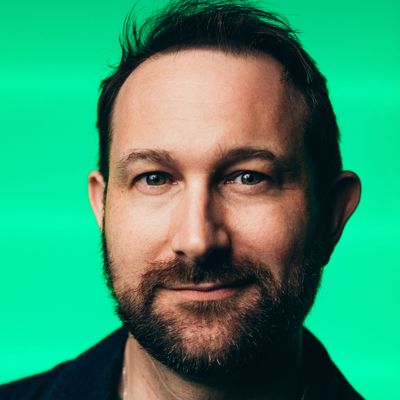
Rob Rokicki is an actor, music director, composer, and lyricist whose shows have been nominated for Drama Desk, Lortel, and Off-Broadway Alliance awards. He is a member of the Dramatists Guild, Actor's Equity, and an alum of the Tony Award-winning BMI Lehman Engel Musical Theatre Writing workshop... Read More
From the show: The Theatre Podcast with Alan Seales
Guests
About
Rob Rokicki is an actor, music director, composer, and lyricist whose shows have been nominated for Drama Desk, Lortel, and Off-Broadway Alliance awards. He is a member of the Dramatists Guild, Actor's Equity, and an alum of the Tony Award-winning BMI Lehman Engel Musical Theatre Writing workshop. He wrote the music and lyrics for the critically acclaimed Broadway musical THE LIGHTNING THIEF: THE PERCY JACKSON MUSICAL, which recently finished up its limited Broadway run.
Growing up in the Colorado plains, he listened almost exclusively to classical music. The acquisition of a boombox exposed him to rock music for the first time, which morphed into a love for the rock musical genre. In addition, this episode covers:
- His natural affinity towards monsters (maybe since he was born on Halloween?)
- His theory that "real life" is just high school with more money -- adults are still living scared and trying to win their parents' affection
- Working with Joe Tracz on The Lightning Thief long before Be More Chill ever surfaced
- The story of how The Lightning Thief went from a non-equity, hour-long touring production to a full-fledged Broadway production
- Monster Songs: Rob's graphic novel you also listen to (stories told from different monsters' point of views)
Connect with Rob:
Connect with The Theatre Podcast:
- Support us on Patreon: Patreon.com/TheTheatrePodcast
- Twitter & Instagram: @theatre_podcast
- Facebook.com/OfficialTheatrePodcast
- TheTheatrePodcast.com
- Alan's personal Instagram: @alanseales
- Email me at feedback@thetheatrepodcast.com. I want to know what you think.
Thank you to our friends Jukebox The Ghost for our intro and outro music. You can find them on Instagram, Twitter, and Facebook @jukeboxtheghost or via the web via jukeboxtheghost.com.
A very special thanks to our patrons who help make this podcast possible!
Cheryl Hodges-Selden, Paul Seales, David Seales
If you would like to see your name in this show notes or get a shout out on the pod itself, visit ttp.fm/patreon to become a member and show your support!
Transcript
This transcript was automatically generated and might contain errors.
[0:00] Alan Seales: Welcome to The Theatre Podcast, intimate personal conversations with theatre's biggest names.
[0:10] Alan Seales: This episode is with lyricist and composer Rob Rokicki, who is probably most known for writing the music and the lyrics for The Lightning Thief, The Percy Jackson Musical, which, if you have not been following this musical, has had an amazing trajectory. It started out years ago as literally just a one-hour, small touring show that TheatreWorksUSA commissioned. The creative team had six actors playing over 30 parts, I think he said, and then it went to off-Broadway, and then it started touring again, and then now it's on Broadway for a limited run, and I have never ever seen a show have a trajectory like that. And I think, you know, that speaks to sort of the generation of the people who really want it.
Sort of like Be More Chill, right? So it went from the smaller thing, and then the soundtrack was made, and then because of technology and the internet, and the way that younger people are now starting to, even people listening to this podcast, possibly, are looking to identify themselves on stage or find themselves and find others who are in the same sort of struggle. And gosh, it just speaks to so many people. And then Rob here, too, was saying that even as adults, we don't ever really feel like we find ourselves, maybe? I mean, most people don't. I'm speaking for myself. I'm always kind of searching for that next thing or searching for that next point of identification or purpose or whatever it is.
So these stories like Percy Jackson and even Harry Potter and, you know, The Lion, Witch, and the Wardrobe, these young adult novels that have just become movies and become shows or whatever it is, they speak to the nostalgia. They create this sense of home, I think, for younger people, and then it starts translating. So I wish that all of you could have actually seen this episode visually. I mean, you're going to hear it. But I was just enthralled by watching Rob talk about his love for storytelling. He started out as an actor. And I can tell, like, he found his home as a writer and as a composer, because he just goes into these modes where his eyes light up. He talks about the need to identify with the characters and care about them and why are we there.
And I'm really excited for all of you guys to listen to this. One more point before we get into it. He is now the second person recently who's told me how theater helps people, especially younger people, practice empathy. And that's something, of course, you know, in the age we are in now where there's a lot of hate, and there's a lot of bigotry, and there's a lot of racism, and there's a lot of whatever it is, toxic masculinity, everything that goes in and around our culture. I mean, I'm talking, of course, what my experience is in North America and the United States, but, you know, as a kind of a global, bigger thing where we just need to kind of understand each other. And he said something, too, where he doesn't want to have us as a society, other people, where he means like saying, it's not us, it's them, it's the others, right?
So, I don't know. I just really enjoyed this conversation. Anyway, I'm rambling a little bit. Sorry about that. Let's get into the episode. But before we do, as always, please visit me online at thetheaterpodcast.com. Show your support via thetheaterpodcast.com slash Patreon, P-A-T-R-E-O-N. And find me online on Instagram and Twitter. Please send me a message. I love hearing from everybody. So, please enjoy this episode with Rob Rokicki.
[3:46] Alan Seales: My guest today is an actor, music director, composer, and lyricist whose shows have been nominated for Drama Desk, Lortel, and Off-Broadway Alliance Awards. He's a member of the Dramatist Guild, Actors' Equity, and alum of the Tony Award-winning BMI Musical Theater Writing Workshop. He wrote the music and lyrics for the critically acclaimed Broadway musical, The Lightning Thief, the Percy Jackson musical, currently finishing up its limited run on Broadway. Rob Rokicki, welcome to The Theatre Podcast.
[4:12] Rob Rokicki: Thanks so much for having me on.
[4:15] Alan Seales: Okay, okay. So, let's go back to baby Rob. Little Rob, where did you grow up?
[4:19] Rob Rokicki: I grew up in, well, it was considered unincorporated Arapahoe County at the time. Now, it's Centennial, Colorado. It's about a half hour east of Denver.
[4:29] Alan Seales: Yeah. Okay. I was going to say, you were saying names and I had no idea where they were.
[4:32] Rob Rokicki: Planes.
[4:33] Alan Seales: Okay.
[4:34] Rob Rokicki: The planes.
[4:34] Alan Seales: The planes.
[4:35] Rob Rokicki: Yeah.
[4:36] Alan Seales: Where now marijuana has become legalized.
[4:38] Rob Rokicki: Yeah.
[4:39] Alan Seales: So, what was your childhood like? Obviously, it was before legal weed.
[4:42] Rob Rokicki: Uh, yeah. You know, I hung out outside a lot. My dad was a big hiker, too. So, we did a lot of Colorado hiking adventures. But most of the time, I was just riding my bikes. And then my parents only listened to classical music. They love classical music. So, we would have the car trips. It was like, name that composer, you know, Shostakovich or whatever. They're like, great. But they also love classic musicals, too. Especially if it was like opera singers covering it because they would like those versions, which, you know, not always my favorite to listen to now, especially as a guy that writes rock musicals. But the original cast recording of Candide would be in our car. Or like West Side Story with like Cary Takanawa or whoever. So, you know, I did fall in love with some of those classics like that way. But yeah, and I have a twin sister, too. And one Christmas, we got like boomboxes and we discovered Bon Jovi and Bruce Springsteen.
[5:44] Alan Seales: I mean, just listening on the radio?
[5:45] Rob Rokicki: Yeah, just on the radio. And I was like, what is this Black Magic on the radio? What is this devil's music, this rock and roll? And yeah, I was obsessed with soul music when I was a kid, too. So, my dad and I, it's funny, we don't like, I'd be like, Dad, you gotta listen to this whatever, you know, when I was 13. Radiohead song. And he'd be like, no, no, no. The meter is interesting, but I can't understand the lyrics. Lyrics are not important to my parents. They're important to me. But we could get along together listening to classic albums like some of the Beatles stuff, but also like some Motown things, too.
[6:25] Alan Seales: Oh, really?
[6:26] Rob Rokicki: So like, you know, that was fun. I remember dragging my parents to see the Pointer Sisters do Ain't Misbehavin', which was a thing, things like that. But yeah, it was funny for a guy that grew up listening to just classical music, like the fact that I discovered the chess on the soundtrack. I was like, oh, wait, what is this new thing called rock and roll mixed with musical theater? And so I was like, kind of hooked from then on of like, oh, I want to do that. I want to write like pop rock stuff.
[6:54] Alan Seales: Were you originally like, going towards a career of writing classical music?
[6:58] Rob Rokicki: No, no, not at all. I mean, my dad, he's a classical pianist, a really good one. And my mom was singing in choir. So like, it was just music was around. My grandparents, my grandmothers were both singers. So like, you know, singing things were around, but it was not like, oh, yeah, that's what I'm going to do.
[7:18] Alan Seales: Did your parents want you to?
[7:19] Rob Rokicki: No, they didn't care one way or another. They're just super supportive. They just knew like, well, Robbie wants to do, you know, Wilson Pickett, his talent show in eighth grade. I was like, probably not the smartest thing to have this little high-pitched white kid singing Wilson Pickett, but you know, whatever. No, Colorado. But yeah, they were very supportive. And I think because I didn't know any better, I just thought, well, yeah, I like doing this. I want to keep doing this. And then I just never stopped. It was never a point where there was like a hard and fast decision. It just kind of things just, oh, well, I'm, this is what I do. Since like I was first grade, that was what I did. I did a play. And then I was like, you know, oh, I like this.
[8:01] Alan Seales: And were you in the play? Were you on stage as an actor?
[8:05] Rob Rokicki: Yeah, yeah, yeah. I mean, obviously there's no pit in a first grade production.
[8:08] Alan Seales: Well, you know, I think it was a pianist. It was a play called Goin' Buggy. I played the lawyer who I think the bugs are trying to get equal rights. And I was the lawyer that was like, no. But then I had a change of heart and I'm like, yes, I vote that they do. And I had one line and I literally was like, oh, wow, I have so much power on the stage. It was a pure ego at the start. But then like throughout that, I started acting, but I was always writing weird little songs, making up things. My dad would get mad because I would like swing the moonlight sonata. And he's like, it doesn't go that way. Beethoven doesn't write it that way. I'm like, but it's fun if you, you know. So, yeah, I wrote a really angsty musical.
Oh, I wrote a really weird one in high school called Mass Confusion. The title given to me by my dad because he couldn't understand the script, which I was like, yes, Mass Confusion. It was like instead of the golf course, there were aliens. And it was a mess, but it was, it was really fun. And there was some, some weird little songs and that. But then I was like, oh, I'm going to be a serious writer. And I had this great idea to write a Jekyll and Hyde musical. I'm born on Halloween. My twin sister and I are born on Halloween. So I'm very like drawn to monsters. And I was like, Jekyll and Hyde musical. And I had, I had the poster designed and my mom at like a Virgin Maga store or something was like, oh, Robbie, look.
And it was like a concept recording of the album. It was like early. It was like the Colm Wilkinson one, like way back in the day. I was like, my dreams shattered. No one will hear the silence before the storm. The great song that I mean, yes, this is the moment. Give it up. But Robert Rokicki at age 13, the silence for the storm for the Jekyll and Hyde musical with a fantastic poster that he designed himself, man, it could have changed the world.
[9:52] Alan Seales: Do you still have the poster?
[9:52] Rob Rokicki: I gotta, I gotta somewhere. It was really good. I was really proud of that. Dream shattered. It was, it was a good lesson to learn early on of like, get used to disappointment kid, figure out another way of telling a different story.
[10:03] Alan Seales: What did your sister end up doing?
[10:04] Rob Rokicki: So my sister's a publisher. She works like literally around the corner. She is like the director of publicity at Random House for a bunch of books. She would always give me like the coolest book. She also worked for like a rock magazine, The Deli for a while. So, so we first moved to New York in the early 2000s. We were just like going to concerts. Last week we went to see the Pixies together, which we hadn't done in forever. But she's, she just was working on Prince's book that just came out. So she's, she's very cool. But, but yeah, she would always hand me some cool book that I'd be like, I don't want to read that. She handed me the Alexander Hamilton book. I was like, this is really dry.
I don't know. And then she gave me Gone Girl, which I loved and The Martian, which was cool. You get these galley copies. That's the thing that's so cool about working with, you know, you know, my sister would get these books and you don't know if they're going to be a national bestseller. You don't know if they're going to be, you know what they are. You just, she's just like, I got a feeling about this. This is special. And she'd like, share it with me. I'd be like, oh, this is so cool. Obviously the Hamilton book influenced a couple people, but it's, isn't that funny too, that like how it, it, something speak to you and you just immediately latch on. You're like, oh, I see myself reflected in X, Y, Z. And then it's like, I got to, I got to do something with that. Or I want to tell my side of the story through that medium or that book or whatever.
[11:19] Rob Rokicki: Yeah. I think it's interesting. Both of you found your way to New York city.
[11:22] Alan Seales: Yeah. And we literally moved, uh, August of 2001. So it was a very interesting time to kind of get acclimatized to New York in the following weeks and, and such after. But I think it was like, there was something about being in New York in that time too, after, you know, such, you know, devastation of, of this sense of community and wanting to stick it out and wanting to, to like make things and, and help people make things. And like, so I feel like we kind of like, we're kind of that foundation of wanting to stick it out, kind of grew out of that time period.
[11:48] Alan Seales: Um, did you move together?
[11:49] Rob Rokicki: No, no. She went to school up at this tiny little college, Colby college. I think actually Hillary Clinton went there in the middle of Maine in the middle of nowhere. It's beautiful, but it's like remote. Uh, and I went to school at the university of Michigan.
[12:10] Alan Seales: Another UM.
[12:10] Rob Rokicki: Another UM.
[12:11] Alan Seales: Another UM. Well, speaking of, of books and whatnot, like, uh, Rick Riordan obviously wrote the book, Blinding Thief. When did that book come out? I didn't look this up.
[12:23] Rob Rokicki: I think 2005. I want to say it was, it was mid 2000s.
[12:28] Alan Seales: Yeah. So you were in New York before the book came out.
[12:28] Rob Rokicki: Oh yeah. Yeah. I, I, I'm, I'm a little older, so I, I missed the, the craze of, of, of the, the Percy Jackson books. Um, but I, I was a fan of YA literature, especially like YA gothic, uh, horror and stuff like that, you know, um, Dinkoots and stuff like that. But also like earlier in that, when I was a kid, John Blair's like the house with the clock and its walls and all that kind of stuff. That was kind of early YA stuff. And, um, I liked horror and I liked like fantasy, uh, stuff. Um, I read a lot of Hardy boys.
[13:03] Alan Seales: Yeah.
[13:03] Rob Rokicki: Well those mysteries and things, some of those can get pretty creepy. I liked them. Uh, but yeah, so I missed that, that, the, the kind of cusp of, of when you might get introduced to that. But I always loved Greek myths. My mom was also a history teacher. So I had this big book of Greek myths with these scary drawings that I was like, yeah, this was cool. The Kraken, you know, and everything.
[13:23] Alan Seales: Oh yeah.
[13:23] Rob Rokicki: Um, clash of the Titans was one of my favorite movies.
[13:28] Alan Seales: Oh my God. And the best with the stop motion Harry.
[13:28] Rob Rokicki: Oh yeah. Yeah. Stop motion. The original one.
[13:32] Alan Seales: Oh yeah. No, not the remake from a couple of years ago.
[13:36] Rob Rokicki: I would say I watched the sequel the other day. I was like really sick. And I just watched the sequel, the sequel to the remake to the updated one that just came out. I actually like had a blast. I was like, ah, Liam Neeson playing a God. You gotta love it.
[13:46] Alan Seales: I have a particular set of skills that is creating lightning skills.
[13:56] Rob Rokicki: Yeah. The mythology part. Um, is that kind of what attracted you to, to Percy Jackson? I mean, tell me your story of getting what attracted me was I was kind of struggling at the end of my, what, what am I doing with my life? Uh, and this, this, uh, it got a call from a friend of mine, Joe Iconis, who was like,
[14:14] Rob Rokicki: Hey, they're looking for writers who write rock music, and this is a thing I think you're going to like. You should put your hat in the ring for this thing. And I like all good things. It's usually your friends that suggest or help or talk or whatever that get you out of your funk. I was in a really weird place because I had just booked, this was 2012-ish, I had booked a show called Pump Boys and Dinettes that was going to have this big revival. John Doyle was going to direct. It was this whole thing. I learned accordion for like three months as an actor. And this is my Broadway debut. Oh, my gosh. I was understudying my old classmate, Alexander Gemignani. So I was really stoked to see him again.
It was going to change my life. We got an announcement on Friday that, hey, we're postponing on Monday, our first rehearsal. And I'm like, well, wait, we were all off book. We learned accordion has been built. And they were like, yeah, we're extending. Or we're delaying. And then another, we're delaying. And then it just fell apart. And as things happen in this industry. But I think it was the double whammy was that week was the week that another show I wrote called Strange Tales that I had done at Artists Nova was supposed to have a production out in California. And our producers dropped us like that week after a year of negotiations. We went to celebrate. And they were like, yeah, we're going to grad school.
So we're not going to produce your show. It's the best thing for the project. And I was like, well, the best thing for the project would have been not having you have the option for the past year, but whatever. So it was like this double whammy of like losing the show that I love so much that I had worked on and losing this thing as an actor. So I was just like, what am I doing? And I was looking for anything that I could, as a storyteller, because like when your sense of identity has been robbed, feeling like the only thing you know how to do is like, give me, give me. Yeah, I was literally chorus line. Give me something to hold on to here. And that's when I found out about this project. So I like wrote demos for it.
I read the book voraciously. I thought it was really great. I laughed and laughed. And I remember thinking that like when I get upset as an actor or as a storyteller in general, as an artist, like YA in particular, is so helpful because like Harry Potter, you know, like the fifth book of the Harry Potter series is my favorite because it's like the one where he's up against the most, you know, the system, man, it's got him down. And you know what I mean? No one believes him. And that character that Percy, you know, in Lightning Thief that he's this kid that just can't get a break, can't catch a break. I suddenly was like, I see myself in this kid. And I think we're all in a state of arrested development a bit wherever we're at.
You know, the older I get, the more I realize that like real life is just high school with more money. You know what I mean? It's the same kinds of things of people that are scared and people still trying to win their parents' affections and people still trying to, you know, live in these kind of cycles of pick their battles of other people before them. And I was just and how Greek that is, you know, in the grand scheme of things. So I really did love the book and I thought, oh, I have a way in with this and the kind of angst of those teens. I know how to write that music.
[17:28] Alan Seales: What's the audition process like as a composer and a lyricist? Because obviously you're not auditioning like a traditional actor, but you said you throw your hat in the ring. So it's not like Joe called you up and said, you've got this.
[17:35] Rob Rokicki: No, no, no, no. It was very much I had to earn it. But so Joe Tracz had seen the book on his agent's desk at the time. And Joe Tracz is an incredible book writer. This was his first musical, though. This was before Be More Chill, before Netflix, Lemony Snicket. You know, he just he loved those Percy Jackson books. He really he was like, whatever I have to do to adapt that, I want to adapt that. And so they did as a play, basically. And very early on in the process, TheatreWorks was like, we need to compress more plot. This thing should sing. And it was such a coup for TheatreWorks, you know, been around forever to get a title this big. We had to win over Rick's agents and all the stuff because they've been so badly burned by the movies and stuff like that.
You know, it's like we want to get the tone right, all that stuff. So it was like little battles, picking little battles and getting them to win every time. So Joe had adapted it. And then they chose a bunch of different writers to submit. Like this happens a lot where different writers will submit, different teams will submit. Sometimes they're music lyricist team. You know, one guy does one, somebody else does another. But I submitted like three demos and that's what got me the job. They thought it fit the best with the tone that they were going for. So we were off to the races. But yeah, the weird thing is those three songs I think I made for those demos. They're the only songs that have like really not changed that much in the course of this whole craziness of the past seven years of eight million versions and 20,000 songs that were written and cut for this thing.
So I think, you know, it's so funny that like the heart and tone that I was trying so hard to nail out of the gate. It's like I did a good enough job of that, that it stuck with us and we're like, okay, I got it.
[19:19] Alan Seales: Have you ever had the conversation with Joe Tracz about whether it was Chicken or the Egg, where they had the tone in mind and then your songs fit that? Or if they were looking to find the tone and they're like, oh, these songs are what we want. Like now that we've heard it, that's what we want.
[19:32] Rob Rokicki: I think it's a little of, you know, I think it's a little of they know what they're looking for. But they don't know how to articulate it. It's just as soon as they hear it, they're like, oh, that's it. They get it, you know, it's like it fits. And I'm sure the other writers that submitted were fantastic writers and probably booked other jobs I didn't. But the kind of heart and humor that the books have, it's, you know, these are kids from broken homes. They don't have a lot of means as far as he has ADHD and dyslexia, but they're snarky. They're very kind of Americanized. You know, if people try to compare it with, you know, Harry Potter, which there obviously are examples or comparisons to be made, but they're very unique and it's kind of that specific tone. And I wanted to get that right. And I think that's what the songs tried to do. And they were like, okay, yeah, that's a good fit.
[20:30] Rob Rokicki: So the history, I guess the timeline of the show in general, you said, you mentioned TheatreWorks. So TheatreWorks, was it them who hired Joe? Like we want, we have this idea, we want to capitalize on it.
[20:45] Rob Rokicki: Yeah. So they hired Joe. Joe wrote this play. Then they were like, we need to have music. So they hired me. And then we wrote demos. Then we did a lot of R&D and Rick's agents would come in. Joe met with Rick actually and kind of see how his brain worked. And, you know, we really wanted to win them over because we know the fans have been burned so badly because the films hadn't gotten the tone right. You know, it's very hard in a Hollywood system to like, you know, it's by committee and I don't blame the actors. I don't blame anybody. It's just hard. And I know Rick was disappointed in kind of that, you know, when you let your baby go into someone else's hands, what happens? So I think he was very rested, read a set, there we go.
To, you know, have us take over his property again. So we had to constantly do R&D. We would like bring in kids that were from Camp Half-Blood camps that are in Long Island, you know, that they do these like reenactments and stuff. We brought in his, you know, obviously his agents were like, you can't do that. You can't combine that character. You can't do this and this and this. We had six actors playing like 30 characters for the original one hour. You know, it's a lot of plot, right? It's a nearly 400 page book. We were putting in like a one hour musical at first. So it was, but it actually became kind of fun in terms of like, great, well, we have six actors and we can't keep combining things.
We just have to do it all. Great. We will do it literally like the most theatrical, but fun, frenetic roller coaster ride. And they'll play 30 characters and there'll be monsters and things that we'll throw at them. And so that's kind of how we attacked it. And Steven Brockett came on pretty early in the process. We don't have a lot of really fantastic directors, but Steven's kind of out of the box thinking. He comes from like off, off Broadway, impossible theater, never be able to put this on stage. And yeah, great. We have a monster. We've got a guy that comes out of a wheelchair and turns into a centaur. We have a, you know, a Minotaur that's like on a murdering rampage. We have like bad demon fury things.
You know, how do you wrangle that and make it fun and fast and truly embrace the theatrical nature of the storytelling? And originally had a tour in a band and we had, you know, it was like so many constraints that we had that actually helped us in the, in how we were going to tell the story.
[23:06] Rob Rokicki: Oh yeah. You know what I mean? Because it was like, these are kids from, you know, without much means. So here we are actors without much means telling the story with this kind of distritus left on stage, taking agency on how they're going to tell their story, just like the themes of taking agency, of making the change you want to see in the world and all that kind of stuff. It felt very fitting, the kind of way that we told the story and how we told the story.
[23:25] Alan Seales: So what year did the TheatreWorks tour start?
[23:32] Rob Rokicki: 2013, we had like a little mini tour. We jokingly call it the Minotaur. It was just a piano. Oh, I'm filled with puns. We just did a piano and we tested around different schools. You know, kids are like, they're brutal audiences. They'll let you know if things are working or not, or if we did their book justice or not, the fans. And also kids that had not read the books, you had to make sure that they understood the world enough that it wasn't as confusing. So we did a lot of little mini tours and then we had a, we didn't think we'd get the rights to have a sit down in New York at all. But Nancy Marietta, New York's agents, got the rights away from the film studio after the second movie kind of tanked and we were able to.
And so it was part of free summer theater. A lot of kids from underserved areas, families that came out and never seen a musical before got to see this show. It really was special. And then that, because how weird that what happened was our little one hour TYA family-friendly show got nominated against Hamilton for Outstanding Musical for a Lower Teleworth. And everyone was like, what? And Michael Friedman's beautiful shows. He had Fortress of Solitude, which is such an amazing show. So it was incredible. And I think everybody's ears kind of perked up. And so we, that little one hour tour toured around for a couple months, I think actually almost two years. It's six of those. And then we expanded it and made it a two act and kind of ripped the show apart and started over in a lot of ways, trying to add in a lot of the stuff that we had to cut before.
And that's where songs like Good Kid and these main kind of character songs where we actually, as Steven likes to say, instead of cramming more plot, we actually tried to like sit with the characters a bit more to give it a little more gravitas, to raise the stakes a bit more, let the show breathe a little more. Joe likes to call it, say that it's like before it was the rollercoaster and now you have the amusement park, which I like in terms of our looking at our show. So that was kind of the creation of it. Then the thought the show was dead. Well, not dead, just over. It was great. It ran two months at the Lortel, hooray for us. We did it. Everybody seemed really happy. And then Broadway Records came, made an album, and that changed everything.
A tour, which was amazing. And then we thought the tour was over. And then Broadway, I've never seen a show with the trajectory of it, started out as a one hour, TYA show turning into a full fledged Broadway musical.
[26:01] Alan Seales: That's what I have written down here, actually, was to talk about the trajectory. It just went from a one hour thing to this massive two hour Broadway run, or two act Broadway run. How long is it now?
[26:11] Rob Rokicki: It's two hours. It's like it's two hours, 15 and not even, it's like two hours about, but it is a two act show. And it's definitely for everyone. It's not designed for kids. And even the little, I mean, obviously it's designed for everyone, including kids. But even the original show that was a little, looking for a slightly younger demographic, we still wrote it for ourselves. We still were like, what I love so much about the show is you get the wave of laughter from the youngins that find the things that they relate to. And then you get a wave of laughter from the adults or whatever. When the jokes land or the things hit in different places, that's that sweet spot, which is so, so satisfying as a writer. And that's been a joy. The demographics that we have at the show is unlike anything I've ever seen.
[27:00] Alan Seales: That's what I was going to ask about was whether you see if it's, I mean, because Broadway ticket prices are more expensive, you have to have more disposable income. So like going from the one hour tour, TheatreWorks plays more to younger audiences. Now on Broadway, which plays more to older audiences, has the show maintained, obviously it's maintained an upward trajectory, but in terms of audience feedback, has that changed?
[27:24] Rob Rokicki: Well, I mean, the show is a family friendly show, but we've had a repeat guy that keeps coming, he's like 85. But we've also tried to keep ticket prices low, thanks to our producers, because the theater should be for everyone. And it is a problem in our industry. Our industry of musicals, theater, which we love so much, Broadway, is classes. It is, it just is. Money is unfortunately a major issue that prevents art from getting to the audiences it needs to. And so I'm very proud that our show is able to try to be as inclusive as possible and aware of those things. And part of the joy of the tour was getting to go to all these cities all over the country, and these gigantic, beautiful theaters, and having families be able to afford to come and see it.
[28:28] Rob Rokicki: But yes, that is a thing. And that is a, you know, it's something that we're very mindful of. But, you know, if you're paying XYZ to see a show, you want to see a show, you know, and that is a conversation to have, too, of like, what are you paying for? Do you need spectacle to have, or is, you know, and our show does have spectacle, I think, in terms of the actors and some of these incredible, like, theatrical moments. I'm not going to give too many things away. But it is, and it's a really interesting conversation about, like, accessibility to theater and audiences. But we have a lot of people, this is their first show they've ever seen. A lot. And we have younger audiences, younger people that are fans of the books that read the books when they were in their teens.
And now they're in their 20s and 30s that are like, I want to see kind of relay my favorite character on stage. Adults that had, are reading the books currently to their kids. They want to come and see it, like, date night and stuff like that. It's so funny. I get so many, like, you know, letters and tweets and things from parents that are like, we took our kids and we ended up having the best time ever, you know. And then there are these kids. They're there at the stage door every night. They see themselves in this show and it's the greatest feeling in the whole world, you know, when someone says, I want to be a writer because of you, or I want to be an actor, or this story means the world to me, or this story helped me get through whatever and to see the impact that it's had.
I think they're the generation that's going to help kind of keep this industry going and pave the way. And so to not discredit them and to embrace them as an audience is really important for a lot of shows. And I think shows like Be More Chill, shows like Lightning Thief, shows like We Are Tigers, or, you know, it's, they are appealing to this younger, hungry demographic that I feel like are belittled a lot of time in the mainstream press in some ways. And they're smart and they're capable, and they're going to be the ones running stuff soon enough, you know what I mean?
[30:37] Alan Seales: But like we went to Arkansas when we started, and in Arkansas when we did our Out of Town, you know, before the show started in previews, one of the guys that worked there was like, hey, raise your hand if this is your first musical. And like half the audience raised their hand. And people said—
[31:04] Rob Rokicki: In Arkansas?
[31:05] Alan Seales: In Arkansas. And then he said, raise your hand if you drove here from out of the state.
[31:13] Rob Rokicki: Wow.
[31:13] Alan Seales: And like the other half, it was nuts. People flew in from Japan. People drove for like hours and hours to Arkansas in January, middle of nowhere to see our show. That's how much this property means to people. And that's how much this cast album means to people. And for a lot of people who come from the comic book world, or come from literature world, or to bring in a new audience into theater, and especially, and this is the thing I'm not talking about, but I think is actually the most important, a demographic of young boys. Because if we're talking about kind of the world in general and toxic masculinity and patriarchy and groupthink and all the things that concern me, a lot of that stems from an early age and how we find empathy or not.
And if you see, if young men see themselves on stage and see empathy and see smart, capable women kicking butt, even in fantasy is great because it's a metaphor that it's not quite so literal, you can kind of get behind it. Man, that to me feels like a little bit revolutionary in some ways. It's very inspiring to think that these kids, maybe, maybe, maybe we're helping the world make it a little bit better.
[32:31] Alan Seales: Absolutely. And I can't, I can't remember who I was having this conversation with. So if whoever it is you're listening, I'm sorry, I can't credit you. But whoever it was told me that part of what is, maybe it was Tanya Pinkins. I think it was Tanya Pinkins.
[32:45] Rob Rokicki: Oh yeah.
[32:46] Alan Seales: That kids, people in general, not just kids, but I mean, to your point, especially kids that need to learn how to have empathy and how to have understanding for others and feel these other types of emotions in different situations, you only forge those neural pathways being in the moment.
[33:05] Rob Rokicki: Yeah.
[33:06] Alan Seales: And unless you're like, you don't want to be under stress. You don't want to see people in bad situations in real life. So by seeing it on stage, then you're allowing your brain to actually form those connections and get a better understanding of what empathy is without actually having, I put an air quotes, real situation.
[33:21] Rob Rokicki: Absolutely. Yeah. So that's credit to you for recognizing that as well, but absolutely agree that it makes people, arts in general, but especially theater. And then when you add the music to it, it activates more centers of the brain. I'm sure so much about brain chemistry and whatnot, but seeing a musical theater production on stage that speaks to you, literally is making you a better person.
[34:02] Rob Rokicki: Yeah. And what you were saying about people flying in from Japan and going to Arkansas in the middle of nowhere, I think my hypothesis around that is that they're going back to relive that nostalgia.
[34:10] Alan Seales: Yes.
[34:11] Rob Rokicki: Because as a child, like you said, they saw themselves in these books and they got attached to these books. And it's the same reason Harry Potter's doing well. Yeah. Because you go back and you see these stories. Right. And we see it in media, in other media, like obviously the Avengers films and things like that, superhero stories and things like that, which always started back in the Greeks, right? Right. But the demographic is family and tweens watching all those together. Everybody of all ages loves these movies. Why don't we tap into that demographic in theater? It's because obviously price, but also I think it has a lot to do with the tastemakers saying, well, this form, there's only room on Broadway for this type of art.
And it has to be at this highbrow, whatever. But to me, I think the joy of seeing a diverse season on Broadway where you have all kinds of shows, you can have a Freestyle Love Supreme and a slave play and a Lightning Thief and a Moulin Rouge and a Jagged Little Pill. I feel like new musical theater this year has been so thrilling in taking charge of different demographics and stories and things like the Soft Power I just saw a couple weeks ago. Oh my God. So cool. Or like Strange Loop. These shows that are just like pushing the envelope, Octet. I mean, there's so many cool shows. The Sound Inside, just this psychological thriller. It's amazing. There's so much cool theater happening. And I think if you give a platform for it and say it belongs, all of it is valid.
And to have an audience that it doesn't have to be, theater doesn't have to be relegated to just a certain income bracket of people. And part of that is economics of trying to figure out other ways to get people in there. But I think also it has a lot to do with perception. And I think also a producer's taking a chance and saying, how can we do maybe things more like limited runs or other tours or other ways of getting theater to the people? I know it's a question that Sam Pinkleton and I had a while ago talking about Soft Power at The Public. How do we get people who we know need to see this to see it? It's an ongoing thing. To your point, too, to get younger people involved. Younger people in general, I think, are more active on social media.
And as your life gets older, you have kids or you get more responsibilities. I found, at least through personal experience, that my social media attention has been waning. But yeah, you want to spread something by word of mouth? Look at Be More Chill and look at Lightning Thief. Literally, these young audiences just spread this success by word of mouth. And then they've become what they've become. Look at Beetlejuice. Current Ryan Murphy situation aside. But yes, Beetlejuice revived itself completely through TikTok, which is what I will call a young person's game. Because I don't want to play that game. It's interesting. And I think history will be kind to our show and to the shows of this season.
I think 2019 will be a seminal year people will look back on at theater in general. And there is a changing of the guard. There is a bit of a revolution in the works. Working with friends like Joe Trace and Michael R. Jackson and Shaquille O'Neal and Joe Iconis, these people that I adore, that I know, they're breaking down barriers. Things are shaking shit up. Yeah, I think when you're in it for the art and for the teaching and not just the money. The changing of the guard, I take that to mean more of like it's shifting from power to the producers, which producers, of course, will always have to have some power. But producers back towards others, towards the people who are the creators. And producers that are our collaborators in another way, too. It's not just producers. It's just gatekeepers, quite honestly, of having them be more open to being collaborative and how we get this art made and who gets to see that art.
[38:37] Alan Seales: You mentioned, I mean, you mentioned comics a couple of times and graphic novels and stuff. I have a Patreon account and I let people submit some of their questions and one of them came in about the Monster Songs graphic novel. Can we talk about that?
[39:05] Rob Rokicki: Yeah, please. So Monster Songs, the question is, I heard about Monster Songs, each story drawn by a different artist who wrote, and you wrote a whole album, a musical album about it, too. So the question is, what exactly is Monster Songs and how do you define it?
[39:11] Rob Rokicki: Well, that was like a hard thing for a lot of people who are at the Mind Round. I was like, well, it's a graphic novel you listen to. People are like, well, what? I'm like, yeah, it's a beautiful book. You have all this art from different monsters' points of view. Classic monster archetypes, but done in kind of subversive ways. And then the idea would have a different style of art and a different style of music for each monster to kind of hear from their side. But it was exploring kind of through the lens of this young man and kind of as he's at the cusp of adolescence, exploring things that scare me, toxic masculinity, or how we other people, those kinds of things, but done in a very fun way, too.
And so Dave O'Neill, originally, and I loved his art. He was a husband of a friend of mine, Melinda Bass, was an incredible singer. And I was like, I just was going to hire him for one panel of one song. And he was like, no, let me try another one of these songs. And he was a true chameleon. Everyone, all his art, he's just the sole artist, but it looks like there's like 10 different artists, illustrators. Every song is totally done differently. And it took five years of work. There's like 30 different instrumentalists and artists on it. I had to wait to get the singers I wanted. And I wanted to collaborate with those artists to find ways of things that maybe I knew about them or our friendship to kind of talk about things that we face.
So Megan Hilty is an old buddy of mine through my wife, who understudied her in Wicked, but also through her husband, who I used to bartend with. And I wanted her to sing the ghost song, which you're like, why the ghost song with somebody who doesn't feel seen? Isn't that interesting that it would be someone who's kind of a celebrity? I'm like, well, people make assumptions about people that are celebrities all the time. And I wanted to have her sing something that felt a little like rock and roll a bit, which is kind of outside what people expect of her. And it's been fascinating to see that song also done by all kinds of different people out in the world. It takes on a different meaning every time someone else sings it.
And that's the joy of it, because anybody can play it. So the color of singing the song, or if a child is singing a song versus an elderly person, it's like, if people don't feel seen, they get it. You know what I mean? And so that was the idea, was that each one of these songs would be kind of connected thematically, and then have this big ending. And it was a joy to work on over many, many years. And then the idea was, okay, what if we can make it like a stage show? So we started incorporating the art with projections and things. And then a producer in London who worked at the time at PlayStation, and she does VR stuff. So she is coding a VR game. So you have a couple of those songs there.
I mean, the original impulse was to have different writers write songs with me. And the only one that actually happened was Joe. I kind of wrote a song about a Yeti and a Sasquatch that are like best friends. But all the other ones are kind of me working out kind of how I think about the world. Like the homeless guy down the street from me near my house in Queens that I've tried to help out many times. I was like, well, how do we, if I try to personify him as like the troll under the bridge that everybody makes assumptions about, what is his story from his side? And how easily we can dismiss another someone who maybe just didn't get the help they needed at the right time. So like, those are things that I think is...
[42:42] Rob Rokicki: They're funny and they're silly, but they're also a little heartbreaking. Like Medusa's song, I wanted to give Medusa, speaking of Greek myths, she went through a lot. And she lost her head. But I wanted to give back the narrative to Medusa. And I was like, okay, what if it was kind of like an Adele darky, spooky piano song? Who can I sing that kind of spooky thing, but really rock it out? And Katrina Rose Diedrichs and I collaborated. She's unreal. It's truly when she riffs at the end of that thing. Holy Lord. It's thrilling.
[43:18] Alan Seales: Where can we hear it?
[43:19] Rob Rokicki: So Broadway Records was nice enough to help me release it. So it's distributed through them, but you can get it online. It's on Spotify. And they have a full hardcover graphic novel. You can actually read it. It's beautifully printed at Broadway Records.
[43:34] Alan Seales: Can you read it?
[43:35] Rob Rokicki: Should you read it while the songs are playing? Oh, that's amazing. We were at NAMMP's last year. I've been trying to get into NAMMP, the National Alliance for Musical Theater, for 10 years, writing all these highfalutin musicals that I thought were so important. And I submitted monster songs. I was like, this is the weirdest thing. It's part graphic novel, part virtual reality, video game, part musical. And that's the one they love the most. And that's what they chose. So we did it at NAMMP last year. And it was just a blast, man. It was just a blast.
[44:04] Alan Seales: Well, I know what I'm going to be listening to on the way home tonight.
[44:06] Rob Rokicki: Please, please. It's fun, man.
[44:08] Alan Seales: Yeah, it sounds really cool. I love how technology now especially can take this traditional medium and really bring new life into it. It speaks to the younger generation now.
[44:19] Rob Rokicki: Well, that's part of what NAMMP was so excited about. It was like, wow, how can we push the envelope of what immersive means? Because in a perfect world for me, monster songs should be Sleep No More, but a musical, right? I mean, it's tricky with sound isolation. Obviously, K-pop was trying to figure out how to do that and things like that. I'm very curious to see how they do it as a proceeding show. But as a musical, as a narrative, it's tricky. But we have it mapped out. So fingers crossed, maybe we'll have a production one of these days where we get to combine all those things, that kind of full synergistic intake of art and live performance and maybe like puppetry or AR and VR and stuff to kind of experience each monster in a different way so that you're put in their shoes. That's the goal. Again, empathy. It's truly.
[45:06] Alan Seales: Yeah. Are you just keeping an eye out for like an abandoned hotel or something?
[45:10] Rob Rokicki: You'd be surprised. But we have never been a couple of scopes out to Brooklyn warehouses and things like that. Yeah.
[45:20] Alan Seales: Oh, that'd be so much fun. Yeah. You mentioned the Sleep No More. I've been to that. I've been to Then She Fell.
[45:27] Rob Rokicki: Oh, yeah. Oh, my God.
[45:29] Alan Seales: And there was something I forget. It was the same company as Then She Fell, but it was like Paradise or Paradise. I couldn't get to see it, but I saw it.
[45:36] Rob Rokicki: Yeah.
[45:36] Alan Seales: Well, what changed everything for me was going to Santa Fe and seeing Meow Wolf.
[45:40] Rob Rokicki: What was that?
[45:41] Alan Seales: I don't know if you know Meow Wolf. It's like an artist colony that basically took over this giant warehouse and they tell this like crazy weird stories. But they're all like these different artists. George R.R. Martin like basically underwrote it for them.
[45:52] Rob Rokicki: Wow.
[45:52] Alan Seales: And so it's like the story that I went to because they changed it up. It's like this house that's breaking apart into different dimensions. And these aliens are like watching it, but feeling like there's sympathy for this family. The family is like the dads in a cult and the brother and sister like don't know each other anymore. And sister thinks the brother is like a homicidal maniac because he murdered this hamster. But the hamster is actually from another planet and the hamster is like evil. But it's like this crazy weird story.
[46:17] Rob Rokicki: But all these different artists design different parts of the house as it's breaking up. So you have this like weird like black and white section is weird. That's like Miro fantasy thing. And but the crazy stuff in the house like you'll see a little in the little everything's tangible, everything you can touch and look and feel and you read like the little kid's journal.
[46:29] Alan Seales: And it's got the hamster thing and you open a portal in it like in his bookshelf and you enter a giant cave and there's a woolly mammoth and like the giant that was one of his toys that you can actually make. It's a musical instrument and it's got lights and things on it. And there's like this guy that went into the house like will break apart into different weird sections. So like this guy literally opened up a laundry door for like a whatever this. So I'm using can't use my words. The thing that does laundry, you know, the washing machine opens a washing machine and he like it's like a slide and it takes you all the way down to this giant basement where there's like weird monsters and things. It was truly like, wow, this is this is narrative. This is immersive.
[47:15] Rob Rokicki: The weirdest thing I've ever seen. There was also like silks and dancers that were doing and reenacting the story with a rock band. It was just like all the things. It was just how cool is it when you have like art and theater and graphic design and all of these these elements come together with like kind of escape the room and immersive things and multimedia in every single way. And it was fun. It was so fun. And just being like, wow, I care about all of these people. And you can stay as long as you wanted, or you could just kind of go through it all and leave and do it all on your own. And it's like, wow, how cool would theater if you could create a narrative like that, that you can kind of sit back on your own time. It's like kind of like a video game can do that, too. Right. But but in real life.
[48:02] Alan Seales: Yeah. Well, gosh, I'm trying to understand your psyche right now. And I mean, you mentioned at the beginning of our chat that that, you know, the time when you got both rejections and you were like trying to figure out what to do with yourself and just the way you've been describing everything, it sounds like you're very cerebral. And like, I'm what you really enjoy is, is where you can be transported. Yeah. And the fantasy, like, yeah, you like aliens, you like other dimensions. You know, you like, I'm sure Lion Witch in the Wardrobe. Sure. Yep. And, you know, being John Malkovich, like that whole concept of going into other people's psyches. Like, do you still do you still struggle with with trying to find like your place in the present and in what we know as reality?
I mean, it's kind of a weird question, but like where you are now, I would I was originally a few minutes ago was going to say something about imposter syndrome. Like when you're coming out at the stage door and people say, oh, yeah, I want to be a writer because you wrote this great thing. And are you like, you know, but why? I'm just me.
[49:14] Rob Rokicki: Well, I feel like, you know, this year, you know, I've like, I've got a lot of help this year in different ways, like financial help, legal help and some emotional help. And I think part of that idea of like allowing people is coming to terms this year with also allowing people to be moved by something you've written and not dismiss it and say, well, why not? You know, other people, other friends of mine have written things that have deeply, deeply moved me. I mean, you should see me crying during the goodbye song last night, singing with Iconis, you know, and I think it's okay to say, yeah, I did that. But it's not because I'm better than you. It's just I've had more experience at it. And of course, you can try that.
I think we all have a little bit of imposter syndrome. I just want it to be good. I just I try so hard to say, all right, is this in keeping with this character? Is this in keeping with the tone? You know, you work out all these puzzles of how to tell a story, especially in adaptation. And you just want to do right by the source material. You want to do right by the author and by the fans. Most of the people do that. I think it's a little scarier. It's a little more daunting when it's something that's personal, like monster songs. You're just like, here's a blank page. Here's this crazy idea I have. And and knowing it could totally fail. But it's literally a song I wrote for the lightning that was cut the song called Try.
It's just like literally this song. It's like, I'm probably going to screw this up. I'm probably going to screw this up. Let's do it anyway. You know, and that's what I think as an artist, you have to kind of do. You just have to be brave in ways that you that are terrifying, because, you know, people are going to root for you to fail. But for all of that, there'll be one person or it could be an army, but it could be one person that says that changed the game for me, that that made me feel seen, that speaks to me in a way that inspires me. And it really is meaningful that that doesn't go away. And I like to have a dialogue with that, you know, with fans on Twitter and whatever it is.
[51:17] Alan Seales: To just to see where they're at, to gauge their temperature, to say, yeah, I'm like, I'm with you guys. Let's let's be part of this, you know, together.
[51:30] Rob Rokicki: How long did it take to get to this point?
[51:32] Alan Seales: Oh, my God, dude. Years. I mean, I've been I've been at this since 98. I mean, I've been I'm old. But I think that was the interesting thing to me was like really coming to terms. Many times with disappointment and how you you kind of frame it in your head. I wrote this. I was asked to write an article for Backstage and I was like, oh, my God, about advice. And I was like, oh, God, what am I going to say? Some platitude or whatever. I'm like such a Debbie Downer half the time. You know, my my wife is like everything's always like even when things are going amazing, you know, you're always like, ah, but it's not good enough or it's not whatever. And and I keep coming back to this this note that I found in a room in Telsey when I was one of my last auditions as an actor.
I haven't acted that much lately, but I saw this note that some somebody left there and it was on the floor and I pick it up and it's from some mom to their kid. And it was the most beautiful, heartbreaking, just the most the advice that I needed at the time. I don't know who's this kid's mom was, but God bless them. But but I put the song I put the literally the note to to to music and I sing it sometimes for my my cats, my one kids, but or my students or whoever I teach a lot. But it's like, you know, hi, honey, I just want to tell you that for you, some of you are searching for that special role. You're doing all the right things. And I know it must not be easy. And in this line, keep doing what you can with what you have.
You know, it's just like that all you can do is just keep doing what you can, where you are with what you have. And I think that advice is so pertinent to to artists and to anyone who just feels like comparing themselves, comparing themselves to others, comparing themselves to their their past work, all that kind of stuff. It's like you can only do what you can at the time. And then the note is like, go and then go to Michael's and make something fun to like spark your creativity. It's like super fun, like such a mom thing to say that it just makes me laugh. But but yeah, that was the advice I used to that backstage. I thought it was just like, just keep doing what you can while you're at with what you have, because that's all you can do.
[54:00] Alan Seales: Yeah, you know, I really like that quote.
[54:04] Rob Rokicki: Yeah, it's yeah, listen, listen to the talk sometime. I'm pretty. I like it. Good on you, mom.
[54:09] Alan Seales: OK, so there are three standard questions that I ask everyone to close out every episode. The first one simply is what motivates you?
[54:15] Rob Rokicki: I. Oh, man. Collaboration. Good stories, good stories motivate me.
[54:23] Alan Seales: Just telling or reading or hearing what?
[54:26] Rob Rokicki: All of that. I read a thrilling book the other day called The River. I was like, ah, it's inspired me. I was like that my dad recommended. Actually, it's like, yeah, yeah.
[54:41] Alan Seales: All right. And then the second question is, what advice would you give to your younger self and younger people listening now starting out down a similar path?
[54:44] Rob Rokicki: Well, literally what we were just talking about, you know, don't the idea of of trying to make yourself into something that you think somebody wants you to be. There'll be plenty of people that are going to try to put you in a box. You just you know, it's so hard to say be your authentic, weird self. But like your experiences are so unique that if you put those down and you keep doing what you can with what you have, where you're at, people will respond to that because our shared humanity is going to be into your specific unique world view is the thing that we're going to respond to much more than you trying to like, you know, pigeonhole something that you think we want us to see.
[55:28] Alan Seales: All right. So last question, if you could only see one show for the rest of your life, but you could see it as many times as you want, what would you say?
[55:33] Rob Rokicki: Sweeney Todd.
[55:36] Alan Seales: Another one for Sweeney Todd.
[55:39] Rob Rokicki: Well, you know what? Oh, if you want to change it up, I could say I could say my three favorite shows are Sweeney Todd, Tommy and Hedwig and the Angry Inch. So I have to say, like, could I say maybe Tommy? I really love Tommy so much and I'm so excited for the revival. But like every time I get something else out of it, I just love it so much. And also the album, the original album. It's just so good.
[56:01] Alan Seales: Yeah. All right. Well, Sweeney Todd is very popular answer, so don't feel bad about that. I'm born on Halloween. What do you want?
[56:11] Rob Rokicki: All right. So everyone, please go down and check out the Lightning Thief, the Percy Jackson musical, which closes on January 5th, 2020. You can get your tickets at lightningthiefmusical.com. And we can visit Rob online at robertricchicchi.com. You're on Twitter and Instagram at rrokicks.
[56:26] Rob Rokicki: Yeah, rrokicks.
[56:31] Alan Seales: rrokicks. You can get more of me at thetheaterpodcast.com. Show your support at thetheaterpodcast.com slash Patreon. Get me on Instagram and Twitter, theater underscore podcast. Please leave a rating, leave a review. This is edited by Matthew Hendershot, music by Jukebox the Ghost. And then, Rob, thank you for the wonderful chat. This has been incredible.
[56:47] Rob Rokicki: Thanks so much for having me. Appreciate it.
© Broadway Podcast Network, All Rights Reserved