

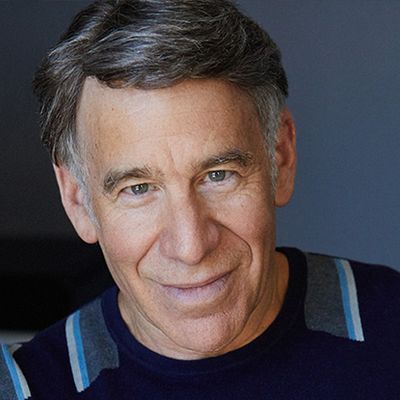
Join us for a captivating episode featuring the legendary Stephen Schwartz, the genius behind some of the music in Disney’s "Pocahontas," "The Hunchback of Notre Dame," as well as hit musicals such as 'Godspell' and 'WICKED'... Read More
From the show: The Theatre Thoughts Podcast
Guests
About
Join us for a captivating episode featuring the legendary Stephen Schwartz, the genius behind some of the music in Disney’s "Pocahontas," "The Hunchback of Notre Dame," as well as hit musicals such as 'Godspell' and 'WICKED'. Stephen's illustrious career, including the creation of "WICKED," is a testament to his brilliance and we're so excited to chat with him. Listen in as he discusses his history in theatre, adapting "The Prince of Egypt," and the musical resonance for audiences now captured live on screen and on demand.
🎶 Experience "The Prince of Egypt" Recorded Live from London's West End, available to rent or download from the 6th December, 2023.
Stream Now: https://www.theprinceofegyptmusical.com/
🔗 Gain exclusive access to full videos and premium content via our Patreon community for just $3/month.
Youtube: https://www.youtube.com/channel/UCR93_M-PPoNEGtRSc23sq4g
📱 Connect with us on Instagram @theatrethoughtsaus and @ttpod_official, and follow us on TikTok at Theatre Thoughts Australia.
Transcript
This transcript was automatically generated and might contain errors.
[0:00] Justin Clarke: In the spirit of reconciliation, the Theatre Thoughts Podcast acknowledges the traditional custodians of country throughout Australia and their connections to land, sea, and community.
[0:09] Justin Clarke: We pay our respects to their elders, past and present, and extend that respect to all traditional custodians of the land on which our episodes are recorded.
[0:22] Stephen Schwartz: The wonderful and amazing Hans Zimmer wrote the score that is the music that wasn't songs or derived from the songs. So we had a fantastic time working together.
[0:35] Stephen Schwartz: I mean, our answer's obviously amazing. And yeah, it's always surprised me how popular the animated feature was with kids. You know, it seems kind of adult to me, but I meet people all the time who tell me that it was their favorite animated feature growing up.
[0:59] Justin Clarke: You're listening to the Theatre Thoughts Podcast, your backstage pass to the world of theatre in Australia and beyond. I'm Justin, your guide to the drama, comedy, and pure magic of the stage from the heart of Australia to the grandest stages worldwide. Join us here for enlightening conversations, reviews, and behind-the-scenes stories from the artists themselves. Subscribe for your regular dose of theatre inspiration and consider supporting us on Patreon for exclusive content. Follow us on Instagram at Theatre Thoughts AUS and @ttpod_official, and discover even more over on our TikTok, Theatre Thoughts Australia. So join us as we raise the curtain on a brand new episode of the Theatre Thoughts Podcast.
[1:52] Justin Clarke: Welcome everyone to an extremely special episode of the Theatre Thoughts Podcast. I have with me a man who needs no introduction, but I'm gonna do one anyway. He studied piano and composition at the Juilliard School of Music and while in high school and graduated from the Carnegie Mellon University in 1968 with a BFA in drama. In 1971, he wrote the music and lyrics for Godspell for which he won two Grammys, among other awards. He's collaborated with Alan Mencken on Pocahontas, The Hunchback of Notre Dame, and Enchanted, as well as writing the music for The Prince of Egypt, and not to mention he's the writer of Wicked, which is currently playing in Australia. Stephen Schwartz, thank you so so much for joining us on the podcast.
[2:34] Stephen Schwartz: Good morning, Justin. Happy to be here. And hello, Australia.
[2:39] Stephen Schwartz: This is a pinch-me moment. When I got the email, I was just like, I'm sorry, sorry, what? I had to do a double check. I was like, yes, I'd very much love to talk to Stephen Schwartz. Thank you very much.
[2:49] Stephen Schwartz: Well, happy to talk to you. And you know, we're talking about this video capture of the production of The Prince of Egypt that was in the West End for about a year. And it's, you know, I'm a fan of the production, let's put it that way.
[3:05] Stephen Schwartz: Yes, I thought it was a beautiful production, so I'm excited that it's been captured on video and gotten out into the world and happy to support it.
[3:15] Justin Clarke: And of course, you worked on the film with Hans Zimmer. You know, so you've got a long history with it. And it was really weird because I got the link and I watched the production, and I felt like, to be honest, I felt like a kid again because I haven't seen it since I was a young boy. And like I knew, you know, the whole story of Moses and Exodus and everything, and the music of The Prince of Egypt, the film, was one of those ones that was just so elevated for a DreamWorks animated film. And it stuck with me. So when I was watching the recording and I was listening to, you know, Deliver Us and all the other songs in there, I was just transported back to watching it as a child. And you're right, it's an amazing production. I was gobsmacked.
[4:00] Stephen Schwartz: Thank you. Yeah, for those of your listeners who don't know, I wrote the songs for the original DreamWorks animated feature, which was in the late '90s. I think it came out in 1999 or something like that. Excuse me, it's early here in New York, so drinking my tea and clearing my throat. The wonderful and amazing Hans Zimmer wrote the score that is the music that wasn't songs or derived from the songs. So we had a fantastic time working together. I mean, Hans is obviously amazing, and yeah, it's always surprised me how popular the animated feature was with kids. You know, it seems kind of adult to me, but I meet people all the time who tell me that it was their favorite animated feature growing up.
[4:54] Stephen Schwartz: And I've asked consequently, I've asked why, because you know, I would expect it to be something more cartoony, but from what I'm told, kids like the sort of the reality of it that it deals with big issues and doesn't shy away from dark, you know, the dark part of life. And also I think they respond to the character of Moses trying to find himself and what is his purpose in the world. Yeah, I mean, that pleases me obviously a lot. And then I was very happy, as I told you, with the production of the stage show, which obviously has many more songs in it than the movie because it can be longer, and also gets into, I think, in a more complex way the relationship between the two brothers of Moses and Ramses.
[5:57] Justin Clarke: Yeah, I was gonna say, it really delves into it a lot more, and you really feel for Ramses more than I think you would in the film, because you know, he's given this role of being the pharaoh, he has to live up to his father, which is Moses needs to find who he is. So, and I think this is like what you do well with Wicked as well. You create really beautiful relationship dynamics between your main protagonists, and especially in their music and their big ballad numbers that really complement each other, which I think carries on with The Prince of Egypt as well.
[6:29] Stephen Schwartz: Thank you. Yeah, I mean, that's what's interesting to me is, you know, when I was a kid, my favorite musical was Rodgers and Hammerstein's The King and I, though obviously even though I'm older, I wasn't old enough to see the original production, but I saw revivals. And what I loved about that show was the relationship between the king of Siam and Anna, and that one wasn't a hero and one wasn't a villain, and it was a complicated relationship that was ultimately based on love, but wasn't simple, you know, good guy, bad guy. Obviously, that's what Wicked is about. And we tried to bring that approach to, you know, The Prince of Egypt as well. You know, no one is a villain to himself. You know, everybody, no matter how villainous we may think they are, has his or her own reasons for doing, you know, what they're doing.
[7:28] Stephen Schwartz: And we really did not want to make it the story of my god's better than your god. You know, we really wanted to make it the story of these two brothers who love each other but are trapped by their own destinies and their own responsibilities, and it causes them to have to be antagonists to one another.
[7:49] Justin Clarke: Exactly. Well, I'd love to, I'll put a pin in The Prince of Egypt for now because I'd love to delve into the man behind the music for a second. I'd love to ask you our one-minute theatre thoughts questions and say what comes off the top of your head. I'm just saying up front, these things make me very nervous because I never, you know, I always find the answers 10 minutes later. I'm like, ooh, I should have said. So just with that as a preamble, I will do my best.
[8:16] Justin Clarke: Excellent. All right. Well, let's have a look. So the first question is, what has been your favorite production you've seen recently?
[8:23] Stephen Schwartz: Well, I'm New York based, so I'm gonna talk about Broadway shows, which may not yet have gotten to Australia. There was a wonderful musical that opened last year called Kimberly Akimbo, that actually won the Tony Award, etc. And it's a really beautiful and quirky and quite touching show with great performances. And Janine Tesori wrote the music, and I'm a big fan of hers. So, you know, I really did love that. And yeah, I think in terms of musicals, that's been my favorite recent show that I've seen.
[9:10] Justin Clarke: Beautiful. Great answer. Okay. Name a production that's left you speechless. Doesn't have to be recent, could just be at any moment.
[9:16] Stephen Schwartz: Oh gosh, there are a lot of them. Yeah, I mean, off the top of my head, I would say two of them, one of them which is recent and is not a musical, but the production of Harry Potter and the Cursed Child.
[9:34] Stephen Schwartz: Yeah, I saw that this year actually.
[9:36] Stephen Schwartz: Yeah, I actually saw it, I've seen it three times, and I saw the full-length one where you went out to dinner between the part one and part two, and I thought that that is one of the best productions in terms of the staging and the design. That it was jaw-dropping to me. It's so good.
[9:54] Stephen Schwartz: And then going way back, I guess I would cite the original production of A Chorus Line because I'd never seen anything like it. And the first of all, the use of dance, but also the sort of reality of it was very influential on me. Some years later I did the show Working, and that was obviously very influenced by A Chorus Line. And yeah, just how much Michael Bennett and his team achieved with such simple elements, I thought was really dazzling as a production.
[10:32] Justin Clarke: Beautiful. I love that. It might be a bit of a tough one, this one, but I'd love to know what's the most rewarding show you've worked on.
[10:43] Stephen Schwartz: Oh, that's an interesting question. People always ask me my favorites, and I decline to answer those because I think that's a different question, and I don't like to get myself in between the audience and the work. But I think over time, the most rewarding show for me has been Children of Eden. It's a very meaningful show to me in terms of its themes and the fact that it took a while for my co-writer John Caird and myself to get the show right. We had a London try-out that didn't work initially. And then we went back and worked on the show over time, and you know, now it's become sort of this staple of musical theatre. But I think it was very rewarding to me to, for want of a better word, solve that show and make it work because I am very proud of my score for it, and I feel the themes are extremely relevant to what we're dealing with in our world.
[11:49] Justin Clarke: I love that. That's great. I love that you've gone, yeah, the rewarding, the challenges that you face, and that's like rewarding itself. Great. Okay, last one is, do you have or what is your all-time favorite musical?
[12:02] Stephen Schwartz: Well, I already talked about The King and I.
[12:04] Justin Clarke: Yes.
[12:05] Stephen Schwartz: And that remains my all-time favorite musical. You know, I talked about how the characters are portrayed, but also the score by Richard Rodgers, obviously Oscar Hammerstein's lyrics, but particularly the music for The King and I, and how Rodgers was able both to evoke a place like what was then obviously it's Thailand now, but what's then Siam, and still sound like Richard Rodgers. I mean, there's a direct line from the score for The King and I to the score for The Prince of Egypt, where my attempt was to achieve the exact same thing that Rodgers did to evoke the feeling of ancient Egypt and the Hebrew tribes, but also sound like myself at the same time.
[12:54] Justin Clarke: Excellent. Well, actually, that's a great segue because I was gonna actually talk about the music now for The Prince of Egypt. Well, thank you, first of all, for doing our Theatre Thoughts questions.
[13:02] Stephen Schwartz: I love that so much. Um, but what you just said about replicating and kind of being inspired by that music when I was listening to "The Prince of Egypt" in terms of the big musical version, I was listening to it and what you said about capturing Egypt and the vastness of it, it was reminiscent to me of some of the music that was in "Miss Saigon" in terms of the vastness of the situation that the characters found themselves in, especially with "Deliver Us" as this big powerful opening number. And I was just like, it's yeah, it's like I just had flashes of "Miss Saigon" because I was like big, beautiful, punchy vastness of the entire space. And I'd love to know, like when you were working on this music, what were the influences for you to get all these other songs? Because obviously you worked on it way back in 1998, 1999, but adapting it to the stage would have been a very different task altogether.
[14:00] Stephen Schwartz: It was, but I returned to the same sources that I used. Uh, you know, obviously my research from when I was doing the film, I didn't throw it away. So I still had it, and you know, I had recordings of ancient Egyptian court music. How anyone knows what it was, I don't know. But apparently someone did some research and recorded what they could find. Um, I have recordings of, you know, Hebrew lullabies and music from that period. I mean that part of the world, and also frankly, sort of pop, um, some sort of pop records that I got when I was on my trip to Egypt and kind of bought on the streets of Cairo. Um, you know, just to try and get that flavor. And the, you know, obviously with a movie, you can have a 90-piece orchestra.
So you're not able to do that in a show, but we wanted to get the epic quality that the score for the movie had. Um, Justin, that you were just talking about. Um, and the orchestrator, uh, August Eric Smullen is a guy who's extremely good with bringing authentic kind of ethnic instruments in. He did the orchestrations, for instance, for "Come From Away," where he got kind of Northern Canadian side. He's very good at interpolating authentic instrumentation into his score. And um, and so he did that as well with the orchestrations for "The Prince of Egypt." So there are a lot of authentic Middle Eastern instruments, particularly percussion instruments, but some wind instruments as well that are used as part of the orchestra.
[15:53] Stephen Schwartz: Actually, I have some notes here. So, uh, because I was gonna mention that. So you've got, um, include, and I'm gonna get these names wrong, and I'm gonna be so embarrassed. A bazook, a duenbeck, and an ood. Um, that's right. Yeah, so you have those right, by the way.
[16:09] Stephen Schwartz: Yeah, all three of those are pronounced correct. Excellent. Thank you. Um, yeah, and so those influences really came through, especially in the numbers like when Moses goes to the desert, and those influences start to like come into it and you can hear it, which I love. Um, but I'd love to give just, uh, I want to read through some of these because when I was watching it, I didn't quite like I took in how vast the production was, but when you read some of these facts, I was like, this is a big production.
[16:35] Stephen Schwartz: Yeah, it's very big. So it's a company of almost 60 artists, it includes fire effects, illusions, pyrotechnics, performers flying, you've got projections, more than 50 makers, milliners, and sewers were involved in producing over a thousand individual costumes, headdresses, jewelry, pairs of shoes, and wigs. It is a big production. And I think it's the only way you can tell this story as well.
[16:59] Stephen Schwartz: Yeah, it's a big story about big events and people dealing with huge emotions. Um, you know, we were in a big theater, you know. We were in the Dominion Theater in London, which is vast, and we had to fill that theater. And I just think the design, I hope it comes across in the video capture of it. You know, it's hard because I know what it looked like on stage, yeah, and it was kind of jaw-droppingly beautiful.
[17:32] Stephen Schwartz: Yeah, um, I think you can see it because there are a lot of, you know, long shots of camera, and you get a feeling for what it looked like on stage. But it was pretty amazing to see because it went out into the house and kind of enveloped the audience as well.
[17:49] Stephen Schwartz: So, um, yeah. That's beautiful. And I think you can tell, you can tell especially by the sheer number of the ensemble that are in it and the body work that goes into it, I thought was so, so clever because you could have done projections, you could have done, you know, sets, but the ensemble themselves make like the burning bush, they make the trolleys that the slaves pull the bricks on. It's very clever, and um, I think it adds some themes to it as well in terms of I agree.
[18:16] Stephen Schwartz: Yeah, yeah. Sean Cheesman did the amazing choreography. Uh, Scott Schwartz is the director, and together they came up with this concept that since there were laborers who were doing all this work, you shouldn't use like machinery that just, you know, or as you say projections, but you know, the use of dancers' bodies should create the Nile and the sands of Egypt and the, you know, the stones of the desert, as you say, the burning bush, this is all created with dancers, and yeah, I had never quite seen anything like it. I thought it was pretty amazing.
[18:55] Stephen Schwartz: Yeah, definitely. Well, I'd love to jump back a bit, and I'd love to ask the tale of how it came about. How did you know this land on your desk and said we'd love to do the stage adaptation?
[19:06] Stephen Schwartz: Well, for years, I and, uh, I personally, but also DreamWorks the company, kept getting requests for um to be able to do a stage version of the show, and there were sort of groups doing it illegally. When I was in Denmark working on something, um, the uh book writer for "Prince of Egypt," Philip Lisevnik, who lives in Denmark said I hear this they're doing a stage version of "Prince of Egypt" over in Sweden. Should we go over and take a look at it? And you know we did and they're, they you know just were making up their own version. And so you know we got in touch with DreamWorks and we said well we should probably do something about this so that if people want to do the show there's actually a real show for them to do.
[19:57] Stephen Schwartz: And meanwhile DreamWorks have been considering doing putting together a stage version just as I say because they're getting so many requests. What's so great now is that um the MTI, the licensing company, is putting together the show um so that it can be licensed if you want to do it in your school, if you want to do it in your, you know, home theater or whatever very soon you'll be able to and now there's both the cast recording of the songs but also now this video recording to help people get an idea of oh these are some things you could do I mean obviously in a school they're not going to do a production the size of the stage but they can be inspired by that and make their own choices.
[20:51] Stephen Schwartz: So you know I'm excited that along with this video being put out there um the ability to license the show is also being made possible.
[21:01] Justin Clarke: Yeah, definitely. Um, a question I'd love to ask. I know we're heading towards the end of our time um but I'd love to ask you a question I asked um everyone on the podcast because everyone always comes different.
[21:12] Stephen Schwartz: It's not like off the top of your head. I get intimidated by these things.
[21:18] Justin Clarke: Yeah.
[21:19] Stephen Schwartz: I'll ask him, we'll see how we go.
[21:20] Justin Clarke: So I'd love to know how you think the theater industry's changed over the years and how those changes have impacted the work that you do and the work that you create.
[21:31] Stephen Schwartz: Okay, I mean I think it's changed in some positive ways but also some not good ways um just to be brutally honest at least again I work in New York principally Broadway theater but also, you know, see what goes on in the West End of London and it I understand the reasons for this but I feel there's an awful lot of playing safe. There's an awful lot of oh we can only do something pre-sold um now admittedly we're talking about "Prince of Egypt" which was a title that people wanted to see so in a way this falls into that category although we tried to do some dangerous things during the production you know so it wasn't uh um you know simply pick it up from the animated feature and put it down um but I try not to let that um philosophy impact what I do I try to keep dealing with subject matter um that's unusual and maybe you wouldn't expect it um but it delves into things that are, you know, it's not just a jukebox musical in other words.
[22:47] Stephen Schwartz: Um, not to put those down. Some of them are excellent, some of them not so excellent. But you know, there's some good one, good jukebox musicals. Yeah, I still respond to I mentioned "Kimberly Akimbo" to you before, which is an interesting weird play. Um, that got converted into an interesting, weird musical with a very original score, and that's still what I respond to the most.
[23:11] Justin Clarke: That's great.
[23:12] Stephen Schwartz: That's so good.
[23:13] Justin Clarke: Yeah, I find it because I was really interested to ask that question because obviously you've had, you know, such a career working with so many people in so many different facets of, you know, the entertainment world. So yeah, so I was uh when I was thinking about that question, I was like, what is he gonna say? Like, how can I ask them this question? Um, so yeah, thank you so much for that. I think it's very enlightening to see um to see your thoughts on it.
[23:35] Stephen Schwartz: Thanks.
[23:36] Justin Clarke: Excellent. Um, well, I know we're at the uh end of our time. Um so I'll I'll uh wrap up the episode there. But before you go, I'm wondering if you can do me a favor.
[23:45] Justin Clarke: I'm interviewing uh Sheridan Adams and Courtney Monsma next week, who are playing yeah, Elphaba and Glinda in "Wicked."
[23:53] Stephen Schwartz: Exactly.
[23:54] Justin Clarke: It's yeah, so amazing. And I'm sure you've sent out a message, or if you haven't, I'd love for you to say a quick hello so I can be like, oh yeah, who says hi.
[24:03] Stephen Schwartz: Yeah, please tell Sheridan and Courtney, I said my very best. I am really I'm in the midst of a uh workshop for a new show, as I mentioned to you here in New York, and it was why I couldn't get down there for the reopening of "Wicked" in Australia. But I love going to Australia and I love having an excuse to get there. So I I'm determined to get down there to see them in person during the run, and of course, my best to them and the entire company of "Wicked" down there.
[24:32] Justin Clarke: Definitely. And I'm sure we could go an entire tangent about the upcoming film, which I'm also that we were talking about the other day, which is a whole nother podcast episode entirely.
[24:40] Stephen Schwartz: We'll do another podcast about that.
[24:42] Justin Clarke: So maybe I'll see you next time we talk about that one.
[24:45] Stephen Schwartz: Fantastic.
[24:46] Justin Clarke: Okay. Well, Stephen, thank you so much for your time today. This has been um surreal to to Buddha.
[24:51] Stephen Schwartz: Thank you.
[24:51] Justin Clarke: No, it was really fun for me. You ask fun questions, and in the end it wasn't too intimidating.
[24:56] Stephen Schwartz: Excellent.
[24:57] Justin Clarke: Alright, well, thank you so much and enjoy the rest of your day and um good luck with the workshop.
[25:02] Stephen Schwartz: Thank you very much.
[25:06] Justin Clarke: A massive thank you to Stephen Schwartz for joining us as our guest on this week's episode. Thank you to Carly Lincoln from Nixco for helping to organize this episode. "The Prince of Egypt," the musical filmed live on London's West End, is now available to stream on digital. Head to the Prince of Egyptmusical.com for more information. This episode was produced by Echidna Audio. Follow them on Instagram at Echidna Audio for all their audio services. Once again, if you enjoyed our podcast, leave us a review wherever you get your podcasts and head to the link in this episode's description for our Instagram account, TikTok, YouTube, and Patreon. My name's Justin Clarke, and I'll see you next time here on the Theatre Thoughts Podcast.
© Broadway Podcast Network, All Rights Reserved