

In this week's special episode, Joel Crump is chatting with acclaimed scenic designer David Korins! David has received a 2024 Tony Award nomination for his exceptional work on the groundbreaking musical Here Lies Love... Read More
From the show: The Weekly Dose of Joel
Guests

Featured Shows




About
In this week's special episode, Joel Crump is chatting with acclaimed scenic designer David Korins! David has received a 2024 Tony Award nomination for his exceptional work on the groundbreaking musical Here Lies Love. Known for his innovative and immersive designs, David has also created stunning sets for Broadway hits like Hamilton, Dear Evan Hansen, and Beetlejuice. Join Joel as he delves into David's creative process, his former works, and his thoughts on the future of set design. Don't miss this insightful conversation with one of Broadway's most visionary talents!
Indulge in Broadway buzz like never before with "The Weekly Dose of Joel: Everything Broadway and More." This podcast, brought to you by the Broadway Podcast Network and Broadway Time, delivers the latest news, theater history, and exclusive interviews with Broadway stars, all in one podcast! Don't miss out on your front-row seat to the magic of Broadway!
Transcript
This transcript was automatically generated and might contain errors.
[0:00] Joel Crump: What's up? I'm Joel Crump. Welcome back to another episode of the Weekly Dose of Joel Podcast.
[0:06] Joel Crump: I'm so excited to be speaking with one of this year's Tony Award nominees and one of my favorite set designers, David Korins. This year, he was nominated for Best Scenic Design of a Musical for his work on Here Lies Love. This is his fourth Tony Award nomination, having been nominated before for his work on Hamilton, Beetlejuice, and War Paint. You won't want to miss our conversation as we dive into the set creation and aspects for Here Lies Love, which was the first show to ever gut a Broadway theater and redesign it into a dance floor. I had the chance to experience it and it was magical, so I am thrilled for you all to hear about it right now. So without further ado, let's get on to this week's episode of the Weekly Dose of Joel.
You guys, the Tony Awards are almost here and let me tell you, I am over the moon. This is the event we've been waiting for all season long and let me tell you, this has been the longest season on Broadway ever with all the different opening nights and, you know, all the different award shows building up to the Tony Awards, but I'm very excited for the performances to see who wins and to honestly just be there with that one night celebrating Broadway magic. But I wanted to run it back and talk to one of the creative team members for a show that I loved very much this season, which was Here Lies Love. You know, I've been shining the light on the actors and all the people on stage and the Tony nominees for the past couple of weeks and I wanted to talk to somebody who was behind the scenes, who worked behind the curtain, and I feel like David Korins is the perfect person to talk to.
You guys, this guy has worked on 24 Broadway shows. I mean, that is crazy. I'm just gonna list off a few, but he has worked on so many Broadway shows and I love each one of them. This season he worked on The Who's Tommy, Here Lies Love, and Just For Us. I mean, three shows in one season. He worked on Beetlejuice, Mrs. Doubtfire, Bandstand, Dear Evan Hansen, Hamilton, Motown, Bring It On, Godspell, The Pee Wee Herman Show, Passing Strange. He's done it all, you guys. And he also does set designs for movies and museums. I mean, David is a legend. And I just want to let you guys know that you might hear a little bit of background noise during the interview. David is very busy and I actually messed up our original time when we were supposed to do the interview, and so he carved some time out of his very busy schedule to do this interview.
And, you know, when you are super busy doing incredible work like David does, you're going to be traveling. And so he was in the airport on his way to go do a design for a new movie. And, you know, he's going to be back in New York for the Tony Awards. It's just back and forth. But when you're so talented like David is with his scenic design, it's going to be a wild schedule. And I'm so glad that David carved some time out for me to chat with him today. So get ready for my chat with David Korins. What's up, you guys? I'm very excited to be talking to David Korins today. I have admired his set designs for a very long time. And this year, you were nominated for Best Set Design of a Musical. To start off, David, tell me how does it feel? How do you feel?
[2:54] David Korins: I feel great. I mean, I've been nominated before a few times, but every time is very, very different. And to have the show, you know, because the show is closed, to have the show remembered feels extra, extra sweet.
[3:12] David Korins: Yeah, let me tell you, and it was nomination day. Me and my mom were sitting together watching the nominations. And when we saw Here Lies Love come on the screen a couple of times, we were just thrilled because it was so special. And when we went, we sat in, you know, there was, of course, the standing area and then the mezzanine and then the sides. We were sitting on the sides and it was spectacular. I mean, we were able to see the people enjoying it on stage and then see the mezzanine in every aspect. Just take me back because I know this has been a 13-year process for you. Take me back 13 years ago. What was the initial idea for the set design for Here Lies Love?
[4:47] David Korins: Well, so, you know, the original, original idea came from David Byrne himself. He was at Studio 54, you know, 30 some odd years ago and saw a pop-up performance of a performer in the middle of a crowd on a platform. And he filed that kind of away in his mind, thinking that's an amazing way to see a show. Right? Then he did a bunch of research on Imelda Marcos and realized that she had this like extreme affinity for discos and for nightclubs. And he kind of married the two ideas. And so when he came to Alex Timbers, the director, and myself, he said, I know this sounds crazy, but what would happen if we like did it somehow in a club experience? And so, you know, 13 or so years ago, Alex Timbers called me up and said, David wrote this musical.
I want to try and figure out if this idea is even possible, if we could put performers in and amongst a crowd of people. And so we did an entire workshop just trying to figure out how people might move through the space. And then we did, of course, four other productions on our way to Broadway.
[5:00] David Korins: Well, it's changed a lot, right? So at Mass Mocha, which is where we did our first workshop, it was just people standing on the floor trying to figure out if we can move platforms around and what that would be like, and just the proportionality of how high do those platforms need to be? How low do they need to be sight lines looking over other people standing? Then we went to the public theater and there was about 100 people standing on the floor and about, you know, another 50 or so up sitting looking down. And then it took years and years and years to find the right Broadway theater that we could actually do it and the right producing team and the right theater owners that would say yes. And it was the Broadway theater.
[5:55] Joel Crump: Talk to me about that transition to what we came to Broadway.
[6:40] Joel Crump: Yeah. So I was, I recently was back at the Broadway theater, and the Broadway theater for Here Lies Love, obviously, and that was my first time there. And then I went back to go see The Great Gatsby. And I, like me and my mom, it's very different, isn't it? I'm just like, what's going on? I remember sitting when we were going to see Here Lies Love and seeing the proscenium and kind of thinking, okay, this is what it's like. But it was so completely different. What was it like for you stepping into the Broadway theater before transforming it and then after being in there and just seeing the differences? Because for me, it was just I couldn't even comprehend or understand it.
[7:13] David Korins: Yeah. So I mean, first of all, I had seen shows in the Broadway theater, including, you know, Miss Saigon. Ironically, Leah Salonga, who was in our show, was also in Miss Saigon. And there were two some pretty intense helicopter moments. You know, it was sort of an out-of-body experience to be able to get to be trusted to do that kind of a theater transformation. You know, Alex and I had a lot of pinch-me moments where we looked at each other during the process and thought, I can't believe they actually agreed to this and they're letting us do this thing. And we were able to take out all of the seats of the entire orchestra. But we also built this, you know, 60,000-pound structure inside of the building.
And it was like the most extraordinary thing. And the seats were all replaced, as you know, because you saw Gatsby. But it was so amazing whenever you get trusted to do something that dynamic and that big of a swing, you know, it was really one of the artistic high points of my career.
[7:18] Joel Crump: Wow. And so, you know, this season, you did Here Lies Love and Just For Us with Alex Edelman. Oh, my God, I forgot. And those were all on the same time, right?
[7:32] David Korins: Yeah. So what was it like bouncing between all three of these shows? Because they, you know, Who's Tommy is massive, as well as Here Lies Love, which is super massive. And Just For Us, it was like bouncing back between, you know, it sounds corny, but like a dream come true. Right? Like, totally.
[7:58] David Korins: You know, if you get to work on Broadway at all, it's an incredible experience. If you can do it a couple of times in one season, it's like mind-blowing. You know, the thing about Tommy is we worked on it for five and a half years. So and we had a very successful production in Chicago last summer. And so we were sort of transferring the Chicago production into New York. I mean, we added some bells and whistles, but it was kind of transferring that. If you realize love we had, you know, as you know, worked on it for 12 and a half years, 13 years. So we were really, we were in the thick of it trying to put that thing up and because it was, you know, it's probably the same linear square feet as like five productions of Hamilton, you know, it is so big. So in a way, it was really pretty remarkable to be able to do all three of those things in one season. And, you know, they're also different, which is good, because those stories are all very different.
[9:02] Joel Crump: So, you know, the title scenic designer, what does that mean? Because I was wondering, like, of course, that's the set that's, you know, what you're seeing on stage. But is that also like the tables or the chairs and the couches? Talk to me what that is.
[9:16] David Korins: I used to tell my parents when, you know, early on in my career, when they were like, what do you do? And I would say, like, basically, if you rip the ceiling of the theater off of the building, and you turn it upside down and dump it out, everything that falls out that's on stage, it's not an actor is what I make. Wow. So that kind of, you know, sums it up a little bit.
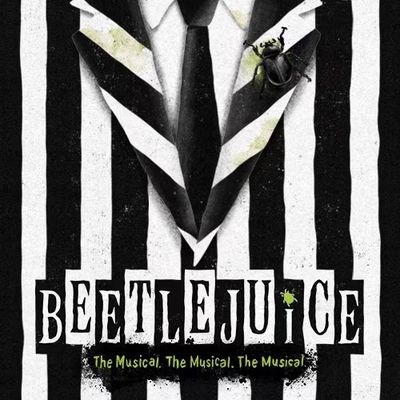
[9:34] Joel Crump: Yeah. So I mean, a show that I will always love is Beetlejuice. I'm kind of in that generation that brought Beetlejuice back to life. You know, we all love Beetlejuice. And when I saw set pieces like the couches or like the chairs and the tables, it was just magnificent. Talk to me about what it was like designing stuff for Beetlejuice.
[9:50] David Korins: You know, Beetlejuice, I was a huge fan of the movie, really all Tim Burton things. So to get a chance to do that show was really remarkable.
[10:33] David Korins: An ambitious show I had never designed until Here Lies Love. Because, you know, the thing about Beetlejuice is there was a light, a special effect, a magic trick, a piece of scenery, a speaker in every single piece of scenery. You know, but Here Lies Love, just from the real complications of making a piece of architecture that the audience had to sit on and stand inside and look into and sit under was so unbelievably complicated that it took something like Beetlejuice and made it look relatively easy. Right. And, you know, you talk about all those moving parts. Of course, the show is unfortunately closed now, which I mean, if you guys weren't able to see all those on Broadway, you missed out because it's one of the best theatrical experiences I've ever had.
[11:17] Joel Crump: Oh, sweet. Thank you. What it was like stepping into the theater and going up to the floor or going to the mezzanine. Talk to me what that experience was like, because for me, I remember what it was like for me and it was life changing. Talk to me about that.
[11:31] David Korins: Yeah. Well, you know, getting to stand on the floor, first of all, you know, on Broadway, there's a trend to do like environmental theater. Right. So people are wrapping designs around that. We've certainly seen people breaking the fourth wall. We've seen, you know, stages built out into the audience and we've seen audience sitting on stage. But what has never happened before in the history of Broadway is 315 people standing up and moving around during the show. Right. And so what it felt like was you were like, wait a minute, am I standing on the stage? Am I standing over where the audience would be? And we've completely broken the fourth wall. And those 315 people got to see a theater in ways that you like, even as a performer, you would never see it.
Or as an audience member, you certainly would never see it. And they moved around during the show. Right. So I think, you know, I mean, the feedback that we got from people that have that experience was just, you know, completely unique. Right. And like you said, it breaks the fourth wall. It blurs the line between the performers and the audience. You know, how did this interactive aspect influence your set design?
[12:40] David Korins: The thing about our show that I'm so proud of is this is not a concept that was layered on top of the show. It's not like Here Lies Love existed. And then they were like, oh, we've done it in the proscenium. Let's do it in the round or something like that. This was the way that David and Alex conceived of the show. Right. And so, you know, I'm really proud of our producing team that they not only tried to honor the thing that we had made, but they had the audacity to be like, let's do it. Like, let's do it the way that you guys want to do it. And let's really try and move the needle forward for all theatergoers.
[13:18] Joel Crump: Can you highlight a few key features or moments in the set that you were particularly proud of?
[13:26] David Korins: A couple things. Yeah. Like one is after all of the crazy things that happened to the show and right people on the floor are cast as funeral goers and people who go to the wedding and people protest and at an election at the end that funeral moment where everyone parts and we have this massive multi-ton piece of scenery that tracks all the way, you know, 75 feet across the floor coming inches away from audience members with the funeral procession on it with those that gorgeous song by David. That to me was one of the most cathartic and emotional moments I had ever seen in the theater, let alone be part of it was so beautiful and stunning. Because it's one thing to move scenery near actors. It's another thing to move scenery through audience members like that.
And then the other moment is the final moment of the show really where we where we fly out all of the back wall of the scenery. And you see all the way to the back wall of the theater. And there was that mural. And that mural was hand painted by a Filipino street artist that we found. And it was just such an extraordinary moment where we were all together as one community on the floor on those side galleries in the mezzanine wherever you were. And you were we were all there as a community. And it was I thought like a beautiful, very poignant moment about the fragility of democracy and how important people's voices are. And those two moments in the show, you know, stand out for me.
[15:02] Joel Crump: Right. And, you know, now that you bring it up, it's all coming back to me. And there were so many magical moments, because everything kept on changing. And it's, it's honestly like one of the first times I had an experience like that in the theater, which made it so magical. So thank you.
[15:18] Joel Crump: Yes. So, as you know, right now, we have a ton of adaptations on Broadway. I mean, we have The Outsiders, The Notebook, all these movies that are being turned into musicals. And you actually did Mrs. Doubtfire, which was an iconic movie, and then a Broadway musical. I don't know what's your dream movie that you'd want to do a set design for?
[15:32] David Korins: I feel like that's a trick question, because there are a lot. Oh, man, you know, I have to say, I have just been asked to do a musical based on a movie, which I am not going to announce today. But I will tell you, it was a it was a dream of mine, like really and truly. Yeah. And I just got hired to do it. And so not next season, but the season afterward, you're going to see it. And it's it's a it is a dream come true.
[16:11] Joel Crump: Wow. And so two years from now, you know, when it's two years from now, I'll come, I'll come on to this show. And I'll be back here. And we're gonna have an exclusive interview talking about this new set. I'm already excited. And for you to say that it's something you've been dreaming of for a long time. And now it's happening. I mean, that's why the movie is one of the most kind of iconic and theatrical and spectacular things. And it's like begging to be turned into a musical. And in fact, it is. Are you enjoying my interview with David? I hope you are because I had a fantastic time chatting with him.
[16:47] Joel Crump: But before we get back to the chat, it's time for a quick break.
[16:52] Joel Crump: Now it's time to return to my interview with Tony award nominee David Lawrence. Okay, so now we're gonna play a quick game. Okay. And I'm gonna list awesome shows that you've done on Broadway. And I just want you to shout out your favorite aspect, either set piece or design that you remember having. Okay. This is Doubtfire.
[17:01] David Korins: Seeing Rob McClure go from, from his, from his character to Doubtfire to his character to Doubtfire of Vista watching that transformation happen. Those costume changes were unbelievable.
[17:30] David Korins: Beetlejuice, the fans, the fans and Beetlejuice showing up in like cosplay and going ham on like, you know, dressing up and like making every night a party.
[17:39] David Korins: Yeah. Andy Blank and Bueller's extraordinary choreography. There's that moment where they push all the soldiers are like battling PTSD and they push the piano slowly in slow motion across stage. And it's like one of the most exquisite stage pictures I've ever seen. Right?
[18:05] David Korins: War paint. Bottle, a wall of bottles. And, and in that unbelievable. Elizabeth Arden pink.
[18:16] Joel Crump: Yeah. Dear Evan Hansen.
[18:19] David Korins: Oh, man, I remember seeing Ben Platt do a reading of that show. No scenery, no nothing, just did a reading of it. And I thought, Who is this guy? And I cannot wait to see him do that role. And then watching him grow as a performer. Every night.
[18:34] Joel Crump: Annie, I had a kid who was like in the, you know, you know, in kindergarten, and thinking like, I'll be the coolest dad in school, getting to bring her getting to bring her class to see to see Annie was really pretty amazing.
[18:54] David Korins: Had to be a fun experience. Totally.
[18:58] Joel Crump: Bring it on.
[19:04] David Korins: I'm seeing half the cast learn how to do cheerleading stunts, and half the cast learn how to act and sing. And seeing a perfect melting pot of that was so cool. And the same thing with the composers seeing multiple composers come together to make a score. Really cool total melting pot experience.
[19:17] Joel Crump: Wow. And evening with Patti LuPone and Mandy Patinkin.
[19:23] David Korins: Oh my god. I got to watch Patti LuPone sing Rose's turn in an empty theater warming up with no one there but with hair rollers and her hair, wearing a pair of slippers and a bathrobe. And it was one of the greatest experiences I've ever had in my life.
[19:40] Joel Crump: Oh my god. I'm so I'm so jealous right now. Let me tell you. I love Patti.
[19:45] David Korins: Gatsby. Oh man, trampolines in the floor, raining water in this down from the ceiling. Total like jungle gym for that cast.
[20:04] David Korins: The Pee Wee Herman show. Getting to find a way to take something.
[21:07] David Korins: Ever and doing it and that means the design that means the first all Filipino cast on Broadway and that means like pulling together that length of time and executing it.
[21:22] Joel Crump: You really have worked on some of the best sets and the best shows on Broadway.
[21:27] David Korins: Oh well, yeah. It's really, it's a really cool list and it's very, very, very special to me.
[21:38] Joel Crump: Yeah, and I mean like moments like working with Patti LuPone or moments like doing the Pee Wee Herman show for Hamilton or even doing Here Lies Love. Do you ever have moments where you're sitting in the theater seeing your set and thinking like, wow, I was able to design this and work on this?
[21:51] David Korins: All the time. All the time. It is not lost on me how special this is, how special the collaborations are, how special the processes and the final products are. I mean, I feel so grateful to be able to get to do what I do. I'm telling some of the best stories in the world with some of the most talented storytellers in the world.
[22:17] Joel Crump: Right. Okay. And so I also, because as you were answering, I realized it's a lot of collaboration with the other people in the creative team. How do you work with them to make sure that your vision is told, but also the directors and the songwriters and everybody else's vision is told as well?
[22:33] David Korins: Well, you know, designing is redesigning and really designing is learning how to communicate just three dimensions. And so it's all about the conversations. It's all about conversations. It's all about sketches and renderings and models and using those things as tools to try and like, figure out like, am I close? Do you like this? If you don't like it, what about it? And it's both like understanding what people want and what they hope and what they dream and what they want people to feel like, and then finding a way to like put it in here in my mind and then kind of like mash it together and then figure out a way to like actually make it in three dimensions. Those ideas on stage are not mine alone. They're all, they all come through a series of collaborations with other designers, with other members of the creative team, writers, directors, and I'm like the set design, you know, the ultimate set design is just sort of a vessel for everyone else's like big ideas.
[23:29] Joel Crump: Right. Now we're going to do some rapid fire questions. These are just some fun questions. I'll match you. Okay. Favorite set design not designed by you.
[23:38] David Korins: Oh, man. I saw War and Peace at the Met like 20 years ago, designed by George Sepin and it was crazy. It was like a cannon on stage that went off. I mean, it was crazy.
[23:54] Joel Crump: Wow. Most challenging set you've ever worked on.
[23:58] David Korins: Here Lies Love.
[23:59] Joel Crump: Of course. Favorite musical of all time.
[24:08] David Korins: I guess I gotta give it up to Hamilton.
[24:11] Joel Crump: Wow. Wow. Favorite cast recording.
[24:14] David Korins: Ooh, man. I used to mow my lawn when I was a kid to basically every cast recording you could ever imagine. And when I really go back and choose, I can't choose one, but I gotta tell you, I like, I listened to, I wore out, I mean, back in the day I had a tape recorder and I wore out those tapes.
[24:36] Joel Crump: I love it. Most memorable backstage moment.
[24:39] David Korins: I have thousands. I will tell you, just popped into my head because we're talking about Patti LuPone. There was one time, and this is not a happy one. There was one time where we were doing a scene changing in Warpaint and she got caught and she almost got completely like pancaked. She jumped onto a moving platform, but I heard her scream and it wasn't a pretty note. And we were all like, oh my God, she's going to kill us. She's going to kill us. But I heard her scream and it wasn't a pretty note. And we were all like, oh my God. And for like 10 seconds, we were like, did we kill Patti? We didn't kill Patti. But that one pops to mind is, you know, you don't want to get even close to killing Patti. Especially not Patti.
[25:19] Joel Crump: Especially not Patti.
[25:20] David Korins: No, no.
[25:21] Joel Crump: Favorite city to work in other than New York?
[25:25] David Korins: Theater?
[25:30] David Korins: You know, Chicago and London do really well.
[25:33] Joel Crump: Yeah, yeah. Most unusual material you've ever used in a set design?
[25:40] David Korins: Oh, interesting question. Oh, wow. Gosh, I'm trying to think of like what I haven't used. You know, what pops to mind is water. Although that's not that unusual these days, but certainly water adds a complexity to it. And I've used water many times. So I'll go with water.
[26:05] Joel Crump: Yeah.
[26:05] David Korins: Kind of a lame answer.
[26:06] Joel Crump: Yeah. No, no. But I feel like when you, especially like for like Godspell, like back then it wasn't seen as much. It was new then.
[26:13] David Korins: Yeah. Yeah. You know, yeah. Add water. It's complicated.
[26:17] Joel Crump: Yeah. And then lastly, best architectural design for you?
[26:21] David Korins: Oh, wow. Well, I mean, I've got to say Here Lies Love only because we worked alongside Mitchell Crookston Architect and McLaren Engineering Group for thousands and thousands and thousands of hours. I could say, you know, I've made pretty architecture. But once you've done projects where you actually need architects, the pretty architecture thing goes away. Here Lies Love needed real architecture so that things didn't fall down and go boom, and that people could actually get out of the theater in case of emergency. We added, you know, elevators and ramps and fire egresses. And we, you know, doors on the side of a building and escape stairs and all sorts of things. So that is an architectural marvel in the theater world.
[27:07] Joel Crump: Yeah. So you killed Quick Round. I mean, those are some of your questions ever asked in Quick Round. And you had all the best answers. The last thing I always like to end on is what advice would you give to an aspiring set designer that wants to design sets on Broadway or in general in theater?
[27:27] David Korins: Two things. First of all, there is no magic shortcut. Hard work. I am not the best set designer. I'm not even in the top 50. I work really hard. Yeah, really, really, really hard. Hard work. Be honest with yourself about what your strengths and weaknesses are and work on those weaknesses. And then study with people, see work, and ask people who you respect to begin work with them.
[27:57] Joel Crump: Yeah, I love all of that. You know, and you say I'm not the best set designer. And in my opinion, I'm speaking to one of the best set designers on Broadway.
[28:06] David Korins: Oh, that's sweet. Thank you.
[28:07] Joel Crump: Ivy, thank you so much for doing this interview with me. You guys, his set design for Here Lies Love was incredible. It's Tony nominated. And Who's Tommy? You can go see that on Broadway. But David, I really appreciate you spending time with me today. And I can't wait to see what you do next, especially two years from now.
[28:23] David Korins: I appreciate it. I hate that I had to bring you into the airport with me. But you know, I'm going to LA to do a very secret project. So maybe I'll let you know about that in two weeks.
[28:34] Joel Crump: I love it. Yes.
[28:35] David Korins: It's great to meet you. Thanks for having me.
[28:38] Joel Crump: What a fantastic chat with David Korins. It was such an honor to interview him. Like I said, I've seen him on many red carpets before, but this is my first actual time talking to him. And this is the perfect way to talk to him about Here Lies Love, a show that I love so much, and about his upcoming Tony Award nomination. And, you know, the big day's almost here. We will see what happens. I have my predictions set in my mind. And let's just say I am rooting for Here Lies Love, another show I'm rooting for that has already closed its dodges African hair braiding. I'm hoping that those shows that, you know, already had a life on Broadway are still remembered. And I'm also hoping that all the people that have been working hard all season get remembered.
You know, Broadway, getting shows to Broadway is so hard. And so it's so awesome to see that these shows are still getting the recognition that they deserve. But the Tony Awards are on June 16th at SoundCBS at 8 p.m. You don't want to miss it. I'm so glad I've been able to bring you guys along the road for the past month on coming to the Tony Awards nominations press day, interviewing some of the Tony Award nominees and bringing you to the other award ceremonies like the Chita Rivera's and the Lucille Hortel. I've had the best time ever. And let's get ready for the Tonys this Sunday. I will see you next week with a Tonys recap. We're going to have a big, deep dive in talking about all the wildness that will happen because I'm telling you, it's going to be wild from the performances and the winners of the speeches, everything. It's going to be the best time ever. But I will see you then for another weekly dose of Joel.
© Broadway Podcast Network, All Rights Reserved