

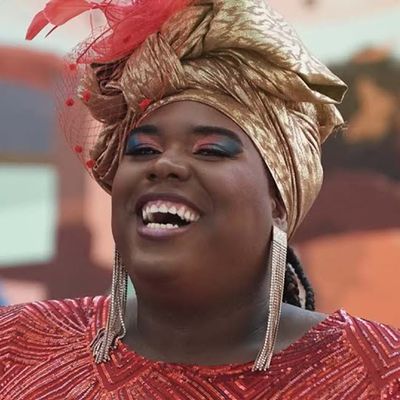
The incomparable Qween Jean, costume designer and activist, sits down with Harrow and Meghan to talk activism, theatre design, and hopes for the future of queer liberation... Read More
From the show: Thesis on Joan
Guests
About
The incomparable Qween Jean, costume designer and activist, sits down with Harrow and Meghan to talk activism, theatre design, and hopes for the future of queer liberation. We discuss designing for revivals versus new work, what makes a good collaborative relationship, not living with the rules, and creating freedom for the stories of BIPOC artists to be told without relying on adjacency to whiteness. In a relevant and prophetic conversation, Qween Jean breaks down the wars we are facing today that we can’t ignore, the direction towards real equitable change, the need to uproot and reimagine failing systems, multiple ways to support Black Trans folx, and the way for everyone to have the chance to rise.
Check the show notes to find out more about Lavender Men by Roger Q. Mason playing this Summer at Skylight Theatre in LA and streaming.
Qween Jean: Website | Instagram
Episode Mentions
- Lavender Men by Roger Q. Mason
- soft at MCC
- Stonewall Protests
- Bridges4Life
- GLITS
- Black Trans Travel Fund
- For the Gworls
- Black Trans Femmes Artist Collective
Queer Culture Recs:
- Queer Cook Outs!
Queer Gives:
Episode Credits:
- Edited by Meghan Dixon
Thesis on Joan:
Transcript
This transcript was automatically generated and might contain errors.
[0:07] Harrow: Hello, welcome back, queers.
[0:10] Harrow: This is season three, episode six of Thesis on Joan.
[0:14] Harrow: Thesis on Joan is a podcast dedicated to amplifying voices from the LGBTQ community and the New York performing arts scene and examining the industry from a queer perspective.
[0:24] Harrow: Join us as we sit down with groundbreaking theater folks, both on stage and behind the curtain.
[0:30] Harrow: For many queers, theater has been an escape, and this podcast looks to have open conversations on where we've come from and where we're headed as a community while queering the canon along the way.
[0:45] Harrow: Hello, queers.
[0:47] Harrow: Happy end of pride.
[0:48] Harrow: We hope everyone is looking forward to an even queer summer ahead.
[0:53] Harrow: So speaking of summers and breaks and all that wonderful stuff, we will be taking our annual hiatus after this episode.
[1:01] Harrow: We will be back in early fall with lots more interviews, some takes on new theater.
[1:07] Harrow: So stay tuned, enjoy the next month, month and a half, and we promise we'll be back before you even know it.
[1:13] Harrow: In the meantime, feel free to message us on Instagram, share any shows that we should know about.
[1:18] Harrow: We of course want queer culture wrecks, even when we're not making the show.
[1:23] Harrow: So before we jump into our interview today, we wanted to share with you all that friend of the show, Roger Q. Mason just had a new play announced.
[1:32] Harrow: So we wanted to give you information in case your summer travels take you to Los Angeles.
[1:38] Harrow: So Roger Q. Mason's play Lavender Men will premiere with Skylight Theater and Playwrights Arena in Los Angeles, August 6th through September 4th.
[1:47] Harrow: This genre-pushing play courageously reimagines one of America's most beloved historical icons, President Abraham Lincoln, through a queer person of color's storytelling lens.
[1:58] Harrow: The production will also be accessible to a national audience via streaming performances beginning August 20th.
[2:05] Harrow: Visit www.lavendermenplayla.com for more information and to purchase tickets.
[2:12] Harrow: And we will have a link in our show notes to that.
[2:15] Harrow: So just a heads up before we start our interview with the incredible Qween Jean.
[2:20] Harrow: This was recorded the first preview of Soft at MCC, which was just extended through July 17th.
[2:28] Harrow: So Soft is by Donja R. Love, directed by Whitney White, and Qween Jean has done the costumes.
[2:34] Harrow: So you can hear some noises in the background as they get ready for their first performance.
[2:39] Harrow: So that's what's happening there.
[2:40] Harrow: But we encourage everyone to get out and see Soft before it closes.
[2:44] Harrow: It's a New York Times critics pick.
[2:46] Harrow: And after this episode, we think you'll definitely want to check it out.
[2:50] Harrow: Also, Qween Jean hints at some projects with the Black Trans Liberation movement that she didn't want to share before Pride since this was recorded in May.
[2:58] Harrow: So you can check out more information about that in our show notes.
[3:01] Harrow: Definitely pay attention to the Black Trans Liberation Kitchen.
[3:05] Harrow: And now without further ado, the incredible wisdom of Qween Jean.
[3:11] Harrow: Theatrical Revelator.
[3:12] Qween Jean: Hello, everyone. My name is Qween Jean, and I am a New York City-based costume designer who has designed over 50 shows and counting.
[3:18] Qween Jean: I have fully committed my voice to the advocacy of marginalized communities, emphasizing Black trans people.
[3:18] Qween Jean: I am currently among the few costuming professionals in the NYC theater who live their trans identities out loud while making an effort to ensure I am not the last.
[3:34] Qween Jean: I founded the Black Trans Liberation in 2020.
[3:37] Qween Jean: The organization aims to provide access and employment resources for the TGNC community.
[3:43] Qween Jean: Through this work, I have organized community events, protests, and mutual aid drives to denounce the actions of a disenfranchised system and call for an end to racism and white supremacy.
[3:53] Qween Jean: I am a firm believer in the preservation and support of Black trans people and a testament to how one can thrive when adequately paid, supported, and loved.
[4:01] Qween Jean: Hire the girls is my motto.
[4:04] Qween Jean: In 2021, I was MoMA PS1's artist in residency and co-curated Memorium and Deliverance.
[4:11] Qween Jean: This installation called awareness of the last five years of transphobic and fatal violence while celebrating Black trans leaders in the community.
[4:19] Qween Jean: I was also the opening speaker for the March on Washington March On for Voting Rights.
[4:24] Qween Jean: I have an MFA in design from NYU Tisch.
[4:27] Harrow: Hello Qween Jean, welcome to Thesis on Joan.
[4:30] Harrow: We are so excited to be talking with you today.
[4:33] Qween Jean: Hello! So I'd like to start with our guests sharing their name, pronouns, and anything else you'd like to share about how you identify.
[4:33] Qween Jean: Absolutely! Hi everyone, good evening. My name is Qween Jean, pronouns are she and her, and I show up in this world as an unapologetic Black trans femme coming from Haiti.
[4:43] Qween Jean: I show up in this world also as a storyteller, an educator, and also a revelator revealing a lot of special truths that people may be hiding from or may not be ready to come to terms with, but we can unpack it together.
[5:07] Qween Jean: So yeah, that's me.
[5:08] Harrow: Qween, you are a costume designer and you've designed both for new work and revivals, including Shakespeare.
[5:18] Harrow: How is your approach different for new work versus revivals? And do you prefer one over the other?
[5:23] Qween Jean: No, I actually don't think I have a preference.
[5:26] Qween Jean: I mean, I think they both actually, oddly enough, require the same amount of mental space and level of research and process and collaboration ultimately.
[5:39] Qween Jean: And I would say that I think what I find exciting, you know, potentially, I think with the new projects, is that it is truly a really earnest time that you can create.
[5:54] Qween Jean: You often may have access to a writer who you can have a lot of information from.
[6:02] Qween Jean: We often are dealing with pieces that sometimes might even feel autobiographical.
[6:07] Qween Jean: So it's helpful that there are references that you can often pull from, things that you can actually use for deeper meaning and contextualization, all of those.
[6:17] Qween Jean: So that to me is really exciting.
[6:19] Qween Jean: And honestly, it's one of those things that we don't have any rules, honestly.
[6:24] Qween Jean: I think oftentimes with the revivals or with a previous work or the reimagined Shakespeare's, you know, as a society, I think we all have this idea of what we're expecting to see.
[6:37] Qween Jean: You know, when we go to a Hamlet, or, you know, I mean, there are a lot of imprinted ideas about character.
[6:46] Qween Jean: And sometimes you could really reimagine it, right?
[6:48] Qween Jean: And it actually then feels like a new form of theater, you know.
[6:56] Qween Jean: I think casting can help with that.
[6:59] Qween Jean: Sometimes cultural landscape or geographical settings or just reenvisioning also allows for the audience and for the community to actually maybe see it through a different lens.
[7:10] Qween Jean: So sometimes that's also really exciting, I think.
[7:15] Harrow: And you also design for opera, dance, and film.
[7:19] Harrow: What are the different things you have to consider when going to these different mediums?
[7:23] Qween Jean: Oh, that's a great question.
[7:24] Qween Jean: I think when traveling between different performance spaces and mediums of expression, the true difference lies in sometimes with the collaborators.
[7:24] Qween Jean: I think a choreographer and a director often serve a similar function, right?
[7:43] Qween Jean: And that there is a strong vision that we as collaborators are really supporting, following, uplifting, amplifying, and deepening as well.
[7:54] Qween Jean: So that I think is a commonality.
[7:56] Qween Jean: And then I would say in terms of differences, you know, I mean, you know, sometimes ultimately, like I will say this.
[8:04] Qween Jean: I think the main difference is the level of durability, right?
[8:09] Qween Jean: An item or a costume or an article of clothing may need to have.
[8:09] Qween Jean: I think for a dance piece or sometimes with operas or things that have a high level of physicality, there are differences structurally in how as a designer I would approach either one of them.
[8:26] Qween Jean: So, you know, if we're doing Three Sisters or, you know, a piece of good old Ibsen or Chekhov, you know, those folks aren't really, you know, their sense of time and purpose is quite different as opposed to if it is a piece, you know, we could say by Bill T. Jones.
[8:45] Qween Jean: I recently had the honor and pleasure to collaborate with two different forms of medium and two different ways to start.
[8:52] Qween Jean: So I think that's the main difference.
[8:53] Qween Jean: And I'll also say that the stories often feel familiar and they can even echo, they feel the same.
[9:00] Qween Jean: And oftentimes the people who are embodying these characters or storytellers, the folks that are, you know, being the shepherds of this vision, you know, that often we can find a lot of parallels between them.
[9:18] Qween Jean: You know, they're still humans, they still have feelings.
[9:23] Qween Jean: And most importantly, they also have a voice in the collaboration.
[9:29] Qween Jean: They will give amazing and sound input that I think really helps me as an artist and as a collaborator to make my work stronger, to make our work stronger, right?
[9:41] Qween Jean: How the piece wants to move, how the piece is going to shift even from the first act to the second act, what level of transformation may be included in that conversation.
[9:52] Qween Jean: So that to me I think is also a similarity.
[9:57] Harrow: Yeah, thank you.
[9:59] Harrow: And you frequently collaborate with the director Whitney White.
[10:03] Harrow: Can you tell us more about your work together and what makes a good collaborative relationship between a director and a designer for you?
[10:12] Qween Jean: Oh my gosh, that is such a great question.
[10:14] Qween Jean: I think what makes a good collaboration between a director and an artist is trust and communication.
[10:20] Qween Jean: I mean, I think honestly, it's like any old relationship, okay?
[10:24] Qween Jean: We gotta know what's going on.
[10:25] Qween Jean: We gotta know that the individual that you are sharing space with, right, that you're holding space with ultimately, that there's a good rapport, that there's great positive energy, and trust in that you can relay your ideas, your impulses, and that they embrace them.
[10:50] Qween Jean: And sometimes they might even manifest them into something else.
[10:53] Qween Jean: And so for me, you know, that can manifest into some sketches, it can manifest into something being draped on like a good form.
[11:00] Qween Jean: You know, I mean it can manifest from like a magazine clipping, or you know, we could be like, hey, I actually just saw this movie, or, you know, often, but again, that is something that I think what I would also add to that is like the development over time.
[11:16] Qween Jean: I think that's what makes such a great collaboration between a director, choreographer, filmmaker, and the artist that they're working with.
[11:24] Qween Jean: And for me as a designer.
[11:25] Qween Jean: And so I would say that in terms of the trust again is that the language that we're both speaking, it doesn't always have to be the same, but there is a common denominator, there is a unifying principle in the way that we're approaching the work, and that we're both able to listen.
[11:45] Qween Jean: We're actually both excited, right, to actually have challenging questions if they arise, but also have some great time.
[11:54] Qween Jean: You know, I mean, you end up working very closely with the director, with the choreographer, or, you know, like a film artisan.
[12:03] Qween Jean: And so what I often find makes for a good or positive collaboration, you know, is ubiquitous, but I think for a lasting collaboration, what often helps is this idea of communication and that the communication is not siloed.
[12:22] Qween Jean: You know, I think everyone's really part of these ideas.
[12:25] Qween Jean: Folks are woven in a little bit into what the process looks like, that it doesn't perform, folks aren't feeling like when is this gonna happen?
[12:36] Qween Jean: But honestly, it is such a unique thing for each person.
[12:42] Qween Jean: So, you know, we kind of allow for there to be air and for there to be room in how a collaboration happens.
[12:51] Qween Jean: And I think lastly I'll just say that what I think I can say proudly and happily is when you're collaborating with Whitney White, you're collaborating with a true visionary.
[13:07] Qween Jean: With a comrade.
[13:10] Qween Jean: You know, she exists in this world not just as a director, but you know, behind the scenes, you know, she's a philanthropist, you know, she's an educator, she's a mentor.
[13:19] Qween Jean: She really is committed, on stage, backstage, wherever.
[13:25] Qween Jean: And that to me is something that I'm really attracted to as a human.
[13:29] Qween Jean: You know, I like to know that the team and the family that I'm part of, the artistic family that I'm part of fully sees me, right?
[13:37] Qween Jean: Understands me.
[13:38] Qween Jean: And again, we don't always have to speak the same language, but that there is a way for us to understand one another.
[13:44] Qween Jean: And that I think allows for a good old time.
[13:48] Harrow: Yeah.
[13:49] Harrow: It sounds like a dream match.
[13:51] Harrow: It sounds like you guys are meant to work together.
[13:55] Harrow: And you spoke a little bit about this already when you were talking about preconceived notions of characters when audiences come into the space.
[14:02] Harrow: Are there other rules that you've given yourself the permission to break when it comes to designing?
[14:08] Qween Jean: Oh, absolutely, babe. I don't live with the rules.
[14:11] Qween Jean: I'll be quite frank.
[14:12] Qween Jean: I think anyone that knows me knows.
[14:12] Qween Jean: And I think that there's joy in that.
[14:22] Qween Jean: There's power in that.
[14:22] Qween Jean: I would say as an artist, if we're creating rules then why are we doing this work, right?
[14:26] Qween Jean: To me, I'm not trying as an artist to limit what I have to say or to even funnel how I say it.
[14:34] Qween Jean: I think that's not earnest or necessary.
[14:39] Qween Jean: I will also say that I think as a creative, ultimately what we're doing can feel right, can feel like a call to action, can feel like it's connected or aligned with a sense of spirituality, even divinity.
[14:39] Qween Jean: I think that folks have different alignments, and so I will say I think for me personally, I don't think that rules help us.
[14:39] Qween Jean: And quite frankly, rules are always meant to be broken, but I think that each new adventure, each new play, each new musical, each new idea needs to have the full space of growth, of transformation, of resources, let's name that, in order for it to actually have the full breath that it needs so that it can also take air and rise.
[15:35] Qween Jean: And it might even, you know, grow bigger and beyond than what you maybe have imagined. And that I think is truly, you know, like the best scenario. You know, and honestly, then you know, then you are blessed to be with a cast or an ensemble of people who also are ready to take that journey with you, right? Who may also be willing to embark on this idea of a vision and to see it through. And I think for a lot of communities of color, and particularly black folks, brown folks, we don't always get to have the space for our stories to be told, for our stories to be reimagined. It often comes out of strife or adjacent to whiteness, and it no longer has to be that way, quite frankly. And so for me, I think as an artist, I think that it is time for people to dream even bigger, even wider, and if there are rules or if people feel like there are rules for them, I think you can challenge them gracefully.
It's not to be, you know, antagonistic, but if there is a way that we've been operating, if it doesn't work for everyone, I don't think that it serves us to continue to reimagine, oh well maybe we can do it this way this season or next season it could be this way. Actually, no, it doesn't work. So actually, let's say it doesn't work, that's fine. If there are things that are tools, or if there are even, you know, things that we can apply to a new idea, of course we can honor that. We don't have to reinvent the wheel all the way from scratch. But I think there needs to be true reimagination in some capacities. And again, this is not to be alienating or even to be accusatory. I don't think that's what it is at all.
I just think that in this time of awakening based costume design post-designed over TV shows, I can't even say post-pandemic because we are a needy pandemic. So we're actively in the pandemic, but poised, George Floyd and knowing that there have been many George Floyds way before there's been a Trayvon Martin, right? There's been a Marcia P. Johnson, right? There have been many, many people of color, and particularly black folks who have been so marginalized and killed by this idea of staggering thinking about returning to a sense of a disenfranchised system call for an end to racism and white sexuality. And you know, we can ask ourselves did those days really, you know, were they good for everybody?
And so I think that's why when adequately paid I'm excited as a collaborator, as an artist, as an actor in 2021, Queen was MOMA PACE. To really reimagine how we tell stories, co-curated memorial. And ultimately how we invest in this. And how do we prepare ourselves for the response? For the response, not only for the community, but the young artists who are being actively seeing what was happening. I think in 10 years, you know, we will have to see a new language, a new wave of reaction from what folks are experiencing, living in a pandemic, living in a true civil war against race in this country, race, gender identity, sexuality, women's reproductive rights, all of these things. I mean, it's something that we can't ignore.
You know, the war against our AAPI community with relentless Asian hate and violence, as a community, we are going to respond. Folks are going to have stories of personal things that they've experienced, but also of things that we hope to see can be our future, and that as a community, we can invest in that. Let's invest in that, right? We don't miss and again, this is not to take away from Ibsen or a good old piece of doll's house. But that may not be, you know, what could apply to my life or to my community.
[19:45] Harrow: Yeah, I love that this question started with, you know, your design work and got into your activism work. And because those things are so interwoven and tied and yeah. And it feeds into our next question. You've done this incredible work through the creation of the Black Trans Liberation. And can you tell us more about the mission of your organization and what you all are doing?
[20:07] Qween Jean: Absolutely. Black Trans Liberation for me is a daily commitment. It is my fist in the fight. It is a dedication to not only uplifting but truly creating access and sustainability for TGNC, trans and gender nonconforming folks and particularly black trans women who we know are not only ostracized in society but they face such a life-threatening life expectancy of the age of 35 and that is something that I'm deeply committed to ratifying, to actually really dismantling altogether. Black trans folks deserve to live and they deserve to be able to have equitable ways to live, to be able to have a fair education, to not have to face job discrimination, housing discrimination, to not, you know, not need to continually face food inequities and insecurities when it comes to accessing those things, accessing their rights, not only as Americans, but as humans.
Folks often don't want to disassociate that. And so actually, Whitney says something really beautiful. It's like, you know, somehow, somewhere down the line in our history and just of evolution, you know, for black folks, black women in particular, there's this idea that they're super strong, supernatural, but somehow that they're not human or that they're subhuman, superhuman even, right? That they can withstand all types of pressures and forms of white supremacy and all types of oppression so that they're superhuman and then or even not human at all, anti-human. And so I think that that is something that I'm super aware of. Our community is aware of as black people, but truly at this moment, centering black trans voices, and creating sustainable ways for them to not only survive, but to even potentially thrive.
And so for me, for our organization that shows up in forms of job security and equity, a lot of training, a lot of, you know, sitting down, right, with employers and different corporations, and even other organizations, right, who are, you know, willing at this point, right? Or who are being asked, right, or demanded of, right, for real equitable change. And that's a great thing. I don't never want folks to feel like, oh, well, now we gotta do this thing. You know, well, now the trans folks, you know, I mean, first off, trans folks didn't just arrive onto the scene. That's a big misnomer. You know, we have always existed. We have never had space. And so now, if we're calling for there to be equitable space, you know, we shouldn't feel like, oh my god, you know, that like somehow community or artists are being burdened, right?
The PWIs as they were. I'm sure y'all know what that gives. But you know, but it's not burdensome. I think folks really should, this is actually an invitation to do better, an invitation to deepen your work. A lot honestly, and this is not to just run off, but I think a lot of these organizations and facilities or these, you know, corporations, you know, if you go online or if you, you know, do just a little bit of reconnaissance, so much of their mission statements are rooted in global emotional care and equity, and in community preservation. It's like okay, but if we look, right, and you're, like we could even take it, you know. If we look at your board, right, we see what it's given. If we look at your staff, we see what that's given.
And so it feels like there's a huge disconnect. And ultimately, what it feels like, you know, folks are relentless or sometimes reluctant, right, to really commit themselves to that change. To actually truly being inclusive and diverse, and it not just being part of a fad or just a wave, you know. This season we're gonna be, you know, inclusive and being diversive. No, I mean it, it's a commitment. And there are really, and there are people and there are, you know, that's happening. It's actually been happening way before the pandemic, but I think now we can't ignore it. And I think that that again is an invitation for us to continue doing that work, for us to recommit ourselves, right? To really making sure that black lives, that all black folks are no longer left in the margins of society, no longer left in the margins of your thinking.
That they don't always have to be unhoused. And ultimately, and truly this is a sentiment that I always think about, but because someone is homeless doesn't mean that they're hopeless, right? It means that the system has failed them. Systems have continually failed us. But if we don't have to stay in that failure, we don't have to make excuses for the failure. We can actually start to repair and have a path of restitution, a path of care, most importantly. You know, what does it look like for all these companies to actually have a clinical therapist, right, on staff? You know, a series of them, right? We could have a four, you know, I mean, so there are ways for us to really invest, I think.
Well, not I think, I know. There are ways for us to really invest in a really positive and equitable future that can exist. We can really start with the PWIs, right? Because we know that the brass truth folks, we've already been doing it. Right. We've already been instructurally and innately, right, dedicating ourselves to everyone, and not just the folks at the top, not just, you know, the folks that are in artistic positions, leaderships, you know, we know that at every tier in a business or corporation in a household, in every tier, everyone needs care. Everyone needs sustainability. Everyone needs a paycheck, okay? Everyone needs to be greeted and loved on from the moment that they arrive.
Everyone wants to feel that they matter. And this isn't to say again that oh well one person is, you know. No, but if that's kind of what the benchmark is, right? We have an entire family or network of folks who need to have accessibility, permanent accessibility, right? Even a little piece of health care, that wouldn't hurt. You know. So I think that with the resources that we have, is there not a way to think like actually how can we equally and fairly and adequately disperse those resources so that we don't always have folks that are always at the top, you know, that are thriving, so it seems. Or we can just tell by the social media. Okay, you know, we could start with Elon Musk. Hey brother.
But again, and again, you know, and just to that point, you know, I think that there's a huge understanding, or you know, folks to be like, well, you know, these folks are folks with money, you know, that they invest back in the community, right? That they make charitable contributions, but that's not a path towards liberation, right? A one-time donation doesn't save a community, an investment does, right? Mutual aid does, right? If we stop, you know, if we give out, you know, a turkey, and again, this is not to be cynical, but if we only give out a turkey every Thanksgiving, you don't think that those folks are hungry? What if we give out, you know, two or four turkeys every month? And speaking of mutual aid, you know, that's great. You led your protests at Stonewall fighting for black trans liberation. And can you tell us more about what Stonewall Protests is continuing to do for the community?
[28:21] Qween Jean: Yeah, oh yeah. So I will say so, yeah, I was one of the founding organizers for the Swamp Protest. And but since I mean, but since like this past year, you know, things have evolved and I have also moved on from there. But the community is still there. I'm still part of that community. And so there's a deep commitment, obviously to the core values, practicing, you know, to unlearn a lot of the systemic forms of racism and systemic oppression that we are navigating, educating community about TGNC folks and about TGNC care and truly vitality in our community and liberation. And that really has manifested into Black Trans Liberation. You know, full time that's where I'm at. And then working with a lot of amazing community partners and other organizers and organizations, excuse me, like Bridges for Life, which is founded by Tatiana Furman, and they are based out of Jersey, New Jersey, work with Stop Killing Us campaign, which is a very powerful dedicated work to ratifying the unfortunate aggressive deaths of trans folks, and particularly trans women, trans women of color, and that is founded by Miss Lexi Fox, and as well as a lot of community organizations like Glitz, Gays and Lesbians Living and a Transgender Society, founded by Kayan Dor Show, the Black Trans Travel Fund, for the girls, the Black Trans Fems Collective.
[30:01] Qween Jean: So there are many incredible folks that are modeling, right, that have spearheaded this idea of how do we connect our community to care? How do we create a sustainable way to put it together? And so that's what's what the last, you know, so that's where I've been committing myself. And you know, I truly feel deeply seated in my purpose. And that also manifests, as we know, in and in the mobilization of community protests, um, as well as you know, getting folks um uh on the front lines when it comes to the unfortunate murders that continually happen, unfortunately, right? Because we have not a truly ended the thing, right? The police brutality will end when police end. But somehow we're not gonna make that connection just yet.
Um, but I'm continually ready to educate and to implore folks um to abolish the police. And truly, and and this is not jokingly, but uh I I I mean that with true sincerity. Um, you know, recently we were down in Baltimore. Uh there was a young high school student, Donald Rochester, um, who's supposed to graduate this month, shot and killed by the police in February, and the community and the family uh were lied to, information was withheld from them. Video footage then came out after they were actively pursuing them for information for try you know for truth. And you know, video footage showed that um what the police had alleged was incorrect, false, um, and that this young child was killed and shot and ultimately choked in their own blood while being handcuffed.
And so it's it it it it's those atrocities that really highlight the inequities and the uh true racism that is in with these uh systems, these systems of law, um, that we will not escape until there is truly a nationwide calling to action, a nationwide sense of of uh true investment and reimagining what that looks like. Um I think a lot of folks, I mean I don't you know the Derek Chabin Trout, you know, his uh, you know, that team, you know, they're they you know try and get a plea deal, right? To get his sentence reduced. And you know, this was the uh unfortunate murder that launched everyone into civil unrest. So there is truly that like the system um doesn't allow for there to be real permanent justice, equitable justice, and so therefore we have to make reimagine the system, uproot it, but um, but you know, obviously, but that means that we have to put something in place that is contingent and and serves the entire community that benefits and allows for the entire community to rise, and not just the folks at the top, not just the one two percent.
Okay, that little one two percent milk it look, it'll always be there. But how do we make sure that everyone right is rising? How do we make sure everyone else is truly um you know fortified um in their growth? Yeah, yeah. And I think that so directly can be applied to the theater community as well.
[33:19] Harrow: Oh, absolutely, yeah.
[33:25] Qween Jean: Absolutely. There are many correlations of white supremacy, but again, you know, we don't have to stay there. You know, I think that's the thing. It's like, I mean, as we all know, I mean, there were so many uh artists, um, storytellers, um, proud, uh uh fearless individuals, honestly. You know, at the beginning of the pandemic, and folks emerged and told their stories, uh, spoke out their truths of the discrimination that they faced, of the inequities that they had to endure. And um, for a moment, it seemed that there was a true, true, true sense uh in care and investment in humanity, right? There was all these like organizations, you know, just like one-off things really now, it seems, but you know, there were you know, commitments made, statements made that should say so many again, like like let me really uh get specific.
A lot of statements were made about um you know making this a better place for us to work and to live and to create. Um, and what I think, and this is not to be cynical or just not to be, but I'm just observing it, and it seems like you know, we've made such an effort into the land acknowledgments, and that has been very consistent. But are we truly you know invested into our indigenous communities? Like are like are they partners of these institutions? What's going on? So again, I I think that, and then on top of that, you know, we have we truly centered the black and brown stories, the black and brown lives, um, the communities that have systemically, historically, all of those things been literally kept and shut out. Have we truly invested in them having a permanent seat at the table? And sometimes if it's not a table, that they have a a permanent set of keys. Yeah.
[35:15] Harrow: Right?
[35:16] Qween Jean: Um, so I'm looking forward to that. But in the meantime, we're gonna be jovial, we're gonna continue to live and to be resilient. Uh, because you know, change doesn't happen overnight. I mean, a friend of mine jokes and says, girl, look how long it took, you know, for us to stop being segregated. And I was like, my dear, there are still parts of this country that are desegregated. Yeah. So, and obviously, you know, we need to tell these lawmakers, policymakers to keep their hands off of our bodies, right? I mean, uh it's all connected, the political and the personal, right? I mean, if we are telling women and femmes what to do with their body, if the law is telling them how to conduct it, it it's egregious.
And and and we should not have to truly run out into the streets to call people in and to say this is unacceptable. We should not have to worry that young, uh trans youth are going to be somehow chastised, penalized, you know, parents will be considered, you know, abusers for trying to support their family and their loved ones. Yeah, yeah. It needs more than a reset at this point. Um, I think is we you know, that there truly needs um again to be an active investment and to not you know settling ourselves right back into the oppression that we just climbed up out of. Some of us are still trying to get up out of it. Some folks still have not been able to pay their rent. Do the folks in uh Flint Michigan have clean water?
What's going on? And like you're saying, it's not like the pandemic's over either. You know, it's like it's it's all just still circling and the talk keeps happening. Or the talk stops. I feel like I've noticed that a lot with a lot of the organizations that were speaking up. It's like now that they're back in person, like you don't hear the promises anymore.
[37:18] Harrow: Yeah, no, no, no, no, no.
[37:20] Qween Jean: Yeah, I mean, it's like um yeah, I I actually love that, you know, the conversations have stopped. And what happens when the heartbeat stops? Maybe everything dies. You know, I think uh I had a colleague, uh, I think maybe we were like having an open discussion similar to this kind of forum, right? About um about this idea of liberation, ultimately about revolution, and like how does the revolution keep going? I said, the revolution never stopped. If at any if at any point we thought the revolution stopped, right? Somehow, okay, well, we got Trump out of the, you know, out of the White House. Uh boo, he might clamor himself right back in there. If we are not actively, again, being so vigilant and actively uh working towards true revolution, equitable, inclusive, intersectional revolution, we will find ourselves back out in the streets, hands up, don't shoot, hands off my body, not going back to wire hangers.
I mean, we will literally find ourselves regressing, regressing, you know. Uh we want, you know, our marriage equality bills to come back. I mean, all of these things will be um uh compromised. And um no one wants that. Thank you all for taking time. Oh my gosh. I know this is a lot. I know this was supposed to be a quick conversation about artistry, but you know, uh it's all connected.
[38:43] Qween Jean: Yeah, absolutely.
[38:44] Harrow: Do you have time for like a speed round of like our final closing sessions?
[38:44] Qween Jean: A speed round?
[38:50] Harrow: Okay.
[38:50] Qween Jean: I'll try to be quick.
[38:52] Harrow: She's long-winded, but I can be quick.
[38:54] Meghan Dixon Thesis: No, we love it.
[38:55] Harrow: Yeah.
[38:55] Qween Jean: So this part we call querying the canon. So is there a play or a musical work that you would like to see adapted in a queer way? And or is there one that you would like to design for?
[39:08] Qween Jean: I've always been enamored by Sylvester and all the contributions that they made, right? Um, to the scene and to community. So I don't know, I feel like something around Sylvester would be awesome. And I would love honey to adorn however that manifests. But yeah.
[39:28] Harrow: Amazing. Uh for a queer culture rec, so outside of theater, what's your queer culture indulgence? And you can take that however you want.
[39:36] Qween Jean: Oh, I mean, okay, no shade, baby. Let me tell you, I love a poppy juice moment. Oh, yes, God. Uh, I love you know, a poppy juice moment. And you know, I I love to um, you know, I think a a good old queer cookout is where I'm best suited with with my potato salad um and pink lemonade and a pizza hot dog every now and then.
[39:57] Harrow: Yeah, that's yeah, we do queer game nights, but Holly, maybe we should do a queer barbecue cookout.
[40:05] Qween Jean: I mean, you know. Let's do it.
[40:07] Harrow: Always. I'll come.
[40:10] Qween Jean: Yes, please. We will invite you for sure.
[40:14] Harrow: And you mentioned so many amazing um organizations uh that we will link to and folks can follow. Is there one in particular that you would like to shout out that our listeners can support and potentially give to help?
[40:28] Qween Jean: Oh, yeah. I mean, uh look, it it's no question. Black trans liberation, okay? Tap right in. I mean, we're really excited. We have a lot of amazing partnerships and community uh communal outreach uh endeavors. Uh and uh just we have a lot of uh uh I mean look, I just want to like spill it now. But we have a lot of things that are coming out um around the first thing of June that I think are really um, you know, align with uh with our mission, um, but also uh with the you know with the investment of our people, centering them and providing for them. So um folks and please look out, tap in, um, support. You can support often as you'd like. You know, you you can support us well and you can support us often. I mean, we would love that. But um, so yeah, black trans liberation.
[41:23] Harrow: Awesome. And I think the last thing is how can people follow you online if you want them to follow you?
[41:30] Qween Jean: Well, absolutely hi everybody. Um I'd love, you know, to you know, I like to connect. Um, you know, I think that there's a lot of disruption that happens, but I think that we need to make a lot of connections. Uh uh great um, you know, colleague um who who gives, I think a lot of insight. Um that oftentimes we we think that this fight is um that this is one group's fight, right? Well, this is the queer struggle, this is the trans folks problem, this is the black people problem. Um, instead of actually naming it and taking it on. No, this is our problem. You know, as a community, how can we be okay, right? With our A V A, you know, with with our Asian siblings constantly being harassed, being attacked, being stabbed.
I mean, it is it is unbelievable that people are still operating with that type of hatred. That can't exist anymore. It needs to end. Um, trans and non-binary folks that are also constantly in a war zone, that needs to end. You know, people deserve to live, people deserve to have full access to everything, and it not just be a one-time package. No, we need daily and like investment and and health care and the mental health resources to ensure that we not only are healing ourselves, but we're preparing ourselves right for the next part of this revolution. Vitality.
[43:03] Harrow: And is there thank you for that? And um, is there a way for folks to follow you like on social media?
[43:09] Qween Jean: Yes, I'm okay. Yeah, so you can follow me on social media. Um, I have a Facebook, but I don't know what that's given. I have a MySpace. I'll I don't even know if that logs in anymore. But you can definitely find me on Instagram. Instagram is uh Qween Jean a Q W E E N underscore J E A N. And again, that's Queen Gene Q W E E E N underscore J E A N and Real Friend Me and all my thoughts. My gosh. Thank you so much for being here. I this was so um so joyful and and really inspiring. Thank you.
[43:43] Harrow: Yeah, absolutely. Do you have time for like a speed round of like our final closing sessions?
[43:44] Harrow: Yeah, we thank you so much for giving us the time.
[43:46] Qween Jean: Thank you so much. Thank you for having me.
[43:48] Harrow: All right. Thanks for listening. If you like, please rate and review us and share us with your friends. So excited to hear your queer culture recommendations or any of your ideas on how we could clear the canon. You can call us. Yes, actually call us and leave us a voicemail at 845-445-9251 or send us an email at thesisonjoan at gmail.com. Until next time, keep it queer.
[44:17] Harrow: Not that it'd be that hard for y'all to do. Okay, see, this was supposed to be speed. Um it's a good idea.
© Broadway Podcast Network, All Rights Reserved