

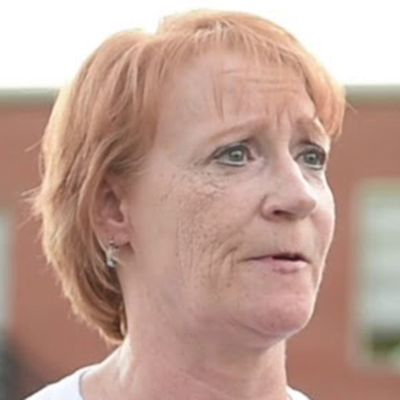
Reality’s mother Billie Winner-Davis, her sister Brittany Davis, and activist Wendy Collins discuss experience in prison. While in prison, Reality was held in solitary confinement in an ICE Facility, denied basic human necessities, had to battle COVID twice, and was physically and sexually assaulted... Read More
From the show: This is Reality - The Reality Winner Podcast
Guests
About
Reality’s mother Billie Winner-Davis, her sister Brittany Davis, and activist Wendy Collins discuss experience in prison. While in prison, Reality was held in solitary confinement in an ICE Facility, denied basic human necessities, had to battle COVID twice, and was physically and sexually assaulted.
This episode covers how the government’s denial of bail and the horrible conditions of being held at the Lincolnton County jail for over a year, forced Reality to accept a plea deal.
TO LEARN MORE
- Press Release from the Department of Justice: https://www.justice.gov/opa/pr/federal-government-contractor-georgia-charged-removing-and-mailing-classified-materials-news
- Affidavit for Arrest Warrant- Reality Winner: https://www.justice.gov/opa/press-release/file/971331/download
- CRIMINAL COMPLAINT- Reality Winner: https://www.justice.gov/opa/press-release/file/971336/download
Visit bpn.fm/ThisIsReality for more info, to sign Reality's petition for clemency, and to get tickets to any productions of Is This A Room.
Transcript
This transcript was automatically generated and might contain errors.
[0:00] Dori Berinstein: Welcome to episode six, The Hellhole.
[0:07] Sally Horchow: I'm Dori Berinstein.
[0:09] Sally Horchow: And I'm Sally Horchow, and we are the producers of Is This a Room on Broadway.
[0:14] Dori Berinstein: On June 3rd, 2017, 11 FBI agents appeared at the home of Reality Winner, a 25-year-old Air Force linguist, to interrogate her about leaking a classified document proving Russian interference in the 2016 election.
[0:31] Dori Berinstein: Is This a Room, the critically acclaimed Broadway play, reenacts the verbatim transcript of that interrogation.
[0:38] Dori Berinstein: When we started the journey of bringing Is This a Room to Broadway, we knew there was so much the public didn't know about Reality's story.
[0:46] Dori Berinstein: So we created the podcast, This Is Reality, to provide a deeper look inside the very important and very timely story of Reality Winner.
[1:01] Dori Berinstein: In our last episode, we heard from Reality's former defense attorney, Titus Nichols, who shared the legal challenges faced by Reality and what ultimately led to her guilty plea and her sentence of five years and three months in prison.
[1:16] Dori Berinstein: In this episode, we talked to those closest to Reality about the incredibly inhumane conditions she faced in and on her way to prison.
[1:23] Dori Berinstein: Her time included, among other things, being held in solitary confinement without basic human necessities, contracting COVID twice, and surviving physical and sexual assault.
[1:35] Dori Berinstein: When Reality was arrested on June 3rd, 2017, she was taken to a rural county jail in Lincoln, Georgia, which was about an hour from her home in Augusta.
[1:49] Billie Winner-Davis: It was hell. It was just a hellhole. It was in a small town in Lincoln, Georgia. It had one holding room for all females. And all of a sudden, she's having to navigate and figure out how to survive in one room with 12, 14 other women, some of them coming off of drugs, some of them detoxing, one shower, one bathroom.
[2:18] Billie Winner-Davis: She's denied medical care. She's denied psychological care. They were denying her food. She was attacked in jail, assaulted and injured. She suffered so much.
[2:30] Billie Winner-Davis: Gary and I couldn't imagine leaving Reality alone in that rural jail. I decided to retire from my work so that I could move to be near Reality in Georgia and help her as needed.
[2:41] Billie Winner-Davis: The visitation at that jail was Saturday and Sunday mornings, and you only got a half an hour with the detainee. And it was between glass. So again, we didn't get to hold her. We didn't get to hug her. It was on a phone. Sometimes if you didn't get the right one, it was really staticky and you couldn't hear each other. Um, you're constantly yelling and trying to make sure that the other one could hear you. And it was again just so demeaning as well, the whole environment. They don't treat you well when you go to a jail to visit your loved ones. They, you know, yell at you and things like that.
[3:20] Billie Winner-Davis: The time Reality spent in this county jail without bail was one of the most difficult experiences of my life. When Reality was in Lincolnton County jail, that was probably the hardest time because I needed to be there to be at least some sort of a lifeline to her.
[3:43] Billie Winner-Davis: It would be, you know, them going days without toilet paper. And I would have to call and tell them, you know, the girls have been without toilet paper for four days now. And basically, you know, they would tell me that that was none of my concern. It got to the point where I was calling the jail for every little thing because as a mother, you just don't stop. It's not okay. It's not okay for her not to be fed.
[4:10] Billie Winner-Davis: At one point, the captain of the jail threatened me and said if I continued to call them that they would get her moved to a worse place. So then I felt like it was always a fight for something when she was there. And just to hear the desperation and the hopelessness when she would call, just to hear her crying on the phone. It just really was probably the darkest time for me as a parent.
[4:47] Dori Berinstein: Reality would end up spending nearly one year and 83 days in that Lincolnton County jail, often with limited access to food. During this time, Reality's story caught the attention of Wendy Collins, who felt compelled to help Reality.
[5:00] Wendy Collins: So my name is Wendy Collins. I'm a mom and I had no social media presence and I've never been an advocate before. I happened to be walking by the TV and I saw Reality's mugshot and I heard this brief story, and it included the word terrorist. And all I could think is, oh my gosh, this young woman reminds me of my daughters. And I just could not look away for some reason. I remember standing there, I remember it like it was yesterday, standing there and listening. And for whatever reason, and I'm like, I need to help this young woman.
[5:41] Billie Winner-Davis: So one day I actually received a text from this person, Wendy Collins, and she told me that she had been writing to Reality. This was in September of 2017. And she became my lifeline. She became my person.
[6:10] Wendy Collins: During this time, she was continuously denied bail, which is, we explored in our last episode, is rare for someone who has committed this type of crime. Reality spent one year and 83 days inside this rural county jail in Georgia. Her experience there was just torture.
[6:47] Wendy Collins: It was literally a large cage. And that was where Reality would try to kind of make a circle for herself and run. She was caged, literally. Her mental health, her nutritional needs, just the most basic human rights were not met.
[7:13] Brittany Winner: The Lincoln County Jail was a hellhole. And we believe that Reality was kept there for so long, denied bail, to try to convince her to plea out and to break her spirit and to make sure that she knew that the government was coming after her.
[7:36] Brittany Winner: And there were so many times when she would call me and Reality would say, There's a girl here who desperately needs a dentist, but she can't see a doctor, and nobody's listening to this girl, and she's in so much pain and she's screaming. There were other times when Reality would tell me that people who were coming down from drugs, and to my understanding, it was just one big room. And these people, these other women would be experiencing hallucinations, they would be violent, they would be, you know, in need of medical attention, and there was no medical attention to be had in that county jail.
[8:15] Brittany Winner: So for Reality to be locked away when she hadn't been convicted, when she hadn't had her day in court, was totally wrong, in our opinion, and just really served to make her feel like she had no hope that there was no way that she was going to get out of there until she gave the government what they wanted.
[8:37] Brittany Winner: And what they wanted was for her to plea out. After over a year in that small county jail, Reality and her lawyers concluded that her best option would be to take a plea deal, since Reality was never going to be released on bail. And she was facing a minimum of 10 years in prison.
[8:57] Brittany Winner: A plea deal would reduce her sentence to five years and three months and allow Reality to be transferred to Carswell Federal Medical Center, a maximum security prison in Fort Worth, Texas, which would provide the services that were unavailable at Lincoln. She would also be closer to her family's home in Texas.
[9:17] Wendy Collins: But the journey to Carswell would be traumatic. Before she got to Carswell, where she served out her prison sentence, she was transferred to a county detention center. She was driven in the middle of the night, pretty much around 4 a.m., taken to Florida to a county detention center in Baker County, Florida, and thrown into isolation.
[9:45] Wendy Collins: So when they took Reality to Baker County detention, that's where Reality landed in isolation. She couldn't reach her family for whatever reason. So I got a call that she was there, and she was hysterically crying, that she couldn't be in isolation, she couldn't be alone. You know, she'd been a year and 83 days in a room with all these people. Now she's alone, she's scared to death, she has no idea what's happening.
[10:12] Wendy Collins: So I start trying to call Baker County, trying to find out why she's in isolation, and we can't get an answer, and they don't know why. They don't know why, except for she's some dangerous individual. And there's always this fine line that I was learning as an advocate while Reality was in Lincolnton. How hard do you push to where they're gonna take it all out on Reality, or you're actually going to push in the right way that change will come? But when we do it not quite right, Reality is the one who suffers.
[10:43] Wendy Collins: Reality was tremendously upset when she called me from the facility in Florida that was at that time being used as an ICE detention center. She called me crying, just crying, telling me, you know, I can't do this, I can't do this, I can't do this. They put her in isolation. She has no idea what's happening or where they're taking her or how long she's going to be there. And they take her one comfort away, which is her Bible.
[11:12] Wendy Collins: I was in Florida at the time. So it was about a five-hour drive from me, I believe. And I got there and I was told that I could not see her. I was incredibly upset because I was told over and over that I could see her, that she was allowed visitors. And so I just kept pushing it and saying, you know, I was told I was allowed to see her, you know, I was told I was allowed to see her, and I just wouldn't leave.
[11:41] Wendy Collins: Then I was told apparently, if you're in isolation, there, you know, you can use like a video call in the cell. But apparently the video monitor was not working. And so they were like, you can't have your visit, the video monitor's not working.
[11:59] Wendy Collins: But I wouldn't give up. I was determined to help Reality. I wouldn't leave. I was told I could see her.
[12:19] Wendy Collins: And there was a phone, because that's how you're supposed to speak through the glass, like you did in jail. But I realized that I could hear her. So I put the phone down, not knowing if they were going to allow that or not. And then she put the phone down. And we both put our hands up to the window and we just talked. And I think they let me stay for like it felt like an hour. I told her that we were going to work on getting her out of isolation. We were going to do everything we could.
[12:56] Wendy Collins: I just had never seen her this terrified before. It was like, you know, seeing your little child in this type of a position, and there was nothing you could really do. And it's so weird because in my life, like if I work hard enough at things, I can usually find some type of a solution or resolution or make something better.
[13:19] Wendy Collins: Like that's what I've learned in my life. You know, just keep trying, don't give up. But with the government, the full force of the government wanting to torture this young woman and not having any power behind us, we just couldn't help her.
[13:35] Brittany Winner: Reality was held in this ICE detention center for a few weeks before she was finally transferred to a holding facility in Oklahoma. Then she got flown again in, I believe, the wee hours of the morning. They would not even let her keep her jumpsuit. She flew across country to Oklahoma in long underwear, shackled, where she's dumped off there in basically a warehouse, a filthy holding place. It was crazy. I mean, it was just nuts. After a few weeks in Oklahoma, she was finally released to Federal Medical Center Carswell in Fort Worth.
[14:14] Brittany Winner: We believed that when Reality pled guilty, received her sentence, and was sent to Carswell in Fort Worth, Texas, that she would at least be able to start living some semblance of a life. It's still prison, it's a federal prison. It's not a good situation for anybody to be in. But Reality wanted to take correspondence college classes. Reality wanted to teach fitness classes. Reality wanted to try to again try to live some semblance of a life. She thought that when she was transferred to Carswell, that she would at least be able to be granted the fundamental rights of an inmate in that they should be allowed to go outside. She thought that she would also have access to better options for food, at least vegetarian options or, you know, healthful fruits and vegetables, kind of the bare minimum of what we should be feeding people who are incarcerated.
And, you know, we really, as a family, had a hope after Reality was transferred to Carswell because we thought that Reality would be moving on to something at least a little bit better. Anything's got to be better than county jail. And I think that we were ignorant of how bad things could also really get. But we thought that maybe in a federal prison system that people would be more reasonable and that they wouldn't maybe be so punitive and so petty. But what we experienced was worse than we ever could have imagined.
[15:48] Wendy Collins: Once COVID hit in 2020, all the support services available to Reality ended. Her situation once again became dire. We all know being free how hard COVID was to maneuver and manage. Well, they weaponized COVID in prison. In July of 2020, Reality tested positive. So when Reality was in Carswell and found out she had COVID after being tested, basically the guard threw her COVID results at her and said, "Congratulations." And that's how she found out she had COVID twice in prison. Sadly, contracting COVID in prison wasn't rock bottom for Reality. In January of 2021, Reality shared with her mother that nine months prior, she had been sexually assaulted by a guard at Carswell. Reality had filed a complaint under the Prison Rape Elimination Act, but there was no follow-up whatsoever regarding the assault. Previously, she had been physically assaulted while at the Lincolnton County jail. And, as with this situation, there was no action taken on her behalf whatsoever.
[16:58] Brittany Winner: Both times, Reality tried to shield her mother from the truth. Whenever you see any kind of police show or prison show, you see those things. And during this whole ordeal with Reality, I just prayed and prayed and prayed that this would never happen to her. When she was in Lincolnton County jail, she was assaulted physically. And she did not tell me until like a month afterwards. She would not tell me the worst of the worst things that were happening to her because she didn't want me to worry. And you know, when she did finally tell me, you know, she could tell me at a place where she's safe. The same thing with regard to the sexual assault that happened at Carswell Prison. She didn't tell me until that guard that sexually assaulted her was moved back into her unit.
[18:03] Brittany Winner: And Reality did everything right. She reported it. You know, they have like a 1-800 number or a system where you can report it as soon as possible. You can also, you know, report it to your case manager. You send in what they call these request forms, and you can report it. And she did that. And she heard nothing. And then all of a sudden, this same guard who touched her inappropriately at night in her dorm is back in her unit. And that's when she freaked out. Reporting on her assault had actually made matters worse, not better. And that guard actually came on the unit that night and told the entire unit that Reality had lied on her. And she made a statement that said, "If you lie on me, I come for blood." And at that moment, my daughter was terrified not only of being re-victimized by this person who had touched her inappropriately in her bunk during the night shift, but also now she was terrified that this guard was going to get her physically hurt or killed.
[19:25] Wendy Collins: It may not have even been this guard doing it herself, but you know how prison works. Prison works by favors, prison works by payment, and you can get anything done in prison if you can pay for it. And so this guard coming on the unit that night and announcing to the entire unit that my daughter had lied about her and that she was coming for blood. That's when Reality knew that she had to tell me. So she called me the next morning. And I mean, she was just crying. She was frantic, she was scared. And this is the following morning, and she said, "I didn't sleep at all last night. I was terrified." And at that point, you know, I knew that I had to do something. And so I, you know, made various inquiries and complaints to the BOP system, to the DOJ system. I contacted her attorneys. I told her attorneys, "You guys need to do something, somebody needs to inquire about this."
[21:03] Brittany Winner: Then Reality told me during that investigation how she was called in, and she was basically told that she reported it wrong. So because she reported it wrong, they didn't look into it. And then she was told that there was a backlog into the system where she reported it. And so that's why they didn't look into it. She was told it was because of COVID. You know, she was told all these different excuses as to why they did not investigate this very serious claim. And then they really tried to talk her out of the whole complaint, telling her, "Well, maybe she misunderstood. Maybe it was that this guard was just checking on her well-being, checking to make sure that you know there was a living, breathing person in the bunk." But my daughter told me that her eyes were open, their eyes locked.
[21:57] Billie Winner-Davis: I tried every which way to sound the alarm. I wrote to the prison's administration, to two Texas senators, to her congressional representative, and to the White House. I shared details of the incident with her tens of thousands of social media followers. So, you know, through this entire process, I've contacted, you know, my representatives and my senators. And then when this did happen, I again reached around and wrote to them and emailed them. And I only received these generic responses that I needed to make my complaints or my inquiries to the Bureau of Prisons or the Department of Justice, which of course, I had already done as well. You know, and I told them that in my complaints, that I've already reached out to everyone I can.
I'm not getting any answers. My daughter's not getting any answers, my daughter's not being protected, and I need your help because I live in your constituency. I am your constituent. This is what we get in America. This is truly, truly the most disappointing thing for me is I can't even get a meeting with my representative to talk to them about my daughter and her safety. And this is happening in their state. Yet nothing happened to that guard. Nothing was ever resolved. Reality continued to serve her sentence at Carswell until finally, in July of 2021, Reality was released to home confinement to serve out the rest of her sentence with her family in Texas. But her troubles were far from over.
[24:02] Wendy Collins: What America needs to know is that Reality Winner has a very long road ahead. She will face three years of probation with lifetime restrictions. Reality will never be able to talk about any of this. Intervention that will not happen. In our next episode, we will talk about the importance of clemency or pardon for Reality and how critical that will be in getting her life back post incarceration. You can support Reality by signing her petition for clemency at Standwithreality.org. Please join us for the next episode of This Is Reality. And for more information and tickets to all productions of Is This a Room, visit BPN.fm/ThisIsReality and make sure to check out all the podcasts on the Broadway Podcast Network.
[25:14] Dori Berinstein: We're incredibly grateful to our special guests, Billie Winner-Davis, Brittany Winner, and Wendy Collins. This podcast is created, written, and produced by Dori Berinstein, Sally Horchow, Rebecca Aparicio, and the Broadway Podcast Network. Sound engineers are Alan Seales and Kimberly Garris. Podcast editor is Alan Seales. Executive Producer is Liz Armstrong. This is Reality is part of the Gotham's Fiscal Sponsorship Program under the Sound and Light Project. Please join us for our next episode of This Is Reality by following and finding out more information on BPN.fm/ThisIsReality. And finally, special thanks to Bea Westby, Katie Rosen, Ayna Prescott, and the rest of the team at the Broadway Podcast Network.
© Broadway Podcast Network, All Rights Reserved