

In this episode, Jose talks to Tony winner André De Shields. The legendary performing activist talks about his upcoming performance as Frederick Douglass in Mine Eyes Have Seen the Glory. The piece is part of Flushing Town Hall's Black History Trilogy, a celebration of Black History Month... Read More
From the show: Token Theatre Friends
Guests
Featured Shows

About
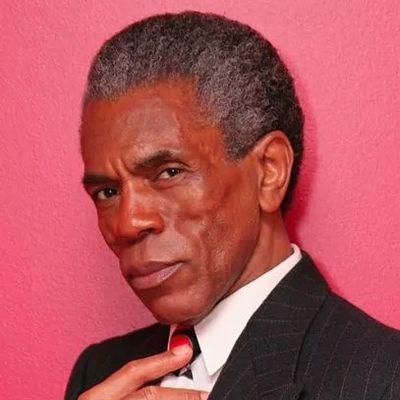
In this episode, Jose talks to Tony winner André De Shields. The legendary performing activist talks about his upcoming performance as Frederick Douglass in Mine Eyes Have Seen the Glory. The piece is part of Flushing Town Hall's Black History Trilogy, a celebration of Black History Month.
During the conversation, De Shields speaks about the clash of evolution and history, and his role as a messenger. He also talks about the circularity of history and the spirits of the theatre. It's a delightful talk emboldened by De Shields' charm and wisdom.
Transcript
This transcript was automatically generated and might contain errors.
[0:20] José Solis: Welcome to Token Theatre Friends. I'm Jose Solis. If you're new here, welcome. We are a community of BIPOC critics, journalists, and friends who love the performing arts so much that we do a web series and a podcast every week where we talk to some of our favorite artists and we also review shows.
[0:41] José Solis: In the past, we have done interviews with Heidi Shrek and Josh Groban, among others. I want to remind you that everything we do is thanks to you, and it's also for you. So if you are able to please become a contributor and patron by joining our friend zone. We have different tiers starting at $1 and going all the way to as much as you're willing and you're capable of giving at the moment. If you join our tier at $1, you're gonna be getting a weekly newsletter, bonus content, including Q&As and bonus episodes and early access to our episodes and more.
[1:56] José Solis: So I hope you enjoy this interview as much as I loved talking to Mr. André De Shields. And it's a pleasure to be talking to you today. I was going to ask you this later, but I really am dying to talk to you about this.
[2:14] José Solis: One of the most moving moments for me in lockdown was I think it was early in the summer, when you posted a picture of yourself kissing the door at the theater where you performed every night in Hadestown. And you said you were giving the theater a blessing. And I have thought about that constantly every time that I, you know, wonder when are we going back and why is it taking so long and will we have it back? And I think about that image and I think about that blessing, and I kind of borrowed that as a blessing for me also and for all of us who love theater.
[3:02] André De Shields: Outstanding because that is exactly what the effort was intended to mean. This is possibly going to sound a little far out, but the more I mature, and the longer I remain active in the arts, I am persuaded that there's no such thing as inanimate any longer. Every encounter, whether it be with a person or a thing, is a testament to life.
[3:54] André De Shields: So once I understood that the moratorium on Broadway performances was going to be longer than anyone could have imagined. And I had that opportunity to do that interview in front of the wall to current. I thought about the spirit that's inside the theater that we see as locked down. It's represented by that ghost light. That when we are performing, after every performance, we leave the theater, the ghost light is put on to give an opportunity to those spirits that have been left there over countless years to do whatever performance they need to continue their lives, their existence, their significance.
[4:56] André De Shields: So it's a kind of guard. That we will be here whenever you return. So not only was it a thank you, but it was also take care of yourself, be safe. Happy trails to you until we meet again. It's a kind of ritual that hadn't been missing from my life, but it was obvious that with the lockdown, people were beginning to respond in panic and react in fear and looking for the end instead of coming together, collaborating, cooperating, communicating, and this is going to sound severe, but this is the way I see it. Allow that world that is yearning to die to do exactly that.
[6:15] André De Shields: And then assist the world that's yearning to be born to do exactly that. And that takes time. But yes, we need to be the midwives for this new world that's trying to change the paradigm, the zeitgeist. And it's an invitation to us to be the doula.
[7:08] José Solis: That's really beautiful. I love that. Those images are because like one part of me wants to ask you and be very, I don't know, like a little kid and ask you about actual ghosts, but I won't do that. Instead, I'm gonna ask about what the adult part of me wants to know, and it's you have given the space for the spirits of the theater to keep under performance, right? But how have you nurtured? You know, you're a living creature of the theater. How have you nurtured that performance in the year almost since lockdown started?
[7:44] André De Shields: Let me use as one totem. Sunday, June 9th, 2019, when after 50 years as a performing activist, I received my first Tony Award. It was my third nomination, but it was the first time I actually had the award bestowed upon me. And I shared my life's philosophy when I accepted the speech, and I professed what I refer to as my three cardinal rules for sustainability and longevity.
[8:37] André De Shields: Rule number one surround yourself with people whose eyes light up when they see you coming. Rule number two, slowly is the fastest way to get to where you want to be, and rule number three: the top of one mountain is the bottom of the next. So keep climbing. Now, I don't speak or live in sound bites. I'm a thinker, I'm a philosopher. I enjoy deep time, which is why rule number two is there, slowly.
[9:35] André De Shields: Curiously, but not so unexpectedly, the lockdown has given me that opportunity to encourage, to luxuriate in that part of being a performing artist that necessarily has to be contemplative. You cannot act your way through a life in the theater. That's part of the equation. Another part of the equation is you have to imagine yourself through a life in the theater. If it doesn't, if you can't conjure it in your imagination, you cannot manifest it in reality.
[10:29] André De Shields: So 2019 was illustrative of that aphorism, you reap what you sow. After fifty years of sowing my seeds, I had an abundant harvest. Again, after the harvest, you have to allow the field to lie fallow so that it can contemplate, so that it can rest, so that it can be revivified, so that it can see, it can receive the seeds that we plan to plant in the future for the following harvest. That is how I am embracing the pandemic.
[11:36] André De Shields: But because I have always known that I live an anointed life. There is a blessing, there is a gift. We simply have to be bold enough, be courageous enough, to be unafraid enough to work through the disguise of the problem to recognize the gift.
[12:39] José Solis: Once you said anointed, and you spoke about creating opportunities, I couldn't think of a better segue to talk about Frederick Douglass, Mine Eyes Have Seen the Glory, because it's we're bringing everything full circle right now. Source spirits, anointment. So I'm dying to hear everything about this piece and what it means for you to be doing this at this time in history.
[13:03] André De Shields: Well, in your question is part of the answer. You said we're coming full circle. One of the concepts, one of the ideas that has become so clear in my thinking during the pandemic is the idea, you know how we say history repeats itself. I'm subscribing to that now, but not in the simplistic sense, in that we are cursed to repeat our mistakes. We cannot envision how large it is, but it makes sense to me that it's circular, which is why we invest in the laws of karma.
[14:09] André De Shields: What goes around comes around. It may take a lifetime for it to come around, or it may take longer than one's individual lifetime for it to come around, which is why I'm investigating the circularity of history through the eyes of Frederick Douglass. What I understand, just one example. What I understand is that when we listen to our great martyred hero, Dr. Martin Luther King Jr., when he says, "I have a dream," if you know anything about Frederick Douglass, then you will understand that the dream that Dr. Martin Luther King references has been bequeathed to him. He has inherited it from Frederick Douglass. And if you do more research, you will understand that Frederick Douglass inherited that dream from Saint Louverture.
And so on and so on. Until in your own existence, you will find the most recent, the latest heir to that dream, one of whom was James Baldwin, for instance, one of whom was Mary McLeod Bethune, one of whom was Barack Obama, and you can name almost an inexhaustible list of people through whom history is continued and evolves. And the beauty of this intersection between history and evolution is that it is happening in our lifetime. Not many people experience the crossroads of history and evolution. More often it's one or the other. History is either ahead of evolution or evolution is ahead of history, but here we witnessed it as if it were a clash of the titans. They're eyeball to eyeball, and it is incumbent upon us to resolve the confrontation, if you will, and we must resolve it and err on the side of those who are going to inherit history and evolution from us.
We are now the gatekeepers, we are now the keepers of the faith, we are now the storytellers, and the story we tell must be progressive, must be forward looking. Why? Because evolution goes forward. Evolution doesn't go in reverse, which is why the zeitgeist is changing, because it has been going in reverse for too long. And we now are all aware, doesn't matter what side of the political spectrum you are on, everyone is aware that it is time to have a shift in gears. And I want to use Frederick Douglass, a revered, respected icon of history, civil rights, human rights, freedom, and who lived through the century that produced the century, Frederick Douglass in the 19th, the 20th century, when the change began to be made.
And now that we're in the 21st century, we can finally and ultimately realize what has been imagined for so many generations. So I'm so when you see me as Frederick Douglass, I'm not going to do a straightforward by the numbers remembrance of his life. I'm going to use Frederick Douglass' journey. Did you see Hades Town? All right. I'm going to use Frederick Douglass as a modern day Hermes, a messenger who will hold all of us to account. What have you done? What have you not done? What do you now realize you must do in order to get to the promised land, if you will, the new earth.
[19:55] José Solis: I wonder during your research to play the part at putting, you know, gathering all the materials and like the essence and spirit that you wanted for this piece, which of his messages, maybe one that you never had paid attention to before, or one that was new to you, struck you the most. Which of his bits of wisdom, I would say, or what is something that he said that you didn't know that struck you like lightning to keep it in the Hermes church?
[20:27] André De Shields: All right, uh, yes. It is not a new concept, but it is one of the dots that fills in the journey that I've been on. As a very young child, and I know it now in retrospect, but as a very young child, I loved language. And when I became the first person in my family to attend college, I studied English. Why? Because I wanted to be sure that I could make myself understood by those who would oppress me. And I wanted to be sure that I was understanding what was being said to me and about me by those who would oppress me. Frederick Douglass is referred to as an autodidact. He taught himself with the help of one of the wives of his masters how to read. She, being a good Christian, owning a slave, thought how significant it would be if I could use the Bible and teach him his letters.
And Frederick took to that immediately. Of course, when the master of the plantation found that out, he said to his misses, "Stop. Slaves should not have knowledge. Slaves must remain ignorant. In that way they will remain docile and obedient. And that will translate as our slaves are happy." So that's my first line of parallelism with Frederick Douglass. As a young boy, he was attracted to language. So was I. And both of us use the beacon of education to surrender to our destinies. And that is the power in each of our lives. He became a great orator. He became the great emancipator, the abolitionist. And he set, he set the bar, if you will, for all liberators to follow him. I take on that same responsibility as a performing activist.
[23:54] I've never had to follow someone in a role. I've been able to create roles. And there is a tendency to be possessive of that. And what I have grown to understand is, uh, create a role, blaze a trail, but then leave crumbs on that trail for those who are following in your wake. You create a role, you open a door, leave that door open so that those who are also looking for a portal will have a way in, a way through. Not because we're making it easier. We're simply expanding opportunity. And that's what this battle is about. I don't want to be a white person. A white person doesn't want to be a, you know, politics and identity. We all want access to opportunity. And then we will do with that opportunity what we will.
[25:14] José Solis: I uh yeah, I'm I'm I'm thinking that I want you to run for office right now. Especially with the American flag behind you and everything. But no, it's it's so interesting because you were talking earlier about being at that crossroads, right between like having like the literal clash of Titans, and you as Hermes right now being a messenger, because I'm thinking, you know, uh back in the 19th century, for instance, you we couldn't do this, people couldn't do this. Like you couldn't be in people's televisions, you couldn't be in people's living rooms, and right now I'm thinking that as Hermes, you are in my ears. If I listen to the cast recording of Hades Town, there's videos of you performing, uh on shows, for instance.
There's also, uh you were Hermes again, uh in the podcast with Rachel Chafkin, and you're right, right. You're everywhere as Hermes right now. So I'm curious as to I'm sure it was not a coincidence that you were Hermes at the moment when you needed to be Hermes, but I wonder what that was like for you when you realized, okay, this is it. Does that make sense?
[26:29] André De Shields: Yes, it makes more than sense, it makes destiny. I say to uh my young wards, sometimes I teach masterclasses, or sometimes people just ask me for advice, and I say, no, no, no, no, I don't have any advice for you. But just as since 9/11, we've said, if you see something, say something. I believe if you know something, share something. So when someone asks me for advice, I say, no, I have no advice for you, but I will tell you what I know, and this is what I know. The universe recreates itself for our pleasure. The universe is a source of abundance. So, first of all, you have to understand that there's no such thing as lack, there's no such thing as inadequacy, there's no such thing as insufficiency. There is enough. If you suspect there isn't, then you're being victimized by politics. Abundance. Written on it. And then you can never experience I don't have enough.
[28:10] André De Shields: If I stop pursuing abundance that has Jose Solis on it, yeah, I will not have enough.
[28:20] André De Shields: But if I pursue the abundance that has André De Shields written on it, that's called surrender to your destiny.
[28:32] André De Shields: So when Hermes came along, just as I said before, reaping what you sow, it was one of the seeds that I had sown that had come to full maturity.
[28:50] André De Shields: It was blossoming, it was blooming. Because if you surrender to your destiny, your only obligation is to bloom, blossom, be gorgeous, be beautiful.
[29:07] André De Shields: So when Hermes came along, it was my permission from the universe to be as gorgeous as I wanted to be, to be to use language as lovingly as I wanted to be, to be as erudite as I had yearned from a young man.
[29:33] André De Shields: When I came to New York in 1973, no one asked me to use the seven syllable word.
[29:56] André De Shields: You know, can I you know? I mean, I didn't have a French vocabulary right in dance.
[30:02] André De Shields: I had no idea what a develop was or a together or anything like that, but I could throw down.
[30:10] André De Shields: I knew I could bring something to the um what's it called? The potluck.
[30:18] André De Shields: I could bring something to the potluck that was unique, and that's what my destiny. That's that's what my career has been idiosyncratic, the most authentic André De Shields that I can be.
[30:45] André De Shields: I'm thinking now about the um the late Chadwick Boseman and how it wasn't until he passed last year that people started thinking about how during the last portion of his career he had started doing what you have been doing your entire life, which is building both the André De Shields library, but also the André De Shields forest with all these trees that are blooming all over.
[31:14] André De Shields: Because right now, hearing you say seed and bloom made me think of how whenever I need to lift up my spirit, for instance, I go and get my DVDs of Sex and the City, and I watch the episode where you teach Charlotte how to tap a change of dress, it's called and that lifts me up every time.
[31:35] André De Shields: So, you know, I don't even know where I'm going with this anymore, but oh, yeah. Back to you've been building this legacy, and I I I I I wonder if you could talk a little bit about the moments where you have maybe uh almost gone down a different path.
[31:54] André De Shields: Have there been those moments at all?
[31:56] André De Shields: Oh yes, yes, and those those are the those are the testing moments. That's those are the quizzes in life, you know, the pop quizzes, the ones that you haven't that you should have been studying for, but you didn't because you were out having some fun, which is okay.
[32:17] André De Shields: You are supposed to have fun. Life is intended to be joyful.
[32:24] André De Shields: However, you are also supposed to be prepared to pass those tests when they come your way.
[32:45] André De Shields: I'm sorry, the top of one mountain is the bottom of the next, so keep climbing.
[32:50] ⚠ About 4 minutes of audio could not be automatically transcribed.
[37:13] André De Shields: We should be going picking from the tree, right? Picking the fruit from the tree.
[37:16] José Solis: Yes.
[37:17] André De Shields: Yes, it's been left there for us. And it's in all of it's in all of our ethos. I hope that's a word. I mean, we go back to America thinks of itself as a Christian nation. There are other religions, I know that, but so what is the what is what is our creation ethos that humankind was put into this beautiful eternal garden. And there was no such thing as work. All you had to do was agree with your creator that you would not eat of the fruit of the tree of the knowledge of good and evil. That's all. Seek out, yes, there you go. So I'm just using that as an illustration that all the wisdom that we need for our joyful life is there. Why do we avoid it? Why do we think we have to invent fire, invent the wheel, invent air, and that it's there? It was the it's there when we are come naked into the world through the first portal. It is there when we exit the world clothed through the final portal. The abundance is there.
[39:15] André De Shields: It should come as no surprise to me also then that you are that you apparently also have a green thumb because your money trees look beautiful.
[39:23] José Solis: Yeah.
[39:24] André De Shields: Oh, you recognize them, huh? I do, yeah, because I'm trying to get mine to grow. It's not in this room anymore. Well, perhaps do you also recognize this beauty here?
[39:38] José Solis: I don't know.
[39:40] André De Shields: Is that an orchid?
[39:41] José Solis: It's a thaleonopsis orchid.
[39:43] André De Shields: Oh. Yes. It was given to me by our producers of Hades Sound for my 75th birthday.
[39:51] José Solis: That's so beautiful.
[39:52] André De Shields: So you do have a green thumb. And next to the thaleenopsis on this this side, I don't know if you can see this here.
[40:02] José Solis: That's a lily, right?
[40:04] André De Shields: No, well, it might be in the lily family, but it's an anthurium.
[40:09] José Solis: Okay.
[40:10] André De Shields: Yeah. And that was given to me by my director, Rachel Chafkin. So you can see that everyone understands how identic my character is, lush, beautiful, garden of Eden, tropical, warm, abundance.
[40:34] André De Shields: Ha ha ha. I'm gonna play this recording of you to this plant that I have on my desk because it's the plant that I keep closest to me while I work and look how huge it got.
[40:44] José Solis: That's a pathos, isn't it?
[40:46] André De Shields: Mm-hmm. Yes. And would be and and and this is such a it's it's a beautiful and appropriate name for that plant. It's called pathos because of the white markings.
[41:01] José Solis: Oh wow and that's what's missing in our current culture empathy pathos compassion. We all need to be doppeled like that plant is more often than not we would call that a philodendron but when it comes with the white markings it's pathos this one's over here right yeah yeah that's so beautiful now see now I'm gonna think about my plant while I'm working in a completely different way and I feel very shallow asking you this but um you're talking about portals and as someone who is creating portals during his lifetime when do you get a break when do you rest how do you rest how do you okay you know take a breath before going on your path on your path again.
[42:02] André De Shields: You're in my head. You're asking all the right questions. One must learn, and it and and it is it is a tool that that requires honing.
[42:17] André De Shields: And it is, it is a habit, one of the few habits that I would encourage people to cultivate. One must learn how to rest in action. It's another lesson that we can learn from the pandemic. This idea of sheltering in place. But it doesn't mean that we should pretend that we are black bears and eat everything and then find a cave and sleep for six months to a year. That is not what sheltering in place means. Sheltering in place means to rest in action. Continue to do what you know is going to nourish your relationships with your fellow human beings and with the natural phenomenon.
[43:49] André De Shields: And from that we can learn. All of a sudden, we've lost our insight. All of a sudden, we've lost the knowledge that we are born with. All of a sudden, we can't find the wisdom that's been laid out for us for five thousand years. So you must rest in action. Same thing with the other caution. Social distancing. That's an inappropriate use of language. Physical distancing is what you want to do, so that we're not shedding the virus on one another. But you can be physically distanced and continue to be social. That's the duty to continue the community, to continue communicating, to continue being social, simply at a distance. And we all know how to do that. That's what we're doing now. That's what Zoom is all about. That's what virtual communication is all about. That's what telephones are all about.
[45:15] André De Shields: Absolutely, yeah. Yeah, I hadn't thought about that. It's a total oxymoron, almost even, I would say. You know, asking us to do that. And let me make one other point.
[45:26] José Solis: Of course.
[45:29] André De Shields: When your spirit, because we were talking about that, eternal spirit knows when you must rest. What happens? You fall asleep. That's the only rest you require. As long as you are awake, do not rest. Because if you follow that journey, you will then become woke. And there's a difference, you know. Many of us are awake. Few of us are woke.
[46:17] José Solis: I agree. Now you're making me think about both, you know, who was it? Was it Ra who went to sleep at night in Egyptian mythology, right? Like who went under to the underworld and then would come back the next morning.
[46:31] André De Shields: Yeah, he wasn't resting.
[46:33] José Solis: Yeah.
[46:33] André De Shields: And I also journey. Yeah, and I also I don't know if you've heard this. I mean, you might have told me this for all I know at some point. But there's this um, no, I think I heard it for the first time maybe during the pandemic, and I had never heard this before. It's a part, I think it's in the uh it's a part of m it's a myth in Muslim uh tradition where it says something about the um archangel uh Michael, is that what it's called?
[47:07] André De Shields: Say Michael, yeah, yeah. Anyway, the archangel uh Michael apparently before sending children to the world before they're born, kisses them on the forehead, and then whispers in their ear the entire all of knowledge and all the wisdom in the universe, and then when he sends them into earth, once we arrive, we start slowly forgetting everything the angel told us.
[47:38] José Solis: Exactly.
[47:40] André De Shields: Exactly. When I was pursuing my master's degree at New York University, my professor of Shakespeare, Professor Dr. John Carroll, kissed me on the forehead and whispered in my ear. He did that for the entire class. But I'm the one who remembers.
[49:00] André De Shields: Child can chew on its toe. But when you're 75, you can't do it. Because as soon as you come into the world, you begin to forget what you know. But at the same time, that's the only way you can experience life on a planet that's ruled by gravity. And that's become full circle one more time, then I wonder. You start, you know, you start off talking about what you knew when you were a child, and I wonder if there are any other, let's say, rediscoveries that you have made from your childhood now that you are in lockdown.
[50:07] André De Shields: I now know that what belongs to me, and I'm saying it, but also applying it to every individual. What belongs to me is on its way to me and cannot be kept from me. While I am, and it's not even while I am expecting it to arrive, I was about to say while I'm waiting, but I'm not waiting. While I'm expecting it to arrive, my energy must be invested in my responsibility to the least, the last, the lonely, the forgotten, and the loveless.
[51:46] José Solis: Thank you so much. That's really beautiful. Um can you remind our viewers and our listeners where they can see because I was gonna say, you know, one of the things that you know is coming for you will be more glory, more rightful glory when you play Frederick Douglass on a 26th. But would you like to remind our viewers and our listeners where they can find this uh one night only event?
[52:14] André De Shields: Well, my Facebook is is has public access, so you could go to André De Shields on Facebook, and it will tell you that it's being virtually streamed, it's a live performance, it's being virtually streamed from Flushing Town Hall at 7 p.m. Or that's when you know they'll open the um what do they call it? What do you open? The lobby, I guess.
[52:46] José Solis: Yes.
[52:47] André De Shields: And then at 7:30, we'll hit it.
[52:52] André De Shields: Hit it, you will, out of the park as usual. So well, I'm not predicting anything. That's not what Hermes does. He doesn't predict. But I would like to I would like to leave you with this blessing. It comes from the network of Bantu languages that are spoken in uh the southeastern regions of Africa. It's similar to the yoga blessing of Namaste, which is the divinity in me recognizes and salutes the divinity in you. This Bantu word is Ubuntu. And it means I am because you are Ubuntu.
[53:54] André De Shields: Thank you so much. It's always a pleasure and a blessing being in your presence. So thank you so much. And break a leg on your next destination.
[54:04] José Solis: We'll do. And thank you for that lovely interview in American Theater Magazine. It's one of my favorite moments in my life. So thank you so much for talking to me again. This has been a joy. Have fun.
[54:19] André De Shields: We'll do. Ciao for now.
© Broadway Podcast Network, All Rights Reserved