

This week, the Friends weren't able to record an intro together. But their guest is pretty epic. They welcomed Tony-winning actor/writer John Leguizamo, who is now adding director to his resume... Read More
From the show: Token Theatre Friends
Guests
About
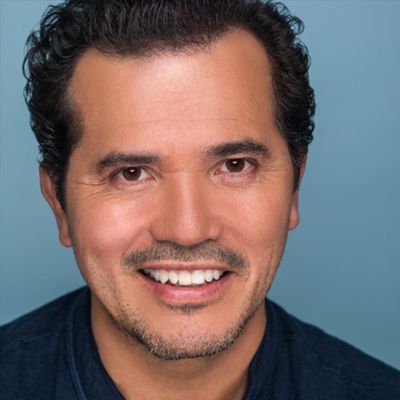
This week, the Friends weren't able to record an intro together. But their guest is pretty epic. They welcomed Tony-winning actor/writer John Leguizamo, who is now adding director to his resume. He's starring in and directing a new film, Critical Thinking, where he plays a chess teacher who helps inspires a group of low-income Black and Latinx high-schoolers to national chess championship victory. Leguizamo drops by to talk about the film, Latin History for Morons (currently on Netflix), and his ongoing work to advance Latinx representation in film and theater.
Here are links to the things discussed in this episode.
- Critical Thinking
- Latin History for Morons
- Leguizamo recommends that you all read: 1491: New Revelations of the Americas Before Columbus by Charles C. Mann
- That NPR interview where Leguizamo talked about being heckled by racist audience members
Transcript
This transcript was automatically generated and might contain errors.
[0:10] Deep Tran: Hi, this is Deep Tran, one of your Token Theater friends.
[0:14] Deep Tran: Uh, you're probably wondering where Jose Solis, my co-host, is this week. Last week was a really overwhelming week, so we don't really have the mental and emotional space to record an intro this week. So we just have an interview with the legendary John Leguizamo coming up for you.
[0:38] Deep Tran: But I wanted to give you all a little update on like what's going on with me. So I was recently on the phone with a professor in London. I was interviewing him for a story I'm working on about uh zombies and pandemics. Very light subjects. And he told me that uh I sounded really upbeat for someone who had lost her job because of COVID and is now freelancing full-time. And I wanted to tell you all the answer I told him, which is what this moment has really taught me is how to live in the moment and to feel okay with uncertainty and how to be truly grateful for the little things.
[1:36] Deep Tran: And right now, I'm not making as much money right now as I was when I was working a full-time job. But at the same time, I've been learning to be grateful for the fact that I'm healthy and my family is healthy, and that I can take a nap in the middle of the day when I'm feeling overwhelmed by everything. And I can choose what to focus my time and my energy on. And right now, what I've been choosing to focus on and what's been really nourishing me is how I can be of service to people. That's how I decide what I'm going to write about on token theaterfriends.com. And that's why I just I decided to, you know, be a poll worker for the election and to go out and protest and amplify the messages that protesters are sending.
[2:39] Deep Tran: I've also signed up to do some writing and editing for this nonprofit that's focused on educating the Vietnamese-American community, like my own community, and to work on something that my own mother can read. And the reason I'm telling you all about all of this is not to make you feel bad for if you're you feel like you're not doing enough. It's just to show you like how right now you may feel like you're powerless, you may feel like everything is hopeless, and how important it is to surround yourself with people who can pull you out of that.
[3:19] Deep Tran: I had my first big meeting with everyone at the nonprofit that I'm volunteering with. And everyone is just so hopeful and driven and really passionate about the cause. And the great thing, especially if you've ever worked in backstage at theater or on an art project with other people, is how their energy helps feed your energy. And it's the same energy I felt when I was when I had more time to go out and do more protesting. And by them having hope, it helps, you know, it helps keep the flame inside of you alive.
[4:18] Deep Tran: If you're feeling down, I really, and if you're able, I really hope you'll take the time to get involved in like any of these efforts to help the November 3rd election or any, you know, socio-political, social justice issue that you're passionate with. And just be around people, even if it's remotely, be around people who can help buoy your spirits and to and who can help you feel gratitude not just for your own life, but feel gratitude for the fact that there are still wonderful people out there who are trying. And if we can just keep on trying, then maybe things will get better.
[5:06] Deep Tran: So, yes, please consume art, read token theater friends, read books, read things that inspire you, watch things that inspire you, and also find some people that will inspire you and that will keep your spirits up. If this moment has taught us anything, it's the fact that we need each other in order to make a better world. And so I hope that right now you're not isolating yourself and you're being and you're willing to be open about where you need help and use your energy in a productive way that will help other people and that will also help yourself.
[5:52] Deep Tran: And so uh that is my soapbox uh for this episode. And now we'll go to the interview that Jose and I did for this week. Uh we interviewed actor, writer, comedian John Leguizamo, who has a new film coming out called Critical Thinking, where he's directing and also starring in alongside Rachel Bay Jones, who you may remember from Dear Evan Hansen on Broadway.
[6:28] Deep Tran: Uh, I'll just read uh the summary of what the movie is about. Uh it's based on a true story from 1998 of five Latinx and Black teenagers from the toughest underserved ghetto in Miami fight their way into the National Chess Championship under the guidance of their unconventional but inspirational teacher. Uh John Leguizamo plays that teacher, and he was kind enough to hop on a call and talk to us about what it is to build legacy and what it is to be patient and to teach people, even if we don't always agree with them.
[7:06] Deep Tran: Oh, and at a certain point, you cannot see it on this podcast, but I hold up a book and I think John is very proud of me in that moment. Uh that book is called 1491, New Revelations of the Americas Before Columbus by Charles C. Mann, which John also talked about in his one-man Broadway play, Latinx History for Morons, which you can also watch on Netflix. So watch Latinx History for Morons, watch Critical Thinking, and uh listen to this interview with the legendary John Leguizamo.
[7:45] Deep Tran: Hello, hello.
[7:47] John Leguizamo: Hi, John. How are you doing?
[7:51] John Leguizamo: Gracias, placer, comato. I'm doing great. See, I even wear my Moulin Rouge shirt for you.
[7:57] Deep Tran: Oh, nice, nice. I can barely see it, but yeah.
[8:00] John Leguizamo: Uh so welcome. I am so excited that you're joining us. I was like, chill, and I saw you and I'm like starstruck, and I'm like, oh like oh my god. So I I love your work. You know, I grew up in Jurist and I've loved your work since I was a little kid.
[8:12] John Leguizamo: Thank you.
[8:14] Deep Tran: Yeah, and when I was watching Critical Thinking, uh congratulations, by the way.
[8:19] John Leguizamo: Thank you.
[8:20] Deep Tran: I couldn't help but think that you're like, you know, the uh direct heir to uh uh you know Emmet and this is your stand and deliver, right?
[8:28] John Leguizamo: So this is my stand up, deliver, kick ass, kick it through the field post, you know, the goal post.
[8:38] Deep Tran: Yeah, yeah, definitely, definitely I love that movie. That movie was so inspirational to me. And we need so many more of these type of movies of Latinx leaders who have been pioneering and nourishing our youth, you know, through the five hundred years that we've been in this country.
[8:58] John Leguizamo: Uh what was your part of your decision to direct it?
[8:58] John Leguizamo: Well they asked me, you know, the producers Carla Berkowitz and Scott Rosenfeld and I was like you know what I think I can do I think I can bring something because you don't want to jump in a movie just to you know to for vanity's sake you want to you want to feel like I can bring something else I can add to this and I really felt like you know I was a ghetto nerd growing up a ghetto nerd and I knew you I knew how these kids felt you know trapped between you know two places you know trapped between doing you know their duel stuff and and football and you just don't sometimes you're just not a football player you're you're a book reader you know you're a book nerd.
[8:58] John Leguizamo: So your chess was books and literature then?
[8:58] John Leguizamo: Yeah but my chess board was always plays books poems you know movies you know the field that I'm in.
[8:58] John Leguizamo: Yeah, oh speaking of books uh I have I've been reading this it's it's a lot it's a lot I'm still but it's so good come on I know it's so dense though it is mad dense but he writes so well I mean he really does I mean he makes it poetry he makes it accessible because it's because hey yo we were great empires it can't if it wasn't dense it wouldn't be worth it I mean we were the one of the greatest civilizations on earth the Incas the Mayas the Aztecs Comanche and Apache in the Southwest these were vital important civilizations equal to or bigger than most of uh European and Asian uh empires.
[10:35] John Leguizamo: I mean, the Inca were three times bigger than the Ming dynasty, bigger than Tsarist Russia, bigger than the Ottoman Empire. I mean, what more can I say?
[10:46] Deep Tran: Yeah, I I remember in grade school, we we did like a whole course where we had to pick different uh Mesoamerican tribes to do reports on, and I picked the Incas, and and it was really funny because we did all this history and then and then we skipped straight to and then the Spanish came. We're not gonna talk about that.
[11:00] John Leguizamo: We're not gonna talk about how they killed all these people.
[11:02] Deep Tran: They just came and then that's what happened, and now we're gonna be able to do that.
[11:08] John Leguizamo: But it's more than the genocide, man. I mean, the genocide, of course, is is horrific, but the this is the first time in the history of mankind where a people's culture, religion, and language was completely destroyed for all these groups of people, Mayans, Incas, and Aztecs. I mean, some vestiges of language, Nahuatl and Mayan languages and some Quechua survive, but you know, not the way they should, not with the with these great empires.
[11:41] John Leguizamo: So, you know, you have to cut, and then you have to, so you have to flash forward 500 years and go, where are Latinx people now? I mean, that's what we came from. That is still part of our legacy, you know, that destruction of of who we were, and it's called psychosocial erasure. You know, and it continues here in America. You know, we're we're the largest ethnic group in America, 20%, almost 20% of the population, including all my undocumented immigrant brothers and sisters, and yet less than 3% of the faces on in movies behind the camera. I mean, less than one percent of the stories in all of streamers in Hollywood. I mean, the least represented in children's picture books.
[12:30] John Leguizamo: And we don't see ourselves represented in picture books. How does a kid, you know, see himself? How does he build his self-esteem when he never sees himself in a comic book or a picture book or a movie or you know, just anywhere? I mean, it's it's impossible. Or even when they're told that they're not gonna learn Spanish, if they get bullied if they, you know, speak Spanish in school or if they bring food that's not like some boring peanut butter and jelly sandwich.
[12:56] Deep Tran: Right, right, right.
[12:57] John Leguizamo: Those little yeah, well, we we don't do Goya anymore, so Goya has been done.
[13:02] Deep Tran: We drop the Goya.
[13:03] John Leguizamo: What's your alternative to Goya? What's a good alternative?
[13:06] John Leguizamo: You go to your you go to your store and you get for Sasson, you get garlic powder, onion powder, coriander powder, cumin, uh black pepper, uh salt, and achiote, and you got the song without nitrates or monosodium glutamate.
[13:21] John Leguizamo: Uh uh. F you Goya. You ain't for us, we ain't for you.
[13:26] Deep Tran: So recently you've been playing, you know, literal teachers. But I wonder, you know, uh what's like the the the greatest thing or the thing that you most appreciate that art and the art that you love has taught you?
[13:38] John Leguizamo: You mean in terms of being a teacher or I'm I'm not sure.
[13:41] John Leguizamo: No, uh in your life, you know, even if you're playing teachers, like you know, your projects are like fantastic, you know, like you're not supposed to be taking notes either at Latinx history or critical thinking.
[13:51] John Leguizamo: Well, Latinx history took me to another place. I mean, I was so happy that my audiences went with me there, letting me, you know, instruct and educate.
[14:00] John Leguizamo: And the more I held on to those reins, the more they appreciated it. So that was a really beautiful sort of soul exchange in the theater. Uh, and you know, I have embraced that, you know, that there's so much incredible information out there, especially in this digital age, that I can now bring to books, bring to picture books for children, bring to plays, bring to movies. I just have to, you know, figure a way around the gatekeepers because they're the ones denying me and anybody who looks like me access. You know, that's the problem right there. Because wherever we have metrics, we let people win. Like, uh, uh, Spotify, J Balvin is the number one star in the world, Colombian rapper. Uh, my Dominican sister Cardi B, number one in Billboard.
Maluma, Colombian brother, you know, up in the top ten, Camila Cabello, Pitbull, Bad Bunny, um, uh, I mean you name them, and they're up there. And in baseball we win because you got stats. And in politics, AOC, uh, Cindy Polo, David Mercosur Powell, Xavier Bercera, Veronica Escobar, uh, Joaquin Castro, the Castros, wherever, because you can count those votes, but with gatekeepers, we had to rely on a gatekeeper's opinion or taste. They don't see us, they don't know us, they don't care about us.
[15:30] Deep Tran: And do you think that's part of the reason? Because you know, I mean, growing up like I knew you as, you know, as Tibble, the Prince of Cats, and as in Moulin Rouge. And I feel like as your career progressed, uh, like you went back to doing, you know, more original work on stage as well as, you know, now you're directing. And so is this your way of like gaining back control of production and getting it?
[15:52] John Leguizamo: Absolutely. Absolutely, absolutely. Because you know, it was a disappointing run in Hollywood. You know, you do movies like, like if I was a white actor and did Carlito's Way, boom, I'd be like, you know, Tom Cruise, Brad Pitt, you know, you do a movie that's a hit like that Empire, you know, or something where you're the lead and it's a hit. You know your opportunities could triple. But when you're Latinx, it's just like you, it's like you didn't even do it. You know, so I was like let me go back to what feeds me. Let me go back to my community. Let me go to where there are no gatekeepers, Broadway, theater off Broadway, where there are no gatekeepers. All you gotta do is have a tight script, raise the money and boom, rent out that barn, you know, and that's how Lin-Manuel did Hamilton.
I mean he would have pitched that to a studio, to a network, to a streamer. It would have been, excuse me, Burr was not black and a Puerto Rican Hamilton, that's outrageous. And they didn't speak in hip hop back in those days. You know, it would have never gotten done but because he's in the theater, boom, you know, the work that you get from your young ensemble is really, really wonderful because you know it seems like everyone's so comfortable.
[17:07] Deep Tran: So talented, thank you.
[17:08] John Leguizamo: Yeah. How did you achieve that? Like I never felt comfortable in school.
[17:11] John Leguizamo: Uh, well you know, it was hard to get these kids because there was so much Latinx and black talent out there. The hundreds and they were all incredible. So I was like how am I gonna solve this? I gotta figure, I gotta make a choice. So what I did was I picked guys who looked like their characters or their personality was the character already. Because you know, I'm directing and I'm in it. You know, I needed a shorthand. I didn't have the time for a long process of development. And then we did, you know, I did a like a chess boot camp. I said, you know, you're gonna be my movie, you gotta give me a week before, which is unheard of in independent films. This was a 20-day shoot too, which is brutal.
Um, so I asked them, give me a week, 12 hours a day. We're gonna rehearse after shooting too. This is gonna be exhausting, but you're gonna be so proud of your work at the end. And they came, the kids delivered, man. And I got the real guys who were the real stars, champions, they came and consulted and showed us how to play the moves. Uh, you know, whatever was bumping or tripping or not right, or a little fudged. They made us correct it. It was great.
[18:20] John Leguizamo: I created and I'm currently running a training lab for critics of color. And every time that I have to like, you know, teach them, I feel like what do I have to teach them? And I wonder if you have any words to maybe like relax me or any insight that you have now as a real life educator.
[18:44] John Leguizamo: Well, you know, uh, I think it's you gotta make it fun and you gotta let them teach themselves in some ways, you know. I think that that was the beauty of when I talked to Mary Martinez, the real teacher that I was playing. It was like, how did you get that info into them? How did you, how did you, because they had the talent and the passion? It was just getting the book knowledge in them. And obviously, he supplied all the books and walked them through the right passages, but it was that magnetic board. They would go over the moves over and then have them try to replicate it or break through it or break the code on it, and that's how they self-taught themselves.
[19:22] Deep Tran: How did you rate yourself as a player now?
[19:26] John Leguizamo: You know, I'm a little better. Not as good as I thought I would be, but I am winning a little bit more. I beat my son like once or twice and he used to always beat me. And I'd be mostly children I beat. I haven't played adults yet.
[19:43] Deep Tran: You'll get to college kids one day.
[19:46] John Leguizamo: I'm working towards that. I gotta first go through high school though. It's also so exciting because right now I mean Latinx History is on Netflix and uh, Craig I think it's gonna be on VOD and what does it mean like to have, you know, to give people access to your work which, you know, like when you do it on Broadway people have to be in New York. A neutrally an independent movie starts like super small and then if they get like us karbuzz or whatever they keep growing. But everyone can see it.
[20:11] John Leguizamo: Yeah, which is great you know. I mean obviously I was robbed of my victory at South by Southwest Film Festival and theater release, you know, because of COVID. But I think the upside is everybody can see it now on Apple TV, Amazon, Voodoo, iTunes and since we're all sequestered at home, you know we gotta look at something and then why not look at Critical Thinking? I think it's a really inspiring movie, true story shows you how many gifted genius street intellectuals are in our neighborhoods and Latinx communities and black communities that are just, you know, squandered, you know, like wasted dreams and it doesn't need to be that way. You know, we really need to do something to make that change.
[20:34] Deep Tran: I love how you balance both, you know, like darkness and joy because like the movie has some very violent moments that honestly made me think of growing up in Honduras. But then like you balance that with such warmth and happiness. And why is it important as an artist to also show the joy of our people?
[21:17] John Leguizamo: Well, because you know, otherwise it's ghetto porn when it's all that melodrama and just, you know, soulless violence because there's a lot of joy in our communities because that's the only thing we can afford is joy, you know, it's tax-free, you know, and that's and you don't, when you go to a Latinx community, you know, they're celebrating, they're having block parties, park parties, music's bumping, everybody's laughing and sharing food and dancing. You've never seen joy like that in any community, man. It's the most beautiful, heartwarming thing you've ever seen. I mean and inclusive. Everybody's welcome, everybody.
[21:57] Deep Tran: Well, speaking of you as an educator, I feel like because I was listening to your NPR interview about like when you got heckled while doing Latinx History by like some racist white people.
[22:08] John Leguizamo: Oh yeah.
[22:09] Deep Tran: And like last year, you know, you're touring around the country doing this play, and you've met all kinds of people who may not share your views. And so, what have you learned about like trying to talk to racist white people?
[22:21] John Leguizamo: Uh, it's tricky because when they yell stuff out inappropriately, I mean, who goes to a Republican play if there's such a thing and starts yelling crazy shit at them? I mean, who does that? It's so weird that these older white couples feel like it's okay to yell like we hate you. You're go back to Mexico, and I'm not even Mexican, you know. Uh, it's like you're just yelling really horrible stuff. What's, I mean, I don't understand how you think that that's civilized. Do you know what I mean?
[22:52] Deep Tran: Mm-hmm.
[22:53] John Leguizamo: And so I don't really know how to respond. I mean, I just try to keep the crowds from attacking them. That's what I just try to do, you know, and if they had an opinion to share or something, but it just taunts, you know, it's just vilifying and it's not really sharing anything intellectual, it's just being mean. And I just, I don't know, I try to ignore them because I don't want to get into a battle with them because they're not really there to exchange anything. They're just there to be mean.
[23:21] Deep Tran: Right. But how have you learned something about like how to have like meaningful exchanges?
[23:25] John Leguizamo: That yeah, that I have. I mean, you gotta really go into it open-minded. You can't go there wanting to proselytize and convert. You gotta really go there and go, you know, I can learn. I might learn something. That's the way you go to it. Otherwise, you're not gonna, what, how you gonna penetrate anybody and make them change their opinion? They're not gonna do it to you. So you gotta really come in there as open as you can. I mean, it was just difficult, it's not easy.
[23:50] Deep Tran: So we got the warning for one more question.
[23:52] John Leguizamo: So I, you know, I grew up and you were my Luigi when I was little. And I couldn't have a thinking right now, especially after, you know, Chadwick Boseman passed that in many ways, you know, real life heroes are people like you and him who are rescuing our heritage and rescuing, you know, creating characters that will live on forever. And although, you know, I want you to live forever and ever and ever.
[24:33] John Leguizamo: Definitely, definitely trying to leave a legacy, definitely trying to get all the information I've learned in the last 15 years in terms of my research. I'm definitely trying to get it in as many books and as many formats as possible. So yeah, you're gonna see a lot. I'm gonna try to leave the world a more brown planet than I came into it.
[24:55] Deep Tran: And you're already on it. So, uh, do you want to invite our listeners and our viewers to find Critical Thinking and to also watch all your shows that are available?
[25:03] John Leguizamo: It's true. Yes, please, everybody watch Critical Thinking on demand, on Apple TV, iTunes, Amazon and Voodoo and all the other platforms except Netflix. And you can see Latinx History for Morons only on Netflix.
[25:20] John Leguizamo: Which other classes, John Sueno. Gracias, bye.
[25:25] Deep Tran: Thank you.
[25:26] John Leguizamo: Bye-bye.
[25:28] Deep Tran: I hope you all enjoy the interview and that you also do some critical thinking of your own. Uh, this is usually the part of the show where Jose talks about why you should be a Patreon. Uh, Jose doesn't, Jose can't do that today, so I'm doing it. Uh, if you love this podcast, and if you love the writing that Jose and I are doing on Tokentheatrefriends.com, then please, please, please support us on Patreon if you can. Token Theatre Friends is a hundred percent reader supported, and we have no angel investors and you know no large donations. Uh, we're running this out of love and also out of a need to, like I said at the top of the show, to feel useful during this time. And for as little as a dollar a month, you can help support mine and Jose's work and we're also trying to build a community of patrons.
If you become a patron you'll be able to take part in programming polls that we put out, oh wow say that three times fast, and we're also doing like weekly discussions about topics that come up. Our Patreon base so far are very opinionated and so smart and so if you are also an opinionated lover of theater and the arts and you want to get into discussions about it in a platform that's not incredibly public and problematic like Facebook or Twitter, then I encourage you to be a patron of Token Theatre Friends. I thank you for listening and I hope you all have a great week and we'll talk to you again next week.
[27:33] Deep Tran: Bye.
© Broadway Podcast Network, All Rights Reserved