

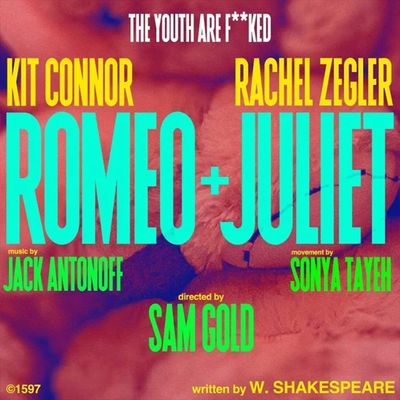
In this episode, Alexi and Juan review Romeo Y Julieta at The Public Theater. The show’s bilingual translation reminded Alexi of the chismes in his family spilling the tea (some might say he himself is the chisme)... Read More
From the show: Token Theatre Friends
Featured Shows
About
In this episode, Alexi and Juan review Romeo Y Julieta at The Public Theater. The show’s bilingual translation reminded Alexi of the chismes in his family spilling the tea (some might say he himself is the chisme). Both agreed that maybe it was best to leave behind the old English and bring this Shakespeare classic into a full Spanish telenovela setting.
The friends also reviewed Twenty-Six by Ang Bey. The show was part of Jouska Play Works New Play Showcase at Simpatico Theatre. Juan points out that these characters are MESSY, but nothing less is expected as the play provides an unvarnished view of what it means to figure out your gender identity and sexual orientation.
Transcript
This transcript was automatically generated and might contain errors.
[0:02] Juan Michael Porter II: Hello, my name is Juan Michael Porter II, and I'm here with Token Theater Friends.
[0:07] Alexi: My name's Alexi. I'm managing editor and co-host of Token Theater Friends.
[0:12] Juan Michael Porter II: And today we are talking about two amazing productions.
[0:15] Juan Michael Porter II: First, Alexi, I wanted to talk to you about the fact that theater feels more authentic these days because it's not focused so much on making all the glitz and glam bucks. It feels like, especially with these two productions that we're talking about today, that it's back to the bare bones means of storytelling. What are your thoughts on that?
[0:35] Alexi: Yeah, I think that basically theater in the COVID era, Leslie said right now, has really had to kind of like pare down on what like a production set looks like. And it really kind of boils down to having someone on a screen telling you their story or portraying someone's story. And so it feels a lot more authentic, it feels a lot less commodified, and I've become more appreciative of that fact. So I think that these two shows that we're going to speak about today kind of like fall in line with the new style of COVID theater. I'm just gonna call it that now. COVID theater that I've seen in the past year. Do you think you've kind of seen that same type of trend lines of feeling like the stories are more authentic because like you don't have a huge production backlighting something?
[1:26] Juan Michael Porter II: Yes, and it feels more community-based. Like when I say community-based, I mean for community instead of like give me all your bucks. Like I'm thinking about Equus years ago when it had that Harry Potter kid in it. There they had tickets for like 125 dollars, and then they charged extra tickets if you wanted to be on stage. And here it's like, no, you get the experience, and that experience is a conversation that we get to have in the dark in the comfort of your home. And no matter where you are, even if you're in your smartphone waiting in line to like check out groceries, as I've been, you get to have an amazing experience. I think that's like so I agree right community-based theater does seem more community-based because you're hearing the stories and it's just kind of like you and the story.
It's very individualized in that sense but it's almost ironic right because the audiences are probably much larger than these community-based productions have had before you know you're no longer kind of constricted to a physical space so someone in Philly and someone in New York can like hear it at completely different times but feel like that story is being told solely to them which I think is kind of beautiful.
[2:37] Alexi: And then come together to talk about it like we are now like I while I was watching um Julieta's uh Sahim Ali's production at the public a friend of mine was watching it at the same time in California and we were totally we did Romeo and Juliet in high school and so we're totally geeking out like oh my gosh that pops that hits so differently right now and even as we're not in the same physical space we are still having this experience that only theater can actually manifest. And like I'm thinking now that vaccines are rolling out and fingers crossed May 1st it is available to all adults in the US really manifesting those positive vibes out there and thinking like wait I don't want the shows that I review to be constricted to the city that I'm located in now.
Like I want to continue to watch shows in the UK or shows on the West Coast um virtually and be able to talk about it on a podcast instead of only the theaters that happen to be within uh a walking or Uber distance, Ubering distance from me. Um, so I wonder how that's going to feel like negotiating like live theater versus virtual theater based on what I want to review.
[3:49] Juan Michael Porter II: I mean, for sure, there's always going to be that thing about uh being in the room where it happened that said you don't have to be. I have family members who are differently abled, who cannot actually trek to a theater. And the idea that they are barred from participating is something that I've always found distasteful. This more than making it more community-based, it feels democratized. Access is greater.
[4:14] Alexi: Yeah, absolutely. And I mean, this can go on and on, but when then I think about like now that like theater is being democratized because it's like virtually accessible, which is a conversation that everyone's having and has been having for the past year. Um, what happens then with kind of the norms of like what theater is and how it should be viewed? Because if you're now able to see it on your phone, then you're able, like you said, to listen to it in line. And like, is that the theater experience that they produced? Are we being too strict of what we count as like paying respect to a show by only focusing on the show as you watch it? That makes me think about when you spoke about the strip-down values, the fact that we don't have these huge sets.
Something like in the conservatory would say is don't applaud the set. And yeah, time after time when I've gone to these big Broadway productions, the audience like, ooh, that's sad. And like I totally applaud the costumes designers, the crew, the set designer. But at the end of the day, am I there to be like blamed out or to actually participate in a conversation with someone?
[5:19] Juan Michael Porter II: I think uh like don't applaud the set. I think is really, really I think that's a very, very important, because I'm thinking of a production I went to. So I when I went to go see the Kilamaskin bird, just like a very white savior, I mean a classic Aaron Sorkin twist, right? Like you can see here the white savior vibes from the West Wing, and it's just like echoing in every line of dialogue. I mean, the way he wrote Calpernia was like very frustrating. But anyways, I still was like gasping when that set change would happen, and I was like taken in by the magic of like the house lowering down onto the stage, and I'm like, oh my god, like this is beautiful. But then I also had to remember like the dialogue and the framing of this play is not what I want it to be when it comes to like discussions on race relations and racism in the South.
This is not what I want. Um, and so how do you negotiate that? Well, I don't have to negotiate that in the COVID world. I get to listen to the dialogue and be like, no, that wasn't great. Like that was kind of harmful. That makes me think about um what was it like for you listening to Romeo and Julieta and this production? And like where were you when you were listening to it?
[6:32] Alexi: Sure. So Romeo and Julieta, I was just in my living room, just kind of vibing, listening to it. Um, and it was an interesting experience for me. So I'm Guatemalan, my parents are immigrants, and so, or rather my dad is, and we grew up in a Spanish-speaking household, um, but like a lot of children of immigrants, like I had to negotiate like assimilating with whiteness and understanding and basically figuring out how much do I buy into the value of learning Spanish. And I think like I bought into understanding Spanish, but not speaking it like um super super fluently. So I can understand it when it's spoken to me, but not speak it as easily. But with this show, the way they kept the old English and then jumped into colloquial Spanish, it was one of the few spaces in my life where I felt like Spanish was the more comfortable language for me.
And I really enjoyed that dynamic that really kind of like affirmed my Guatemalan identity, and I just uh enjoyed like hearing the colloquialisms and seeing my family in those conversations. Um so that's kind of my main interaction with the piece. What about you? What was the experience listening for you? Do you know Spanish? Like, how'd you engage with that?
[7:49] Juan Michael Porter II: I'm not 100% fluent in Spanish. I used to speak it very, very well. Um, living in Southern California, it is it's interesting because we have it as a part of our identity, but there's also a lot of racism against Spanish speaking people and culture. And this felt like when I moved to New York and I was in Dominican and Puerto Rican neighborhoods, and I felt like I was being brought into someone else's home. This felt like I was being brought into someone's abolished home to like sit and like chat with them. And I, you know, again, when I when it was switched to Spanish, it would hit so crispy, crisply, so differently, like, oh, that's what that line means. We think about Shakespearean text as this the old English as another language, and it's definitely heightened.
And then with the Spanish, the actual way that they were being the actors were articulating and so beautifully, so crisply, it reminded me of a friend who said, Oh, I can't translate that into English, it doesn't make as much sense. It's not as beautiful in English, and like the text sang in a way that was like, this is so much more beautiful now than it ever has been for me. And I think like that's real. And so I remember listening to the trailer for the show that the public released, and they kept talking about we put this in Spanish for accessibility to make the Shakespeare's piece accessible. So it feels intimate, like being in your abuelitos home, right? And like understanding kind of like the lines better than they would be in Shakespeare, um Shakespearean English.
And I think when it was in Spanish, that was like achieved perfectly because I think I bought into the story more when I heard like just casual Spanish. Um but it made me think the whole piece have just been in Spanish because it like the old English wasn't as like valuable to me, I think, um, as the Spanish translations were. And I kind of wanted more of the Spanish, more of like just a complete kind of translation that anybody could understand.
[9:53] Alexi: Because it gave me strong telenovela vibes, and I think it would be cool to have it completely Spanish and like kind of listening to an audio telenovela. You know, that's one of the things I was thinking about in terms of a production being in an audio radio format. I actually went back and listened to the old like uh Laurel and Hardy productions or like Lucy Arnez's show of Des Yarnez. Um, when they would be on radio, and it was so much more theatrical, actually, through their vocal acting than they ever were on screen. And it's interesting that you say telenovela vibes because that was a part of me was like, Oh, is this? And then I was like, No, it's not, it actually feels within its own world in the same way that when you I guess what I'm trying to say is when I see Shakespearean productions, there's this agreed-upon accent with everyone agrees to speak in this way, Light's way, and it it has a ring of artifice to it that didn't seem present in the Spanish.
And I will say that I agree with you that when they would switch back to the old English text, that it wasn't completely artificial to me, but there were times when I felt like this doesn't feel as it doesn't feel as sincere to me.
[11:07] Juan Michael Porter II: No, I agree. I think like it's a lot more, it's a lot more authentic when you have the language that you usually speak in. Um, not you necessarily, but just kind of like uh when I listened to it, I would be like, wait, this is how my family would explain family drama to me. This is how my family would be at dinner, like spilling the tea. And I really like identified with that, and then suddenly it goes to like spilling the tea, and then it's like in old English spilling the tea, and it's like, okay, that's a little filtered, and it's not working as much here. Um, and I also feel like the entire cast is really good at expressing their emotions in Spanish, like they were really good at doing that and leveraging Spanish for what it is, a really express, like a language that's full of expression and emotional intensity.
And so, why rob them of that by pivoting sometimes to old English? But that being said, it's a Shakespeare piece. I do get that, but I think the Spanish need to be up more. You know, what also occurred to me was um I remember um being in a train station where a telenovela was in on Los Angeles, the old train station, and uh people who didn't necessarily speak Spanish, I don't know, maybe they did, like, but I'm thinking of a gringo white businessmen who were there and they were following, and there was no like there were no subtitles, there was no translation, they were just following the drama.
[12:33] Alexi: And I this is one of those instances where it occurs to me that we actually don't need to do everything in English, that even if you don't speak a language fluently, you can listen to it and you get it, you feel it. There were a number of times where I thought I didn't understand something, and my mind reached back to like doing it in high school, the old translation, but then a few seconds later it was there for me. Like I didn't have to think, oh, where am I? It was completely conveyed through the acting. I'm thinking particularly of Juan Castano as uh Romeo, who I thought was so fantastic at being on the text, on the breath, being completely in it, and also really selling the point that Romeo is just a very immature guy who is overtaken by his emotions.
And uh it also occurred to me with our friar Lawrence, who oh I have to look at his name so that I don't, oh, Julio Monge. He Julio he wow. When he spoke, it made me think of my best friend's father that really put me in a place of like, we're going to handle this. Mijos, calm down, you don't need to be worried. Because you know, as teenagers, we do make a big deal out of things. Everything is such a big deal. And he brought that very, even though he's really responsible in the show, um, he he made me believe that everything was going to be okay. I believed Romeo when he went to this man for guidance.
[14:05] Juan Michael Porter II: Yeah. No, I think that something that I so I grew up in LA, and so I understand like I've seen the white gringo like follow along with the tele development, but also, like growing up, that was me as I was learning Spanish more and more. There are like certain just kind of like um, there's just certain kind of like tones and nuances that you pick up on and you piece together the story. And I think for me, like when I was listening, and sometimes like it was hard for me. I tried to stay away from the script, right? Um, I only went to the script when there were like certain like passages where I was like, I feel like I really want to know how this is translating over into Spanish. But most of the time I tried to just kind of listen to the vibes if the words were escaping me.
Um, but in terms of like carrying over that telenovela comparison, the character I felt that was most like a telenovela character was like the nurse who's like trying, like during that scene where she was telling Juliet where to get married, like, or to go to get married. She was like, I'm so sorry, I'm so tired. And she was dragging on, like, I'm tired, I'm in pain, like, please don't talk to me. Then she's just like, am I getting married? And she's like, Oh, you are so like needy, you're being so like pushing, and like, poor me, but you make this old woman walk on her arthritic bones just to get you your wedding and uh information. I was like, pull pull uh, sorry, full telenovela, like dramatization, and um I enjoyed it, but yeah, um, that's where I am with that.
[15:34] Alexi: Um, the other show that we watched was 26 by Ange Bay. Um, it was part of Sympatico Theaters, like Jowska Playworks New Play Showcase. So it's a showcase of plays by black playwrights, and I believe that those um shows themselves are kind of like excerpts of readings of these original works, and they're still on at Sympatico, so there'll be a marathon of all the shows that have been part of the showcase next weekend, um, starting the 25th of March, I believe. Um, but tell me, what did you think of 26?
[16:11] Juan Michael Porter II: Oh my lord, what a mess. And by a mess, I don't mean the show, I mean the characters, and I loved it for that. Because I'm thinking about um I'm older than you, um, a little bit older than you, and I have students who would be the age of of these characters, and the same sense that everything is such a big deal, but in this present time of trying to find oneself within us the new way that we speak about gender, the new way that we speak about uh rights and how we accord one another. I thought it did a fantastic job of handling that. And uh for those of you who haven't seen it, I would say that it involves a young woman who is going to college and she is dealing with her relationship with her family, but also her relationship with how she identifies, and mixed in with that is a relationship with someone that she used to sleep with who is also dealing with his own identity sexually.
And I don't want to sing anything more than that because you should absolutely see it. I I thought that it was fantastic in that it did not try to avoid the messiness, and it allowed the actors to really like simmer in that. I think it just completely I think what it did was show you like when two people are making the mistakes that you inevitably make as you figure out your identity, you're gonna hurt one another. Um, and that I mean, that's part of I mean, that was part of like some people's college experiences, right?
[17:40] Alexi: I also think it's like important to emphasize that she is like a black individual in a predominantly white institution, and like that like plays a lot into it. I remember being in that spot myself when I was in college, kind of like arriving at Penn and then kind of like realizing systems of oppression, etc. etc. And then realizing I don't know what my I don't know how I'm reckoning and reconciling this position of being a person of color, but with the privilege of being at a predominantly white institution, but like I don't want like my like validity as like a person of color to be robbed because I happen to like be privileged enough to go to like a white predominantly white institution. So then I sometimes double down on like the um like calling out oppression and et cetera, et cetera.
And I think that's what this character is doing here, like not understanding kind of like not fully grappling yet with the relationship of having privilege with being a POC, and then like being like, okay, like now, like everything that's tied to whiteness is bad. And um, I think what the call-outs that she makes in the play are valid a hundred percent, but I do think that there is like this relationship of like, wait, where do I fit into this world of whiteness if I'm privileged enough to be in it, but also have gone through the trauma of being a person of color.
[19:03] Juan Michael Porter II: I think also in like addition to that is the fact that learning to kick one's battles is not something we arrived equipped with when we're confronted by that trauma. Where it's like, well, do I need to respond to this? Is this yes, my feelings are valid, but do I have to tackle this in the way and the way that I am? That there's a moment where she has a bit of a crisis where she calls a hotline, and that conversation was really important, I think, for me to see, and I think for all viewers to see, because it it points to the fact that you are yes, you can feel the way that you feel, and you can get help for it. Um, I know I'm being a bit opaque there because again, I don't want to give away too much of the plot.
I I think that we don't see enough of that in here. We watch people suffering and struggling through things, and it tends to go in this very dramatic, unhappy place. And I felt like without giving this like bow tied happy ending, it uh it also said you can get help if you are seeking a conversation with someone who will listen to you.
[20:09] Alexi: I do think that I'm like that's a really good point to bring up. I think bringing up the hotline conversation, it was a very honest portrayal of like what a hotline conversation can look like. Um, because I think um in college, when I first got introduced to the idea of like these hotlines as well, they kind of like made it seem like if you're in a tough spot, this hotline will like solve all your issues, and it will like be the thing that saves you, and like thank God for this like mental wellness, like uh the department that's just been open at our university. Like, we have our hotline, call it. Um, and then you know, you call the hotline, and I mean the hotline can only do so much, right?
Because it's there to alleviate immediate symptoms, but not address the root cause of what might be causing um your mental health issues or struggles. So I think it was really good at portraying, like, yeah, like this hotline is there, it's a resource, but like, in order to resolve all the issues afterwards, like more work needs to be done.
[21:08] Juan Michael Porter II: Um, so you I think like I'm a big fan of how that hotline conversation was portrayed because it's also been leveraged so heavily during a pandemic. That's uh and that's another point, especially during the pandemic. That like you said, it's not gonna solve everything, and also the other the person on the other line is dealing with their own stuff, maybe inadequate to your needs, but wants to be there. That it's not necessarily about having this magic pill that you take. No, no more problems. Um, because in this instance, it it absolutely did take some sussing out and figuring out and someone actively saying, I'm going to go above and beyond and do this because I know I'm not adequate to the things that you need, but I don't want you to feel like you are alone or that you have to do anything drastic.
[21:53] Alexi: No, exactly. I think so. I don't work at like a hotline, but one of my jobs was working at um like Tennessee's Department of Labor and helping unemployment claimants like work through their appeals when they were rejected benefits. So basically, I would just have conversations with them to figure out are there certain situations in your life that would actually qualify you for benefits and working them through the system, which can be really really complicated, um, which I have a lot of problems with. But I mean, these are very honest and raw and intimate conversations because you're trying to figure out how to get them on employment benefits, and it can get really emotionally intense, and like something I would keep emphasizing is like I am like one person, I can't like give you all the resources you need, although I wish I could, but like something that I will like make sure and emphasize in this call is that like these feelings will pass.
You will like I'm here, and I understand that you're in a lot of pain, and I just want to like get you through like some of this pain, and like making sure that you know on the other end is someone who like is empathizing and caring about you during the span of this phone call.
[23:02] Juan Michael Porter II: Uh, and I think that can do a lot because I mean, when I've received that when I've caught a hotline, it's meant the world to me. So one another thing that I really enjoyed about this production, and this was a Zoom production as opposed to a radio audio listening experience, is that they didn't try to add in all of these tricks to make it seem like it wasn't Zoom. Like it very much and accept it. And there's this thing where I've I've seen productions where they go above and beyond, like, we're not on Zoom, and it just adds to the unreality of it. And this felt it felt like a conversation that people were having with each other actually over Zoom. Like, even though it was in its own setting, because it didn't try to trick things out. I was like, I totally buy this as something that's happening in the moment right now. I feel like I'm actually there with them, and I I loved that immediacy of it.
[23:56] Alexi: Um, and at times it made me a bit awkward. Like at the end, our main character is having a conversation with her father, and we don't hear from him. And I felt like I shouldn't be watching this. That this is inappropriate for me to be there, and I think that cringe feeling is the best when you feel as if you're intruding upon someone's personal moment. It like ties back to what we were talking about earlier, where it's like theater is seeming more authentic, more intimate with that one-on-one conversations because you feel like a fly on the wall.
[24:28] Alexi: Um, and like you said, the fact that it's not like manufactured and aestheticized, it sounds like you it feels like you really are just like tapping in onto the webcam of like someone who's going through all these like troubles. Um, and that can be I mean, that makes the viewing experience uh really intense but I always love seeing the little moments when people are trying to like deal with the zoom uh constrictions like the fact that the baseball bat is a really important piece of the show and the mom is like pretending to handle a baseball bat through the screen I thought that was very very funny especially because like everything else about that conversation seems so real and in the moment like she was really giving the vibes of a mother who was trying to scold her daughter and being like I know more than you don't act like I know I don't know more than you but then like pretends to have a baseball bat and like you're brought back into the reality of this is a play and not a conversation between a mother and her daughter so I thought that really got me for some reason but it did legitimately the same when she did that I was expecting her to say you're acting brand new like you don't know me and then suddenly I'm like wait what is no I know it's literally like it's literally like a conversation where I'm like oh I've had this conversation with my mom like this is real like this is like play by play it's like you listen on a phone call and wrote down the words but then it's like doesn't feel as real anymore when you're like here's the baseball bat oh my goodness but it was a very good show and it's in development so it will only continue to like iterate and get better and I'm hoping that Sympatrico gives it the opportunity to be uh in person and I wonder how I will react to it.
[26:08] Juan Michael Porter II: Right that is the that makes me think about um again with the public's production of Rome and Julieta um what it would be like to say that in in person. Um, because I for me it was so real, so visceral, um, my reactions to what was going on through the sound of it. What happens when that um that odd visual component is added in when you've been wetted when one is wedded to the sound of it? I'm thinking about adaptations of comic book movies, for instance, where you see the story one way and then you see it on screen, and it's not as satisfying. I I think that it would actually be much not much more, but just as satisfying having the voice and the um visual the in the moment experience. If they could bring this cast together again with the Spanish adaptation, how do you think you would respond to it?
[27:01] Alexi: That's interesting. I think like I think I would have that relationship of like I've read a book, I've had it in my head perfectly like um pictured the way it is, and then the movie like does it differently or just slightly, and now that's the only way I can remember it. I don't want that for certain plays. I think I'm okay with Romeo and Julieta having it be that way, but I don't think I want every play I've seen the pandemic like a direct comparison in person. Um, because to a certain extent, for like uh in terms of my relationship with theater, I think that would be unhealthy because I cannot treat a year-long's worth of like theater experiences as placeholders. Um for then the real thing.
Like I've tried to frame my theatrical experiences um or interactions throughout this past year as like this is what theater is, and this is how like this is the best it is, and it's really great, and not constantly comparing to what it can be in person. Um but yeah, this is one of those shows where I think it would be cool to see it in person, but um uh I think it is what is.
[28:05] Juan Michael Porter II: Yeah, it's not a substitute, it actually is theater, and and that's something that was very important to Sahim. I profiled him for his previous production with the the public, Richard II, and he very clearly said that Zoom didn't feel good to him personally for his aesthetic, but a radio play did. And I'm I remember thinking about you know War of the Worlds when that first premiered, and people actually thought that the Martians were invading years ago. Um, and that'd be so cool. I love that something was so powerful, or like sorry to interrupt, but like original like films and like a trains coming at you, and it it's just like not realistic, but like everyone thought train was hitting wrong. I didn't know literally like ah so I love that like radio plays and just like um analog forms of like um art can like have that impact on people, but keep going.
[28:58] Alexi: Yeah, no, I mean that actually I just want to give it up to the Spanish translation, um, which was by Sahim and Ricardo Perez Gonzalez, and it was based upon Alfredo Michel Mondanesi's uh Spanish translation. And I just thinking back to what you were saying about the love of the colloquial Spanish, my friend and I were like, oh, this feels so modern without them doing anything like R and J by Boz Lorman, where it was totally transposed into this modern era, just the sound of the the colloquial Spanish made me feel like this was now that this was mine, and um I it really makes me want young kids to have this because I taught elementary school kids, and when they received um Shakespearean text, it's always dumbed down, right?
Like this was not dumbed down at all. This just had everything present. And I have to say, just thinking again, a moment that struck me that I actually thinking about this would want to hold on to the radio version was uh Capulet's monologue where he tells Juliet, like you're married in Paris, or I'll kick you out and like you'd be dead to me. And that hit so differently hearing it in Spanish. It just it I had friends who've had difficult conversations with their families about dating a boy or whatever. And it had that same tone of like the violence that comes from someone who loves you, but who will not take the scent, who will not accept it. And when it's in the old English, it feels I don't want to say campy, but it feels a bit like a pantomime. I'm like, oh now we're gonna do a song and dance routine. It doesn't have the same impact.
[30:40] Juan Michael Porter II: And I I also think again about Mercuccio. Um as an actress, it everyone that I've ever spoken to has is of the agreement that Mercuccio is um gay and in love with Romeo, and this felt with uh Mercutio Cast as a woman, it really sold to me the fact that Mercucio is just over everyone. And it's like, ah, you people who I'm stuck with it, and like that was really meaningful to me because it took it out of, you know, how people become obsessed with sex in a way, and then they lose everything else that's going on. Like Mercuchio is not okay, and no one pays attention to that, but like here's like, oh whoa, Mercucio is really not okay. But I agree with the conversation being really powerful in Spanish and campy in English.
I think that's a really interesting um like observation. And I think what it points to is just the fact that like the stories of Shakespeare wrote are obviously relevant because of the undertones, but the way you keep them relevant and the way that you make people access them more is by putting them in the languages that people can understand. Because like the storylines that he wrote about have been done over and over and over again, right? In like different films, movies, books, etc. Um, but it's still good to kind of hear the original story, like in a language that is accessible. I love the fact that there was a matriarchal figure. I think that added a like an energy that I don't want to call it a girl boss energy, but it did add an energy that I really appreciated and added more drama and made the story so much more interesting for me for like a mother to be like I I know what I'm talking about, like I've had to navigate a patriarchal system. So like if you want to like win at this game, like you're gonna have to figure do it the way I'm telling you to do it, which is cool. I mean, it's a different take on it. I hadn't seen it before.
[32:41] Juan Michael Porter II: No, not at all. And I'm excited. This is again one of the things that the pandemic reality is bringing us. Um without making it about uh commodifying things and making a ton of money, it's showing us that we can tell stories in a new way. And who knows what it will be like when we're able to gather in person again. This is one of those things that I really hope that is a part of the experience. That it it you can choose to change someone's traditionally male gender, and it will be just as powerful, if not more so. That there's nothing that says that we have to do it this way.
[33:19] Alexi: Exactly. And I hope that we just keep like pushing the boundaries of in-person theater once that's allowed, and I hope that casting is done more inclusively. And hopefully we get to catch a show together in a post-pandemic world.
[33:35] Juan Michael Porter II: Yes. I'm curious. If you were to thinking about 26, if you were to see a screen, on-screen um version of it, and you had like luxury casting, you can cast anyone in the world. Who would you cast in the role of our messy antagonist? Or I'm saying protagonist. Oh my god, who would I um oh my god, who would I cast as Tasha?
[34:01] Alexi: Mm-hmm. Oh, that's a tough question. Give me a second. This is like fantasy football, but for theater geeks.
[34:13] Juan Michael Porter II: No, this is like fantasy football for theater geeks. Oh my goodness. For some reason, I want a reality TV star. And I'm trying to like figure out who it could be, but I don't know. That's hard. Um that's too hard for me right now. Or hold on, give me a hold on. I feel like the lead of I may destroy you would be. Oh my gosh, Michaela.
[34:40] Alexi: Oh yes, yes, yes, yes, yes, yes. That's like who I'm gonna go with. I just don't remember their name.
[34:47] Juan Michael Porter II: Michaela Cole.
[34:48] Alexi: Michael Cole would be perfect for the God. And I think they'd take it. So there you go. That's my answer. And as her mother, I would want it to be um, oh, the mother of Black Hollywood. People are going to like throw things at me for not remembering her name. I I can't believe that I'm blanking on her name. She's been in everything. I'm like literally Googling this mother of Black Hollywood.
[35:16] Juan Michael Porter II: This is so embarrassing. I might have to get my black card back.
[35:21] Alexi: Jennifer Lewis!
[35:22] Juan Michael Porter II: Jennifer Lewis as the mother with that baseball bat would be. Yeah, I was literally thinking of her as like I didn't know the name, but I was thinking of her.
[35:35] Alexi: So that's good. That's good. Or the um, who am I? I don't remember the name, but she played the mother in Jeremy O'Harris' Daddy, and I think she's Oh Charmaine Warren.
[35:48] Juan Michael Porter II: Oh yeah, yeah, yeah.
[35:50] Alexi: She's a really good mother figure, and she always knows how to like tell you how it is. She knows how what she's doing there. She's just literally one of the best actresses on the podcast. If you're like play a five-year-old baby, you'd be like, why am I buying this? This makes so much.
[36:04] Juan Michael Porter II: No, I know. I know. Okay. Well, this was so much fun. This was I enjoyed this. Thank you, Alexi, for uh inviting me to talk with you today.
[36:18] Alexi: No, thanks for giving me a great like time to just talk about theater. It's like therapy for me. When I do it, I feel so rejuvenated after.
© Broadway Podcast Network, All Rights Reserved