

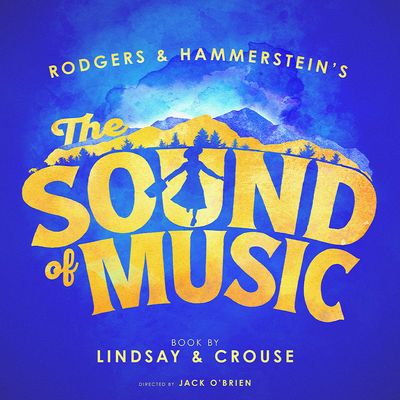
In this episode, Jose speaks to Ashley Blanchet who plays Maria in the Paper Mill Playhouse production of The Sound of Music. Blanchet speaks about playing one of the most iconic characters in musical history and making it her own... Read More
From the show: Token Theatre Friends
Featured Shows
About
In this episode, Jose speaks to Ashley Blanchet who plays Maria in the Paper Mill Playhouse production of The Sound of Music. Blanchet speaks about playing one of the most iconic characters in musical history and making it her own. The conversation was recorded over the Thanksgiving holiday, which gives Blanchet to talk about the many things she's grateful for.
Transcript
This transcript was automatically generated and might contain errors.
[0:14] Ashley Blanchet: Welcome to Token Theatre Friends. I'm so happy to be talking to you today. Although this won't air obviously today, and it didn't air yesterday, which was Thanksgiving. Just for people who are just hearing this, forget about all this nonsense that I'm saying right now. And let me get to the point of the question, which is Ashley, what were you thankful for? What are you thankful for this Thanksgiving, given it's going to be in the future?
[0:46] Ashley Blanchet: Oh man, I'm thankful for so many things. I feel like the pandemic really put a lot of things in perspective. And one of the main things for me was that I wasn't doing a good job of balance in my life. And if you could take it as a gift, you know, not being able to do what I had trained to do my whole life, what I've been doing with my career, what I've been so, you know, streamlined focused on didn't exist anymore for at least a year. And so it made me have to take a step back and say, who else am I? What else is important to me? And a lot of that I realized was the people in my life and my family and my chosen family. And so I think this year, one of the things that I was thankful for was starting to really make an effort to balance that out a little bit better and to, you know, to start to take more time on purpose, you know, to cultivate self-care, to cultivate my relationships and see that as an equal part of who I am and not just something that I do when I come home at night and it's whatever, you know.
And that's easier said than done, some days better than others. But very grateful for the love that I have in my life, the people that I love, the people that are around me, and my chosen family, which is who I spent my Thanksgiving with because my family lives in Boston. And most years I actually spend the holidays with them because a lot of, as you know, a lot of theater happens on holidays. It happens on Christmas. You do your Christmas in the morning and then you come see a show at night. So a lot of holidays I have spent in New York City with my chosen family. And so they're very important to me. And so yesterday was a day of thinking about that and taking time to reiterate how important that is and how blessed I feel to have those people in my life.
[2:41] Jose: That's really beautiful. Thank you for sharing that. And speaking of gifts, I honestly cannot think of a better gift in theater form than getting to see The Sound of Music. So can you tell us? I mean, I don't think there's anyone on the planet who doesn't know The Sound of Music, but can you tell us a little bit about, for those people who don't, whatever? For those bad people that don't know The Sound of Music.
[3:07] Ashley Blanchet: Um, it's an interesting story because I feel like it became the most popular movie musical of all time. You know, it broke so many records when it first came out. But the story itself is really not something that you would think is that predictable. It's a true story of a woman in Austria, Maria Rayner, who was going to be a nun. And she ended up becoming the nanny basically for this captain in the navy. He had a whole bunch of children with his late wife, and they ended up getting married, and then they ended up coming to eventually coming to America, actually, trying to escape the Nazis in World War II. And so this story takes that snapshot of their very exciting life with all their children, and they were a family of singers.
Actually, the family still sings today, and the grandchildren still give tours and tell the story. It's a very special, I think, story of resilience. And over the Christmas season, I think what's fun about it is it really is about family love, which is actually what's so funny, is what I was just talking about with Thanksgiving. But you really understand, I think, both concepts of his nostalgia for having to leave his country when the political arena changes, which is something that I think we're all kind of relating to in America right now. And yeah, just the story of love, and it's kind of a Beauty and the Beast type of story because the captain is very strict when she first gets there, and she's kind of able to show him how to hear music again, which I think is really just a metaphor for expressing love and showing love to his children. And so that's why I say it's Beauty and the Beast, because he kind of softens up and through love, actually, you know, becomes a better person.
[5:16] Ashley Blanchet: Here's Cosmo to agree with me. I wonder what Cosmo's favorite song in the musical is, "Doe, a deer, a female deer."
[5:29] Ashley Blanchet: So, you know, from Mary Martin to obviously Julie Andrews, who I think is the Maria that all of us think about. And even Carrie Underwood played her in the live musical version that I received a few years ago. When you get the opportunity to play a character that's so loved by people from so many generations, everyone thinks they know Maria. As an actor for you, what is the challenge? How do you find something about Maria to make her Ashley Blanchet Maria?
[6:06] Ashley Blanchet: Absolutely. It is a trap. It is a whole other trap. Because I grew up watching this movie over and over again. I adored Julie Andrews as a kid. I watched her in Thoroughly Modern Millie. I watched her in The Sound of Music. I wrote to her as a kid. My mother just sent me the letter where I was like, please, if you would send me an autograph picture, I want to be a musical performer, and I just love you so much. And I think your voice is kind of a miracle. And like, you know, this little seven-year-old girl writing to her. So I have the line readings of the way that Julie Andrews does it in the movie in my head. And then I'm a little bit self-conscious, knowing that a percentage of the audience probably has that.
Because sometimes, you know, when I do musicals and I'm like, oh, I have this musical in my head, I'm like, the audience doesn't remember. But in this case, a percentage of them will remember. So it's a balance though, because I don't want to just redo the line readings that I have in my head just for the sake of being different. So it has been a study in really going back to as much of my training as I possibly can. And a lot of that has to do with not only breaking down the script and seeing what it is and seeing what, you know, what the songs actually say with their lyrics and sitting down with it and actually looking at it instead of just singing it from memory. But on top of that, I think what's really been helpful for me is the other actors on stage and really listening to them and really working off of whatever they give me and not having sort of a planned performance or a planned way of that I'm gonna say these lines.
And going off of what they give me and what I'm seeing in real time helps me to adjust it to my own interpretation. And the more that we rehearse it, the more that we do it, I'm sort of finding my own curves and valleys of slightly, you know, interpretations of sort of the way that I would get this feeling across, that I would get this message across. And I think it's becoming more and more my own over time, which I'm really grateful for because it was a big fear of mine that I wouldn't be able to, because I'm a sponge and I love to do impressions. So like, you know, I was afraid that it would just become a Julie Andrews impression. But yeah, it's sort of slowly becoming my own, trying to root it in my training and in the other actors on stage and what they're giving to me, which is what I do anyway, even if I didn't know the show.
[8:35] Jose: But have you discovered anything about Maria now getting to play her that you never knew as an audience member as a little girl who loved Julie Andrews in The Sound of Music?
[8:46] Ashley Blanchet: Oh, yeah, absolutely. What's so funny about it is that as much as I love Julie Andrews, I didn't ever think about it in terms of, oh, that's me. You know, here's this blonde-haired, blue-eyed woman from Germany or Austria. And I, as a Black, you know, I grew up in a household with two Black parents. And I'm a Black woman. And so seeing that, I didn't really relate to that myself personally. However, now doing it myself and reading over the script and having had Mark Hobie, our wonderful director, you know, say, do you want to play this part? I am sort of realizing, like, oh wow, she's outspoken. She is a rebel. And that's a really kind of a powerful characteristic for 1959 when it was written that this woman is kind of, she's a rebel.
She's not doing what she's supposed to be doing. And, you know, she's speaking out against the captain when she first meets him, when she first walks through the door, and she's continuing to challenge him and say, you know, not be afraid of him the way that everybody else is. And at the end of the play, that ends up being what saves them from the Nazis is her ability to kind of be mischievous and not go with the flow and think on her feet, which is her training from being a rebel all those years. So I think in a way, it's kind of a feminist show about a woman who really isn't afraid to be herself, isn't afraid to speak her mind, isn't afraid to be honest, and because she does it all through love.
So I think these are all things that I aspire to, and these are all things that I would love to relate to. And it's fun to get a chance to realize, like, oh, I think maybe I did connect to this all these years ago because I did sort of see myself in it, you know. And that is kind of fun to realize that even though it's not something that looks like you, it can still, you know, touch you for deeper reasons than you think.
[10:51] Jose: That's really beautiful. So I get that you were a rebel growing up. So how was it in your family when you told your parents that you wanted to be an artist, that you wanted to be an actor?
[11:04] Ashley Blanchet: Well, I was very lucky because I had generations of people that sort of set me up for the ability to do this, you know. My father wanted to be a musician, he was incredibly musical. He wrote music on the piano without really ever having taught it. He played the drums all through growing up, but his father never went to college and said, you have to go to college, you know, you have to do these things. So my dad became a businessman, he became a lawyer. But because of those things, when I grew up and I said, hey, music is so important to me, I want to do this with my life. Instead of my dad saying, hey, you have to go and get into college and you have to do these things, I was very lucky. I was in the generation where he said, oh, I understand, I understand that pull, you know, I understand wanting to be a musician, and I have set our family up enough that I can send you to a performing arts high school.
So I'm very cognizant of that privilege at all times that the generation just happened to hit me at the right spot. That although my father wanted to be a musician, I'm the one that gets to benefit from it. So I'm very, very grateful to my family for making those sacrifices so that I could do what I love.
[12:17] Jose: I wonder now if you're comfortable sharing, if this isn't too personal, is there a song that your dad loves to hear you sing? That he's like, please sing that for me.
[12:28] Ashley Blanchet: There's songs that my dad likes to sing for me. No, my dad used to sing me to sleep actually a lot. And he would sing me a lot of his school songs, actually, because he was in the glee club. So he would sing all this music from the Glee Club that he would teach me and teach me songs in Latin. And we would go see Broadway shows because I grew up in New York. And so my family very oftentimes would take us to go see opera, to take us to go see musicals. And I'm very lucky for that as well. And it was a big part of our home life growing up. My dad used to actually, this is a kind of interesting story. We would sing along to the Beatles, for example, on our way to him taking me to my ballet class, for example.
And he would we would sing along and then he would turn down the music at random moments and see if all the kids in the car could hold their harmonies. And you know, so I think even before I started taking like professional lessons, he was sort of instilling this importance of music and this love of music in me from a very young age.
[13:28] Jose: So that technically was the Maria Rayner figure, right, in your childhood?
[13:34] Ashley Blanchet: Absolutely, absolutely. Yeah, you're right. You're right. This was more a part of my childhood than I thought.
[13:40] Jose: That's really beautiful. I wonder if he ever made like outfits for all of you from the curtains and have you spike all over time.
[13:48] Ashley Blanchet: Wait a minute, you did.
[13:51] Jose: No. Being in a property that's again as beloved all over the world, like The Sound of Music, I wonder if the element is kind of, you know, like I always bring up The Wizard of Oz for everything. That's like my biggest, I don't know, good thing.
[14:09] Ashley Blanchet: Or two.
[14:10] Jose: Yeah, for everything. So I wonder if for you, you love the piece so much, does being in the piece feel at all like Dorothy discovering that the wizard is just like an old guy behind a curtain, or instead does it allow you to uncover new magic that you didn't know was available for you until you're a part of the musical?
[14:35] Ashley Blanchet: Well, I think anytime you work on a Rodgers and Hammerstein piece that's a classic, I think you realize the depths of the genius behind it, and it really is so well written, all of it.
[14:48] Ashley Blanchet: One thing that's interesting about it is I don't think I ever realized how heightened the language is. It's really not casual at all. It's very formal writing. Um, like she says at one point, um, I don't think first of myself anymore, I think first of him. And you really have to think of it almost like Shakespearean kind of at this point because nobody really speaks like that and endow it with so much subtext, but every single word is thought of very specifically and put out there for a very specific reason. All the comedy is very specific, you know. Um, the writing is just so, so good that if you follow this map, you really understand what they were going for and you see how it works. And you almost don't really want to mess with it too far because it's such a, it's just, it just works so well.
And that I think that's why it's a classic, you know, because you discover little things about it as we're doing it constantly where you're like, oh wow, like that's so well done. That's so well made. And I think it stands the test of time, you know, comes on for Christmas every year because it touches people in a really deep way. Um, and it's just put together so well. And I think it's surprising how touching it is. Um, because you think at first it's just the story of a woman who is, you know, going to be a nanny with children, but it has more depth than it just being about a woman and kids and fun and laughter and music. I think it really has some serious adult messages, you know, about resilience and about nostalgia and about love and about loss.
And I think everybody can relate to it, even if they're not currently escaping Nazis. I think these are all themes that really come through, especially with the beauty of the music. I think you hear these songs, you hear "Ado Vies," you hear "Climb Every Mountain." And I think everybody in the room while we've been rehearsing has been surprised by, you know, how deeply it touches us and how much this music really hits home because of how beautiful it is.
[16:53] Jose: Okay, so can you brag a little bit now about getting to the title song? Like, I feel like every little child on earth has always wanted to troll, you know, we see a spot of grass somewhere, and all of us are Maria um Rayners finally, and you get to do that. Um, get through that every night for a while. So what's going on in your mind with the trolls? And like it's, I, I, I, it's probably like the most iconic title song in any musical ever, I think.
[17:28] Ashley Blanchet: That's the hardest song of the show for me, honestly. Where it's placed in my voice, we decided to take it up a third because where it's written in the score, the score that they send out to um people to perform the show, it's lower than in the movie. So we're like, let's put it back up, which was my big stupid idea. But so now I really have to be warm and really have to be ready. And also the show actually starts in the abbey with all the nuns singing, and they sound so beautiful. We have these beautiful singers that are classically trained. And so the sound of it is just stunning. And it starts off with in complete silence. It's a cappella, and you just hear the sound of these beautifully trained singers, and it's gorgeous.
And so then I come on, so I really have to be on my game after they sing and really inspired by hearing them. Um, and that song is the highest in my registers. So I'm, I'm actually just in rehearsal. I've been focusing on my technique, I've been focusing on placing it right, making it sound good. But hopefully by the time we start performing it, I can let go of that a little bit and I can enjoy it, and I can not have to think about taking deep breaths for the right moment and all that stuff. Because it really is, it is a beautiful song. And um, it's a song that everybody, I think from the very beginning, everyone just hears this music and they're just like, oh, I know this as well as I know the alphabet.
You know, I, it is almost like our American traditional music, I think is classical musical theater. These are songs that we sing at Christmas time, these are songs that we've heard all our lives, whether we know the musical or not. And so I think it just hits different when you grow up hearing it and knowing it. And you know, um, so I think it is, it is kind of a cool moment for everybody in the room, at least while we've been rehearsing it, to be like, wow, this is really meaningful to us in a way we didn't think it was gonna be when we got the job. I love it so much.
[19:27] Jose: Is there a song, I think it's called, but Maria doesn't get to sing that you would love to sing at some point? Like if they were to do, remember that West Side Story where Cher did every part? If they were to do that with you, is there a song from The Sound of Music that you're like, anything to sing that song someday?
[19:47] Ashley Blanchet: You know what? They, this musical, I can't be too greedy. Maria gets to sing most of the songs. Um, but I do enjoy watching um Elsa and Max. Well, they actually have two songs that were cut from the movie that are bops, they're jams. So I think people are gonna enjoy hearing two new Rogers and Hammerstein songs that they're maybe not used to hearing, that are obviously great songs that they'll love for the minute they hear them. And then of course, "Sixteen Going on Seventeen." We have um two actors that are so lovable and so cute, and the choreography is so cute. So I enjoy um watching those while I take a sip of water and rest every time we've been running it. Um, I don't know if I need to do it, but they're doing a great job performing it.
So I'm excited to see it when we move into the theater and see how it really comes to life. Those songs. I do love the songs that were cut from the movie. Like I agree, there are people who don't know them are definitely in for a treat. I don't know how to sing, but I, um, although Maria would say yes, you do. Uh, but I, I have such a soft spot for "Edelweiss." And I, one of my father's favorite songs. And when I read in, I had some book, um, some bio or something, when I read that it was the last song that Rogers and Hammerstein wrote together, every time that I listened to "Edelweiss," I just started sobbing because it's this like, I mean, I don't need to tell you this. It's like this beautiful anthem about loving your home so much.
And like you mentioned earlier, although fortunately we aren't running from Nazis right this moment, a lot of the things that are happening in the show, we're seeing a lot of like parallels in real life. Like obviously what's happening in America, and there's also the rise, you know, the ascendance of the far right here, which is getting super scary in so many different ways. Is being in the Sound of Music in any way like medicine or a balm for you to understand a little bit of what's happening in the world and to maybe calm down your fears and anxieties at all?
[22:11] Ashley Blanchet: Yeah, I know what you mean, especially when we're talking about the song "Edelweiss." The first time that we heard it um in rehearsal, I realized how much I could relate to the idea of um someone, you know, loving their home and seeing it change politically and seeing all this hatred come in and not relating to it at all. And uh what's beautiful about that moment is that he is escaping the country, he's becoming a refugee from this country that he loves so much. But what he's doing is he's singing a patriotic song, and he's saying, bless my homeland forever. And I think that that is uh such a beautiful sentiment that, you know, instead of feeling like, you know, everybody that I know is like, I'm so embarrassed to be an American, you know, I don't, I'm not proud of it, especially when Trump was president, you know, like, but all the things that he unleashed, all the Nazism that he unleashed, you know, the white supremacy that he unleashed.
Um, I think people that I know are saying, I'm embarrassed to be American. I hate being American. But for all that to be happening in your country and for you to say, bless my homeland, I'll always feel, you know, like this is my home. Um, I think that's a beautiful sentiment. And I think it's one that I wouldn't have felt except for what's been going on in our country for the past few years. Um, so yeah, so in, I don't know, I don't know if it makes me feel better to know that, you know, gosh, we can relate to what was going on in World War II. You would like to think that we had learned from it, and that we would look down on it and say, how could people behave like that? You know, people don't behave like that anymore.
Um, in some ways, it is kind of sad that we can connect to it, but it goes to show you, you know, what being a human is about is, you know, in a classical piece, what they bring up about being a human is oftentimes things that we can relate to no matter what's going on in the political climate or, you know, in that time period. You know, these are feelings that maybe will never go away. You know, how do we all get along together? Um, is a question I think we're gonna be asking as long as humans are around. Um, I hope, I like to think that we are getting better at it. I feel like as Martin Luther King said, you know, the arc of history is long, but it bends toward justice, you know. And um, so I think as you look back through history, you say, okay, you know, these things may have been going on, but hopefully things are getting better.
We're becoming more self-aware, we're becoming less um, you know, horrible to each other to some extent. To some extent. And I, I like to think that we're learning and we're improving as humans, and that, you know, we're becoming less harmful to each other and to the planet as time goes on. That's what I believe.
[25:32] Jose: That's the hope, right? So, you know, onto a more uh happier note, I would say from, you know, from Frozen to Cinderella to The Sound of Music, so many of the characters that you've played, uh I can imagine have tons and probably hundreds and thousands of little boys and little girls who see you and you're the dream princess, and you're who they want to be, and you're the role model, and you're also doing shows that in so many ways provide children with valuable lessons. So, other than The Sound of Music, what were some of your favorites growing up that taught you something about the world that gave you priceless knowledge in musical form?
[26:20] Ashley Blanchet: I think that when I was growing up, there was a lot of like Disney musicals that like Howard Ashman and Alan Menken wrote, um, that I think really touched the entire community. Because I was watching a lot of like golden age musicals that not a lot of kids were watching. So I was a nerd. But I think that the Disney musicals definitely touch people, and I think that they definitely had messages about love, about treating people well. I feel like in Beauty and the Beast, there's a line that's like, um, they're going to kill the beast, and they're like, we don't like what we don't understand. In fact, it scares us, and this monster is mysterious at least. And like over time you realize that, oh, that's a, that's a kind of an awesome lyric.
We don't like what we don't understand. In fact, it scares us. Like, oh, that's a good one. Um, so I think any Disney musical has a lot of like good gems if you watch them again. Um, any famous musical I would say probably has themes that are beautiful. The one that jumps out to me at the moment is West Side Story. Um, I think, you know, that's probably the most famous and best musical of all time. And it sure definitely has some beautiful messages about love. I think pretty much any musical or any story that has an uplifting message, it probably comes back to love, loving people and being more loving towards people is probably what the message comes down to eventually. Um, I think every musical is probably about that to some extent.
[27:57] Jose: Yeah, I mean, like Burt Bacharach said it, right? Like what the world needs now is love.
[28:02] Ashley Blanchet: Yeah, and that's what music is, you know. I think it's, I think it's music in a different wavelength. I think that's why it touches people so much. Because, you know, it doesn't, you don't have to translate it. It's not in any particular language. It's in every language. As soon as you hear it, we can all relate um to the way that we're touched by it. And I, I don't know why. I would love to find out from some like scientists or something, you know, what it is. Is it, is it because when we were in the womb, you know, we heard these sounds and we feel, you know, safe or something? I don't know what it is, but I do know that music is medicine, you know, and um, and I think that's, that's what musicals are all about. They're medicine.
[28:49] Jose: And not to mix all my Julie Andrews references, but you will be giving people sweet medicine from December 2nd through January 3rd, right? At Paper Mill Playhouse. So would you like to invite our viewers and our listeners to come see you as Maria in The Sound of Music?
[29:07] Ashley Blanchet: Yes, please come and thank you so much for uh for putting this out there. It's gonna be a really beautiful time and it's, it's a really fun thing to do for Christmas, I think, with your family. So come on down to Millburn to the Paper Mill Playhouse and come check us out.
[29:07] Jose: Thank you so much, Ashley. Break a leg.
[29:30] Ashley Blanchet: I'll think of you, Jose. I'll think of you for sure and try to enjoy it a little bit more.
© Broadway Podcast Network, All Rights Reserved