

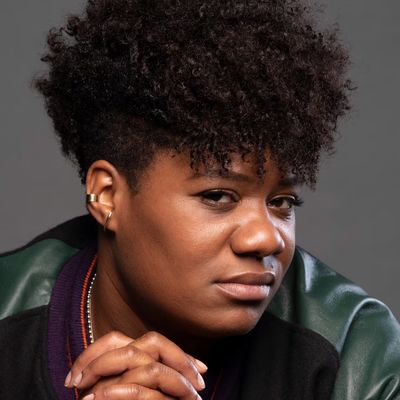
In this episode, Jose speaks to Adrienne C. Moore and Sean Boyce Johnson, two of the stars of Black Odyssey. The duo talks about the genius of playwright Marcus Gardley, share tips for beginner actors who want to try out working in different mediums, and comment on fearlessness and the importance of saying yes to things that scare you... Read More
From the show: Token Theatre Friends
Guests
About
In this episode, Jose speaks to Adrienne C. Moore and Sean Boyce Johnson, two of the stars of Black Odyssey. The duo talks about the genius of playwright Marcus Gardley, share tips for beginner actors who want to try out working in different mediums, and comment on fearlessness and the importance of saying yes to things that scare you.
Transcript
This transcript was automatically generated and might contain errors.
[0:18] Adrienne C. Moore: I play Al Sandra Sabine in Black Odyssey as well as two other tertiary characters, Circe and Charybdis, who was a part of the Sirens.
[0:32] Sean Boyce Johnson: And I play Ulysses, Ulysses Malcolm Lincoln, and I don't play any other characters.
[0:39] Adrienne C. Moore: All the characters are the titular character, honey.
[0:43] Sean Boyce Johnson: Yeah.
[0:45] Adrienne C. Moore: A lot of the characters are conspiring to help him come to consciousness in a way.
[0:53] Sean Boyce Johnson: Black Odyssey is, let's say, like an updated version of the Odyssey that we know.
[1:01] Adrienne C. Moore: Like how would you describe the play?
[1:05] Sean Boyce Johnson: Well, I would say it feels more like a retelling. It plays as a fever dream in a way.
[1:19] Adrienne C. Moore: It happens while Ulysses is under the knife for a condition called hydrocephalus. He's being treated for it, and as he's being treated, he's hearing voices and seeing visions of his ancestors and of his family, things that are happening in real time and things that are happening in the past and present and future, and a lot of these interactions are part of our conspiracy in order to bring him back into consciousness so he can see his family and he could be healthy and present for them.
[1:54] Sean Boyce Johnson: Right.
[1:55] Adrienne C. Moore: Marcus Gardley is a genius. And I don't think I have to tell you this. Like you know it very well.
[2:03] Sean Boyce Johnson: So I wish that to open a script by Marcus and just dive into it.
[2:11] Adrienne C. Moore: Like you're bragging about it.
[2:13] Sean Boyce Johnson: Like I'm sure it's incredible.
[2:15] Adrienne C. Moore: All the time.
[2:16] Sean Boyce Johnson: I mean, I met Marcus very early on in the beginning of my career in New York. And he saw me in a play. Um, and he invited me to sort of join his circle of actors when he would write and have readings and workshops.
[2:41] Adrienne C. Moore: So I have been on the Marcus Gardley train for over 10 years, and I have loved every single thing that he's done. He and I always promised to work together. And so when this opportunity fell on my plate, I was like, come hell or high water, I'm gonna make this happen because I haven't, you know, and I've been blessed to work with a lot of writers thus far in my career, and he definitely is one of the standouts because his words are poignant, his storytelling is elaborate and emotional. Like all the feelings that you could feel, you're gonna go on this journey on in and on this range of emotions because he creates such specific characters, and he allows you within the wording and in the language to just give it everything, every facility that you have within you to make this character come to life and to make the story come to life.
So it makes perfect sense that it was this heroic crazy epic saga tale of a black Odyssey that we call Black Odyssey to finally be able to like say his words every night. It is an honor for me for sure.
[4:04] Sean Boyce Johnson: It's an honor for me as well. And to open the script, it can feel intimidating because there are so many words and you want to do it justice. And what I discovered with the script and how Marcus writes is it reads one way and then you hear it and it's doing something sonically with the alliteration and the sounds and the words that sound alike but don't mean the same thing. And even in performances, I'm making discoveries. There's a scene where a character's picking my hair and they go, "Tell me a story," and it doesn't have to be a good story because I ain't picky. And I was like, my brain exploded because I'm like, they're picking my hair, you know what I'm saying? It was just like, wow, like it was just a moment and I was like, there's so many other little things where you may not discover it until further into rehearsal or later. It lands in a weird way.
[5:06] Adrienne C. Moore: It's beautiful, right? It's always revealing itself to you, the script, the play, the words, how you can play with the words and how you can emphasize a meaning or a point, you know, within it. And then sometimes you'll be saying a line every night for like two, three weeks and then it will hit you like, that's what that, like that line means so much more. And sometimes it can happen when an audience member reacts to it and then you hear it through their perspective and you're like, oh shit, or another actor looks at you a certain way and you're like, oh, that's what that is because I thought it was this thing, but it's bizarre.
[5:56] Sean Boyce Johnson: That's also so cool though. Because like, I'm pretty sure that in a parallel universe, Marcus is Secretary of Education because at a time when, you know, like we are being told that classics and history should not be, you know, taught or visited, he's doing this incredible thing which is like reworking the classics to be able to include black history and merge them and see like this is why both are important and you can disregard one or the other. So you kind of already touched on what you discover about the play every night, but what have you discovered about, I guess, the way history is told by doing this play with him?
[5:57] Adrienne C. Moore: That it's cyclical, you know, the things that were being written about in the 60s, heck, during the time of the Odyssey, you know, I mean, not during the time because it is a mythology, but I mean, you know, that these same stories and struggles that people go through is cyclical. It happens to us all. I mean, the fact that you could take something that was this fantastical story and apply it to a modern-day black man and his family and what's going on today, but then also jump periods in time and in space and in history, and it still be relevant, you know.
[7:28] Sean Boyce Johnson: And what I also love is that yes, you have the Greek mythology, you have the black history and the black culture. You also have, you know, spirituality, deep roots of spirituality and African ideas and folklore, and it all blends together and it makes sense. Like it's interesting. Some of my feedback from the audience is like, sometimes I didn't know what was happening, but I was still there, and then it all made sense to me, and I went back and I was like, oh, that's why that, you know, it's interesting how it all kind of collides in this beautiful kaleidoscope and this tapestry of black culture, you know, and history and music, and it just all there.
[8:21] Sean Boyce Johnson: Everything she said.
[8:25] Adrienne C. Moore: It's so refreshing and so rare, I would say, to hear actors talking about listening to how the audience is reacting when you're on stage. Like I feel like usually, I don't know if maybe I haven't asked the right questions, but I've always been under the assumption that people just kind of learn how to block audience members.
[8:47] Sean Boyce Johnson: No, no, no, no, no. Not our audience, but in general.
[8:48] Adrienne C. Moore: To tell them shut up.
[8:53] Sean Boyce Johnson: But our audience is very vocal. It's interactive.
[8:56] Adrienne C. Moore: Yes.
[9:01] Sean Boyce Johnson: And truthfully, I do think some moments live or die with whether or not the audience is there with us. And if they're not there, you can feel it. You can feel that there's something off. So when they're with you, they're with you. I always look at it like, and I've always thought this, no matter what play I was doing. It always feels like you rehearse a play, you do room runs, you do a tech rehearsal, but the play isn't complete until you get your last scene partner. And the last scene partner is that audience, and they're different every night.
[9:32] Adrienne C. Moore: Yep, yep, yep, yep.
[9:34] Sean Boyce Johnson: I agree. I a thousand percent agree. And the play, at the very beginning, you know, we say, "Let us begin at the beginning so we can end at the end." And we are literally inviting the audience into this world, into this experience, into this story to come along with us. I mean, we say, you know, shout out, clap if you feel like clapping, stomp, dance, you know.
[10:01] Adrienne C. Moore: And then I remember we were talking, actually, because Saturday's show was probably one of our most vocal audiences.
[10:09] Sean Boyce Johnson: Very vocal.
[10:11] Adrienne C. Moore: That we were like, okay, okay. I mean, I think at one point, you know, there are moments of the show where you feel like you're watching our version of Good Times and The Jeffersons, like together with the family dynamic, right? And the audience chimes in and they'll be like, uh-uh, girl, don't do it. No, no, don't do it. And you should be like, okay, like, let me get the words out.
[10:40] Sean Boyce Johnson: They're in it.
[10:41] Adrienne C. Moore: They're in it. It's built to be an interactive piece. And so throughout the show, we're talking to the audience. At one point, I mean, I don't do it anymore, but at one point I was sitting in an audience member's lap, you know, but then I was like, maybe for the COVID safety of it all, I shouldn't keep doing that, you know. But it's a very interactive play.
[11:03] Sean Boyce Johnson: Yeah. There are even moments when I give a speech or moments in the where I look at the audience and I address them directly. I usually pick a person and address them, pick a different person every night. Or even there's a moment where we do the sirens, where we do like a musical number and I have eye contact because my character is looking for help in the moment.
[11:27] Adrienne C. Moore: So I look at an audience member like help me, please. Like, you know, because they're there. You can't you can see them, you can't act like they're not there.
[11:36] Sean Boyce Johnson: Do they always want to help, or have you had cases where someone's like gets like teached fright?
[11:42] Adrienne C. Moore: There was one person when I pointed to them and they like shuddered a little bit, like me, like you know, because it's a deep moment. So when I pointed to them, I could tell that they stopped breathing. Um but I'm like, no, you came here to be a part of a show. You're not this is not the show to come and be like entertaining me. You can't just sit in the audience and just it it's the type of show where you have to be a part of it. You're in there, you're in the room.
[12:09] Sean Boyce Johnson: But it's almost like the audience is kind of like an extra like three courts, right?
[12:16] Adrienne C. Moore: Well, the audience is a character, trust me. They're a character in the show. Even when they're silent, you know, because that even speaks, you know, and a lot of times actors think when an audience is silent that they're not engaged or involved. But, you know, um, I take that as they're just listening deeper.
[12:36] Sean Boyce Johnson: We were just talking about that yesterday.
[12:38] Adrienne C. Moore: Yeah, yeah. Cause sometimes we do, sometimes we do get, you know, or we get a really quiet audience and it's like, what do you do then?
[12:48] Sean Boyce Johnson: And so I tell myself, because it is such a we we do, we do receive and we enjoy the laughter or the talk back or the you know, this the sniffles and the cries that we hear, or the you know, the catching of the breath, like all of that is like, okay, they're there with they're there with us. And so sometimes that can feed you, and then when you don't hear it, you're like, wait, are they not there with us? Are they not do they not think that was funny? And you can you can get inside your head or you can say, Oh no, they're just really paying attention.
[13:14] Adrienne C. Moore: Right. Oh, they're listening, they're quiet throughout the whole show, and then you hear someone blowing their nose, like during the sad scene, and you're like, oh yeah, they're there. They're there, they're still there.
[13:27] Sean Boyce Johnson: Like as people that, you know, like as creative people and artists that obviously uh get something from this feedback. What replaced probably there was no replacement for it, but what occupied, I guess, the space of an audience during the years that theater was, you know, uh on a break because of the pandemic. How did you get that?
[13:51] Adrienne C. Moore: I don't know, those creative juices. Like how did you feed that relationship without having a live audience uh in your life?
[14:00] Sean Boyce Johnson: Don't that's I think that was what was hard for a lot of artists is because you don't have that relationship to the people who are consuming the content that you're creating or the work that you're doing. You don't have a direct relationship with them.
[14:14] Adrienne C. Moore: Um I think that's also the challenge of like, you know, we're acting on camera. You know, you don't get to be in contact with the people who are watching you every week or watching you, you know, day to day.
[14:28] Sean Boyce Johnson: Yeah.
[14:30] Adrienne C. Moore: Yeah, it was it was hard. I mean, I um I think we all, you know, get into this business because of our love of storytelling and our love of entertaining and our love of creating this world and this portal for people to you know go through and escape, you know, whatever their reality is for just a moment in time. So it was hard to to not uh have that.
[14:57] Sean Boyce Johnson: And even out and I'll be honest with you, you know, I went back to shooting relatively early in the lockdown in the pandemic. And as excited as I was about like, oh my god, I get to go back to work and you know, do some things, it was a challenge because storytelling and how we tell stories changed and shifted.
[15:17] Adrienne C. Moore: I mean, just how set protocol had to change. And even now today, you know, in the audience, you know, our audience members have to wear masks. And I always look forward to like looking in out and seeing faces, especially with a show like this. Like I can only imagine if we had if we would have done the show before the pandemic, or like hopefully in like five years, less than five years down the road when you know we're not required to wear masks in the theater and test all the time, and you know, have these, you know, it's a breakout or whatever, that we can like go back to seeing faces, you know, because especially in a show like this, because it is so interactive.
[15:57] Sean Boyce Johnson: And we do depend on like seeing and hearing from the other characters, the audience in our show.
[16:04] Adrienne C. Moore: Right.
[16:07] Sean Boyce Johnson: Has has your relationship with your craft changed in any way because of this uh, you know, weird times that we just are coming.
[16:16] Adrienne C. Moore: I don't know if we're coming out of that or not, but you know, like this years that we've experienced recently.
[16:23] Sean Boyce Johnson: Yeah, I mean, yes and no. I mean, it's interesting because when I first started doing a lot of theater, I was doing like regional and you know, traveling to different theaters. And so the dynamic is different because you're, you know, staying in this apartment or this housing situation with everybody else. So you kind of already are just kind of a club together.
[16:44] Adrienne C. Moore: Um, and I remember I did this show once. We opened at La Jolla and then we came back and opened at Playwrights. And so we had this wonderful time in La Jolla, California, like getting to know each other and like you know, whatever. And then we come back to New York and it's like, all right, I'm bye. Just like leave and you go home. And then sometimes you go you go grab a drink with your castmates afterwards, and sometimes people like, oh I've been seeing y'all for 10 hours today. I need to be out.
[17:14] Sean Boyce Johnson: But I will say this cast is extraordinary, and we love each other. We we like we we fanbooed up like day one. Um, and it's been it's been wonderful. Like, I even on the tough days, and I know Sean will agree with me, even on the tough days when I was like, man, I don't know about this, and I can do all this that they're asking of me. I literally went every day because of them.
[17:41] Adrienne C. Moore: Because I I love this cast. There are even moments. I mean, we were talking, we were like, we don't even have to do the play, we can just hang out. We can just go to the theater.
[17:54] Sean Boyce Johnson: There was one time I literally came out like I didn't want to do this show tonight, but dang, I want to hang out with y'all.
[18:02] Adrienne C. Moore: Yeah, and that was us last night. It was great to kind of hang out with the cast and you know, their friends and family after the show.
[18:10] Sean Boyce Johnson: Um, because yeah, it's it's just a great group. It's just a great group of people.
[18:14] Adrienne C. Moore: It's a blessing to be a part of something where everybody's genuinely wants to do their best in order to tell the story, and you can tell that it's it's about the story, and and to get along with people, to get along with the cast, and even the crew, you know, the people backstage who were helping us get our wigs and clothes on, like we get along, and that's a blessing to have that because it doesn't always turn out that way. Sometimes it's the exact opposite.
[18:51] Sean Boyce Johnson: Okay, so Adrian, I'm about to do some cross-referencing, I guess, to other episodes. So uh, I will ask Sean a question that we've asked you in the past, so I'm not trying to bypass you or ignore you, but if you want to know what Adrian said, go back and listen or watch our uh episode with Adrian, which is like a fantastic episode, by the way.
[19:14] Adrienne C. Moore: So, Sean, the question for you is why why theater? Why did you want to get uh why did you want to become an actor?
[19:23] Sean Boyce Johnson: Whoa, okay. Um, I was always an imaginary, I grew up as an only child, and I grew up in uh in a I grew up in a housing project, and being an only child in the housing project, you sort of become self-reliant on your imagination. And so I had a really wild imagination. I fell in love with make believe at an early age. I would make believe everything in my room. I'd be doing sailing ships and shit, doing crazy stuff in my room.
[19:56] Adrienne C. Moore: Um, and as I got older, I never grew out of it. And I found the closest thing I could do to living make believe as an adult, which is this, and then eventually finding purpose within that, and then being like, oh, I can use this to affect other people. It's not just like a selfish pursuit, it's actually something that I can do to be of service.
[20:19] Sean Boyce Johnson: Um, and so that's that's where it came from, just the the love of make believe and imagining something or escaping or finding something new within myself that I didn't know that I had.
[20:32] Adrienne C. Moore: And I've tried other things, tried a lot of other things, and it didn't work.
[20:37] Sean Boyce Johnson: And I was like, okay, this is what I'm supposed to be doing.
[20:40] Adrienne C. Moore: Okay, and I want to know what have you tried, and I don't think uh I ever asked you this patron, like, have you tried something that's not what you do and do so well in love?
[20:51] Sean Boyce Johnson: Yeah, I tried a lot of shit. I was like at one point, okay, so like at one point I wanted to be a forensics detective, so I went to the high school for law enforcement and public safety, study forensics, and was like, uh, I wanna do this thing. Then we went to a real forensics lab, and it was nothing like it was on TV. It was nothing like CSI, it was like cold for fluorescent light, white walls. I was like, where's the blue light? Where's the suits? Where's the the dim dimly lit labs? And it didn't look like that. So I was like, oh, I wanna be on the show. I don't wanna do this every day.
[21:28] Adrienne C. Moore: Um I've tried, I thought I thought I wanted to be a radio broadcaster, thought I wanted to be a newscaster. There were a bunch of things I tried.
[21:37] Sean Boyce Johnson: A model.
[21:40] Adrienne C. Moore: None of the none of that shit really clicked.
[21:43] Sean Boyce Johnson: You could still model Sean.
[21:45] Sean Boyce Johnson: Hey, you think so?
[21:46] Adrienne C. Moore: You think so?
[21:51] Sean Boyce Johnson: I had to trim that down a little bit at the time.
[21:55] Adrienne C. Moore: Um, yeah, and me quickly, um, I think every actor, you know, goes through a journey of several jobs. I was in marketing and advertising before I even moved into the arts professionally and you know, went back to graduate school and got my degree and so forth.
[22:13] Sean Boyce Johnson: So I was an event planner and I, you know, worked with major Fortune 500 companies and helped them achieve their vision for um their marketing campaigns.
[22:26] Adrienne C. Moore: And then uh when I was that struggling actor, I did everything from working in a cookie shop, I was a nanny for years. Um I worked, I worked at CFO magazine.
[22:40] Sean Boyce Johnson: That's when they tried to pull me back in.
[22:42] Adrienne C. Moore: When they realized how good I was, they were like, Oh, are you sure you don't wanna you don't wanna get back into marketing?
[22:48] Sean Boyce Johnson: And I was like, nah, no, I'm a good. And surprisingly, funny funny enough, my old boss, my old boss from CFO magazine came to the show a couple nights ago. And she was like, and she pulled her mask out. She's like, hey, and I was like, oh my God, Molly. That's fantastic. You're like, I feel like I'm back to try to get it. I don't know. It's funny, I think I had an influence on her because after she left the company, she started working at BAM and now works at City Center. Wow. You see, show up where you're supposed to show up. God'll show up. Yes. And sometimes when you follow the thing that you're supposed to be following, you even said this, Adrian. When you follow the journey that you're supposed to be following, it leads others to where they want to go and inspires others to do the same.
[23:40] Adrienne C. Moore: Mm-hmm. We get deeper now. I you I was like a cater waiter. I was a tour guide at Radio City. I did a lot of shit. It's crazy. Like actors, we do a lot.
[23:57] Sean Boyce Johnson: Yeah. Question. I got a question. Can I ask a question, Jose? Can I? That's cool.
[24:04] Jose: You to you.
[24:07] Sean Boyce Johnson: What was the job? Or what was the yeah, where you were able to transition full time into being a professional artist?
[24:17] Adrienne C. Moore: Like the acting job?
[24:19] Sean Boyce Johnson: Yeah, like when you were like, oh, I don't need to like do side jobs anymore. I can like this is I'm a professional actor. My income draws primarily from this.
[24:29] Adrienne C. Moore: I think it was voiceover stuff. And that's how I got my SAG card through voiceover first.
[24:36] Sean Boyce Johnson: Oh yeah.
[24:37] Adrienne C. Moore: It was like little narration gigs here and there, commercial here and there. And I was like, oh, okay, I'm I can I can survive you know got it kind of like that's kind of like the newscaster job in a way right like using your voice yeah but then you can actually make believe because newscaster I mean like I know they make believe a little bit they did no they actually make believe a lot but but it's a different kind of make believe you know um you can still act and play different characters or um but also you you don't there's a way with narration where you're invested but you're you're also not you it's it there's an objectiveness to it that I really enjoy with with um narration.
[24:42] Sean Boyce Johnson: The two of you followed uh you know the the uh academic path in order to become actors and when you're in school you are usually taught you know the classics not in this cool way that Marcus does the classics but the classics as this like imposition on this like you have to learn the canon because it is the canon and we cannot question it. So what are some works that you wish were regarded as part of the canon that aren't uh maybe done enough or maybe people just never uh seem to stage at all you know also well my my idea of the quote unquote canon is different for me because the things that I consider canon for me are the plays that I like.
[26:23] Adrienne C. Moore: And then there's the plays that you learn about in school. But then if somebody was like, this is the canon of plays. As far as I'm concerned, every black play that I've read or that I like is in the canon too. The canon is subjective, I think. There's some teachers that are like, you know, there's just nothing to care. I'm not, I don't know. It's subjective, but I I think it also points to the lack of opportunities for you know BIPOC playwrights in general, black, indigenous, you know, people of color, because of who the core students are in the schools, right? You can, you know, I mean, I know we're moving toward the society of genderless casting and non-binary casting and so forth, and or you know, non, I don't even know all the words, but you know what I'm talking about, right? Non-traditional casting, that's the word.
[27:18] Sean Boyce Johnson: Um, but I remember specifically when I was in graduate school, we were doing plays that fit the student body, you know.
[27:28] Adrienne C. Moore: So we were doing a lot of plays from you know, white playwrights. Um so I think that issue kind of needs to be looked at at perspective, needs to be looked at with a little bit more scrutiny, because then in that case, I think there are a lot of BIPOC artists that should have their work as being considered as canons in our literary work. Like I think Alice Childress, I think Pearl Cleage, I think, I mean, I know we've done it, we've celebrated August Wilson. I know we've celebrated Lorraine Hansberry, as they should. But there's so many more. You know, Amiri Baraka. They mean right, James Baldwin. I mean, there's so many, there's so many um people who I think work needs to be lifted up on a regular basis.
[28:18] Sean Boyce Johnson: Think I think there's there's just there's a lot of playwrights who go unlooked because you know, it's it's like if we if it's not celebrating the August Wilson and Lorraine Hansberry, then you know they don't deserve the light, but they they just as much deserve the light. There's there's so many other stories that need to be told, but then because because those stories aren't being told in the education system, there are there are artists coming up that don't get the chance to say those words or that don't know that they are represented in text.
[28:49] Adrienne C. Moore: That there's that there are characters that are like them or characters that they could play. So many I remember being a young kid coming up looking for a monologue, and you know, this is before I really was aware of August as a kid trying to do monologue just to do monologues at home, and I'm like, I didn't I had no idea until I became like a late teen. I was like, why didn't I know about this?
[29:11] Sean Boyce Johnson: Mm-hmm.
[29:12] Adrienne C. Moore: Mm-hmm.
[29:13] Sean Boyce Johnson: And let's be clear, Marcus Gardley will definitely go down in that book of canon, but you know, of works that or are playwrights whose work will be um heavily, heavily cycled through the generations. I remember one time I was having a conversation with him, and he told me he had 15 plays commissioned at one time.
[29:44] Adrienne C. Moore: You wrote that many plays. In addition to all this plays that you didn't get to know and learn about until you were done at school. What were some other things that you wish school included?
[29:58] Sean Boyce Johnson: Because I'm actually right now, the reason why I'm in Spain is I'm going to grad school. And in so many ways, the the you know, academia seems to be so stuck in this very narrow-minded idea of how things should be done and how everything has to be like scientific process and all of this like very um limiting and unimaginative ways of doing things. So what were some other things that that you wish got um taught in school?
[30:28] Adrienne C. Moore: The business of it all and and on camera work, because that's a different instrument. It it's the it's truth is truth, but there's a different instrument at play when it comes to your body and what things are doing. I I sometimes wish that the schools that I had gone to had prepared me. I feel like my graduate school experience prepared me a little bit more, but like undergrad and then you know, you take classes in the city, but nobody's teaching you. You gotta find a lot of the business shit, you gotta find out on your own.
[31:07] Sean Boyce Johnson: Or you you already find a mentor to tell you, you know.
[31:11] Adrienne C. Moore: I agree uh wholeheartedly, Sean. I think um there's not enough explained about how the business works, how to navigate it, how to how to get an agent, how to how to if you if you want to be a writer, how to how to break into the business. I mean, a lot of people get into the business through referrals, you know, um, or if they you know get selected at some type of talent showcase or you know whatnot. I mean, it's there's no clear cut path, um, even in going to graduate school, you know.
[31:45] Sean Boyce Johnson: Um, but yeah, I I think for sure to educate, uh, because and and I was I'd say this is this is the lesson that Snoop Dogg taught me. He said there's a reason why they call it the entertainment industry or the entertainment business.
[31:59] Adrienne C. Moore: Right.
[32:00] Sean Boyce Johnson: He was like, my job is the entertainment. That's what I was hired to do, and that's what I bring for it. But the business, that's what everybody else, you know, your manager, your team, your agents, this and this and that, you know, they facilitate the business, and you have to, you have to really remember that it's the entertainment business.
[32:19] Adrienne C. Moore: And both of them, you know, operate as as one and the same, you know, so to speak.
[32:25] Sean Boyce Johnson: But a lot of artists just think, oh, I just want to do art. I just want to, uh, it's great. Do art all you want to, but how much of the business do you know?
[32:34] Adrienne C. Moore: And how much of the business can you navigate?
[32:37] Sean Boyce Johnson: And if you really want to make a living, it's just the understanding that one hand washes the other.
[32:42] Adrienne C. Moore: Mm-hmm.
[32:46] Sean Boyce Johnson: That was a master class right there.
[32:51] Adrienne C. Moore: But the on-camera thing, I remember being an undergrad and like we were fighting for um on even in graduate school, we were fighting for like on-camera classes.
[33:01] Sean Boyce Johnson: Um, because it was a different thing.
[33:03] Adrienne C. Moore: We found that it's just a different instrument, you know, like the equivalent of like a set change on a stage on camera, all you gotta do is look to the left, and it's it's you telling a different story.
[33:19] Sean Boyce Johnson: It's it's a it's a lot for the actor's instrument to to to realize, oh, this is a completely different thing.
[33:27] Adrienne C. Moore: It's just not acting, is acting, but it's there's so many different things at play depending on what medium you're using. I remember the first few on camera auditions I went to and I was so nervous and we and we actually did do some on camera um classes in graduate school but the first few I was so nervous because it was like oh you know what they don't prepare you for is now you're in a room with a casting director you know and they got they done seen how many people today and they got you you third of 50 or you the 50th of a hundred you know what I'm saying so you go in there with all this like anxiety and I wanted you get on a ticket so my first few auditions I was so nervous Jose like no lie I straight up looked dead in the camera's eye the entire time like that before too I was like whatever the line was I was like I thought they looked at that camera and was like she's not gonna make it that's another thing they don't prepare you for like when you're on set and there's a camera that like that like this close to your face and you're supposed to have an intimate moment with somebody and there's this big black thing up against your face and you're just like and then and you're and your acting partners trying to do their best trying to be as close to that camera as possible and you're like girl that's not gonna work it's not working.
[34:50] Adrienne C. Moore: Yeah, and then they're gonna tell you, oh, you can't look in your scene partner's eyes because it reads differently on camera. That's happened to me before where it was like, you can't look in your eyes because it looks as though you're looking somewhere else, so cheat your eye line. Now I'm looking at a book on their bookshelf for the scene. It's different, you know? It's a different animal. Do you have any practical, that's not calling advice, but rituals or suggestions of things that you do that might aid people who are listening, who are actors who don't know how to move between mediums like the two of you expertly do? What are some tips that you have for people?
[34:50] Sean Boyce Johnson: There is a calibration of the—this is gonna sound real, I don't want to sound pretentious, you know when people say, oh, the instrument? But like there's a calibration, you know? How like if you work with sound levels, there's like an equalizer. There's like a calibration of that when it comes to theater and film. So like with film, it's like, oh, the equalizer for the visual, you can turn that up a little bit, but the equalizer for sound is maybe not so high because you're mic'd here, you got a mic here. But then when you're on stage, it's like maybe a little bit of both, but the visual, the intimate visuals may not read, but the bigger visuals read better because you're in the theater. So it's like calibrating that, like how much of my body, you know, for like a frame is like, you know, you can do something, but then on stage, it's like my legs and everything is in the frame. So my whole—there's like a calibration of what works for what medium or what shot.
[35:53] Adrienne C. Moore: I think what my mother has always encouraged me to do is to always remain open and be open to explore and have new experiences and just say yes as often as you can, you know? Obviously when it's within reason and you know it's not detrimental. But to say yes. And so I started my voice, my—similarly to you, Sean—my voiceover career was my first entry into professional work, and that's how I got my SAG card. Because I said yes. And I didn't—and my agent at the time only represented me commercially. And so I still had to get a theatrical agent. And so I was still like beating the pavement around New York, trying to get onto a new stage so somebody could give me a chance. And then that, you know, is what opened the door to stage and then film and then television. But it's always just saying yes and always being like, why put myself in a box if nobody else is putting me in that box?
[37:44] Sean Boyce Johnson: Yes.
[37:45] Adrienne C. Moore: If they're asking me, can you do it? Black, yes. Yes. And also like I got in trouble with that a couple of times, like saying someone your special skills, saying that you can't—saying that you can do something that you really can't do. Okay, well, don't be saying you're fluent in Spanish, bruh, if you ain't fluent in Spanish.
[38:05] Sean Boyce Johnson: I know, I know, I know.
[38:06] Adrienne C. Moore: But we know, but like say yes and say yes to the things that scare you. Because I think there's something there. There's something to be said for something that feels intimidating or daunting or scary. Say yes to that, move in that direction because that means that you'll grow and you'll learn. To me, that's fearlessness. Like a lot of people are like, what is fear? Like, what does it mean to be fearless? And I think it is to approach that thing that you fear, like to lean into that fear. That to me is fearlessness. You know, a lot of people think it's, oh, being powerful and like overcoming the fear, but it's like, no, it's actually being like, this scares the shit out of me. Let me try it.
I mean, that's what the Black Odyssey was. The Black Odyssey, when I read the script, I was like, it's a lot of singing. And I know Marcus, you know, Marcus is not like one of those sit down and just like talk kind of writers, you know? His characters are constantly engaging and moving and doing all these things. And so I was like, well, it's a lot of singing. And then I kept seeing my characters with a song and then a song and then a song and another song. And I was like, is this a musical? This is a musical. It's like just a play.
[39:22] Sean Boyce Johnson: Um, and that scared me. And I said yes to it just because it scared me, you know? Just because I was like, I don't know if I can do this.
[39:32] Adrienne C. Moore: Yeah.
[39:35] Sean Boyce Johnson: Same exact thing. Somebody in our cast said something that always cracked their—I think about it to this day when they said Harriet, when she was like, every time I turn the page, it's yellow. Because you know when an actor highlights their lines, they have yellow, and it's like, damn, I got more shit to say. I was like, first time I read it, I was like, damn, this brother's going through a lot. Can I do this? I'm gonna do it. And so, because I was like, it's scary, but it's exciting.
[40:07] Adrienne C. Moore: Um, so yeah, same thing as the same as yeah. If it doesn't scare you, well, what's the point of doing it, right?
[40:14] Sean Boyce Johnson: This is Lola, by the way.
[40:15] Adrienne C. Moore: Oh, what's—if you want to edit her in or out of it? But this is one of my dogs. This is Lola. She can—she's been the whole time, she's been scratching my leg because she wants to get in my lap.
[40:27] Sean Boyce Johnson: Oh, like we love dogs. Like bring all the dogs. How many dogs do you have?
[40:31] Adrienne C. Moore: I have three, but two of them are with me now. The other one is resting patiently on the floor.
[40:38] Sean Boyce Johnson: They're all invited.
[40:39] Adrienne C. Moore: This is the little—she's the selfish one.
[40:43] Sean Boyce Johnson: She's cute.
[40:46] Adrienne C. Moore: Yeah.
[40:48] Sean Boyce Johnson: Very, very adorable. Um, after dealing with things that scare you, like I'm glad that you ended up wanting to do the play, but after dealing with things that scare you and play characters as intensive characters that you play, like Odyssey, how do you like unwind? Like, how do you?
[41:08] Adrienne C. Moore: Oh my gosh, she's yawning. I'm sorry. I—dogs just I cannot. I can't. Sorry. Uh, okay. So how do you unwind? How do you release all the emotions that you have been dealing with on stage?
[41:25] Sean Boyce Johnson: I try to meditate. I try to pray. Um, it's funny because I usually like to sit in a room alone, but it's hard to do that when you go backstage because it's a lot happening. So I try finding a way to get into like a bathroom or something where you can just breathe in and then breathe out. But I also—there's like a mental thing that I try to do is as I'm taking off the garments, it's like I'm releasing the character and I'm not taking that character home. So I try to attach—I endow the garments and the objects in his pockets and those things with that character so that when they're not on me, I can release it. But also, contrary to that, the opposite of that is that it kind of is weird because when we're in rehearsals, I try not to have my wallet in my pocket or things in my—because then they're reminded that I'm me.
So I like to—it's, you know, it's endowing the garments and the things, the props with the ideas, and then so when you let go of them, you're you again. So, and for me, it's honestly these guys. My, you know, just remembering that I, you know, my name is Adrienne, and I got to get home and get my dogs walked. You know, things like that. Honestly, like it's so funny because most times when I—nowadays when I'm doing like my meetings and stuff, I'm usually outside walking my dogs. Cause that's a time and a space for me to kind of think and be in nature and be outside and like I like my energy responds well to nature and being like just being outdoors. And so like I'll take—okay. So I'll take them on a walk.
This is the only reason why I don't want to pick her up because she can get a little demanding. Um, I'll take them on nice long walks. I listen to music. Music is another big source of inspiration and just calmness for me, you know, when I'm going through something, there's a song, there's something that'll help me out.
[43:54] Sean Boyce Johnson: Would you like to invite our listeners or if you were to come see Black Odyssey? Would we?
[44:00] Adrienne C. Moore: Yes. Yes. But yeah, bring your ass to this play, please. Get yourself in them seats before they fill up, because they filling up.
[44:13] Sean Boyce Johnson: Yeah, they are filling up. We have had amazing audiences.
[44:17] Adrienne C. Moore: Yeah. Like seats are like almost, if not all full. Like we've had—and just even for previews. Like the first two, three previews packed. It was like packed. I was like, wait a minute. We just like—and our first preview was like the second time we ran the show.
[44:45] Sean Boyce Johnson: Which is why—I think we all have been like, what is going on? Like we literally only ran this show one time yesterday, and we have a preview today.
[44:56] Adrienne C. Moore: Wow.
[44:57] Sean Boyce Johnson: It was wild. I was scared. But I—whole audience too. But you know, we've had amazing audiences. They've been so generous.
[45:07] Adrienne C. Moore: Yeah. They've been so generous, generous. I mean, like our first preview was like the show ran three hours and nobody left. And they were engaged the whole time. The whole time they were with us for three hours. They were like, it was long, but it was good.
[45:28] Sean Boyce Johnson: Right, right. Everybody was like, it was long, but it was good.
© Broadway Podcast Network, All Rights Reserved