

On this episode Jose talks to Grace McLean, the composer and star of In the Green, a musical about medieval saint Hildegarde Von Bingen, a composer, exorcist. and doctor of the church who spent most of her childhood in a tower... Read More
From the show: Token Theatre Friends
Guests
About
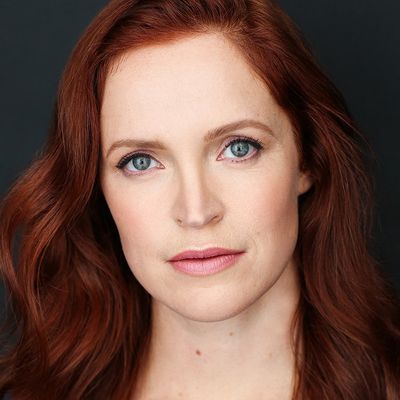
On this episode Jose talks to Grace McLean, the composer and star of In the Green, a musical about medieval saint Hildegarde Von Bingen, a composer, exorcist. and doctor of the church who spent most of her childhood in a tower. The cast recording is out now, you can stream it wherever you get your music, or you can buy a CD version as well (those will be released later this year).
Grace spoke about the new subject she's been fascinated in during quarantine, shared insight on her writing, and what it was like to give voice to a woman who challenged societal and religious norms on what women were supposed to do.
Transcript
This transcript was automatically generated and might contain errors.
[0:07] Jose Solis: I'm Jose Solis. This episode of Token Theatre Friends, I talked to Grace McLean, the writer and star of In the Green, a musical about the life of medieval Saint Hildegard von Bingen, who was a healer, composer, exorcist, and eventually became a saint.
[0:25] Jose Solis: But when she was a little girl, she was locked in a cell with a woman who became her mentor. In the Green was one of my favorite shows last season. I was astounded by Grace's ability to combine genres and by the bold visuals that the show presented us with. So I was very happy to see that the cast recording was coming out. And it's actually now available. So after you listen to my conversation with Grace, please make sure to experience for the first time or revisit if you already love it. The beauty of In the Green. Enjoy the interview.
[1:04] Jose Solis: I'm so happy to see you. So what have you been up to in quarantine? Sorry, I was not timing on starting with that question, but I'm so curious.
[1:28] Grace McLean: Like, why don't I have time? I don't know. I got the time now. Um I'm taking a class um called it's one of a series of prerequisites that I would need to take if I wanted to like actually have a degree in this thing, which maybe I do. Anyway, the class is called uh Anatomy and Physiology of the Speech Mechanism. So it's a lot of like, yeah, it's very sciencey. It's basically like here are our muscles, here's what they do, here's how they connect to each other, here's how they work. Um oh just yesterday uh there was a whole chapter, and I think the next class that I'll take is on hearing and the ear, and like that. The next class is called sound and the auditory mechanism. Anyway, I love it, Jose. I have to tell you, because first of all, this is what I've been saying about it. It's really nice to be like engaging with information that is objectively true.
[2:22] Grace McLean: Do you know what I mean? Like, there's a right answer for this stuff. Like when I take the quiz, it's like, yeah, either you know where that point of attachment for that muscle is or you don't. And then there's a you know, when there's something wrong with it, that's when you get into the pathology of all of it, and like how do you begin to correct that? And it's all very interesting, but for now it's really like I'm just looking at my notes. I like I printed out. I'm a very good student. I print it out. Here are all the muscles of the mouth. And it goes on for anything. That is incredible. That's what I'm doing right now.
[3:00] Jose Solis: Are you studying all of this in hopes of like learning how to do different things with your voice?
[3:06] Grace McLean: I mean, ultimately, these the series of classes that I am looking at taking would be a prerequisites for a master's in speech and language pathology, which I don't, I'm kind of interested in that. Like for a long time I've been thinking about, I know that I really am interested in the voice and the things that it can do, not just as a performer, but as a source of communication, and then what that source of communication means for us, like as a point of identity, in rec like how how it connects with our psychology. And I'm just really interested in that, and I'm not entirely sure what to do with it, but I'm pretty sure. But I found that if there's a thing that I know that I'm interested in, and I just keep learning about it, uh, the the path will make itself known.
[3:57] Grace McLean: I mean, in a way, isn't In the Green kind of like pre-research for all of this? It is about the voice and about finding the voice and about nurturing a voice.
[4:08] Grace McLean: Definitely. So, yeah, all of those things are interconnected for sure. And this is just sort of the um the science-y way of looking at it, which I think which I'm really interested in. Like, I'm just learning little little things here and there that get my mind sparked. I can't remember exactly where this was because yesterday I just like plowed through a chapter, but there's um there's a part of your body called the tragus. I think that it's this part right here on your ear that like flaps over the your ear hole. I could be wrong, but anyway, what's nice about my little textbook. Thank you for letting me go on this weird tangent because I do think that it really like. I love it.
[4:45] Grace McLean: Um so what's nice about this little textbook is all of the you know anatomical structures that we're learning about, they're really um logically named, but you just have to know the logic of like the Latin root of the word, you know what I mean? And then you're like, oh, so like your your sternum, there's a part of your sternum called the um the manubrium, which is Latin for like handle, and when you look at you, like, oh yeah, I could grab that thing. There's another like manubrium part of a bone in your ear, and you when you understand that it's a handle, you'd be like, Oh, I can identify that. It's like it's actually quite nice once you know the language, it's very logical. Anyway, so the tragus, it'll tell you on the side of my book, my textbook, like what the etymology is, and it has to do with a goat, and I don't know how that relates to the anatomy, but then they'll then they'll talk about they'll be like, oh yeah, so this is like the tragical thing in Majing.
And I was like, tragic, traes that have to do with goats, and I got super excited about like, and I still haven't done it. I've only been thinking about it because I don't want to be. I hope that it's true. I don't want to be like wrong about it. But if the like the etymology of tragedy has something to do with goats, and then thinking about like ancient um like goats in mythology, and um the Latin, I think for goat is capra, from which we get like Capricorn and capricious and changeable, and you think about how the goat symbol is also related to like devilry, you know, with horns and cloven hooves and all of that.
[6:22] Grace McLean: And I'm just I got in learning about the ear, I went off on a tangent about like what is the intersection of tragedy and like darkness and devilry, and what do we cannot wait for that musical? My mind immediately went, and this is like how basic my knowledge of like ancient languages is. My mind immediately went to me imagining like the Greeks bringing goats to the theater and parking them outside, and obviously the goats would leave, and like it was such a tragedy. The goats are gone.
[7:01] Jose Solis: That is fantastic.
[7:10] Grace McLean: I lost my goats.
[7:12] Jose Solis: Right? That's that's such a tragedy, yeah. No cheese, no milk, no, nothing.
[7:16] Grace McLean: Um you also want a little teleport. Congratulations.
[7:20] Jose Solis: Oh, thanks. For your performance in In the Green. And we started talking about etymology and about anatomy. And would you like to tell our listeners or viewers what In the Green is and who is it about?
[7:34] Grace McLean: I loved the show so much.
[7:35] Jose Solis: Oh, thank you so much.
[7:37] Grace McLean: Thank you. That really means a lot. Um, yeah, so In the Green imagines the origin story of uh Hildegard von Bingen, who is a woman who lived in the 12th century in Germany, and she uh was recently, only recently made, I think like an official saint of the Catholic Church. She is also a doctor of the church. I think there's maybe only one other woman who's a doctor of the church, but she's um she was a composer and a healer and an herbalist and a writer and a really cunning sort of had a great like political mind.
[8:17] Grace McLean: Um that was quite self-serving, but I mean, good for her being a woman in the 12th century, uh making an actual place for herself. Um she was a visionary, she had these visions from God that were like sanctioned by the Pope and la la la. So she did a lot of really cool things. I learned about her actually um uh in studying uh medieval art when I was in college. I may have told you that once when we talked before, but um, I just remember thinking like medieval art, it's all kind of the same, it's pretty simple. If it's art and we have it, it's it's connected to the church. Okay, fine. And it's they're following the same kind of stories. You'll see the same figures over and over. But Hildegard's was intensely personal.
[9:01] Grace McLean: And it was kind of radical for the time. And it and it and it looks like stuff that was being made in like the late 19th, early 20th centuries. Um, and it was because she was like, Well, God showed me these things, so I'm just gonna write them down. Everybody take it. That's what I saw. Um, so it's about uh her early life when she before she did any of that stuff, before she made any kind of a name for herself or a place for herself in the world, she was locked in a cell with another woman called Jutta von Spanheim, um for about 30 years, and then that other woman, Jutta, died, and then Hildegard said, I don't want to be in this cell anymore. Now I'm gonna live this amazing life. But um, yeah, so the show is about Hildegard and Jutta in a cell by themselves, dealing with their own darknesses.
[9:58] Jose Solis: Which sounds pretty much like what we're going through right now.
[10:02] Grace McLean: Yeah, sounds familiar. I was listening to the cast recording, and I couldn't help but you know, be like, oh my god, she's thinking about life right now, and that was very, very spooky. And I wonder if any of the research, because obviously you must have like a library full of research about her. Did any of her research and any of the things you know about her have they made quarantine and the pandemic and understanding what's happening right now, a little bit easier for you to deal with, or at least be like, she was in there for 30 years, we've only been doing this for eight months.
[10:39] Grace McLean: Yeah, that's interesting. I mean, it really has to become a meditation in a lot of ways, right? Be and and and um it essentializes, I mean, this moment like essentializes uh what we have, what we need, what we have access to, and um also something about Hildegard that I'm really like understanding and resonating with too is her love for the natural world. You know, she was separated from it for so long. And um greenness is a big theme in her work.
[11:29] Grace McLean: Um, and she talks about the natural world as a metaphor for our spiritual world, um, which was like a radical thing. Nobody in the West was talking about anything like that. They were just like physical world bad, spiritual world good. And she was like, no, they're connected. We can the macro and the micro. Um, and I have been spending, I bought a car, which has a been a really nice thing to be able, I'm in, I'm in New York. Um, and right now I like I've made a little, I'm looking at this little green space in my room. I've got like plants I'm growing, I can see the trees out there, but it's like this is how much of the nature that I can see. But being able to get out, and I've been doing a lot of camping recently, and just that's another like essentializing thing, because then you also don't have this, you don't have your phone or anything.
[12:16] Grace McLean: There's no connection, and it's your connection that that you have is with the per person that you're with, or the people that you're with, and um the ground and the water and the sky, and it's moves at a different pace than we're used to. And I I honestly think that there's it's been kind of a gift to be able to yeah, slow down in that way. I mean, clearly Hildegard was like, I don't want to be in this cell anymore. Like, she didn't choose to continue to live in the cell, and I don't think that any of us would continue to live in this way forever. But there is yeah, this the slowing down and the appreciation that you kind of have to have for those like small essential things, I think is has the potential to be quite to be quite nourishing.
[13:12] Jose Solis: I was always very curious because like when I was sitting at LCT 3 and I was watching the musical, I was so mind-blown because I had seen you perform some of the songs a few years before, but then seeing the entire piece was overwhelmingly beautiful, and it was almost like going to church, but the music was by Bjork and Rogin Murphy. But obviously, it's by you. And I'm really curious, like, how did you know? Like, what do you think about saints? And you think about someone who's like trapped basically, right, for so long, and you immediately think about the time period, maybe because we are a very reductive species that we imagine, like, you know, chanting and like medieval music, and instead, your show is such a delightful, like hybrid of so many genres. Like, I could have sworn I was listening to I Am Hungry, and I could have sworn that there was some ska in it.
[14:15] Grace McLean: Mmm, cool. And how did you actually, you know, how did you come up with the sound of the musical?
[14:20] Grace McLean: Yeah. Um, well, first of all, I decided to take a cue from Hildegard, who was a composer. Um, and if you listen to some of her music now, you might be like, oh yeah, that sounds like some Latin stuff. You might be, or you might be really moved by it, which some people really are. But she was a revolutionary for her time in the kinds of music that she was writing. There were in many, many, many facets of her world, there were strict rules. There was a strict hierarchy. But she sort of was able to live in that hierarchy and get away with doing crazy other stuff because again, she claimed to have this like direct access to God. I'm not saying that I have a direct access to God, but what I'm saying is I was interested in finding out how I could break whatever rules I wanted to, and you know, call that Hildegardian.
Um, and so yeah, for the music, I wanted it to both have a sound that was reminiscent of her world. You know, I used some of her music and talked with it a little bit. Um, so I wanted it to have that sort of like ancient kind of holy, like deeply spiritual sound. And then I also wanted to be able to, I wanted it to be, yeah, also of the present and of the future. I wanted it to be all of those things because I do think that even though the story we were telling was embodied by these 12th century women, the story itself is for all for everybody for everybody all times. And so, you know, I wanted that to be reflected musically. I wanted it to sound familiar and also maybe like you heard it in a dream.
I feel like I'm bragging right now, and I'm sorry, uh viewers and listeners for what I'm about to do. But I was I loved, you know, I kept bragging and I kept telling people about how great this musical was, even after it closed. And I was, you know, right now there's no live theater, but I'm so happy that we have a cast recording. And for instance, I was so touched by how in the show Hildegard is shown disembodied. She's trying to like put herself together. And one of the words that you use constantly in the songs is whole and how she wants to be whole. And there's this like beautiful connection between whole and holy. And she's not like aspiring for holiness, she's aspiring for wholeness. Can you talk a little bit about that?
[17:02] Grace McLean: Yeah, oh gosh. Well, you know, uh, I was interested in breaking her apart for a couple of reasons. I mean, number one, you know, sometimes when you see or encounter work that's about somebody who like is this larger in life figure, it's like, how can you ask somebody to step into that role and embody that? That just seems kind of cruel. And so I thought, well, if we make her three, like, then we can do, we could do anything. And um, and investigating why I wanted to tell this story. Like I, because I didn't, you know, sometimes I'm like, I know that I'm interested in this thing, but I don't know why. And I so I just keep like digging and digging and digging. And then I found out that the why was um that it had something to do with trauma.
And so that sort of that fracturing that I was already interested in doing to uh sort of embody this larger than life character was also was also in service of humanizing her ultimately and saying, like, no, she's not, she is a human being and she has you know pain like everybody else. And so yeah, the show became about this like quest for wholeness, and that I am in my mind, and I wonder if this translated to people or how it translated to people, had something to do with like perfection and being like exactly right, and ultimately what I hope people took away from the show is that like that's that's not possible, but we can move forward and heal by accepting that brokenness, and that becomes greater than the sum of its parts. Does that make any sense?
[18:57] Jose Solis: Yeah, absolutely. Because I when people, you know, when people ask me to describe the show, I would often describe it as I was like, imagine like the share show or that's on a summer musical.
[19:09] Grace McLean: Yeah, yeah, yeah.
[19:10] Jose Solis: But cubist.
[19:12] Grace McLean: Because it is cubism, what you're doing with it with the pieces.
[19:15] Jose Solis: Absolutely, yes. And and in many ways, also like you are, you know, in her story, there's this theme of how still today women especially are asked to also separate those parts of themselves and be like you can be, you can have a voice here, but you can't have a voice in this other room. And you can see here, you can be witness here, but you can't be a witness somewhere else. And that was like really heartbreaking. Do you um when when you were writing the music colour when you were performing it, obviously, did you wish in any way that maybe this things that she had to go through so long ago would not be relevant anymore?
[19:56] Grace McLean: Of course.
[19:58] Grace McLean: Of course. And but then I wouldn't, you know, then the show wouldn't be. We wouldn't have these things to talk about. Um, I'm I the thing that is my mind that I don't mean to say is that I'm I'm not glad to have this to talk about at all. But I do think it's important. I'm glad to have the voice and the ability to talk about it. You know, she was an anomaly. And even though I'm still talking about her, you know, there are a handful of people who are like, yeah, I'm not a part. Um, you know, there is still progress, and that's uh I'm happy to acknowledge that, and especially happy to acknowledge that like I, this little girl got to who happens to be interested in the voice and its many and many manifestations and the many angles one can approach it, was able to use um mine to tell a story that I just wanted to tell. And then I'm just really grateful that people wanted to listen.
[21:11] Jose Solis: Uh you are joining Hildegard now, because you're a composer as well. I mean, you'd be the composer for a very long time. But just like her, you know, like your music will get to live on. Because like even if I don't know, if the clouds disappear or whatever, and there's still paper around, people will be able to interpret your music centuries from now. If there's still a civilization fingers crossed.
[21:34] Grace McLean: Yeah. I wonder, can you talk a little bit about did were you did you have that in mind in any ways? You know, like you are uh your work, especially now that there's a cast recording, which I'm so happy about. Yeah, your work gets to live for even a longer time. Like it's not only the people who saw it uh on stage or the people who get to see a revival at some point, but now everyone can access the music.
[21:58] Grace McLean: Yeah. Yeah, there's a kind of like weird like sigh in that. And I don't mean a sigh of like, what a funny word that I just used. I mean a sigh of like, oh yeah, I can. There's like a rest in it. Because man, that's making things is so much work. It is so hard. Um, and then to have some kind of a record of it, like a record. That's what it is. Um feels really amazing. Like, oh yeah, we can point to that and say we did that. Yeah, I get to share. And I hope people continue to listen to it and interpret it on their own. You know, like the show will be licensable, and if there's ever theater again, I hope that some people pick it up and look at its challenges and are excited by them. Call it being home for eight months, but I've been seeing, you know, I've been relating art that I love to like what's going on right now.
Like if it's impossible not to write when you're trapped home. And I hope you don't laugh too much when I say this, but I when I was listening to the show, I was uh playing it on my Alexa speaker, and it's almost like it almost looks like a tower. And it made me think so much about how the tower where she was in many ways is like a throat, right?
[23:21] Grace McLean: I love this.
[23:22] Jose Solis: And I was I was hoping you could talk a little bit. I don't know what the technical terms for it are, but there's a lot of like throat singing in is that what it's called?
[23:34] Grace McLean: Yeah, I mean, we did some like there was like some vocal fry stuff, and we did. I was really trying to get some overtone singing, which I think it it happened a little bit, but in in I Am Hungry, there's that. I mean, have you ever seen Overtone Singers live? It's so weird. I highly recommend you look it up. Um yeah, I'm I'm kind of in this like weird a cappella world, and I go to these festivals and there are people doing crazy, crazy, crazy things with their voice. And yeah, I wanted that to be a part of it. I wanted, I'm really interested in singing and the performing with your voice and communicating with it as like a tool, as an instrument beyond a vessel for just melody and lyrics. You know, like there's so much more inside of that.
And yet there, there's like that's there's a person you hire because they interpret a thing in a certain way, and like that's their way of communicating, and I that's great and totally valid. But I'm also interested in like, do you know Room Full of Teeth? No, you might really be interested in them. They're um an a cappella group, but they're not like doobity ta do tao. They're like, what? They're like Pulitzer Prize winning crazy vocal stuff. And they use a voice like an instrument in a way that you just don't really encounter, at least in in Western culture. And yeah, that that is something that continues to really inspire and excite me about um using using those things not just as um a musical tool but as a theatrical tool, as a storytelling tool.
And I think that's um, I don't know, I think that there's there's more and more there's room for that for people to um hopefully step out of or expand or let go of their expectations about like what a musical is and what it looks like, and let in you know, crack it open a little bit and so that there's room for um yeah, just like the myriad tools we have at our disposal that like we can just stretch a little bit more and like yeah, that's what I love about theater, you know, as a storytelling um medium is that there's so much magic that is particular only to bodies in a room together.
[25:59] Grace McLean: Am I am I is my memory failing me, or is there a moment is there a moment in the actual show where you came and started using the beatbox?
[26:08] Grace McLean: Um here's the thing, I don't think that I ever actually like because I had a lot of conversations with this about um about beatboxing in particular with my sound designer, and it had to do with the kind of microphone I was using. So I translated the the like lip stuff into like guttural stuff. So there was a lot of like it just be it just that kind of vocal percussion had to move down into the chest and the throat, you know. But yeah, some of that was there. I think what I've done at live live or or just as um outside of the show. I just beat the box. One of the things that I really love about this core for the green is that you know, like you're listening to the songs, and then there's like layers, and then a new layer comes, and you're like, okay, and then another layer and you're like, Oh, okay.
You're like, okay, Grace. Yes. And I remember when I was sitting in the theater, and I want I wanted to just like burst into applause, even though you're probably like all the old people would have tried me. It was so cool. And this process of layering, how do you know when the song sounds like you want it to sound?
[27:25] Grace McLean: Oh that's a good question. I mean, um, yes, we didn't even talk about the the layering. That was uh that was a fun thing to figure out how to translate to the stage too, because I had been riding on my looping station for for so long, and I knew that I wanted that to be a part of Yutta's character in in opposition to what Hildegard, you know, with her voice was able to do. If Hildegard is three voices, that's like there's this kind of amazing unlimited um form of expression that she has. But for Yutta, I wanted it to be equally like amplified, but also have a container. You know, the loop is there's only so far you can go with that, and it and it always points back into itself and it's limiting.
So how do I know when it's done? Oh man, I play a lot with it. Um, and it's hard, like you know, writing for a looper. There are clear limitations because it's just a loop. So it becomes about for me anyway, it becomes about like where how can I like lay down the little crumbs of the sonic story that I want to tell? And then how can I subvert expectations but still make it like like a pleasing surprise? I always want a surprise. Um, but I want it to still be like inviting. Um how do I know when it's done? It's not like a cake, right? It's not like a cake, but it wants to feel like a journey. And maybe the journey doesn't return where it started, maybe it does, but I want it to, yeah, I just want it to still have an arc.
[29:12] Jose Solis: You accomplished so much. It's like I remember also noticing the looping, and like in a way, it's also representative of like how her life will be limited to this place.
[29:22] Grace McLean: Yes, and that's it. And then Hildegard gets to like have even more layers and leave and like beam from my Alexa. Yes, which is really beautiful. What was it like? When do you record it? What was it like to go back and record it? Because you recorded it months after the show had closed, right?
[29:41] Grace McLean: Oh man, we recorded it like two weeks after it closed. But I'm really excited that it's available. I like this. Is actually like the timing is great. I feel like now's a time where people are sitting around and could really relate to these two biddies in a cell. So we'll really think about it, you know. You know?
[29:58] Jose Solis: That was I was also thinking like how many of the songs I was like, maybe I'll suggest Grace does like a an a remix version for like a club.
[30:06] Grace McLean: Oh my gosh, you're not the first person to say that. People who are like who definitely wanna maybe I should try to find somebody to do a remix of like what's the one that uh uh uh uh uh that Rachel's saying uh where those three ladies are like ah stab we that like we slow that down, we like get a good like jump step beat in there. I don't know, is that a thing? Do people do that?
[30:44] Grace McLean: I think so. Yeah, let's make it happen. Please let's because like I was even gonna say like confession, you do some like uh talk syncing. So that like that's like ready for like a featuring like I don't even know who it's like the Cardi B or something. Can you imagine?
[30:59] Jose Solis: My God, I love this.
[31:04] Grace McLean: Okay. Well, I'm gonna need you to like hashtag these things and like shout about it and we'll so we can get Cardi B to do a cover remix. Can you imagine like people are like Cardi, where are you thinking about a mystic?
[31:17] Jose Solis: Yes, I feel like I feel like she'd be on board.
[31:22] Grace McLean: I she better be. I hope she will. So um, can you tell our listeners or viewers when the album is out, where they can find it? Is there anything that you're doing soon? Any concerts, everything you want to plug. This is your time.
[31:37] Grace McLean: Okay, here we go. Plug it in. Um, so the album is available uh to stream, to download on any place that you stream and download things on October 16th. That's tomorrow from today. Um, so that's very exciting. There will be a physical CD for people who still have the means to play such things out in mid-December. And I'm really excited about that because I will also be releasing around that time some of my solo music that I've been sitting on for way too long, but we're finally like finishing that up. So there'll be a new Grace McLean and Them Apples um album coming out. Um, and there'll at least be a single, maybe like a music video or something available in mid-December. And um, yeah, I think I'm gonna have a concert around that time. So Merry Christmas.
[32:34] Jose Solis: I cannot wait for that. And if this is not a too interesting question to ask, because I've always ever since I saw a show, I was I really wanted to ask you this. At any moment during your research or when you were writing the music and you were writing the lyrics, did you at any moment like um wish that you could ask something to her? And if so, what did you want to ask her?
[32:54] Grace McLean: Hildegard? Mm-hmm. Well, I would want to ask her what happened in that cell. You know, I know, right? I really just was like, well, what if this happened? Yeah, I'd really I would want to know a really I would want to know about Yuta. I mean, that's what the show is. The show is a question about that relationship. Because Hildegard didn't write or talk about her very much, but they spent she spent her formative years with that woman. And um yeah, she's who I'm really curious about. I mean, you know, we're talking about Hildegard, who did a lot of amazing things, but I um yeah, I have a lot of like I have a lot of feelings for that Yuta lady. She's not the one that we know, she's not the one they we remember, but she had an effect on somebody who was so um powerful, and yeah, she's like lost in the in the background, and those are the people that I'm interested in, the ones who don't necessarily get to share their voice with the world, yeah, but probably had a really powerful one.
[34:25] Jose Solis: It's like be had a great woman, just not a great woman, and fortunately, she probably inspired the music that inspired you. So bless them both.
[34:34] Grace McLean: Yeah, bless them both. Thank you so much, Chris. This has been a true pleasure. And I hope you have more fun with your classes and learning about because I was gonna say, like the manu manubrium, it's like maneuvering something, right?
[34:47] Jose Solis: Look, yes.
[34:48] Grace McLean: Oh my gosh. I'll start some Latin. I think no, I like you just like picking up your thing. You got the Alexa with the voice, like these connections that you're making are fantastic. Let me give you one more and let me tell you what you think of it. I'm gonna get my these are all muscles.
[35:10] Jose Solis: Let's go.
[35:11] Grace McLean: Oh, here this is my favorite one. I'm gonna, I just know what it is. Okay, it's called the Salpingopharynges.
[35:19] Jose Solis: I don't know where the salpingo from comes from, but pharynges gives you a clue that it's in your pharynx.
[35:24] Grace McLean: Okay. What do you what does it make you think of? Do you want me to tell you about it?
[35:28] Jose Solis: That's how pingus.
[35:29] Grace McLean: Salpingo pharyngeus. Yon, did you want to know where it is and how it connects?
[35:34] Jose Solis: Okay, first. I have no idea.
[35:37] Grace McLean: So I mean, why would you? There are uh there's so many weird muscles in your body. It's amazing. Um, so the salpingopharyngeus, it actually starts up like in your temporal bone near the like auditory canal. There's a lot going on in your temporal ball. Also, your temporal bone is the densest bone in your body. Wow. You're welcome. Um so it connects somewhere up in the ear and then it courses down and goes down into your pharynx here. And so it has to do with I think it assists in like uh-uh-uh-uh moving your mandible, and also it is I think it assists in like constricting your pharynx like when you need to swallow. Anyway, what a funny name. Does it make you think of anything?
[36:22] Jose Solis: Salpingo pharynges.
[36:24] Grace McLean: Salpingo pharynges. I mean, I'm thinking salpingo kind of sounds like jumping out of somewhere. Because it's like in Spanish, jump is saltar. So maybe it's like jumping, like it kind of jumps out, right? Or no?
[36:41] Jose Solis: Yeah, sure.
[36:42] Grace McLean: I don't really know. I'll take this class with you. It's gotta be one of these down here. Like jumping. Okay, I'll I'll remember it. I'll remember it forever. Thank you. This is fantastic. This is these are the things I need. We need these kinds of stories to remember muscles.
[37:01] Jose Solis: Yeah.
[37:01] Grace McLean: Think about jumping. Think about jumping and think about pink flamingos. It's almost like a pink flamingo jumping. Do you know that a flamingo is my spirit animal?
[37:12] Jose Solis: Oh, really?
[37:13] Grace McLean: I no, I had no idea about that. Well, there you go. This is gonna be that's gonna be your favorite muscle then. Wait, it is a muscle, right?
[37:19] Jose Solis: Yes.
[37:20] Grace McLean: Okay. Well, I get a I get a gold star for my new knowledge of uh anatomy.
[37:26] Jose Solis: Absolutely.
[37:27] Grace McLean: Oh thank you so much, Jose. It was so nice to see you. You've literally like turned my day around. I'm so happy that I got to see you and talk to you.
[37:36] Jose Solis: Me too, and I hope everyone needs to go get in the green available to stream everywhere. It's so beautiful, Grace. Thank you for giving us that gift.
[37:45] Grace McLean: Thank you. Wow. I hope you enjoyed my conversation with Grace. And if you haven't, please go listen to in the green. It's available wherever you can stream your music. And since I have your ears right now, I would like to ask you to become our contributor on Patreon. I know this is a very trying time for all of us, and it's not easy to do away with money right now. I totally get it. Uh so if you can't do that, please share a pieces and our interviews and our episodes. Like we really appreciate that as well. But if you have sub spending money, just a little bit, you can become a contributor for one dollar. We have several tiers, but I really love the one dollar tier because I want everyone to be part of our friend zone on Patreon.
We have exclusive outtakes from our interviews, bonus QA's with the guests that week. We also have a weekly newsletter where Deep and I send recommendations of things that we love beyond the other, believe it or not. Like Deep even shares her recipes sometimes. And we have much more in store. So if you can do that, we would love to have you. We're waiting for you, friends. And for now, this has been Jose Solis. I'll see you next time.
© Broadway Podcast Network, All Rights Reserved