

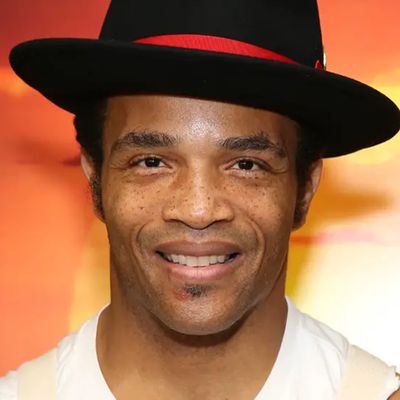
Actor James Harkness made his Broadway debut in Aida back in 2001 before moving on to productions such as Chicago, The Color Purple, Guys and Dolls, the Dreamgirls tour, and Beautiful. Now that Broadway has returned he resumed his role as Paul Williams in Ain’t Too Proud on Broadway... Read More
From the show: Was It Chance?
Guests
Featured Shows



About
Actor James Harkness made his Broadway debut in Aida back in 2001 before moving on to productions such as Chicago, The Color Purple, Guys and Dolls, the Dreamgirls tour, and Beautiful. Now that Broadway has returned he resumed his role as Paul Williams in Ain’t Too Proud on Broadway. A navy veteran, James seized an unexpected opportunity and took a chance when he walked into a dance studio while on leave and forever changed the trajectory of his life.
James shares how embracing chance, taking intentional risks, and learning to trust his instincts lead him to a beautiful and unintended career working alongside mentors such as Tiger Martina and Sergio Trujillo, and performing alongside some of the greatest in the arts, including John Legend, Julie Andrew and many others.
Y’all don’t want to miss everything James is up to. Follow him at @iamjamesharkness and go see him in Ain’t Too Proud on Broadway right now: https://ainttooproudmusical.com/.
- Make sure to follow this podcast everywhere you find podcasts, leave a rating and a review, and slip into our DMs at @wasitchance.
- More about Heather via @heather_vickeryandco on Instagram and Threads, @Braveheather on TikTok, and listen to The Brave Files
- More about Alan via @theatre_podcast and listen to The Theatre Podcast with Alan Seales
EPISODE TAKEAWAYS
- Missed opportunities may be hidden gifts
- Manifestation only works when you work hard
- Resharing our experiences and stories brings new awareness
- Learning to trust your intuition
- Running towards fear rather than away from it
- Resting is an important part of being ready to embrace “chance”
- Staying connected to creativity by being flexible in the moment to always do your best
Transcript
This transcript was automatically generated and might contain errors.
[0:00] James Harkness: She said, if you decide that this is something that you want to do, keep my number, call us when you get out, we'll re-audition you and see where you're at.
[0:08] James Harkness: And I said, by the way, what was the audition for?
[0:14] James Harkness: And she was like, oh, well, Whitney Houston has a project that she's working on right now.
[0:19] James Harkness: Oh.
[0:21] James Harkness: And I was just like, that hurts.
[0:24] James Harkness: That hurts me.
[0:25] James Harkness: I'm sorry.
[0:38] Heather Vickery: All right, y'all.
[0:39] Heather Vickery: Let's do this.
[0:40] Heather Vickery: I'm so excited to be here.
[0:42] Heather Vickery: Hi, everyone, and welcome to Was It Chance, the podcast about embracing opportunity and taking intentional risk for your creative life.
[0:51] Heather Vickery: I'm Heather Vickery.
[0:52] Alan Seales: And I'm Alan Seales.
[0:54] Heather Vickery: We are two perfect strangers who met by chance and embraced opportunity.
[1:02] Alan Seales: Do we ever not laugh?
[1:03] Heather Vickery: Do we ever not laugh?
[1:04] Heather Vickery: Wait, wait, wait, I'm not done with the intro.
[1:06] Heather Vickery: Listen in as we chat with other successful people about the risks that they've taken to put themselves on a path to creative success.
[1:14] Alan Seales: Dude, that's Alan's broadcaster voice.
[1:17] Heather Vickery: I know, but just laughing at your broadcaster voice.
[1:21] Alan Seales: No, seriously, I'm really excited, actually, because this is my first opportunity to get to know our guest, who Alan is already friends with.
[1:30] Heather Vickery: And we are going to welcome James Harkness to the podcast.
[1:35] Alan Seales: If you want to read his friends is an interesting choice of word.
[1:44] Heather Vickery: So I'm gonna uh shut up and let you read my um introduction.
[1:52] Alan Seales: Okay, go ahead.
[1:53] Alan Seales: Uh okay, okay, here we go. James made his Broadway debut in Aida back in 2001 before moving on to productions such as Chicago, The Color Purple, Guys and Dolls, the Dreamgirls tour, and of course, Beautiful.
[2:11] Alan Seales: And now that Broadway has returned, he has resumed his role as Paul Williams in Ain't Too Proud on Broadway.
[2:19] Alan Seales: He's also a Navy vet, and he embraced his fear, took a chance, walked into a dance studio one day while on leave, and the rest, as they say, is history.
[2:31] James Harkness: Hashtag insert clichés.
[2:33] Heather Vickery: Oh my god.
[2:35] Heather Vickery: What do we feel about people who say the word hashtag in conversation, James?
[2:40] James Harkness: Um the same way I feel about people who say BTW and stuff like that.
[2:48] Heather Vickery: Wait a minute, is that what we're doing friends?
[2:51] James Harkness: Oh BT dubs, I do say that.
[2:54] James Harkness: My and then the dumb thing about it is I was teaching a dance class at some point in time.
[3:00] James Harkness: No, I was choreographing a production somewhere, and one of the ensemble members said BTW, such and I was like, wait a minute, wait, wait, wait.
[3:12] James Harkness: Is that actually shorter than by the way?
[3:14] James Harkness: Is it not?
[3:16] James Harkness: Exactly.
[3:16] James Harkness: I was like, it takes more syllables to say BTW than by the way.
[3:21] James Harkness: I say BRB, is that all right?
[3:23] Heather Vickery: My 15-year-old said No bedroom and board the other day.
[3:29] Heather Vickery: She said lol.
[3:31] Heather Vickery: And I said, What are you trying to say?
[3:34] Heather Vickery: It's just she was just pronouncing LOL.
[3:37] Heather Vickery: And I'm like, wait, who does that?
[3:38] Heather Vickery: She's like, that's what we all do.
[3:39] Heather Vickery: I'm like, y'all say lol?
[3:41] James Harkness: And then okay.
[3:43] James Harkness: Instead of laughing.
[3:44] James Harkness: Instead of just laughing.
[3:46] James Harkness: Somebody told me yesterday, not yesterday, the other day they said jail.
[3:50] James Harkness: You have to do the hand movement, but they go, That's jail.
[3:53] James Harkness: Have you heard of that?
[3:54] James Harkness: Jail as in J A I L.
[3:56] James Harkness: Yeah, like it's so bad it's jail.
[3:59] James Harkness: Wow.
[3:59] James Harkness: So it's like it's I can't P H A T or Michael Jackson badge.
[4:05] Heather Vickery: Yeah.
[4:05] Heather Vickery: No.
[4:06] Heather Vickery: Okay.
[4:07] Heather Vickery: We're obviously talking about James Harkness here.
[4:09] Heather Vickery: I have to tell a story about when I was on a plane.
[4:12] Heather Vickery: Um last time I was on a plane, which was two years ago at this point, where the old couple behind me were like, can you believe kids these days say dope instead of cool?
[4:22] Heather Vickery: They they might as well be saying cocaine.
[4:26] Heather Vickery: And I wanted to turn around and say, like, really, when you like something, is it literally groovy?
[4:31] Heather Vickery: Is it the cat's pajamas?
[4:32] Heather Vickery: Like, where do you come off?
[4:35] Heather Vickery: Is it the bees?
[4:36] Heather Vickery: Do bees have knees?
[4:37] Heather Vickery: Like, where why do you gotta be so literal?
[4:39] Heather Vickery: Like, enjoy your life, man.
[4:41] James Harkness: Yeah, like but no, there are definitely things when it comes to stuff like that.
[4:46] James Harkness: I I'm 100% with you.
[4:47] James Harkness: It's like there is there is slang that you're just like, why?
[4:53] James Harkness: Period.
[4:54] Heather Vickery: Every generation is at it.
[4:56] Heather Vickery: Why period?
[4:57] Heather Vickery: I like that.
[4:58] Heather Vickery: Okay, but if we're gonna talk about literal things, I actually have a literal question for you, James.
[5:04] Heather Vickery: That I um first of all, I I love your resume.
[5:09] Heather Vickery: I think you're uh I think you're a cool cat, but you don't meow, literally.
[5:14] James Harkness: I do meow, actually.
[5:16] James Harkness: I do it at work.
[5:18] Heather Vickery: I believe you.
[5:19] Heather Vickery: There's a there's a story behind it, but keep going.
[5:21] Heather Vickery: I wasn't sure where we were going with that, and I thought we need to keep this clean.
[5:27] James Harkness: No, seriously.
[5:28] James Harkness: There's nothing about this, but you are, for those of you who can't see you and aren't looking at your picture, you are a black gay man who was in the Navy.
[5:40] James Harkness: That sounds like a lot of literal challenges to me.
[5:44] James Harkness: It was definitely a challenge.
[5:46] James Harkness: But there's a lot of beauty that came out of that challenge.
[5:50] James Harkness: And a lot of finding myself and learning how to stand on my own two feet and taking chances.
[6:12] James Harkness: But where I was from, where I am from, El Paso, Texas, and how I graduated from high school, which I graduated well, um, you know, in the top upper portion of my class, but because higher education was not something that was encouraged, you're welcome.
[6:36] James Harkness: If I could have just kept talking, I should have just kept talking.
[6:41] Heather Vickery: You chime that toaster to accentuate your thought.
[6:43] James Harkness: I I I highly respect that.
[6:47] James Harkness: Um, but uh that was not part of my upbringing.
[6:51] James Harkness: Um, my upbringing was you graduate from school, you get a job, eventually you get married, you I was raised as a Jehovah's Witness, so your life is actually centered around being a Jehovah's Witness.
[7:10] James Harkness: And that was not my journey.
[7:13] James Harkness: So when I graduated from high school, um, I didn't have any thing to look forward to employment wise.
[7:26] James Harkness: So I did some of the things that a lot of some other kids did.
[7:29] James Harkness: You know, you go to the mall, you put in applications at this place, you put in applications at that place, you know, you you go around town, you hope to find a job.
[7:37] James Harkness: None of those things came my way.
[7:39] James Harkness: So the discussion was had is like, what do we do?
[7:42] James Harkness: And my father was in the military, both of my brothers were in the military, so my mom was like, we should try the military.
[7:50] James Harkness: And went to the place and I joined the military, I joined the Navy.
[7:57] James Harkness: And that set my life on a course that ultimately has led me here.
[8:03] James Harkness: Yeah.
[8:04] James Harkness: Broadway.
[8:05] James Harkness: And through many steps along the way that I had zero idea that they were gonna happen because none of them were planned.
[8:13] James Harkness: I didn't have that, like a lot of people that I work with now.
[8:17] James Harkness: They went, they started dance at the age of six.
[8:23] James Harkness: And they did acting in school plays, they did it in high school, they took drama, they went to school, to university, to Juilliard with musical theater degrees and opera degrees, etc.
[8:37] James Harkness: I have none of that in my life because none of that was where I thought I was gonna go.
[8:42] Heather Vickery: I thought where did you think you were gonna go?
[8:45] James Harkness: I thought I was gonna have a job.
[8:47] James Harkness: Even even after my time in the military and the things that happened to me in the military.
[8:52] James Harkness: My mindset was still I'm going to get a job at some business, and I'm going to have my little briefcase, my suit and tie, and I'm gonna go to work every day and enjoy whatever the other parts of my life are.
[9:11] Heather Vickery: And that is go ahead.
[9:13] Alan Seales: I was gonna say, uh, talk about when um you know that I mentioned it in the opening bio that you were literally on leave.
[9:20] Alan Seales: I think it was in California, if memory serves, right?
[9:23] James Harkness: And you walked by I wasn't on leave.
[9:26] James Harkness: Uh I wasn't on leave, but I I was stationed, I had just gotten to San Diego, California, yeah, which is where I was stationed.
[9:33] James Harkness: And I had been to San Diego, California because my aunt lived there, so we used to go there summers.
[9:38] James Harkness: Um, mom would drive us out to visit the family.
[9:41] James Harkness: But I'd never been there as an adult.
[9:44] James Harkness: Quote quotations adult, an 18-year-old adult.
[9:50] James Harkness: Or 19-year-old, whatever that age was.
[9:52] James Harkness: Um, and so I was walking around downtown San Diego one night after getting off my ship, uh working to uh just see what the what the city was like.
[10:04] James Harkness: And I was walking down Seventh Avenue, going towards downtown, um, got out the trolley, actually, and uh I can't remember what street the trolley's on, but going down 7th Avenue, it was about 10 o'clock at night, and I looked up and I saw this sign that said stage seven, and there was nothing else on the sign but those words, and I looked through the door, and there was all I could see was stairs leading up.
[10:32] James Harkness: And so my brain, having danced and stuff like that in high school and grew up, grow up liking music and all that sort of stuff.
[10:40] James Harkness: I just went, stage.
[10:42] James Harkness: Well, it has to be something with performing, right?
[10:46] James Harkness: So I went back the next day, got off the ship, headed straight there, and walked in and walked up the stairs, and I could hear music.
[10:55] James Harkness: As I came up and I could see, I saw a reception desk and I saw dancers sitting, stretching, and there were two class windows where classes were happening, and I literally was just like, oh I felt I felt like I found I found a piece of heaven, and it was something that I was looking for, but I didn't know that that's what I was looking for necessarily.
[11:23] James Harkness: But I knew something in my life was missing.
[11:26] Heather Vickery: Okay, so I love that.
[11:30] Heather Vickery: And I have over the course of my life gotten really comfortable with recognizing my own intuition.
[11:36] Heather Vickery: In fact, I feel uh a yes, like I'm gonna do this if it shows up in my solar plexus in my belly, and if it shows up in the back of my neck, it's a no, like that's a bad sign.
[11:48] Heather Vickery: Do you have are there any signs for you, James, that you're like, this is a chance I want to take.
[11:54] James Harkness: I wasn't expecting this, but I'm gonna jump on this.
[11:56] James Harkness: Like, how do you know?
[11:58] James Harkness: Huh.
[11:59] James Harkness: Um, I don't know.
[12:01] James Harkness: Uh, I mean, we all have intuition, and sometimes that intuition is something as simple as you go, oh, I should take this with me, but then you don't, and then later on, you're like, I should have taken that with me.
[12:17] James Harkness: That happens to every single person.
[12:19] James Harkness: When it comes to other things.
[12:20] James Harkness: I don't know.
[12:22] James Harkness: There have been things that I have been afraid of trying, and I didn't realize until after that that fear was something that I needed to run towards instead of run away.
[12:36] Heather Vickery: How long did it take you to get there though?
[12:38] James Harkness: Um I'm still not fully there.
[12:43] James Harkness: You know, but it's I'm I'm I'm so much closer than I've ever been because I after enough experiences have happened where that fear is just human fear.
[12:54] James Harkness: We all have it, but it's not like a fear that an animal is going to rip my my throat out.
[13:00] James Harkness: It's for me, it's fear of failure.
[13:04] James Harkness: And fear that people aren't gonna like what I do, that I'm gonna be judged, etc.
[13:10] James Harkness: etc.
[13:11] James Harkness: That's the kind of fear that I deal with.
[13:13] Heather Vickery: Yeah, and lots of people do, yeah, most people do.
[13:17] James Harkness: Um, in in all walks of life, and I have learned, and even in talking with my mom, uh I just said this like two nights ago, actually, that even within that, if you do go and do something, and maybe it doesn't go off the way that you hope that it might, but you still accomplished it.
[14:46] James Harkness: That is a version of success.
[14:46] James Harkness: Yes, and understanding what success is and your perceptions of success is very important, and those things have shifted for me as the years have gone on, and as I have shifted what understanding success, the understanding of success is, it has helped me broach, it helped me face my fears easier.
[14:46] Heather Vickery: Do you consider failure also to be successful?
[14:46] James Harkness: I guess in the moment it's a lot harder.
[14:46] James Harkness: And I don't want to put words in your mouth, but I would like personally for me, when I'm in the middle of something fail like that is catastrophically failing, hopefully it doesn't happen very often, but I think it's the end of the world. And then over time now, in my early 40s, I'm able to now look back and say, okay, I remember this feeling, but I can also remember the feeling that comes after it, which is fear, disappointment, whatever it is, will subside, and I can learn from this and hopefully prevent it in the future.
[14:46] James Harkness: It is a version of success as well because again, you not only have you completed it, yes, maybe it burned, but you are able to step away from it and in time, just as you said, you're able to learn from it, and that is also I think a version of success if you're able to do that.
[15:06] Heather Vickery: Not everyone's able to do that.
[15:08] James Harkness: They're not.
[15:09] Heather Vickery: Do you think that fear can play a positive role in taking chances and being creative?
[15:20] James Harkness: Yeah, because if you don't find a way to face that, to confront it and conquer it, you don't grow.
[15:30] James Harkness: You don't learn, you don't grow, you don't succeed. Can you imagine the amount of people who we in this world revere on so many walks of life that just because they've conquered these things doesn't mean that they were not afraid to do so, but they faced those fears and they created stuff that we live by, live with it's I think fear is a very important part of the human growth process and the human success process for sure.
[16:07] James Harkness: It's valuable, and it you know, it also teaches you things to be aware of and how to navigate things, but it's important.
[16:20] Heather Vickery: Well, I'm a big fan because embracing fears is my whole business.
[16:24] James Harkness: So I agree.
[16:27] Heather Vickery: Yeah.
[16:28] James Harkness: You've got the career with the show with Ain't Too Proud and your own solo career with I know that you know last time we did a formal interview, you were promoting Broadway Buskers concert series, and so you had written your own music and were performing that, and you've got stuff with the Wiggles. You've of course La James Cafe, which is part of the ever popular Wiggles. Where are you I guess at any given point in the day, right? How are you deciding where to focus your time? And I going back to Heather, one of Heather's earlier questions about like what draws you to a yes, what do you what is your intuition leading you to? Where is your solar plexus? How do you determine where your solar plexus needs to pull you out and take you to the next place?
[17:20] James Harkness: That's a really actually wonderful question. Right now, because Ain't Too Proud is very much time consuming and getting back into or forward into the swing of things. My focus, honestly, right now has been on self-care.
[17:42] James Harkness: So that's where my main focus is. But I am still pushing here and there on like my solo music and stuff like that. I just worked with one of the people that I write music with on something that I've been wanting to work on, so that is happening. I think for me right now, where I'm at in my life, the thing that pushes me forward is just knowing that there are things that I want to do, and time is limited, and as I as you everyone gets older in life, you lose more and more and more time, and at this age that I am at, I have lived a really amazing life, but I have also not done things because I was afraid to do them, and you don't get that time back.
[18:35] James Harkness: As I look forward, I'm like, if I want to do these things, I have to get them done because no one can do them but me. And I was talking to another the same person I was talking to about success, and he's also an artist, and we were just discussing getting doing the things that we want to do, and there's I can't the this that saying or a version of the saying is you know, you gotta you gotta put your stories out there, and then I thought about it, and I was like, well, actually, it's a little bit more in depth than that to me. It's like you have to put your stories out there because if you don't, no one can do it for you, no one can tell your personal story, it's not a culture thing. If you have something that you want to say, you need to do it, and so those are the things that I think about and go after what we've gone through and the amount of lives that have been lost unexpectedly due to something that you know that's that's a whole onion to get into it.
[19:39] James Harkness: That we could have maybe prevented if we'd had good leaderships, sorry. We or we could have we well, yeah, we could have circumvented a good portion of it. There was no way we weren't gonna lose lives because it's an illness, it is what it is, but we could have probably lost a whole lot less lives had we had the proper leadership. And if we also had people, because leadership, leadership, leadership, sure, but we also have humans in life who are idiotic and they want to do what they want to do. Well, okay, so there's also that. But that is something that I keep in the forefront of my mind is like you have to use the time that you're given.
[20:23] Heather Vickery: Yes, you said something though that I find really fascinating, and I want to take it apart just a little bit.
[20:29] Heather Vickery: Uh-huh.
[20:30] Heather Vickery: You said there were a lot of chances you didn't take because you were afraid of them.
[20:43] Heather Vickery: And that I think we can hold a lot of self-resentment for that, things you wish you'd done because now you know you can, you've seen yourself succeed. Except, do you ever think, gosh, if I had taken this chance and that opportunity, then this other thing that was so much better wouldn't have presented itself to me? Like, do you think the chances you didn't take maybe led to the chances you did take?
[21:09] James Harkness: That is always the case. That is how walking through a door works. You walk through a door, it leads you to another door. And if you and you know, if I had if I had turned to the left, it would have taken me where it took me. Maybe it might have got me somewhere.
[21:28] Heather Vickery: Yeah.
[21:29] James Harkness: The answer is yes. Because I know it's a like tricky road, but because I was talking about to someone about a thing that happened to me when I was still in the military, and I had found that dance studio.
[21:48] James Harkness: Look, we're back to the story. In taking these dance classes and finding a joy that I hadn't had in a while, of course I meet other dancers. And one dancer that I met in particular, her name's Roberta, she was like, hey, they're having auditions for an agent in LA. You should come audition with me. And I was like, no. And she was like, you should come. And I was like, why do I don't an agent? I and I don't know. The ultimately at first the answer was no. And then she talked me into it because in my head, I was like, what do I need an agent for? You know, my brain at that time was like agents were Hollywood and television and movies and stuff. That was what it was. And you were a dancer.
[22:36] James Harkness: I was a dancer, and also I wasn't I was dancing for joy. I wasn't dancing because this was gonna be my career. Like I said, my thought process was I'm good, I have a trade that I'm learning in the military. I'm gonna utilize that when I get out, and I'm gonna have a job.
[22:55] Heather Vickery: James, you mentioned a while ago that now that Ain't Too Proud is back, Broadway's back, and our audience is not primarily Broadway focused. And so I want to actually just cover that real quick because people think you sing and dance for a living. That's gotta be one of the easiest jobs in the world.
[23:13] James Harkness: And you mentioned specifically self-care. Eight shows a week. I say Broadway performers are the Olympians of theater.
[23:22] Heather Vickery: Certainly.
[23:23] James Harkness: So you are at the top of your game. You have to make it seem like it's your first show every single night. So talk to us about the self-care that you have to get through.
[23:34] James Harkness: For myself personally, it's just taking care of my body on all levels, be that physically, making sure that muscularly, that my like that I'm not achy, that my that I can do all the things that I need to do, and you know, there's injury prevention, and so you know, acupuncture, physical therapy, massages, whatever all of those things that that different people do, I do those three just to keep myself moving. You know, I am human, I have been in this business for a minute, I've done a lot of stuff, and you, as you do in regular life, you garner injuries along the way. So I deal with those types of things so that I can do the show, my show the best way that I can.
[24:21] James Harkness: So rest plays a very important part, not only for my body, but also for my voice, taking voice lessons, and resting your mind and your spirit. That's it's very important. All those things play a part because what we have to do as actors, you utilize every feature you have, you utilize it every night. There's no point where my mind is at rest or my body is at rest or it I have to utilize every single thing that I have and that is like a digit I have to utilize you know we use our fingers every day but the way in which I have to use my fingers is not the same during a show that that somebody does on a regular basis or somebody that works in an office does it's a very very different thing like my knuckles on my I on my right hand my thumb knuckle the the major one that's connected right to your hand and the the second finger that middle knuckle as well there was a period where I was like why are my why are my knuckles so sore I don't understand why I'm in pain and I realized that because we snap in the show oh that makes so much sense we snap all the time that's part of the aesthetic of our show wow and my hands were hurting simply because we snap throughout the entire two and two hour and whatever minutes on stage that's a lot of snapping and it and it wasn't I wasn't the only one the all the other guys were feeling the same thing.
[26:07] James Harkness: That's that's a small thing but you just kind of go ah because we we really do utilize everything to get the job done that we do. So it definitely takes a lot out of you, and then you're doing right now. We do seven shows a week. Normally, the Broadway schedule is eight shows a week. I am so thankful that we only have seven shows a week because that one extra show makes a difference. And people don't understand that. I don't even think producers really understand just what that takes out of you. Unless they've done it. You know, and some and there are producers that used to be Broadway performers. I think that the general producer, big time producers, especially, they they're not performers. So they don't have the understanding of all that it takes to do a show and to keep yourself up to do a show.
[27:01] James Harkness: Is the beginning of every show for you knowing knowing the stress that goes into your body and the I mean, you look at the people in the audience, you can see the audience from the stage, and you can see everybody there.
[27:15] James Harkness: Many of the people have never seen it for the first time. Is there fear? Is there pressure for you to go out at the beginning or before every show? Do you have a moment where you're like, I acknowledge you, fear? I know you're here, but I gotta get over you, and I gotta go on stage and I gotta give it the better show more effort than I did yesterday. Or you know, like you know what I'm saying? Is there some part of you that has to prepare every single time, or is it just muscle memory at this point?
[27:42] James Harkness: It's not muscle memory, but it uh it is also muscle memory because it is in my muscles, so I know what I'm doing. Emotional memory, emotional memory is actually a very that's interesting, and that that I will touch on about the roller coaster of the show, but no, there's not fear of trying to go out there and do the best show that I can because I agree with you 100%, and I've also spoken on this before. Is I do have a responsibility. One of my castmates asked me, how do you do the show the way you do the show every night? And I was like, the base of that answer is because I love what I do. Period. Period. Um, but also the other factors in that are I have a responsibility to myself as an artist.
I have a responsibility to the other performers that I'm on stage with, and I have a responsibility to the audience because just as you're saying, these people, many of them are coming to see the show for the first time. Many of them, this may be the only show that they're able to see. This is the one that they saved up the money to buy tickets for, whatever show that is. And so I owe them the best that I've got. So it's not a fear thing, it's an obligation and a responsibility thing for me.
[29:05] James Harkness: With muscle memory and emotional memory, you know, it's funny that you say that because the show to have the show be fresh, and I attempt to make that happen. I do my best to stay aware of the things that I'm doing within the show so that I'm not doing them just because that's what I do. You know what I mean? Like there are certain things that have to be. Choreography has to be as close to what it originally was, and sometimes that's impossible because your body's different every day, you feel different every day. So sometimes that hand gesture is the same hand gesture, but it's not exactly the same because it's somewhat impossible. But that is what we do as dancers. We recreate a snapping thumb hurts.
The snapping thumb hurts. But well, honestly, I actually in I injured my thumb uh three Mondays ago at home. And so I actually had to fake snap. And for a couple of days, I actually couldn't, because I couldn't move my thumb, but I also couldn't not do my show. I couldn't actually snap snap. So I was moving that second finger to make it look like I was snapping while not moving my thumb. So these are things that I also was having to think about throughout the whole entire show is how do I get through the show with a thumb that is hurting like crazy. I have to do costume changes, and you have to put your hand through a shirt hole, and you have to button your shirts, you have to button your pants. There are things that, and it's my dominant hand. So these are all things that I'm thinking about. But um so many things, right? But emotionally, yeah.
[30:58] James Harkness: Emotionally, the emotional journey of the show, unlike muscle memory, for me personally, I do my best to not just rely on that because I have worked with actors that I've watched them do a show, and not saying that they weren't giving their all, but their show was almost identical every time that they did it, down to the movement of a finger, and this is not in a choreographed moment, it's in an acting moment. So it's robotic. But some people live in that way. Like for some people, I've realized that that is how they do their best show. Like they know what works, and that is what they invest themselves into. For me, I have to try and be as emotionally present in a moment as I can be. And what can be difficult about that is if it's an emotionally charged moment, but you're not like say that day, you're not in that space.
Like sometimes it's easy to get to an emotionally charged scene if you're already in that space. There's something in your life that's happening, so you can get those tears or that anger comes up easily, or whatever. Then there are times when that's not in your system. And so you have to take that journey, and that can be very difficult sometimes because you want the scene.
[32:50] James Harkness: So emotional muscle memory is a negative thing for me. That's really fascinating. Well, it's not listening, it's not active listening. I mean, that's what you hear all the time. That the majority of good acting is saying nothing. You're just listening, you're being in the moment, you're being present. And I think that relates on a macro level to the whole purpose of this conversation of embracing fear, like being aware when the opportunities present you, right? Because there may be an opportunity on stage where something happens, somebody does something that they've never done before that gives you that moment to react to it. And if you're being robotic, you're not gonna be able to do that. And that is one of those are those are when things are magical.
And that's when I love when I'm working with performers in acting moments that are in that place, that are paying attention to what each other are doing so that you respond. Am I saying the same line? Yes, I'm saying the same line. But because you said you this line a certain way, or your face did a slightly different expression, or there was an intonation in your voice that makes me go, oh, all right. So this is how I'm gonna respond to that. I'm still in the world of the story and the parameters of what I'm supposed to do, but there's that slight shift, and I've worked with people that don't do that. They what they do is they say, you can say, wah wah blah blah blah blah. And they're gonna go wah wah wah wah wah. And then, or but then the next day you could go, wah wah wah wah wah wah, and they're still gonna go, wah wah wah wah wah wah. And then I'm like, hmm. That wasn't fun. You took the fun away.
[34:40] James Harkness: You took the yeah, in a little bit you did. You took the fun away. And I'm like, because because you're not maybe for whatever reason it does, that's something that you weren't trained to do. And I think that's also another thing when I was saying I don't have that kind of training. I didn't go to school to study Alexander technique and all this kind of stuff. I come at acting from a life perspective. Yeah. There's another show about that, right? Alexander Technique. Was he one of our founding fathers? Uh well, but you know what? It's interesting, Alan, that you bring up Hamilton. We know at least comes back to Hamilton. I don't know why. Alexander Technique. I saw Hamilton. Somebody get the hook.
Somebody get the hook. Okay, you're welcome. I saw Hamilton here in Chicago five times. And every time it was a different show. It's the same show. It's the same music. But every time it was a different show, and I have favorites, and they usually pertain to, you know, rap battles or whatever, where there is opportunity to sort of express some creativeness and to play around a little bit and to maybe not follow the formula 100%. And I'd love to know from you, James. Like, when are you your most creative when you're doing your work?
[36:14] James Harkness: Does that in general are you speaking of in? In general, in general. No, no, whenever, whatever feels good. When I when I can be when I have input creatively, or when I am creating. One of my recent, in recent in the last couple of years, favorite times, a couple of them, but one of my most favorite things, aside from doing my own, like when I was writing the music for my concert, for my Broadway Buskers concert that I did. That was a really special time because that was all my original music, and I had to figure out in the confines of quarantine how I was going to do a concert from my home to present five songs of mine where I'm not that kind of singer who can who can sit on the couch and you're just gonna sit there and listen to them sing because they have they have the riffs and the runs and they have the technique and all that stuff and they have that gift.
I'm not that kind of a singer. I'm I'm an artist, I'm a performer. So I enjoyed this process of figuring out how to make this visually exciting so that it's not just like, oh, oh, he's singing another song, and his voice is the same as it was in the other song, but I was like how to create a visual presentation, and so that is where I'm the most happy, is when I'm actually creative.
[37:50] James Harkness: When I worked with the Wiggles and we did La James Cafe, I loved L-O-V-E-D, Capital Letters, my time there, because not only was I a vessel for the work that they created for me, I was part of the entire creative process. I the songs that were written initially for me, they allowed me to modify the songs that so that they worked for me, which ended up meaning I sort of rewrote parts of every single song that I sung, and they were completely fine with that. I had input into that. I had input into certain bits of staging. I had input into what I did creatively as a performer. I wasn't just a vessel for someone else's work. And that is when I'm most happy. And I loved being there and watching them because that is how they also work there.
And Anthony is the captain of the ship. But everyone has creative input, and ultimately he decides what is what. But it's an environment that allows everyone to bloom. And those things are very important, and that's when I'm my happiest.
[39:28] James Harkness: But um it doesn't sound like that's maybe true. It may be a story. But it does because it is funny. And it is all real, and it has been it is amazing. And when I talk about it, and every time I get a chance to talk about it again, I am so thankful, so blessed, and so amazed. But there are things that I have not done that because I've been afraid. I will I I another example that I didn't finish the uh the earlier one, but this is one that's a little bit closer to my time here in the in in New York City. Um, you know, Broadway Care's Equity Fights AIDS, I love those people with all my heart. And I was on tour with Aida, first Broadway show, and we had a little bit of a hiatus, so of course you know you come back home.
And I went to Broadway Cares because I like to go to the building just to say hi and see people. And I was sitting in the outs outside of one of the office talking to someone, and Adrienne, uh, she pops her head out of the window and out of her office, and she was like, Oh, wow, James, I can't believe you're here.
[40:56] James Harkness: And she had a phone in her hand, and she was like, Because right now Jerry Mitchell is on the phone with me, and he was looking for you.
[41:07] Alan Seales: Talk about chance, yeah.
[41:09] James Harkness: Wow. And and uh, and so he had he had seen uh a performance of mine that I had done for Broadway Cares, uh with Aida for the Easter Bond of the Year, and he wanted to know who I was, and he was trying to reach out to find me.
[41:28] James Harkness: And so he found me. There was an audition for a musical that he was working on at the time, and he wanted me to come in and audition for one for one of the leading roles.
[41:38] James Harkness: And so called my got in touch with my agent, and everything was set up for that day. It was it was a that day moment.
[41:49] James Harkness: So I was I left the building. I'm talking to my agent on the phone, and they were like, okay, so you're gonna go to such and such a place.
[41:57] James Harkness: Oh, no, or was it for the next sorry, it wasn't for that day, it was for the the next day. And I needed to go to such and such a place and bring my tap shoes, da da da.
[42:06] James Harkness: And I was like, tap shoes. And and I was like, oh, I'm not a great tap dancer. I'm I'm fine at best.
[42:18] James Harkness: I can do it if I have time to like work, then I'm then I'm alright. But in an audition process, you know, you gotta learn it on the spot.
[42:26] James Harkness: You know, you get 30 minutes. So I was like, e I didn't want to go in front of Jerry Mitchell and make a fool of myself and waste his time.
[42:38] Alan Seales: Don't say the F word.
[42:39] James Harkness: We don't say fool on this podcast.
[42:42] Alan Seales: Shut up, Alan.
[42:44] James Harkness: Shut the fuck off, Alan.
[42:47] Alan Seales: Hey, Alan. Would you shut the fuck up?
[42:51] James Harkness: Please shut the fuck up.
[42:54] Alan Seales: Shut the fuck up.
[42:55] James Harkness: Is that our new theme song?
[42:57] Alan Seales: That is your new theme song.
[42:59] James Harkness: I will record it for you.
[43:03] Alan Seales: I need a button.
[43:08] James Harkness: That's not fair.
[43:09] Alan Seales: I'd never be able to speak.
[43:15] James Harkness: So you did not audition.
[43:17] Alan Seales: Is that where you're going?
[43:19] James Harkness: That is where I'm going. I I asked my agent to please respectfully apologize on my behalf, and I didn't go to the audition.
[43:28] Alan Seales: Do you think you could have done a good job tap dancing?
[43:30] James Harkness: It sounds like you're pretty good at learning new things. Here's what happened years later.
[43:35] James Harkness: I get asked to do a New Year's Eve and Times Square presentation of that Jerry that he was doing.
[43:44] James Harkness: And I finally get to now work with him. So I took the opportunity to talk to him in person about that moment because it I that never left my my spirit.
[43:57] James Harkness: And he said, I'm gonna tell you something. Don't ever turn down an audition.
[44:03] James Harkness: And he was like, especially not one with me. He said, because what you don't know about me is I like to work with my actors.
[44:14] James Harkness: And so I so if you had come into the room, I would have worked with what you had to offer, and we would have created what wouldn't what I want.
[44:24] James Harkness: You know what I mean? We would have created and worked with what works for you.
[44:29] James Harkness: And he was like, so don't say no. That was one of my first lessons, really, from someone else in conquering your fears, not being afraid.
[44:43] Alan Seales: That speaks to Jerry a lot, too, to give you that feedback too.
[44:48] Alan Seales: Because he could have just said, you know what, don't worry about it, and then just never called you in again.
[44:54] Alan Seales: But also it's a really good reminder that in general in life, we should not decide for other people what they will think of us.
[45:04] James Harkness: Yeah, sure.
[45:05] James Harkness: And in a situation like that, that's exactly what I did. What I am really curious to know if there is a particular person or mentor or relationship that is really special to you that absolutely happened by chance.
[45:23] James Harkness: There are two. One, the first one is Tiger Martina, who is he is my mentor as a choreographer specifically, but also just as a human being.
[45:38] James Harkness: I I adore the man. Tiger used to dance for Paula Abdul.
[45:42] Alan Seales: Never heard of her before.
[45:43] James Harkness: I know she wait. She's famous on TikTok right now, right?
[45:46] Alan Seales: Right, right, right, right.
[45:50] James Harkness: Did you say did you say Tic Tac?
[45:52] Alan Seales: I need you to leave the building.
[45:56] James Harkness: So when I was in my my military days, pre-military and military days, it's it's freaking Paula Abdul.
[46:06] James Harkness: And uh so one of her concerts, her first concert I went to that her under my spell tour.
[46:14] James Harkness: And I love that tour. That's that that that was like those dancers were everything to me and still are.
[46:24] James Harkness: Um so life moves on, and I just used to watch that. The video came out on DVD, so I bought the DVD and I watched it over and over and over again.
[46:34] James Harkness: Actually, it came out on VHS first. That is how old we are.
[46:38] Alan Seales: I am too.
[46:40] James Harkness: I am too.
[46:40] Alan Seales: Speak for yourself.
[46:42] James Harkness: Okay. You are you are a baby.
[46:45] Alan Seales: Shut the fuck up, Ellie.
[46:48] James Harkness: Um so I um years pass, and a friend of friends of mine that I knew in San Diego, that I met at that dance studio, have now moved to Las Vegas, and they are reach out to me one day and they were like, hey, we there's an audition for a show out here that we think you would be great for.
[47:11] James Harkness: And so we can you put uh together a videotape? And I was like, Yeah.
[47:18] James Harkness: So you're gonna be sending it to the I think the dance cap. I think he at the time he was a dance captain.
[47:23] James Harkness: So they were like, this is the person that you're gonna be sending it to. And it was Tiger Martina, and I was just like, Oh, he's the guy from the Paul Abdul Tour.
[47:34] James Harkness: So I did some Paul Abdul choreography from that Paul Abdul tour, and that is how Tiger came into my life just by someone reaching out to me for an audition that I didn't get, I didn't get the job, but eventually Vegas came into my life randomly, as so many things have come into my life randomly.
[47:57] James Harkness: We finally got a chance to work together, and I there's so much about me creatively that all goes back to him.
[48:06] James Harkness: Um, and because he because of the foundation that he lives on, which is people like Paula Abdul and the old jazz masters, Bob Fossey, etc.
[48:26] James Harkness: etc. which also led me to meeting his then partner, who, as a singer and a dancer and a choreographer, also he Tony Perry, who's no longer in the business, sadly for me.
[48:38] James Harkness: Um, I learned so much from those two men, and the way that I perform now is directly linked to those two men, and doing Ain't Too Proud is directly linked to the things that I learned while I was in Las Vegas.
[48:59] James Harkness: So, yes, and then my other mentor, I don't even want to call him a mentor, but he kind of fits into that category, uh, is Sergio.
[49:09] James Harkness: Uh Trujillo, who's our choreographer for for Ain't Too Proud, and Sergio's uh an interestingly a similar type story.
[49:17] James Harkness: Um, my first, okay. So I go to LA with this girl.
[49:24] James Harkness: She says, Come with me, audition for the agent. I said no.
[49:26] James Harkness: She talked me into it. We drive down to LA and I said, she said, you know what, just come with me as a support and at least experience what auditioning in LA is like.
[49:35] James Harkness: And I said, Great. We go, I put on my number, we audition.
[49:40] James Harkness: The agent C was really great. And they were like, if we don't call you, if we we're interested, we'll call you within a week.
[49:46] James Harkness: If we if you don't hear from us, keep working, we just think you're not ready, come back and audition another time.
[49:52] James Harkness: I leave, we drive back the next day. I get a phone call from the agency because they wanted to sign me.
[50:01] James Harkness: And I was like, exactly. And I was like, oh, um, because they had an audition that they wanted me to go on that they thought I would be great for.
[50:04] James Harkness: And I was like, I'm in the navy. And there was a moment of just quit.
[50:22] James Harkness: Right, and there was a moment of silence, and it was like, oh, oh, well, that's wonderful. You know, thank you for your service. Da da da da da.
[50:30] James Harkness: And uh that's too bad. And uh, okay. And they were like, so what do you want to do with this?
[50:36] James Harkness: And I said, I said, I don't know. Um, I said I I like dancing, I just I had no thought process of what dance was gonna be in my life, aside from just pure joy.
[50:46] James Harkness: So she said, if you decide that this is something that you want to do, keep my number, call us when you get out, we'll re-audition you and see where you're at.
[50:55] James Harkness: And I said, by the way, what was the audition for?
[51:01] James Harkness: And she was like, Oh, well, Whitney Houston has a project that she's working on right now.
[51:09] James Harkness: And I was just like, That hurts.
[51:12] James Harkness: That hurts me. I'm sorry.
[51:15] James Harkness: Um, and so clearly, you know, I I stayed in the Navy.
[51:20] James Harkness: But years moved down.
[51:21] Alan Seales: Wow.
[51:22] James Harkness: Because court marshalling didn't seem like a good alternative.
[51:26] Alan Seales: Right.
[51:27] James Harkness: Well, um, so I get out of the military.
[51:32] James Harkness: I'm getting, I'm working with temp agencies and going on job interviews.
[51:36] James Harkness: I eventually, in the course, do get a job.
[51:40] James Harkness: Um, but I also we decided to reach out to the agency because I've still been taking class all this time, and I reached out to the agency and I said, you know what, I can just try it.
[51:50] James Harkness: I have no idea what it's gonna be. And they readitioned me, they signed me, and they started sending me out on auditions.
[51:58] James Harkness: And I went to my first big audition. The first audition was a small one.
[52:04] James Harkness: The second one was a big audition, which was for the Oscars, which was for Debbie Allen.
[52:10] James Harkness: Which which made my brain implode that I was gonna be in a room with Debbie Allen.
[52:18] James Harkness: Because Debbie Allen is Debbie Allen, and especially for me, at that time period, fame was a huge part of my life.
[52:29] James Harkness: So I go to this audition. I walked into a room of all male dancers from the Hollywood in LA.
[52:39] James Harkness: All the male dancers, many of them who I've seen in music videos that had been on tour with Paula Abdul, people that I'd seen in television commercials, people that had toured with Michael Jackson.
[52:50] James Harkness: I was I was standing in this room with these people, and I got scared, and I turned around and I walked out of the building.
[53:00] James Harkness: And then I stopped myself and I was like, if you don't do this, you'll never know.
[53:05] James Harkness: So I turned around and I walked back in and I auditioned.
[53:09] James Harkness: The person, there was this guy who was auditioning, who was Debbie's assistant.
[53:14] James Harkness: And it was Sergio.
[53:16] James Harkness: And I didn't know it at the time who he was until years later.
[53:20] James Harkness: Now New York Broadway has come to me also by chance.
[53:24] James Harkness: And I book a broad, well, I booked two Broadway shows.
[53:28] James Harkness: And I get my first Broadway show, Aida.
[53:31] James Harkness: I'm asked to come in to this audition for a workshop.
[53:38] James Harkness: And who's in the room running this audition but Sergio?
[53:44] James Harkness: And I walked into because I never forgot him from that audition.
[53:47] James Harkness: And the reason I never forgot him, it was not necessarily the audition, but when the show was broadcast because I didn't get that job.
[53:54] James Harkness: But I watched that piece over and over and over and over again because I was like, oh, I had learned all that choreography and I didn't get the job, but I watched it and I went, oh yeah, I wasn't ready for that job.
[54:07] James Harkness: I there was no way I was going to be able to hang with those dancers.
[54:24] James Harkness: And now I'm in a room auditioning for him. And all these years later, now I'm in the show where he's finally won his first Tony, and I get to be a part of that. And it's such a crazy special thing that is a part of my life. So, I mean your life is insane right now, anyway. Last time I saw you was out in the Hamptons. You're doing your production for a theater that Julie Andrew co-runs. And you're on TV the other day, holding hands, literally holding hands with John Legend.
[55:00] Alan Seales: Yeah.
[55:02] James Harkness: James, you're feeling a lot right now, aren't you?
[55:06] James Harkness: I love what I do, and I'm completely grateful and blessed for the things that I have done. I am aware of what my career is. I have insecurities about things because I also am aware of my peers and what their careers are. Peers that I we started in New York City at the same time, or peers when we started dancing in LA at the same time, where their careers have gone to, and I have the tendency, as we do as human beings, to compare myself to other people. Um I do much less of that now, but I still do it. And I see shortcomings and things that I'm not doing, or that I maybe if I had done this, had I gone to this audition, would I be here? Had I gone to that Jerry Mitchell audition, would I have booked my first principal role back in 2002 versus 2019?
Or 2000 and yeah, 2002 versus 2019. Would that have happened? You know, you were saying, uh, Heather, about having had missed opportunities, would that have led you here or there? Had I had fear not taken a place or whatever. I I'm paraphrasing what you said. And that's one of the things that I was getting ready to say about the Whitney Houston thing is years later, also by chance, I find myself working in a sh in an industrial with one of the guys that was on that Whitney Houston tour. Because what that tour ended up being was, do you remember she did a concert for the troops?
[56:47] Alan Seales: Mm-hmm.
[56:48] James Harkness: No. That's what the project was. Wow. And so there are so there are times when I think, had I gone to that audition, because what I also found out when I ended up working with one of the guys that was on that, and I told him the story, and he was like, We would have hired you in a second. And so I'm standing there with this guy going, you know, um, and I look back and I go, had I gone to that audition, this is one one episode, one version of my thought process. Had I gone to that audition as someone who was actually in the military, Whitney knowing that she's going to do a concert that was for the military, and I had booked that job, but let them know that while I'm in the Navy, what a boon that would have been to have for the military to have one of their own. I probably could have done my service for the military while dancing. While dancing with Whitney for the military. Can you imagine the publicity that would have been?
[57:59] Alan Seales: Right.
[58:00] James Harkness: But that's the exciting version of my thought process. The other version of that thought process is that audition was at a very early point in my life. That audition, I would have been 20 years old, or something like that. Versus when I met this guy and we were working together, I was like 24, 25 by then. So I had five years of more training. By the time I got to work with him, I was a better dancer and performer than I was when the audition opportunity happened. So I also could have gone to that audition and not gotten it. We'll never know. And that's something that I never really thought about. I like, you know, because the joy and is thinking about, oh God, what could have been, especially when you meet someone and that says, Oh, we totally would have hired you.
But he was also basing that on the dancer that he was working with at the time, not based on the dancer that existed back then. So it's so many, so many ways to think about if you go to a door and you open up that door and you go in it, is that gonna lead you here, or is it gonna be a dead end and that's gonna lead you someplace else? You know, you just never know.
[59:35] James Harkness: I think that's part of the really important thing to take away from all of this is that there's always in everyone's life, no matter what, going to be those moments where we say, what if, what if? And if the anxiety and the stress of thinking about the past is not I don't I I just want to say let go of, like acknowledged and moved beyond, right?
[59:55] Alan Seales: Yeah.
[59:55] James Harkness: And there's and there's certain things, of course, that are bigger than others that you need to go back and deal with, whether it be trauma or whatnot. So that stuff, uh, not discounting that, but for these relatively benign decisions, like a decision, right? Um, you can't beat yourself up about it, and you gotta move forward and you gotta learn from it.
[1:00:15] Alan Seales: Certainly, yeah.
[1:00:16] James Harkness: And it's all there for you. Like the universe has your back, right? Like we get we get where we are because of where we've been.
[1:00:25] Alan Seales: James, this has been amazing. Thank you so much for spending so much time here with us.
[1:00:31] James Harkness: I appreciate it. Talking about my story with different individuals always brings up different things, and I can talk about the exact same thing, but depending on how the question is asked and the context in which it's put, it brings up a different viewpoint. Even a slightly different viewpoint. So I thank you, Alan, for being becoming a friend. Cause you know, the way that we met, it could have been that one thing and could have gone on about our business. You know what I mean? Because uh from that that moment at Google, I feel like I'm probably the only person from that experience that you're in contact contact with the frequency that you and I are in contact with, even if at all. And that could have gone a different way. It could have been like, oh, hey, it was nice to meet you, and yeah, no, it's like it's it's learning it's learning to trust.
[1:01:30] James Harkness: I mean, I make fun of Heather for everything, but it's the the solar plexus of it all, that'll be the erotic thick. So my solar plexus, my my watering stick, my my water stick stick of water, it might want to you might want to. I'm dirty.
[1:01:44] Alan Seales: No, and I mean, and then dirty's fine, but you just need to you need to know what you're saying when you say my man log was to like it's it was drawn to me.
[1:01:59] James Harkness: Wait, Heather, you might want to you might want to mute yourself so Alan and I can have a cop a conversation and I hope this whole thing better be on the damn podcast.
[1:02:14] Alan Seales: Yes, I want I want the world to know that Alan's water log, his his man log was a was directed towards me.
[1:02:25] James Harkness: No, there are people and situations like like we've talked about this entire conversation that that you just have to follow up on it. There have been times in my life where I have looked back and I have said, listen, I wish I had followed up or kept in touch or gotten that phone number or gone down that road. And then for you, again, it's taking a chance. Because who am I? You know, when we first meet, you're you're this guy on Broadway, and I'm this other guy that like doesn't you don't know me, you don't know if I'm some weird old creeper, and I mean I mean I am you are right but but thank you too for just like being open to a new friend. It is so hard to make new friends as adults.
[1:03:10] Alan Seales: Well, you know what? You guys were you guys were good people. And then meeting you guys, um, that everyone that came in to like help out and make sure our sound was good, etc. etc. You guys were all nice people. You were very you were nice, you know. You we exchanged numbers, and but I just remember you being a kind person.
[1:03:31] James Harkness: But I and I remembered your kindness and saying, well, hey, yeah, let's keep in touch. And and we did, but even still, you know, sometimes you do you you have that one or two texts with someone that you keep in touch with, and it just falls by the wayside. We've all had that experience in whatever avenue in life. It's always fascinating to me the people that stay in your life, and I'm appreciative of that. So chance is amazing, but then there's the purpose be, then there's the action. So, you know, Heather, you were you were saying and we were saying about you that the universe has your back. But I say the universe will have your back if you're putting in the work. It's one thing to want things and to to try things, or it's one thing to want things or say that you want things, but if you're not putting the work in, then the universe is not gonna have your back, and that thing is gonna go someplace else.
[1:04:29] Alan Seales: Absolutely.
[1:04:30] James Harkness: I mean, that's the that's the whole premise of the show is that manifestation isn't just thinking a thought, it's declaring a thought and then taking intentional action to create the thing.
[1:04:41] Alan Seales: James, thank you. You are amazing.
[1:04:42] James Harkness: I appreciate that. I appreciate this. It was awesome. Much love to you both.
[1:04:50] Heather Vickery: That was a really fun conversation.
[1:04:54] Alan Seales: James is a really cool guy.
[1:04:56] Heather Vickery: I like him so much.
[1:04:58] Alan Seales: I do too.
[1:04:59] Heather Vickery: He's so different.
[1:05:00] Alan Seales: He's very serious.
[1:05:01] Heather Vickery: He's a very serious guy.
[1:05:03] Alan Seales: He is and he's not. I mean, so he's I don't know. I mean, maybe this is because we hang out personally, right? I get the sense of humor that he's got, but he he is very analytical and very emotionally explorative.
[1:05:18] Heather Vickery: Yeah.
[1:05:19] Alan Seales: Like he looks for the meaning behind everything.
[1:05:21] Heather Vickery: And I liked that.
[1:05:23] Alan Seales: I highly respect that about him.
[1:05:25] Heather Vickery: Yeah, I liked it. And I have to give him all the credit because he on the spot wrote, performed, and produced the what the fuck Alan song.
[1:05:35] Alan Seales: Oh no, the shut the fuck up Alan song is called the Shut up.
[1:05:37] Heather Vickery: Shut the fuck up.
[1:05:38] Alan Seales: The shut the fuck up Alan song.
[1:05:41] Heather Vickery: Alright, so we're gonna play that again right now.
[1:05:43] Alan Seales: Hey, Alan. Would you shut the fuck up?
[1:05:47] Heather Vickery: Please shut the fuck up.
[1:05:50] Alan Seales: Shut the fuck up.
[1:05:52] Heather Vickery: Yeah, that was fun.
[1:05:53] Alan Seales: That was fun.
[1:05:54] Heather Vickery: Okay.
[1:05:54] Alan Seales: I don't know if the people listening were doing the same thing.
[1:05:58] Heather Vickery: We were recording, we can see one another, you and I, Alan.
[1:06:02] Alan Seales: Right.
[1:06:02] Heather Vickery: Um, and and the whole time James was talking about the his knuckles and the snapping. You and I were we're like inspecting our fingers, like, wait, which knuckle can you snap like that? Did you see that we were both doing that?
[1:06:16] Alan Seales: We were like, I was trying to snap without touching my fingers.
[1:06:19] Heather Vickery: I'm doing it right now. It's like I'm turning a giant uh Gatorade bottle cap right now.
[1:06:23] Alan Seales: That's what I'm saying.
[1:06:24] Heather Vickery: Yeah, it's not it's not working.
[1:06:25] Alan Seales: I suspect the people listening were also like, wait, counting was it second neck second knuckle and third? Which one was that?
[1:06:31] Heather Vickery: It was pretty great.
[1:06:32] Alan Seales: It was funny to watch.
[1:06:34] Heather Vickery: He's very serious and he's really exploring his deep emotions, and and you and I are playing with our knuckles on camera.
[1:06:43] Alan Seales: So let's wrap up.
[1:06:44] Heather Vickery: I have no idea how we're gonna close this just because this is the first episode, and you know, we're still building the finish line before we get there.
[1:06:50] Alan Seales: Yeah.
[1:06:50] Heather Vickery: Alan's building the finish line while I stand on the podium.
[1:06:50] Alan Seales: On the podium.
[1:06:55] Heather Vickery: Um please rate review uh as a new podcast. The ratings in the beginning are extra special and important.
[1:07:04] Alan Seales: Share the podcast, tell your friends, check the show notes for social media and website information because it'll be there.
[1:07:11] Heather Vickery: We want to know how you are out embracing opportunity, taking intentional risk, or gosh, I don't know. Was it chance? You can tell us all about it.
[1:07:24] Alan Seales: Tag us or reach out on Instagram.
[1:07:27] Heather Vickery: We are was it chance. Let us know what chances you took, how you embraced fear, and how you learned from failure. We'd love to share your story.
© Broadway Podcast Network, All Rights Reserved