

Maryann Plunkett can currently be seen in Erica Murray’s The Loved Ones at Irish Repertory Theatre. A Tony Award winner for Me and My Girl, she earned a second Tony nomination for her performance in The Notebook... Read More
From the show: When Lightning Strikes!
Guests
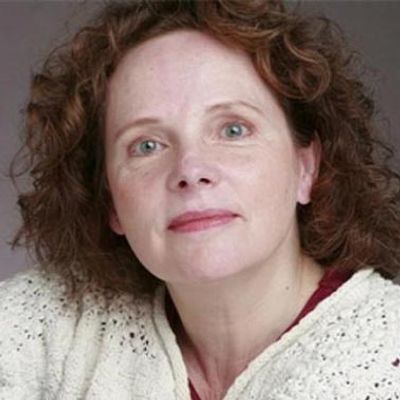
About
Maryann Plunkett can currently be seen in Erica Murray’s The Loved Ones at Irish Repertory Theatre. A Tony Award winner for Me and My Girl, she earned a second Tony nomination for her performance in The Notebook. Over her four-decade career, she has delivered acclaimed performances in countless productions, including Agnes of God, Sunday in the Park with George, The Seagull, Saint Joan, Richard Nelson's Rhinebeck Panorama, and many others. Her film and television work includes Greta Gerwig’s Little Women, A Beautiful Day in the Neighborhood, Manifest, and Dr. Death. She and her equally brilliant husband Jay O. Sanders were jointly awarded a Special Citation for Lifetime Achievement by the New York Drama Critics Circle.
This episode was recorded July 20, 2026
Transcript
This transcript was automatically generated and might contain errors.
[0:00] Jeryl Brunner: From Shakespeare to Schwartz, from Fossey to Alvin Ailey, from Sondheim to Brel, from McNally to Faye. It happened to the greats, it still happens every day. When lightning strikes is the moment you know. When lightning strikes, where your mentor goes. You can stand in Chalureka. Do whatever you like. You'll never forget the moment when lightning strikes. This is Jeryl Brunner, and you're listening to When Lightning Strikes.
[0:33] Maryann Plunkett: Maryann Plunkett can currently be seen in Erica Murray's The Loved Ones at Irish Repertory Theatre. A Tony winner for Me and My Girl, she earned a second Tony nomination for her performance in The Notebook. Over her four-decade career, she has delivered acclaimed performances in countless productions, including, and this is just a few, Agnes of God, Sunday in the Park with George, The Seagull, Saint Joan, Richard Nelson's Rhinebeck Panorama, and many, many, many others. Her film and television work includes Greta Gerwig's Little Women, A Beautiful Day in the Neighborhood, Manifest, Dr. Death, and she and her equally brilliant husband, Jay O. Sanders, were awarded a special citation for lifetime achievement by the New York Drama Critics Circle.
[1:35] Jeryl Brunner: Well, welcome.
[1:37] Maryann Plunkett: Hi, thank you.
[1:38] Jeryl Brunner: That sounds very nice. They say writing is killing your darlings, or making an intro for a podcast is killing your darlings, because you have so many darlings. So, congratulations on The Loved Ones at Irish Rep. I want to know what inspired you to take it on. What went through your mind when you first heard about The Loved Ones?
[2:04] Maryann Plunkett: Well, I was asked to do a reading of it. Irish Rep does in the fall a sort of a new play festival with new plays read over a period of a week or maybe, you know, ten days, I'm not sure. And The Loved Ones was one of those plays, and it's literally meeting for you rehearse a bit and you read it through in the day, and then an audience comes in at night and you're at music stands. And I really liked it a lot, and I hoped that it would have a full production, and it did. So, and very quickly, you know, I did not expect it would happen that soon. So when Kiran wrote to me and asked me, I said, "Yes, I would love to do this."
[2:59] Jeryl Brunner: So what was it about the play that you so loved? I mean, it's about grief, it's about seeing people you love in a different light, it's about connection, it's about—there's so much. But what was it about the play?
[3:17] Maryann Plunkett: You know, if they say in a derogatory way, if it's a play with all women, it's, "Oh, I guess that's a women's play." You know, I'm not interested in that. That's just women's stuff, and this play is all women, and my husband reminded me—because I always say it's the four ages of women—and he said, "Well, there's the baby too," because she's seven months along. So there's a kicking baby who happens to be a girl also in there. So it's really five ages, you know, of women, and yet the themes are universal grief. You know, the lost pregnancies of Orla, the grief that goes with that, and the feeling of also that Robin, her husband, my son, maybe part of what happened. I'm not going to reveal things.
[4:20] Jeryl Brunner: Yes.
[4:20] Maryann Plunkett: Yeah, don't reveal. Maybe he was holding grief as well. Yes, you know, that and it's not as easily expressed. He's having to take care of his wife because it's her body that it's happened to, but maybe there's no thought of what grief is he going through as well, and you know, the complications of that, how it affects a life, how it affects people within that situation. And as the mother, observing but not being privy to everything that goes on, because they live in London. I live in County Clare. Yeah, so I see them not always, and you know, a child you raise exclusively, she's a single mom, and then you realize but the life expands and his life expands, and he has a different partner than his mom.
[5:24] Jeryl Brunner: Well, I think—do you mind describing the play for people here? You play Lel, who owns this Airbnb, she's a super host, like you said, Callie Claire, and I'll let you tell it.
[5:37] Maryann Plunkett: Well, she is an Airbnb super host right now. Yes. It's not something that she went, "I think I'm going to buy a cute cottage and become an Airbnb host." This is her home. And where she raised her child. Her own. Yeah. I mean, her parents were there, they supported her in terms of, "We're not going to let you starve." She was unmarried in the 1980s, and it deals—this play deals with shame too. Where does shame come from? I think Nell has lived a life of shame that she's proud of her son, and he became a professor in London. She was studying when she became pregnant at the university in Galway, one of the universities, and she was their golden child, and then suddenly her life became very contained.
She didn't leave this small town. She lived her life. It's a sheep farm too. The dad had a sheep farm, and now the flock is getting smaller and smaller, and she needs to make some more money, so she lets people come in and pay her to sleep in one of the bedrooms. And so it's survival, coming to terms with shame, the recognition of my life has been filled. Don't let the side—the stopping of a cycle of shame comes into it as well. I think it's beautiful.
[7:13] Jeryl Brunner: Yeah, and from what we—again, without giving too much away—so there's Lel and then there's her daughter-in-law who comes, you know, you're right, or then there's Lel's Airbnb guest who she's such a beautiful company, and then there's a surprise visitor, you know, and it's how you all coexist together, you know, and then the other character is Lel's late son who is very much in the play talked about, who passed away and how—and his ashes have been brought—he died six months before, yeah, funeral for him in London that did not go well in terms of the relationship between Nell and Orla—but Orla is bringing his ashes now to his home to scatter over the—so yeah, it's a fascinating dilemma, you know, because here you have, you know, something so expected and then you know that Lel and Orla are gonna have this time together to bury the ashes, and Lel—people show up and seriously put a wrench in their own ways in the plan.
[8:55] Jeryl Brunner: And I think about how that Lel has to confront not only the loss of her son, but she has this realization that there's parts of his life that she didn't ever know. And do you—I wondered if for you, do you feel like what is that like, you know, for somebody to have a vision of somebody, not just someone, a child, and to have that completely transformed, you know? How do you think that changes Lel? And something, yeah, that you thought about when building her.
[9:40] Maryann Plunkett: Well, it's there, it's yeah, it's present in the script of, you know, one of her first lines, one of her earliest lines to Gabby is, "I don't think my son would do something like this." Yeah, it's just—and it's that simple. Like, you know, you're trying to fool me, you're tricking me. Yeah. You want money or something? You've shown up here, you've looked into the obituaries in London, and you think, "Oh, I could go to this little town," and that suspiciously, you know, watching, listening because he was her life. He was now flowing, you know, that he did well, and he was a professor in a London university. Well, that reflects her because she had to leave university and she was pregnant with him. And her life was not as—one character says, "Oh, you must have been a real free spirit." And she says, "The sad thing is I wasn't."
[10:49] Maryann Plunkett: It was one night. And I in my own heart, I believe that that one night of uh and the line is of recklessness, but I think it's of passion of freedom. She had one night at which she wasn't being dutiful, and then everything um stopped uh or became contained like this. Um and shame comes into it. So you uh other people could move forward, but you're living in an environment of shame, you keep your head down and you just continue to do everything by the book.
[11:28] Jeryl Brunner: Yeah.
[11:29] Maryann Plunkett: What do you think the play is say about how we construct people we uh people we love? You know, how we can how we see people we love.
[11:41] Jeryl Brunner: You mean like with rose-colored glasses?
[11:44] Maryann Plunkett: Yeah, yeah. Of course, Lel, we we all have a vision of people who we love. We have a we have an image of them, but yeah, well, you raise a child and you instill certain values in that child, and you think perhaps those values are part of that child, and then something happens that uh disrupts your belief system in what you have simply believed in, and and you know, without cause. Why are you believing this as an individual person and uh individual who lives a life hundreds of miles away um it's uh a person who's teaching you know it's I don't really when you're living in a small town in a small house and you have control per se over the child what the child does what the child is doing you have knowledge of where they are and then they grow up and they have their own lives and you can hope that what you've tried to instill in them will stick or on the other hand they might even you know say well I have my own beliefs I have my own needs I have my own uh griefs that I'm trying to deal with in my own way whether for for good or bad um you know do you hate your child do you what what is and it's again what is shame what is shame and and who who is really deserving of shame um you know it's I I think it presents that in a very strong way it is very powerful and what an ensemble you make and I thought what's also so profound are the silences that there's the listening is just so beautiful between all of you you know and you want can you talk about this gorgeous ensemble of you know, the four of you very, very different characters, and what if the rehearsals were like for you.
[14:07] Maryann Plunkett: Well the rehearsal, we had a lovely um rehearsal period. Uh I think we had four full weeks of rehearsal, which is these days quite unusual. And then and then several days of tech, and then we had 10 days of previews before we officially open. And so it was rather luxurious in terms of time to breathe, time to get to know each other. Um, I I describe our this troupe, as I said, we're um it's a very happy dressing room. We share a dressing room, and it's a very it's a it's a dressing room you look forward to going into, and um it's supportive, it's funny, as it talks some serious stuff and some very ridiculously silly stuff, but it talk about the play the time, and it's uh it's a it's a great room to be in. And the rehearsal room was also um Nicola and and um the stage managers and the assistant um associate director, I mean everyone coming in and out. Uh it was largely women, yeah.
[15:22] Maryann Plunkett: And it's sort of wow. I don't think I've ever done a play that was virtually all women. And and it shouldn't be a big deal, as though, oh well, it's all women. You go, well, yeah, sometimes it should be that sometimes that happens because how many times have I been in a room where the all the uh creative team, the production team, it's all men, and you just people don't think twice about it, but yet if it's all women, suddenly it's it's all women. Let's make a headline out in the music. And it's God, we still haven't um I know and not and not enough has changed. That well wouldn't that be nice if it's just really good play and happened to be all women in it. And um you know it's in the play my pregnancy took place in the eighties and I talk about it was the eighties and um but yet I come around to realizing and hit here we are and the same thing has happened again. And you realize the cycle the cycle and the the the shame that still exists um and it it's sort of you know so do not be ashamed of this.
[16:36] Jeryl Brunner: Yeah, yeah. I well I wonder what you hope people take away from seeing the piece.
[16:44] Maryann Plunkett: Um well first I hope that they take away that they were moved by it. They laughed in it there. It's very entertaining. It's funny yeah. Um Donna Lynn who plays um um Cheryl Ann, you know she's sh she sort sometimes you go, is this a comment on Americans in for in countries other than um the United States? But then of course she becomes full in the at the end, the final act she's I call it's like Yoda suddenly has all the wisdom. So it's there.
[17:20] Jeryl Brunner: Yeah or Shakespeare's fools, you know that Shakespeare's fools and in his plays they're they're the fools but then no, you know they have knowledge and they speak the truth.
[17:31] Maryann Plunkett: Yeah. Um that was beautiful. Her character. Yeah, it's so hilarious. I know you've worked with Irish rap before. What what keeps you coming back to Irish Rap?
[17:42] Maryann Plunkett: It's such a wonderful theater. Wonderful company. And Charlotte is that even though I've only done the um O Casey Dublin cycle in 2019. And I did two plays in that of the the trilogy. I did two plays. And but I said I don't feel as though I've ever left because I'm there watching shows. If I'm not in them, I'm watching them. So I it's it's it's one of the greatest places to work. Um I've worked in a lot, a lot of places, and there's just uh care um within the walls about that that theater. And it's such a beautiful little jewel box, too. It's just the stained glass windows of depicting um things that were made for the theater. And it's just yeah, it's it's um it's just you go, oh, I'm home, I'm home, you know. There's an intimacy that I just love about that theater, so wonderful, yeah, and and of course your your accent is so phenomenal, you know.
[18:54] Maryann Plunkett: I I feel very comfortable with it. I feel very conversational with it. I you would it's uh um Barbara Rubin is a dialect coach, and she's so specific and so much fun to play with. And uh it's it's uh you know, as but Nell's accent is it's rural, it's you know, it's a small town in County Clare, and um Nicola wanted it to make sure that it showed that she has been here. She did not go traveling, she did not go live someplace else for a while. Um, whereas um Orla's accent, and even though she grew up in the same area, she didn't meet Robin until she was in London.
[19:40] Maryann Plunkett: Yeah, what's it? So I'm traveling, I'm going to get out of here, and then I end up with a guy who lives basically down the road from where I so but her accent is is a a little different than mine. She influences of London and and Dublin and um, you know, probably went uh to college in Dublin and so and the desire to not be part of this rural community. Uh you know, that she has taken on a different life, yeah.
[20:17] Jeryl Brunner: Yeah, that's a fascinating dilemma. I'd love to shift to your lightning strikes moment when you knew you had to be an artist. You grew up in Lowell, Massachusetts.
[20:29] Maryann Plunkett: It's Lowell and Tooksbury. The Tooksbury is the town. When I was eight or nine, we moved to Tewkesbury, and that's where my parents stayed until they died. Um, five kids in this house and the adventures we had there, and uh Tuesbury, it's Lowell to it's right off of 495, both of them. So got it, got it. And but what was it? I I heard that a story about you seeing the red shoes when you were a kid. Was there a moment where you thought, okay, this is my path, this is what I have to pursue.
[21:06] Maryann Plunkett: I you know, I you know, by the time I was a senior in high school, I knew more about that. I I would we had in our neighborhood, we had a thing called the Barnyard Players. It was just there was someone's house had burned down in Tooksbury, and one of the mothers said, Let's try to raise money for them. And they brought all you know, all in the neighborhood kids together and adaptation of Beauty and the Beast and one, and then we did two plays actually over in two summers, and uh the wild swans, um, you know, the the the princes who are Matt enchanted into they're they're just wild swans and they become princes again.
[22:22] Maryann Plunkett: And it was just truly all people in the area, all the kids in the area, from ages say nine to seventeen, eighteen. The big boys would park the cars when people came on somebody's lawn that they let people drive on. And we made the scenery. We did all that overseen by one of the mothers. And then there was a thing when I was in high school, it was a teen theater workshop that two teachers from the town decided to do. And it was just so that com I grew up a very shy girl, and I found it—I always tell the story—I said I would know the answer to questions in school, and I couldn't get my hand up to raise my hand. I'd be sort of willing it to raise; all you have to do is lift your hand up, and I couldn't do it.
And my mom did—she brought me—I can still see the stage, I can still see the production. I can smell the air almost. It's springtime and the light starting to go down. It was just—it was part of my soul became of the red shoes. And I just—that was my first professional production. They had brought it to what is now University of Massachusetts in Lowell, and it was Lowell Technological Institute, and then it was Lowell State College across the river that combined into just UMass Lowell. But I watched it, and I just—I was always playing, always imagining it. I would, you know, my dolls were alive, my toys were alive, but my dog was really a person, and I would talk out into the woods together. And I'm the middle child of five, so we had a lot of activity going on in the house. There was lots of stuff going on, but it was theater in particular, I think, is a brilliant thing for a shy child.
[23:56] Maryann Plunkett: Because you have the—it's about community. You're all working, no matter what size the role is, you all have to come in on that first day. You meet each other, you all get the book, you know, that book where there were words, and it's a wonderful cushion of protection that there's this little magic protection between you and the world. And then as you're working on it and you get more comfortable, the book can go down, and suddenly you're part of this community. And to me, it's one of the most marvelous experiences of creating a community. And for me, it was a very important part of my growing up to be able to experience that beyond my family. You know, I was part of the community in my family, but to go out and know I don't have to run into the room going, "Hi everybody, hi, my name's Miri Ann. How you know this?" I have this magic book. And I can be very busily studying if I'm feeling shy. And it doesn't look weird. It doesn't make me look like I'm weird.
[25:13] Maryann Plunkett: So I wonder how it makes you feel. Is it possible to put it into words whether you're performing, whether you're on the stage? I don't, you know, I think because it's different and each night could be different. I, you know, some people they go, "Oh, just so and so was in the audience." So I never know that, and partially it's—I think I will myself not to try to look, because I would hate to be aware that, "Oh God, I recognize someone," or "Oh, that's where Jay is sitting," or "Oh, my best friend is there. Oh sh, I didn't know she was going to be there." I like—for me, it's about—it's an escape, you know? You enter this world, and for the span of the play, you have your technique or whatever, but you throw it away.
To me, you throw it away as you step on stage. You figure out who this person is, and then you go out and play, you know, really. You get on that stage, and I—just like, you know, when you're a kid, you're so serious about what you're playing. "No, I'm the mother here, and you have to be the kid, and I'm very angry with you right now because you did very poorly in school." So you come home, and you make up a story. You make up a play; you improvise a play. And I think we give that up as we grow up, and I'm just so fortunate. Jay and I say we look at each other all the time saying we are so lucky that we have been able to spend our lives doing this and sharing with people. Mentoring—I try to mentor, I coach young actors. You know, it's something I love doing.
[27:06] Jeryl Brunner: How did you go from though wanting to do it to—I know you went to the University of New Hampshire, and weren't you one of the founding members of Portland Stage Repertory?
[27:18] Maryann Plunkett: Well, I was still at UNH, and yeah, I said I was working as a waitress in Durham and going to class and then getting into my old Chevy Impala, this like tank of a car that was probably 10 years old, and drive up the main turnpike to Portland. And we toured the state of Maine; we did 67 straight shows without a day off, one-night stands—all the periphery of Maine, and setting up the sets, and we did everything. And then rented a furniture store in Portland, well, in the fall, and transformed that into the theater. And now they have a beautiful space up in—my God, that's incredible.
[28:07] Jeryl Brunner: And how did you know you could sing? I mean, you have this also beautiful voice. You won the Tony for Me and My Girl, you know? How did you know?
[28:07] Maryann Plunkett: I don't know. I never—I don't think of myself as a singer. I mean, Donna Lynn's a singer. I mean, she's sort of—I think she's trained operatically; she has amazing—so does Claire, and I think Alana does too because I hear sometimes she's singing. I don't usually sing because it's sort of—they all sing so well. That's always my feeling of like, "Oh my God, you're in Sunday in the Park with George for some time." You can sing, but I think an actor—and then if the character happens to sing, well, then I sing, you know? It's not about going, "I'm a singer; I have to find a musical." Now it's, "What's this character like?" And I don't know; it's weird. I'm weird, but I am—I don't think we all are. That's one of the weird—well, I heard, you know, everyone—people say, you know, actors are misfits in the most delightful way.
[29:12] Maryann Plunkett: So, yeah, yeah. Well, you know, I think actors are people who are permitted to be misfits because our job is to be open, and our job is to absorb and express other people's beings through our own beings, through our bodies. And, you know, I think everyone in this world has their misfit element, and sadly, most people are not permitted to express that. You know, they—you sit over here, here's your bottle. You have to fit into that bottle. "Wait a minute, it's overflowing. Don't, don't, you know, keep your hands down, lower your voice," whatever. And how lucky am I? And our son is also an actor, a beautiful actor, Jamie. And he's getting—he was at the public in the fall with an initiative, and he just received his first Drama Desk Award for the show.
And it's sort of how lucky we are. And you just sort of—and you never know what is coming or what is—it could all dry up, but you go, "Well, you just take a step and see where you land," and you keep trying and you keep working. You know, I say to young people when they're graduating from school, I said, "If you want to do—I said, do you want to be an actor or do you want to be a star?" I said, "If you want to be an actor, there are many ways to be an actor. If you want to be a star, whatever that means, I have no idea, you know? I have no how that happens." I said, "But I'm so fortunate that I've been an actor now for a long, long time and have been able to make a living, and I wish that for my son, for our son.
You know, and all the other young talented people who are there saying, 'Just give—let me try, you know, give me a chance,' you know, just like chorusongs. 'Oh, just I need a chance to show you. Because I don't fit into the bottle really neatly.'"
[31:38] Jeryl Brunner: Well, oh well, it's such a joy to talk to you. Thank you so much. And here's to many, many more beautiful roles.
[31:46] Maryann Plunkett: It's great fun. It's great fun to talk to you, and so much congratulations.
[31:52] Jeryl Brunner: And yeah.
[31:56] Maryann Plunkett: Oh, yes, two more weeks. Have a wonderful day.
[31:59] Jeryl Brunner: Thank you.
[32:00] Maryann Plunkett: Bye.
[32:00] Jeryl Brunner: Bye-bye.
[32:04] ♪ Musical number: "When Lightning Strikes" — performed by Tom McGovern ♪
© Broadway Podcast Network, All Rights Reserved