

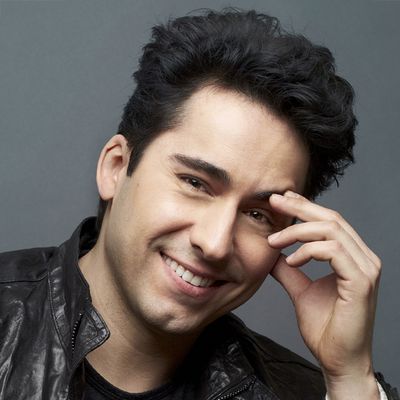
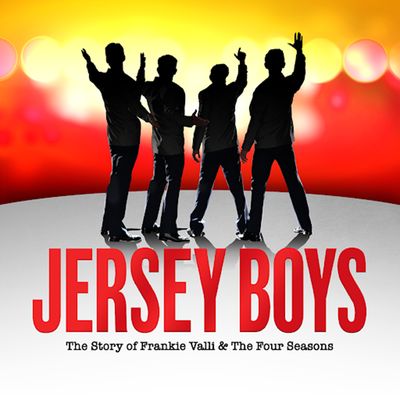
A Tony and Grammy Award-winning force, John Lloyd Young played Frankie Valli in the Original Broadway Cast of Jersey Boys. He also starred as Valli in Clint Eastwood's Warner Bros. movie adaptation of the show... Read More
From the show: When Lightning Strikes!
Guests
Featured Shows
About
A Tony and Grammy Award-winning force, John Lloyd Young played Frankie Valli in the Original Broadway Cast of Jersey Boys. He also starred as Valli in Clint Eastwood's Warner Bros. movie adaptation of the show.
Young is the only American actor to have received four major awards for a Broadway musical: the Tony, Drama Desk, Outer Critics Circle and Theatre World Award.He has performed concerts at The White House, Carnegie Hall and all around the world.
On February 12 John Lloyd Young will performing at The Space Las Vegas in John Lloyd Young’s Vegas Valentine. His intimate show will be streamed live as he sings beloved Jersey Boys favorites along with luscious and romantic classic tunes. Visit, https://www.johnlloydyoung.com/live for more information.
Transcript
This transcript was automatically generated and might contain errors.
[0:00] Jeryl Brunner: From Shakespeare to Schwartz, from Fossey to Alvin Elley, from San Time to Burelis, from McNally to Faye. It happened to the greats, it still happens every day. When lightning strikes is the moment you know. When lightning strikes, where your mentor goes, you can stand in Chalureka, do whatever you like. You'll never forget the moment when lightning strikes.
[0:25] Jeryl Brunner: Hi, this is Jeryl Brunner, and you're listening to When Lightning Strikes, where we talk about the tingly, heart-stopping mic drop moments that led you to becoming an artist. John Lloyd Young is the Tony and Grammy-winning star from the original Broadway cast of Jersey Boys, as well as Clint Eastwood's Warner Brothers movie adaptation. Young is the only American actor to have received these four major awards for a Broadway musical: the Tony, the Drama Desk, the Outer Critics Circle, and the Theatre World Awards. In his New York Times review, this is what Ben Brantley wrote about John Lloyd playing Frankie Valli.
[1:17] Jeryl Brunner: Mr. Young has crossed the line from exact impersonation into something more compelling. It's that sort of melting from perfect wax effigy into imperfect flesh. Brantley goes on to say, inhaling the cheers of the crowd, Mr. Young as Mr. Valli glistens with that mix of tears and sweat. And everything that has led up to that curtain call feels just for a second, as real and vivid as the sound of your hands clapping together. John Lloyd Young has performed concerts at the White House, Carnegie Hall, and all around the world. And on February 12th, he will be performing at The Space Las Vegas in John Lloyd Young's Vegas Valentine. His intimate show will be streamed live as he sings beloved Jersey Boys favorites along with luscious and romantic classic tunes. Welcome, John Lloyd. How are you?
[2:21] John Lloyd Young: Hi. Oh my God. Hearing those lines from that review. Oh my God. I just got tingles myself. I got tingles reading it again after all these years. I'm reading it again, my hands, yeah. I clapped my hands just to feel that feeling, just to feel what it's like to be an audience member and to witness that. And I remember seeing you and how magical that was.
[2:51] John Lloyd Young: Well, the magic was mutual, right? I mean, not because what he was picking up on was that thing that they call flow, where your talents overlap with your activities perfectly. And it was just, oh, what a great moment that was. And I got to do it 1300 times. I got to feel that moment, you know, all over the world.
[3:19] John Lloyd Young: Yeah, and it's visceral. And that's why I love live theater. That's why I love being together as part of an audience and that collective joy that we all have together that you just can't. Nothing like it. It's really just nothing like it in the world. How are you doing? How are you staying creatively nourished?
[3:41] John Lloyd Young: Well, you know, I'm a natural introvert. So for me, you know, between concerts, whatever, I come home and I keep to myself anyway. But even this has just been too much for me. To not be able to engage with other people, to be constantly on the lookout for yourself, you know, to make sure you're properly distanced. It's just exhausting, you know. Yet these live streams for me have been a lifeline because I have not had to lose my momentum with my followers and fans, and I haven't had to lose that feeling of live performance because I give the same show.
[4:31] John Lloyd Young: Look, this place that I play, The Space, is a live performance space, but it's one of those places that doesn't have fixed seating. So they're able to clear out all of the tables and turn it into a sound stage and turn it into a TV production, you know. And of course, I've done some work in front of cameras anyway, right? I've got some experience in front of cameras. So for me, it's a slight adjustment to just know that there are people in real time on the other side of that camera who are experiencing what I'm doing, you know, in real time.
[5:12] John Lloyd Young: It's very similar to a live performance, and it really has kept me sane as a performer who loves to do this. It's a slight adjustment really, because I have a good imagination and I see all those faces there even though I know they're sitting, you know, on a couch like you are in their own apartment or whatever. I know we're all experiencing something in real time and you might not breathe in the energy of the real room, but we're as close as we can get. And for me, it's in a way it's almost better because I get to have an individual conversation with each person, but they don't—I can't hear what they're doing or saying, so you know, there can't be interruptions.
[5:25] John Lloyd Young: If someone from the audience wants to say something to me, it doesn't interrupt my flow. That part of it is missing, but I don't know if that's an answer to your question. The live streams are what are kind of keeping me sane and keeping me engaged.
[6:17] Jeryl Brunner: Because you've done a couple of them now, right? This is your fourth or fifth one?
[6:17] John Lloyd Young: Yeah, and this is the Valentine's Day one. And you're going out to Vegas, right? For the LS?
[6:17] John Lloyd Young: For me, I'm an LA guy, so for me, Vegas is a short road trip. And it's perfect for COVID and distancing and safety because I just drive myself in my own little car, you know, my own pod. My music director, Tommy Farragher, is also an LA guy. He drives himself, we get together for the sound check, distanced, we do the show, we go our separate ways. It's a very safe way to do this without sacrificing production value.
[7:07] John Lloyd Young: So I don't have to do it from my kitchen and Tommy's remotely on Zoom or whatever from his kitchen. We get to go into the real performance space with this amazing lighting and sound package. So none of that is sacrificed. And you know, I don't know, it's working out great. It's working out wonderfully. It feels as good as it can feel under these circumstances.
[7:33] Jeryl Brunner: It's so phenomenal. How do you choose what songs you're going to sing?
[7:40] John Lloyd Young: You know, it's like a chef who has his own restaurant. What do I want on the menu today? And so, Valentine's Day, which is like a specific holiday. What of the great, wonderful, beautiful, romantic love songs, lush ballads, whatever. What am I going to put on the menu tonight?
[8:04] John Lloyd Young: And this is a Valentine's menu. So you can just assume it's going to be things that people who want to swoon and think of love and all that stuff. But I also understand that a lot of us right now are isolated, and every Valentine's Day is like that, where just because it's Valentine's Day doesn't mean we have a Valentine or we have a date. And I've always acknowledged that every single time that I do my Valentine's concert, just sort of like a specialty for me that I sing songs about losing love too, or songs about pining for people, you know, when you're alone.
[8:39] John Lloyd Young: So everybody has a seat at this table, whether they're canoodling lovers or just single people, you know, dreaming about that love or that unrequited love. In fact, probably half to three-quarters of my love songs are the messy side of love, which is my favorite because I'm an Italian singer and a Welsh singer. Think about Italian singers and Welsh singers, okay. Think about Tom Jones, Shirley Bassey on the Welsh side, and then every Italian singer you've ever heard of. We're highly emotional singers in our traditions, and I love the messy love songs. They're my favorite ones.
[9:17] John Lloyd Young: So it's like a tsunami. Oh my God. Have you ever heard of the folk singing, the Portuguese folk singing Fado?
[9:28] Jeryl Brunner: It sounds familiar.
[9:33] John Lloyd Young: Tell me more.
[9:34] John Lloyd Young: Fado is this kind of club singing that's Portuguese. I think probably started in Lisbon, and you go into these little cafes, and there's a little platform with a guitarist or whatever, and you have these singers who look like life has just beaten them up, and they get up there in these little places and they sing songs that are so full of emotion. It's a world form of music that is, you know, one of the famous—they're called fadistas, the people who sing fado.
[9:39] John Lloyd Young: And they say one of the famous fadistas, and I remember who she was specifically, but she says, when fado is sung correctly, it's like a knife twisting in your chest. And I swoon when I hear that kind of description of singing, you know, the Edith Piaf, the people—all of the messy, you know. I think in that Ben Brantley review that you mentioned, my favorite line, and I'm paraphrasing, was that Young as Valli channels all the messy something, whatever, horrible feelings of life into these songs.
[10:48] John Lloyd Young: That to me is my pinnacle of achievement as a singer—to channel that human frustration and even the hurt-so-good kind of feelings of love and emotion into songs. That to me is living fully as a singer when it's messy. I love it.
[11:11] Jeryl Brunner: Yeah, that's why I love hearing you sing since I don't have you and the whole, you know, all those messy stuff, and some of my favorite stories to write. I used to every year, and now you're inspiring me to go back to—I write a story, how to be single on Valentine's Day, and it's usually you're single and you don't have a Valentine. Oftentimes I get a comic to weigh in about how to deal with Valentine's Day, and I embrace the messy. I'm all for that.
[11:39] John Lloyd Young: It's my favorite. My favorite type of song is the messy feelings, you know, working them out through song.
[11:49] Jeryl Brunner: Yeah, to be human. Let's talk about your lightning strikes moment or moments in your life. Can you pinpoint a moment or moments where you thought, oh God, this is my path. I have to do this?
[12:04] John Lloyd Young: Yeah. And first of all, can I tell you that Lightning Strikes is literally oftentimes my opening song?
[12:11] John Lloyd Young: Oh, Christie. Yeah, the Lou Christie. It was like, you know, very early on, I realized, okay, you're getting known for singing this Frankie Valli high falsetto stuff. What's another song you can sing from that period that shows off the same notes? And Lightning Strikes, Lou Christie's Lightning Strikes. It's been a part of my repertoire for years and years.
[12:30] John Lloyd Young: But that's not your question. So my lightning strikes moments have been several, actually, and over, you know, different periods of my life. My first one, I was a six-year-old kid, and my grandparents were New Yorkers. And my grandmother, you know, on my mother's side, the Italian Americans, my grandmother used to have a bridge game.
[12:55] John Lloyd Young: And she won big one summer. We were taking limos all over the city. She took us to Radio City Music Hall. I was six years old. We went to a Broadway show. My first Broadway show was Annie. And I was a little kid, six years old, and I was sitting up in the mezzanine. I remember distinctly because there's the big brass bar, and I was putting my hand on the cool brass bar and looking down over the people sitting in the orchestra. It was really exciting. We were sitting all the way to the right of the auditorium, and my mom had told me before I went to the show, you're not supposed to see the actors in the wings.
[13:35] John Lloyd Young: Okay. So I, whatever, you know, whatever that means. So I was sitting so far to the right that I could see all the little girls getting ready to make their entrances from the wings. And I remember thinking, I'm not supposed to see them. Also in Annie, they had this treadmill on the stage that would, you know, that one I think the NYC number, they're all walking in place, but it's like the scenery's moving past them, but they're walking on a treadmill.
[14:05] John Lloyd Young: And you know, I'm six years old. This is fascinating for me to see the technological stuff happening on the stage. Anyway, all these little girls running in and off the stage and this exciting show. And they were little girls my age or a little older. So my lightning strikes moment was wow, this is something you could do as a kid. You could be a kid on Broadway. I remember I went home with my program, and it was Allison Smith at that point who was playing Annie. I still remember. And then she was on a sitcom, Caitlin Alley. And I remember I used to watch it as a kid, and I was like, that's Allison Smith. I saw her on Broadway. You know, that was my first lightning strikes moment. I used to draw pictures in the I carried the program around like it was a coloring book, and I would circle things and draw in it.
And you know, I was fascinated with the whole thing, all the pictures, the little girls, and because I was a little boy, and I thought, if there's a little girl show, there might be a little boy show. And soon after that, the college in the town that I lived in upstate New York was doing Oliver. And I was like, Yeah, there's a little boy show. I could be an urchin in Oliver, and I was. So that was my first exposure and excitement around Broadway. And then there were another lightning strikes moments throughout my life. You know, um, rent when I was older. Uh, I was still an undergrad at Brown University. I, you know, I wanted to go and be on Broadway and be an actor in New York. And I had gone, there were open calls for rent.
I was still in school, and I took the bus to New York and I auditioned and I got a callback for rent. And I went back to school because I still had to go, and I suddenly, you know, all of my theater professors, everybody, everyone was so impressed that I got a callback. And I remember one of my professors, my acting teachers said to me, if you get a callback for Broadway, that means you're gonna be on Broadway. I mean, that is the sign that you got what it takes to be in a show. And that for me was a huge moment. Now, I didn't get cast then, and then that show that was my big dream to be in rent. I got cast ultimately in you know, my first Broadway show was Jersey Boys, and then that was my own show where I was the star of my own show, and it wasn't rent, I wasn't replacement, I was an original cast.
So it was even better than my first dream. But that was another lightning strikes moment is getting a callback for Broadway when I was still an undergrad. I hadn't even moved to New York and tried it yet. That's extraordinary. That's another one. I mean, there's a lot of them, but those are the two that have come to mind first.
[16:49] Jeryl Brunner: So the very first time you did Jersey Boys was on Broadway.
[16:53] John Lloyd Young: Yeah.
[16:54] Jeryl Brunner: Yeah. Playing Frankie Valli.
[16:56] John Lloyd Young: That's pretty heady.
[16:57] Jeryl Brunner: Yeah. Pretty heady. Well then, can you do you talk about one of your first professional gigs?
[17:04] John Lloyd Young: Uh, one of the one, well, the most the most meaningful one of all of those initial gigs in New York was uh it was a regional production of Chaim Potok's The Chosen, a dramatic adaptation of that. There was a ill-fated musical, This Was the Play. Um, and it was a joint production, which they were doing a lot in the regional theaters at that point, in the early 2000s, a joint production between the Coconut Grove Playhouse in Miami and Paper Mill Playhouse in New Jersey. And the star of it was Theodore Bikel. And now I knew everything about Broadway. It was a real Broadway baby, and so much so that I was a teaching assistant at this big survey of the American musical at Brown. And I taught the segment on Candor and Ebb, you know.
So I knew all the Broadway history. So to be cast in something where Theodore Bikel was playing my father, you know, this was the longest running president of Actor's Equity, the guy who had played Tevye in Fiddler on the Roof more than any other actor, the original Captain Von Trapp in Sound of Music with Mary Martin, Richard Rogers and Oscar Hammerstein wrote Edelweiss for Theo because he played the guitar and they wrote a song for him. Edelweiss was the last lyric that Oscar Hammerstein ever wrote for anyone. And Theodore Bikel liked to tell the story that the last word that Hammerstein ever wrote on paper was forever, which is beautiful, you know. So bless my homeland forever, you know. So I was doing it, I was doing a play with Theodore Bikel, who was theater royalty, you know, without a question, not to mention the fact I was raised with a Jewish stepfather, a stepgrandfather, um, who had fought in World War II.
And all of the stories about the Holocaust and everything were a big part of my childhood. And here was a man who watched Hitler uh march outside his window as a boy in Austria and escaped, you know. So if you follow Theodore Bikel or anyone who does, or what you know, really they venerate him as a hero of the Holocaust, you know, escaped that. He was a wonderful, brilliant man, and he was playing my father. I felt at that point I was doing this regional production and getting validated by this lion of an actor, you know, who said to me very early on in rehearsals, uh, you do good work. You know, I was floored. I was a struggling actor working in Morgan Stanley Dean Whitter on Graveyard Shift as a word processor, trying to make ends meet.
And here I am in Miami rehearsing, uh rehearsing this really fantastic, beautiful um poetic play, you know, um opposite Theodore Bikel. That to me was uh such a privilege, and it made me feel there might be some hope that I would be doing some great things in the future that I had the skills or was gaining the skills to be actually another actor in that realm.
[20:22] Jeryl Brunner: What a mentor to have, just and and so early on. That's extraordinary. I remember you know, all throughout my childhood looking at LPs and theater.
[20:34] John Lloyd Young: Yeah.
[20:34] Jeryl Brunner: Oh, yeah.
[20:38] John Lloyd Young: Oh my god.
[20:39] Jeryl Brunner: What a unique sounding name, you know, just how you know what I remember too, you know, it was really really fun coming out of the stage door in Miami, um, because there was a really uh large uh Jewish audience for that play because of its themes and also because of Theo. And all of these Khadassah women would come within busloads, and they'd be outside of the stage door with those LPs for Theo to sign them. And I and that was exciting because I'd never been around someone who was a star that people wanted him who wanted them to sign things. So seeing that outside the stage door every day and being an integral character in that play, because I was I played Danny Saunders, who was you know his son and the heir apparent to the you know to being the tzadik or the rabbi of the community.
So it's a very important part. Um it was just rewarding on every level, not to mention the fact that it was December and we were hanging out at the pool in Miami, you know. It's a great feeling, you know. Anyway, and it's a beautiful, well, I love the source material and then the movie was yeah. It's gorgeous, gorgeous book.
[21:53] John Lloyd Young: When did you know that you had this gift that you could sing?
[21:57] John Lloyd Young: I've always been a natural singer, and so my parents and my stepmother discovered it when I was just a toddler. Um so much so that I was featured in their wedding. I'm gonna date myself because do the math. The song, their wedding song was You Light Up My Life, Debbie Boone. And so you can kind of place what time, you know, and you could probably age me if you figure out when that was a big hit. So my job at the wedding was at the reception, was to um sing You Light Up My Life. And I was three years old, and uh I the band leader, you know, held me up in his arms and gave me the microphone, and I sang an a cappella and on key, you know, relative pitch I had already then. And uh so it was very, very early in my life that um that uh, you know, my family or whatever people noticed that I was a good singer, and then I was always in chorus, or I was in the musicals uh the kids could be in in the community, and it was I was always a very natural singer.
Um and in fact, I got to New York at one point, and I had I was I was uh in one of those stages where you want to be involved, but they haven't they don't know you yet, and you're still auditioning, and that frustrating period where you know you have some skills, but you just haven't been acknowledged, right? So I was in a it was a moment of kind of like um frustration. And I remember I said to I had uh my my then girlfriend, I remember saying to her, This is bullshit. I'm the best singer in New York, and I had done nothing, you know, I'd done nothing. And I and I and I had this feeling, you know, but I I was such a uh acknowledged good singer my whole life, and I knew I had this capacity, and this was Jersey Boys wasn't even on the horizon yet, but within two and a half, and she was really angry at me for saying that.
She's like, You're so arrogant, you know. Believe me, it was a moment of when you're arrogant in order to push yourself over the hill of complete self-loathing and feeling pathetic, you know. But but it was just a moment, and I said it out loud, and then I was like, oh my God. I remembered like two years later when I was getting all of these accolades for my singing. A couple of years, you know, around that time, there had been a there had been uh an article that came out in like entertainment weekly, and it was said the choicest voices of Broadway. And I remember Adam Pascal was in it. And I think Adam Pascal has one of the best voices in the entire business, if not the best. I I worship at his voice, especially because that he can as this rough sound that he doesn't hurt himself.
Who's that other guy who was just uh Alex the guy who just played Beetlejuice? Oh, Alex Brightman. Yeah. He's also someone that can do things like even in that show, his voice that yeah, I don't know if I could do that, could come back show after show with that rough sound and not lose my voice. But at any rate, two years after I'd made this so arrogant, like astonishingly arrogant comment to my girlfriend, I was getting those getting called that and as having those accolades. So uh so I knew something about myself, you know, that uh that down the road I was being acknowledged for and and um and feeling like well, as something in that was that wasn't very polite, but it was somewhat prophetic.
So and maybe that's that sense of confidence got you know into those audition rooms and believing in yourself in a way. I didn't know how to sing show after show with that kind of falsetto singing, but I was a skilled enough singer so that with the right training, then I was able to do it. And and and I got better as the run went on. So I was a better singer when I left the show than I was when I was starting, because I had it behind me and all the training, and now I say, wherever I go out to sing now, that brutal eight shows a week singing unprecedented amount of songs for a lead in a Broadway musical because most lead characters, like think about Alfred Drake or those, you know, historic big parts, right?
Kiss Me, Kate or something. They have maybe four big songs or five songs. This character has two dozen easily, you know. So years later, when I sing a concert now, I'm a better singer now than I was then. And it's because of then. That was the who's the guy, Demosthenes with the pebbles in his mouth, the great orator in ancient Greece. He'd go into the amphitheater, but he'd do pebbles in his mouth to create an impediment so that when he would remove them and he would have this resounding voice that projected. I look at that as my Demosthenes period where I was doing such brutal singing then that everything since has been much easier. And so I the best training ever for me as a singer outside of Jersey Boys was Jersey Boys, was playing Frankie Valli.
[27:17] Jeryl Brunner: That's extraordinary. And then talk about, I mean, to just shift to another talent you have. I hear that you're an artist, that you create this one. Can you talk about that? Your art.
[27:29] John Lloyd Young: Yeah, I had sure. I had my lightning strikes moment with visual art was so when I was an undergrad, you know, I uh my dad was Air Force, so I grew up in kind of small towns that they didn't always have a museum or whatever. So the first really exciting art exhibit I saw, I was an undergrad abroad in Spain.
[27:55] John Lloyd Young: And I went to the south of Spain with my art history class, and there was a Warhol exhibit, and I saw the Brillo boxes and these things that these famous things that I'd never seen in person, and was just blown away by what art could be and how exciting it was to see his work in person. Um and again, so I, you know, I said, you know, I studied art history in college. So I was always, after that, you know, it was a museum hound. In fact, two show days during Jersey Boys, I would go to MoMA and just it would be keep because it's quiet, a way to keep my voice quiet, but it was also only four blocks away. And I would just wander the, you know, whatever. When I had moved out to LA to do Les Miz at the Hollywood Bowl, it's 2008.
I'd left the show, so soon after I'd left the show. I did about two years, the first two years. Um I entered this market, the LA market during the writer's strike of 2008. So I came, I moved out here. I was born in Sacramento, so I always planned to move to California eventually. And I moved out here, and there was the writer's strike, and so there was nothing going. Kind of like right now, but for different reasons. And um, I was still going to museums and everything, and then I had this epiphany, this idea, it was something that I had never seen in a museum before. So I started making pieces with a real understanding of what I was doing in terms of art history and its context. So I was a fan of Arte Povera, which is the movement in the 60s where Italian artists invented where they would use really cheap materials, like what nowadays you it would be like doing an art project with things that you just bought from the dollar store.
Brillo, like literally Brillo pads or like steel wool, that they would use materials like that, everyday materials, cheap materials. That's why it's called Arte Povera, poor art. Um I got an idea that kind of mixed that with Warholian Pop, and then like Swarovski or like Judith Lieber, like what she does with the purses and stuff. And I imagined, I was like, oh wow, let me take, so let me take groceries and pave them with jewels, put them under museum glass, but literally the real grocery, like the garbage. That's where the Arte Povera comes in. What you would throw out and instead venerate like this box of Ritz crackers, venerate it, exalt it, dress it up, and put it on a pedestal, literally in museum glass.
And that, and this became an expression that I would, I first of all, I hadn't seen it anywhere. The closest thing that comes close in my mind is there's a famous piece at MoMA called Object by Merle Oberon. You might know it if you see it. It's a fur-covered teacup and spoon and saucer covered with fur. And I, and I, so my idea was to cover these things with rhinestones and make a piece of garbage into this exalted thing. Now, one of my favorite things about Pop, about Warhol's whole thing, was that Warhol's idea was to take something and replicate it and make hundreds of like one soup can portrait, right? So he would manufacture art like it was a mass-produced thing, like mass-produced soup cans or Ritz boxes or whatever my play on pop is almost in a way opposite because the way that I lay the jewels on things I could have a series of 10 Ritz boxes or something but the jewels are laid in a different way each time so that each one is a unique object so I take something that is mass-produced and stop it in its tracks and take make it into a unique thing so uh so for me, so all of these art history things that I've had in my mind since I was an undergrad I was able to play with and you know and integrate and create my own unique expression and it's become a really exciting second career.
You know now for a decade I've had things I think my debut took a few years to build up some work because it's time-consuming but my debut was in 2010 and so it's now been 11 years that I've had this career and it's been a nice fill in between because in any entertaining career you have downtime it's filled in every single time I've had downtime I've been able to be active in the art side of things.
[33:02] John Lloyd Young: And it's interesting the yay and yay of you know saying versus creating something with your hands using the different parts of you to express yourself. And I can listen to music and find new songs while I work on art so they can all feed into each other. Are you tired of answering people asking if you'd like to come back to Broadway?
[33:29] John Lloyd Young: If the right role came along, you know, in the perfect world when we're back, I'm hopeful we'll be back. You know, is this something you would like to do? I guess. Yes, and I had I'm not tired of it. In fact, before it didn't happen, but it was almost gonna happen before the pandemic. That I I want I want to play great roles. I don't care about all the snobbery about oh, Chicago's been running forever, whatever. I was down the road with maybe Billy Flynn in Chicago, because I'm old enough now to do it, and I wanted to play the part in the best production anywhere. I could do it in a regional theater somewhere, but I don't care what someone could be like, oh, he's all washed up. I'm sorry, but I I've been around the Broadway community for a long time.
It's not nice all the time. And people will say that. Oh, I guess he's got nothing going, so we went into Chicago, which I think is mean. But I wanted to play the part is great. James Naughton, who won the Tony for the revival, is another Brown alumnus, the only other Brown alumnus besides me who has best actor and a musical Tony Award, okay? I mean, David Diggs has one now, but it's featured, you know. James Naughton and I have the big kahuna, you know. So I was looked up to him, and I was an undergrad at Brown when he was doing the original production of this revival. To be old enough to play it now is kind of cool. And so that's something I would have done. Didn't happen, but um almost they offered it to me.
But uh but there is a specific role that I would want to go back and do on Broadway right now. Um and it would be the wizard in The Wiz. I think, first of all, after what we just went through in our politics, to have the one white guy in the whole cast be the charlatan is perfect for our times, you know. And it's also I adore and admire Andre de Shields and have always been obsessed with The Wiz. The Wiz was the best musical Tony winner the year of my birth. So I grew up with it. And uh and the part is if you think about it, for a return to Broadway for someone who hasn't been there for a while, who has been proven to be able to do an exciting performance, right? Is one of the most exciting parts in Broadway history.
It's the title role. You're waiting and waiting and waiting, just like The Wizard of Oz, everything. You wait for a lot of the show to see the whiz, the wizard for the first time. So you sit, yeah, you sit there with anticipation, which would be great for me to have my fans or whatever an audience wait to see well, okay, what's he gonna be like? Um, and uh you're not carrying the show, like with Jersey Boys, you know, like that was good for when I was a younger guy. Going back to Broadway now would be nice to get my feet a little wet and to do something exciting, but to not have to carry the whole show. So for me, uh and his material is there's two songs, not 24, and they're exciting, really exciting songs, and he gets to be this campy, over the top, intimidating, electrifying presence.
So if there's another Broadway show that has that combination of things all in one, I'm open to it. But right now, my dream would be to be like the white guy charlatan, you know, in The Wiz, a revival of The Wiz, a good revival of The Wiz. So anyway, whatever. A man can dream. The answer to your question is yes. To go back to Broadway in an exciting way, absolutely. But let's first get Broadway back and then we'll see.
[37:16] John Lloyd Young: The other thing, there's another role that I would want to play. Yes. When Broadway comes back, and of course, you know, it's Lynn Manuel's show. He wrote Hamilton. So if it's good for the show to him be back to be back in it, you know, if I wrote a show and I it would be good for business for me to go back in it, I would go back in it. I would love to play Aaron Burr off opposite Lynn Manuel Miranda. Now I know that the way they're casting it, I'm not in the right demographic, whatever, but down the line with a show, you know, if America is a country of all different ethnicities, and you know, I think, and and also what do they say in the show or around the show? Immigrants make it happen. We get the job done.
Yeah, I mean I'm the grandson of Italian-American immigrants to New York who helped build that city. So I think that it might be okay for someone, you know, like an Italian guy to go into Hamilton for six months. I mean, we built New York City too, so you know, I think we qualify as immigrant as an immigrant community that contributed. So we got some jobs done, some bridges built, some tunnels dug, you know, and we contributed to that city, I think.
[38:29] Jeryl Brunner: Those are such eclectic roles through you game. And what's great, I think about The Wiz, it harkens back, if I may, to your Andy days as a little boy, looking at the kids in the wings, and here you would be playing the guy who's making the sausage, if you will, the proverbial sausage.
[38:48] John Lloyd Young: That was a leap. Well, no, but you know, there's nothing like there's nothing like the electricity of a live performance in front of an audience that is that doesn't know what to expect. Those lights go down and you hear the murmur. Um, and uh and and to walk out there and to participate in that dream life, it's a communication, isn't it? You know, when it's live. And it's uh there's nothing like it. So in the meantime, my solo concerts, like this one coming up February 12th, you know, it's that same feeling, you know, it's just not attached to a script. The songs that I sing, I am addicted to thrilling songs or gut-wrenching songs, dramatic songs. So I always sing really interesting, electrifying songs, and it's just in little three-minute pieces, right?
So it's not a whole script, it's not a whole trajectory of a character, but they're little tastes of it for an hour or whatever, how long the concert goes. And in the meantime, before I get back to Broadway, my live concerts have really filled that gap.
[40:03] Jeryl Brunner: And you're still telling the stories through those songs.
[40:07] John Lloyd Young: Yeah. Big time. Yeah. Well, you know, it's like what Barbara Streisand always said about singing that her songs were one-act plays. And when you start as an actor, it's a little hard to just sing a song to sound pretty, or to just go through those runs, or to sing the whole song with your eyes closed the whole time. You know, this when you're an actor first, you understand that you're putting over a lyric, you're putting over a story. And I think that if you're also a really thrilling singer, it makes for a really great combination.
[40:40] Jeryl Brunner: Oh, well, I can't wait to see the concert. And I'm just so thrilled to talk to you.
[40:46] John Lloyd Young: It'll be now. So now you'll be one of the faces I know I'm singing to. I have, you know, dozens and dozens of people I know they watch over the years. I've, they've come to my concerts. I have an image in my mind always of who's in the audience, of where they're smiling, where they laugh. And so now you're gonna be one of those faces.
[41:03] Jeryl Brunner: Oh, I'm honored. I'm honored. Thank you so much for coming on.
[41:08] John Lloyd Young: Hope you have a lot of fun.
[41:09] Jeryl Brunner: No, thank you. Thanks. And thanks for opening up some things I have not talked about before. So it's that's always exciting.
[41:17] John Lloyd Young: It's a joy.
[41:19] Jeryl Brunner: Have a great day.
[41:21] John Lloyd Young: Yeah, you too. Be well, stay safe.
[41:23] John Lloyd Young: It still happens every day. When lightning strikes is the moment you know. The theme song was written by Tom McGovern. This episode was edited by Kyle Moore, and the talent was booked by Anna Strauss. Lightning strikes.
© Broadway Podcast Network, All Rights Reserved