

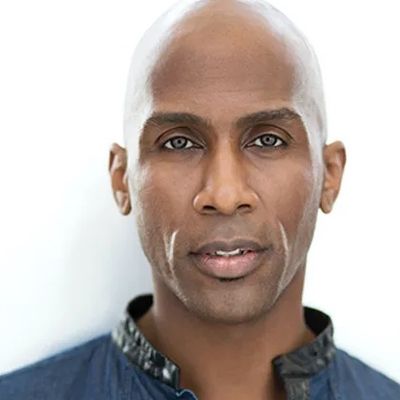
For nearly two decades Ray Mercer has been a cast member of 'The Lion King' on Broadway. One of the longest-running male dancers in Broadway history, Mercer, who plays one of the iconic 14 foot giraffes at the top of the show, is also the show's fight captain... Read More
From the show: When Lightning Strikes!
Guests
Featured Shows

About
For nearly two decades Ray Mercer has been a cast member of 'The Lion King' on Broadway. One of the longest-running male dancers in Broadway history, Mercer, who plays one of the iconic 14 foot giraffes at the top of the show, is also the show's fight captain. This past November 'The Lion King' celebrated its 25th Anniversary. Mercer is also a prolific choreographer creating pieces and working with companies and universities around the world.
Transcript
This transcript was automatically generated and might contain errors.
[0:00] ♪ Musical number: "When Lightning Strikes" — performed by the podcast theme ♪
[0:25] Jeryl Brunner: Hi, this is Jeryl Brunner, and you're listening to When Lightning Strikes, when we talk about the tingly mic drop moments that led you to becoming an artist.
[0:38] Jeryl Brunner: For nearly two decades, Ray Mercer has been a cast member of The Lion King on Broadway, one of the longest running male dancers in Broadway history. Mercer is also the show's fight captain. This past November, The Lion King celebrated its 25th anniversary. So welcome, Ray. It's such a pleasure to have you here on the show.
[1:07] Ray Mercer: Oh, thank you, Jeryl. Thank you so much. Thanks for having me.
[1:10] Jeryl Brunner: My pleasure. And what an epic couple of months it's been, right? For The Lion King celebrating its 25th anniversary.
[1:15] Ray Mercer: Yeah, you caught us at a really good time, Jeryl. Yeah, we're in the thick of it, you know, celebrating the 25th anniversary of Lion King being on Broadway. I'm also still celebrating my 20th year being a part of the show. So it's really a special time.
[1:40] Jeryl Brunner: I'm aching to know about your lightning strikes moments when you knew you had to be an artist, when you knew this was your path.
[1:51] Ray Mercer: That's a very good question. It still resonates to this day. I was destined to be a gymnast. I was a competitive gymnast in high school, and my career aspiration was to go to the Olympics. So I was training to go to the Olympics. And I just by happenstance took a ballet class. A friend of mine had said, "Why don't you come take a ballet class? I think you'd be great, you know, you're flexible, you're strong." He said, "Why don't you go take a ballet class?" And I was living in Omaha, Nebraska at the time. My very first dance teacher was Mary Watt Taylor. She had a very small studio. And I walked into the studio with a bunch of nine-year-olds in tutus, and here I was, this big grown man taking a ballet class. And I fell in love with it. She told me that if I continued, if I was serious about it, that she would allow me to take classes for free. So that's how my dance training began in a very small ballet studio in Omaha, Nebraska.
[3:01] Jeryl Brunner: Were you an adult at that point? And where were you in your life?
[3:05] Ray Mercer: Yeah, I was a senior in high school. I was 17. You know, I was 17 years old when I was introduced to dance. I was kind of introduced very late comparatively to some dancers who've been dancing since they were three, four, five years old. So I felt like I think that helped, too, because I felt like I had a whole lot of catching up to do. You know what I mean? So I was very serious about my training when I first started.
[3:34] Jeryl Brunner: Is it hard to put into words what it was? What was it that made you fall in love with this beautiful art form with dance? What was it about that class?
[3:40] Ray Mercer: You know what? I don't know if it was the teacher, how she inspired me, you know, her method of teaching. But, you know, as I got, you know, as I furthered my training, I knew that it was a way to, you know, I always enjoyed the physicality of dance. You know, the jumps and the turns and all of those things were very intriguing to me because I was a gymnast. But I think that lightning moment happened when there's a whole other side of dance that is the artistic side, you know, that side where you can express your artistic, you know, artistic side of dance, you know, stretching your imagination and figuring out how, you know, how dance is connected to humanity. You know how we, you know, it's very that old saying of art imitates life. You know, it was that moment where I realized, wow, it's just not the physical. It's those two things, two things that I enjoy very much. And to have those combined into one art form was I just knew that that would be my career choice.
[4:52] Jeryl Brunner: That's extraordinary. At that point, how long had you been a gymnast for years and years?
[4:59] Ray Mercer: Yeah, I started young. You know, I started my gymnastics career when I was like five. You know, it started with me tumbling in the backyard and flipping off garages and cars and things like that. My parents said, "We need to get you in a class before you kill yourself." So I started very young as a gymnast and then I trained all the way up until I was, like I said, like a senior in high school.
[5:34] Jeryl Brunner: So how did you go from being in this wonderful class to becoming a professional dancer?
[5:36] Ray Mercer: You know, I was finishing up my, you know, I was almost a senior in high school, so I finished up there in Omaha and I had a strong introduction to dance. She gave me the basics, but I knew that it would require more training. So I eventually I spent a year I went to the University of Nebraska for about a year and then I transferred to New Orleans and I minored in dance down there. I graduated from the University of New Orleans and I minored in dance down there. There were also some wonderful studios where I was able to get training there. Eventually I trained in Chicago, I trained in Detroit and in New York. So I had a vast amount of training where I ended up eventually in Chicago, where I danced with a company and eventually auditioned for Lion King.
[6:33] Jeryl Brunner: So can you bring me to when you got word that you were cast in The Lion King? You did the tour first, right?
[6:42] Ray Mercer: Yes, yes.
[6:44] Jeryl Brunner: OK, so listen, I right upon graduating from college, I had to find a job. I had to pay for my way through college. So I had to find a job. And the very first job I ever interviewed for professionally, I guess you would call it, was to be a flight attendant. And I strategically did that because I wanted to be able to travel to auditions. I wanted to be able to travel if I wanted to take class. I could take class anywhere around the country. So I interviewed for a flight attendant. I was hired. So I was able to travel everywhere. And I eventually ended up I was based in Chicago at the time. And like I said, I was dancing with a company and auditions were coming to Chicago and everybody in the city knew about it.
It was like a dream job for me, absolute dream job for me. It had been running probably about four or five years at the time, and it was the biggest hit and everybody was talking about it. So it was a huge audition. Every dancer in Chicago was there at the audition. And I remember auditioning and there were probably about 100 men in the room. And I later on during the day, you realize you look up and there's only maybe 20 of us. And then it felt like, oh, wow, this is a possibility. This is a strong possibility. And then when it starts to dwindle down like that, Jeryl, that's when you really want it because it's right in your hands. So at the end of the audition, it probably was about five of us left.
And I remember the guy that was doing the audition asked if anybody in the room could tumble. And that was my key. I knew that my gymnastic training would come full circle. So I was able to tumble. And by the end of the audition, there were probably about 100, maybe 120 guys that auditioned. And they only hired two of us. And I was one of the two.
[8:46] Jeryl Brunner: Oh my God. Now, did you when did you find out? Did you find out in the room that you were hired or can you bring me to that call or email or or no?
[8:56] Ray Mercer: Oh God, it's the worst. It's the worst, Jeryl, because they made us wait. I think we auditioned late summer. It was probably late summer, early fall. And we didn't find out until they didn't call us until like November. So I decided in my mind that I would just let it go. And I was like I said, I was a flight attendant at the time and I just finished the flight and I was on my way to a rehearsal and I checked my messages and it was from Lion King. And that phone call, I remember exactly where I was. I remember I had to park the car in the McDonald's parking lot to gather myself. And that call single handedly changed my trajectory forever. It changed my life forever.
[9:41] Jeryl Brunner: Can you talk about getting that call? What went through your mind? You bring me to that McDonald's parking lot.
[9:50] Ray Mercer: Yeah, I can think about it now. It almost brings tears to my eyes right now to even think about it. I was driving in the car and I saw that I had a message. One was for my mother and one was from, you know, vendor casting. And I remember I said, well, I wanted to check the message from my mother. So I pulled over in the McDonald's parking lot. It was the nearest parking lot before I was on my way to rehearsal. And I checked my mother's message. She was just saying how much, you know, "Hi, just checking. I know you just got off a trip, blah, blah, blah." And I said, "OK, check the next message." I wasn't going to check it, but then I decided, "OK, let me check it because I was running late for rehearsal."
Checked the message. And they said, "Ray Mercer, hi, this is Sarah Proctor." What's her name? And that was, I still remember that phone call. She said, "This is Sarah Proctor from vendor casting. And I have some great news for you. We would like for you to join the cast of The Lion King." And hearing that, it just, it changed my life forever. It really did. It changed my life forever. And I always remind young people, you know, even people who, just young people remember what that felt like to get that call. Remember that, you know, if you ever need encouragement or a little inspiration, remember what it feels like to get that phone call saying that you are now a part of something huge.
[11:24] Jeryl Brunner: I love that story. And here and then you toured. Right. And then can you bring me to when you got to Broadway?
[11:32] Ray Mercer: Yes, I have been on tour. I love being on tour. It was great. We went to some fantastic cities. We sat in Chicago for about a year and then we sat in San Francisco for a very long time, too. And there was rumor that one of the guys that was doing the track that I was doing on tour was leaving the show. And I immediately sent an email and I, you know, I was still young in the show. I'd only been there for about a year, a year and a half. I was still young in the show. So I sent an email to the resident choreographer and associate choreographer. And I told her that I was interested. And probably about a week later, they contacted me and asked me if I wanted to come to Broadway. One of those other moments. I remember exactly where I was. You know, it was life changing.
[12:29] Jeryl Brunner: So was the track The Giraffe, that original track that you were in?
[12:34] Ray Mercer: Yeah.
[12:35] Jeryl Brunner: So people for people who don't know, you are at the very top of the show. You are one of the giraffes that comes in in that beautiful, majestic moment with the sun rising. And can you talk about that? What that's like for you to be the giraffe, 14 feet high, walking across the stage on stilts, is it?
[13:01] Ray Mercer: Yeah, on stilts, I love that.
[13:36] Jeryl Brunner: Colbert and you did the Thanksgiving Day Parade. What was that like to take the giraffe outside your regular milieu, outside the theater and to have to navigate those spaces?
[14:03] Ray Mercer: You know, it's so funny that it was kind of strange taking my giraffe outside of his home. Yeah, you're right. But it was, the Colbert show was, it was a tight space, but the associate choreographer did a fantastic job of making it visually, you know, it just, the way it was choreographed and staged, it was really, it was visually stunning. So, you know, it was just kind of maneuvering within the tight space and getting it. It felt the same, but it was just trying to maneuver the choreography within the tight space. The Thanksgiving Day Parade, we just did recently, last Thursday, and it was nice, it was just cold, it was cold. I know the other dancers were freezing, but I had my big giraffe suit on, so it wasn't so bad. We had a good time. It was one of my bucket lists to do the Thanksgiving Day Parade. So great. And I got to do it in a giraffe.
[15:12] Jeryl Brunner: Great, yeah. I saw that the head was moving, your head was moving, right, Bobby?
[15:25] Ray Mercer: Yeah, yeah. Unbelievable. What's the joy? It's all in the choreography. It's incredible. And then you, as a member of the dance ensemble, you're a blade of grass, right? Are you a hyena?
[15:42] Ray Mercer: Yeah, uh-huh. It's so crazy. I have like between 13 and 15 different costume changes in the show. So I'm a busy man, I'm a busy little dancer. So I get to be, yeah, I get to be a grass. I get to be a hyena. I get to be a giraffe. I get to be a person for a little bit, you know? So I get to be a trickster. I get to be, you know, all those costume changes. It's about, it's probably close to 13 costume changes. And yeah, it keeps me busy.
[16:17] Jeryl Brunner: Are there some moments or milestones that you could look at with your time at The Lion King where you thought, I can't believe I got to do that? Like, I saw the anniversary, I can't believe the 20th, and there you were all on stage singing with Elton John and how special that was. Were there some really special, special moments for you that you can point to?
[16:40] Ray Mercer: Yeah, there's so, yeah, there's so many. You know, just piggyback on what you said. Just to think after five years, to be part of a Broadway show for five years is unheard of. And then you look up, then it's 10 years, and then 15 years, then 20, and then 25 years where a Broadway show has thrived for 25 years. And not only thrived, but one of the biggest running Broadway shows in Broadway history. That was a milestone for me. Recently, I found out that I am one of the longest running male dancers in Broadway history. That was a milestone for me. Those, it's things like that where I've been able to have a dual career, where I've been able to perform and be a choreographer. Most performers aren't able to do that, where I've been blessed to have a dual career.
That's been a huge milestone for me. Celebrities have come. Michael Jackson came one time, that was a milestone for me. He came and saw the show and spoke to the cast. So, there's little, tiny little milestones, but the biggest ones are those kind of iconic timeline achievements that happen, where you look up and you've been there for 20 years, and you look up and you're one of the longest running male dancers in Broadway history. Me coming from Omaha, Nebraska, it's a big thing.
[18:16] Jeryl Brunner: That's extraordinary. And I love, I was reading that you have, as you mentioned, you have this whole dual career as a choreographer, let you choreograph back in your hometown of Omaha. And can you talk about what that gives you and why that's important for you to also be a choreographer and express yourself that way?
[18:41] Ray Mercer: Yeah, I knew eventually that, I knew that I wanted to be a dance maker. I knew that I wanted to create dance and I wanted to be a choreographer. And I always, my biggest fear that I would have to sacrifice one for the other. And fortunately, I hadn't had to do that. Lion King has been very kind, let me take time off to do certain projects. I've choreographed musicals. I've been the resident choreographer for the Ailey School. I was an adjunct professor at Howard University for two years. I would fly down, I mean, I would take a train down on Mondays to teach choreography there. I've had my works archived at the Smithsonian. I've worked very closely with Broadway Cares and I have one more Broadway presentations for Broadway Cares than Broadway History. So it's those things that I look up and I say, wow, with all the sacrifices that I have to make, I am extremely, extremely blessed to be able to do them both.
[19:51] Jeryl Brunner: That's so wonderful. Do you have an aesthetic or when you have that kind of blank page or you're given the commission, is there something that you do, something that you turn to, to help you choreograph, something within that helps guide you?
[20:14] Ray Mercer: Yeah, I love that question, Gerald. I love that question. When I'm choreographing musicals, the story is already there. So it's just a matter of me bringing the story to life through dance. So musicals are different beasts, but sometimes the most rewarding are when I get commissions and I have full reign, you can create whatever you want. And I'm always been attracted to things that touch us all, the humanistic side of art, things that are tangible, books that I've read, experiences that I had, conversations that I have with people. Those are the things that are usually the impetus of my work.
[21:59] Jeryl Brunner: What are some musicals that you've choreographed? Ape Misbehaving is one, right?
[22:06] Ray Mercer: Just recently, yeah, I did Ape Misbehaving. I just recently did Rent Over the Summertime. I had a great time doing that at Theatre Company. I also, in Connecticut, I also choreographed just recently Jersey Boys in Aspen at Theatre Aspen and had a great time with that. The cast was wonderful. Producers were wonderful. So those are the two recent ones, Ape Misbehaving. I'm scheduled to do Dreamgirls soon, early fall.
[22:41] Jeryl Brunner: I love them.
[22:42] Ray Mercer: Yeah. And I've been told from people that, in The Lion King, that it's almost like, it's almost a spiritual experience since so many people have been doing the show for many, many years. And that when you come, at the very top of the show, when you come together for Circle of Life, it's like everything else doesn't matter. It's almost like a spiritual moment that you're able, you come together to do the show and almost nothing else matters. And that's how you, it's almost like you're, not a work, but it's like you're that start of something really magical, no matter how many times you do it. But how do you keep it fresh? How do you sustain it for so long? Is it because of that moment of Circle of Life or what do you do?
[23:38] Ray Mercer: Yeah, that's so beautifully put. It's a very sacred place, that sacred, and you can tell by the actors and crew, the entire company takes that, that opening number is such a mind blowing, spiritual. It's one of those things that you have to experience to even wrap your brain around it. So I take it very seriously. It's one of my favorite parts of the show. And to see that, a lot of people, I remember, I still do remember seeing people in the audience, grown men crying, and to have one piece of art affect so many people in such a visceral way, it's nothing but sacred. You just have to treat it that way. It's one of the most iconic opening numbers in Broadway history. So we take it very seriously.
And back to your question, I think that it's because of that, because of the people, there's so many people who have not seen the show, they're seeing it for their very first time. And it's my responsibility as an entertainer to do the best I can and give them a great show. And the cast too. I have a wonderful cast that I work with, and we have so much fun. Sometimes the backstage antics are more fun than the things you're doing on stage sometimes, but we have a good time.
[24:13] Jeryl Brunner: That's wonderful. Is there something you wish you could tell that Ray, who is in the McDonald's parking lot or going to that first ballet class, is there something, knowing all you know now and all the experiences you've had in your life, is there something you wish you could say?
[24:38] Ray Mercer: Yeah, I would tell that little boy, I would tell him to be patient. I think that, and trust your instinct and trust your talent. I knew that I had a certain amount of talent. I knew that there was something special about me and being able to, I would tell him to hone in on that and trust that and rely on that. And I also tell young artists that your worth ethic is the key. There's no special magic potion, no jiggly poof that's going to happen. And all of a sudden, you're going to be this phenomenal artist. It requires work. And I still continue to this day. I continue to work very hard at what I do because I take it very seriously.
[25:31] Jeryl Brunner: Well, Ray, I'm so grateful to have you on the show. It's been a true delight to talk to you. Thank you so much.
[25:39] Ray Mercer: You know, I had so much fun. It was great talking to you. Here's to many, many, many more years.
[25:46] Jeryl Brunner: Oh, thank you so much for that. I had a great time. Well, take good care.
[25:50] Ray Mercer: Mm-hmm.
[25:51] ♪ Musical number: "When Lightning Strikes" — performed by Tom McGovern ♪
© Broadway Podcast Network, All Rights Reserved