

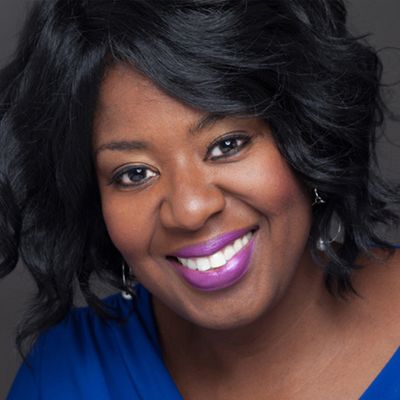
NaTasha Yvette Williams was just nominated for a Tony Award originating the role of band leader Sweet Sue in the new Broadway musical Some Like it Hot. She is also featured in the musical's original cast recording... Read More
From the show: When Lightning Strikes!
Guests
Featured Shows


About
NaTasha Yvette Williams was just nominated for a Tony Award originating the role of band leader Sweet Sue in the new Broadway musical Some Like it Hot. She is also featured in the musical's original cast recording. NaTasha's other Broadway credits include Tina: The Tina Turner Musical, Chicken and Biscuits, Waitress, Chicago, A Night with Janis Joplin, The Gershwin’s Porgy and Bess and The Color Purple. You can see NaTasha in the historical thriller Alice, the Disney+ movie Better Nate Than Never and Partner Track on Netflix. NaTasha is also a founding member of Black Theatre United. This episode was recorded on May 23, 2023.
Transcript
This transcript was automatically generated and might contain errors.
[0:00] ♪ Musical number: "When Lightning Strikes" — performed by Unknown artist ♪
[0:25] Jeryl Brunner: Hi, this is Jeryl Brunner, and you're listening to When Lightning Strikes, where we talk about the tingly, mic drop moments that led you to becoming an artist.
[0:38] NaTasha Yvette Williams: NaTasha Yvette Williams was just nominated for a Tony Award, originating the role of band leader Sweet Sue in the new musical, Some Like It Hot. She's also featured in the musical's original cast recording. NaTasha's other Broadway credits include Tina: The Tina Turner Musical, Chicken and Biscuits, Waitress, Chicago, A Night with Janis Joplin, The Gershwins' Porgy and Bess, and The Color Purple. You can see NaTasha in the historical thriller Alice, the Disney Plus movie, Better Nate Than Never, and on Netflix's Partner Track. NaTasha is also a founding member of Black Theatre United. So welcome, NaTasha, it is such a joy to have you on the show.
[1:40] NaTasha Yvette Williams: Thank you for having me, and the show's great, I'm having a great time.
[1:44] Jeryl Brunner: And so much congratulations on the Tony nomination.
[1:52] NaTasha Yvette Williams: Let's not start again. I know we were crying at the Tony nominee meet the Tony nominees thing. Let's not start me again. I'm a bucket.
[2:01] Jeryl Brunner: I don't want to make you cry again.
[2:03] NaTasha Yvette Williams: I'm a bucket of water. I have been since the announcement, so I periodically cry. So don't take it personal or think you've upset me. It's all good. I think crying is, you know, a very good emotion.
[2:16] Jeryl Brunner: Yeah. Can you take me to when Sweet Sue came into your life, when you heard about Some Like It Hot, when that came in your inbox, or how did it all come about?
[2:29] NaTasha Yvette Williams: I was actually working in, Broadway had just reopened, and I was in a show called Chicken and Biscuits. I got the audition, yeah, I got the audition for it, and that was a straight play. I wasn't singing. It was kind of rare for me to not be in a musical, but it was a comedy. It was fun. It was great. And I got the call, and I worked on it, actually, with one of my cast members, and I remembered the movie because I liked the movie, but I said, well, let me go back and look at Sweet Sue, because I don't quite remember her character from the movie. I watched the movie again. I was like, oh, she's kind of a small part in the movie, but I've got two or three songs here, three scenes. They've clearly done something different with Sweet Sue's role.
And it was so exciting to me to just be so present in the story. I have spent a lot of time either replacing people or coming in, being some kind of dramatic entrance for a person, or maybe even the comic relief sometimes, but not so present in the story as this time, and I was very excited about getting the opportunity to do that.
[3:36] Jeryl Brunner: And what about when you were cast?
[3:39] NaTasha Yvette Williams: That was heaven. That was heaven, because the show was scheduled before the pandemic to go do an out-of-town run in Chicago, and had that happened, I wouldn't have been able to be involved. Because of the pandemic, they did have to do some recasting, and I got the opportunity to do it. I was in Tina: The Tina Turner Musical at that time, when it actually began to start, it started. We did a workshop, so I was double duty, and I was doing Tina: The Tina Turner Musical at night and rehearsing the show in the daytime, and then we had a seven-week run out on 42nd Street. And, oh my God, it was just heaven to be able to work with the material, to aspire to be a dancer with Casey Nicholaw, just making everybody move and use parts and muscles that they don't normally use.
It was just a very exciting time for me, the whole process. I was loving the energy of Sue, and trying to match those things at home, where she was in control of that band on the road, and I wanted to come home and be in control in this house and make sure everybody was doing everything. So it was just a great kind of play that I had at home and on the job.
[4:54] Jeryl Brunner: Do you remember where you were when you got the call or the email that you were cast, that you got the job?
[5:01] NaTasha Yvette Williams: I was in, where was I? No, I don't remember where I was exactly when I got that call. I do remember getting a call to come back in, because I did the audition as a self-tape. And then the callback was in person. I do remember that. And that was like my first in-person audition after the pandemic. And I was like, oh my gosh, am I going to know how to act in this room anymore? Because before, you know, self-tapes you get to, which they're daunting as well, but you at least get to fix it until you, you know, do it until you like it at least, or at least do all that you can. You might not be doing the adjustments that the creative team wants, but you at least can fix the tape. And so I was like, oh my gosh.
So I got really nervous about going into the room again. And then I think it was a couple of days after that, that I got cast. And I think I was in, I think I was in, I know that I was still in Chicken and Biscuits and we were having issues with COVID and all this kind of stuff. So it was a, and that was going to close. So I had this dichotomy of, oh my God, am I ever going to work again? Oh, I booked the show. So it was, it was, it was great. It was a feeling of, oh my goodness. I don't know, because at that time COVID was so high and running rampant and crazy. And you always thought, I don't know, is this going to last? Is this going to happen? And so then I booked it. I got happy. And then I got nervous again. Oh my gosh. What if we catch COVID there too?
[6:35] Jeryl Brunner: Oh God. How crazy is life? And now, you know, what, 13 Tony Award nominations later.
[6:43] NaTasha Yvette Williams: Yeah. And absolutely amazing.
[6:46] Jeryl Brunner: Yeah. And I love, love, love Sweet Sue. I mean, I think about how special she is. She's fearless. She's a survivor. She's the band leader. And it's a, it's a fraught, fraught, brutal time. You know, it's 1930s prohibition.
[7:08] NaTasha Yvette Williams: Yeah. Rough.
[7:09] Jeryl Brunner: Segregation. She's trying to survive, trying to lead her band. I mean, keep everybody safe and progress as well at the same time. So it's, it's a difficult little dance she's doing. And I think she kind of makes it look easy. But if we really look at what actually was going on, it's, it's, she's pretty remarkable. She's pretty remarkable, but she keeps them together and she tries to not put the weight of the time period that we're in on the girls. And it's just like, are you crazy? You're drinking. We can't be doing this. We can't be acting crazy. I'm leading this band. I'm a black woman leading the band across America. And it's prohibition, guys. We got to think about each other and think about our safety and think about our progress. So it's a great, great time to be Sweet Sue.
[7:58] NaTasha Yvette Williams: Yes. And it's a tightrope because she is about joy. She's about love of art, you know, and, and making people thrive and be their best. And she nurtures all these artists. And, and also she has to, yeah, keep it together, keep it alive. And there's that very, very poignant line at the beginning where she, where they're figuring out, she's figuring out where to go, you know, and she's like. Minnie's like, I'm going South. I'm like, hey, it's 1933. And my line is just, it's 1933. Look at me and ask me that again, because we clearly are not going South in 1933. And it's so poignant and so powerful. And the way you do it, it speaks volumes about you, your acting chops and, and the levels because it's people, they, I hear people laugh, but also it's when you really think about it, it's like, yeah, you ain't going South.
You can't go South. Oh, that's where we are. You know what I mean? It's like this light bulb realization. Ah, I got it. Where, where, you know, it puts us, puts us right where we're supposed to be. And everybody knows at this time when it is, you know what I mean? So it's just, it's great. The writers have been so specific and intentional with everything. And it just is a great, it's a great little fit, you know, everything, all the pieces are together, together.
[9:32] NaTasha Yvette Williams: Yes. And you care so deeply about these characters. You're really rooting for them. What do you love about Sweet Sue? What, what qualities?
[9:41] NaTasha Yvette Williams: I love that she, she thinks she's basically controlling these women. She thinks she's in charge, and she is in charge, but she thinks she's protecting and caretaking all of these women. But I love the fact that she is so secretly entwined with them that they're, they're really what's holding her up. Every girl and every, every person in the band needs something. And I feel like Sue's trying to give them that. This one might be abused and needs to get on the road to get away from some bad relationship. This one is young and never had a job and never, didn't have many prospects in Chicago. I want to give her a better life. All of these women have something that they're in search of. And, and, and I'm in search of too.
I was working for basically gangsters or working for other people and getting arrested all the time because of prohibition and decided to take this band on my own and make a new life for myself, but also bring these women along to uplift them. But not only am I doing that, they're really what's undergirding me. And so the realization that how much we need each other and depend on each other. And if we just listen to each other and support each other, then that's what makes it work. So that's what the big, the great thing is for me about Sweet Sue is that she thinks she's guiding it, but it's the fact that everybody is working together and moving toward the same goal that really makes it work.
[11:03] Jeryl Brunner: That you all support each other in a really profound way. And that's her journey, right? And, and there's that beautiful line that you say, yeah, that you're, you're tired of, what is it working for these like two-bit Capone types?
[11:38] NaTasha Yvette Williams: I'm sick of these cut rate capones. I leave their bands, I hog their booze, and I'm the one who ends up in the clink. I get arrested and that's what propels me to say, look, I'm not doing this for anybody else anymore. I'm going to start my own band. We're going to get an all-girl band and we're going to travel the country. And the best safest place for us to travel is out going out West. So let's do that and see what happens. Cause it can't be any worse than what's happening with us getting jailed every other night. And it's cold in Chicago. Let's at least go somewhere warm. And I mean, it's really profound because going back to here it's the 1930s and women, you know, barely had the right to vote.
I mean, that was pretty new. And didn't have, um, like a lot of the girls come up and want me to read their ticket. A lot of the girls have chosen that their character can't read. Um, not a lot, but a couple of them can't read. A couple of them can't count, you know, different things. So there's, there's, we have this whole backstory going on on stage about, Hey, Hey, Hey. And I'm telling them to turn the ticket up the right way. This is what this is the room number. This is how you find your place. So we have this whole life going on, but it is inside the life of the play. So it's very interesting about the challenges women and can I speak to this man or can I sit, um, you know, carry my bag or can I do that at us?
We're all going through these motions that we did that the audience doesn't the audience sees the life of it, but they don't know exactly the specifics, but we are literally creating a life for women in 1933 that, um, is different. Um, but we're bringing those experiences in terms of what it must've been like for women at that time to the train and to the, to the journey as we travel. I love that backstory. And then within all of that is the unbridled joy. The, I mean, the, the costumes, the sets, the art deco that, I mean, it is, it's so lush and the music is gorgeous and it's just, it's, it's a spectacle to behold. It is. And that train, when we first saw that train coming on, I don't know.
I think we get just as giddy as everybody else. It's, um, I don't, I don't know. It's just, it's a gorgeous place. The costumes are glorious and everybody looks so good in this. There's been so much attention to detail, um, that makes the show really come alive. Um, I'm very, very, very proud of something like that.
[14:22] NaTasha Yvette Williams: And I love the onset with you and of course, how you connect also with Jay Harrison Gay and Kristen Borrell. Can you talk about your connection with them?
[14:33] NaTasha Yvette Williams: Sure. Um, they are also part of this, me needing to this band to succeed. And so I see them, they have these, I'm like, Oh my God, it's, it's perfect. You, you all come on the road, but then there's this thing in the back of her head is like, something is not quite right with these ladies. Um, you're interesting. Um, something is not quite right with you, but because I need them, I'm willing to forego any kind of questions that I have about them. And then, um, Daphne, um, it stands up for me in several different ways and shows up for me. And it just endears me to her, um, a little bit quicker than it does to Josephine. Josephine's character, I am still just questioning like, what in the world is going on with you half the time.
But even in that I'm like, okay, but I can help her. I can help. We can help her. We just give her a little time, you know, she's older, but we can, we can, uh, we can make this work. And then there's this running joke about how old she is, um, or how she looks old, uh, you know, the whole play. So it's just, we got, we have lovely moments and we have time to, to tease and forgive each other throughout the journey of the show.
[15:41] NaTasha Yvette Williams: For people who might not know that those two are in the, in the show that they're, they're started as men and they're on the lam. They're running from the mob. They witnessed a murder by a gangster. And then they decide to, as they run, disguise themselves as women and go on the road with us. But the rest of us don't know. The audience knows that they're women. The rest of us don't know that they are, um, hiding in this van in plain sight. And, um, and the, the show is about them and us escaping and going on the road and the journey, the incidents and events that happen as they proceed to try to get to Mexico, if you will, um, to escape the gangsters. It's just a delicious show on every level. Can we, can we talk about your lightning strikes moment when you knew you had to be an artist? From what I read, you were singing once since you were a very small child.
[16:42] NaTasha Yvette Williams: Like three years old, we had a tiny top choir in my, in my church. And so I would sing and people just, um, reacted and respond. I mean, most of it was, I probably was not great, but I was cute. So they laughed or had some kind of reaction. And that gave me a visceral response. I also like watch television with my mother, um, as a young child and thought, Oh my gosh, we're sitting here enjoying this as a family. Um, and happy, you know, and it's just bringing us together and I want to do that for other families. So I thought I want to be in the box. I want to be on the television. And I didn't really realize that, um, theater was a thing. Um, until I was, I was like 13. My assistant principal at the time, his name was Reginald, and it invited me to go do a, um, a show at the favorite little theater, which was the regional theater where I was from.
It became a regional theater later before it was just a little theater. And, um, and I auditioned for a show saying, and, um, cause I was always singing and got into the show. And then I was like, my people, my family, we're here. We're here all the time. Um, rehearsing and getting the show ready. And my mother, um, we didn't know anything about theater. As I said, I think I was there till like 11 one night or 10 something. And she's knocking on the door. Hey, Hey, Hey, what's going on. And it was time to go. So, so they took me. She's like, you spend so much time. And the director at the time, um, both or she was artistic director who recently passed. She actually passed the night we moved into the space and to the theater for something like a hot, um, told her, look, your daughter has is talented.
And I know we're here a lot. I know, but this is like I'm going to be her second family. But if you will lend me your daughter, I will take care of her. We will coach her. We will, um, allow her to grow in this thing. And if you just trust me with that, it'll be okay. And, and, um, and so my mom, my mother did, and my love for the theater just exponentially grew.
[18:47] Jeryl Brunner: What a gift that she gave, that she's recognized that. And so is it, and that was in Fayetteville, you say? Cause I know I, from what I read, you were born in what Rochester and then.
[19:01] NaTasha Yvette Williams: Rochester, New York. And I was born in September and the snow came in December and my family, my family and my parents were from, um, uh, North Carolina. And this was their first winter in Rochester. My father had moved there for a job with IBM, I think or Xerox or something like that. One of those printing companies. And snow came and he couldn't drive to work and had to walk to work or something. And it was like 15 minutes away and it took him like five hours or something. And he was like, yeah, we, we, we're not going to do this. So we moved to Philadelphia and I was there for about five years. And then we moved to Fayetteville, North Carolina, and that was my mother's home. And, um, and that's where I call home.
[19:45] Jeryl Brunner: I see. And what was that first play? Do you remember the name of the show that you were in?
[19:48] NaTasha Yvette Williams: That I was in? It was called Razzle Dazzle. It was, uh, like a explosion of, uh, music and fashion. It was like a fashion show, but we did like Michael Jackson. Like I played Michael Jackson's voice. Like I sang Michael Jackson songs. I played one of the Supremes. Um, and we did different things. There were four tops and different groups that people were, um, character rising and telling some kind of, I don't think the story, I don't think it was like a through line story. It was just basically little skits. That was the first one. And then right after that, I got cast as Ronette in Little Shop of Horrors. Um, that was my first play, I guess, a musical. Yeah.
[20:36] Jeryl Brunner: Can you describe how performing makes you feel? I know how it makes me feel watching you.
[20:41] NaTasha Yvette Williams: Let me, let me think about that. Oh, that's great. I don't know that anybody has asked me that. I feel the feeling of flying. Um, the feeling of soaring. I'm about to cry again. I feel when I perform, I just feel like I'm fulfilling a calling basically, if that makes any sense. It feels like something I never want to end. I feel accepted in a way that I can't feel just walking around in the world. All of my insecurities or doubts about myself disappear or dissipate in the character. And I can just fly. It feels like flying. Yeah.
[21:39] Jeryl Brunner: That's beautiful. That's so beautiful. Because from what I read that you ultimately got a master's degree at Michigan State University.
[21:47] NaTasha Yvette Williams: Yeah, I went to Michigan State for grad school, but that was just in acting. In undergrad, I was a math major and theater arts major. And I can do other things. I'm qualified to do other things, but I really am my most fulfilled and happiest and most productive for everybody else when I'm performing.
[22:14] Jeryl Brunner: Yeah. I love that you have that duality of being a performer and being an actor. You have that duality of math and performing.
[22:23] NaTasha Yvette Williams: Maybe, right? Because I was like, everybody's like, oh, no, I love literature and I love to read. But I didn't like that. I didn't like reading the stories, the plays and all of that stuff. I like the numbers. I like the formulas. If I do this and that and I put it together, it's going to equal that. That's what I like. I'm pretty, I don't know, compartmentalized like that. I'm just, but yeah, I don't know how it worked together, but it does, it does.
[22:50] Jeryl Brunner: When was the moment that you said, okay, I'm going to pursue this career in theater. I'm going to, I'm really going to perform performing.
[23:01] NaTasha Yvette Williams: I guess around 96. I graduated from grad school in like 95 and I lost my uncle. And that was the first time anyone had died close to me and my family. So I moved back home. I taught school for a year.
[23:16] NaTasha Yvette Williams: High School in Fayetteville, North Carolina. And it was so hard because I had like seven or eight different classes and lesson plans and all of that for those classes. And I thought, this is not what I want to do. I want to sing. I want to perform. And I had a fish fry that summer in between school and took all the money I had and packed my car up. And my mother was like, OK, if that's what you want to do, all right. She rented me a U-Haul. And I moved to New York. I moved in with my aunt and hit the pavement and started auditioning. I was like, you can do this. And I probably would have done it sooner had I not lost my uncle. I probably would have went straight out of college to do it. But because I was so drawn to wanting to be around family, I went home and I was like, yeah, OK, I'm OK.
The grieving process is going to be ongoing, but I'm OK. And I can just go and pursue my dreams. And so that's what I did. But it was always never a question that I wanted to do that because I was teaching math and I was teaching drama at that high school in Westchester. And I was teaching so many things. But anyway, I digress. But I always knew that I wanted to be involved in performing. And so it was the end of that year that I was just like, let's just go for it and do it. And New York was closer than L.A. And I had family here. And it really is. I'm more of an East Coast person than a West Coast person. So but yeah. And I know you made your Broadway debut in The Color Purple. So how long was it between when you got to New York and made your Broadway debut?
Ten years. Ten years. I spent eight years. But you know what? I got my first job in like. I want to say my first or second audition, but it was free. It was like for no money. I mean, I didn't get paid. It was the Godspell at the Victoria Theater in Harlem, actually. I auditioned for it and got it and we went to went right to work and but but for free. So I was doing it. I was living with my aunt in Port Chester. My father was paying for a train pass for me to get from because she lives in Port Chester, New York. So I would leave Port Chester every day, go to the city and audition. And then I would leave Port Chester every day, go to the city and rehearse the show. And we got ready to open. And then the theater caught on fire.
So we never opened the show. Oh, we did. We did eventually open it. But so that was my first show. And I then I put a couple of regional things and then I started booking the tours, the Broadway tours, first nationals. And I did a bus and truck. I did about eight tours for about eight years and then had a conversation with Kapathia Jenkins, actually, who was one of the people that I sort of admired and idolized when I got here because I was always watching her or Lillias White do whatever they were doing. I was like, oh, yeah, I can be like them or they’re sort of like me and all that kind of stuff. So she told me I said, I want to be on Broadway. I've been doing like I literally did eight tours.
And she was like, Natasha, you're fabulous, but you have to stay here. You have you want to be on Broadway. You have to be here. And I was like, yeah, but I have to work and I book the tours. So I take them. She said, well, you have to stop auditioning for them and start auditioning for Broadway or whatever is in New York. Just stay here. And that was one of the turning points for me is to stay or to say no to something. And when it's something I really want to do to and my rent's due or whatever, you know, I had to really decide I'm going to wait and if this is what I want and the next level of this is waiting. I'm sorry. Let me just stop that. So that's what I did. I stayed in town and then I booked Dessa Rose at Lincoln Center and then I booked something at Paper Mill.
So I was able to stay in town and then eventually I got I got something. I was with BJ Crosby, who was also one of my idols, North Shore Theater. And right after that, I booked The Color Purple. Do you remember when you booked Sofia?
[28:03] Yes, I do remember that. I was in a show called Abyssinia at North Shore Music Theater. I think it was. And then we were touring that we were in Boston and we were somewhere else. And that theater also caught on fire. Oh, my gosh, is this a thing? That theater caught on fire and we couldn't do it at North Shore. We had to go on the road or something. So we did it in different places. And I had an audition for The Color Purple and the original cast. And I was so and my director, Stafford Arima, let me go to the callback or let me go to the thing. But I didn't book it. And prior to that, I had traveled to Atlanta. They were doing an out of town in Atlanta. I traveled to it to see it because I was just so I wanted to be in the show.
It's my favorite movie. It was the only movie I ever went to see with my grandmother. My whole family went in '85 to go see this movie. And I was so drawn to it. So I went to Atlanta to see the out of town production, got myself ready for the audition, asked to be released from rehearsal so that I could go. He let me go. And then I was got down to the three people and I didn't book it. And I was devastated. So like six months later, like when they have maybe it wasn't six months. It was a year. It was a year later because the cast was getting ready to go on tour and Felicia Fields booked Sophia was going on the road. The tour was starting in Chicago and she wanted to go home. That's where she was from.
So but I had an audition for the gospel singer who starts the show. And I went in to audition for the gospel singer and came out, came out, had bought a piano player with me. We sang. Gary Griffin walked out of the room and hugged me and said, you did so great. And I was great. And then I had to fly back to Milwaukee because that's where I was at that time. I was on tour with All Shook Up and I was delayed and delayed and delayed, missed the opening night for that show and had to pay some money because they had to have emergency rehearsals because I was out of town. Anyway, when I found out I booked Sophia, I was in Milwaukee during All Shook Up. And my agent called me, told me to sit down and I thought she was going to tell me how much my fine was.
And she told me, you have booked Sophia in The Color Purple, in the Broadway production of The Color Purple. And so it was my first Broadway show. It was a principal role and it was not the role that I auditioned for. I auditioned to be in a featured ensemble part that sang in the beginning. And it was just, again, these incredible moments that I get to experience through my art. It's just unexplainable. I can't even explain it. I can't describe it. Indescribable, the joy that I had learning that I booked Sophia.
[31:07] Jeryl Brunner: Oh, how extraordinary to go in thinking you're going to do something else and you get this gift from the heavens and speak volumes about you. Is it hard to put into words how this experience of playing Sweetsu, originating this beautiful role, being on the cast album, how that's changed you?
[31:33] NaTasha Yvette Williams: I think so. I think I'm a pretty positive person and I have like, this is my eighth Broadway show. Thank God. I mean, I'm very blessed and fortunate for that. But I have been up or could have been nominated maybe four times of those eight shows. The first of which was The Color Purple. Now, it wasn't an original cast, but at that year, the Tonys had a category that said, they just added it, First Replacement. I was a Tony for First Replacement. So when I started the show, that category was there and I could have been eligible. But by the time the Tonys came around, they had done away with the category. I wasn't eligible for that. I was like, oh, okay. Next time. So I started saying next show, next time.
I started that my first year on Broadway, which was 2005, 2006. I was saying, okay, next year, next time. And now it's 2023 that it finally gets to the next time. The next show that I was eligible in, or one of the shows was A Night with Janis Joplin. But I broke my foot the night before the audience came. So I wasn't in the opening cast. So you're only eligible if you open the show. So I'm listed as a first, I'm listed as a replacement for myself on Broadway. Because I didn't do opening night. So that took me out of the running for that. Then I was really close in Porgy and Bess, the Gershwin's Porgy and Bess, but there were so many great shows that year. So there just wasn't room. There wasn't room for one more nominee.
But I always said, next year, okay, it's all right, next year, next time. And all the rest of my shows where I was replacing somebody, and so there was no more replacement category. And I stayed in Chicago for years. Me and Mama Morton, I love Chicago, I love all the people over there. But it did limit me from being able to be sitting in this space and in this place of being a Tony nominee. So I can't even describe all that I'm feeling now, but it literally has been almost 20 years that I've been chasing this part of my career, this recognition. And it feels incredible to me. Absolutely incredible.
[34:11] Jeryl Brunner: Ah, now it's this year.
[34:17] NaTasha Yvette Williams: Well, so, so much. Congratulations, Natasha.
[34:24] NaTasha Yvette Williams: Thank you. Thank you so much for being on the show.
[34:32] NaTasha Yvette Williams: Thank you for having me. Thank you for having me. Have a most wonderful day.
[34:34] Jeryl Brunner: You do the same. You do the same.
[34:45] Jeryl Brunner: The theme song was written by Tom McGovern. This episode was edited by Kyle Moore. This episode was produced by Alice Stroud.
© Broadway Podcast Network, All Rights Reserved