

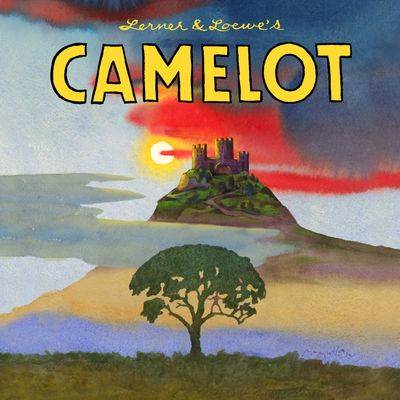
Marilee Talkington stars as Morgan Le Fey in the musical Camelot now playing at Lincoln Center Theater. A prolific actress on stage and screen, some of her other theater credits include A Nervous Smile, The Middle Ages, The Last Day and her solo show, Truce... Read More
From the show: When Lightning Strikes!
Featured Shows
About
Marilee Talkington stars as Morgan Le Fey in the musical Camelot now playing at Lincoln Center Theater. A prolific actress on stage and screen, some of her other theater credits include A Nervous Smile, The Middle Ages, The Last Day and her solo show, Truce. She has acted in film and on TV in The Home, Extrapolations, SEE, FBI: Most Wanted, NCIS, New Amsterdam and Law & Order SVU. Marilee, who is legally blind, founded Access Acting Academy which offers actor training for blind and low vision adults and children.
On July 26 1990 the Americans with Disabilities Act (ADA) was signed into law to commemorate that date, July is Disability Pride Month. In the court of Camelot at Lincoln Center Theater Marilee is one of two disabled actors in the company. Anthony Michael Lopez, a congenital above-knee amputee, plays one of the main knights, Sir Dinidan. Both these roles were not written to be played by disabled actors. They are non-disability specific. In this episode Marilee reflects on her struggles and triumphs.
This episode was recorded on July 17, 2023
Transcript
This transcript was automatically generated and might contain errors.
[0:00] ♪ Musical number: "When Lightning Strikes" — performed by Unknown performer ♪
[0:26] Jeryl Brunner: Hi, this is Jeryl Brunner, and you're listening to When Lightning Strikes, where we talk about the tingly mic drop moments that led you to becoming an artist.
[0:38] Marilee Talkington: Marilee Talkington plays the first love of King Arthur, Morgan LeFay in the musical Camelot now playing at Lincoln Center Theater, a prolific actress on stage and screen. Some of her other theater credits include A Nervous Smile, The Middle Ages, The Last Day, and her solo show, Truce. Marilee has been in film and on TV, in The Home, Extrapolations, FBI: Most Wanted, NCIS, New Amsterdam, and Law & Order SVU. Marilee, who is legally blind, founded Access Acting Academy, which offers actor training for blind and low-vision adults and kids. Welcome.
[1:30] Jeryl Brunner: Thank you. What an intro. Thank you so much, Jeryl. It's great to be here.
[1:37] Jeryl Brunner: It's such a joy to have you on the show. And thank you so much. Congratulations on a pivotal key role in Camelot. What is it like to be in that show in that gorgeous theater? You with incredible, an incredible cast.
[2:00] Marilee Talkington: It's pinch-me moments every single day, to be perfectly honest. Like there's no, I'm not even gonna lie about it. This is pure joy. My heart is open all the time. There's so much love in that cast. There's so much respect and care and craft, and that started back in the workshop back in October, and then all through rehearsal. I remember when I was first listening to the cast sing because I'm the only actor other than Merlin and Tom Warwick that don't sing, and I'm sitting there on the edges of the rehearsal room listening to everybody sing, and there's just tears streaming down my face, and it still happens. We're at performance one close, 140, and I will still be sitting in my dressing room in a state of just awe of what I get to listen to every night. And then of course, to play such an iconic character in such a gorgeous show written by Aaron Sorkin and play across from Andrew Burnap every night. I mean, it's a dream, it's a dream come true.
[3:21] Jeryl Brunner: Talk about when that show came into your life, when you heard about it, what went through your mind, what were the circumstances?
[3:29] Marilee Talkington: Um, I'd heard about Camelot forever. I mean, who hasn't heard about Camelot? This production of Camelot. I got the, this is an interesting story. So I had, and I have not talked to you about this, Jeryl. So this is new news. I had a mini stroke a year ago. And after that, yes, I bomb there. I fully recovered. But it took some time away and really got very, very present about what I wanted to do, who I wanted to be, how I wanted to bring myself to the world. Because I found out there were behaviors, belief systems that just weren't working for me. So during that time away, one of the things that came up was I want to be on stage again. I need to be on stage again. And I set a very strong intention of wanting to be on stage.
And literally in the next two weeks, I got the sides for Morgan LeFay. And when I read them, my whole body started to tingle. And I knew immediately that there was a connection between Morgan and me. And what I heard, and I'm not joking, but what I heard in my mind was Morgan saying, we're gonna be working together, and just understand that no one person knows who I am because I've been in the hearts and minds and souls of thousands of people over the centuries. So know that we are each other's, but you are mine. So I just gave myself over to that audition. I made really strong choices and fell in love with everything about Camelot and her and the story and where Aaron was taking it. And I sent in my tape, and there you go.
[5:22] Jeryl Brunner: What do you think?
[5:26] Marilee Talkington: Well, I think what I love about her is she's really complex and I think often misunderstood.
[5:35] Jeryl Brunner: Oh, so deeply misunderstood.
[5:36] Marilee Talkington: I think those are the most interesting characters, right? Because she's the first love, and you know, Aaron first wrote her as an opium addict. So that was my first take. I was making and doing opium, but that eventually got written out. What I love about her is her profound strength. I mean, she was a single mother during a time. I mean, it's tough now. Back when Camelot was actually Camelot, this would have been brutal for her. Her safety, number one, how to just make money, how to support a son, how for her to even live without getting remarried, without actually connecting herself to some other man. She did this on her own. And at the same time, she's pursuing science. So Aaron has written her as a scientist.
So she's this brilliant mind who's also a channeler, even though he took out the magic, she's still a sorceress. Absolutely, 100%, because the things that she's studying are about the planets. She's studying about the earth rotating around the sun rather than the sun rotating around the earth. So she's also deeply sensual. She's in her body. And I feel like the thing that I got right away is that she connects both heaven and earth. She is this rod that is both grounded. She's Mother Nature, and she's a goddess of heaven as well. And I just was like, oh my gosh, she is this channel that is sourcing both sexuality and love and intelligence and dry wit and sharp edge. It's just I'm getting the chills. She's just so delicious.
[7:26] Jeryl Brunner: Do you mind me asking why did he originally write her as an opium addict?
[7:35] Marilee Talkington: I don't know. That's a good question for Aaron.
[7:39] Jeryl Brunner: Yeah.
[7:42] Marilee Talkington: I think maybe, I don't know if you, I'm trying to remember now if he actually even talked about the why, but I think there was something more about her making it and selling it as a way to survive. And then she took it. So in this version, she makes and sells brandy wine.
[8:10] Jeryl Brunner: Yes.
[8:11] Marilee Talkington: Maybe to add another layer. I mean, obviously this is all conjecture.
[8:15] Jeryl Brunner: Right, of course.
[8:17] Marilee Talkington: Well, I want to talk about your lightning strikes moments or moments when you knew you had to be an artist from what I've read about you from your beautiful speeches. You've talked about a class that you see San Diego and acting that you just sort of happened into, right? To get your GPA up. But tell me when you, but and then you've also talked about when you that you had always been good at voices and characters, but when did you know that this was your path? Or when did you realize, oh God, I have to, you know, I have to get my MFA?
[9:03] Marilee Talkington: Um, well, it was that, I mean, I didn't know about MFAs when I first knew that I wanted to be an actor, but it was that story that you read at UC San Diego. I was graduating, I was on the six-year plan and graduating with a psych degree and a math minor. And I thought maybe I wanted to go into research because I was very interested in why people do things. And I just needed to get my GPA up a little bit so I could apply to grad school. And my friend was like, oh, take an acting class. And I literally was like, no, no way. I'm not interested in that at all. And I looked for every other class that I could take, and they were all full. So the only class I could take was an acting class. And it was day two.
It was literally day two when we were in there, and the teacher's like, bring in a monologue, and I started working on a monologue for the first time, and something in my body just went, oh, I can, I have permission to be something a little bit more than I am. I think it was, I mean, to be perfectly honest, let's drill down just a second. To be perfectly honest, I was not in a good place at that time. I'll bring up the legally blind right now, but being disabled my whole life, also being a woman, I was battling with feeling very confined and feeling like I had to prove myself all the time. And something about that first acting class was a way in which I got to actually break out of those feelings.
And I don't think I had language for it back then, but I certainly had the feeling. So I took that class and I was like, oh, I think this is what I'm supposed to do. And I sort of dropped my, you know, I got my degree, but I pursued acting after that, and have not really looked back. There's been a lot of stories in between, like this is a whole nother podcast, but I moved to LA and got mixed up with some Hollywood con men. That'll be another podcast. That'll be in my memoir. Oh boy, that was quite a year. And then I moved to San Francisco, did night classes, summer classes, just marinated in it, and then I applied to graduate school and finally got into the American Conservatory Theater to get my MFA.
[11:49] Jeryl Brunner: There is the most incredible story you tell when you spoke at the 2018 LFB National Convention for people who don't know, right?
[12:02] Marilee Talkington: The National Convention of the National Federation of the Blind.
[12:08] Jeryl Brunner: And you tell this incredible story about how you graduated and you went to one of your first auditions, and they gave you the sides, you know, the script, a section of the script to read, and you asked if you could have some time, uh, because you needed to go make the script bigger and uh let you tell it.
[12:31] Marilee Talkington: Yeah, I'll do it. Try to show share the short version of the story. I can't remember what I said during that speech, to be honest, but um this was when they weren't giving stuff digitally. Yes, they would just present the script then and there, and this is when I didn't have an iPhone. Um, and the script was too small for me to read. So I asked if there were photocopiers around that I could enlarge, and the director didn't know. So um, like I said, I don't know what story I told then, but this the semi-longer story, which you you know, do with what you will. Uh it took me two hours to find a copy machine. And I went, I walked miles and finally found like a uh real estate agency that would let me borrow their copy machine.
And um, they were kind enough to let me in, and I enlarged it as best as I could, walked all the way back two hours later, and um something something like two hours, maybe it's a little longer. And I go into the audition, and it's still very hard for me to read because it's blurry and it's just it's tough. I'm legally blind. So I was holding it fairly close to my face, and the director says to me, he notices this, and uh he first he asks me what's why are you holding this so close? And I said, Well, I can't see the script. And um, but I'm here, I'm ready to go, very excited. And he said, if you can't see the script, then you don't belong on stage. And he excused me from the audition. And um, that was the that was a turning point moment for me.
Um I didn't have the vocabulary that I have now. Um so I left and I didn't really say much. Um, and it took me three buses to actually even get there. Yes. Um, this was at the very beginning. So this could have been a moment where I I just walked away because there was I didn't see anybody like me. I still don't see anybody like me. Still, yeah, except me. Like I still don't. So this could have been that moment, and I it was a tough one. I was like, maybe I'm not meant to do this. Um this is gonna be hard. So I spent that day just crying and thinking about what this was what I wanted, and I remember thinking it hit. Well, if the world isn't gonna have a vision for me, then I have to create a vision for myself. I don't know how, I have no idea how.
[15:45] Marilee Talkington: And that's when I just went to every training opportunity I could. And I'm not gonna lie, training was hard because training is set up, has always been designed for people who have full vision. So I had to figure out my own way in every single class, even in the MFA program at ACT. One of the first things that was asked in the audition. Um this was years ago now. Yeah. So I just want to years ago, that I was asked, because they knew about my vision. Um, will you be able to do what the normal students can do? It wasn't how can we create access for you? It was how can you adjust yourself to fit in? Because clearly you're the problem, not us. So how can the how can or can you do what the normal students can do?
And at that point in time, I was still in a proving place, proving, proving. I'm I'm less in that now. Um, but yeah, yes, of course, of course, of course. So went through the MFA program, and there were, you know, challenges there. But that's a that's another long story. But that but that moment, that lightning moment was okay, I decided if the world doesn't have a vision for me, I am going to create a vision for myself. It's it may be hard, which it was, but let's go. Game on in your speech, if you don't mind recording it, you talk about this pivotal moment where the audition or the director said, you don't belong on stage, and that you said, I went home and I was devastated. I asked myself, do you believe him? Do you believe that you do not rely on stage because you cannot read business? And the answer that came back was a resounding no. I do not believe him.
[17:48] Marilee Talkington: That's right. No role models. Right? As you say, you said, I'm gonna forge ahead anyway. And right, you got all this training, and you ended up getting your MFA at the very prestigious American Conservatory Theater, ACT, and here you are two decades later.
[18:12] Jeryl Brunner: Yeah, I think that is yeah. I'm sorry to interrupt. That is um, thank you for reminding me of what I said, because that's something I still say. Because in there are so many moments in life, still, still in this industry, but just in life in general, where people have belief systems about me, yeah, about what I'm capable of, about who I am, what my worthiness is, what my value is, and I'm constantly asking myself the question, do I believe them or not? And most of the time it's no, of course I don't believe them. Um and then I move on my way, but I feel like it's an important question for us all to ask. What do we actually believe about ourselves? Because sometimes I have found, especially in the disabled community, but I think in other communities too, we take on other people's belief systems as our own.
Yes, and that's no fault of our own, because we're marinating in this culture of deep unworthiness. We are we don't see any representations of ourselves in any sort of mass way. So this idea that we're invisible, thus not worthy to be visible, less value. That's it's hard to get out of that belief system. And I know I know this for myself, but I know this because I teach as well. I teach blind and low vision folks, and they come to me, excuse me, and it's that's the first thing that we have to work on is their belief about themselves because they have it's been pounded in them that they do not belong in this business. Pounded, yes, and they believe that, and they think it's their belief about themselves. So we have to actually dismantle that first before we can even get to the real acting techniques.
[20:06] Marilee Talkington: This is so timely because on July 26, 1990, the Americans with Disabilities Act ADA was signed into law. And since 2015, July is disability pride month. I believe we should celebrate the achievements of those who are disabled every day, 365 days a year. But this month in particular, we honor the struggles, the successes of those of us who are disabled. And as I mentioned to you before the broadcast, you I was born with a cleft lip and palate. And one thing I didn't mention is that I went to New York University's Tisch School of the Arts for drama. And the very this is resonates so deeply with me because of the very last week before graduating. So I went through the whole program. I studied it in the conservatory setting at NYU.
And this was the 90 ladies, and we were put on video, which was very unusual, right? Because we were all doing theater work, and then we got a private critique after. And the teacher sat me down and he said, it's not your acting, but in the video, your speech is too muffled for theater, and your face is not symmetrical for film and TV. So I don't think you should pursue acting. And I think about how you chose not to listen. However, there's a PS here. I listened and I took that as the gospel. Feeling though, but I'm an actress. This is what's in my heart. He did say to me, write instead. And this podcast is about you, but I thought it was important to share. But cut to about eight years ago, I realized I didn't want to leave the earth without performing.
And then just like you did, I took agency and I started writing plays. And just last year I got my SAG card and I've been in some plays, and I'm pursuing it. So yes, I am so fascinated, and I am so in awe how you didn't listen, how your drive was so strong, you said, I don't believe you, and I'm gonna get my MFA. And look what you did. So thank you.
[22:54] Marilee Talkington: Well, uh, Jeryl, thank you so much for sharing that. That is I really feel that so deeply. I feel it so deeply, your story. And so thank you for sharing that because I think that is such an important counterpoint is that um it makes me emotional to think about because there are folks that come to me that started, gave up because they believed, and then there was a moment where they're like, Wait, there's something in me that they didn't I know about but they didn't know about, and I'm gonna I'm gonna go after it.
[23:30] Marilee Talkington: I don't know how. I think that's the thing is we often don't know how. Yeah, and one of the reasons why I want people to know about my story is that they can point to something now and go, it exists, so that means there is some pathway, there is some pathway how. So if they can point to something and go, someone or someone has done this, then it's possible. So the hows may not be as nebulous, may not be as um David. I'm not gonna say as difficult because they're gonna be they made me difficult, but it the how exists. Um hopefully it can spark what you just shared too, which you discovered seven or eight years ago, is the remembering of our worth. Yes, the remembering of our passion and our fire, why we pursued it in the first place.
If that, you know, sorry to go off on a tangent, but the very first preview um of Camelot, I got a DM from somebody, uh young person, and the very first preview, a DM saying, I'm uh low vision. I flew in from I can't remember what state I flew in to see this. I read about you. Um, I've been told that I can't be on stage because I'm low vision, and so I gave up, and then I saw you on stage. This just happened a few months ago, right? And I'm gonna go after it now because now I know it's actually possible. And so, like to receive that on the first preview. I was like, uh, this being Morgan LeFay, this gorgeous character with agency, sensuality, intellect, power in this incredible show. To it's not just for me, it's it's for others that see not only can a legally blind person be on stage, but be on stage in a character like this.
Yes, because she was not written as someone who's legally blind or vision. No, she's disability specific. That's the way I call it non-disability specific. And I want to um put it, give a shout out to Anthony Michael Lopez, who's also in the show. He's disabled. Um, he's an amputee, he has one leg. He's playing Sir Dinidan, he's a knight. He sword fights. Yeah, that part was also not written with a disability. That was a non disability specific role. So, you know, we're in there in non disability specific roles, and I mean, I'd like to think we're killing it. So um, but we should be everywhere, not just playing the blind characters or the amputees. We should be exactly what Camelot is doing and Lincoln Center is doing, considered for every single role.
[26:32] Jeryl Brunner: What does this month in particular mean to you?
[26:36] Marilee Talkington: Yes, this well, a lot of things. One this month is honoring those that have been taken too quickly because of being in disabled bodies and disabled queer bodies. Um it's hard to go down this path, but you know, more disabled folks are murdered than any other group of people in the United States, um, and often by people that they love. Um, so honoring those folks, and it's yeah, like I said, especially disabled queer folks, and also just going, hell yes. The pride is so it's pride is also for LGBTQ, but it's also disability pride. Like, I'm proud to be a blind person. I am proud of it. I love it. You know, it's great. My life, like, of course, there's challenges and beliefs, uh, you know, challenges and barriers, but I am proud of who I am, and that it's it's a wonderful thing to just go out on the world and go, uh-huh, look at this fierceness.
This is something, you know, just appreciate this right here. Um, and also coming out as um gender fluid the past couple years has been truly exciting for me. And um, I have learned so much. It's okay. This is another little tangent, but you know, I've been a disability activist for so long. I mean, decades, but in terms of being gender fluid, I'm learning from the young folks now. So the young folks learn from me in terms of disability, but I'm learning from the young folks in terms of you know, queerness and non-binariness. They gave me courage to come out just two years ago. So I go by She They now, and it's um I love the give and take of that. So disability pride is actually quite meaningful for me in those ways.
[28:26] Jeryl Brunner: So gorgeous. Can you talk about one of the first professional roles you had? So here you are, you get out of school, and what happened next?
[28:40] Marilee Talkington: Not professional roles, I'll tell you that. Um I was there was still a great amount of enormous amount of prejudice and discrimination. I mean, we we look at it now and you're like, wow, we we're seeing more disabled folks, but not that many. Well, when I got out of school in 2004, like I didn't get picked up, I was really struggling. But at that time, I was creating my own work, a lot of it. I was creating my own work ever since I started, I found acting. I was creating my own work. So I spent years writing, directing, designing, and then my first, gosh, I can't even remember my first professional job out of school. Um, I think I don't know. Um CIS or oh, television. Oh, to my first television.
Professional job on TV was NCIS. And that's another thing too, is that everybody's like, you got to start with co star, get your co-stars, then go to guest star, then go to you know, top of show guest star, then get recurring. And I once again, I was like, do I believe you? No, there's no one path. So my first um show was a top of show guest star. That was the first thing I was on television with, and that was NCIS, and it was playing a blind character, and um I had a blast, and it felt so it was terrifying because I was also I live in between worlds. If you meet me, you're gonna be like, She's legally blind, I don't get it, right? So I can play uh fully sided, although I'm not, and I can lean into what I actually am.
So I I can lean into fully sided or totally blind because I've been around blind, my mom's blind, so I've been around blind people for my entire life, and NCIS was um a character, they ended up changing the definition of her blindness to mine, so that I could just feel totally comfortable within it. And uh I just let myself lean into it, and it was so fun, and I did all my own stunts, and um that was joy. I got thrown around and then will will Will Mavalderama saved me. Um that was also the first time too, where I got the script and I was like, okay, it's great, and I'm so oh god, I'm so bold. First time I met the writer, I was like, it's so great to meet you. I have some notes. Um so I just gave them some notes. Now I charge for that, but I gave it for free at that time.
[31:30] Jeryl Brunner: What can didn't you write a cheat sheet as well?
[31:33] Marilee Talkington: Oh, yeah. There's a great story about that that you kind of screamed up. Oh my gosh! Yeah. I forgot about that. I did. Because every every every show I go into, I have to re-explain to people. Excuse me. Every show I go into, I have to re-explain to people about my vision. And I figured, you know what? Let me just create a cheat sheet. I didn't know anybody that had done that, but I did it. I wrote down all the things that I felt comfortable giving information about. I feel comfortable giving quite a bit of information, but what do I have? How does it manifest? Um, what do I need? Specifically, it was for my access needs. These are my access needs. Um, this is how I work with directors. I'm going to turn my head and listen to you rather than look at you often.
Just know that I'm listening. Um, because that's how I process information better if I'm not looking at you. Um I just would go down the list of like I need uh large print uh on my door, my dressing room door. Um, I'll need a tour of the space before we go in. Um, and just give me two minutes on set. I hadn't even been on set before, but I had been in so many theaters that I kind of knew what I was what I needed. Um I need a tour of the set, just know show me where the low-hanging lights are, cables are, so on and so forth. And uh they did that. I learned my space, and then I I also said at the very end, things will come up always. Let's address them. Um, I will ask for what I need. Um, let's knock it out so we can get to the work.
But dialogue, communication is very important. So that that cheat sheet, unbeknownst to me, I sent it to NCIS, but it actually circulated all around CBS. It's like great? So such a reminder for people, you know, to to really advocate for what you need.
[33:32] Jeryl Brunner: You know, and I think about how you founded Access Acting Academy. Can you talk about that? What inspired you?
[33:42] Marilee Talkington: What inspired me? I was on this television show called C on Apple TV. And if anybody's um seen it, it's a world that has gone blind. So um 99% of the characters on the show were blind. Excuse me. And um most of the cast was cited. And that hurt. Um that was really hard for me to be around. Um and I want to distinguish between the people and the I love the people. Yeah. I got along with people. For more information about this episode, visit megaphone.fm/adchoices
[34:17] Marilee Talkington: And to see so many people pretending to be blind and taking ownership over something that wasn't theirs to take ownership over crushed my heart. And that was one of those things where I had, you know, I'm a recurring on that. I wasn't a recording guest star, I wasn't a series regular, I wasn't a name, but day two, I requested a meeting with the showrunners and was like, can we go over the script.
[34:48] Marilee Talkington: Um, there's some stuff in the script, and I and you know, the thing that they said was look, the Titanic, it's really hard to turn the Titanic. Um, but they did their best. Um and that the whole cast, though I'm getting to the Access Acting Academy, but basically I was like, casting needs to do better. And it's not the casting director, and I want to be clear about that. It wasn't the casting director, right? It was just you need to develop more talent. And there, and I became friends with Francis Lawrence, who um EP'd it and was also the director of the first four episodes. And he said, Where's the talent? And I said, let's start a I'm gonna start a program. So um, long story short, I got Apple to fund it.
And it was the first thing that Apple had ever funded like this in the history of Apple. I created an entire proposal. Uh like I mean, I spent weeks like drilling down to how much a pencil would cost, you know, like creating an entire uh proposal for a six-week um, a six-week training program, and went in and talked to the Apple execs and uh got it funded. So that's when Access Acting Academy started. And um, I had already been training blind and low vision folks, so I had already been creating a new pedagogy that wasn't visually focused but energetically focused. So for example, um people say make eye contact, and um I don't use that term. I say, where is your energetic point of focus? That's when you think about it that way.
Um every uh sided people think it comes from the eyes, but it actually comes from I believe it comes from the body and other places, so just using different language, and I developed this with my mentor and friend Jeff Crockett. So we developed this whole new pedagogy together, and that's what we've been teaching right now. AC3, um Access Acting Academy AC3 is on hiatus because we're looking for more money, to be perfectly honest. Um, and we had a big funder, but they pulled it, and we're not sure when it's gonna come back. So we're looking for money right now to keep this going. But that's where it started with C Apple TV.
[37:07] Jeryl Brunner: You also told it's so wonderful. You also told this really incredible story in that same speech about how your mother gave you the talk. Would you mind sharing that? Are you comfortable talking about that? Because I said a lot of people are surprised, you know, um, when they find out you're legally blind.
[37:29] Marilee Talkington: Yeah. And you talked about how your mother, when you were what in fifth grade said, okay. And I think this applies to a lot of people who uh end up code shifting. Um in fifth grade, so my mom's blind, um, I have what she has. And what what we have basically, I have no central vision. I was born without central vision. I'm totally blind centrally, I have peripheral vision, which means when I look at things straight on, I can't see them. I can only see things with my peripheral vision, which I've been losing over time. In fifth grade, my mother sat me down and said, Look, you can choose to look at things the way you need to look at them, which is turn your head and look at people with your peripheral vision, the side of your eye, or you can look them in the face.
And the distinction is that if you look at people the way you need to look at them, they will know that you're different and they will treat you differently. Because that's the world we live in. They will treat you differently. If you learn to look at them in the eye, even though you can't see them, pretend that you're making eye contact, then you have a better chance of being accepted. And she didn't tell me which way to go, but it seemed pretty clear. Um, and as a child, I wanted to survive. So I stopped, and this hurts my heart a little bit, but I've been checking in with my younger self, you know. She she just wanted to survive and be accepted. So she learned how to look at people in the eye, even though she couldn't see their face.
And I say she, and I mean I, because I still do it, it's in my muscle memory at this point. Um rather than looking away, which is what I needed to do. So I learned how to lie, basically, at a very, very young age, um, with my body, and uh it serves me, and I'm not gonna say it doesn't serve me, it serves me when I need it to serve me. Um if you have seen Camelot, if you are going to see Camelot and I'm on stage, you won't know. You don't know because I'm looking at Andrew Burnap as though I'm fully sighted. I don't see him at all because of the lights. He's a big blob, and actually, when I'm looking at him, he's he doesn't, he probably doesn't even know this. He's just static. I am responding to his energy, and anyway, the thing though that hurts is that that young girl to survive had to had to had to give up part of herself.
Um, which is interesting that we're talking about this now because I'm reclaiming her in a way right now at age 50. I don't think I shared my age, but I'm 50, playing a 30-something. Hello. But um, I'm reclaiming her right now. And I felt I saw Camelot, your gorgeous performance, and I felt all the feelings and the emotions and the energy between the two of you and the passion and the complexity between your relationship. I mean, it was all there.
[41:15] Jeryl Brunner: Yes, yes, it is all there. And even if, and here's the thing too is I wanna I want to um make sure that there are other blind folks that can't quote unquote fake it. That doesn't mean all that complexity wouldn't be there. So I could have played it, you know, maybe that was a direction we could have gone down where she was blind, all that passion and complexity would still have been there. Yes, that's not the direction we ended up going. So it's not about like, well, all you know, if she can appear uh sided, then she'll be great. That's not what that was or is, but um, and I just want to be really clear about that. The thing is that like every blind person that I know has a very complex deep life?
Every single one. Doesn't mean we're all the same. We are not, we are not, we are not, but there's a lot there's so many blind actors that I know that could have knocked that out of the park. Um, and you would have been able to tell that they were blind. They might have even had to use a cane on stage. But the passion, the love, the there's blind scientists out there, you know, all that would have existed too. So yeah.
[42:34] Marilee Talkington: Is there something you wish you could say to that kid, you know, who is having the conversation, or maybe to the to the person, you know, who was trying so hard to audition with the script and was sent away, you know, right after you graduated from college. Is there something you wish you could say? Knowing what you know now, yeah.
[43:03] Marilee Talkington: Let's let me think. You're not the problem, you're not the thing that needs to be fixed. There is wholeness in you already that exists, there is value and worthiness, but I think the main one is move away from seeing you being the problem, and if people don't see your wholeness, that's not something you may be able to change in the moment, but if you feel your wholeness, there will be a path that will lay itself out for you.
[43:49] Jeryl Brunner: That's so beautiful, and how is this experience of doing Camelot changed you? Playing this gorgeous role.
[44:03] Marilee Talkington: Well, it's not over yet. So I'm changing every day. Okay. I'm I am I feel a sense of great. Um one of the challenges that I offered myself going into this was letting myself fall in love with my cast members. Um even though people might think I'm extroverted, I'm actually quite introverted. So I I went in going, let me see if I can really open myself. And that's one of the things that has happened is I've come I've really opened myself and fallen in love with not just the cast but the company. Um one of the things that I'm doing, oh, I'm a filmmaker as well. So one of the things I've been doing is I've been going around, I'm not in the first act, so I have been catching all this behind the scenes footage of the show during the first act.
So I'm catching the hydraulics, I'm catching the quick changes, I'm catching the sound mixer, I'm catching the spotlight operator, I'm catching the stage management. And I have just, I think that's one of the things that's changed me is that I have learned so much about what a group of people who are going after one thing with love and respect can accomplish. There's still such magic that's happening, and I'm changed by that. I'm bigger, I'm more expansive, I'm more realized and um more open.
[45:35] Jeryl Brunner: So beautiful. You feel so generous.
[45:39] Marilee Talkington: Thank you. It's a joy to talk to you.
[45:41] Jeryl Brunner: Thank you so much.
[45:43] Marilee Talkington: Thank you for being you.
[45:45] Jeryl Brunner: Oh, thank you. Thank you so much. And thank you for sharing as well. I really appreciate that. You trusting me and trusting your audience with your story.
[45:46] Marilee Talkington: Thank you.
[45:53] Jeryl Brunner: Thank you, Daryl.
[46:00] Jeryl Brunner: The theme song was written by Tom McGavru. This episode was edited by Kyle Moore. This episode was produced by Alice Stran. When lightning strikes.
© Broadway Podcast Network, All Rights Reserved