

A prolific director on Broadway and off, some of Leigh Silverman's credits include Violet, Grand Horizons, The Lifespan of a Fact, Chinglish, Well, SUFFS, The Search for Signs of Intelligent Life in the Universe, Soft Power, Sandra, Hurricane Diane,The Wild Party and Really Rosie... Read More
From the show: When Lightning Strikes!
Guests
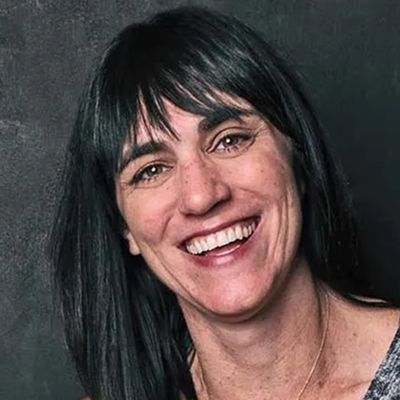
About
A prolific director on Broadway and off, some of Leigh Silverman's credits include Violet, Grand Horizons, The Lifespan of a Fact, Chinglish, Well, SUFFS, The Search for Signs of Intelligent Life in the Universe, Soft Power, Sandra, Hurricane Diane,The Wild Party and Really Rosie. A Tony award nominee, Leigh has directed over 60 world premieres and musicals. Her latest show, Merry Me, is now playing at New York Theatre Workshop. Leigh will soon be reuniting with Billy Crudup directing him in the Berkeley Rep production of Harry Clarke. He performed the show at the Vineyard and Audible theaters.
This episode was recorded on October 26, 2023.
Transcript
This transcript was automatically generated and might contain errors.
[0:00] ♪ Musical number: "When Lightning Strikes" — performed by Unknown performer ♪
[0:28] Jeryl Brunner: Hi, this is Jeryl Brunner, and you're listening to When Lightning Strikes, where we talk about the tingly mic drop moments that led you to becoming an artist, a prolific director on Broadway and off. Some of Leigh Silverman's credits include Violet, Grand Horizons, The Lifespan of a Fact, Chinglish, Well, SUFFS, The Search for Signs of Intelligent Life in the Universe, Soft Power, Sandra, Hurricane Diane, The Wild Party, and Really Rosie. A Tony Award nominee, Leigh has directed over 60 world premieres and musicals. Her latest show, Merry Me, is now playing at New York Theatre Workshop. Leigh will soon be reuniting with Billy Crudup, directing him in the Berkeley Rep production of Harry Clarke. He performed the show at the Vineyard and Audible theaters. Welcome, Leigh. It's such a joy to have you on the show.
[1:42] Leigh Silverman: Oh my gosh, thank you so much for having me.
[1:44] Jeryl Brunner: Thank you and congratulations on Merry Me.
[1:48] Leigh Silverman: Thank you.
[1:50] Jeryl Brunner: What is the joy of doing Merry Me?
[1:54] Leigh Silverman: There's a lot of joy in the show; there is a lot of joy. I mean, I will say comedy that dumb is quite difficult. So the real joy of it is just sitting in that audience at night and listening to the laughter. And, you know, people are really desperate for a laugh right now. It's a really hard time. People are coming in very heavy and very, you know, just the onslaught of terrible news in the world and to be able to provide 90 minutes of pure escape, pure delight. You know, it is really like a balm for me personally to be in that theater every night. And just such a great payoff to all of the very, very hard work that we've done to get there.
[2:40] Jeryl Brunner: Now I know you and Hansol are real collaborators. When did this come into your life? When did you say, okay, let's do this sex romp of a play?
[2:53] Leigh Silverman: It's queer. Well, it's so funny. You know, she has a slightly different version of this story than I do. But we, when we were doing her play Wild Goose Dreams, which was a very sad play and very much tapped right into Hansol's feelings about being an immigrant in the country and being from South Korea. And it was a very beautiful but very dark piece of theater. And we did it in the winter, and we were walking from tech one day to Whole Foods to get some soup because we were both sick. And I just said, Hansol, the next play has to be a comedy. And she said, Well, what kind of comedy? And I said, Well, why don't you write me a lesbian sex farce? And you know, I have to say, I never thought she would do it.
It seemed so outside of her wheelhouse; our two plays that we had worked on together previously, Cardboard Piano and Wild Goose Dreams were very dark dramas. And I just thought it was kind of like a funny challenge to give to her. And then she met it, which is really one of the crazy things about Hansol, which is that she really likes to defy expectations and she liked the challenge.
[3:57] Leigh Silverman: She, in her way, which is so unique, she read Five Lesbian Brothers, she read Squid Bridges. She's really calling on all of our queer ancestors, past, present, and future, and putting it into really just the craziest blender with the Greeks, with Our Town. I mean, it's heady as a piece of theater. It is full of references. And yet I like to say that it operates the way that The Muppet Show operates, which is that like you can be five years old and not know like any of the references, or you can be a very, you know, deep nerd and know all of the references, but I really feel like they're saying something for everyone. But she dedicated the play to me. She wrote it because I challenged her to, and I am so grateful. Never happened before.
[4:49] Jeryl Brunner: What was it about this kind of play that you said I challenge you? Like part restoration, part what was it about this genre that you thought, I've got to do this?
[5:01] Leigh Silverman: That was all her. The restoration was all her. I just thought she was gonna write like a funny farce. And instead, she really went back to, I mean, she started with the Greeks and Restoration Comedy and The Country Wife. The main character in our play is named Shane Horn, and the main character in The Country Wife is named Harry Horner. And so she really was like, Oh, I'm gonna take that restoration penis and turn it into a vagina and give it the first name of the main character of The L Word, and like it'll all be good. But then, because she just has such an amazing brain for structure, she kept finding different ways to reference and pay tribute to and subvert types and kinds of theater, queer and not, that sort of supported the story that she wanted to tell, which in some ways is a twist on The Country Wife, but really at its heart is a play about female sexuality, female desire, and nonviolence.
[6:07] Jeryl Brunner: Yes, which is so key, especially now. If somebody were to ask you, what is Merry Me about, you know, how would you describe the play?
[6:19] Leigh Silverman: You know, I have this problem with a lot of plays that I direct. They're very hard to describe because I'm so interested in shape shifters and genre benders, and this play is so exceptional to that rule. I would say that Merry Me is an incredibly queered up cocktail of a play about a group of people stationed on an army base and the sexual shenanigans that they get into, and kind of leave it at that because if you get into too much more, it really becomes a spoiler. Yeah, because you really want to experience it as you're watching it. You know, it really has to be experienced. There's a lot of surprises, that's for sure. You just have to kind of strap yourself in and get on the roller coaster and go from there.
[7:04] Jeryl Brunner: Exactly. And what is it about New York Theatre Workshop where you thought, this has got to be? I know you have very deep roots with New York Theatre Workshop.
[7:15] Leigh Silverman: Very deep roots. But I have to say, this is my third show that I've directed there. I was an intern there in 1996. So I really feel like it's my theatrical home. But all this is the third of three plays that I've directed there that are all written by women comedies that deal with female sexuality. So I did Oedipus of Palm Springs, the last Five Lesbian Brothers play. I did Hurricane Diane, Madeline George's play, and now this. I have to say it's quite a trilogy. And I don't know of another theater in New York that would produce those three plays and celebrate them in the way that they do. I really feel like particularly because this is Patricia's first season as artistic director, in a way it feels like she's paying homage to Jim and his taste, the artists who came through there before, like the Five Lesbian Brothers.
I really was quite delighted that Patricia, upon hearing one reading of this play, committed on the spot to it. She just was so confident that this was the play that people needed; this was the laugh that they needed to have; this was the weird, adventurous story that needed to be told. Hansol is an artist there who, you know, I just think this is for Patricia to just agree kind of on the spot to produce this weird play, in a way, it's really such a testament to her vision and her belief in the artists around the New York Theatre Workshop community.
[8:48] Leigh Silverman: I feel really grateful for the opportunity to do this play there. It feels like exactly the right spot. It's in a good lineage of these kinds of plays because they really take risks. And then I think about the risks they took with Rent and how they really trust the artist and celebrate the art they do. I mean, when I walked into New York Theatre Workshop in 1996, Rent was happening in that space, and I, you know, had never seen anything like it. Like the rest of us, it was like I haven't seen these people on stage. I haven't seen those stories told in this way. And that was really, I was like, I found my people, you know, and I think the workshop has continued to support those kinds of stories and those kinds of voices certainly in the years since then.
[9:40] Jeryl Brunner: And I imagine it always is evolving and always changes. But when you have a script and then you're gonna stage it, I love seeing your productions and how eclectic they are and how inventive you are. I think about just looking at your calendar of work at this point, you know, from Violet and Grand Horizons and everything, Harry Clarke, which you're gonna do again at Berkeley. They're all so different and they're all so special in their own way, and they all tell these beautiful stories and get me inside, you know, that you get me into the layers, you know, you get me like into these stories and into these characters. And I care so deeply.
[10:36] Leigh Silverman: You know, and I think, do you mind sharing? Is it hard to put into words like when you get the script that, you know, how you think, okay, I'm gonna take the script and it's gonna be three-dimensional now? How does that happen for you?
[10:54] Leigh Silverman: I mean, it's such a—I mean, I'm a director because of the writers that I work with. You know, I don't have a lot of stories that I want to tell that I'm like, oh, I read that Shakespeare play and now I'm gonna do my version of it. I don't feel that way. I am not—I wish I was in some cases more of that kind of auteur director. I feel like my interest, the thing that gets me going is a great story told well and theatrically, much more so than, you know, oh, I have a take on something. I like collaboration. I like the thing that you can get to when both when you agree and disagree about something theatrically with a writer, with a group of actors, with designers. I'm really interested in how to, I don't know, excavate a story. And I, you know, every project is a snowflake in a way; it's its own magical, weird, thorny problem that you are trying to solve.
[12:01] Leigh Silverman: And I think with most theater, the only thing that it has in common, at least in my experience, is that you start off and you have like hopes and dreams, and then it's just nothing but problems. And you never end up where you think you're gonna end up. And if you're successful, and by that I mean if you've just been able to make the problems a virtue, make anything that has been hard from a production side, from a collaboration side, from a storytelling side, from working with a designer, and after anything that is a challenge, if you can embrace it and make it a virtue somehow and contribute, and that the overall experience, even though you maybe haven't ended up exactly where you thought, it is still that process has been productive.
That to me is what feels like success. Also, when you feel like the writer wants to work with you again, that feels like success, you know, that the sense of someone saying, you know, Hansol is one of those people, David Henry Hwang is one of those people, David Cale is one of those people who, after going through a process, you say, you know, I want to get back in there with you. Because there's always problems. There's always how are we gonna solve X, Y, and Z thing, this part of the play, which we thought made so much sense, makes no sense. Like, how do we do all of these variants? How do we make this story clear? And how do we know what we want the story to be? And how do we each contribute to each other's work so that I can give suggestions?
Someone can give suggestions to me, an actor can give suggestions, and then I can like synthesize it and try and deliver something to an audience. And it requires trust, vulnerability, some level of just like you have to put yourself into like some zone of amnesia where you don't remember what happened the day before so as a director, you can come in fresh-eyed and see it again without getting tired of it or without getting frustrated with it.
[13:56] Leigh Silverman: Um, you know, you bring a hefty dose of like adventure summon patience. And then this thing happens when you put it in front of an audience where you just start learning very quickly. You learn more quickly in one performance than you do for four weeks of a rehearsal process. And so you have to then be able to assimilate the things that you learn very quickly, both what works, what doesn't work, but also like in this case, Hansel and I are listening for very different things. And even though she's listening for structure and form, I'm listening for performance and audience response and truth telling and where we go off the rails and where we're connecting. And it's like where those tracks are parallel but different.
And then we kind of report back to each other. And then there's a huge amount of trust that comes from the actors in the preview period because you come in every day and you say, here's 30 new pages, um, you know, of an 80-page play. So if a third of the play is going to change every day during previews, you know, it's a very it makes for quite a robust process. And the actors are tired and they look at you like, really, we gotta change. Yeah, you know, and particularly with consoles, she'll take like three words from one sentence, three words from the next sentence, and just like switch their places. So it's like just enough because she's looking for the right rhythm, the right joke. Um, she's very attuned to both sentence structure and the rhythm of words.
She really, in a way, like she's really from a musical background. So she really understands rhythm with language in a way that is so deep. And it is a really, it's a really wild ride. And so somehow if you can get to the end of that and feel like you're communicating story, tone, style, you feel like all the actors are in the same play. You can feel their commitment, you can feel uh, you know, that you're that the audience is receiving, you know, most of what you've been trying to put forward, that feels, you know, that's kind of what I'm after. So every process of how you get there is different. And sometimes you don't get very close, and sometimes you feel like you've really gotten as close as you can get in that moment.
And then mostly like they say, okay, now you have to step away, you know, and it's such an intense moment for a director to feel like you've kind of worked yourself out of a job. It's like giving birth almost.
[16:13] Leigh Silverman: Yeah. Kind of, yeah. I mean, and like giving birth to an adult. Yeah, I think and I think about how you're revisiting Harry Clarke, which I saw what at Audible Theaters. Yeah, and it was at Vineyard. What what inspired you to go back to Harry Clarke with Billy Crudup?
[16:32] Leigh Silverman: With Billy, yeah, you know, we so we did it at the Vineyard and then we did it again at Audible at the Manetta Lane. And then we were going to do it again in LA in 2020 when the pandemic hit and it was canceled. And then it was rescheduled for 21 and canceled again. And we really felt like oh we're just you know not going to be able to ever do it again. And Billy had a new TV show that he was working on he had the morning show. I mean he was just having he's had such success in television and um it's it was wild. I mean Joanna Fowser who ran Berkeley Rep called and said, you know, I just Harry Clarke is really one of my most favorite plays I've ever done. Do you think that Billy would want to do it again?
And we just started to have a conversation about what it would look like. And in a way I think because we were supposed to have done it and weren't able to because of the pandemic we both still had a little lingering feeling of wanting to do it. And we're Billy's really very ex it's funny to to revisit something after five years. And, you know, it's just like life has changed so much for everybody. And yet, like you still have, you know, this itch to get back to it, to continue to work something out. I was just talking to him today about it. And he he's he said, Oh, I have so many new ideas for this one part. And I just think that's like an incredible luxury. I rarely get to go back to shows, you know, sometimes like with subs or with shows that I know are, you know, hopeful that it's gonna move on.
You you're able to get back in there. But with this kind of project, it's been a number of years. And you just think, oh, I'll never get to to work on it again. And here's the chance to get back in there. And particularly with somebody like Billy, who is just the most extraordinary human being and performer. And I'm just so excited to be back in that world.
[18:19] Leigh Silverman: Is the choreography different because it's you know one person versus you know, you think of the cast of subs, you know, like a lot of people, a lot of actors there trying to really for Billy, it's gonna be a I think a pretty similar production. We have the same set design. You know, it's really, I mean, even though it's been a number of years, it's sort of a remount subs, it's gonna be completely different. I have a whole new design team. I have a new choreographer. So I'm really I the we're very deep in on the reconception, done a ton of work in the last year and a half. I don't know, there's probably 14 new songs of the 17 songs in the show. I mean, it is really like it's and that's in a way, I don't know, like why do it the same when you can have new ideas and continue to work and have the luxury of having the chance to do things again.
I certainly have had many shows that I wish went on to have a second life so that I could improve upon them and they never did. So it's like you really, when these opportunities come along, just at least for me, I just feel like, oh, like rigorous about wanting to revisit and and reinterrogate.
[19:25] Jeryl Brunner: Well, I'd love to talk about your lightning strikes moment. I remember years ago you told me about going to Cambridge to a theater program and doing a monologue and how that's rocked your world. But when did you know that you had to be an artist when this was your mom?
[19:43] Leigh Silverman: I mean I think for me, it's I really I loved theater. I loved, I didn't see a lot of theater when I was a kid, but I was an only child, and I would make up plays all the time. And I had my dad built me a little stage in my playroom, and I would just invite friends over and you would do it. Like I was that kid who was just like constantly like, you know, acting out scenes from Annie, basically like down on all fours with a bucket. Like I just was like, you know, I was just that kid. And my mom died when I was 14, and I was so lonely. I was such a lonely kid. I was an only child, and it was a very sad, hard time. And I really felt that theater was the world that made sense as opposed to the world that I was living in.
And the family that I felt there, the camaraderie that I felt there, the way that you could have you could lose yourself. And I think now as an adult person, I actually feel like I go to theater to find myself, to feel recognition, to feel in community with my fellow audience members, to understand something new about the human condition from the show that I'm seeing. But I think at that time it was an escape. And in either case, it was like and continues to be the place that I'm most want to be, where things make the most sense and where I can feel whether because I disappear or find myself, it is the world, the realm, I guess, that that really has always called to me. And I have on many occasions felt like, oh, I can't continuing to live the life of a freelance director sucks.
And, you know, there were just so many years where I was desperate for a more stable life, more money, more security, less travel. I felt like I've compromised so much. I felt like there was so much sexism in the business. I felt really I have had many many times and you know, very recently in the pandemic, where I just thought this is absolutely not the place. And whether it is my own stubbornness or, you know, whatever it is, it's like it just continues to be where I want to spend my time, where I want to learn. Leadership is so important to me, and where I want to keep learning how to be a good leader, where I want to be inspired by people. And it continues to be the place that I think like right now, I think it is a very painful time.
And being in that room and hearing people laugh and telling this story and having people talk back to those actors on stage and all the things that happen, I just think that is what theater is for. It is for the toughest times to bring people together and give them an opportunity to laugh and feel connection.
[23:01] Leigh Silverman: And there's this amazing quote from this play that I directed, the revival of Jane Wagner's The Search for Signs of Intelligent Life in the Universe that I did with Cecily Strong. And you know, the space aliens in that show, when they come to learn about humans, they go to the theater because they can appreciate in that moment what it is for humans to sit in the dark laughing, and how that is the definition of humanity, that feeling that's I'm doing a very bad job of paraphrasing it, but that's the kind of linchpin of that play is that sentiment and the catharsis that we feel. And so I think that's for me like that continues to be the spark. That continues to be the reason why. And I feel as much as sometimes the frustration of the theater and the certainly the problems that are inside of the industry right now.
There's so much fear, there's so much crumbling infrastructure, there's such a need for a revamping of so many of the old models, rethinking. We need visionary, new leaders who can bring audiences back. But I think like it is foundational to society. It really is. I think of that quote, what is it? Art soup, art. Yeah, the audiences are the I love from stories. Was there a moment in your life where you thought, okay, I'm gonna take this turn, you know, and go towards theater?
[24:43] Jeryl Brunner: Or oh God. I mean, towards theater or away from theater.
[24:47] Leigh Silverman: Towards theater.
[24:49] Jeryl Brunner: Oh you said I think I just always I was just like always wanted to do theater.
[24:54] Leigh Silverman: I always did. I always could imagine doing anything else. And I mean, I wanted to be an actor and then was told that I was terrible. So then I stopped doing that. And you know, but I was really like, I think it was always it was just always in my mind that was the best job in the world. And it's so funny to think about it now for so long, all I felt like I wanted, I just kept saying, if I could just get hired to direct one play. And you know, it's it's so wild to sort of look back, like particularly now when I'm at New York Theater Workshop, and you know, I remember being an intern there and just sitting in that theater and just feeling like, oh my God, someday, if only and it's a very full circle moment in a lot of ways to be there.
[25:43] Jeryl Brunner: And just find what what kept you going or what keeps you going during those moments of doubt, three those moments of I don't think I can do it anymore.
[25:52] Leigh Silverman: I'm so glad that you convince yourself otherwise. But what kept you kept you in this place of okay, I'm gonna direct a leather, a little.
[26:04] Leigh Silverman: You know, sometimes I think what keeps me in is that like the writers that I work with, and I'm just like, okay, this is my last, you know, like I uh Hansel was like teasing me the other night because she was like, Oh, you always say that this is your last play, but like, is this your last play? And I was like, Well, unless you write something else for me, then yeah, you know, like that there's this way in which it's like I it's irresistible, a good story. It's irresistible to me. And the chance to be with Lisa Crohn or Madeline George or Hansel or David Wong or you know Janine. Yeah, I mean, I just think like, oh, what could be better than that? You know, I so like, even though sometimes the frustration and the desperation and the despair and the jealousy and all the things that go into having a life as a freelance theater artist, you know, and then I just think like, oh no, it's the best. It's the best. I'm the luckiest, and and it's all, you know, it's all worth it. And then I try and hold on to that feeling for as long as possible. And just like tightly in my fist.
[27:10] Jeryl Brunner: Well, Leigh, we're lucky to have your work out there.
[27:13] Leigh Silverman: Oh thank you.
[27:14] Jeryl Brunner: Thank you so much for coming on. It's a joy to have you.
[27:17] Leigh Silverman: I really love your interview with you. It's so fun.
[27:22] Jeryl Brunner: Thank you.
[27:22] Leigh Silverman: Thank you.
[27:29] Jeryl Brunner: The theme song was written by Tom McGovern. This episode was edited by Sarah Goodman and produced by Anna Strauss. Lightning strikes.
© Broadway Podcast Network, All Rights Reserved