

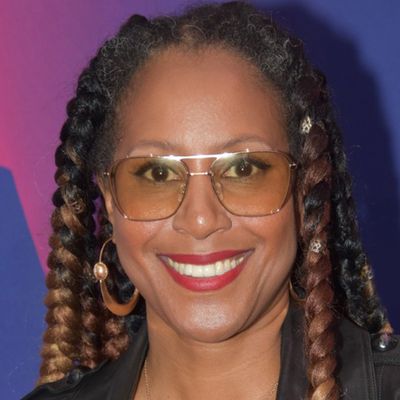
Sade Lythcott is a Tony and Emmy-nominated producer and the Chief Executive Officer of the National Black Theatre. Founded in 1968, by her mother Dr. Barbara Ann Teer, National Black Theatre is the nation’s first revenue-generating Black arts complex... Read More
From the show: When Lightning Strikes!
Guests
Featured Shows

About
Sade Lythcott is a Tony and Emmy-nominated producer and the Chief Executive Officer of the National Black Theatre. Founded in 1968, by her mother Dr. Barbara Ann Teer, National Black Theatre is the nation’s first revenue-generating Black arts complex. National Black Theatre, also called NBT, is one of the longest-running theaters by a woman of color. Most recently, National Black Theatre co-produced Fat Ham and Purlie Victorious on Broadway and (Pray) off-Broadway. All three shows have been New York Times Critic’s picks.
This episode was recorded on November 1, 2023.
Transcript
This transcript was automatically generated and might contain errors.
[0:00] Jeryl Brunner: From Shakespeare to Schwartz, from Fawcy to Alvin Ailey, from Santam to Borelis, from McNally to Faye. It happened to the greats, it still happens every day. When lightning strikes is the moment you know. When lightning strikes, where your mentor goes, you can stand in Chal Uringa. Do whatever you like. You'll never forget the moments when lightning strikes.
[0:28] Jeryl Brunner: Hi, this is Jeryl Brunner, and you're listening to When Lightning Strikes, where we talk about the tingly mic drop moments that led you to becoming an artist. Sade Lythcott is a Tony and Emmy-nominated producer and the Chief Executive Officer of the National Black Theatre. Founded by her mother, Dr. Barbara Ann Teer, National Black Theatre is the nation's first revenue-generating Black arts complex. National Black Theatre, also called NBT, is one of the longest-running theaters run by a woman of color. Most recently, National Black Theatre co-produced Fat Ham and Purlie Victorious on Broadway and (Pray) off-Broadway. All three shows have been New York Times Critics' Picks. So welcome, Sade. I love what you're creating. I love the legacy you take over from your mother. Can you talk about the National Black Theatre? If somebody said, "What is the National Black Theatre?" what would you say?
[1:54] Sade Lythcott: Oh, well, the National Black Theatre, you said it so beautifully in your intro, but National Black Theatre is a national destination for Black storytelling through theater arts. We are transfixed by preserving the stories of authentic Black lifestyle while also, you know, blazing, trailblazing unapologetically into the future narratives that shape our country and culture through the lens of Black artists.
[2:28] Sade Lythcott: I've heard NBT described as Harlem's cultural conduit for Black liberation. What does that mean to you?
[2:37] Sade Lythcott: I love that. Yeah, it's gorgeous. Thank you. As a cultural conduit to Black liberation, I mean it's two things. One, NBT really leans into our theory of change, and our theory of change is grounded in the notion of Black liberation. You know, there is, um, Toni Morrison said, you know, none of us are free until we're all free. So this idea of Black liberation, until the Black woman is free, this idea of liberation, which Black liberation, which is centered in all that we do, is also an invitation for all of us to have a relationship with our own liberatory practices. But what I will say is our theory of change is Black liberation plus art plus placemaking equals the conditions for human transformation.
And when we were founded in 1968, you know, a turbulent time in this country's history, um, the height of the civil rights movement, the burgeoning of the Black arts movement, we as the National Black Theatre wanted to move past this idea of representation to really empower Black communities, not only to see themselves at equal footing as the rest of the country, but really to transcend culturally, spiritually, uh, untether ourselves, and become unfettered in our artistic expression.
[4:13] Sade Lythcott: And so our first company of actors we referred to as liberators, that when an actor touches that stage and is able to perform and embody the words of our artists, our playwrights, our poets, it is a liberatory practice of inviting folks to be in relationship to how our lives matter, how deeply our culture matters, and how when you get close enough to the truth of who a human being is, you find all of these commonalities and pulse points that we share across all communities, ethnicities, and so liberation for us, Black liberation in particular, is super important and is entrenched in all of the plays we produce and the programs we offer.
[5:08] Jeryl Brunner: That's so beautiful. I want to go to your origin story, as you mentioned, and specifically with your mother, Dr. Barbara Ann Teer, and wanting to create this temple of theater, dare I say it, um, temple of arts. Can you bring me to where she was in her life, you know, and what inspired that? And I think about the courage she had as a Black woman, you know, taking agency like that, you know, in the 1960s.
[5:46] Sade Lythcott: Yeah, courage and agency. Wow, those are the words, you know. And I think, you know, to connect to your listeners, we find ourselves in our own lives often at crossroads. And my mother, uh, in the early 60s, um, you know, she started her career as a dancer, a modern dancer, um, and she danced with so many people, um, Vygmont, uh, eventually in the first company, one of the first companies of Alvin Ailey, and she had a devastating injury to her knee that um, precluded her from dancing anymore. And that's really when she found and fell in love with um, theater and acting and directing. And what she found were that there were all of these young people who were, you know, pouring into the streets, protesting and, uh, and activism and in resistance to uh, the crossroads that our country felt um, was experiencing.
At the very same time, these young people were extremely talented storytellers, and her experience navigating theater in the early 60s were that every audition was for like maid number one, or you know, these stereotypes, prostitutes, uh, maids, mammies, and so you have this kind of convergence, this conflux of cultural identity, experiencing the holistic um wholeness of who we are. And then in this craft that's so highly regarded, you're limited to two-dimensional sketches of who you actually are.
[7:42] Sade Lythcott: So she, for her, she saw the gap. She saw the gap between what was being offered and the incredible amount of talent and passion and courage that was pouring into the street. So it started out, she was an acting coach. Her and Robert Hooke started something called Group Theater Workshop, where they were teaching young African-American activists and students how to act, and they were brilliant. And out of Group Theater Workshop came two theaters: the Negro Ensemble Company, which is kind of world-famous because it's how where Denzel Washington, Sam Jackson, so many folks got their start. And my mother kind of split off and said, you know, theater and representation is important, but I want to create a holistic model that really is in service to our community.
And so she moved to Harlem and founded the National Black Theatre, which commitment is, you know, we take a kind of social impact, social justice lens to all of our storytelling vehicles because liberation is so important. And um, those are our origin stories.
[9:02] Jeryl Brunner: It's beautiful. And I love in the 1980s, right? That you or that your mother ended up buying the building. Can you, that's such a great story as well?
[9:15] Sade Lythcott: Yeah, talk about really taking ownership.
[9:19] Sade Lythcott: Yeah. So again, it's like, you know, yeah, the ownership of our art became really important. So, you know, I always like to say that National Black Theatre is a home away from home for Black artists. I think it's important. She used to say it as well. And the reason why I say that as opposed to, uh, we are a cultural arts institution is because, you know, the thing that Black folks have been chasing since we were ripped off of the shores of Africa and brought to this country, uh, and enslaved, was, and it's, you know, I feel like it's never spoken about enough, but the psychic trauma of it exists in all of our communities, but we've never had a home. We've been in institutions, you know, they used to call slavery a peculiar institution.
But like if we are in the business of freedom and if we are in the business of liberation, then we have to rethink the whole model. And that's what my mother was trying to do. Rethink the whole model. So ownership became a key empowering component to this liberatory practice of giving Black artists a permanent home somewhere whether you were in California or Appalachia. If you are an actor, a writer, a performer in Maine or Vermont, you knew there was a centralized home in Harlem for you that was vibrating at the frequency of your creative ambition.
[11:01] Sade Lythcott: And so when we got the opportunity in the 80s, it was a building. We were renting space in an old jewelry factory on 125th and Fifth Avenue. And the building is the whole block in law.
[11:16] Sade Lythcott: And at first, after a devastating fire, my mother wanted to rebuild our space. And then she thought more about it and vision, she was such a visionary that she said, you know what? I don't want to rebuild our space. I want to buy the block because it's the most famous address in the world. And people thought she was crazy. It was 1980s, it was Harlem, you know, it was like the narrative around Harlem was it was impoverished or dangerous. And she saw it as the opposite. It was a Mecca. So she wanted to buy 125th Street and Fifth Avenue because she said you could go anywhere in the world and say Fifth Avenue. Everyone knows New York City, everyone knows Opulence, Breakfast at Tiffany's, the Metropolitan Museum of Art.
And you can say 125th Street, and everybody knows Harlem is the cultural capital of the Black world. And so she wanted to buy the intersection of the two. And as you said so beautifully, build a temple of liberation to her people. And that's what we did. And that's why we're here, you know, over a half century later, doing the same kind of freedom. And hasn't it evolved that you're transforming it, blossoming it into living residential spaces and more theaters and can you talk about that? How it's blossoming and evolving.
[12:41] Sade Lythcott: Yeah. It's so funny that you use the word blossoming. Our season theme this season is called the defiance of our bloom. And I think it's poetically, you know, embodies exactly what you're saying, which is we got the opportunity. So I took over the theater in 2008. And one of the things that was really important to me was really looking at how to see permanence for our organization. And my mom's vision always when she bought the city block was to create an ecosystem, a cultural hub where artists could live, work, and serve. And in reimagining what the city block could be, I thought this is the perfect opportunity to really create like what does a home feel like, right? It's where your exhale feels the best.
And so we went through a rather tedious seven year U-LERP process to rezone our building, find the right partners to create a mixed use building that mixes residential, cultural art space, community space, and commercial space to really manifest this vision that this black woman had, you know, generations ago, which is to create a hub for our artists and the creative economy to live, work, and serve right here in our own community.
[14:14] Jeryl Brunner: And I want to talk about your lightning strikes moment, what I've read and learned about you. You started your career in fashion, right? That was your great passion, and then you took up the mantle of your mom's beautiful work and legacy. So how did so when was your lightning strikes moment? He thought, oh, this is my path or moments.
[14:41] Sade Lythcott: Oh, wow. I love that your podcast is called Lightning Strikes Moments, because it's so important to give us the permission to reflect back on those moments that in a blink of an eye changed our lives or our direction. And so I've had many of those in my life. But I'll speak about the transition from fashion to theater, which was a lightning strike moment. And the thing about lightning strike moments is that oftentimes they're built out of pain and grief, right? That pain and grief is just as much a directional teacher as love and triumph. And so for me, my whole career had always been centered around things in fashion. I had everything from a fashion journalist to a stylist to a designer, had my own company.
And I was not passionate about fashion. I was good at telling stories through clothing. And so it came really natural to me. And I think being a kid who grew up in New York City, there's a lot of opportunity in fashion. And on the other side, my mother would constantly say, I don't know why I work so hard. It's not like you and your brother are gonna do anything with this. And she was right. I had no theatrical ambition at all. You know, it's one of those things when you see what your parents do, you either run towards it or you run away from it. I was definitely one of those people who ran the opposite direction because it seemed so daunting, you know, it was her full life. And in a lot of ways she gave her life to the organization.
And I thought I wanted something different. And so my mother unexpectedly passed away in 2008. And thank you. And it was on the heels of me starting my own swimwear line. And I remember having that last conversation. So this was my first lightning strike moment. I was having this conversation with my mother. And I did not know that it was going to be the last conversation I would ever have with her. And I was in Miami for swim week, and a client, an old client of mine had called, and they were doing a video shoot in Paris, and they wanted me to come out and be a part of the video. And I thought, oh, I can't do that. I'm a CEO of a swimwear line. And I called my mom to say, you know, this person wants me to come to Paris.
It's kind of a dream job, but I've changed lanes. And she said, darling, when Paris calls, you always pick up the phone. And so I thought, okay. And I said, But mom, I'm gonna need my passport. Can you send it to me in Miami? And so she was saying how stressed she was, and anyway, but that she would find the time to FedEx it to me. And I told her I loved her. She told me she loved me more than words. We hung up. And the next call I got was from her assistant that she had died of a heart attack that later that night. Oh gosh. And so you can imagine just the devastation, the shock, the grief that brought me back home. And about a week later, into planning her memorial service, which by the way was literally the most fabulous thing that ever was.
I was like, she is in, she is directing this from you know the heavens at this point. The door was constantly ringing with like flowers and gifts and notes, and I answered the door and it was a FedEx, and so I opened the FedEx, and it was my passport. It was rerouted from Miami back to my house, and it had this handwritten note from my mom that said, Life is short. Lean in hard. And that was my lightning strike moment. The board asked me to draw to, you know, to step in for six months. I've been here for 15 years, and what I don't didn't realize, and this is why it was a lightning strike moment, is that everything that happens in your life, for better or for worse, you know, in grief and in deep joy, is constantly preparing you for what's around the corner, whether you realize it or not.
And so I was being prepared my whole life to take on this mantle that I thought I didn't want, but is my life's work and passion because I get to wake up every morning and I get to create pathways of possibilities for black artists that didn't exist the day before. And that to me is just worth waking up every day for, and giving black artists the resources they need to imagine a world that is yet to be created, which means on the other side of these blank pages, you know, we get to craft the world and the stories we want to live in that we have been left out of for hundreds and hundreds of years. So that was my lightning strike moment. It brought me here, and I've never looked back.
[20:23] Jeryl Brunner: What an extraordinary story of coming in, like baptism by fire, yeah, in a way. What was it like growing up with your mother and surrounded by her work in the National Black Theater? What was that like for you?
[20:42] Sade Lythcott: Oh, it was wild. You know, New York, first of all, New York in the 70s and 80s was such a brimming bubbling creative time. The thing that is true, and I think a lot of children don't realize until much later. Like, I like the thing that was the funniest for me is that I did not realize who my mother was, what the National Black Theater was growing up. I didn't realize who my aunties were. I didn't realize who my uncles were. I was just in this community of artists, performers, intellectuals that were the way, you know, that took me to school, that took me shopping, that were, you know, would never leave my house because the wine was being poured and the conversations were flowing. But like, you know, I learned about National Black Theater in a theater class I took at NYU in college, you know, and as you get older, you realize, oh, Auntie Maya is Maya Angelou, or Jimmy is James Baldwin, you know, crazy Auntie Nina is Nina Simone, right?
So I grew up with all of these luminaries. Belicia Rashad was a part of like my mother, was one of my mother's students that were in her women's circle that she created. My mom was a person who always understood, for example, like this is how visionary she was, that rest and care was a part of your resistance and resilience and activism. So we always leaned into self-care practices, you know, all of these kind of concepts that I was steeped in as a child are really, you know, the people and concepts and visions that are our medicine and salve as we navigate these hard times 50 years later.
[22:44] Sade Lythcott: So growing up, it was a it was wonderful, you know, it was like it was costumes and canopies, if you will. It was really celebratory in so many ways, but really formed by the greatest luminaries and thinkers and spiritual leaders of our time. They were always our guests in our home, and that felt wild and wonderful at the same time. God to go back, just thinking about James Baldwin and Maya Angelou's part of your life, you know, that they were they weren't just people on the page or yeah. And it was for all of us. Like I went to this wonderful school called the Cathedral School, and my brother's best friend was a kid named Trevor. And Trevor and we were all friends because like his uncle Jimmy was mom's great friend.
And so like that was the relationship. Like Trevor's uncle Jimmy's at the house, as opposed to oh, James Baldwin and my mother are having conversations and discourse and debate over whatever it was, you know. Yeah, and I love also that I think about the choices you've made in terms of what to stand, what theater to stand behind. You've co-produced so extraordinary theater and produced extraordinary theater just this season, last season alone, when I think about Fat Ham, Pearly Victorious, which is currently on Broadway, Pray Off Broadway. Can you talk about each of those productions and what inspired you to get behind them and to nurture these beautiful playwrights?
[24:32] Sade Lythcott: Yeah, so I have the great privilege of working with our executive artistic director, Jonathan McCrory, who is an artist in his own right and really just an incredible he calls himself creative doula of black works and so you know Fat Ham is a really special Pulitzer Award winning play by James Irons that was a no-brainer for National Black Theater. We first produced James in 2017. We world premiered a play called Kill Move Paradise, which was the first production, first major production, I think maybe the first production ever that James had in the New York market. And the play was weird, but the play was important, you know. It was it was it was it was in the pocket of what National Black Theater does.
It feels it felt so next. It was dealing with some of like the state violence of police brutality, but it was coming from such a poetic and human-centered, courageous space that wasn't about propagating the narratives that you see on the news, but it was handing ourselves back to our handing us back to ourselves in a holy way. And when I say holy, sacred, absolutely, but also in a whole way. And so we fell in love with the play. He was like, really? Because it was so abstract, and we had been kind of following this new director called Sahim Ali, and we paired the two together to produce the world premiere of Kilmu Paradise. And you know, seven years later, or five years later, or six years later, you know, Sahim is an associate artistic director at the public theater and a brilliant artist in his own right.
And when he got to the public, the first piece he wanted to produce was with James and with National Black Theater. So you know, he was like, we should produce Fat Ham and the rest is kind of history, and it is our sweet spot because it's a show that we developed for stage. It was first produced as a digital film during the pandemic, but we thought like this show deserved what it was intended for, which was for the stage, and you know, it was so successful at the public theater that it got transferred to Broadway and then nominated for five Tony's and quite the ride. And for people who might not know, it's so brilliant because its source material is Hamlet, Hamlet, and it's present and it takes place at the barbecue and a family barbecue, and a really a fascinating family, and I was yeah, it is a very loose adaptation of Hamlet the Fat Ham.
And it's a contemporary story about a queer our Hamlet is a queer, fat, black, beautiful Hamlet who is awkward, and the beauty of it is it's this gorgeous standalone story about what it's like to grow up in the South as a queer kid, through the story arc of Hamlet. And to your question, you know, why it was important to produce that work, it was like if National Black Theater is interested in anything, it's interested in complicating and creating complexity in our narratives, and this idea that we could be so subversive with a text that is so sacred to the you know to the Western theater canon. Shakespeare is so sacred to the Western theater canon, and we could subversively use the arc, and in some ways like the iambic pentameter of Hamlet to tell this story in this backyard barbecue setting of these queer kids' lives, like how brilliant is that.
And James is a brilliant writer, obviously it won the Pulitzer, but we did it because at that same time that we were producing Fat Ham is when we started to see the rolling back of black studies and the shifting of and the censoring of our history. We're also seeing drag shows being banned and anti LGBTQ policy. So, as much as James wrote as close to a perfect play as possible, in my honest opinion, it was also a vehicle for us to come together as community and to wrestle with these topics that are being so brilliantly shown in the play that we're dealing with in our lives. And that's how we approach all of our choices. Pearly Victorious on Broadway right now is a revival that's all over 60 years old.
But Ossie Davis's text is so incredibly beautiful and is a sub for what the world and our country is going through right now. And so we wanted to bring that back so we can have conversations and lenses into how we heal as community from different sides of the eye. When I saw Pearly Victorious, I thought, oh my God, I wish Ozzy and Ruby D, his wife, who were both in it, right? And he wrote it, we're here to see this exquisite production. Yeah, what can you talk about what inspired you yet to take that on?
[30:55] Sade Lythcott: Yeah, this incredible play that hasn't been done in decades, right? Well, it's never been done since the it premiered on Broadway since 1961. There was a musical version of it called Pearly with exclamation point produced in the early 70s. But the original straight play that Ossie Davis wrote in 1961 hasn't been produced since then until we have just brought it to Broadway. And you know, we chose that to be our sophomore piece for lots of reasons, and I don't want to for your listeners. But the first one was like, I believe in these lightning strike moments, and Pearlie was a lightning strike moment for me in two ways. One, what Fat Ham taught National Black Theater was there absolutely has to be a shift in the business model that creates spaces for black, non nonprofit theaters of color to have a seat at the table.
The fact that we made history by being the first black theater to develop and transfer something to Broadway since the late 70s, early 80s is unconscionable. So, you know, we left Fat Ham with like I had a fire in my belly to figure it out, right? In the same way my mother figured out how to buy a city block. I was gonna figure out how we unlock the economic possibilities that Broadway has for you know regional theaters in particular. So the lead producer of Pearlie is a multi-Tony Award-winning producer named Jeffrey Richards. Ironically, Jeffrey and I went to the same high school. So we are always on alumni panels talking about theater and kind of always at the end of something, we're like, we should do something together.
And so Jeffrey got the rights to do Pearly, and he thought maybe this is the piece that we should do together. Now, here's where the lightning strikes. My mother was in the original film of Pearlie called Gone Are the Days, and the original Ghetlow character was played by an actor named Godfrey Cambridge, who my mother met and fell in love while they were making Pearly on Broadway and got married during the run of the show. And Aussie was his best man, and Ruby was one of his maid of honors. And so when Jim Glaub, yeah, it was Kismet. And so when Jim Glaub from Super Awesome Friends said, I think Jeffrey wants to talk to you about his next project, and that project was Pearly. I was like, Oh, this is that lightning strike moment, these divine breadcrumbs that sit that are pointing you in the direction of how you are going to make sizable shifts and changes.
[34:00] Sade Lythcott: And so Pearlie became our sophomore piece because of all of that. And you know, I happen to also be the chair of coalitions of theaters of color, which is the largest cultural initiative in New York City's city council budget, and it was founded by Aussie and Ruby in 2004, and I chair it today. So, anyway, there were all of these signs, all of these lightning strike moments that said this is the piece that National Black Theater needs to be bringing to Broadway. And I am so glad that this piece is—I mean, you've seen it. It is a brilliant Leslie Owen Jr. and Cara Young are brilliant, and Kenny Leon has directed this ensemble of liberators. I feel like we're back in the 60s when my mother said, like these storytellers are liberators, and Pearly.
If you sit in the audience of Pearly Victorious, there's no way that you don't leave feeling a little bit more convicted by how to make the world a better place and seeing things through a different lens and perspective. And so we're really proud of it. And every Thursday we moderate talkbacks called Victoria's Talkbacks, where we talk with the cast and special guests so that we can digest as community and heal as community together. Talk about the church or temple of spirit of joy. Let's talk about Prey, which is downtown off Broadway, literally the theater is literally reconstructed as a church with pews. And I love it.
[35:59] Sade Lythcott: Oh my gosh, yes. Transforming that piece. Can you talk about what inspired that collaboration? You know, my life changed when I woke up one day and I realized I wasn't in the business of theater, as I said earlier, but I was in the business of freedom. Like I—this is freedom work. And so we look for projects and pieces that are that are that are that the artist is absolutely working on a vibration in a vibration that is so unleashing of their soul onto the paper. And Nikki Douglas, the conceiver, creator, choreographer, director of Prey, has been and is one of those artists. So it's kind of a funny moment for us right now in our season, right? Because Prey and Pearly represent the spectrum of the work that we do.
So Prey, commissioned by Arsnova, co-produced by National Black Theater, the world premiere of Prey really poured five years of development support and work. NBT came in on the latter end of it in the last two years to this singular artist who had never had the opportunity to do something like this before. Nikki Douglas. She's an incredible choreographer. She's known, very well known for lots of things, but not as this centered artist. And Prey is really her excavation of her own wrestling with her own spirituality growing up in the Baptist church. Her mother was a pastor, and what it means to live in a black femme body and question the constructs that are placed around us and how we get free while still staying connected to the divine spirit and energy.
[38:11] Sade Lythcott: And so you saw it. It's this interactive musical, gospel choreo poem that invites us all to be in communion together as one congregation, navigating how we wrestle in our own lives with these existential questions around what is our purpose, why are we here, and what role does God play in our lives or gods, meaning the force and the spirits that are bigger than us? Yes. And then on the other side of that is Pearly Victorious, which is very polished and very Broadway, and you know, being at the Greenwich House Theater in the West Village is like an old school New York experience that feels like you're witnessing something for the first time. Yes. And I love that you have to put booties on to protect the floor.
You know, we really talk about a sacred space. It's wonderful. Yeah, the element of surprise I don't want to give away. And I think about how you've held on to your mother's vision and how you've evolved as well. Is there something you wish you could tell your mother, you know, at this point? Or if you could ask her something, you know, in the parallel universe, or what do you think she would be saying about what you've done for the National Black Theater?
[39:48] Sade Lythcott: So here's the funny thing, and it is—I mean, maybe it's funny. I'm a pretty witchy woman, so it's pretty normal for me. A bit of a conjurer. But you know, I think a part of the secret to my success and the growth of the National Black Theater is that that last phone call with my mom was not the last time I spoke to her. I talk to my mama every day and in every way. Like she is guiding so much of what we're doing. And quite frankly, I don't think that we would be where we are if it wasn't for the deep listening, the understanding that energy is never destroyed. It just changes forms. And my mother used to be in the flesh, and now she is in the atmosphere, and that all of us have the opportunity to connect to these energies that protect us and guard us that we call our ancestors.
And so much of the work that we do is about creating and holding space, not only for what you get to see as the audience member or the artist, but to create space for those seven generations that came before us, whose shoulders we stand on to say there is still a place at the table for your wisdom, for your intuition, for your ability to clear the way in ways that we cannot do in our physical form.
[41:30] Sade Lythcott: And so I think that, you know, the secret sauce to National Black Theater is that it's a little witchy in that like a part of the legacy of our organization, in particular our home, is that we are, you know, convicted by creating leveraging the energy and the unfinished stories of our ancestors. So I think that my mother obviously would be proud. I never question what my next step is because I know that I am not the sole, you know, controller of what's next, but I create sacred space to hold not only where we're at, but where we've been, and that creates the conditions to where we're going to go. And that is so steeped in love that I can be fearless in those decisions. And I think that that's the woman she was.
Steeped in love. I want to end with your mother's message that actually Beyoncé adapted in her Renaissance album. We dress a certain way, we walk a certain way, we talk a certain way, we paint a certain way, we make love a certain way. All these things we do in a different, unique, specific way that is personally ours. What does that mean to you?
[43:13] Sade Lythcott: Well, my mom would call that the science and secret to soul. And that is what we get the privilege to celebrate every day at National Black Theater. We're not trying to be anybody else but ourselves and who we are as depicted in the incredible, incredible success of Beyoncé and Renaissance, which was such another lightning strike moment, is that when you can embrace exactly who you are the way you are, everything kind of contorts and folds to meet you where you're at. And I think that's an important message for people of color in particular that we can be fully who we were born to be, and the world will meet us there instead of pretending to be something we're not. And so I—it's a guiding principle for all that we do. And I think it's a gift to the world to invite everyone else in to have that same conversation with the magic that is specifically held within that.
[44:27] Jeryl Brunner: Thank you so much, Sade, for coming on. It's been a pleasure and a joy to talk to you.
[44:37] Sade Lythcott: Thanks for having me. This has really been a wonderful way to spend the afternoon. So thank you.
[44:49] Jeryl Brunner: The theme song was written by Tom McGovern. This episode was edited by Sarah Goodman and produced by Anna Strout.
[44:59] Jeryl Brunner: Lightning strikes.
© Broadway Podcast Network, All Rights Reserved