

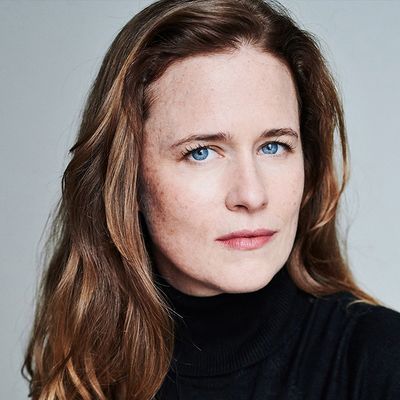
Katie Brayben won a Olivier Award playing Carole King in the West End premiere of Beautiful. Just a few of her theater credits include Girl from the North Country, Honour, A Walk on The Moon, The Spoils, My Mother Said I Never Should, King Charles III and American Psycho... Read More
From the show: When Lightning Strikes!
Guests
Featured Shows

About
Katie Brayben won a Olivier Award playing Carole King in the West End premiere of Beautiful. Just a few of her theater credits include Girl from the North Country, Honour, A Walk on The Moon, The Spoils, My Mother Said I Never Should, King Charles III and American Psycho. On television she has appeared in Luther, The Alienist, Doctor Who, King Charles III and Vera, You can see her in the riveting film, A Serial Killer’s Guide To Life which is now streaming online.
This episode was recorded May 18, 2020.
Produced in part by the Broadway Podcast Network.
Transcript
This transcript was automatically generated and might contain errors.
[0:00] ♪ Musical number: "When Lightning Strikes" — performed by Unknown artist ♪
[0:25] Jeryl Brunner: Hello, this is Jeryl Brunner, and you are listening to When Lightning Strikes. This is a podcast where we talk about the moment when your proverbial light bulb goes off, the heavens open, the seas part. You have that wonderful heart thumping, tingly, glorious mic drop moment when you discovered you had to be an artist. And today I'm so thrilled that we have Katie Brayben, who won an Olivier Award playing Carole King in the West End premiere of Beautiful. And just this is just a few of her theater credits. Uh just a few. And on television, she's been in Luther, The Alienist, Doctor Who, King Charles III, and Vera. And you can now see her in the riveting film, A Serial Killer's Guide to Life. So welcome, Katie.
[1:30] Katie Brayben: Oh, thank you so much for having me. This is lovely.
[1:34] Jeryl Brunner: I'm so happy to have you. Where are you right now? And how are you staying fortified in this?
[1:42] Katie Brayben: Oh, yeah. I mean, it's tough, isn't it? I um I'm actually currently in a cupboard. Um, and uh I've got my soft uh sort of things around me, because I sometimes do some recording in here, so I've put myself in the cupboard with the door open, so hopefully the sound's okay. Um and I'm in London. Um how am I sort of keeping it together? Uh I’m very lucky I have a lovely uh boyfriend who keeps me sane at the moment. And uh I’m currently doing a lot of running and uh, you know, well, I say running, jogging really, um, and reading, and yeah, just you know, speaking to people as much as possible, because um, you know, it's tough right now, isn't it? It's very tough. Not to sound so dramatic, but it's hour to hour, sometimes minute to minute. Some days I'm just feeling like I'm a font of creativity and possibilities, and then some days it's oh boy, what's going on right now?
[2:47] Jeryl Brunner: Yeah, it's having that sort of purpose taken away from you.
[2:50] Katie Brayben: So you'd sort of wake up in the morning and you're like, oh, I have to sort of create something in my own brain, you know, to keep myself going. Um so yeah, I definitely uh have been feeling that, yeah, for sure. Because you were just in rehearsal for Jeremy O'Harris' play Daddy, right?
[3:11] Katie Brayben: Uh you know, I'm really sad that uh I mean and that there's you know obviously a hope for the future that maybe you know that it will go on, but um if it doesn't, I'll be really sad that people won't see uh these amazing performances that I got to witness in rehearsals um from the cast. Um yeah, so we were just about to go into tech. So yeah, I think there was even a swimming pool sort of being constructed in the Almeda Theatre, um, which is no small feat. Um so yeah, that's uh yeah, sort of sadly um not to be at the moment. Uh but yeah, great to be in the room with uh Jeremy O'Harris and uh Daniel Tamor, who was directing as well. I mean, their extraordinary brains, you know, were amazing to sort of uh witness in the room. So I feel like um I had some experience of working with them, which was uh better than nothing, I suppose.
[4:12] Jeryl Brunner: I want to get back to that because I saw the play with Alan Cumming at uh Signature Theatre in New York, and it was oh gosh, it was so powerful and heart-thumping, and you're right, that set just took my breath away.
[4:31] Katie Brayben: Yeah. Amazing, amazing set. And uh yeah, uh and such an interesting sort of um he Jeremy O'Harris is such an interesting voice, and I think he's so playful and um so interesting. Uh and uh you know, like I say, um to get the chance to kind of dig into that text a bit, even for you know, three or four weeks, was really wonderful. It's so extraordinary just to have that experience with him.
[5:02] Jeryl Brunner: Let's go to your lightning strikes moment. When did you know, or were there several moments where you knew you were reaching back into your vault when you knew, oh gosh, I have to be an artist?
[5:19] Katie Brayben: Well, you know, it's really interesting. Obviously, I know that uh this is what this podcast is about, and I have been thinking about it a lot. I have a terrible memory, so I don't have like a lightning strikes moment. And also I feel like I when I was younger, I mean, basically, I just always I feel like I've always known that I wanted to be an actor. I couldn't tell you when the moment happened, but I feel like in a way, everything in my life from that moment, whenever that was, uh is just like um a test of that, if that makes sense. So um, so I can tell you about moments where that's been tested, and I can also talk about moments where um I felt like that call and had calling has been compounded, but I couldn't give you an exact, you know, lightning strikes. That was it. I just knew.
[6:20] Katie Brayben: Um, but I suppose going back through my brain, um when I was uh when I was about 10 years old, I got to sort of share the part of Annie uh in uh in a you know uh a very amateur uh production um in Lewisham in the shopping centre. Um so it was sort of bizarre actually. I don't know if it still exists, but it was a sort of theatre, but inside a shopping centre. And I'm I mean I'm sure it's still there, but I don't think it gets used at all, which is a shame. Um it was for sort of three nights, and I think I played Annie once, maybe in those three nights, but um I can remember my mum, because I cried when it was over and I really mourned it. And um I can remember being in the bath and my mum sort of soaping me down as I was crying, and she was like, and I remember her saying something like, Well, if this is how you react when you do drama, then I don't think you should do it anymore.
Which was kind of the opposite of um how I was feeling because obviously um sort of, you know, was so in love with um, but not just being on stage, but I think for me, and it's always been about this since that moment, it is about the coming together of people to create something, you know, like the camaraderie and you know, the backstage stuff, as well as the on-stage stuff, the learning, the growing as a person, and all of that for me is sort of tied up in theatre specifically.
[8:05] Katie Brayben: Um so yeah, that was one of my sort of moments.
[8:10] Jeryl Brunner: What made you go to step two to follow the next theatrical experience?
[8:19] Katie Brayben: Well, I had really great teachers in secondary school. Um I had a great singing teacher. I mean, I should say that my parents uh are musicians. Um so I grew up with uh listening to a lot of folk and blues music. Um they're specifically blues, amazing blues musicians. Um so I was already sort of singing at a very young age, I suppose. Um but I knew I wanted to be an actor, it was sort of uh more so than than a singer. I can remember being at uh at school, and I had this great singing teacher called Joanne Hanson. I had this great drama teacher called Margaret Wilman. And um I mean, if you I mean they were just amazing, they just were very supportive. And um I didn't know there was such a thing as a drama college really um until uh Margaret Wilman uh told me about it and I applied for two, I think, and I remember getting uh the information through for RADA, and I just threw it straight in the bin because I was like just the thought of that was it was too much for me.
Like I didn't have that entitlement at all. I didn't think um from hearing about it that I could possibly have even dreamed of going somewhere like that. So I sort of put that straight in the bin, but I did apply for two and I got into one luckily, and um and yeah, I mean it's been a slow thing for me. Like every place that I've turned up at, whether it's drama college or a job or you know, whatever venue I've managed uh like worked at, I've always felt this massive sense of wow, like how did I this is amazing. Like I got here, I got to the National Theatre, or you know, I managed to get a job at the Almeda. There always I always feel huge, sort of uh huge gratitude is the wrong word, but um just like so sort of passionate about it that wherever I end up I'm just really like thrilled, to be honest with you.
[10:27] Jeryl Brunner: Was that the Rose Bruford?
[10:30] Katie Brayben: Bruford? Yeah, I went to Rose Bruford, and um I remember when I applied, uh I did the acting musician course. So um because I play instruments and I am a songwriter as well, um they're my two passions, you know, and I thought, oh, I get to put these two passions together. Um I didn't realize that it was actually a course for people who play instruments on stage. Uh that was kind of a shock for me when I when I got there, and that's what it was about. Um I haven't actually done as a professional actor much acting musician work um subsequently, but uh I did love that, you know, at the time the course, you know, you just on a Wednesday afternoon, you just all just played your instruments. It was great, you know, and um I really enjoyed that.
But it was it was the acting course with sort of a bit of music at the time, but I think it's different now. I wouldn't like to say what it's like now, I don't know. Are there roles that really stand out for you that you did there in school?
[11:33] Katie Brayben: Yeah, actually, there was a bizarre, um, it wasn't a whole play, but I remember we did basically to push us, they gave us these roles that we would never sort of get given. And, um, one of them I remember doing with my best friend David, and it was, uh, a scene from Blood Wedding, and, um, I was playing the mother, and he was playing the bridegroom, and it was just a scene, but I remember, um, you know, because it's so far removed from, you know, these sort of very English people doing this Andalusian, you know, very passionate, um, scene. Um, I completely was so absorbed in the character that I don't really remember what happened when we performed it, which is, you know, something I'm always chasing, I have to say, as an actor, and very rarely, uh, get to experience, but that feeling of that it just, it's, um, it's outside of yourself, like it takes you away, and, um, you're so sort of involved in the character, um, that you kind of, you know, you give yourself up to it really.
Um, and that's why I guess I love the sort of transformative actors and, um, like to be able to try and do that as an actor myself, yeah, because it's so fascinating to me when I think about the breadth of your roles you've played, the characters, you know, when you think about Carole King and Lou, you know, like, and then everyone in between that you really, you dive into whomever you're playing, yeah.
[12:11] Katie Brayben: I think, well, that's, um, yeah, I hope, yeah, uh, I really enjoy, um, how imaginative the work is, I think. Um, uh, it's very hard to analyze it, isn't it, I suppose? Um, but I love how imaginative it is, and actually, uh, the furthest away from yourself I feel, in a way, the more playful you can be, and that doesn't mean that the character doesn't have shades of you in it, but, um, for me to be able to be playful and, um, you know, to fully delve in, sometimes it's fun to play people who, um, are very different from you, actually.
[14:06] Jeryl Brunner: Can you talk about your one of your first professional gigs out of school? How that happened, how you went from being a student to a professional.
[14:17] Katie Brayben: Oh, well, I feel like I'm still a student. And I don't mean that like I know that sounds silly, but I, I mean like I just love, um, and this is what I'm missing at the moment. I love the fact that when you walk into our hustle room, you are just like at square one, and you just, you get to like learn. You get to learn about the time in which the play is set, you get to learn about the people, you get to learn about, um, the history, and if it's something that's modern, you get to sort of delve into some extraordinary, like, um, personalities, and, and I, yeah, I always feel like I'm learning. Um, but, uh, yeah, in terms of becoming a professional, oh, I mean, it's just like some of the, some of the first jobs I did were like pretty terrible.
Um, I trying to, uh, remember some of them now. Um, I mean some of them were really good fun though, like I had really good fun on some jobs that I did when I left college. I suppose I suppose the job that, um, really sort of pushed me, um, uh, was funny enough, it was Mamma Mia! doing playing Sophie in Mamma Mia!, which was probably my biggest thing after college. And, um, yeah, I found that incredibly challenging, actually. Um, and I think it should have been more fun than I made it because it's a really fun musical, but I think because I was very serious about, uh, about acting, I was very serious about, um, you know, telling this young woman's story, and, uh, yeah, it taught me a lot actually.
It taught me a lot doing Mamma Mia! even though I think maybe I was a kind of square peg pegging a round hole, um, in that show I, I definitely, I learned my limitations and my strengths, and I'm, I'm very grateful for that experience.
[16:13] Katie Brayben: And that was a big, that was the 10th anniversary of production, right? How long was it roughly after, um, you graduated that you landed that role? Was it, I mean, a while? I mean, it wasn't, it wasn't, um, a quick thing, and, and also, you know, after that I didn't work for ages, you know, it's like I always find it interesting, you know, you think that there's gonna be this trajectory where you, I don't know, play a certain role or do a certain thing and then you're done, it's fine, everyone knows who you are, you don't have to audition anymore, you could just, you know, um, enjoy, enjoy sort of the work, um, but that's never happened for me, you know, in my whole career. Um, I've always sort of, you know, been incredibly lucky and done great things, but then, you know, been working at the pub again or waitressing or doing something else.
Um, I mean, the funny thing was that that role came out of, uh, I had done some workshops in Poland with this great amazing theatre company called Tear to Piss in Coswa, and I'd worked with a woman there, and she knew, uh, this, uh, director and said, oh, you should, uh, this, you should get this girl into audition for this show he was doing, and that was, um, you know, the Smiths, the, the band The Smiths, they were doing a musical of, of, uh, more like an, well, it was an opera, there was no, there was no text involved in it, but, um, they were doing that show, and I auditioned for that and got a role in that, and then after that, uh, the Andrew, the director, um, was also directing the tour of Mamma Mia!, so he got me in for that.
[17:51] Katie Brayben: So it, the kind of bizarre sort of way that things work out, you know, like you wouldn't have thought doing a sort of very physical theatre, um, you know, uh, experience in Poland would lead me to like a huge commercial, um, Western musical. Uh, so I'm always interested in those connections. I think, you know, I think they're kind of amazing, um, when you look at your, when you look at life in that way.
[18:19] Jeryl Brunner: You were recently in one of, uh, my favorite pieces, um, Girl from the North Country, uh, play, uh, Elizabeth Lale, right? And can you talk about that experience working with Carla McPherson? Um, doing this gorgeous Bob Dylan musical. I feel like I heard those songs for the first time, especially hearing you sing "Like a Rolling Stone." I just love that rendition so much. But when you heard about Girl from the North Country, what went through your mind? What was that experience like?
[19:01] Katie Brayben: I, because I mean, it's so interesting. I mean, uh, I watched the show, um, when it was on at the Old Vic and then in the West End. And when my, uh, I got a call from my agent saying, um, you know, they'd like to see you, and I was thinking, for who? I mean, I didn't think there was a role in it for, for, for me. Um, and, uh, they said, oh, for Elizabeth, I was thinking, oh, that's, uh, okay, that's unusual, but, um, my god, yes, I'd love to give that a try, you know. What a brilliant, you know, opportunity to, you know, sit down in front of Connor and to, um, to audition for him with that role. Um, and, uh, you know, he's amazing, you know, he really is amazing. He gives you an extraordinary amount of freedom.
Um, and his direction is so spot on, but also so sleight of hand that he makes you feel like, you know, you're coming up with things yourself. But actually, I'm sure that it's, you know, it's all part of his sort of plan. Um, but he, he does, he gives you a lot of freedom as an actor, and I felt that immediately, uh, in the audition in the room, I felt very at ease, you know, and felt like, okay, I'm gonna do, you know, what comes to me in this moment. Um, I, and I've always, you know, I've always loved Dylan, I've always been a massive fan of Dylan, and, um, I, you know, very much, um, his versions of the songs were in my heart whilst doing that show, definitely.
[20:47] Katie Brayben: And Simon Hale, who did the arrangements, is just, uh, an utter genius. Um, and he, you know, uh, in London, you know, uh, in the, in our version of it, um, you know, being in the room and, and, uh, being able to like experience like, uh, I don't know, all these incredible voices just sort of singing at you. It's, um, it's a really, it's an intense experience, it's, yeah, I, I'm glad that you, that you love the piece so much. I mean, it's, yeah, it was a joy to do and, and actually even more so at the moment I feel like, uh, just having had the experience of that, um, I feel very lucky, feel very lucky to have had that experience because he really is a poet and, and his words and then mixed with the musical arrangements, it's, it's a visceral experience, and I was able to see that both the public and on Broadway, um, and also the ensemble work is magnificent, uh, and I remember hearing from my friends who saw it at the UK how special it was.
[21:10] Jeryl Brunner: What do you love about Elizabeth?
[21:10] Katie Brayben: God, she's so complex, so complex and, uh, oh, I mean, I mean, I love, I love her honesty. I love the fact that she can, she can sniff out a good one and a bad one, you know, she's like, she, she just knows, she just knows, and it's so sort of deep within her that, um, uh, you know, she, that she can suss that out in people. Um, I love her freedom, and I think, um, you know, I, I, I think I remember saying at the time, like I've, I've never felt so free and so afraid in the same breath being on stage, like it, it was an, it, you know, really challenging. Um, but in that way as well, really, um, I learned a lot, you know. I learned an awful lot doing that.
[23:04] Katie Brayben: Yeah. Let's just sound too hippy dippy, but she's almost like the seer, you know, like yeah, she's like this moral center of all this chaos that's going on in this boarding house, a very complicated time, you know, during the Great Depression. Um, and that last speech, you know, like and I remember when I watched it just being so utterly moved by that speech. Um, and you know, to be able to express that sort of almost bizarre third person, you know, in fact they talked about it in rehearsals as it's sort of like Nick's song because Nick doesn't get to sing, he doesn't get a song, but through her, um, through this speech, you kind of he has some kind of release, you know, he has that all that pent up energy that he carries throughout those experiences that he's not able to express through song, like everybody else's in the play.
Um, is sort of done through that speech, which I really love. It's beautiful. And what about because your parents, you just said are musicians or artists, did that inform the piece for you or help you kind of navigate your way through or give you even more of a special connection to the music of Bob Dylan? Um, yeah, I so I suppose yes, that the answer is yes to that. I mean I think it's really hard to put into words like what having that upbringing you know has done for me in terms of my connection to a lot of the pieces that I've done with Beautiful, the Carole King musical as well, you know, having been absorbed, you know, having that sort of musical education as a kid I think has been invaluable.
[25:20] Katie Brayben: Did you grow up going on tour and what was that like, you know, with having? Yeah, they didn't, well yeah interestingly there wasn't, I mean you know there was like buggies in the wings at concerts and things, yeah, but there wasn't a lot and I'm kind, you know, there wasn't a lot of moving around for my parents because when they decided to have kids they kind of like they became teachers as well so it's like they do more music now when we got older they went they kind of locked back into doing their music but they sort of became teachers whilst me and my sister were growing up so there wasn't like much moving around. But I do remember when we were kids, the thing that was sort of like another lightning bolt moment, I suppose, but when we were kids, we used to go to we used to camp in France and we used to take like guitars and things and you know, sit out and sing together and make this lovely sort of family harmonizing sound.
Um, and that was something very special growing up, but also like the songs we used to listen to in the car have a very deep sort of they resonate very deep with me. And I used to have these sort of like you know, these fantasies as that like I was singing the songs that were being played, and that um, you know, interestingly, because I mean space a long way of saying people have said to me, like, why, you know, how did you why musical theater? You must be very passionate about musical theatre, and you know, you've done a lot of it. And I never thought that I was really interested in musical theatre necessarily. But when I think back to those times, like I was creating this sort of imaginative world where I was singing to like the boy I liked, or you know, I was like being heroic in a moment, and that feels to me very musical theater bizarrely, like your storytelling.
[27:36] Jeryl Brunner: Do you remember if you did if you don't don't worry, but do you remember some of the things you sang in the car or around the campfire?
[27:44] Katie Brayben: Well material. So we used to sing around the campfire, we used to sing things like um like Buddy Holly songs and stuff. But um in the car we used they used to play like the Judds and I know. And Hall & Oates and things like that. So like really, and Whitney Houston and Aretha Franklin, but not necessarily the kind of Bob Dylan, Carole King stuff. It was like quite different vibe in the car. So yeah, be like the Judds and like whether whatever you think of the Judds, like the like mini stories, those songs and you know, those country songs. So I suppose I had that kind of those little stories running through my head as a kid in the back of the car there in France. So um I think that um as a little explanation, even to myself of why musical theatre has you know has been in my life.
[28:45] Jeryl Brunner: And I love that you played Carole King. Is there something you remember about your dealings with Carole King?
[28:55] Katie Brayben: Oh well, I mean, so I said very very early on to the cast and crew and everyone, I was like, if Carole King ever comes to see the show, I don't want to know. Like because you cannot be on stage and play someone who's sitting in the audience. That to me is just um my brain would be you know ticking over with anxiety. So um I said I never want to know when she's in. And you know, kudos to everyone because opening night comes around and um I didn't know, but she was in the audience. And bear in mind this is press night, which is in the UK is like everyone comes at once. It's you know, it's the most horrible night ever. And um, my friend Lorna who played brilliantly played um Cynthia Weil, who won an Olivier for her performance, um she said to me in the dressing room just before she said, have you have you looked on Twitter at all?
And I was like, no, it's uh with five minutes to the show. Well, why would I go on Twitter? And she was like, Oh, good, good, good, good, good, good. Unbeknownst to me, honestly, she didn't want me to see that Twitter had blown up because Carole King was in in the building. So um yeah, my overriding memory anyway of meeting Carole King was uh after the bows of our opening night. She comes up on stage and uh sings a bit of You Got a Friend, which was uh I mean mind-blowing um experience. Yeah, uh totally, totally brilliant. So glad I didn't know she was in. It's too much pressure at press night anyway. So, you know, don't need that added pressure.
[30:42] Jeryl Brunner: Yeah, that sounds like a lot of press. Is there something if it's too personal, I understand. Is there something she told you that really resonates with you or sticks out? Or I can't even imagine being Carole King and seeing the pet because I've heard I heard that when it opened on Broadway that it was just too painful, and it took her a while to finally see the whole thing through that she saw a rehearsal, yeah.
[31:12] Katie Brayben: The first act and Lela had to leave because I can't even imagine. That's totally understandable. I mean, uh I can imagine, I mean, nobody would want to do a play of my life, but I mean, I couldn't imagine sitting through something, you know, is essentially your life when you were 16 to 28. You know, that's uh yeah, that's a bizarre experience, I imagine. Um, I mean, she said uh she said some really cool stuff, and you know, we had we had a chat. I mean, we didn't have a like a long chat or anything, but um I do remember her saying, uh, you know, you know how I love my cats. And I was like, oh, cats. I was thinking she has a cat. Does she mean a cat that she has? And actually she meant obviously her musicians.
And what she was saying to me was a bit of advice for on stage was she was like, just show them a little bit more love in the scenes, um, which I kind of thought was brilliant because it's such a subtle thing for her to pick up on um that kind of small like on stage like nods to the bass player and nods to the band and really feeling it. And I just thought that was such a great thing to say. It's funny because when you first said cat, I was thinking or cats, I was thinking of tapestry and left being a little bit. This was sort of another word for musicians, I think.
[32:44] Jeryl Brunner: I love that.
[32:47] Katie Brayben: So lovely. But yeah, she was great.
[32:50] Jeryl Brunner: Love for something really different. The movie, A Serial Killer's Guide to Life. Uh, it's available to be streamed. Uh, it's on Amazon Prime here in the States. Can you talk about that experience?
[33:06] Katie Brayben: Oh boy. Yeah, I mean it's hard to like sort of truncate like how that came about. But um basically, uh I am I'm friends with a couple of geniuses, uh Poppy Rowan, Staten's cousin Rosero, and they are uh they are um married couple, and um we've been friends for a long, long, long, long time. And uh we made a short film together that Staten wrote, and uh we filmed the whole thing in their little flat at the time they were living um in Charlton. They had this little flat. We filmed the whole thing in there. Um, and that was called This Way Out, which is actually like totally free now online if you can find it. Um it's a great little film. And I wrote the credits music and the music at the end as well, just as a little thing there.
But um, yeah, so that happened, and then Staten always wanted to write uh like a feature, and um he's a brilliant, brilliant filmmaker. But there's something about the amazing sort of ingenuity and uh like uh tenacity of the two of them together. Um they're quite a team, and so they came up with A Serial Killer's Guide to Life, which is basically about a woman uh called Lou, who I play who is uh sort of downtrodden. Um I think she has uh like a rested development, and um she's obsessed with self-help, and she lives in this sort of little seaside town, and she's really um you know, squashed by her mother and to this still list with her mom and stuff.
[34:45] Katie Brayben: And um she meets this life coach um called Val. Um, but unbeknownst to her, Val is a murderer. So I mean you've seen the film um yeah, I mean it's good. We filmed it in two weeks. Two weeks. Two weeks? Yeah. Wow. And uh we kickstarted the money. Um and uh it was an amazing success, the Kickstarter campaign, and I have so many people to thank for that for putting their money in and for believing in the project. Um was really amazing. You're really on the edge of your seat throughout because you don't know what's going to happen next. It's so it's it's terrifying, but also there's this element you're you're very invested in these characters, and I was just rooting for Lou. And I don't really give it away, but it's really fascinating to see her transformation and this sort of epic buddy picture sequence.
Yeah, I'm really there's nothing better than working with your friends on something like that. I mean it tests your friendships, but it's like amazing. It's um and to have something written with you in mind or with you playing the character in mind is like amazing. I've never had that experience before.
[36:27] Jeryl Brunner: Are you a fan of the genre?
[36:30] Katie Brayben: I mean, it's even hard to put it into a genre. I know I've seen it described as a you know, a thriller or horror, but it's not your it's more well, it's not your sort of run-of-the-mill horror picture. It's really in the class by itself, I would say.
[36:49] Jeryl Brunner: Uh yeah, well, that's nice, nice of you to say. I mean, I think so too. I think it defies genre, and actually, I think like uh I don't know, art that defies genre is um it's hard to get made. Um but when it does, it's like so refreshing. And um I know that Staten certainly wanted to keep his vision with it, which is why it was kind of mostly uh funded by um uh you know it that the no one you know had a big producer hold over it, it was um very much like I say, funded by Kickstarter and self-funded, and I think that's really important if you've got a strong vision that doesn't fit a specific genre, um because people are so interested in putting stuff in boxes to be able to sort of sell it, I suppose.
[37:52] Katie Brayben: Um that sometimes it's difficult to get that stuff made. You know, another genre-defying piece, Daddy, look at that piece and how completely original that is.
[38:06] Jeryl Brunner: What do you remember about or what stands out about working with Jeremy O'Harris?
[38:13] Katie Brayben: Oh my gosh. I mean, he's just extraordinary. I could listen to him talk for hours. Uh I just love the way he speaks, and um yeah, he's just got an extraordinary brain, really. Um, and he's very kind and uh and very supportive. Uh and yeah, well, wonderful to be in the room with him. I I like I say, I'm gutted that um so far, you know, we've not been able to do it. I like I say, I know there's hope that we will be able to. Um, but yeah, I'm always I just so interested in working with uh people, interesting people with visions, you know. And I I'm just like, yeah, I'll jump on board.
[39:06] Jeryl Brunner: I love that. And what about working in the US? Because you've worked in the US as well. Um what do you like about coming here and working in the US?
[39:19] Katie Brayben: Just I mean I really love um just meeting people from different places. I I'm just I love it, just different ways of life, different ways of being. Um I I you know, I in a way I don't think the artistic industries are that different in America to here. Um I think the people that I've met are challenging and pushing boundaries and um and uh I see that wherever I work really.
[39:52] Jeryl Brunner: Is it do you did you grow up going to the States or do you remember one of the first trips you took here?
[40:00] Katie Brayben: And uh no, I I never I'd never been to the States. Um I went uh I went for a holiday with some friends um years ago, and I remember I wonder I remember the one of the biggest cultural differences was because I was working at a bar at the time in London, and I remember we went for New Year's Eve, and I remember going to a like a bar, like the cellar bar or something like that, I think it was called in in downtown. I think it was downtown New York. But anyway, I remember looking around uh like halfway through the night, and there were just dollar bills on the on the on the counter, you know, on the bar. And I was like, wow, that's amazing. Because obviously, working as a as a bar person in London, you get like a maybe a pound tip if you're lucky, you know, um every shift. So there was sort of this bar full of like notes. I couldn't like couldn't quite get my head around it. So that was like the biggest cultural difference for me when I first went to New York.
[41:09] Katie Brayben: But no, I oh I love I mean I love New York. I I love the vibe of New York, and um obviously it's just really sad at the moment that um we're all going through this, but I I hope one day to go back, you know.
[41:26] Jeryl Brunner: Yeah, yeah, we'll travel again.
[41:28] Katie Brayben: I know we will.
[41:30] Jeryl Brunner: Yeah. And and what about you said you were writing music during this time. I know you're a musician, a songwriter, and what does that give you?
[41:40] Katie Brayben: Oh, I mean, I you know, speaking to my my boyfriend the other day, and he said that when we met, I said my two passions are uh writing music and acting, and and apparently I said at the time I couldn't be without either. Um, but I realize I haven't really written music in a while. Um, and it is it's a great passion of mine, and it's it, you know, it's kind of amazing to be afforded the time to just sit, you know, just sit with an instrument and see what happens. So I've been doing that, but it's mostly sort of for my own sanity. It's not really um, you know, I don't want to say it's a hobby, but it's it's sort of keeping me sane. Um, and I put, you know, I put something out there on Instagram the other day, and I'm not used to doing that. So maybe this is me getting, you know, better at that. And maybe I'll put more of my music out there. We'll see.
[42:34] Jeryl Brunner: Dipping your toe. How would you describe your music? Or is it I get hard to genre defy.
[42:45] Katie Brayben: I mean, I I don't, I wouldn't, I don't know if it's that, but I but I guess I'm so influenced by so many different styles of music that it would be hard for me to say exactly what it was. The song that I put out there feels really folky. Um, but um, but equally I've written things that aren't, so I don't know. I mean, I think it just is what it wants to be in the moment.
[43:08] Jeryl Brunner: I wanted to ask you about The Spoils, Jesse Eisenberg's play. He talk what was the joy of working on The Spoils with Jesse?
[43:18] Katie Brayben: Oh, I mean, I'd say that's one of my favourite experiences actually as an actor because um, well, uh Jesse Eisenberg is amazing. He's an amazing actor, writer, again, very generous, um, and and kind and very open to like, you know, I kind of thought, oh no, you know, what happens when you're on stage with the writer? Does that mean you have to like actually do the words and get it right? And um, but actually it made for such a playful uh experience. Um, him, you know, being the writer and on stage, um, gave us a lot of freedom. You know, he's so playful and um so you know, so enjoys you know, for want of a better word, just enjoys acting, enjoys you know, working with people. And um it really was a joy to do that show every night and it felt so real and sort of so fly on the wall. And especially in the small lovely venue of the Trafalgar Studios, um, which is so intimate. Yeah, it was just great to do that show.
[44:27] Jeryl Brunner: And one thing you said was that it's you always you thought that maybe working with a playwright, you saying their words and then acting with them might be might be challenging, but it it wasn't the case in terms of having their words be precious, right?
[44:47] Katie Brayben: Yeah, exactly. Um he never felt like he was precious about anything, but obviously you wanted to you wanted to get it right because it's so brilliantly written. But the sort of like naturalization of the text, I suppose, if that's a word, um, you know, the ums and the Rs and the kind of like um like just what I did then. Uh he you know, he was very open to that sort of thing and I love that. Like I I love really sort of very real, naturalistic um uh plays when I go and when I as an audience member, I I love things like um I don't know if you saw Downstate, for example, but um like a play like that that's set in one room, sort of almost real time. Um, I find I find that thrilling as an audience member.
[45:37] Jeryl Brunner: Well, Katie, you've just been so wonderful. I really enjoyed talking to you.
[45:40] Katie Brayben: Oh, it's been lovely. Thank you for having me on.
[45:45] Jeryl Brunner: Thank you so much, and have a lovely day.
[45:50] Jeryl Brunner: When lightning strikes is the moment you know. The theme song was written by Tom McGovern. This episode was edited by Kyle Moore, and Letalon was booked by Anna Strauss.
[46:03] Jeryl Brunner: Lightning strikes.
© Broadway Podcast Network, All Rights Reserved