

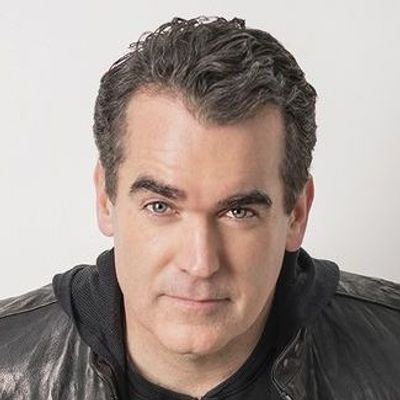
In this episode When Lightning Strikes! goes on location to the theater at Studio 54. Jeryl Brunner talks to Brian d’Arcy James who currently stars in Days of Wine and Roses with Kelli O'Hara. Adapted from the 1962 film and original 1958 teleplay by J.P... Read More
From the show: When Lightning Strikes!
Guests
Featured Shows
About
In this episode When Lightning Strikes! goes on location to the theater at Studio 54. Jeryl Brunner talks to Brian d’Arcy James who currently stars in Days of Wine and Roses with Kelli O'Hara. Adapted from the 1962 film and original 1958 teleplay by J.P. Miller, this new musical features a book by Craig Lucas, Adam Guettel's music and lyrics and direction by Michael Greif. In this extensive conversation Brian talks about the epic journey to bring Days of Wine and Roses to the stage and why the show is so important to him.
Transcript
This transcript was automatically generated and might contain errors.
[0:00] Brian d'Arcy James: From Shakespeare to Schwartz, from Fossey to Alvin Ailey, from Santham to Burelis, from McNally to Faye.
[0:07] Brian d'Arcy James: It happened to the great city, still happens every day.
[0:11] Brian d'Arcy James: When lightning strikes, it's the moment you know when lightning strikes, where you're meant to go.
[0:18] Brian d'Arcy James: You can stand in Chalureka, do whatever you like.
[0:21] Brian d'Arcy James: You'll never forget the moment when lightning strikes.
[0:28] Jeryl Brunner: Hi, this is Jeryl Brunner, and you're listening to When Lightning Strikes. And today we have a very special episode on location from the theater at Studio 54. I'm with Brian d'Arcy James, who currently stars in Days of Wine and Roses with Kelli O'Hara. Welcome.
[0:50] Brian d'Arcy James: Thank you. Thank you so much for coming on to the show.
[0:54] Jeryl Brunner: What would you like for people to know about Days of Wine and Roses?
[0:58] Brian d'Arcy James: Well, first and foremost, it's a brand new musical, and it's always exciting to kind of experience a new musical on a Broadway stage. Adam Guettel's is the composer who brought us Light in the Piazza and Floyd Collins, and he is an extraordinary composer. Craig Lucas is our book writer, our esteemed American playwright Craig Lucas, and Michael Greif, who brought us Rent and Dear Evan Hansen, and of course Kelli O'Hara. Yes, the one and only. So I'd start there by saying these are the people that are involved in this brand new Broadway musical. And then I would, you know, venture into what this story is about, which is, in a nutshell, basically about two people who fall madly in love, but who are also wildly addicted to—who are alcoholics.
And so it really is a story about their struggles to maintain sobriety and their failures and their successes in that pursuit, and all the while trying to keep that connection of love that they have for each other solid and secure so they can raise a family and live their lives in a healthy way. So it's daunting, it's a beautiful story, it's heartbreaking, it's joyous, it's everything really. So I have not been good at being short with this answer, but that's how I'd start. And I love the origin story of this new musical because it goes way, way, way back to Kelli and Adam's story. So I'll take the liberty to kind of co-opt it. But as the story goes, Kelli and I had just finished doing a Broadway show called Sweet Smell of Success, and right after it closed, she went out to do a workshop of a new play at the Sundance Theater Lab.
And while she was there, she wasn't doing any singing for this particular project. But at the same time, Adam was starting to develop this show called Light in the Piazza, and he needed a singer. And someone said, "Oh, that girl Kelli can sing." And so she was ushered over to their rehearsal room, and Adam and Kelli met, and they started working on this legendary partnership with creating Light in the Piazza.
[3:30] Brian d'Arcy James: Yeah. But at that point, they were just getting to know each other, and as she says, she was just completely smitten by his ability and his writing, and he felt the same way about her abilities as a singer. And in this kind of meeting, they happened to talk about Days of Wine and Roses. As Kelli has said, she and I had worked together, and we were coming from the same era, 50s café society in New York. So that was similar to Days of Wine and Roses to her. The Lee Remick and Jack Lemmon quotient was something maybe that we could pull off. And that was a conversation that started with she and Adam, and Adam had the same kind of immediate magnetic draw to the material, and basically it just kind of gestated from that point on, and it became this long evolutionary thing where here we are now on a Broadway stage doing this show some 20 years later.
[4:39] Jeryl Brunner: It's so incredible to me that when I think about how you all stayed the course and how it was worth it because it's devastatingly beautiful, the performances, the music, you feel like you're inside the music and the lyrics are gorgeous, the direction is amazing. I wanted to read a quote from Laura Collins Hughes in the New York Times. She says that Days of Wine and Roses, not for an instant does it glamorize the boozy itself, and yet we can sense the allure, how alcohol might become the one true thing that matters. Smoldering wreckage, be damned. You know, that it's really about these relationships between two people, families, relationships with alcohol.
[5:34] Brian d'Arcy James: Yeah.
[5:35] Jeryl Brunner: Can you bring me to when you got involved and what went through your mind and what inspired you to say, "I've got to stay on this ride"?
[5:47] Brian d'Arcy James: Well, you had mentioned, you know, the idea of staying with it over all this time. And yes, it is kind of miraculous that we are here and we're all still together doing this. But on the other hand, it really isn't surprising at all. And by that I mean this material is so unlike any other musical I've done in terms of what it's asking, not just vocally, but just as an actor and how these characters are drawn, and how the story that Craig and Adam have concocted and how they're telling this particular version of what people might remember from the movie. This is a different version of it, although it's similar, but it's different. But anyway, the requirements needed and what's asked of us, Kelli and myself as actors, and everybody else for that matter, to be so dedicated to plumbing the depths of this very harrowing story.
And so to answer the next question about what drew me to it and what kept me interested, and what were the things that kind of got me interested? It really is the material at the end of the day. And when you have the imagination and the facility and the ability, like Craig and Adam, to give voice to this in such a unique way.
[7:17] Brian d'Arcy James: Well, let's talk about the music, because that is obviously a defining aspect of it. It is a musical. So that aspect of it was so unexpected and so surprising and so unique in terms of its delivery and what Adam had imagined for this and how he executes his dreams, you know, and how he envisions these characters. And he writes so specifically for character that each thing that you get to sing is infused with just as much beautiful architecture in terms of the musical composition as it is with the emotional landscape that a character has to travel. And that's not always the case with a musical, and that's not a knock. But in this case, it is such a glorious thing to be able to have been given that task to really try to unearth something that is almost endless in that pursuit of trying to figure out how to portray these characters honestly and to be as true and faithful to their efforts and their struggles and their despair and their love and their ecstasy and all of the things. I mean, the gamut really is traveled here. So again, long answer, but that's what comes to mind.
[8:45] Jeryl Brunner: It's beautiful because I think about just how as an audience I live in the music and it's so visceral and it just touches you in such a deep way, and then you're right. It's so unexpected. And it's almost like it's jazz, it's riffing. I think about the lyrics, "Two corks just bobbing around, two corks in the Long Island sound." I mean, that's just so delicious to me.
[9:13] Brian d'Arcy James: Yeah.
[9:14] Jeryl Brunner: Another one of my favorite lyrics is they talk about Kirsten and Joe, the characters talk about their secret language.
[9:23] Brian d'Arcy James: Yeah.
[9:24] Jeryl Brunner: And that means so many things. But in this, I feel like it's analogous to basically what Adam is doing is creating this language, this vernacular that the audience is experiencing. They're let in on this secret language of their musicality, which is bold and different and beautiful. And so I think as someone who's watching the show, you are basically let in on this way of communicating that is so completely unique. And I think that is a huge feather in the cap of this show because it is, again, the delivery system is the music in a huge way, and it's such a glorious score. And so yeah, to be able to kind of experience that secret language as an audience member and to be let in on that, I think is something that makes it really special.
[10:22] Jeryl Brunner: How has the show evolved for you? Like when you first came on board all those years ago, what was it like versus what it is now?
[10:31] Brian d'Arcy James: Yeah, there are all kinds of things that happen along the way. But mostly the spirit of it and the way in which Craig and Adam and Michael have designed this has remained largely the same. There have been little things here and there, songs that existed that don't exist here or there anymore for whatever reason. But for the most part, the way that this story is told in kind of vignettes of time, because it is an exploration of time travel in a way of watching these people's lives and how they evolve over time, but you just kind of jump from moments of time to the next, and the in-betweens aren't necessarily seen on stage, but they're definitely referred to and elucidated by the things that happen in those scenes.
So as you go on, you understand what's happened and what is happening. But anyway, there are so many things that have gone by the wayside, but in general everything has been the same. But interestingly, when we were at the Atlantic Theater for our off-Broadway run, there have been some minimal changes for this production on Broadway that I just think speak to the genius of Craig Lucas and Adam. The changes that have been made are kind of microscopic, but have such profound effect. An example of this is at the end of the show, not to spoil anything, but there's a moment where things are kind of hanging on a ledge, if you will, and my daughter looks at me and says, "We'll be okay." And she reassures her father, and that line didn't exist before, but it's three words that have seismic impact on, I think, the storytelling and certainly on when I experience that as the character. It is an amazing thing to have this child be the caretaker. But things like that have added greatly to this production.
[12:27] Brian d'Arcy James: And what a fascinating choice also that out of the whole cast, just the three of you sing, right? Just the three of you: Kelli, your daughter, and you. And what I think also is so incredible is how you go on this journey. You know, I think about your arc, where you start as a couple and you're so full of hope, and you're rooting for this couple, and then where you get to. And that's what's so painful too about it, watching it, is to see how you spiral out of control. And I wondered in terms of as an acting challenge what that's like for you because you take us on this, dare I say it, this Herculean journey.
[13:47] Brian d'Arcy James: Well it's thrilling really and exhilarating um and also daunting and scary but the great thing about this show is that it's uh it's it's 90 minutes some thereabouts and it's it there's no intermission. So, you know, when Kelly and I walk out to start the show, there's no turning back. And so you are on that ride. And so, you know, this is what happens in the theater. Once you if you get you once you're on the ride, you're on the ride. You know, there's no second take. There's no stopping to kind of relight or or to do something that you've loved. You're you're going. And in this case, this story um does take you places that, you know, cascade and do uh places of despair and darkness and but then also all then you're then you're on an upswing and you're just you're you're dancing for joy because you're with the woman you love and you just got a job promotion and you're on top of the world and you're you're drinking to celebrate. And so it's this crazy ride um that is so again exhilarating because the material is so rich.
[14:52] Brian d'Arcy James: Yes and the way that it is um constructed just you know takes you. Is it too personal to ask is there a ritual you have to prepare for each? No, it's not too personal. There's uh well I don't know if this is ritualistic but um you know the older I get the more I realize I I really have to to um warm up um vocally and physically and for this show uh there there's a there's a certain kind of quality that I I hope to imbue Joe with and if I'm not limber or if I'm feeling kind of stuck or just not limber uh then I feel like I'm not doing what I what I hope to set out to do. Um but just also just to have everything available to you and and and uh so so you know my warm-up routine is is something that is that is a necessity for myself.
[15:46] Brian d'Arcy James: And what do you love about Joe? Because that's what's also fascinating is how lovable they both are. You're 'cause you care deeply for these characters, as flawed as they are, as human as they are. You're shaking your head and saying, Stop. Right. Please stop. Right. You know. But um but there's a lot of I could s there's a lot of love for him. What what do you adore about him? He's he's a good man. Yes. And and and you know, this tension these yeah. And and you know, look, he's he's um he's a guy with a ton of potential and he's he's had some traumatic things happen to him to him in his life. Um, um, but he's an alcoholic and so he is a victim to uh uh uh the thing the disease that he carries.
Um the one thing that I have learned about this, and and I think this is helpful to to for me to understand just uh to in order to kind of how how it impacts and how how how it plays its part in the storytelling is that what you're saying about these characters, I I agree, they are they are redeemable. They are people that you want to root for, they are likable, they are human people that that are you you're not just gonna categorize as being, oh out with them because they're terrible. They're they're wonderful people who display uh affection, kindness, generosity, yes um all of those qualities that you hope to see in in a good person. Um and yet they are tortured by the the choices they make because of their chemical construction.
[17:23] Brian d'Arcy James: So, um, Joe, what do I like about Joe? I think that he has got a huge heart. He's passionate, he is genuinely madly in love with Kirsten and um, you know, wants to do the right thing by being a good sp good partner, a good spouse, uh a good father. He's quick witted. He is sharp. He might not have the best education, but he is capable of making something happen when he needs to in terms of his business. So there's a lot of great things about him that I love. But mostly his capacity to love, I think is what I love about Joe. And how that gets corrupted and diverted by his addiction is what's tragic. And I always I always have to kind of when I'm talking about this, I always have to remember to try to acknowledge that I am playing a part in a show about alcoholism and about addiction.
And I'm I'm I'm representing that as a character. And the more I do this, I'm very sensitive to and fully aware of the fact that this is play acting and that there is a reality that exists where people's lives are destroyed and are just tortured by their own addictions and also by maybe people that they love and having to to try to navigate that is um it's um unfathomable.
[19:04] Brian d'Arcy James: So um what I'm hoping this is I'm I'm going off on a tangent a little bit, but I guess what one of my hopes about doing this show is that I'm honoring or we are honoring um what that story means for so many people um in a story sense so that you can watch it and maybe have um some recognition in it, some see some hope, see some community in it. Um I think there's power in that. Um but I also just need to recognize that it's easy to talk about these things from uh from an acting perspective and and um the the what I what I fear and I I hope not to do is just to kind of belittle it in the sense of knowing that there's a reality that exists for so many that is just so real and painful.
[19:52] Brian d'Arcy James: Well, there's a great sensitivity there, also in the material. Yes, exactly. Well, that's that's I that's absolutely right. The way that that that that Craig and and Adam have come at this, um it's never it's not a morality tale, it's not a preach box, you know, it's not anyone standing up on a box and and saying this is what's right, this is what's wrong. These are two human complex characters that are just so beautifully written.
[20:18] Brian d'Arcy James: Yeah, and then there's the context of the time period. Right, of course. Where people are so judged, you know, that's just by who they are. Yeah, and the choices. Yeah. And not only that, but you know, Kelly could speak very uh way better about this, and I shouldn't venture into it, but just what being a woman in the 50s in terms of the workplace and what just what those opportunities were and were not primarily. Um so the the time stamp on this show is very important for a lot of different reasons. But just focusing on the alcoholic part, the alcoholism part. Um I know that Craig has said very um he was very diligent about never saying alcoholics anonymous. Um he he didn't want to ever have this be seen as some kind of advertisement.
Um, but he also wants to recognize that there is the this burgeoning group or effort to try to deal with something that science wasn't capable of meeting head on at the time. So there's that element of it as well. But you're right, yeah.
[21:28] Brian d'Arcy James: Yes. And also I think about the connection between you and Kelly. I remember seeing Sweet Smell of Success. I love that show so much. That Lumber dirt. I remember being riveted and also thinking, who are those people honestly? It was you and John Lithgow and Kelly and just it was such a special show. What do you love about working with Kelly? And what would you like people to know about her? Well, let's see. I mean, I'll start with the macro. I mean, the the the let's let's just look at the things that she's achieved since I met her in 2001 or whatever it was. Um she's uh she's iconic now in terms of her ability to to be uh uh a great interpreter of the American classical musical theater canon.
She's proven that um um over and and and again. So um she's consummate in terms of her ability. Uh she is an extraordinary singer. That is evident for anyone who hears her open her mouth. But what I love about this show is that it gives her, it gives gives us both, but it gives her an opportunity to to do things. I again I don't want to speak for her, but what I see is um a role that allows her to be uh the extraordinary actor that she is and to to play this character who has such a range of of uh uh layers of of um uh uh of of complexion and uh and how she reveals them and how the story asks her to reveal it is it's extraordinary she's also really funny um and and and I will say I feel so lucky because I do think that we are sympatho in a lot of different ways just uh as people as how we view our jobs um but particularly how we wanted to tackle this uh this show as actors um I think any actor worth their salt is gonna want to open their heart and just try to to really go there and if you if you don't have someone especially with this this is uh this is you know we are hand in hand throughout and if if someone has a a divergent point of view that's totally acceptable but it might make it harder to to kind of have whatever is that that that little zip zip zip between the two people that's happening I mean it might be harder to achieve but I think thankfully we are we are working at a place where everything is just kind of happening symbiotically as kind of one one mind and one effort.
[24:19] Brian d'Arcy James: And I am so grateful for that because it is it makes it it encourages me to go deeper and further and be more courageous and um more honest and and again, just try to honor what Craig and Adam have have have given us to explore. So she is um I could go on and on, but I I just I I I think the world of Kelly O'Hara, and I'm I'm so grateful that I I get to be her friend and to witness up close every single night just what she's doing so so beautifully as a singer of this beautiful score, but also as an actor, just bringing this character to life.
[25:00] Brian d'Arcy James: And I think about your canon of work and how eclectic it is that you've played everyone from King George and Hamilton to Shrek to I mean Into the Woods and Floyd Collins and on and on and on. What has been your lightning strikes moment when you knew you had to be an artist, when you knew this was your path? I know you're from Michigan. Yeah. Right? You went to Northwestern. But was there a moment when you knew this this is what I have to do? Well, I mean, the boring answer is no. I mean, I I because uh it's been a series of little lightning strikes, I suppose. Because um I I've always been maybe let's see, how do I say this? I feel like at the beginning when I was starting, I I I knew I was curious and I wanted to do it.
And uh I was given the chance to do it. And so I f foolishly or not foolishly, I just jumped in and was able to s to swim and not sink. And so I think that just gave me the the courage to try it again and to kind of stay in the game. And then when I started to learn how how to act, when I studied acting at school, I think that's one pivotal moment for me when I really realized that it's not just uh a hobby you do for the spring school musical and just kind of get up there and wing it and just have fun with your friends. This was a craft. This was a science. And that was something that was was eye opening to me and changing. It changed my perspective on it and it made me realize oh, this is something I can spend time trying to hone and and perfect and try to figure out how to do a job the best way you can applying a certain set of skills.
So um I suppose that was a lightning strike. But then along the way I think there are there are moments where in a in a career where if you are um again f I I think I've been I've been I've had enough sense of a foolish sense to try to rush in to things that maybe I shouldn't be doing so that you fail spectacularly and you and and from doing that you really become aware of like okay well what worked there you know what worked in this situation because clearly 80% of it did not but you know in those huge kind of like swings and misses you learn a ton.
[27:34] Brian d'Arcy James: And I've had a lot of those experiences where I think I've felt like, you know, first of all, it gives you the courage to say, well, what doesn't kill you makes you stronger, so that's definitely the life of an actor. So all of those experiences I think kind of help mold you into an artist that is able to kind of figure out, you know, A, you just got to keep trying to go beyond the boundaries of what you are comfortable with. And then if you do that, you can actually strengthen your abilities. I mean, and so these are not lightning strike moments, but I think this is just kind of a constant slow burn evolution for me in terms of my learning process, which I think I will continually do as I have done and hopefully will do moving forward.
[28:20] Jeryl Brunner: Well, do you remember one of the first shows you were in, even grade school as a kid? What was it? What were the scenes?
[28:26] Brian d'Arcy James: Well, the very, very first thing I did was in ninth grade. My drama teacher, Sharon Chote, Miss Choate, who was also our French teacher, she thought it would be a good idea for me to be in a talent show wherein I would play Mickey Rooney had a thing called the Andy Hardy Diaries, I think, where he played a character named Andy Hardy, and he was the son of a judge, and he was this kind of misfit kid, and his father was a judge, and she had this sketch. I remember the paper it came on. It was kind of like, you know, what you get from a Tam's Witmark thing or whatever it is, but it was, you know, sent out to schools to do for possible sketches. And so this was a sketch between me and Judge Hardy, and me basically as a like a four-foot ninth grade boy playing a Mickey Rooney type character in this comic sketch.
And that was the first time I actually acted and was trying to be a character based on a script that I was reading. And so that was really eye-opening because it didn't require me to sing, which was the thing that I was kind of could fall out of bed doing at that age because my sister did it and I would watch her do it, and we would sing all the time, but then I had that chance later in the spring when I did Bye Bye Birdie. And again, Miss Choate said you should play Randolph McAfee the kid, and where I got to sing in the show. And so those were the two, my ninth grade, I guess was, well, there's my lightning strike year.
[30:13] Jeryl Brunner: And then so you went to Northwestern for drama? Is that right? So what inspired you to say, okay, I'm gonna go to Northwestern for drama?
[30:22] Brian d'Arcy James: Well, this is another interesting story where this is kind of what I was alluding to was saying that my evolution is a little accidental in the sense that I went to Northwestern because I knew that they had a great drama program, but I did not go there to be an acting student. I thought I would do what I did in high school. I didn't know better. I just thought, well, just like high school, right? You just do the spring musical, and I know they've got a good drama program there, so then I'll just audition for what ostensibly would be a good show. And so when I got to, first of all, when I applied, they came back to me and said, "Hey, great, you can come here, but you have to be in the School of Speech."
Because I applied to be in the College of Arts and Sciences, which is the general studies program. And I thought, okay, well, that's no problem. I'm into that. And then so I'm like, I'll be a speech major, whatever that means. And so when I got to school, the very first week, at the end of the first like freshman indoctrination week, they said, "Okay, everybody divide up into all the theater majors over here, all the radio television, film majors over here, the speech pathology over here, a couple of other schools." And I basically had to choose. I had no intention of choosing, and I'd been hanging out with all the theater people all week, and I thought, I'll just go with them. And so I became a theater major that day.
And then again, so I was like, oh, I guess I'm gonna do this. And then when I started studying my sophomore year, because that's when the acting class portion of the education starts at Northwestern, at least when I was there, and that's when I realized, okay, that was the right call because this is fascinating, and I love this, and I don't ever want to get out of this sandbox.
[32:09] Jeryl Brunner: I see. Is it hard to describe how performing made you feel back then when you were doing Bye Bye Birdie, when you were making really, I mean, it's all how it made you feel?
[32:22] Brian d'Arcy James: I this is all, you know, in hindsight, obviously. And so my perspective isn't imbued with just kind of probably a little bit of what I imagine it to be and what it has what it means to me now, yes, as opposed to what it felt like then. But I will say that I feel like what those opportunities did for me, and I believe this to be true, is that they gave me a sense of self that, and a sense of identity and a sense of confidence that every kid is searching for and is looking for at that age, and you know, it's hard, it's hard. High school is tough. And I was I always played sports, and I was always a little guy, and once high school started, you know, everyone started really growing, and I was like, oh, I guess I can't play football anymore because that would just be I would get killed doing that.
And it which made me sad, but it kind of opened up this avenue for me to say, okay, well, what can I do here? And it just so happens that the theater gave me a real chance to kind of, you know, jump off the cliff and see what happened. And I could always sing, you know, and I felt comfortable singing. And when I started doing it in shows and publicly, it really gave me a sense of accomplishment and finding my voice and my literal voice and also the figurative part of, you know, who you are and giving you a sense of place in the world and, you know, something to hang your hat on, and like that's the guy that did the show. And you know, those all those things kind of added up to a sense of purpose, I suppose. So it's not necessarily how I felt, but I think it's what I gained from having had those experiences.
[34:13] Jeryl Brunner: What did you sing with your sister? You said you sang.
[34:15] Brian d'Arcy James: Oh, we sang a lot of stuff. I remember one talent show we sang, um, it's an Irving Berlin duet called Play a Simple Melody, where, you know, there's two lines intersecting. That was one where we almost got into a huge fight for some reason. There was always some kind of fight that would happen when in our artistic collaborations. We don't do that anymore. I'm happy to report.
[34:44] Jeryl Brunner: Even artistically collaborate or fight?
[34:46] Brian d'Arcy James: The latter.
[34:48] Jeryl Brunner: The latter.
[34:48] Brian d'Arcy James: I would love to artistically collaborate with my sister. She's an incredible teacher at New Trier High School on the North Shore of Chicago. And I swear, every three months there's a student, a former student of hers who is walking around the streets of New York, who says, "Hey, your sister was my teacher, and I'm now acting and I'm doing a Broadway show, or I've moved here to study, pursue my dream, and your sister's such an amazing person, and she has had such, you know, Miss Cho was such a huge influence on me. She's the Miss Cho for so many kids."
[35:16] Jeryl Brunner: Oh, that's so beautiful.
[35:19] Brian d'Arcy James: Yeah. And can we talk about Floyd Collins? Because I remember you telling me about your deep, deep connection with that show, that beautiful show, and which is also, as you said, Adam Guettel's's show.
[35:33] Brian d'Arcy James: Yeah. Well, my first, my immediate first connection was a tape, a cassette tape given to me to prepare for an audition for a developmental workshop. At that time, they were called, they were called readings. I don't know what they were called back then, but they were doing a workshop. And there were two songs on the tape. One was Daybreak, the duet that Homer and Floyd sing together, and then also the Ballad of Floyd Collins, both of which were sung by Adam Guettel's. So who has an extraordinary voice? He's an amazing singer. And so I remember listening to this tape thinking, okay, what's this show gonna be? And just being blown away by both of those songs. So that cassette tape with Adam's voice on it with these two extraordinary songs was my first introduction to him.
And I just thought, wow, this, I love this music. And who's that singing? And so then I got to know Adam, of course, by with the workshop was in his loft space downtown. And that was a really great experience where I played Homer actually in that very, very first production, and then Jason Daniel ended up doing it gloriously, just his incredible tenor voice just shining. And I played one of the reporters in the show. So that show is very special to me, Tina Landau directed it, and her approach, the viewpoints approach was something that we applied in that, and all of that. The whole thing was wildly creative and extremely satisfying and seemingly groundbreaking at the time. It just felt like this is different.
It felt like it feels like what it feels like now. And I think that, you know, what's the common denominator? Adam Guettel's. I mean, he's somebody that just taps into something so extraordinarily soulful and beautiful and unique.
[37:37] Jeryl Brunner: Yeah, yeah. I hope they bring it back.
[37:40] Brian d'Arcy James: I think that they will. I've heard the rumblings that they're gonna do Floyd Collins again.
[37:43] Jeryl Brunner: They really should. That's an amazing show. I mean, it's like no other show. I mean, for people who might not know it, it's about a man who goes into a cave and gets stuck there.
[37:55] Brian d'Arcy James: Yeah, back in the twenties, a guy who the Great Sand Cave in Kentucky. It was really one of the first media circuses because while this poor man was trapped below the surface, there began this kind of carnival, this atmosphere above on the ground of will he hear or won't he survive? And it was a real kind of rabid first look at, you know, what the media can be like in situations that are, you know, harrowing.
[38:25] Jeryl Brunner: Yeah, you know, I'm thinking of Adam and how he just literally nails humanity and pain in such a deep way when our human existence.
[38:37] Brian d'Arcy James: Yeah, he doesn't mess around. He goes right to the heart of things. I've said this before, and I think it's true. He has some kind of mainline to the soul that his music provides for at least for me. But he's kind of tapped into something extraordinary, I think.
[38:54] Jeryl Brunner: Is it hard to put into words how this experience has changed you? Here you are.
[38:59] Brian d'Arcy James: Yeah, it has. I know I've been profoundly affected by this experience. And it is hard to put into exact words, but I do know that what we're trying to do and what we feel like we're doing, and by we I mean the company, but primarily I mean Kelly and I. I feel like I've learned so much about being an actor. I've learned so much about tackling things head-on that are often really, really hard to discuss and to look at. I've learned a lot about grace. I've learned a lot about people who are dealing with this every single day and having some sense of an insight, not a true sense because I'm witnessing it, I'm not experiencing it, but a sense of the heroism of a day-to-day struggle to make the right choices and to not be defined by your addiction and to overcome it.
I have just learned so much about the human spirit and about grace and forgiveness and community, and all of these things are extremely powerful notions, and you can never really have too many ways of experiencing that either for yourself or in a story setting, you know, kind of watching it in a show. These are good reminders of what I think make us a successful species.
[40:45] Jeryl Brunner: Well, so much congratulations and thank you so much.
[40:48] Brian d'Arcy James: Oh, it's my pleasure. Thanks for the time to talk, of course.
[40:51] Jeryl Brunner: Thank you. Great take care.
© Broadway Podcast Network, All Rights Reserved