

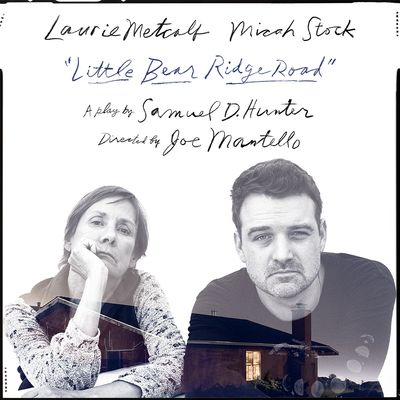
Samuel D. Hunter is a playwright and screenwriter whose work includes the critically acclaimed play The Whale and its Oscar-winning film adaptation. This past fall he made his West End debut with Clarkston, and he is currently making his Broadway debut with Little Bear Ridge Road at the Booth Theatre... Read More
From the show: When Lightning Strikes!
Featured Shows
About
Samuel D. Hunter is a playwright and screenwriter whose work includes the critically acclaimed play The Whale and its Oscar-winning film adaptation. This past fall he made his West End debut with Clarkston, and he is currently making his Broadway debut with Little Bear Ridge Road at the Booth Theatre. Drawing deeply from his upbringing in Idaho, Samuel's work, including the plays A Case for the Existence of God, A Bright New Boise, and Greater Clements, is celebrated for its humanity, humor, and intimate portraits of life.
Transcript
This transcript was automatically generated and might contain errors.
[0:00] Jeryl Brunner: From Shakespeare to Schwartz, from Fossey to Alvin Ellie, from Santam to Borelis, from McNally to Faye. It happened to the greats, it still happens every day. When lightning strikes is the moment you know when lightning strikes, where you're meant to go. You can stand in Chal Eureka. Do whatever you like. You'll never forget the moments when lightning strikes.
[0:28] Jeryl Brunner: Hi, this is Jeryl Brunner, and you're listening to When Lightning Strikes, where we talk about the tingly mic drop moments that led you to becoming an artist.
[0:41] Jeryl Brunner: Samuel D. Hunter is a playwright and screenwriter whose work includes the critically acclaimed play, The Whale, and its Oscar-winning film adaptation. This past fall, he made his West End debut with Clarkston, and he is currently making his Broadway debut with Little Bear Ridge Road at the Booth Theatre, drawing deeply from his upbringing in Idaho. Samuel's work, including the plays A Case for the Existence of God, A Bright New Boise, and Greater Clements, is celebrated for its humanity, humor, and intimate portraits of life. Welcome, Sam.
[1:27] Samuel D. Hunter: Thank you so much for having me. I'm so happy to be here.
[1:30] Jeryl Brunner: Oh, it's a joy to have you. And I always, you know, I see plays for different reasons, but well, I really want to be transformed and have an out-of-body and a reflective experience and a joyful experience. I see a Samuel D. Hunter play, and it just feeds and nourishes my soul in countless ways.
[1:58] Samuel D. Hunter: You're welcome.
[2:00] Jeryl Brunner: So let's talk about Little Bear Ridge Road and what inspired that play. I've heard you say that it was a sign, and a sign maybe Cozy TV, but I'll let you tell it.
[2:12] Samuel D. Hunter: Yeah, yeah. It was so this was long before the pandemic hit, and not long before, actually, it was just a few months before the pandemic hit. And before Lori Metcalf and Joe Mantello had approached me about writing something, my husband and I were either coming back from or going to his parents' place in Boston, and we were, you know, on the highway on that long drive, and I saw a billboard for something called, to my memory, it was called Cozy TV. And it was an, you know, either a channel or a web service that hosts all these classic television programs like Green Acres and Mary Tyler Moore and those kind of things. And it just struck me in a way and made me like a little sad or contemplative, and just got me thinking about television as anesthesia, and it got me interested in the idea of writing a play about people watching television, which on its face is so anti-theatrical, but I think that those kind of anti-theatrical ideas have really interested me over the last few plays.
You know, I wrote a play that premiered at Signature several months ago that was like the majority of it, you know, the characters didn't share physical space. They were either on phone or Zoom, and before that, I wrote a play that was set in a cubicle. And so I'm just increasingly interested in sort of like how do I activate these anti-theatrical spaces to make them theatrical? So that was really the beginning, but then the real kind of fuel for it was Lori and Joe coming to me and saying, you know, would you write us a play?
[4:21] Jeryl Brunner: Yeah, and what's so fascinating is when I think about TV as a way to connect people, I mean, in a way that this is how they connect, and there's some really beautiful scenes, you know, between aunt and nephew, right, about how they sit in front of a television and how they grow together.
[4:21] Samuel D. Hunter: Yeah, I mean, I think it's kind of like a, it's maybe this is a worldwide thing, but I guess maybe I perceive it as also like a specifically American thing of just sort of like the way that we connect now is so much through our screens, which is so counterintuitive, you know what I mean? Because it's literally disconnecting us from one another, but it is sort of like our shared experience of screens is something that's becoming, I mean, there's that, you know, I wasn't aware of this until I was in London for a couple months working on this play, but there's that Gogglebox show where like you're just watching people watch TV, and it's a huge hit, you know? And it's so there's just, there's something, I don't know, there's something in the air right now about sort of like the way that we struggle to connect by not connecting. I don't know. It's still something I'm kind of like figuring out for myself.
[5:18] Jeryl Brunner: So, and I love that it didn't it also start with like you were saying to Joe and Lori said, you know, write us a play, but it started at Steppenwolf, right?
[5:27] Samuel D. Hunter: Yes.
[5:28] Samuel D. Hunter: Yeah, it started at Steppenwolf two summers ago. And we had a really just wonderful kind of just glorious rehearsal process. We all got along so well. The cast came together so effortlessly. And it's the same cast from Chicago. All four people are the exact same. And yeah, it was just like it was one of those rare kind of frictionless things, you know what I mean? Where it's like we all wanted to tell the same story in the same way. And so then it really feels like we just kind of like plopped the production into the Booth, you know what I mean? It's really the same set, it's the same, it's the same everything, you know. So yeah, I feel very lucky.
[6:19] Jeryl Brunner: I feel very, very lucky. Maybe this is too lofty a question, but how would you say you're so prolific? I read somewhere, was it that you wrote, was it 16 plays in 19 years? Something like that.
[6:33] Samuel D. Hunter: Yeah, but how I think it's every play is, you know, kind of its own miracle. But how did this play change you? How did this play really impact your life?
[6:47] Samuel D. Hunter: Really important. This was the first play that I had written coming out of the pandemic, and it does, it's set during the pandemic, it's not a play about the pandemic at all. But I think like for me, it's kind of reflective of those, you know, very few of my plays take place over the course of years, you know what I mean? Like this one, you know, takes place over the course of like two plus years, and I think that's kind of reflective of the fact that like, you know, we were talking before about my play Greater Clements that right before the pandemic hit, you know, and that was like my version of an epic. It was three hours long, two intermissions, and then you know, the pandemic hit like a month after that play closed, and I didn't write a play for two years solid, which is the longest period of time that I didn't write a play since I was like 17 years old.
So I think like writing Little Bear and the sort of like gift and miracle of Joe and Lori asking me to write it really felt like a, for me, a sort of resurrection, you know, of being like, and I remember being scared about it too. When I agreed to write it, I was sort of like, I haven't done this in two years. Have I forgotten? I mean, is this like a muscle that is atrophied?
[8:01] Jeryl Brunner: Yeah, you know.
[8:02] Samuel D. Hunter: But it was a real, I think the play's always gonna be like really special to me for that reason because it did feel like a resurrection, you know.
[8:14] Jeryl Brunner: And without giving too much away, what I think is so profound in this play and all your work is that people say things to one another. They're so fully human. And I think about, you know, your gift for dialogue and where that cut that you let your characters really reveal their underbelly, so to speak, or that you let them really, really share in profound ways.
[8:48] Samuel D. Hunter: Yeah.
[8:49] Samuel D. Hunter: Yeah, I mean, my approach to dialogue has always been, you know, sometimes, and this is just like a personal thing. This is not me, you know, casting aspersions over all of theater, but I've just always personally really struggled with plays where the characters just sort of declaim, you know what I mean? They just sort of like speak with ease and in beautiful paragraphs. Because I just, for me, it's just I always feel like I'm not watching people, I'm watching like a pageant or something like that. And so I think like early on I was like, I'm way more interested in the kind of dialogue where characters struggle to articulate and speak in, you know, false starts and cut-off sentences and inarticulate, you know what I mean? Because I, that's my experience of being a human is like the struggle of communication is what life is about.
[9:48] Jeryl Brunner: Yeah, you know, and that's always what I've been like more interested in theatrically.
[9:53] Samuel D. Hunter: Yeah, I love that you let your characters be so messy.
[9:58] Jeryl Brunner: Yeah, yeah, yeah. And the way they collect and the way they communicate and the way they behave, and there's all this, there's all this, you know, pathos and humor, and yet in the midst of this, there's so much humor.
[10:13] Samuel D. Hunter: You know, yeah, and that's deeply important to me. And I think that's why I was so excited to write for Lori is because I know that humor for her is so important. And what I think Lori is just so, the sort of genius of Laurie Metcalf is the way that she can devastate you and then two seconds later make you belly laugh. You know, and I think that's kind of like the, when I was writing, that was kind of the project of this play. I think that like all of my plays traffic in that to a certain degree, but this one like especially does because I was like, I know that like that's the sort of like instrument that Lori is so good at playing, you know what I mean? It's just the sort of whiplash of tragedy and comedy.
[10:52] Jeryl Brunner: Yeah.
[10:53] Samuel D. Hunter: Um, and it really is like a master class what she's doing on that stage.
[10:57] Jeryl Brunner: Well, it starts with you, and I think about the intimacy in all your plays, you know, Greater Clements and A Bright New Boise, you know, and or the play that takes place in the cubicle, the play that takes place on the couch, or even with characters who are not in the same room, that there's such an intimacy about your characters and your plays, and yet, and even if they're on, you know, just in a cubicle, that there's something so much bigger happening as well.
[11:34] Samuel D. Hunter: Yeah, that's right. I think that's why ultimately, you know, I think there was like a lot of hand-wringing from producers about bringing this show to Broadway because, you know, and this has been following my entire career, which is sort of like can you put a Samuel D. Hunter play in a Broadway space because is it too small? Is it too quiet? But I think, you know, the fact of the matter is I think this play works better in a big space because this play especially is all about these tiny lives in the vastness of the universe, you know what I mean? And I think like the articulation of the vastness of the universe, both in design, but also just in the sort of text of the play, you know, like I don't know if you can achieve that in a 99-seat black box.
Not that you couldn't do this play in a 99-seat black box, I think you could, but there's something about doing it on the Booth stage where that back wall is illuminated and they're talking about the vastness of the universe, that it's like you know, the ideas in the play are very, very large and then the lives are quiet.
[12:35] Jeryl Brunner: Yes, yes, yeah, and that big giant, the blackness that surrounds it, you know, the blackness of the pandemic and then there's this, yeah, the spotlight of that couch and all the action, you know, it's really beautiful and profound. I'd love to know about your lightning strikes moments, yeah, what led you to becoming an artist? I've read that you love poetry early on, that you were writing poetry very inspired by Ginsberg, but I'll let you tell it. What inspired you? You saw Angels in America? Well, I'll let you tell it.
[12:35] Samuel D. Hunter: Yeah, no, it's funny. Yeah, no, that's actually a good summation. I grew up in this small-ish town in Idaho, for whatever reason, Moscow, Idaho. But not, you know, to give Moscow its credit, it is like it's a college town that does have this kind of window to the larger culture. It has the largest library in the state of Idaho. My brother is now the dean there at the University of Idaho. And so it did have this kind of window to the larger culture, you know, I saw Angels in America at the University of Idaho when I was 17 years old. You know what I mean? It was protested, you know, but they did it. And yeah, so I did, yeah, I just always knew I wanted to be in the arts. I thought early on I wanted to be a musician.
I dove really heavily into like classical music and piano, but writing was, and then I was like, you know, I tried acting and then I tried writing poetry, and like, but all throughout, I was just, you know, if I go really far back to when I was like in elementary school, I was like writing stories, and that's what I was like really interested in doing was writing stories. You know, early on it was like I was writing like ghost stories and...
[14:27] Samuel D. Hunter: Do you remember any specific ones and how old were you? I mean, was this like five years old or seven years old? I remember being in like second grade and writing like a series of books that were kind of like they weren't really like ghost stories, they were like kind of like horror, like childlike horror stories or something like that. I mean like kind of fantasy horror stories and I just loved them and I wrote them in rapid succession to the point where I remember like people got annoyed because like every time you wrote a book you'd read it to the class and people are like, oh Sam wrote another book, you know. But then playwriting didn't really enter into my realm until I was like 16, 17 years old.
And it was two things. It was reading Our Town in English class and being just like totally taken off guard by act three. Like I just did not see it coming. And I just remember being like, you know, because I think like as a 16-year-old when you're reading that play, you're like, oh, this is just kind of like Americana, you know what I mean? And it's kind of falsey and charming. And then you're like, and it's like a little confusing. Like, like why are they talking about like the sort of like, you know, the geological history of the place, like who cares? But then, like, I remember like it got to like Simon Stimson committing suicide and then that weird monologue the Stage Manager has at the wedding scene.
Yeah. And I was like, and I just remember being like, what's this like doing? And then act three happened, and I was just like, it was like cold water being thrown on my face. And I had never had that experience with literature before. Um, and then shortly after that, I saw Angels in America at the University of Idaho, and then it was kind of like I was cooked. Like I was like, okay, this is like my mother tongue, this is what I want to do. Um, and you know, all of my family members who went to college went to the University of Idaho. Um, so I applied to the U of I because I just assumed that's where I was gonna go. But then somebody told me that there was this playwriting program at NYU. And so I wrote a one-act play and sent it to NYU and I ended up going there.
Um, which I guess like if that was if there was a lightning strike moment, it was probably that. Um, because I just had never, I mean, I was just like totally blind applying. I don't even think I told my parents I was applying. Like it was just completely blind. I knew nothing about New York City, I knew nothing about the East Coast, I knew not, you know what I mean? But I moved there, you know, right after graduating college, and I think it was kind of the perfect time because I was just like kind of dumb enough and young enough to just like plop myself in New York City and be like, okay, what's this? You know, in a way that like I don't know if I would have had the wherewithal to do that when I was like 25.
[17:27] Jeryl Brunner: So what was the play that you got in with?
[17:33] Samuel D. Hunter: Oh gosh, I don't know. It was a two-character play. I had written a play, like a full-length play that was really bad, that was like almost three hours long. But I remember and I was gonna submit that, but then I realized that the NYU application had like a 25-page limit. Thank God, because it forced me to like write a two-character play. I don't even remember what it was about. I remember it was like there was a gun in it, I think. I think it's like youthful. Um, but I think it like demonstrated that I had a grasp of storytelling and theme and I had ambition. Um, that and they probably had some quota to fill for like people who weren't from the East Coast. Um, but yeah, yeah, no, it was it was very I was very lucky. I feel very lucky.
[18:28] Jeryl Brunner: And when you saw Angels in America, if you don't mind me, were you out at that point? Were you, I mean, did people barely?
[18:35] Samuel D. Hunter: Yeah, yeah. I had I had attended a Christian fundamental school for a long time. Um, but then I was outed by some classmates, and I had to leave. And they were doing Angels in America at the U of I almost at the same time, so it was really just kind of kismet. I mean, it was a really um, yeah, no, it was a really kind of important time for me, I think in sort of like both both in like figuring out what I wanted to do as a writer, but also just sort of like personally, you know what I mean? Like seeing gay men being portrayed on stage was hugely meaningful at the time, you know. Like I think until I had seen that play, I had never seen two men kiss, you know.
[19:21] Jeryl Brunner: Yeah, that must have been really profound. So was there a moment early, uh, I think I read that you spent five years, you know, holy crap, right? You went to Juilliard, you have all these degrees. So I'm curious, was there a moment where you sat in the audience, you know, or in rehearsal seeing your work, and that it was like transcended that it was like you were flying, that you remember early on that this, you know, that kept you going? And also what kept you going during those hard times when you were struggling?
[19:58] Samuel D. Hunter: Yeah, I mean, I, you know, it took me, I feel like the first time I really kind of um it hit my stride, as it were, or maybe that's not that maybe that's overstating it, or just like I started to figure out like what I wanted to really do was um the third play I had had produced in New York, which was A Bright New Boise down at the Wild Project. Yeah, and it was like it really just felt like I had kind of gotten out of my own way and just like wrote a story and stopped trying to like it's it's something that I find when I teach playwrights, I'm always telling my students to loosen their grip. Do you know what I mean? I'm just sort of like you're holding on to it way too hard, just let it breathe.
And I felt like A Bright New Boise was the first time that I kind of let a play breathe, um, as it were. And I remember like the first few previews being like, oh, I think this is it. Like this is what I want to do, you know what I mean? Um, and I actually had written that play after I wrote The Whale, but I had not seen The Whale on stage yet. And so The Whale was probably the first time I really did loosen my grip and just sort of like told a story. And um, but seeing A Bright New Boise on stage, I think was really like, oh, okay. Um, because I had had two plays in New York before that. Yeah, it's a play called Jack's Precious Moment that Page 73 did and a play called Five Genocides that Club Thumb did at um Summerworks.
And I love both those plays, but they were they were like more kind of quirky black comedies that that um that really were uh I was just kind of forcing something with both of those plays. I was really kind of like trying, I was just trying too hard, you know what I mean? And so um yeah, I think it was I think it was A Bright New Boise that that really felt like oh here we go. Um, I love that play.
[21:49] Jeryl Brunner: And what kept you intrepid when it wasn't so easy, you know, to get your plays out there?
[21:56] Samuel D. Hunter: You know, I think it's a thing that I it's the thing that when I do teach, I tell to my students, I'm sort of like, if you're gonna do this, you have to love writing. Like, and I'm not saying like you can't be in love with the idea of having had written a play, you have to be in love with the idea of writing a play. And I think what keeps me going, even in the in you know, in the past when like I've written a play and it hasn't gone well and the reviews haven't gone my way, the way that I kind of build myself back up is by writing a new play, you know, because I just I love writing, it's my favorite thing to do. Um, and like it's a thing that I refuse to fall out of love with is just the physical act of writing.
[22:37] Jeryl Brunner: Are you comfortable sharing your process? I mean, are you someone who has to write a certain amount of pages at, you know, six in the morning, or is it what like what's your process of the case?
[22:49] Samuel D. Hunter: I think it's a lot I feel like I can write pretty much anywhere these days, you know what I mean? Like I wrote a large swath of Little Bear Ridge Road at a uh, I have an eight-year-old daughter now, and I wrote a large portion of that play at a very annoying trampoline park in suburban Boston with like pop music blaring over the speakers and you know, like I so I feel like at this point, like I can kind of you know I wrote a lot of A Bright New Boise in the back of a van. Um, but I also think that like writing takes on so many different forms. Like often if I feel like I'm not cracking something, uh what I do is I go for a jog and I just think about it while I'm jogging, and I can usually kind of like figure something out about it. I don't know what it is, it's just sort of like the you know, just like raising your um you know adrenaline or I don't know what it is, but it's just something.
[23:46] Jeryl Brunner: Yeah, yeah, it's just like you're yeah yeah, exactly. You're just processing quicker, and I feel like you can like figure things out. So I so much of writing for me like isn't typing, you know what I mean? I mean writing dialogue is definitely one of my favorite part. Um I love it, but like I think it takes on many different forms.
[24:06] Jeryl Brunner: And I love that you thrive in so many mediums. I think about, you know, how the sta uh you wrote the f the the whale and of course Baskets, you know, the TV. They you have this incredible career outside theater. What brings you back to theater?
[24:25] Samuel D. Hunter: Oh, what brings me back to theater is I get to tell the exact stories I want to tell how I want to tell them. I mean, like working on like like you referenced the TV show Baskets. I loved working on that show. But at the end of the day, you know, you're a member of a team and and you're you know beholden to a network and somebody else's vision, you know. I mean, I feel like I made very concrete, I shaped that show in very concrete ways, especially when it came to Louie Anderson's character. But um, at the end of the day, like I'm serving a season arc, you know, and and um uh and and we're all you know more or less writing by committee. Yeah. And the same as, you know, I think The Whale, the film of The Whale was a very that's kind of Haley's comment, the idea that like a director like Darren Aronofsky would just sort of be like, no, let's just put the play on screen.
That's that's very uncommon. Uh that's um and probably won't ever happen again. Um but uh but no, it's just a different type of muscle, you know what I mean? It's uh it's like you're serving uh you're serving somebody, you know what I mean? And and and and a specific vision and and a you know, production company that wants a certain not to be crass about it, but a certain product, you know what I mean? And and uh but with plays, it's really just like at least the kind of plays that I continue to write, which is I think it's why it took so long for my plays to arrive on Broadway, is that I just uh you know, like the kinds of plays I want to write, I just I I don't want to compromise, you know what I mean?
Um, you know, like if I was trying to get rich, I would not write these kinds of plays, you know. Um like I write them because I love writing them, you know. And I and I and I think they're like vehicles for actors, and I think actors appreciate that.
[26:13] Jeryl Brunner: Yes. Is there a subject you're aching to tackle that you're open to sharing, or you know, something that you really want to do?
[26:24] Samuel D. Hunter: I don't know. Yeah, I don't know. I've always been kind of interested in writing like a psychological thriller. Uh like a like a movie that's a psychological. I think there's so much good like psychological thrillers out there, and I'm really attracted to that space um because it's so deeply character focused. Um but yeah, yeah, I don't know. I feel I've at this point I've written on so many different kinds of projects that like I just I enjoy the um the athletic nature of kind of like uh you know writing for Baskets and then writing The Whale. I don't know. You know, uh yeah, I just enjoy it.
[27:08] Jeryl Brunner: Well, it's such a joy to talk to you. Thank you so much.
[27:12] Samuel D. Hunter: Thank you.
[27:14] Jeryl Brunner: It happened to the greats, it still happens every day when lightning strikes is the moment you know. The theme song was written by Tom McGovern. This episode was edited by Sarah Goodman and produced by Anna Strout.
© Broadway Podcast Network, All Rights Reserved