

Writer/director Ngozi Anyanwu says that her play The Monsters is “a love letter to strong bodies, soft hearts.” Now playing at Manhattan Theatre Club, this intimate production is also a riveting sibling love story about what it takes to reconnect, forgive, and truly confront your inner demons... Read More
From the show: When Lightning Strikes!
Guests
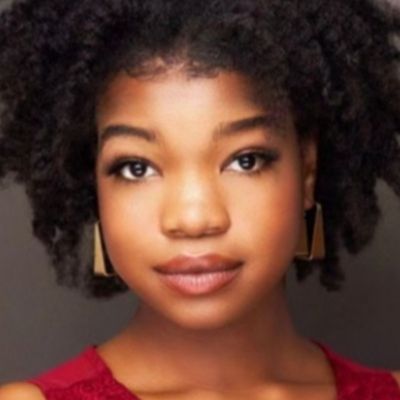
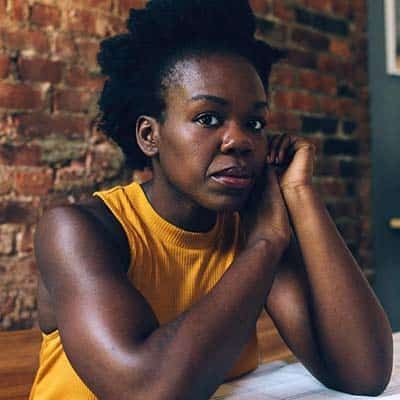
About
Writer/director Ngozi Anyanwu says that her play The Monsters is “a love letter to strong bodies, soft hearts.” Now playing at Manhattan Theatre Club, this intimate production is also a riveting sibling love story about what it takes to reconnect, forgive, and truly confront your inner demons. The Monsters cast members Okieriete “Oak” Onaodowan and Aigner Mizzelle, along with Anyanwu, choreographer Rickey Tripp, and MMA consultant Sijara Eubanks, share insights about the show’s mixed martial arts backdrop and why it feels so relevant, especially now.
This episode was recorded January 13, 2026.
Transcript
This transcript was automatically generated and might contain errors.
[0:00] ♪ Musical number: "When Lightning Strikes" — performed by Unknown artist ♪
[0:28] Jeryl Brunner: Hi, this is Jeryl Brunner, and you're listening to When Lightning Strikes.
[0:35] Ngozi Anyanwu: Writer, director, and Ngozi Anyanwu says that her play, The Monsters, is a love letter to strong bodies, soft hearts. Now playing at Manhattan Theatre Club, this intimate production is also a riveting sibling love story about what it takes to reconnect, forgive, and truly confront your inner demons. I spoke with the cast and creative team about the show, its mixed martial arts backdrop, and why The Monsters is so relevant, especially now.
[1:19] Ngozi Anyanwu: My name's Ngozi Anyanwu. I am the writer and director of The Monsters. Can you talk about when this play came into your soul?
[1:28] Ngozi Anyanwu: I've always wanted to write a fight play. You know, I grew up a real kind of scrappy girl playing with my brother a lot. And I'd seen The Royale, I'd seen the elaborate life of tried deity, I'd seen the Rocky musical. So I'd seen different fight plays, and I was like, I want to get in there and I want to make something, but I just never found my angle. So when I'd taken it on myself as a planner, I was like, I wanna write this fight play. But I just really didn't necessarily have an angle. And my brother had gotten into MMA fighting at that time. And so I was really interested in writing about him, but it takes me a while to go, but what do I want to do? What do I want to say? You know, I actually also had a friend, Pia Wilson, a good friend of mine, who had written a play for me about a fighter.
So it kept coming to me the idea of a fighter. And I just didn't have my angle yet, you know. And then the pandemic, you know, being alone and being isolated, the first 10 pages came out. What I had was this thing of like a brother-sister love play, essentially. But it still takes a while to even be able to get beyond those 10 pages. And Two Rivers had commissioned me and asked, do you want to write a play? Do you want to make something? And I was like, I think I have the idea for this fight play. I think I don't have any idea where it's gonna go. And they were like, hey, come with us and try writing it. And the general manager actually was taking Jiu Jitsu with a woman who used to be in the UFC and was like, would it be helpful if you had a consultant?
And I was like, that'd be great. I would love a consultant and two actors. And so I had two actors, and the consultant was Sijara Eubanks. And I was like, oh, there's my play. And she happened to be training her sister in fighting. And I was like, and so she literally brought her sister who was in school for theater. I was like, oh, okay, perfect. And so even just being around them through that week went from 10 pages to 40 pages. And then it came around the second year, and it went from 40 pages to 100 pages in my head in my draft.
[3:24] Ngozi Anyanwu: What was it about fighting that really inspired you? Just the violence, the subject line. The blood, the sweat, the tears, you know. Yeah, I don't think that martial arts, that world is as separate from the theater world as we think. You know, they work their butts off. They're underpaid, and they need that glory. You know, and it is physically taxing. And so, and there's so much emotion actually that comes out. All we really see is the fighting and the blood of like, oh goodness. But if you watch the whole story, there's a whole story behind each part. There's a whole background, you know. And so I was really, really interested in that. And then actually from the male perspective, what I really watched was my brother gained this sense of self and self-esteem when he found Jiu Jitsu in his life.
He was an athlete and he really loved sports. And when football didn't work out for him, he really found himself in a state of depression. And when he found Jiu Jitsu, that really was like, okay, I have something. And he found MMA fighting that really like kind of sparked self-esteem back into it. So I kind of just loved that. And so I really was like, oh, there's something going on there with these men, particularly and also just these tough bodies that put themselves through this thing. There's a lot of heart there. So I really was like, I wanted to give it from that perspective, this perspective that I don't think we see a lot. I mean, it transformed writing The Monsters. They're not necessarily autobiographical, but they are really personal.
And so for me, I think it just gives me more insights to I think people that I think we look at and we have make an assumption about just based on their physical prowess, you know. As a Black person, that happens to me all the time. And but it also makes me do that with other people based on how they look, based on how they present themselves. And so for me, it really is just a reminder to not judge a book by its cover and to get deeper. And also, you know, if I'm writing something about forgiveness, it's like, who do I need to forgive? Who do I need to apologize to? Who have I abandoned? You know, like all those things. What in myself have I abandoned? So for me, I, you know, these plays, I really do think of them as like problems for myself.
I had this really odd directing teacher called Kabortanka, and he always said the thing, the need, the need. If you're making something, if we're saying yes as an act to something, why do you need to do it? And so for me, the need is like, for me, it's writing the play and going, oh, who do I need to forgive? Who do I need to ask for forgiveness? And this is a little, you know, the play is a little marker of like, yes, it's hard. It's not like an easy thing, but it needs to happen.
[6:10] Ngozi Anyanwu: What was one of the first shows you did or first things you wrote that you recall or something like where you performed in front of an audience?
[6:18] Ngozi Anyanwu: I think I did this play in eighth grade. And it wasn't Romeo and Juliet. It was like one of the knockoffs of like Romeo and Juliet or something. And I was in Recrucio. And I remember I was just loud. Like I was the loudest person there. And I remember being so embarrassed. It was like something I had to say, like, have no fear. Merc is here. And I was like really embarrassed, and it's so corny. Oh my God, like the cool kids are gonna do. And then I remember getting on stage and then just being like, and I just didn't. And they were like, I was like, um, oh, like being fearless in that. That's the moves.
[6:56] Jeryl Brunner: And so it was like creeping back to that fearlessness in asking you why should I come see The Monsters or I know we're not gonna give away spoilers, but what would you say?
[7:07] Ngozi Anyanwu: Uh, one Oak and Aigner. Yeah, that's like enough. That's enough. They're just giving you so much. It's physical. I think it's deeply exciting. Yeah. I think it's deeply emotional, but I think it's something that you bring a loved one to, and you sit with them and you'll, but it I think it's a good, I think it's a big exciting night. And it'll be if you want it to be, it's a big emotional night. So I think it's good. It's worth coming. And it's not what you think it is. What you think it is, and it's more.
[7:34] Aigner Mizzelle: Hi, my name is Aigner Mizzelle. I'm playing Lil in The Monsters. The Monsters came into my life in 2024 over the summer at New York Stage and Film. And I read it for the first time. We worked on it for the first time, and then we read it again, you know, for the people that were at New York Stage and Film. And I fell in love with this play. It was easy. I think the writer, Ngozi Anyanwu, has a beautiful way of using their words very economically. So everything that's said in this play hits right away. There's not a lot of fluff. It gets right to the point. And it's honest. And I think dialogue like this is necessary right now.
[8:27] Aigner Mizzelle: And being in the same family and having completely different experiences in life. And then realizing that you only have each other. Uh-huh. And the urgency that that comes with and the complexity that that comes with. And having to put it all back, putting all the pieces of what fell apart once upon a time back together with this person. Right. So it's complicated and honest. And it's about a brother and sister coming together after being separated for a very long time because they're all they have. They're now all each other has. And it's about how they grow together. It's about seeing each other for the first time. It's about getting to know each other after a long time. Um, it's about forgiveness.
[9:10] Jeryl Brunner: Can I ask you about your lightning strikes moment when you knew you had to be an artist, when you knew this was your path?
[9:18] Aigner Mizzelle: I think I always had a hard time sitting in audiences and like observing. I think I always was like, well, I want to do it. That's part one. And then part two, I thought I wanted to be a doctor. I was pre-med. And then something was just missing. There wasn't enough rigor in care and human connection.
[9:40] Jeryl Brunner: When did you make that shift in your life?
[9:42] Aigner Mizzelle: In college at Emory University, undergrad as a pre-med student.
[9:47] Jeryl Brunner: What year?
[9:48] Aigner Mizzelle: My first semester. And I was like, yeah, pre-med sounds good, but let's get back in the theater. Let's try it. I can always come back to pre-med.
[9:55] Jeryl Brunner: So you had taken an acting class before?
[9:55] Aigner Mizzelle: Middle school I was acting, and in elementary school I was acting. I started out as a dancer. So I was always in the activities outside, but I never took it seriously as a career until college. I left Emory, I went to NYU, got into TIFF, and then from there, it was uh that's what we're doing now.
[10:17] Jeryl Brunner: So, what was one of the first plays you were in?
[10:20] Aigner Mizzelle: You said you were acting when you were a kid. Yeah, one of the first plays I was in. I don't know if anyone knows this, but it's The Adventures of Nicholas Nickleby. One of the narrators. Um, in like elementary. I was in my school. Yes. Like my drama teacher. Shout out to Mr. Ramado, who has retired, was rigorous. Okay, it was like, just because you're a kid doesn't mean you can't do dancing at Lunissa.
[10:47] Jeryl Brunner: If somebody were to ask why should I see The Monsters? What would you say?
[10:49] Aigner Mizzelle: I think it's one of the best things that have happened in the one of the realest, most honest, deep diving relationship exploring plays that has happened to us in a long time.
[11:03] Okieriete ‘Oak’ Onaodowan: Hi, my name is Oak, and I'm playing Big in The Monsters. The Monsters came into my life a couple of years ago, and Guzzi approached me and she said she has this piece she's been writing. She's been thinking about me for playing the role of Big. And I've known Guzzi for years, so immediately I was down. I want to work with you. She's like family. And when I read the character, it just really resonated with me. The piece, him not really knowing how to articulate himself, everything is about what he's doing, what's on his face, what he's feeling, and the struggle between him and his sister and the resolution. Those are the things that I was like, I think people really need to see that. We have that, and I want to work on a piece that hits that message out there.
Work through hard things, reconnect with the people you love. It's gonna suck, but it will be for the best in the end. It touches upon forgiving yourself and allowing yourself to heal so you can be there for others. I think that's the thing. Letting go of the idea you have of yourself, the perceptions people have of yourselves, confronting that so you can show up in the way that you wish to for the people that you love.
[12:09] Okieriete ‘Oak’ Onaodowan: I love that he really cares. He cares a lot. I also love that he was hurt so much that he has retreated and fit himself. And I think a lot of folks can relate to that. A lot of folks can relate to being hurt and letting easier things to retreat and focus on something else— their career, their work, their hobby, whatever it is. And I think a lot of people suffer silently that way. So if you're successful in something, you'll be applauded. It doesn't matter how much hurt you have going on, just keep achieving and climbing the ranks. You're rewarded. And I think in society a lot of people fall in that category. A lot of successful people could fall in that category— praise for their success, but not for their emotional health.
[12:50] Okieriete ‘Oak’ Onaodowan: I've always loved mixed martial arts. I've trained in different disciplines in jiu-jitsu and boxing, some Taekwondo training in the past, and I've always loved it. Then I kind of let it go to pursue acting. Like I'd be training and then I'd get injured, so it was very lovely to kind of revisit it and be getting paid to do it again, which was very fun. And to incorporate it in this aspect of my life, it just felt great. It felt right.
[13:19] Okieriete ‘Oak’ Onaodowan: It's hard to put into words. It feels whole, like whole. My favorite thing is to be able to perform on stage, have the energy of the audience. You know, I used to play sports, so it's the closest thing to that. On set is kind of different, but here it's like we're all in this together. This immediate I can feel the audience. I know when they're with me and know when they're not. Specifically during the play, it's just us. We can take our time, find moments, find beats. When the audience is in there, it really is a shared experience.
[14:04] Okieriete ‘Oak’ Onaodowan: I guess like when I was in seventh grade, I did Little Shop of Horrors, and I played the voice of the plant. So it wasn't like this is what needed me forever, but I was like, ooh, this feels really nice. I was in a little school in West Orange, New Jersey. I was as restless as a kid, and you know, focusing on something was hard to get focused on anything. But that was the one thing I really, really loved to do.
[14:45] Okieriete ‘Oak’ Onaodowan: And then you've been with The Monsters for years since the beginning. It's been fantastic to be with something for that long and have the time to intimately develop the character. And you know, to have a character that you can showcase all sides of them. It was transformative in a way that it's like people want to see this work. It's not overly flashy, it's unfortunate. So it's been transformative to do something that's really simple, ill-rooted, and to have love still. Well, it's been transformative to see people being so responsive to something that is so small.
[15:23] Okieriete ‘Oak’ Onaodowan: I hope people take away how we confront hard things in real life for the people you love. And I think if somewhere buried within you about someone loving yourself from reconnecting, it's worth it in the end— like truly worth it in the end. And it's not gonna be easy. It's gonna be hard. But it's worth it. It's worth it, it's worth it. It's worth the struggle through reconciliation and healing. It's necessary and it's worth the fight— literally toward the fight.
[16:01] Rickey Tripp: Hello, my name is Rickey Tripp, and I am the choreographer for The Monsters. I joined this whole journey, let's say summer of 2024.
[16:17] Rickey Tripp: That's correct. I think in Guzzi, the director, she wanted the fight to feel a bit more poetic and dance-like. I mean, dance is already in its world and in the vocabulary of the movement, if you will. So she just wanted it to feel like a bit more poetic and how do we make it move and what's the sensibility of how do we expand what these fights can look like in a bit more of an abstract world theatrically to create these fights.
[16:50] Rickey Tripp: Well, it was a stretch for me. That's how I fell in love with it. I fall in love with anything that pushes me. Because about an MMA fighter, what do I know about in the past? I don't know anything about, you know, Muay Thai or Jiu-Jitsu. I just don't come from that world, and of course when I see those things on TV, it always feels so brutal. But once I met our MMA consultant, Sijara Eubanks, I started to understand the mechanics behind it and again how poetic it can be and how actually fascinating it is and how they move because it's choreography. And choreography is what? The step of a series of movements strung together, and that's what this is. It's a dance.
[17:32] Rickey Tripp: Yeah, it's a duet. You see someone by themselves, and you see the opponent, the two fighters happening, and it's just like, oh, there's something magical behind it, actually, because it's also a deeper sense of like it's just not about self-defense. It's about self-defense, but it's also not just about brutal competition. There's a history and there's a love and a cultural thing behind it all.
[18:02] Rickey Tripp: They find themselves in their later years about how it feels— forgiveness, compassion, grace, and growth. That's what it's about. It has transformed me because when I see a fight now, I just don't see it as brutal. I take a little taken aback by it, but once blood is drawn, I kind of go, ah, it's a bit too much. But I look at it from a different point of view in terms of like there's a dance to it all. It's a science and it's a math of it all.
[18:35] Rickey Tripp: If somebody were to ask why should I see it? If you are working on forgiveness, you need to see it. It's a hard thing to do to forgive either self or other people.
[18:52] Sijara Eubanks: Sijara Eubanks, aka Sarge, MMA fight consultant. I just retired from the UFC. It was kind of like, I don't know what I'm gonna do. I'm kind of enjoying retirement, not getting kicked in the head. And the gym from TRT was like, hey, we've got a writer here that's writing a play on MMA. Would you like to consult with us? And I was like, sure. This would have been 2022.
[19:18] Sijara Eubanks: Meeting Guzzi in the first kind of read-through and how intensive and intentional she was with representing MMA fighters as human beings, you know, not just like it's not just a movie about people fighting, which is always the plot when you see a martial arts or boxing-based film. This is a play about a relationship between siblings, and MMA is there. And I think that's what really hit home for me—that she was able to tell the story of what it's like for so many of us. And also the trajectory of their careers is very real, very humbling, and that's really what I appreciated about it.
[19:54] Sijara Eubanks: I would like people to know that I think as athletes, people think of us as like NFL and NBA players— like these big wigs. But you know, MMA is really difficult. It's not a very lucrative career. There's a lot of hard work to it. And I think people see us as gladiators. You're just out there fighting for your life. But we're humans. We have families, we have siblings, we have wants, we have hurts, we have needs, we have goals. And so I hope that that's what comes across—that people learn about us.
[20:26] Sijara Eubanks: MMA is mixed martial arts. And so as a sport, you define it as a full-contact sport where the winner wins by either knockouts, submissions, or judges, right? That's the technical definition. But for me, it's mixed martial arts. And so the martial arts trail for me is the discipline, the respect, the humility, the teaching others, the leading.
[20:50] Sijara Eubanks: Now, have you ever worked on a play before? What is that like for you? You know, working with actors who maybe have never done this before? It was really cool, actually, because actors I find are much like young athletes— eager, ready to work, following the lead, ready to do repetition. So they both have had theater and dancing experience, and so there's a lot of discipline in there.
[21:13] Sijara Eubanks: They were really easy to work with. They were a lot more eager to work with than a lot of my athletes that I work with right now. Although I was surprised at how well they took to it. By the end of the first rehearsal, by the end of our first workshop, we did a workshop over the summer with Oak and Aigner—like a two-week boot camp. And I was like, man, there's no way they're gonna look like fighters in two weeks. And they did. They just took to everything really naturally. And I was like, man, you guys, if you weren't already acting, I might have to sign you up for a fight or two.
[21:44] Okieriete ‘Oak’ Onaodowan: It happens to the greats. It still happens every day when lightning strikes. It's the moment you know.
[21:50] Jeryl Brunner: The theme song was written by Tom McGovern. This episode was produced by Anna Strout.
[21:58] Jeryl Brunner: Lightning strikes.
© Broadway Podcast Network, All Rights Reserved