

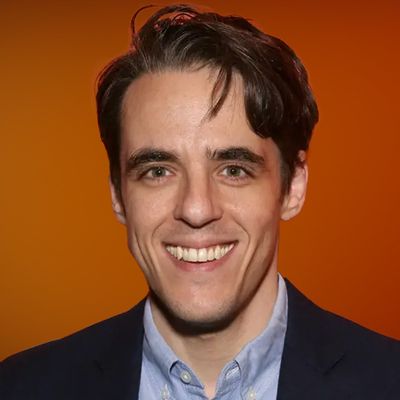
Steven Levenson (DEAR EVAN HANSEN Tony winner) talks about his Off-Broadway play IF I FORGET. Set in 2000, the play focuses on a Jewish family as three adult children (Holly, Michael, and Sharon) return to their parents’ house in Maryland for their father Lou’s 75th birthday... Read More
From the show: Why We Theater
Guests
Featured Shows

About
Steven Levenson (DEAR EVAN HANSEN Tony winner) talks about his Off-Broadway play IF I FORGET. Set in 2000, the play focuses on a Jewish family as three adult children (Holly, Michael, and Sharon) return to their parents’ house in Maryland for their father Lou’s 75th birthday. Michael is a Jewish Studies professor who recently wrote a book called “Forgetting the Holocaust” about how Judaism has become a religion haunted by death and ghosts – unified by fear and the phrase “never forget” rather than religious ideals or customs. With experts Rabbi Shuli Passow and scholar Judah Isseroff, we discuss American Jewish identity, the rise of anti-Semitism and how to combat it, Israel and Zionism, and trends of tribalism. If you’ve ever been curious about Judaism or Jewish identity, if you want to learn more about the Holocaust and its impact on Jews today, if you want to explore what all people can learn from the tribalism that caused the Holocaust, this episode is for you.
You can watch IF I FORGET on BroadwayHD.
Michael’s monologue, as performed by Tony Award nominee Jeremy Shamos, appears with the permission of Roundabout Theatre Company, which premiered IF I FORGET Off-Broadway in 2017, and Steven Levenson.
Referred to in this episode
- “The Rise of Social Orthodoxy: A Personal Account” by Jay P. Lefkowitz
- “The Problem with ‘Social Orthodoxy’” by Joshua R. Fattal, a critical response to Lefkowitz
- “What is the Talmud? Definition and Comprehensive Guide”, Yehuda Shurpin
- Who is Theodore Herzl?
- Who is David Ben-Gurion?
- Who is Sheldon Adelson?
- Who is “Adolf Eichmann”?
- Who is Hannah Arendt
- Neveragain.com
- Anti-Defamation League: Fighting Hate for Good
- What is Jerusalem Syndrome”?
Create the change
- Learn more about Judaism — knowledge facilitates compassion with “Introduction to Judaism” OR “The Basics of Judaism”
- Name anti-Semitic incidents as such, report them, and speak out against them
- Use Ten Ways to Fight Hate: A Community Response Guide
- Learn about The New Israel Fund, which envisions a Jewish and democratic state
- Fight for justice guided by Jewish values with Jews for Racial and Economic Justice (JFREJ)
- Be aware of your own bias — it’s evolutionarily built in us to be tribal and we need to self-examine our thoughts and introduce dissenting viewpoints
- If you are Jewish and looking for ways to become involved:
- Choose a small tradition and incorporate that into your home, like lighting candles on Friday night for Shabat or saying the “Shema” before bed each night
- Take inspiration from B’nai Jeshurun’s The Jewish Home Project
- In COVID, many synagogues have moved services online; explore to find a place that feels right to you
Why We Theater is a product of part of the Broadway Podcast Network, edited by Derek Gunther, and produced by Alan Seales.
Follow us @whywetheater on Instagram & Twitter.
Our theme music is by Benjamin Velez. Hear more at BenjaminVelez.com.
Our logo is by Christina Minopoli. See more at MinopoliDesign.com.
Special thanks to Genesis Johnson, Dori Berinstein, Leigh Silverman, Patrick Taylor, Tony Montenieri, Elena Mayer, Wesley Birdsall, and Suzanne Chipkin.
Connect with Ruthie!
Instagram: @ruthiefierceberg
Twitter: @RuthiesATrain
Transcript
This transcript was automatically generated and might contain errors.
[0:01] Ruthie Fierberg: I'm Ruthie Fierberg, and this is Why We Theater.
[0:06] Ruthie Fierberg: The Intersection of Theater and Social Justice.
[0:09] Ruthie Fierberg: This podcast digs into today's most thought-provoking and urgent onstage works with the artists who made them and real-world experts who advise us on how we can create impactful change in our offstage lives.
[0:22] Ruthie Fierberg: After all, that is why we theater.
[0:27] Ruthie Fierberg: Today we welcome playwright Steven Levenson to talk about his play If I Forget.
[0:33] Ruthie Fierberg: This is another play that felt extremely personal to me, so you're getting back-to-back personal episodes.
[0:41] Ruthie Fierberg: Act one opens in the year 2000.
[0:44] Ruthie Fierberg: The play focuses on a Jewish family as three adult children, Holly, Michael, and Sharon, return to their parents' house in Maryland for their father Lou's 75th birthday.
[0:57] Ruthie Fierberg: Michael, the middle child, is a Jewish studies professor.
[1:01] Ruthie Fierberg: He recently wrote a book called Forgetting the Holocaust about how Judaism has become a religion haunted by death and ghosts, unified by fear and the phrase, never forget, rather than the religious ideals or customs.
[1:16] Ruthie Fierberg: The play and this fictional book are intentionally controversial.
[1:21] Ruthie Fierberg: In the play, Michael's sisters, Holly and Sharon, are deeply offended, but no one more than Michael's father, who actually liberated Dachau, one of the concentration camps in World War II.
[1:35] Ruthie Fierberg: When I first saw the show off Broadway in New York, it mesmerized me.
[1:40] Ruthie Fierberg: It's a fascinating piece about how contemporary Judaism manifests and how it survives.
[1:46] Ruthie Fierberg: Steven articulated so many of my own questions about the foundation of American Jewish identity, our relationship to Israel as American Jews.
[1:55] Ruthie Fierberg: What even makes a Jewish home, and who gets to weigh in on these things as Michael's character is married to a non-Jew?
[2:03] Ruthie Fierberg: We also explore feelings about life in a country where acts of anti-Semitism are reportedly on the rise, and living in an American culture which suddenly feels defined by both the need to belong to a tribe while being plagued by tribalism.
[2:17] Ruthie Fierberg: I'm excited to welcome Rabbi Shuli Passow and scholar Judah Isseroff to help us navigate all of this today.
[2:25] Ruthie Fierberg: You can watch If I Forget online at BroadwayHD.com.
[2:30] Ruthie Fierberg: I find it very fitting this episode will air after Rosh Hashanah, the Jewish New Year, and Yom Kippur, the Jewish Day of Atonement, and during the extended period we call the Yamim Norayim, known as the High Holy Days, which is marked specifically for reflection on our past and manifestation of desires and promises for the future.
[2:51] Ruthie Fierberg: And as we actually discuss throughout the episode, these questions about American Jewry, the Holocaust identity, Israel, they're for all of us to contend with, Jews and non-Jews alike.
[3:08] Ruthie Fierberg: Steven Levenson, I'm so happy to see your face.
[3:13] Steven Levenson: So happy to see yours.
[3:16] Steven Levenson: Oh gosh, I have been thinking about this play since I saw it.
[3:20] Steven Levenson: I think I guess it was back in 2017, off Broadway at Roundabout, and you know, it was a miss amidst the DEAR EVAN HANSEN madness, but another brilliant and totally different play.
[3:35] Ruthie Fierberg: So I know that If I Forget is set, you know, in 2000 or early 2001, but when did you first start writing the play?
[3:46] Steven Levenson: I started writing it in 2011.
[3:50] Steven Levenson: And so I know that you often write in order to grapple with questions that you're personally dealing with.
[3:57] Ruthie Fierberg: What was the question, if there was one, that you were grappling with that inspired this play, and what prompted that question at the time in 2011?
[4:10] Steven Levenson: There were a lot of questions that were swirling around in my head and that have been swirling around in my head since I was, I guess, a kid, about being Jewish and being part of a family and those two things being sort of inextricably linked and being part of a history and what all of that means.
[4:33] Steven Levenson: The story in the play, there's a story in the play about the family's store that they owned in Washington, DC and how it burned down in the '68 riots.
[4:43] Steven Levenson: And that was something that happened to my family, and that was always part of the lore of my family.
[4:50] Steven Levenson: And it was always something that we talked about or didn't talk about, and something I found fascinating.
[4:57] Steven Levenson: So originally I wanted to write a play about that, because that always felt really fascinating to me because it was this incredibly traumatic moment for my family, and also an incredibly traumatic moment for the country and in overlapping, but not quite the exact same ways.
[5:18] Ruthie Fierberg: Right, right.
[5:19] Steven Levenson: And so that's really where it began, and then, and then as I began writing it, it became kind of bigger than that.
[5:26] Steven Levenson: You know, another thing that I was thinking a lot about was like there were so many plays, and there are so many plays about Jews and about being Jewish, and so much literature about being Jewish.
[5:40] Steven Levenson: And the literature and the culture that I absorbed since I was a kid was a lot about assimilation and the perils of assimilation and the struggles to retain one's Jewishness or not.
[5:52] Steven Levenson: And it felt to me like those issues were my parents' issues and no longer the issues that I was dealing with or thinking about, which had more to do, I felt like with politics and history and sort of like what it means to be Jewish and American when that question of religion has almost been settled for a lot of people.
[6:15] Steven Levenson: Do you know what I mean? It's like it's not, yeah, for better or worse, it's not the agonizing thing that I think it was for Jews of a certain generation.
[6:22] Steven Levenson: Like, do I believe or do I not believe?
[6:24] Steven Levenson: I think for people of all different kinds of religions, religion has changed.
[6:30] Steven Levenson: And the idea of assimilation has changed, you know, like for better or worse, my family decided to assimilate a long time ago.
[6:40] Steven Levenson: Like I didn't grow up feeling outside of American culture, and so yeah, I wanted to write about what I felt were the things that my family was fighting about all the time, and the things that we were grappling with.
[6:54] Ruthie Fierberg: And if I can ask, like what was your Jewish upbringing? What were the pieces that resonated with you and what frustrated you?
[7:05] Steven Levenson: I grew up, I grew up mostly going to a reform synagogue. Like we always belonged to a synagogue, my family.
[7:14] Steven Levenson: And we belonged to a reform synagogue for a while. Then we belonged to a reconstructionist synagogue for a while.
[7:21] Steven Levenson: And so we kind of bounced around.
[7:23] Steven Levenson: Religion, like in some ways, religion was a very central part of our lives.
[7:27] Steven Levenson: Like we actually lit the candles almost every Friday night, and we celebrated all the major holidays.
[7:34] Steven Levenson: You know, we weren't like super observant.
[7:37] Steven Levenson: But it was a part of our lives.
[7:40] Steven Levenson: And there was a lack of sort of like spiritual sustenance that I found in what I was given.
[7:45] Steven Levenson: I learned a lot about history, you know, and I learned a lot about where I came from and the traumas of the past, and I felt like I learned very little about my current relationship with the divine or the bigger than me.
[8:00] Steven Levenson: So that was something that I think is sort of interesting.
[8:04] Steven Levenson: Like I think there was something very ecumenical about the approach that I had, you know.
[8:12] Ruthie Fierberg: Right, which is what comes through in the play with this discussion of, you know, is the thing linking us this traumatic history, or is it customs and food and practice and belief and even that quote when Michael, you know, says to his sister Holly, you know, you're an atheist, and she's like, I am not. Do you believe in God? That has nothing to do with it.
[8:39] Steven Levenson: Yes, like, you know.
[8:42] Steven Levenson: That for me was like that was so much part of my. I had family that was much more observant than we were and kept kosher.
[8:50] Steven Levenson: And I once asked my uncle if he believed in God, and he said no, but he was kosher, and I found I couldn't square that.
[8:59] Steven Levenson: I couldn't make sense of that.
[9:00] Steven Levenson: And I still find that, and that's I think that's something that's unique, at least as far as I know, to Jewish people.
[9:07] Steven Levenson: Like that idea of like I practice, but I don't necessarily believe, but I don't know what, you know, like that feels very Jewish and I don't know.
[9:17] Ruthie Fierberg: That's interesting.
[9:18] Ruthie Fierberg: Yeah.
[9:19] Ruthie Fierberg: Well, there's the joke of like, you know, even our we can't even make up our mind about our descriptor. That's why we're Jewish.
[9:26] Steven Levenson: Right, right, right, right.
[9:26] Ruthie Fierberg: I love that.
[9:27] Ruthie Fierberg: Yes.
[9:28] Ruthie Fierberg: Jewish joke.
[9:29] Ruthie Fierberg: Yes.
[9:29] Ruthie Fierberg: But you know, Michael, Holly, and Sharon, as the three siblings within this family, like all have very different relationships to their Judaism, with Holly being kind of, you know, like she goes Rosh Hashanah and Yom Kippur, but like really seems pretty disengaged otherwise.
[9:49] Steven Levenson: Yeah.
[9:49] Ruthie Fierberg: But like more apathetically disengaged, whereas Michael is definitively secular and actively disengaged from a spirituality and more of the intellectualism.
[10:01] Ruthie Fierberg: And then Sharon is like actually a very observant, belongs to a synagogue, her rabbi is her spiritual leader kind of thing.
[10:09] Ruthie Fierberg: So I'm wondering like, is that representative of your own disparate pieces of you? Or was it people in your life?
[10:19] Steven Levenson: Well, that's really interesting.
[10:21] Steven Levenson: I mean, I think I guess yes, would be my answer to both of those things, you know.
[10:29] Steven Levenson: Yeah, I think so, actually.
[10:32] Steven Levenson: Because there are people in my life that I see in these characters, and then there are pieces of myself in each of them.
[10:40] Steven Levenson: And I always try to write plays like where I never want it to be obvious because it isn't obvious to me who like the me character is in it, like who the, like even though Michael is sort of the protagonist, like the things he says are not necessarily things that I agree with, or endorsing, and I want everybody to be wrong in their own ways, you know, and everybody's got blind spots, and to me that's kind of the fun of drama versus like an essay.
[11:08] Ruthie Fierberg: Though, because so many playwrights say kind of the inverse. I want you to believe that everybody is right.
[11:11] Steven Levenson: Right, right.
[11:13] Ruthie Fierberg: So it's interesting.
[11:14] Ruthie Fierberg: It's just interesting that you phrase it. I want there to be the possibility that everyone's wrong.
[11:19] Steven Levenson: Yes, yes.
[11:20] Ruthie Fierberg: What did you learn though from going, I guess, deeper into each of those personas and viewpoints?
[11:28] Steven Levenson: I mean, there were times when I was writing the play that I wrote things that I was uncomfortable with and that I kept writing anyway.
[11:36] Steven Levenson: Like I wanted to push, I wanted to push myself and push.
[11:40] Steven Levenson: I mean, Michael's whole argument about forgetting the Holocaust felt to me like it's a provocation because he's trying to be provocative, but it is also a provocation.
[11:49] Steven Levenson: And it's like, and I guess you know, something that was very interesting in the development of the play was that the world changed as I was writing it, as we all know.
[12:02] Steven Levenson: And when I started writing it, up until I would say 2016, like up until like the last few months of the election, probably, like there was a certain world that I felt we were living in where I did agree with a lot of what Michael said about, you know, this I grew up with so much fear about the Holocaust happening again, and so much fear about latent anti-Semitism, and you know, like wondering which neighbors would hide us in the attic and like that kind of thing.
[12:31] Steven Levenson: And it felt paranoid, and it felt like Jews have achieved such prominence and such stature in the United States.
[12:38] Steven Levenson: And then all of that kind of the last few months of 2016 into the first few months of 2017 when the play premiered, suddenly, like I felt like, oh, have I been wrong all of this time?
[12:50] Steven Levenson: Like I think Charlottesville was around then, and it was sort of like yep.
[12:53] Steven Levenson: Oh, all of this like which is I guess a position that as a playwright, I kind of not as a person, but as a playwright, I'm interested in being in, which is where I'm not sure which is right.
[13:08] Steven Levenson: I'm not sure was I deluded or you know, and I think that question has only become you know stronger in the last few years for all of us in different ways, like how deluded have we been.
[13:21] Judah Isseroff: Um, and I say we sort of broadly assuming a certain kind of person, but like a certain left-leaning sort of person in the United States, like the idea that progress is something that is inevitable and that keeps happening, and like were we were we naive?
[13:41] Steven Levenson: I'm interested to know about some of the conversations that were happening in the rehearsal room, too, because two of the three kids are played by non-Jewish actors in the original production, and yet both Kate Walsh and Maria Dizia feel very Jewish to me.
[14:04] Ruthie Fierberg: Yes, and obviously, you know, your audience is going to be like while off Broadway in a subscription theater, so you will probably have many Jews, it will also be mixed. So, what were you saying and conveying to them to lead to this authenticity? And what were they asking you about in terms of like defining and embodying Jewishness?
[14:29] Steven Levenson: Well, I feel like for both Kate and Maria specifically, their backgrounds in sort of like Irish and Italian Catholic, respectively, households, like they didn't really need a lot of coaching from me on what those kinds of family dynamics are. They both came from loud houses with a lot of arguing and love and closeness and like all those things that are Jewish too. So that was all pretty clear. And then, you know, the director was Dan Sullivan, who's not Jewish, also. I guess with all of those people, like it also forced me to be honest and to stay honest and like make sure that what I was saying actually resonated with people that weren't me.
[15:14] Ruthie Fierberg: Hmm. And similarly with Jeremy Shamos, I mean, I don't know how observant or not observant he is, but I do know that he was born to Jewish parents. What were the conversations like with him about, you know, saying some of the things he had to say?
[15:30] Steven Levenson: Like, I remember I was in college, I took this class called Reacting to the Past, and we were talking about the Israel-Palestine conflict, and our job was to inhabit roles, and of course, like, you know, all the Jewish kids were assigned to be Palestinian roles, and all the, you know, Muslim and Arabic and Arab identifying students were assigned to being the Jewish roles, and I remember like personally grappling with like how am I arguing this case academically, and how does that affect my real life? So I'm wondering what your conversation is.
[16:05] Steven Levenson: Well, there's definitely something. I mean, that actually does make me think a little bit about rehearsals and with like Kate and Maria and other people that weren't Jewish in the company. Like there is this thing that I feel like those issues, particularly Israel, Palestine, there is a visceral quality to the reaction that Jewish people have about it that is like sort of undeniable. And I think regardless of where you stand on it, there's it hits someplace very deep. And like it sounds as academic as it can sound, it is personal. And part of the idea in the play, and part of what I enjoyed about writing it was like all of these political, spiritual, historical things are really they're both true and they really are talking about those things, but they're also talking about one another and their relationships to their own pasts and to their own histories.
[17:00] Steven Levenson: And so even when it seems really abstract, it's really like there's another level that the play is operating on where Michael is really talking about his guilt about his mother and not being there for her when she was suffering. What are our responsibilities to our parents? Yeah, like on a very simple level. What are our responsibilities to our elders? No, that it's a play about legacy. Like, and then that this idea in the play of like the Jerusalem syndrome, which comes in like with their daughters, sort of like what I found interesting about that was like it sort of seems to suggest that there is something intrinsically magical about certain places or certain things that like defies what Michael is saying, which is that a place is a place, a store is a store, it doesn't matter. Like, are there things that we don't see that are real?
[17:52] Steven Levenson: Um. And I don't know. Yeah, I think that's the most exciting. The most exciting thing is the possibility. Yes, right. Um the crux of the play is, you know, or at least through the lens that we're talking about today, are the back-to-back scenes that happen at the end of Act One. Um, he gets really worked up talking about the book that he wrote called Forgetting the Holocaust, um, which is a fictitious Stephen Kree, Stephen created that about the relationship between American Jews, Israel, and the Holocaust. We are actually going to hear Michael's monologue as performed by Jeremy Shamos, courtesy of Roundabout Theater Company, Broadway HD, and Stephen himself. Take a listen.
[18:28] ♪ Musical number: "Michael's Monologue" — performed by Jeremy Shamos ♪
[19:49] Steven Levenson: Because watching it and hearing it, it's intense, but there are pieces of it that resonate for me. And I am someone who believes so much in witnessing, in hearing the story so we don't forget it. I'm that person that watches every movie, reads every label in a Holocaust museum, and yet I do feel weighed down by it. And I definitely want to get into with our experts, but you go from that to this the very, you know, he's it's basically screaming, and then it goes directly to the scene between him and his father, who was an American soldier in the army who liberated Dachau. And then you hear him talk about the atrocities of what he saw in the camp, and you know how you don't understand, and that history is an abstraction for you, but for me it's real. Talk to me about writing those scenes, and did they always come to you in tandem?
[20:55] Steven Levenson: That's a really good question. I don't remember is the short answer. I mean, I know I read that thing about Dachau, um that I that really haunted me, which is the story that he tells, which is that the prisoners initially there was a moment where the prisoners began when they were liberated, began killing the German guards. And it was essentially like a massacre. And the American troops didn't do anything really to stop them until they finally did. And what I what kept coming for me in writing the play, and what I found fascinating and troubling and powerful was this idea that like that the cycle of violence continues. Like is that was that wrong of the prisoners to murder those guards? And like, do I think it was wrong?
I don't I don't know. Whenever I have these abstract arguments or think abstractly about history in any way, you then when you're confronted with the act actual what it actually looked like and what it actually smelt like and like the idea of bodies, you know, like the like when you see those images, it's not abstract. It's not like these are not these are not philosophical questions only. Like you have to you have to somehow be able to hold both of those things in your head. And I and Michael can't do that, and I and Lou can't do that either. Which I feel like I don't know, I feel like I'm trying to do all the time these days of like like trying to think clearly about what's happening in the world and in our country, and also grappling with the like reality, the lived reality in our bodies of what's happening. You know, and that like I can't quite I can't quite swear those two.
[22:58] Ruthie Fierberg: Yeah, the visceral and the intellectual, for sure, for sure. Um the you know, with the play taking place in 2000, 2001, you reflecting on it in 2011, it premiering in 2017, now we're in 2020. Do you feel that we're still identifying our or that there is a section of Jews who are still identifying themselves in this way?
[23:30] Steven Levenson: I could sort of only speak for my own experience, which was so much it was so much about anti-Semitism and the Holocaust. Uh that that was so much of how I learned to identify myself as a Jew. Um, and not that that was necessarily intentional, but that that's what I came away with as a kid, was feeling yeah threatened and in danger because of who I was, and that um, and again, because I didn't have that necessarily that spiritual part of it, or like what I what I knew in my bones, and like people said this was essentially like whether you think you're Jewish or not, Hitler would think you were Jewish. You know, and I feel like that that idea, I don't know, is that a destructive idea? I think in some ways it is, because like to build your identity around a wound um only is tricky.
[24:25] Ruthie Fierberg: That resonates for me. Well, on that note, okay, let's get some other voices in the room to explain. People that actually know what they're talking about.
[24:34] Steven Levenson: No, you know what you're talking about too.
[24:37] Ruthie Fierberg: Thank you. We like artists and experts in conversation. Um, I'm going to welcome our two experts for today. I'm so excited to have Rabbi Shuli Passow, who is the director of community engagement at the Nay Jeshran congregation in New York City. She is also a former Hebrew school in classroom educator. So she'll be able to talk a little bit about what we teach kids in Hebrew school. Welcome, Shuly.
[25:07] Rabbi Shuli Passow: Hi, so great to be here. Thank you so much for including me in this conversation.
[25:13] Ruthie Fierberg: Absolutely. And then we have Judah Isseroff, who is a PhD candidate at Princeton University, working specifically on questions of anti-Semitism, Jewish politics, and theology, and is working on a dissertation tied to Hannah Arendt, who was actually mentioned in the play. So there you go.
[25:34] Judah Isseroff: So I mean, I think you know what Steven was grappling with, and what resonated with me so much was that he articulated this personal struggle for me in growing up, where I felt this same way a lot of the time. Constantly taught in Hebrew school about the Holocaust, and yet were we reading the Bible? Um, and told that I mean, I felt like the single most important part of my Jewish upbringing was the communication of the duty to marry a Jew so that we would not go extinct. I guess, like rewinding even a bit from that, like how do you define what it is to be a Jew? This question of like Holly's, like, I don't believe in God. Does that have anything to do with it? Like, how do you think of it? How do you think structures should think about the identity?
[26:35] Rabbi Shuli Passow: I feel like I have a responsibility to first of all apologize on behalf of all Jewish professionals for the experience of your Jewish education growing up, even though I was not a Jewish professional at that time. You know, I think that your experience is not is not an uncommon one in many American Jewish circles, and there's a great sadness to that. I personally feel that.
[27:18] Judah Isseroff: You know, I sort of had those two narratives coming together. And I grew up in a home that was very observant. We belonged to an Orthodox synagogue, and I went to Jewish day school. And I think that despite obviously having the stories of my grandparents as part of my family stories and hearing them at different moments and interviewing them for school, I think they did, you know, talk a little bit about the idea of, you know, we survived, and so we have to continue this religion. There's an obligation in the face of our history. I actually never experienced Judaism as a whole to be a response to the Holocaust, right? Because Judaism existed for thousands of years before the Holocaust. So, right?
And I think partly because I did grow up in an observant Jewish home with parents who found a lot of meaning in the ritual, in prayer, in community. I'd say that was my primary understanding of why one would be Jewish. Because there was a lot of great stuff in it. And also, you know, there was a sense in my family at least of a religious obligation. There's some kind of divinity in the Torah and in Halacha in Jewish law, and so that informs our commitments. But I agree that, you know, even within Orthodox communities, there isn't as much of a conversation around God and where is God in my relationship to performing the mitzvot, to celebrating holidays, even to prayer. There was an article a number of years ago about this phenomenon of social orthodoxy, right?
If you saw this, you know, what is it that keeps people going to Orthodox shuls and keeping Shabbat and dressing a certain way, and this is sort of more in the modern Orthodox realm, that it's really it's a social peer pressure. My personal way of identifying Jewishly is definitely religious. That's front and center for me and my own identity and my own Jewish life. And yet there's a lot of, you know, I know and have family members and friends certainly whose Jewish identity is rooted more in culture or rooted more in Zionism, Israel. And so I think that's one of the beauties and challenges of Jewish identity is that it has always been multifaceted. The question of is Judaism a religion, an ethnicity, a people?
You know, for me it's all of those things at once, with religion being a central piece of it. That's not true for everybody else. But just to respond to your question, Ruth, that's the perspective that I'm coming from in this conversation.
[30:23] Steven Levenson: Judah, I see you nodding along. Absolutely. And this is the kind of conversation that gets my head like a bobblehead doll. So I'm thinking about this in terms of, right, this seems to be a question about curiosity, which is to say, what's within the bounds of what we're allowed to be curious about in terms of our Jewish identity? And Jews, I think, have been talking about this for longer than we might think, is like how central is God? And if I'm not curious about God, can I still be curious about Judaism? And so mentioning Hannah Arendt, she tells a great story that when she was a teenager, her more religious grandmother sent her to more religious instruction and she was feeling herself and she wanted to be very rebellious.
So she got up in the face of her teacher and she said, you know what? I don't believe in God. And the teacher had a smirk and said, who asked you? Right? Like it's what authority do you have, Hannah Arendt, who would become this amazing philosopher and so on, to tell me that your Jewish identity hinges on your curiosity about God, right? So I think as Judah was saying, there's all kinds of ways to be curious. The question is, how much does rooting Jewish identity in the Holocaust limit what we're allowed to be curious about? Yes. And if Hitler's the one telling you that you're Jewish, how much curiosity does that really engender? How much natural curiosity about what about Judaism brings me fulfillment? What about Judaism brings me pleasure? What about Judaism brings me into community with other people? Right? That seems like a very deep narrowing of the ways you can be curious.
[32:06] Judah Isseroff: I just want to pick up on one point that Steven was making in his nice sort of generational contrast, right? Where the older generation was interested in assimilation and was worried about that, and now that's no longer a question maybe that the younger generation is quite as consumed with. If you have a Holocaust-obsessed Jewish identity, you're actually preempting the ability to organically ask questions and become curious about your Jewish identity. Well, it's interesting also hearing what you're both are saying, because I'm remembering as a teenager, I think I was 14 years old for like the first time I saw Orthodox Jews, which is a weird thing to say, but it's actually true. Like we went to this part of Maryland where we went to like a kosher deli, and I saw people of all ages, you know, wearing Tefillin and dressed in a certain way, and went into the Jewish bookstore and saw I didn't know what the Talmud was.
Like I mean, maybe someone had told me that, but I don't remember that. And it kind of clicked for me. Like I felt a real jealousy of those people because I was like, they I get why they're, I get what they're getting something, and like I didn't quite, which is so weird, and it's weird. It's weird when I my wife who is not Jewish, but like this was a concept that's that was hard for my mom to understand. Is she's like, well, she's Christian, and I'm like, she's not Christian, actually. She doesn't believe in Christianity. And she's like, but she's still Christian, and like that's how we as Jews think about, or my family at least, culture is like I'm Jewish. I could say I could be Hindu in my beliefs, but I'm Jewish. Do you know what I mean?
[33:55] Steven Levenson: That's a perfect example. And I think this just shows up in the play, right? Where one of the characters' spouses gets glossed as Swedish and she corrects quickly and says I'm Norwegian, right? And basically the question is, what right have you to weigh in on any of these questions? And one of the things that we don't think about is, well, actually, if Jews don't get to be curious about their own Jewish identity, how much more so do non-Jews get to be curious about Jewish identity, right? They're ruled out from the beginning because even we don't allow ourselves these questions. And this is, you know, it's an interesting question about the Holocaust, because the Holocaust in some sense is not supposed to be just a lesson for Jews, it's supposed to be a lesson for mankind, supposed to be a lesson for all human beings, right?
Who gets to actually talk about the meaning of that lesson and all of the different component parts of that lesson? I think that's still that right that question of curiosity, and who's allowed to be curious? I am a whole hybrid of things. Like I have a lot of extended family who is modern Orthodox, and that family is also Sephardic. I'm Sephardic and Ashkenazi. And for those who don't know, like the Holocaust happened in Europe, and Ashkenazi Jews are, you know, Eastern European descended, whereas Sephardic are ancestrally like Spain and the Middle East. Most of those Jews did and like suffered through the Spanish Inquisition or like this Assyrian, you know, exile, but not the Holocaust specifically.
And I feel like whenever we're at a holiday or something like the Holocaust really never comes up with my Sephardic cousins, but it is, it was the anchor of like the conservative youth groups I was privy to and in Hebrew school. And you know, this criticism of Michael's that in the play that the Holocaust has become the centerpiece of Jewish life, I guess, like what should we be teaching in Hebrew school? What do we is like, how do we achieve some sort of balance?
[35:57] Judah Isseroff: I'm even thinking about, you know, like Steven, the way you're talking about like the manifestation of the victimization and a neurosis reminds me of when I interviewed James McArdle, who played Lewis in Angels in American, who is, I mean, a Scottish man from Glasgow with the thickest accent you ever heard, the least Jewish person on the planet. And I thought he was a Jew on that stage, and I said, how did you do that? And he said, like part of it, he was like, well, it's in the posture, like, you know, his shoulders are up in his ears, because it's just that neurosis of we never, you know, Jews eat standing up because you never know when you're going to have to pick up and leave. That there's just this ancestral trauma of you never know when you're gonna have to go. And so I'm wondering like, how do we teach that? And how do we continue to pass on this lore, this history, this legacy of people and places without it making us feel stuck?
[37:02] Rabbi Shuli Passow: I think that that question is really beginning to be addressed or has already begun to be addressed in Jewish education. And Steven, I don't know if you have children or you plan to have children, and if you do, I know that they're very little. So I hope, I hope that their Jewish education is very different from the one that you have. And I think if you choose to be in those spaces, you'll find that it is. Because there's really a recognition, has been a recognition that Holocaust education should not be the only or the primary anchor of Jewish education. And I think having taught in Hebrew school, I taught seventh grade, you know, it's probably 20 plus years ago in a reform synagogue where Ruthie, I told you this story, I think when we were talking about this, where, you know, everything was the Holocaust.
And so we got to the unit that was supposed to be about the Holocaust. And I said to my students, I'm not teaching this. We are not doing the unit on the Holocaust, because we've done so much Holocaust this year, and there's so much more. And that was kind of like a shock to them. I don't think you would find that today. I don't, I don't work at BJ, my work is with our adult community, not with our youth, but I have a sense of, you know, what's being taught and the curriculum, and it's very rich. And the driving questions of our Hebrew school curriculum are around what does God ask of me? How do I bring my voice to the chain of Jewish tradition? How do I find meaning? And those are really the primary questions.
Even younger Jews now in their 20s on college campuses, I don't think that the Holocaust is the driver of their identity or the anchor of their identity. I mean, I think if you look at what's going on in Hillels and Moishe houses and base and, you know, sort of other communal Jewish spaces, I'm talking now mostly outside of the Orthodox community, I think you'll find a lot of younger Jews are really searching for meaning, spirituality, social justice, sort of community, as really the drivers of their desire for Jewish involvement. I think that that's a very positive thing, number one. And number two, I would say, in terms of striking the balance, Ruthie, I think that, you know, Jewish education does not start when you start sending your child to school, right?
It's what are you doing in the home? What are you communicating in the home? And you as a parent are creating an environment of positivity around Judaism, that you're lighting candles every week and it's beautiful and it's special, and you're going to Shabbat and it's, there's music and there are phones, and right, like that's gonna be the foundation for a child's Jewish identity. And it's not just the Holocaust, by the way.
[40:09] Ruthie Fierberg: Hold that thought. We're gonna take a quick pause.
[40:16] Ruthie Fierberg: And we're back.
[40:18] Judah Isseroff: So, as you were saying, the notion of Jews as victims is a long-standing history, right?
[40:25] Steven Levenson: Well, I was going to bring that up.
[40:26] Judah Isseroff: Yeah, history.
[40:28] Steven Levenson: If you learn that as a foundation of Judaism as something positive and celebratory and meaningful and life-affirming, I think, you know, the balance will be more naturally struck.
[40:44] Rabbi Shuli Passow: Well, exactly. I mean, I think that that's like the another so many Jewish jokes, but you know, what's this holiday about?
[40:52] Judah Isseroff: You know, they tried to kill us, we fought, we won, let's eat. And so that the idea of being a victim goes all the way back to you know, the boys in Egypt, the the Hebrews before we were even Jews, that the Hebrew boys were being killed. Then we, you know, this the story of Purim is that Haman was trying to kill the Jews in Shushan. So so again, like how do we hold that as part of our history without making it the full identity, Judah?
[41:33] Judah Isseroff: So right, the way that I I tend to like to talk about this is that the Holocaust in the Jewish mind does two things or represents two things that makes a normal relationship to your own history like kind of impossible. On the one hand, right? The Holocaust has actually been happening the whole time, which is basically what Ruthie just said, right? It's the oldest experience we've ever had. It's actually the Holocaust is just a recapitulation of the original trauma of Jewish experience, right? It goes back to Egypt, it goes back to Purim. Okay. And yet also the Holocaust is utterly exceptional, utterly unprecedented. Nothing can be compared to it and stand up to it. Okay, so let me get this straight, right?
We have something that's happening all the time, forever, and also it's radically new. How do you experience what's totally radically novel all of the time? How do you make any decisions in that place? You're experiencing the oldest wound cut anew and cut fresh and bleeding fresh every second. And therefore, essentially, you can't do what I would argue, and I think this is how other Jewish traumas have been responded to, right? So don't forget, right? Judaism as we have it at all, under the auspices of the rabbis in whatever way you take it, the idea that we even pray instead of offer animal sacrifices at the temple, right? That revolutionary innovation, right, happened in the wake of a catastrophic trauma, right?
It happened in the wake of the destruction of the temple, in the ending of the Jewish commonwealth, in the ending of the Jewish monarchy, in in lots of blood and treasure lost, right? And then it took 500 years, more or less to get some semblance of structure and systematicity in what was to follow. So maybe it's just in the nature of trauma that for a while, all you can do is re-experience trauma. But the actual lesson that I think, in some sense, and this goes, you know, I harp on the on the curiosity bit and the constructive bit, is at some point, you have to turn the history into something that you make something out of. Right? Because it's still a relationship to history. You don't, and this is maybe my dispute with Michael in the play, or what I would like to offer back to Michael is something like, you know, there's something between rigid and rigidifying memory and forgetting, right?
It's active memory and creation. Um it's also what it makes me think of, and I love everything you both are saying, it's just so fascinating. But it makes me also think of the universality of those experiences. Like, like in a way, it is it is the Jewish experience writ large is this idea of exile and suffering and separation from God and separation from you know the divine, but like that's also kind of the human condition. Um, not to get too general about it, but like that's also sort of the first noble truth of Buddhism, you know, like that's the this idea of that there is some fundamental wound in who we are, right? And that that that's that's you know, not to not to make the history into an abstraction, but to see Judaism as something that can offer all people something, which is like you said, how do you respond to trauma?
How do you respond to the destruction of the temple? Do you does the religion disappear, or does a whole new set of renovations and revolutions proceed from that? And that's kind of amazing. Like that is that idea of humanity just coming up with something brand new. I mean, I know it's all in the oral law was given to Moses and all of that, but like, but but there was still something incredible that happened there of renovating and and saying actually we can still go on, but different. Like that's amazing.
[45:44] Rabbi Shuli Passow: Well, and that that's the tradition of of clergy in any religion, right? It's why we don't just have books, it's why we continue to have, especially in Judaism, we have rabbis to help interpret and guide in in the current moment, I would I would think. But truly, you were going to say.
[46:27] Judah Isseroff: We all have dramas, we all have wounds. Some of us choose, you know, intentionally or unconsciously to build our identity around those wounds, and some of us choose to say, how do I learn from that and grow and be a stronger person, but that's not the core of who I am. And I think that that is absolutely true for um for the for the Jewish wounds and the Jewish traumas. Uh, you know, Jude, I think your example of of how rabbinic Judaism was developed over several centuries after the destruction of the second temple is a hundred percent right. I mean, it's amazing to think about what we call Judaism now, didn't exist before that time, right? Because it was a there was so much innovation and so much creativity.
Um, but I would even say that we can go back to the, if you want to call it the original trauma of the of Egypt, right? Of slavery. Biblically, the response to that experience is not to dwell in the sense of victimization. Biblically, the response is to say, what do we learn from having lived through a period of slavery? We learn compassion for the stranger. You have to allow the stranger to dwell in your mist and care for the stranger. Kiki Rim Hayitem, but erit mitraim, because you two were strangers in the land of Egypt. And there's an amazing, we just read it last week. There's an amazing, amazing um Pasuk, a verse in the book of Deuteronomy that says specifically about how you cannot antagonize Egyptians.
Why? This doesn't say it in the in the verse, but this is amazing. You would think, oh, I I spent 400 years, my people spent 400 years being slaves and suffering under the hands of Egyptians. If there's anybody I can antagonize, if there's anybody I can, you know, be violent to, it should be the Egyptians. No, the Torah says, absolutely not, right? Your human tendency, your human instinct to want to take revenge, you have to curtail that. That's a lesson to learn from trauma, right? So tell the story. What if we told the story? Not as they tried to kill us, uh, we survived, let's eat, but they tried to kill us, we survived, we learned some amazing lessons from that, and we built something new, right? That's a totally different narrative of ideas and what it means to have had trauma in one's identity.
[49:02] Steven Levenson: So I'm gonna I'm gonna play the devil's advocate for a second because now we're all agreeing and smiling and we've discovered ways to like plant Judaism in new soil, and it's gonna grow and bloom and blossom. And that's and and I'm just gonna I'm gonna throw a wrench in here and say something like okay, right? We're saying Jewish collective experience is founded in trauma. So too for human beings of all walks of life, for sure. They're different traumas, they have their own specificity, but right, it's it's a universal experience. Not only that, the lessons of the Torah, as as Shuly was putting so eloquently, right, teach us that we the purpose of looking inward towards our experience is to look outward and to understand something about universal ethics and compassion.
And I am I am in I am in full agreement. But here's the question, right? So are Jews different than other people or not, right? Like at what point then, once you've learned the what the lesson well enough, what kind of proprietary claim can you make to the lesson? And I just want to put this in the context of the play a little bit, right? Because Michael says something great. Like he says, uh we've we've learned the we've learned the wrong lesson, right? He says we've learned the wrong lesson. What we should have learned is that nationalism is a menace, right? And the implication, mind you, on the Israel politics front, right, is obviously also like, and once we Jews are infected by the malady of nationalism, we too will reproduce the same logics of exclusion and violence and that's a very that's a very powerful lesson.
But what's even interesting, just in him wanting to learn that lesson, is that he thinks, I think, and please, I have I have I have the authority here, obviously, but I think he thinks, in some sense that the Jews, the Jewish people needed to learn from their own history that they were actually just like everyone else. Right. And what's a little bit ironic about that is that if you are a person that has to have your own particular experience in order to learn that you're like everyone else, what's the upshot? We're not really that much like everyone else. And how much can we relax a little bit and not police that distinction, but assume maybe that both things can happen all at once? Because if you take it into a larger frame, there is something about the fact, right, that the fact that this happened to Jews and the reception of the Holocaust has been what it is, proves something about the value and the preciousness of life rather than what you might think from killing and massacre and torture, that human life isn't worth very much. And that's what it shouldn't only be, right? As Ang Juli was saying, that only Jewish life is worth that much.
[52:05] Judah Isseroff: Well, but it's interesting also because Michael, because I completely agree, I think that is what Michael would say. We're just like everybody else. And yet, he's a Jewish studies professor. Like he spends his life immersed in this stuff. And to me, there's something, and that doesn't answer your question, but there's something in that paradox of we're just like everybody else, and yet I can't get away from my particularity. And I I keep circling it and I keep coming back to these sources that feels quintessentially Jewish to me, that ambivalence between universality and particularity. Simultaneously holding belonging and identity versus harmful tribalism is just something that we have to continue to be aware of.
That it's that, you know, this idea of actively forgetting the Holocaust as a provocation rather than let's actually forget it ever happened, is a valuable thing to consider because if you were to more, you know, like freeze it in time and and teach it as a thing that happened, more similar to the way we teach the Passover story or the Purim story, as this is a thing that happened to us, but it like maybe without the current threat, you're still a victim, Hitler is still here and looming. Like maybe that's one of one of the ways to to suss it out. And also the way to say, you know, there's an organization online called neveragain.com that is about all genocide. Because as Michael so rightly points out in the play, like Bosnia, Rwanda, like I remember Darfur, and being like, why aren't the troops going into Darfur?
If we say as Jews, never again, and where was the US for however many years we were suffering in Europe, why are we letting people die in Africa? It's all intertwined of like belonging and identity, harmful tribalism, and how that applies to us and others. But Steven, go ahead.
[54:19] Steven Levenson: I think well, well, I think I think the other part of it, and this goes back to my my own personal experience, which I'm I have to say, I'm I always thought I had an idiosyncratic like Jewish upbringing and education.
[54:31] Steven Levenson: So it's fascinating to hear that idea that like that you taught the Holocaust in seventh grade, and like that that's not just my I mean I sort of just assumed it was a little bit my projection, but I do think that what's missing when you collapse any religion but Judaism or anything like reform Judaism could sometimes feel to me at its best like a social justice project, like it was about figuring out a way to help the world, which is great, which is a huge part of it. But what it missed, and that's where the Holocaust came in very strongly, you know. But what it missed for me at least was a relationship to the numinous, I would say a relationship to the tradition in a way that could fuel my spirituality and give me that kind of sustenance, and that's something I don't think Michael would say.
Um, but that's something I would say that like I feel like that's the thing, and then I have found on my own and in my own research, and that that to me makes Judaism its own particular, singular, important tradition is all of those things that are unique and affirmative and deeply spiritual.
[55:47] Ruthie Fierberg: Yeah, well, it's interesting because so full disclosure, I belong to B'nai Jeshrin um here in New York, but one of the reasons I belong there is because there is an inclusivity and an openness embedded in the fabric of that congregation, and um, you know, our clergy, we have interfaith families, our clergy performs interfaith marriages, and the requirements to do that for them is that you have to assure and have a plan for a Jewish home. And there are many different ways that that Jewish home and that plan can be manifested, and Shulie can speak a little bit about this. She would she was I know she wasn't there for the decision and she doesn't perform marriages on behalf of BJ, but um, but that kind of radical inclusivity, I find a beautiful opportunity because I think for so long my Jewish upbringing was tied to the Holocaust, but also this idea of like being Jewish enough.
Like, are you too Jewish? Are you not Jewish enough? What side are you on? And what we're talking about in terms of like what makes Jewish identity, if we're talking about some more spirituality, then like perhaps there are ways to open the doors, and that would increase our numbers and our vitality. How do I hold that boundary or those distinctions in ways that are um that are nourishing uh and not uh destructive or damaging? And the boundary is porous enough that it doesn't close off my heart to the rest of the world.
[57:50] Steven Levenson: You know, the Holocaust and incidences prior and incidences since um comes from the weaponizing of the otherness, right? The active anti-Semitism. The ADL does a report on uh hate crimes in the country, and they have a heat map and all of these things, but there was a statistic that um 63% of Trump supporters say that being Christian is important to being American. And I think that that's some of the tribalism and the nationalism that we're seeing. How do we best combat anti-Semitism? And maybe Judah, since you're studying questions of anti-Semitism, I'll let you start on that.
[58:40] Judah Isseroff: Sure. So just about your statistic for a second, which is very interesting, right? The conversation about anti-Semitism cuts in multiple directions at every juncture where it comes up. Um has mostly led to a lot of confusion and politicizing and finger pointing and cherry picking of statistics and useful enemies in order to make your broader ideological point, right? Yes. So I want to be wary of that and not say anything too general about what anti-Semitism is. What I would say is that, you know, and this is once again, maybe I'm a little too cavalier with the humor here, but um, right? For some, love is in the eye of the beholder, and for Jews, anti-Semites are in the eye of the beholder, and it's something akin to love.
Um, so certain some of the Christians that you may be talking about, or that at least are included in that statistic, may believe that their view of Christian theology, of their messianic process, et cetera, actually requires Jewish sovereignty in the land of Israel, right? There's some serious Judeophilia, some real hardcore love of Jews that actually may be expressed in that statistic of it requires Christianity to be a good American. Though that 63% in that statistic are either the greatest lovers of the Jewish people we've ever seen, and there are definitely Jews that feel that way, or they're the greatest menace, right, to the Jewish ethical tradition. And so that's just, I think that's representative of how sticky and how multifaceted the question of anti-Semitism is, because you actually have to be able to reach into your own life and say, this this this is this is what it is for me.
[1:00:29] Ruthie Fierberg: Well, let me ask this. How do we, as an American society as a whole, combat the type of anti-Semitism that is the belief that Jews are bad or immoral or lesser, and actual hate crimes?
[1:00:47] Judah Isseroff: So anti-Semitism is in a certain way a perfectly impossible thing to combat for two reasons. One, anti-Semitism is usually fueled by a view of Jews that doesn't necessarily see them as lesser than or worse than, but actually as uh giving them too much credit that they're responsible for the global banking system, that you know, the Israel lobby has somehow um been coddled by the American government and other Western governments because of some extra special treatment. Um, so in some sense, Jews are seen as um more powerful than they in fact are, which is not the most common form of racism. And secondly, the conversation about anti-Semitism is what gets in the way of fighting anti-Semitism, right?
Anti-Semitism is a totally unsettled concept. And so most of fighting anti-Semitism just evolves into discussing what anti-Semitism in fact is. So the only thing I have to say about how to combat anti-Semitism is you have to start as close to the ground as possible, which is the realization that the people that are most often subject to anti-Semitic hate crimes and incidents are those that are, you know, outwardly appearing Jewish, you know, Orthodox Jews, oftentimes orthodox men. And that can be difficult because Orthodox men are not necessarily sort of the most usual suspects for the broader anti-racism coalition building conversation that happens certainly on the internet, but also in the world of activism.
So the first thing that I think is required for fighting anti-Semitism is to be in touch with the concrete world where anti-Semitic events in fact take place and to listen to those that are most vulnerable to those incidents, even when what they have to say is not necessarily the most felicitous and the most recognizable for conversations about anti-racism. What comes out of that, what kinds of coalitions that can be built out of that is still a major question mark. But I think the first thing is to start as close to the ground as possible.
[1:03:03] Steven Levenson: Well, I think for me, anti-Semitism is in many ways a product of tribalism. In my research to talk to you all about this, I was looking at also behavioral psychology and evolutionary biology. And it is just in us to trust members of our own tribe. That makes us evolutionarily adaptive. And when you are adaptive, you survive. And that fear is a learned response from you can learn fear three ways. You can learn it through experience, you can learn it through observation, or you can learn it through instruction. And the instruction is where the tribal piece comes in because you're more likely to trust members of your own tribe. And that fear is a fast response, and that logic is a slow response.
And it quite literally takes your brain, as primates, I learned this. Um, it takes your brain 100 milliseconds for you to describe for you to see the dichotomies between yourself and another group of people. For you it 100 milliseconds for you to go, me them, us them. Right. And that is, you know, uh that sometimes we're at our worst when we're surrounded by a lot of people who agree with us because it's amplified in that way. And I think that that's where, you know, Michael's argument about the thing we actually learned is tribalism and nationalism is the sickness in in all of its forms. Um, as it relates, and I would say that, you know, educating in proximity, then is maybe a good way to start effectively fighting anti-Semitism or any type of bigotry. Is like when you become closer to the them, then it's more navigable. And it's harder to, it's harder to hate that which you know.
[1:05:13] Ruthie Fierberg: And I wanted to touch on the Israel piece of this. There is this use of the Holocaust as often as a defense for the state of Israel, that there are moments in the play where Michael's criticism of Israel, his sisters are like, listen to my brother the anti-Semite, and how tied up the state of Israel is with anti-Semitism, and how I think we're progressing to a place where it's not the same thing anymore. You know, you can you can be Jewish and critical of Israel, you can be Jewish and not and be actively anti-Zionist, and that doesn't make you an anti-Semite. But where does the Holocaust serve us or not serve us in relation to the existence of the state of Israel and grappling with the differences in opinion within our own communities?
[1:06:12] Judah Isseroff: First of all, I just want to remind us that um Zionism also predated the Holocaust. So the um the argument or the line of reasoning that we we need Israel because of the Holocaust, or you know, the Holocaust had to happen so that we could have Israel, uh, Zionism was well underway before the Holocaust happened. Now you could argue that you know a lot of Zionism, Herzl certainly was in response to anti-Semitism that he experienced and that he saw in Europe. But there are many different forms of Zionism. So I think to sort of say, oh, well, Zionism is one thing is not accurate. And there are many forms of Zionism that are, you know, I would say not articulated as we need a haven. We need a place of safety because we're constantly being persecuted.
There are many forms of Zionism and articulations of Zionism that are far more positive. But this is some of them are theological, right? This is uh this is a uh having political uh power and um ownership over the land of Israel is a fulfillment of uh you know, theological promise, a divine promise. Some of them are cultural, that there that I think goes to speaks to the uniqueness of uh the Jewish people and that there's peoplehood, right? This is a Hadhaam. The larger argument of, well, there's so much anti-Semitism in the world, and there has been, and so we need a haven. Um, that I would my feeling on that is while that may, while that may be true, um I personally, and I say this as someone who you know has has lived in Israel, has a lot of family that lives in Israel, although I'm not Israeli, um, that uh that doesn't give license for anything and everything to happen in Israel, and that doesn't give license uh, or that doesn't preclude um one's ability to critique Israel.
[1:08:19] Judah Isseroff: So the question of, you know, when does critique of Israel become anti-Semitism? When is it anti-Zionism? Is there a difference between anti-Semitism and anti-Zionism? That's a whole other podcast. So there has to be room for nuance in that conversation, right? I don't think, you know, Michael in the play is very, uh, he's very binary, right? He's very clear. There is no middle ground, there is no space for the possibility of Jewish nationalism and Jewish sovereignty in the land of Israel that isn't unethical. I don't actually think that that's true, but I do think that it's a very, very hard, uh, it's very hard. I mean, it's hard to be a country, right? It's hard to be a country. And, uh, look at American.
We are not, uh, nationalist in the sense that we're driven by a one particular identity, um, ethnic, racial, religious, cultural. There are people who want American to be driven by a particular identity, right? Um, and even so, in what is ostensibly a democracy, um, we have a lot of people who are, uh, I would say oppressed, and, uh, there, there's a lot of inequity in this country. It's hard to be a country. Um, so, you know, it's hard to be in Israel because Israel is a country again, one of those places where we're just like everybody else and we're different.
[1:09:40] Judah Isseroff: Um, I mean, it brings me back to, um, like we did the soft power episode on the podcast, and, um, we talked about how American is unique in that, um, it was founded on ideals rather than on ethnicity or tribe. And then there are many things that have happened since then. And again, like you're saying, there are some people who would like it that way, but as a concept, American is founded on principles rather than, you know, your blood lineage. It makes us unique. What's interesting about the Zionism piece of Jewish identity and Israel in general, I think is that what I find problematic about the way that it was taught to me is if a specific country in the world is key to your or really is one of the only things that's key to your sense of theological identity or religious identity, it's very brittle, you know, and it's very, especially in the world today, you look at the, uh, you know, as Judah was saying, the sort of the friends of Israel that you see, you know, the sort of the evangelicals and also sort of the Sheldon Adelson, and it's like I, I would like to have a sense of Jewish identity that's strong enough that Israel does get to just be a country, sort of.
[1:11:15] Judah Isseroff: Do you know what I mean? That it doesn't have to be, I didn't when it became part in the same way that American is just a country, it's not part of who I, it's not a part of my soul. Do you know what I mean? And, and I get that that for some people they, they don't agree with that, and they, they do want that, but for me, it's too brittle and it's too fragile to make it like a lot of people. Well, it's kind of like you were making, yeah, in the macro and the micro is like does this family fall apart if we don't have this store? Or are we still a family?
[1:11:46] Rabbi Shuli Passow: That's right, exactly. And so, like, do we as a people fall apart if we don't have this country or don't have it the way we imagined it? And the complicated part is, you know, Michael does say, Michael says it's just dirt, it's just a store, it's just a place. Yep. And that's not true either. You know what I mean? So that's like you said, there's a rigidity in his argument that isn't, both of those things are kind of untenable, and maybe it's in that space that I feel very Jewish at least. Hannah Arendt wrote this book called "Iceland in Jerusalem." She famously called, you know, the banality of evil, which has been sort of misconstrued, right? Where she's challenging this basically this transactional notion that they gave us the Holocaust, and so in recompense, we got Israel, which is like a very boiled down version of that. For something to be considered a polity or a community or something that is cohesive, who's to say that you need to have territory in common for that concept to really take root?
[1:12:50] Judah Isseroff: Counterintuitively now, we're in a, we're in a position where there actually, in fact, is a country. Um, and she's saying if it wasn't for 2,000 years of holding traditions in common and innovating in common, there never would have been such a country to come into existence, and so too, there never would have actually been a people for the Nazis to attempt to annihilate. And so, what there in fact is real continuity between the whole history of the diaspora and what comes into existence in the state of Israel, which actually entitles Israel in a certain historically continuous respect to jurisdiction. What it does not entitle Israel to is a sense of itself as being born out only out of the animosity, right, of non-Jews, only a response to the Holocaust, because its very legitimacy is rooted in a much, much, much longer history.
[1:13:41] Judah Isseroff: Like, what can Israel actually do for us? It can help us interact with history rather than just stop history dead in its tracks. I personally grapple with how can I constructively criticize what I think are injustices happening in the state of Israel without saying that I don't think Israel should exist at all.
[1:14:06] Ruthie Fierberg: We have definitely had an incredible conversation. So to leave us, I want to ask you, both personally and professionally, um, how would you like to see us preserve each other and ourselves in the very immediate future, I would say. Like, what would you like to see this year?
[1:14:30] Rabbi Shuli Passow: In January, uh, the Jewish world started anew, the cycle of studying Talmud, one page a day, takes seven and a half years to complete. It's called Daf Yomi, the Daily Page. So seven and a half years ago or eight years ago when my son was born and the previous cycle started, I said, I'm gonna start in the next cycle. So along came January, and, uh, and I said, Oh, I said I was gonna start this time, so I guess I'm gonna start. Oh my gosh. So I started Daf Yomi and I teach a weekly class at BJ on Zoom.
[1:15:05] Rabbi Shuli Passow: Um, and it's fascinating the people who are in the class. I would say most of them are folks, um, you know, adults from the community, older adults largely, who didn't have much of a Jewish education growing up. Um, either, you know, something along the lines of what you described, Stephen, uh, or not at all. And only through BJ and through not just my class, but also classes that they've taken over the years, have they come to feel a sense of meaning in their Judaism? That, you know, there's something that brought them to BJ, the music, a friend told them to come, and the richness of the prayer experience, even though they couldn't necessarily understand every word. The classes, the intellectual engagement, and that, you know, for many folks at BJ, in those who come to this class and many others, um, I think that has led them to a journey of greater connection to things that are very positive about Jewish practice and Jewish community that have really enriched their lives.
[1:16:13] Rabbi Shuli Passow: And so I think that's what I would say, you know, and that's what I would want to see is is more people saying, how do, how can I find something that's gonna touch my heart and my soul in Judaism this year? Um, I'm gonna take a class, I'm gonna start lighting candles on Shabbat, I'm gonna turn off my phone on Shabbat and be with my family. I'm, I'm gonna learn something new, I'm gonna start going to services, whether it's one day we'll get back to services in person or services online, but I'm gonna find something that I can really connect with and have that be positive and enriching and do it in a way that that is really spiritual and soulful and connects me to my sense of Jewish identity and Jewish community and maybe even to God.
[1:17:01] Rabbi Shuli Passow: Um, and that's like I think that's really my hope for the Jewish people this year.
[1:17:06] Judah Isseroff: That's like on a very, very micro level. I'm gonna give two answers. The first answer I would say is for those that maybe are already doing many of the things that Shuly mentioned, and actually feel like Judaism is in some sense a hearth. And I think for those people that really experience Judaism as a hearth, but I would say the best thing you could do is to really forget the instinct to protect for a moment and try to understand, right? The feeling of fear and unhappiness that for certain Jews who are really active in a political and a, you know, social justice sense, the kind of injury they think that the reputation of Judaism is suffering under all kinds of conditions.
[1:17:56] Judah Isseroff: The opposite answer is just for those that are out there fighting the good fight, right? And are mostly experiencing Judaism as a moment to criticize and as a moment to draw battle lines, find a hearth, right? It's much, it's basically Shuly's answer. And my extra appeal as a family that comes from a very diversely situated background, find a hearth with people that if you were in the streets fighting politically, you know you would be on opposite sides. But try to try to experience what it's like to be warmed at the same time as someone that you might be in an argument with when the question comes to collect. So those are, those are two answers for different institutions communities. I know there are, there are far more. Those both meant a lot to me, and I want to think about both of those.
[1:18:37] Steven Levenson: My only personal answer is that we started lighting the candles with my, um, almost five-year-old. And I, I, it's one of those things where I'm not, I'm not entirely sure why, you know, and I'm not entirely sure what, but it, yeah, it's incredibly meaningful, and it's, it's been meaningful to me, and it's been meaningful to her, and she knows the prayers now, and if there's something about it that I don't know. It's, it's that hearth that you're talking about, and, and it's, yeah.
[1:18:44] Rabbi Shuli Passow: I don't know. It's something.
[1:19:05] Steven Levenson: Yeah, no, I think that's beautiful.
[1:19:07] Rabbi Shuli Passow: Steve, welcome to come to BJ.
[1:19:10] Steven Levenson: Yes, yes, I don't live in New York now.
[1:19:15] Rabbi Shuli Passow: Yes, I do.
[1:19:15] Steven Levenson: I live in Brooklyn though.
[1:19:17] Rabbi Shuli Passow: So that's okay.
[1:19:18] Rabbi Shuli Passow: We've got a lot of people in Brooklyn.
[1:19:20] Steven Levenson: Yes, I guess it doesn't even matter.
[1:19:21] Rabbi Shuli Passow: Yes.
[1:19:22] Rabbi Shuli Passow: So we, I know I was gonna say to find your heart here too.
[1:19:26] Steven Levenson: Yes, well, that sounds amazing.
[1:19:28] Rabbi Shuli Passow: I mean, it's the best, but you know, I would just, you know, for my personal ad is like this, the inclusivity, the inclusivity that, um, find your heart whatever it is.
[1:19:41] Rabbi Shuli Passow: I like this metaphor.
[1:19:43] Rabbi Shuli Passow: Um, and that that is enough. That is enough to make you Jewish.
[1:19:45] Rabbi Shuli Passow: That is enough to be Jewish.
[1:19:50] Rabbi Shuli Passow: And I, and I think that that's true across identities, and then, um, you know, to, to learn the lesson that Michael is trying so hard to drive home just to get closer to one another and, and learn from history, um, and become, you know, use our, use the things that are currently dividing us to actually unite us and use as opportunity to get to know each other and differences.
[1:20:22] Ruthie Fierberg: So thank you all for being here today. This is incredible.
[1:20:26] Ruthie Fierberg: We did it.
[1:20:29] Ruthie Fierberg: Thank you, Ruthie.
[1:20:31] Ruthie Fierberg: This was some fun.
[1:20:32] Ruthie Fierberg: Thanks, guys.
[1:20:38] Ruthie Fierberg: Why We Theater is a product of the Broadway Podcast Network.
[1:20:42] Ruthie Fierberg: It's edited and mixed by Derek Gunther.
[1:20:45] Ruthie Fierberg: If you like the show, subscribe at bpn.fm slash WWT or Apple Podcasts or wherever you get your podcasts.
[1:20:54] Ruthie Fierberg: And don't forget to leave a review and tell your friends.
[1:20:57] Ruthie Fierberg: Our theme music is by Benjamin Velez.
[1:20:57] Ruthie Fierberg: Why We Theater is recorded in part on the traditional lands of the Wapinger and Lenape peoples.
[1:21:06] Ruthie Fierberg: I acknowledge this land was unjustly taken from them and pay my respect to elders both past and present.
[1:21:13] Ruthie Fierberg: Special thanks to Dory Berenstein, Alan Seals, Lee Silverman, Patrick Taylor, Tony Montaneri, Wesley Birdsall, Elena Mayer, and Suzanne Chipkin.
[1:21:24] Ruthie Fierberg: For more resources for change, info about our guests, and more, visit us at WhyWeTheater.com.
© Broadway Podcast Network, All Rights Reserved