

Tony nominee Dominique Morisseau (TV’s SHAMELESS, AIN’T TOO PROUD) discusses her groundbreaking play PIPELINE, named for the national crisis of the school-to-prison pipeline... Read More
From the show: Why We Theater
Guests
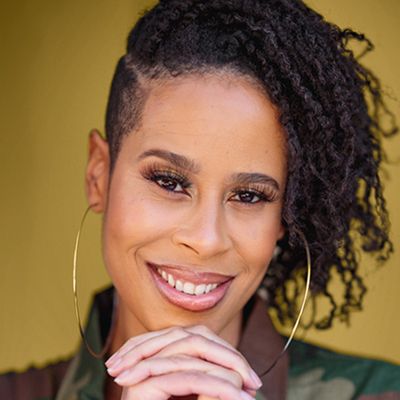
About
Tony nominee Dominique Morisseau (TV’s SHAMELESS, AIN’T TOO PROUD) discusses her groundbreaking play PIPELINE, named for the national crisis of the school-to-prison pipeline. The play follows, Omari, a Black high school student at a predominantly white prep school and his single mother, Nya, who teaches at the district public school. When Omari attacks his teacher in class, Nya’s fears for her son and his future push her to the edge and force audiences to question who is truly at fault.
How and why did the school-to-prison pipeline begin? What problems does education inequity and inequality cause? How do we make education more equitable—across public and private institutions? How do we train teachers of all races to relate to students of all races? What is “culturally responsive education” and how can it improve our education crisis? How does this connect to Black Lives Matter, George Floyd, Michael Brown, Tamir Rice, Trayvon Martin, Breonna Taylor, and too many more? Listen to this fascinating and urgent discussion with playwright Morisseau and education experts Tyree Booker of Camelot Education and Matt Gonzales of NYU’s Metro Center.
Referred to in this episode
- Watch PIPELINE now on BroadwayHD. (Option for free trial for new users.)
- Michael Brown’s murder in Ferguson, MO (Read up until “The Law” section, which sources speculative opinions)
- THE NEW JIM CROW by Michelle Alexander
- ACLU: “School-to-Prison Pipeline”
- Metropolitan Center for Research on Equity & the Transformation of Schools, where Gonzales works on education research and policy
- Camelot Education, where Booker serves as an Executive Director
- Morisseau’s op-ed “Why I Almost Slapped a Fellow Theatre Patron, and What That Says About Our Theatres”
- What is “Culturally Responsive Education”?
- NATIVE SON by Richard Wright – Buy it from your local Black-owned independent bookstore; find stores here or here.
- Hear poet Gwendolyn Brooks read her “We Real Cool”
- Key and Peele’s “If We Treated Teachers Like Pro Athletes”
- U.S. Department of Education School Discipline Snapshot
- 2017-2018 School Survey on Crime and Safey
- “Racial Disparity in School Discipline” Infographic
Create the change
- Stand up for Black lives
- Find one-page education reform resources at the EJ-ROC Policy Hub
- Read JUST MERCY by Bryan Stevenson; FIERCE CONVERSATIONS by Susan Scott; WHO MOVED MY CHEESE? By Spencer Johnson; THE MISEDUCATION OF THE NEGRO by Carter G. Woodson (Buy from a Black-owned independent bookstore; find stores here or here.)
- Follow @integratenyc @CEJNYC @TeensTakeCharge @AQE_NY @CACF
- Read i3’s (Integration and Innovation Initiative) plan to integrate NYC schools, take their cues to adapt the policies for your school district
- Learn what “defund the police” means
- Elect Board of Education reps who:
- Support universal early childhood education
- Advocate for culturally responsive-sustaining education
- Will divest from school policing
- Will decriminalize student behavior
- Will develop “sanctuary school” models to make school a space safe from police and ICE agents
- Provide a model for family engagement in education
- Opt for counseling and progressive discipline
- Reach out to and collaborate with the Anti-Racist Initiatve at NYU’s Metro Center
Why We Theater is a product of part of the Broadway Podcast Network, edited by Derek Gunther, and produced by Alan Seales.
Follow us @whywetheater on Instagram & Twitter.
Our theme music is by Benjamin Velez. Hear more at BenjaminVelez.com.
Our logo is by Christina Minopoli. See more at MinopoliDesign.com.
Special thanks to Dori Berinstein, Leigh Silverman, Patrick Taylor, Tony Montenieri, Elena Mayer, Wesley Birdsall, and Suzanne Chipkin.
Connect with Ruthie!
Instagram: @ruthiefierceberg
Twitter: @RuthiesATrain
Transcript
This transcript was automatically generated and might contain errors.
[0:01] Ruthie Fierberg: I'm Ruthie Fierberg, and this is Why We Theater.
[0:06] Ruthie Fierberg: The Intersection of Theater and Social Justice.
[0:09] Ruthie Fierberg: This podcast digs into today's most thought-provoking and urgent onstage works with the artists who made them and real-world experts who advise us on how we can create impactful change in our offstage lives.
[0:22] Ruthie Fierberg: After all, that is why we theater.
[0:26] Ruthie Fierberg: Today we welcome playwright Dominique Morisseau and education experts Tyree Booker and Matt Gonzales to discuss Dominique's play Pipeline.
[0:36] Ruthie Fierberg: For those of you who haven't seen the show, a brief primer.
[0:40] Ruthie Fierberg: Omari is a Black high school student at a predominantly white prep school.
[0:44] Ruthie Fierberg: Omari's single mother Nya teaches at the district public school.
[0:48] Ruthie Fierberg: When Omari attacks his teacher in class during a discussion of Richard Wright's novel NATIVE SON, Nya's fears for her son and his future push her to the edge while forcing audiences to question who is truly at fault.
[1:03] Ruthie Fierberg: Named for the systemized funneling of Black and brown students into the carceral system, known as the school-to-prison pipeline.
[1:10] Ruthie Fierberg: The play questions education inequity and inequality, school discipline practices, what and how we teach our young people, and so much more.
[1:21] Ruthie Fierberg: You can watch the original Lincoln Center Theater production of Pipeline on Broadway HD.
[1:28] Ruthie Fierberg: It's Dominique Morisseau, and quite frankly, I feel you are always excellent.
[1:34] Ruthie Fierberg: You are the first playwright when I was developing what I consider like developing my taste.
[1:40] Ruthie Fierberg: I was like, this is a playwright I will follow.
[1:44] Dominique Morisseau: Oh wow.
[1:45] Ruthie Fierberg: I truly mean it. I saw Pipeline and I was like, I now see whatever Dominique Morisseau writes. That's how I ended up at Paradise Blue.
[1:53] Dominique Morisseau: That's awesome.
[1:54] Dominique Morisseau: Well, thank you.
[1:55] Dominique Morisseau: Thank you for, I don't know. Having me on your radar.
[1:59] Dominique Morisseau: I really have I really do enjoy interviews with you. They're good, they're juicy.
[2:05] Ruthie Fierberg: Well, we do. We like to dig in deep, especially here on Why We Theater.
[2:11] Ruthie Fierberg: So today we're talking about Pipeline, which premiered off Broadway at Lincoln Center Theater back in 2017.
[2:19] Ruthie Fierberg: It was this week, you know, three years ago. It was the anniversary, and it just blew me away.
[2:28] Ruthie Fierberg: So when did the idea for the play first come to you? What made you put pen to paper?
[2:38] Dominique Morisseau: Um, you know, depending on the day, my answer is different to this question every time. Um, but I, you know, because I can say, well, it started with Steppenwolf. I was doing, I was commissioned to write a play for them, but they didn't, it wasn't there was nothing else that was descriptive about it. It was just like write a play for our company. It was a very small commission. Um, but I took a charge, you know, and wanted to figure out what would I write for this company that could be great work. Um, but then I was also at the time reading Michelle Alexander's book, The New Jim Crow.
[3:12] Dominique Morisseau: Mm-hmm. And she was talking about mass incarceration in the age of colorblindness, which we're not in anymore. We were never in, but you know. Um, and so, and so I was really, my the conditions of mass incarceration. I had never heard the phrase, and I'm I knew about obviously people being incarcerated disproportionately, but I had never heard the phrase mass incarceration. And I think I was just starting to like say phrases like prison industrial complex, you know, understand how the industry how we industrialize um those who have been incarcerated, help function, help pay them nothing and and they actually do um serve our economy in a way that is abusive, you know.
[4:00] Dominique Morisseau: So yeah, the prison system is run by guards who get paid and companies who run them and right and and free and free and cheap labor on the backs of the prisoners. You know which is very very concerning. And so uh so anyway, but that was before I had I was just starting to read that stuff and get that kind of language in my head. And then and then I was in um I was in Scotland with a play of mine for young people um uh Blood of the Root and my students we were doing it at the Edinburgh Fringe Festival and I started working on this because while we were in Scotland Trayvon Martin had been killed the year before you know by George Zimmerman.
[4:46] Dominique Morisseau: Yep who walked free and um and continues to be an antagonist to this day against Black and brown folks. Continues to be an that when that really gets my goat he continues to antagonize us um in his freedom that he did not earn so um but then he but he Trayvon Martin had been killed a year ago and so I was with my students working on a piece that was about um similarly that was about uh railroading of young Black men in the criminal justice system, right? And um, and while we were doing that play, which was inspired by the Gina Six, uh a group of young Black men who were railroaded in 2007.
[5:27] Dominique Morisseau: Um, uh, I Mike Brown got killed and Ferguson. And Ferguson. Ferguson was happening in 2014 while we were in Scotland. Ferguson was happening. And uh, and so I started writing, I started thinking about Mike Brown's mother a lot. Because she kept saying, like, I just got him to graduate. She just she kept saying that, you know. And I saw I started thinking about her as well. And all of those things made me want to explain. I kept thinking, like, doggone it, a mother just gets her son there. That meant something to her, and that meant she had a she felt the way she would say it is if it was a feat, like it was a hurdle that she had overcome, you know.
[6:13] Dominique Morisseau: And that's not because of him, that's not because of his aptitude, that's because of the system. That is against him. That is the the that things and conditions inside of that system are stacked so heavily against him, and they beat those odds. They beat that, only for him to be taken away by Darren Wilson. And so um, it's that kind of thing that uh made me think of the mother and and mothers of Black sons. And that's sort of how I arrived, um, not only wanting to write about the school-to-prison pipeline, but also wanting to write about um wanting to put that that issue on the bodies of a mother and a son.
[6:56] Dominique Morisseau: There is this constructed milestone hurdle that if I can just get him to graduate, then he will be safe, right? But until that moment, there's a fear that he will either end up in prison or dead. And so I think that that how crushing that must have been to a mother to think you have beaten the system only to find out nope the system the system took him down anyway we're seeing mirrors of uh police brutality and discipline on our streets and in our communities as we see in our schools.
[7:13] Ruthie Fierberg: That's right, yeah, yeah and the relationship between the mother and son is so powerful in this play and you're able to at the same time ground it in this world of education where the mother is a teacher and the son is a student in high school and you're able to capture the disparity in public versus private education because Omari and his girlfriend Jasmine are private school students and Nya and her colleague Lori are public school teachers. Why was it important to you to have Nya at public school as the mother and the teacher and Omari at private school and maybe not the way around? Like what do we gain by seeing the mother be the teacher in public school?
[7:13] Dominique Morisseau: That's that's a good question because I was like oh the other way around would be interesting too but different. I think it shifts our expectations really the way that I have it though. I don't think someone like Omari, um, I think we can we always think of him as being a public we you know, if I do the Mike Brown version, it will be public school, right? You know, um that we're fighting for. But I was like, wow, there's a way to broaden this conversation out um by making him private school student, you know. And it's it's there's a way to show how there are two different kinds of structural failures, you know, or how there are two kinds of failures to our young people, and that that public schools and private schools are neither is exempt from that, those failures, right?
[9:19] Dominique Morisseau: You know, public school might suffer from infrastructural failure in many ways. Um, private school, as my director Liliana Blaine Cruz would always say, uh, where we're highlighting cultural failure and how um how both of those two kinds of failures impact the learning, the education, and the overall well-being of the students, you know. Um, and so that nobody's exempt from this, but your money does not buy you out of like not causing harm, you know. And in fact, um, and in fact, I mean, it's very it mirrors uh this is I've never said this before, but until thinking about this right now in this moment, but you know, it sort of mirrors like kind of a conversation around theaters in general, you know, it's like you come to the theater, I think of myself right now.
[10:04] Dominique Morisseau: We're in a moment of protest and insurrection out, you know, across this nation. Um, and you think of like the theater is supposed to be a safe space, right? Like this like theater's supposed to be your safe space. It's like where you're understood, where your creativity is harnessed and nurtured. And um for any uh of Black or Indigenous or people of color who have to experience um policing inside of theaters, you know, that that felt like you wrote that editorial about going to see your own play.
[10:39] Ruthie Fierberg: That's right, that's right.
[10:41] Dominique Morisseau: Which I urge people to check out. Yeah, that's right. It is it's that thing where if I'm gonna, when I'm now policed inside of an institution that is supposed to be my safe space, that means nowhere is safe. And that is that is devastating. That has devastating impacts on you know individuals, you know. And so with Omari inside of school, inside the public, I mean private school system, that's supposed to, he's supposed to be going there because that's supposed to be able to give him a greater um broader opportunities in his parents' mind, you know.
[11:14] Dominique Morisseau: And that's that's where he gets uh the that's where he is being threatened with policing and and and incarceration, you know, inside the private school. It's like to show how vast the issue is. And I think to put Nya inside a public school as a teacher is to show um, you know, my mother was a public school teacher for 40 years inside of a city called Highland Park, which is like uh is surrounded by Detroit on all sides.
[11:40] Dominique Morisseau: So it's like a it's not a suburb, I call it like a sub city inside of Detroit. Inside of it. And um, it's one of the most economically stressed cities in our country. I just felt like the state of Michigan wanted Highland Park to die because it was just poor and Black, all Black, all poor, you know. And um it was it was my mother stayed there and taught there for 40 years, and I taught there for a year uh out of college, you know, at her same school.
[12:05] Dominique Morisseau: And I think of her because when I was growing up, I went to uh a not a uh charter school, but I went to a magnet school and it was a public school, but it was a magnet public school that you had to test to get into. Um, and and my mother taught at a school that was, you know, I could see the disparity between where I was at third grade, you know, in my Magnus school and where her students were, because she taught third grade, you know, where her students were.
[12:29] Dominique Morisseau: And yet my mother was an excellent teacher. I mean, my mother was an excellent teacher. She's the reason why I, you know, my education, why I went so far in education and why I was straight A student, you know. That was because my mama, you know.
[12:43] Ruthie Fierberg: And why you grew up, you know, with a love of language that has, you know, paid dividends for us as audiences.
[12:51] Dominique Morisseau: That's right. That was her mother and my father.
[12:53] Ruthie Fierberg: Yeah.
[12:53] Dominique Morisseau: Yeah, you know, I mean, they they definitely invested. My mother read to me every all the time. My father was a uh a genius, like he was a certified uh mathematical genius. She was always on as a teacher. And and I thought, but you could look at her school system that she was a part of that she refused to leave no matter how many times she was offered jobs that paid more in, you know, in different neighborhoods, you know, she would not leave those kids for 40 years.
[13:19] Dominique Morisseau: And that's why they were in tears when my mama retired, you know. And um, and but you could look at her, the system that she taught and it'd be like, that's a failed system, and those teachers, you know, and people would always blanketly say like public school teachers are failing those students, and it's a you know, and I go, Well, if the teachers are failing the students, then who's failing the teachers?
[13:38] Ruthie Fierberg: Exactly.
[13:39] Dominique Morisseau: That's the thing about your mother teaching for 40 years and her students loving her as much as they did, is because of the care that she invested in them, despite the lack of resources she clearly had in a neighborhood in a community like you are describing, and that that is a lot of what you know what we're seeing, even just in like the costuming of the show, are and this and the scenic design, which was spare, but you know, when you go to like the dormitory of the private school and you see their uniforms and you see, you know, just that juxtaposition to like the empty room with the slate desk, you're seeing the disparity in resources in public education and private education right on that stage.
[14:25] Dominique Morisseau: That's right. And that was Montana Blanco. He was really great, amazing uh costume designer.
[14:30] Dominique Morisseau: Um, so shout out to Montana. I'm interested in like defying expectation, you know, like the thing I want us to confront our uh our um what expectations we have in our head, what prejudices we have. I want us to confront those. Like, oh, I thought he was gonna be this kind of kid. Wait, he's that kind of kid. Or I thought that she, you know, like, oh, I didn't all the ways in which I thought this issue was going to be, you know, explored, I didn't think it was gonna be explored. I don't think of it on these bodies or in this way. Well, that actually brings me to the question about crafting Omari, discovering him. You've said in other interviews that sometimes you outline and that for this play you did not, that it was these characters were speaking through you.
So, who was it important that Omari be? What did you need audiences to see in him? I wanted him to be the total true, um, full human being that he is, uh, which is complicated, it's complex, actually, you know, um, which is, you know, uh, you know, he has definitely is intelligent being, but when Omari is arguing with his mother, there's a whole that's my favorite scene. Him and his mother are having an argument. And it's a it's an intellectual debate. It is not, it is not, you know, Powdy teenager and and fussy mama. It's an intellectual debate that they are having. There is like lawyers fighting to defend their client, and both of their clients is Omari. You know? And that's like it's amazing to watch two lawyers have two different approaches to defending the same client.
And that's what's happening inside of that scene, you know. Um, but so it's so he is an intellectual being because I know that to be true about kids from some of the worst so-called worst schools in our country. Super intelligent. Um, and uh, but I also know him to have um have a rage that he has not reckoned with uh or even fully understands, and that is important to me too, to make space for our rage. Uh yesterday, Dr. Michael Eric Dyson, I was on a panel with him, and he said, um, rage is just joy, uh, joy and hope, I think, or joy and hope inside out, you know. And I thought, yeah, you know, that is um, that is Omari, you know. I mean, there's we have we some, I think black rage in particular has um, and we're seeing a lot of examples of it right now in our country.
And it has always been criminalized, policed, um, told that it had there's no space for it, and and that it is dangerous. Um, but photography about it turned inside out converts it to a it converts the perception of it's right to a to a productive emotion, which is what it is. Right, it's a productive emotion, and it can be if used, if not hushed, if not disengaged, it can be useful. Because for me, it was important that he have um that he have a very righteous rage, you know. Uh, and uh, and so those were the things because I've seen that in my students, I've watched students come into class, we don't know what they're going through. And they walk into that door. I I remember having a moment of teaching a student, he came to class that day, he was late, and he was in a bad mood.
We had to really treat him very carefully because he had just gotten jumped on his way into school. You know, and imagine with his he gave me an attitude, imagine imagine a guard putting their hands on him, right? Because of the way he's treating us in that room that day. Imagine just because he's being a little bit like leave me alone, I don't feel like talking to you, get off my back right now. Even before the disciplinary part, I'm imagining how is essentially a child, right? Like a developing brain supposed to learn in that environment. Like the challenges that kids walk in the door with are I think teachers need to be attuned to that and need to be uh, you know, that's part of what's going wrong in the play.
Is Omari was saying I was not prepared to engage that day. And I told him that. I verbalized that he would not, this teacher did not listen to me. This teacher did not meet me where I was. And therefore, there was a collision of these emotions because my boundaries were not respected. But I think what's also powerful about Omari, and that you know, you've said before, is that you know, he's a is he a junior or a senior, but that he does not look like a child, and that that was very intentional on your part. Whether it's Trayvon Martin, Tamir Rice, you know, Mike Brown. They because I say those three because they were all different ages. Yes, you know, and it doesn't matter how old any of them were.
They were all looked at as men. All of them. 12, 13, 17 men. Right. You know? And it's just like you gotta be kidding me. Um and so when I was um casting Omari in particular, I remember having that conversation with the Lincoln Center. Um, and we got it right, but it took some uh really deep investigation on what was needed because I remember sometimes in casting we would they would say, oh, we like this actor because he's you know, he's easy, he's easily likable, you know, he's easy to get on his side. We we feel a lot of empathy for him. That's why we thought we were warned of him. And I and I was like, Oh, yeah, no, I'm not trying to make empathy easy. Well, I want somebody who's not easy, right?
You know, I want somebody who I can tell has rage, who who can perform rage, who I can see the rage boiling in him. How do we love that person? Because that's the real question. Which is what we're talking about right now, too, with that there was a a different reaction to the murder of Elijah McClain, which was just as tragic as any of the other ones. I'm not saying that that wasn't a tragedy, right? But I'm saying that there was a a a different kind of sympathy because he was meek or because he was more uh, you know, words that are used like docile. But it's no, you need to love, you need to respect and love and exercise the same treatment, no matter what the body looks like, no matter what the personality is, and even going the step further of you know, the the murder of innocent people is horrible.
The murder of guilty people is also horrible, guilty, not guilty, big and brawny, slight and shy. So it's about respecting life. You know, I always say, you know, every teenager has a right to be an asshole, every single one. You know, that's what teenagers do. I was an asshole when I was a teenager. Every teenager has a right to be that teeny. You'd have a right to go through your teenage asshole years without harm. That's also part of your evolution of growth, you know. Well, what we're talking about is the criminalization of behavior. You're talking now about it on the streets, but your play talks about it in the schools. And the school to prison pipeline takes that asshole teenage behavior of black and brown students and says, This is criminal and we're locking you up.
Omari in the story, he has three strikes. They say this is his third strike. And every now and again, you know, an actor would say, Well, we need to know what his other two strikes were so we can know that they were minimal, so you could see how fast that they send you somewhere on your, you know, how fast that they escalate a thing that isn't even, you know, big, you know. And I said, Oh, no, I'm not gonna do that. I don't I don't care what his other two strikes were. I don't care if they were terrible. I don't care if they were, I don't care what they were. And I I want the audience to do that work, you know. Yeah. What are you imagining in those two strikes? What do you think those other two do?
Do you think they were quiet or do you think that they were loud? Do you think that they were whatever it is? I don't care because I stand for the asshole teenager. I I represent and I ride or die for the unruly teenager for that teenager's life to have value as well. Even there's no condition. There's no good, you cannot be good enough to be worth life. You don't have to be good at all to be worth life. Because good and bad are values, you know, those are value judgments on someone's life. Life is life. Life is life. And Namir Smallwood's performance of that role and performance of that rage and embodiment of that character was wild. And note to casting directors out there, you should put that man in a play of yours. So seriously. He's so good. He's so good.
[23:10] Ruthie Fierberg: I'm wondering what other you talk about coming from a perspective of being the daughter of a teacher, but as you've mentioned, you are also a teacher. So bringing that perspective into the play and writing both teacher characters and student characters. What from your experience is the most important thing we can do for those kids that you wanted the audience to understand?
[23:41] Dominique Morisseau: I mean, I think it's about their total humanity. You know, I think first and foremost, they uh all students. If you're gonna serve young people, you you know, you have to, you have to approach it from a place of of their prioritized. You know, their their comfort, their safety, their well-being has to be the top priority, you know, in educating them. Because you won't get to them, you won't get to educating them if those other things are not centered, you know. Um, and that uh if you have to be in service to them and not they're not in service to you, you're in service to them. You got to love them anyway. You have to love, and and and the the most valuable thing is I think teaching um young people that they are lovable because there are so many things that that are that are uh barriers to you learning to love yourself.
It is the job of the person that's there to educate you and to make you feel safe. Which is what we see in Naya, yeah. Right. Like as in in her classroom teaching, when she's teaching We Real Cool, we hear her calling her students by name, you know, looking at the audience and saying, I see you, I recognize you. There's a way to nurture and educate. And I think that those things have to go together. Um because you're making space for someone's total humanity. These are this is a time in young people's lives where they don't know who the hell they are, you know. And yet they they know, but yet they know so many things. I mean, it's that it's this that complicated space. You know, they're being reset in a way.
I mean, but they also are be are reconciling with themselves. They're in a self-loathing space. Teenage years are also very self-loathing, you know. And you have to know that that self-loathing is a thing that you have to help protect them from. Right, right. You know, while you're educating them. And in that scene where Naya is teaching her students, that was one of my favorite scenes because of the lesson of We Real Cool. And I actually um I learned of We Real Cool in high school, the Gwendolyn Brooks poem, and I have been obsessed with that poem and her work since. And I love that we have those anchors in education. Like you are putting us in the classroom and in the lesson, both with Omari's reading Richard Wright's NATIVE SON and Naya teaching Gwendolyn Brooks' poem We Real Cool. They're integral to the skeleton of this show. Did you always feel that those two pieces belonged in tandem?
[26:21] Dominique Morisseau: Those are two pieces in my education, you know, poems that stood out from my um my youth, you know, that teachers taught me. Uh, we real cool. The eighth grade boys performed that in our um black history show. And it blew my mind when they did it. It blew my mind. They were so cool. Um, and but they were so they understood what they were saying. That's what blew my mind, you know. Yeah. It was Shavante, Jamar number one, Jamar number two, and Ruben, Ruben was the last person. And they were so cool, you know. I mean, that poem has so much swag, right? Like it's a poem about swag. I just remember Shavante. We real cool. We left school. You know, they just had so much attitude in it. And by the end, um, when they would say, We jazz June, they would all say it together, we jazz June.
And then I think Ruben by himself would say, or Jamar number two would say, We die soon. Boom. And they would all fall to the ground, you know? And I was like, damn, I don't know. I mean, they it's like they knew something that I didn't. They knew what they were saying was prophetic, was haunting, it haunted me. It used to haunt me as an eighth grader. It haunted me, you know. Um, and then Richard Wright's Native Sun, I read that in high school. I think maybe my junior or senior year. And that it shook me to my core. I mean, that was one of those books I was walking around, you know, like you have the literal nerd uh the the nerd cam where you were literally like walking around school with a book reading it.
Like that's what I was doing. Like walking through the hallways, bumping into people. I never forgot Bigger Thomas. I would, I just would wreck every time I there was a rage, a furnace of rage, you know, inside of me, I would say, Oh, they're making me bigger Thomas right now. I feel really bigger Thomasy. You know, it's that it's that feeling of um a rage that has no escape and that I'm and that a rage that's going to this somehow I'm gonna it's gonna I'm gonna self-destruct in it. Omari, that's how I wrote that monologue for him at the end of the play, you know, where I'm starting to feel like bigger time. I'm starting to feel the room getting smaller. Even though I hate this part of the book, I'm feeling like I'm about to beat this.
Right unreasonable. In the play, you use the terms that like you know, were um the idea of being wild, the idea of being from a different jungle, the idea, like all of those words are chosen very specifically and are very powerful because it's again if you are being treated like you are from the wild, what is going to come out?
[28:59] Dominique Morisseau: It is the self-fulfilling prophecy of being that wild animal. It messes with your head because they think I'm predisposed to knowing what it's like to be an animal. Am I? It's it's psychologically destructive. It's a psychological, it's psychologically, it's a psychological violence. Um, Jasmine in in in our production, our original production in New York is the wonderful Heather Velasquez. Yep. And um, you know, she's a lad next woman, young girl, woman of color inside of the private school sector, too. So Omari is a man of color in that private school sector, and she's one of the only women of color, you know. She too, as a female, has rage, right? That rage is not just a male emotion. I think that's part of what's going on here.
You know, her character, the character of Lori, there, you know, it makes so much sense how formative NATIVE SON was in your life because um the rage that is inside Bigger Thomas affecting you so deeply clearly comes out in all of these characters. Like you said from the very beginning that this is a play about rage. There are security guard Dunn has rage about the history that he talks about in the walls. Naya has rage that her only job is to try and keep her son alive. Omari obviously has the rage. Lori has the rage that she can't help her students who are trying to kill each other in the classroom, you know, beaten on each other. She has rage that she can't stop it and that she can't help their rage.
And Jasmine has her rage. It's just, and then to end the play about rage is not his sin. That's right. It is his inheritance, and now use it, goes back to that statement that you said about it being the inside out of joy and hope. Is that right? Yes, let us use that productive emotion. Let us use it. Yeah. Yeah. It's funny. I know you call the security guard Dunn, as probably do many actors around the country. It's actually pronounced Dune, but I'll tell you why. It's Dune D-U-N, which looks like Dun, but it's Dune because I I just named him in my own little heart. Nobody knows this, but I named him after Abiodun Oyewole, who is the last poet, who's one of the original last poets. And Abi Odoon spells his name, A-B-I-O-D-U-N. We used to call him Doom for short, you know.
And so I'm like, yeah, I'm gonna name him Dune. Yeah, I don't know where that can't be. You know, it's like, and I always thought she's written that out in my plays. Next time, you know, hindsight is a mother. But uh, that's where he can't. It's another um the point is literary uh inspiration. You know, the last poets were all we call them the godfathers of hip hop, you know, and what we'll call a lot of people that, but uh, you know, they were the godfathers of rap because that's what they were doing in their era. Um, but it's also their literary influence. All these literary influences of another era have impacted me and they're all over this play. You have raised incredible questions about education inequity and prejudice and classroom culture and the devaluation of black thought when you compare, you know, this is the HarperCollins version to the broad press version, all of those things.
Lincoln Center Theater at the time hosted many talkbacks. I know that that was important to you, and it was integral to the life of the play. Were there other issues and questions that the play raised for audiences that surprised you, or were there questions that you hoped it would raise but didn't come up? I invited a lot of my educator teaching artists uh community that I had worked with to come to the play. Um, and in that talk back, I remember one of the Lincoln Center's elite older white male subscribers asked a question about um I want to say it wasn't like how do we fix it, but it's like, what do you do? What do you do to fix this? You know, I remember one of my teaching artist friends later said to me, next time you should ask him if you really care, if you really want to know how to fix it, you know, get get a teenager to come see the play, right?
And I was like, Oh, that's a good one, you know. So I was like, that's a really good answer. So for me, when those questions come out, I always go, oh, whose burden is it to have to fix this? You know, like it's not on the theater maker. I my job was to present this to the audience, not because now I'm gonna tell you how to fix it too. You know, that's for all of us to figure out collectively, not for me to have to answer. Well, that's what we're here to do today. That's right, you know, but it but so it turned into so then when my friend said, you know, next time say hey, bring a student, you know. I thought the next my second preview, I went down after the play, um, and I looked at the audience and I said, if you think that a teenager, if you you know think that a teenager should see this show and you want to help sponsor one to see it, please come talk to me uh at the you know upstairs.
And then I ran over to my my boyfriend and some one of my friends over there, like, guys, what am I gonna do? I don't have any, how am I gonna what if they give me emails like, what am I gonna do? I'm unprepared for what I just offered, you know? And they're like, I have a notebook, I have a notepad, and they collected the names for me. I said, Let me talk to Lincoln Center's education department first because they might have something in place. And they did, and we created a fund that they ended up getting a matching grant for, and we raised money to get 500 teenagers to all across New York City to come see the play for free. And so, um, and I not at one shot. So they could walk up. A teenager could come off the subway.
Right. I could run up to them on the street and be like, Do you want to go see a play? And they go, Oh, I don't have any money to go see a play. And I go, you don't need it. And they could come to the show. Like they could just literally walk in and be like, I want to box office. Yeah. And there's already a reserve of tickets for them to just have some tickets. So that was that was fantastic. And also with uh building on that, your husband, uh Jimmy Keys, that's right, bringing, you know, diversity of not just age, but diversity of color to the audience because you guys were essentially doing what we call blackout performances, yeah um, or black theater night. Black theater night specifically, we started at Pipeline because I I just knew how do I get my community in here early you know and my husband's like well I think you have to formalize it in a way and make it and we did a it not only formalize like make it a night that people want to come see something together with other people that they know that's how that happens.
Right. And he also said and then have like a we we went to a uh we we talked to a bar later on that day and we partner with them so then we could send everybody to that bar and then we all went to that bar to go talk about the play afterwards Black Theater Night that's why Asian American theater night I wasn't successful with that me and David Henry Wong he was he really tried to help me and but it was kind of like wow is this girl doing Asian American theater night it didn't work yet but I'll say I'm very proud that it's happened for Lauren Yi figured it out right Cambodian rock band which I'm very excited about. You know we tried that next show yeah but that's the thing that's I think that's the next step is like it's not just getting black theater night to happen for a for a black story on stage it's getting black theater night to happen for you know for Cambodian rock band and it's getting Asian American theater night to happen at pipeline.
So that's right that's right we tried it we did to get there I believe so you know way to level the playing field with that fund. You know we're talking about inequity today and there it is right there and which is actually the perfect transition to bring in our experts who are chomping at the bit because Dominique and I we we got a little chatty there. But I want to welcome I'm so grateful that they're here um we have uh Matt Gonzales who is the director of integration and innovation initiative at NYU Steinhart's Metropolitan Center for Research on Inequity and the Transformation of Schools, which is a long way of saying that um that he works on uh not just desegregation of schools, but active integration of schools.
He's helped shape policy on school integration here in New York City and is on the committee for uh the National Coalition on School Diversity. So thank you, Matt. Welcome. We're so excited to have you.
[37:16] Matt Gonzales: Thanks for having me. This is such a cool conversation. So thanks for letting me be involved in it.
[37:23] Dominique Morisseau: Absolutely. We're gonna get into it. And then we have uh Mr. Tyree Booker, who is the executive director for Camelot Education, which is a private education service that partners with school districts and local education agencies to provide education for at risk students. He launched their program in Chicago. And prior to that, he was an in-classroom educator, maths at Daniel Boone in Philadelphia, which um you know has a lot of echoes of pipeline itself. So welcome, Tyree.
[37:56] Tyree Booker: Thank you for having me. Uh I agree with Matt. I was in thoroughly enjoying the conversation and even thinking about parts of the play. And I'm like, yeah, yeah, yeah. I want all of your reactions, and I I actually I do want to start with getting a little bit personal, if you guys are willing to share, because I think this play is personal. And I'm wondering to what degree each of you were aware of the school to prison pipeline, either by name or just as a concept that there was this lingering possible fate for either you or your peers while you were growing up. Matt, do you want to go first?
[38:48] Matt Gonzales: Yeah, I'm happy to go first. So yeah, thank you for that question. So I'm a Latinx man, grew up in Los Angeles, attended um segregated schools basically up until eighth grade. Um and so in that space, like I think I was given access to a pretty poor quality education. But but I think on the other side of that, I had a strong sense of self-identity in my own community, and I saw educators that look like me. And so there was not until I got into high school that I actually start to feel an interaction, like a real interaction with like what I later to, you know, became to understand the school to prison pipeline is is you know, being in a you know, the school I went to was still majority black and Latinx, but there was a white community, a smaller white community, an Asian community in the school.
And so I think what I understood and what my friends and I understood, and so I I have friends who who've gone into the kind of carceral system. I have friends who no longer are with us. Um and so like I kind came from a community of people that um many of us did not get to work at NYU or did not get to go to graduate school and and and did not get these opportunities for various structural reasons that that are really related and manifest so much in the play. Um I think the way, you know, the very simple interactions we we understood is like I have white friends and had white friends. Um the when we would, you know, leave school early um or leave for lunch, we we all drive in LA. Um I would literally just let a white person like one of my white friends drive my car because we understood very clearly that the security guards would just treat me or one of my blacker Latinx friends who were driving differently than like having a one of our white girlfriends literally drive us out of the school and sort of the ways in which like the you know we didn't have metal detectors at that time when I was in high school and there wasn't this kind of like intensity around policing and policing bodies in the way that we see it now in New York City and across the country but we always knew that the way that we were inter like the the interactions we had with um security with principals with educators was always you know, you know created in a in a in a sense that created a sense of hostility and that reinforced and replicated um structures of power um and and and again we were in the school together um and and didn't necessarily I didn't necessarily feel like I belonged in that school for many years.
And so I think um the the way that you know I understood and I've also had um unpleasant very unpleasant negative interactions with LA police department um to the point where like I've watched my friends get beat up and I've had guns pointed at me. And like so as I'm looking at all these things that happen now and seeing how our young folks interact you know watch the NYPD beat up the city and then are potentially gonna have to walk back into a school where they're standing there. It it it's like I I you know these things happen when I was 18 and so I like I was reliving trauma um you know over the last over the like kind of course of these uprisings and so like it's been very present for me and I'm like very fortunate to get to um do work at NYU and across the city and across the country that really is is intended to disrupt the the various mechanisms of racism and white supremacy as they as they manifest through the school to prison pipeline right other pieces. Because it's a system. I think that that's what people often lose sight of too.
[42:10] Dominique Morisseau: And perhaps you want to know what Tyree before you answer the question. Perhaps you'd like to give us a a simple definition of what the school to prison pipeline is since we've been talking around it. And perhaps there are people who aren't familiar with what the terminology means.
[42:28] Tyree Booker: Well, so to answer your second question first, um I I would say that the prison to the school to prison pipeline is the educational term of systematic racism. Because there is no pr to have an openly prison to school pop up pipeline, then it have it would have to be functional in all forms of education. It only happens with minorities. Right. There is no, there is no in and uh Dominique is was in Chicago. There is no North Side equivalent to the school to prison pipeline. There is no Soho equivalent to the school to prison pipeline. Yep. Systematic racism. That's all it is. Because it only happens in one area for a particular demographic of people.
[43:27] Tyree Booker: It's not social emotional learning. We have a bunch of kids who have PTSD who need to be counseled. And yet they have not had counseling throughout their lives. And because it had as has happened to their white counterparts, and we didn't put them out of school, we had to create a blanketed term so that everyone could then get it. No different than where we're into where in 2020. If you remember in 2004, bullying. We had social media. Got on bullying. But that only came into play because stuff happens at predominantly white schools. And then it didn't happen at black schools. And because we couldn't say, well, you did this with this one and that with this one, we had to make a term for us. We had to be really.
So that's my response to the second part. To answer the first question, I am from North Philadelphia, and North Philadelphia will be the equivalent of Englewood in Chicago. I'm from, yeah. I grew up in, I'm a product of a teenage mother. My mother was 16 when she had me. I lived with my grandmother until she passed away. My grandmother was only 45 when she passed away, and I was seven. So that gives you an idea of uh of that. Um and then I start living with my my uh my mother. Um she was recovering from substance abuse. Um father was not in my life. Um I grew up in a two-bedroom house with six people. Um two in the front room, two in the middle room, and two people in the basement. And I was the oldest boy.
Uh I have two, they're my cousins, but I call them my sisters. Um, they're both old females, they're both older than me. And then I have a brother that is seven years younger than me. So I was the oldest boy in the house. Um, I've seen uh violence on every level. I've personally seen people um murdered, I've been shot myself. Um I went to magnus schools as as as as Dominique mentioned, um, which is basically where you have to test in. So I never went to the neighborhood school. Um, and that's why I say to that effect of print school to prison pipeline, because when I went to the Magnus school, that wasn't the case. Education was considered, you know, considered um a privilege, and you went to learn.
And um, you know, I was always, in the case of Omari, the token black kid, you know, when when you needed a black perspective, you know, people look to me to get that answer. And I don't represent all black people, people are different. People are people. Um, you know, people then want that because they don't have those experiences. Right. So I I enjoyed, I enjoyed the play thoroughly, and I really appreciated uh Omari's anger. And I can tell that she's worked in Chicago because of that sense of anger that he possessed, that struggle between where you're trying to find yourself, because he was so smart. If you listen to his language, and I think I I of course I can't speak for how she wrote the play, but given the incident that he had and then the way he spoke, you can tell that his intellectual level was greater than so much awareness.
He has so much awareness. When when he said um, what was the word that he used? Tame. Mm-hmm. And he kept saying tame to hone in on that. And it was like, wow, it it it it was a powerful word, and at the same time, it shows his intellectual ability. But yet he's being cast out over a mistake. And had his name not been Omari, had it been John, right? We've been, you know, would he have been getting put out of school? I don't want to go in another tangent, but uh yeah.
[47:07] Ruthie Fierberg: I just before we continue, I think it really important to pause and have our listeners take stock of the fact that I am looking at three people of color who as they as they talk about their experiences with police, having friends beaten, having friends murdered, being personally shot at, they're all nodding like, yes, of course. As I sit here completely shocked because I have never had an experience like that, and I am grateful that I have never had it. But everybody should be able to be shocked. That is not normal. It should not be normal. And I want it known here that you know this discussion is in an effort to continue to denormalize that and fix the systems that have made it normal. But that, you know, I we condemn that, I condemn that, and I am sorry that it is your normal.
It is not okay. So having said that, I, you know, the the this idea that Tyree said of the school to prison pipeline existing only in certain cases, is I mean, I did some research and the statistics are astounding, but basically, it's that rather than counseling, like you're saying, Tyree, we are disciplining to an extreme degree to the point where black and brown students uh are put into the juvenile system and then become it, you know, there's in the juvenile system, first of all, there's this the criminalization, but then there's also the fact that let's say you do get expelled or you do have to do, you know, some sort of time or service, you're not having you're not having education during that time.
So when you are done serving that time, how do you go back to school? You are now at risk. You are more likely to uh you know, re I don't even know if re-offend is the right word because sometimes you weren't offending in the first place. But it's this the harsh penalties for both minor incidents and major incidents of like Dominique said in the first half of children. Like we need to be taking into account. I saw a statistic that in the country there are 16% of preschoolers, yeah, I said preschoolers, are black. 48% of the preschoolers suspended, which by the way, we could talk about why the heck preschoolers are getting suspended, but they are, and 48% of the kids that are are black. So there's a statistic for you.
Um I want to know, you know, this rage that you're talking about, and I do want to label it as righteous because it is inherited and it is and there are reasons to rage. How do we help current students who are experiencing that rage? What what do you as an educator, Tyree, and Matt as a policymaker, and Dominique as a playwright and as a former educator want us as a public to be able to provide to help navigate that rage? Matt, do you want to start?
[50:50] Matt Gonzales: Uh yeah, sure. I mean, I think this is should be fairly simple. Actually, and I think Dominique said this probably multiple times, and I think the play articulates that we actually just need to love our kids. We need to actually meaningfully love black bodies. We need to meaningfully love Latinx bodies. We need to meaningfully love our kids. And I think, you know, as we think about, I'm really so happy like Dominique like talked about um Michelle Alexander's work, The New Jim Crow, because as I think about all the manifestations in the play, all the things that we've just kind of talked about, these things do not didn't just like pop up in the 90s, they didn't pop up recently. They they're part of part of a legacy of segregation and white supremacy as it's manifested in our society.
And so I think what that for me means that we police black and black and brown bodies with actual police in schools, we also police their bodies and their minds with curriculum that is Eurocentric, with school cultural practices, with discipline policies that criminalize them. And so Michelle Alexander talks about how we evolved slavery into mass incarceration, and the various institutions in our society have been used historically and currently to create and maintain that. And so I think Tyree is so right. Like the intention of creating of policing, you know, our bodies and the use of public educational spaces to do that is part of a legacy of segregation and separation and exclusion. And so I think for me, um, what I do with young people is one, I just like love them and let them know that they have trust and love.
But also for me, like in terms of like what do you do with that rage? Because I do think there's something beautiful and powerful about like how do how do we transform the anger into rage? How do we transform the rage into like action and power? And so I think what I try to do in one is just like I'm gonna love these young folks and and build trust with them so they know that they can come to me for anything, but then also teach them to see the strings. You know, teach teach them to see the strings that I didn't see when I was a kid and like the and name teach them to name like name these things in ways that give them power and agency. And so my work is so committed to ensuring young people can see, you know, can see the the wizard of oz behind the curtain so they can know who's pulling the strings.
And so when you know when you can see the strings, it's a little bit harder for them to pull pull you in the direction they want. And so I think for me it's about loving these young folks and then supporting them to identify their own agency and ability to self-determine and then being an adult ally resource, whatever they need to navigate them through the various systems that are gonna try to kill them.
[53:26] Tyree Booker: Yeah. Well, first of all, I want to say there's so much head nodding going on, and this is a vocal space. If you guys want to respond, respond. You feeling each other out here. It's a podcast. You gotta let him cook. I mean, he's cooking and you just gotta let him keep going. I'm silent, I'm silent snapping right here. I want people to understand that we are feeling it in here. Um building on that and and by all means answer for sure, Tyree and Dominique, the question of how we help students navigate rage, but I think um then we should rewind and talk about the history uh of the systems that are in place a little bit. But Tyree, I mean, I know that you you worked on designing a program that specifically works with at-risk youth, you know, you have students 16 ages 16 to 21. So what are the kinds of things that are that work well in your program?
[54:27] Tyree Booker: Well, jumping in off what Matt said, the love part is is leading with love. Um, it's building a relationship, then focusing on education because you have to know my intent. The one thing that our kids do better than anyone is read people. They know who's there to form and who's there to collect the check. So they're going to match the energy and what you bring them. Um, so I'm big on and our programs are big on creating the a tripod. And and at the center of the tripod should be the children. The tripod consists of the school, the community, and the parents. We gotta surround these kids from all angles, and we need to all be on the same page because if one leg is broke, that's the that's the the hole that the student is gonna go out of and then fall into the cracks of whatever else they're getting involved in.
Um, so we have to get the community involved. We have to go to our community stakeholders and say, listen, you have a skill set that I need help on. You work at a bank or you teach banking. I need to infuse banking so that my children my students can understand how to manage their bank accounts. Like we have to teach life, like all that Christopher Gallon. I'm I'm not worried about Christopher Columbia. What I'm worried about is kids after I graduate, if you want to be able to live, can you bank? Can you manage your checkbook, my man? Which by the way, I will have I will state here and now I wanted to take what was called business math at my high school, and I was told, no, you you're on a track, you gotta take AP calculus, you know.
Uh business math is for kids who are like did the requirements of geometry and algebra but need another year of math. That's not for you. And I was like, I don't really care about calculus. I want to know how to balance my checkbook, and I want to know how to do a budget. But there I was sitting in AP calculus. Ask me how often I use that. Um we want those critical thinking skills. Um, and we want to teach lessons that pull away what is the critical part that you need to understand for life, not just facts and figures that I want you to remember. I could care less about that because when you get out of school, it's not gonna mean anything. And then the parent, I'm big on if a parent comes to the office and they're upset.
Maybe they they're they're the child, there's the young person went home because we I deal with 16 to 21, so I don't want to say kids, but the young person went home and they disagreed with you know something that we said or did, and the parent comes home comes in and they're I read. Before that, before we sit down with the kid, I'm bringing mom and dad in. Listen, if you got a problem without them in here, say it now and let's hash it out. Because when we go back in the room, we need to be on the same page. Because what I don't want is create a a you against us, and the kid is in the middle and they understand, well, if I tell the school this and tell my parents that I can put them at odds and do what I want to do, just as domin as as Dominique said, but teenagers are a-holes, and that's most of it.
I'm fine with that because that's where they're supposed to be. They think they know everything, they got all the answers, and they don't know sugar honey iced tea, and that's fine because every young person is like that at that age, and we all so if you give them an opportunity to be a con artist, if you give them an opportunity to do what they want, they're gonna do it. So we have to be on the same page. So we have a disagreement, let's have it now, let's yell, let's scream, and then let's go on, let's go in on an equal on an equal playing field, and let's go at this as a universal front, the same way parents would, and then we have to confront our kids.
[57:52] Tyree Booker: And when I say confront, it's to help not the harm. And what I mean by that is I'm looking, I refuse in at any age, or especially not at this time, but everything that these young kids have to face, especially minority kids, and I'm scared of them. Because me not being able to say what I need to say to you, and me not being able to look you in the eyes and say, I gotta call you out on your bullshit, and that needs to stop. That could save your life, right? And I can be afraid of that conversation. So because you're mad, and because you because the world has told you to walk in with that defense mechanism and to into yell and a scream as a way to be defensive and to get people off you, I'm gonna walk past that defense shield.
I'm going to look you in your eye, and I'm going to tell you that's not happening, and that's not acceptable. And this is how we're going to do it. And I'm going to do that every single day that you walk through this door until it sinks in. Yeah. Because I'm not planning for you to be in school, I'm planning for you to live past this point. So it had we have to stop being afraid of our kids. We have to be able to have those difficult conversations with them. We have to be able to look them in the eye and basically, for lack of a better term, say cut the shit.
[59:02] Dominique Morisseau: Well, and I work to use your situation as an excuse at all. I worked as a student teacher in a preschool classroom where we were taught child development, and I and this goes through adolescence that structure is helpful. Expectations are helpful, rules are helpful. And I was gonna say, and consistency within those expectations and rules are helpful. Um, I was gonna say, Dominique. Uh, you know, when I hear that, so I I'm thinking of student-centered learning because that's the education, you know. I have taught in a lot of different ways, and when I've worked for an educational theater company called Creative Arts Team, that is now in residence at City University of New York, uh, we we talk about student-centered learning a lot because it's this putting the students in the in the in the mantle of like helping them have control over their education, you know, that we are trusting their intelligence and their minds to help serve us in serving them.
Um, and so that they get to be a participant in their own structure of their education. It means that it's not, it's it changes the model from being like teacher at the front of the class that knows everything and wags the finger and tells you what you should know and and puts you into um and engages your intelligence in your own education, you know. Um, so you have intelligence from the world that you come from. I used to teach a G D class uh in the Bronx. Um, and when I was in my late 20s, and I had students that were uh everywhere from 19 years old to 40 something, because the GED, in order to conquer that, in order for me to help them prepare for the language and reading portion, I had to talk about you know, value of information, right?
So, like we have information, you have information to ask to your intelligence. This test has information, you know. And the difference is somebody put value on the information that's in this test to say this is what people should know. And that's why so many of those tests are culturally biased as well. This is the information people should know in order to be able to move forward ABCD. And those councils, they're councils of people that put those tests together that make a decision about the value of the information. You also have information in your life. You walk through an intelligence in your life every day. The the world that you see, the world that you experience is a part of your education, is it part of your intelligence, is a part of the information that you have.
And no one's put value on that information. But here's the thing: information does not have value. Information is information, you know, and so if you understand that your information that you have, if you made a test, the people that made the GED will probably fail your test. And um, but what they were really saying is they feel empowered now in their education. It's a partnership of led of leading and being led on both sides, standing up at the chalkboard and sitting in the seats, and that it's a collaboration.
[1:02:04] Matt Gonzales: It definitely is. And so that speaks to the love and the structure that both Matt and Tyree are talking about. Like when you care about your students, but you also know them, you know what battles they're up against. You how can I educate you if I can't even, if I don't know what you're coming with? Otherwise, I'm using some blanket technique that does not work for your individual need. Um, and that's what happens when teachers get overwhelmed in classrooms. You have so many students coming from so many different walks of life. How can you give a valuable care to that student? But what we'll say is so then move them out, take them all to private schools or put them all in charter schools, and I'm I'm not gonna debate the value of those different kinds of schools.
I'm just saying, what happens to the public schools' kids? So then that's supposed to be like the dumping ground? Nah, no, we're not treating those kids like the dumping ground. Well, and that's what you at the end of the play, where um Naya had said, give me a list, tell me what to do, and then you show what that actually looks like, what happens when we listen to our youth, and when we give them what they're asking for. And I think that's true of of any relationship. It's always a question of are you meeting my needs and am I meeting yours? That makes it compatible. But I also I I want to rewind to what you were talking about with your mother and how she's such a dedicated, she was such a dedicated teacher and educator, and not given the resources to succeed, and how that is a lot of the time the issue, part of the issue in terms of equity and education, because I went to a public school, and I thought all public schools were like my public school, right?
Because I didn't I you just say the label public school, and you don't know any lay any experience other than your own. And I went to a phenomenal public school with like all this arts education and everything, choir was free and dance team was free, and sports, it was like if you wanted the sweatshirt, it was extra, but like not every kid got a sweatshirt, you know, like I didn't buy the sweatpants every year. But like it mock trial was free, all and our teachers were phenomenal. And I remember taking sociology when I was 16, and it was a quote standard level course, and so I was in a room with a really like a mix of people, and um, and my teacher was kind of was educating me on this on systemic racism because I grew up thinking, you know, I was told you work hard, you try hard, you study hard, you succeed.
That's the American dream, right? And the idea of privilege and I the idea of people starting farther behind the eight ball, and the idea of no, if you grow up in a different neighborhood, it's not the same. And if you're, you know, if your parents don't make the same amount of money, it's not just they need to work harder, they'll make more money. It doesn't work that way. Like shattered my 16-year-old self because I I was like, what do you mean? And knowing, and I and I think that's what also is illuminated here in the play is like the like you're saying, Dominique, the human story behind that, Omari as an emblem for that. But I want to talk about because I didn't learn this part in sociology, or if I did, it has escaped my brain, you know, 15 years later.
Maybe, Matt, if you could give us like the 60 second version, which is not justice to it, but the 60 second version of how did we get here? How how did education inequity kind of like what were the phases of history that led to this?
[1:05:56] Matt Gonzales: Sure, I'll try to do it quickly, but you know, I you know, I I always tell people like the American public education system was founded as a as a segregated system. It was founded specifically for for the the children of middle class white kids. That legacy is consistent from the inception of our first common schools to to to the industrialization of our schooling system, but also to where we are right now. And so, you know, I think there is so much of this like in important conversation about the various manifestations of of racism as it operates in our schooling system. And again, like I think what we just need folks just need to understand is that the the design of public education in this country was not designed to liberate black or brown people.
I many of us have been able to use that and find a pathway towards some form of whatever liberation maybe means now. But the intention is it is a sorting tool. It's been it's been a sorting tool from the beginning, and it continues to operate and perpetuate that. And it is a function of main maintaining a capitalist system that is that is again on you know built up upon a white supremacist system that is is intended to ensure that black and brown folks will be subjugated in that system in the economic forms of it in the political forms of it, in the criminal justice forms of it and in the educational forms. And so that legacy has been consistent. One thing I always like like to remind people right now, especially as we're talking about like loving black and brown kids, is that after the brown, and I work on integration and desegregation, it's my commitment because I believe it is one of the ills that that manifests all these these kind of evils.
But I also know that after the Brown decision in 1954, in the South, black educators were fired en masse, and we have never recouped those losses. And so I think what what was so critical for us to understand is like the layers of segregation go in so many different directions, curriculum, cultural practices, the fact that there are not enough black or brown or Asian or Muslim or just gender non-conforming educators to be in front of our young people, which means that it's not just who the student population is, it's who the the faculty and the educators are as well. Right. And so that that the all those things are part of the the legacy and and the reason why we are here right now. Um, and I'm hopeful hopefully that was uh a helpful way to think about it.
[1:08:14] Dominique Morisseau: Yeah, I mean, it is a helpful way to think of it, and I also, I mean, I was reading up on some of the history of, you know, in New York when the, you know, the first public school, essentially, like the first state funded school was all the way back in the 1800s. So, of course, like you have a legacy of slavery and segregation there. And then when like the immigration of Ellis Island happens in the early 1900s, you have, you know, further you have different populations, but still the same problem happening. And then with the national housing, with the housing act of of 1934, you have redlining happening. And because public schools are based off of where you live and districts, then your education is based on the house you were literally born into, the land that you live on, which was also colonialized land to begin with.
But that's another conversation. But I'm wondering if it's important to know that that land that you live on, particularly for black, brown, and just gingis people is not land that they chose to live on. It was land that it was stolen from them or they were segregated and forced into ghetto to so much by design. It's like this is a this is design and this is intentional. I always tell people the system is not broken, it is working exactly as it was designed to buy it so much.
[1:09:36] Matt Gonzales: Well, what I'm curious about though, yeah, like how do we so knowing that this is the system that was in place and it's working, how do we replace the system? How do we rebuild the system? Like Matt, in your integration work, which you also beautifully articulated to me, the difference between desegregation and integration, but if it's based on where you live, and that's a bit of a bigger thing to like really integrate residential neighborhoods. How do we integrate schools effectively before we're able to integrate neighborhoods with that as like certainly a longer term goal?
[1:10:21] Matt Gonzales: Yeah. So yeah, I'll just quickly like the difference for me about from desegregation to integration is desegregation is really about proximity and moving bodies and breaking down structural barriers around admissions policy. Integration is like actually when we're all in the building together, are you honoring and valuing my identity as a person of color in a in a space like that? And so for me, the work of integration actually is like lifelong long-term work. The work of bringing people of different backgrounds together is critically important to me. That's necessary, and I think it's gonna be the birth of like how we have a better, more pluralistic society. What we need to do right now is ensure that the curriculum that our young people, again, white folks, white kids as well, need to understand black history.
Yeah, that's an expedit, like so. We need to really be investing right now in our schools right now. Like, so New York City, New York State has been underfunding our New York City public schools for about 12 years right now by a couple billion dollars. So that is a form of structural racism. We need to correct the disparities in funding that exist in our schools right now. We need to hire more black and brown educators to love our young people, to teach and value our young people. We need to build curricula that is culturally responsive and sustaining and connected to the identities of young people. We need to build black studies, ethnic studies. We need to build all these pieces. So again, like the the resistance, the white resistance to integration, and even now, more so like the the like there's black resistance to it too, because the the way that it's been done has been done at on the backs of black families and students, and and then and toward you know, towards a sense of violence for their kids being in all white spaces, and so for me, it's about recentering our educational priorities on those who are mo who've been most historically marginalized and made vulnerable by the system.
And then, like again, like I always we talk a lot about culturally responsive education. It's just like let's connect education to our kids. We already have a culturally responsive system, it is just culturally responsive to white bodies, and so we need to actually shift and understand that like a majority of our public school students are black and brown kids.
[1:12:24] Tyree Booker: We need to prioritize our entire system of policy practices and beliefs to honor and value them. That is not take away from the honoring and valuing of whiteness that happens in this country on a day-to-day basis. That just means we need to really focus our priorities to ensure that if we are gonna, you know, if the mayor is gonna say black lives matter and put it on the street, he shouldn't have cut the school's budget by a couple billion dollars and kept funding the police. And so I feel like we have to make decisions about how we're going to do this for the Well, I think to me, there are kind of like three sections almost. There's the actual integration and making sure that both this the student population and now, like you're saying, Matt, the teacher and faculty population is representative and inclusive.
Then there is the piece of making sure that like you're saying, that's become a coined term, a culturally responsive education or a culturally relevant education where we change curriculum, and then there is the piece of actual discipline when kids do like look, kids act out. There are actual problems here. But what is the best way to be disciplining our kids? So I guess I kind of want to go like one by one in terms of integrating our schools. Is it just a matter of maybe public schools are not done by district anymore? Should we be re envisioning that? Like, should you have to apply to public schools and should it be almost more like a lottery system?
[1:14:09] Matt Gonzales: Well, go Terry, go ahead.
[1:14:13] Tyree Booker: I will start with um and and Matt kind of touched on it, funding. Because in every major city in the United States, minorities outnumber their white counterparts in major cities Philadelphia, New York, Chicago, with LA, all these major cities, and yet the funding to the schools that predominantly serve those students are underfunded. Well, if you go on the north side of Chicago, no problem there. So, how is that money being distributed to these schools? You can't tell me that a school on the north side that has 300 students is getting more funding than a school on the south side that has 800 students. How is that even how is that mathematically or fiscally possible or responsible? Right. So if we're if we equally funded every school in the city, schools will be fine.
It's about the resources in the community. We need to be focusing on um reducing those class sizes so that there's more meaningful ways in order to center students' learning, that you get to know what kind of learners you have, what kind of room you have to be able to teach in side of them when you're putting teachers under duress, you know, making them hit like you know, um, these these standards, you know, that are put together by a bunch of people who are not working in classrooms, you are causing stress on the teachers who have been trickling down that stress to the young people who are already walking into the door with stress. It's like it's a bad structure. Who do you do you write to your board of education rep?
Are you writing to a city council? Are you writing to a governor? Are you donating to the process? Shut down privately run prisons. That's the first thing. Shut down privately run prisons because that's where the pipeline begins. Because if we have for-profit prisons that need bodies that they give through uh lobbying to, you know, government officials, and they're giving money to them. Well, they have to get bodies. And where are they getting those bodies from? They're getting them from schools. Yeah, so we'll underfund your school, we'll give you interagute education. It's the slow death. We can kill you in the street, or we can give you the slow death. And the slow death is we'll we'll make sure you can't read by by fourth grade.
We'll make sure that by the time you're in ninth grade, you're in a third grade reading level. We'll put you in a class with 30 other people who can't read. We'll give the person that that's supposed to be educating you limited resources to then educate your fourth grade reading level at a ninth grade rate, right? And then we'll we'll feed you inadequate food that makes you hyper and aggressive. Oh, that's a good thing. Yes. Then when you do something, we'll call the police and have you shipped off to our properly funded school. Now, and I won't dominate this time, but let's ask yourselves this: you go to any prison in the United States, there are white people in that prison. Did they decide to act up when they got out of high school?
Did they all become criminals at 20? No. But why don't we hear the story about what they did from first to 12th grade? Right. Where's their disciplinary records? Where's their research that says white students are three times more likely to have disciplinary action for a provable documentable offense. Whereas black kids or students, I should say, black youth are more likely to be disciplined for subjective uh offenses such as back talk, disrespect, uh, talking out of turn. Yes. Right. And then we shuffle you off the prison, and then now you're in a system where we all know that once you you know a rant something odd that I found. I've been in Chicago for nine years working in education. And it is no coincidence that every time I hire someone of color and I have to run a background check, that they have a hit on their background.
We're talking about educators, master's degrees, doctorate level, have a hit on their background check for the most mundane sugar honey iced tea I've ever seen in my life. So the process, the goal is to let me put something on your record. Let me soil you up until you can no longer in society. Right. Because and that, you know, is not just for educators, you have to get a background check for nearly every job in this country. And if you have a blemish on your, like, that is why we have such, you know, we talk about diversifying leadership and uh, you know, hiring practices and all of these things. And it's like, well, sure, in an ideal word world, you're looking at a resume of a black graduate from Harvard and a white graduate from Harvard, and you can allegedly, you know, like something puts you over the edge on the black candidate, and you say yes, and and now we have a more uh inclusive space.
But what is the likelihood? Because you're you're tarnishing the records and you are hindering the education of those people. So what are the chances that you actually get that many applications from such a high caliber school because they've been prevented from getting there in the first place, therefore can't get the job, therefore can't get the promotion, therefore can't get the leadership position. And that and that's to Matt's point is a system design is doing exactly what it was designed to do. Right, right.
[1:20:02] Dominique Morisseau: I know, yeah, Dominique. I went to the University of Michigan and affirmative action was there, and and literally someone was um the a case was alive that someone you know was um had basically sued the school because a black student took their spot, and that has been this ongoing idea of like someone took your spot, like where's who what? And that case won. And I never understood that I'm still to this day. That case won. Um, that's how we affirmative action got reversed at Michigan. And it was this idea that how do you know someone, the idea that there's a spot that already the I that there's a concept that there's a spot, a predetermined spot for uh a white student, a white person in this world, that there's a predetermined spot for you.
That's it. That you that you already have it you already have that a black person could take from you. You know, it's like um it's like this idea of jobs, you know, people are pushing for diversity or for or for accountability from jobs and from institutions and from you know in theater or at anything from you know that we want to see more people of color represented here or more black indigenous people represented there, you know. There's this idea that, or or the fit that xenophobia idea that oh, they're coming over here, they're coming from other countries, and they're gonna take our jobs. Like, whose jobs? What what what predisposed thing have you done to earn a job that is up for grabs?
Like, who who told you these were already yours? Who told you this spot over here was already yours? That there's this already this idea of entitlement. Um, and that I don't think most people are aware of. I know directors saying that right now, like, oh, all these changes people are asking for in theater, you know, it's gonna take the things I've worked hard for. You by yourself? What have you worked hard for? White supremacy, what are we talking about? Because that's what's being. I've said this, I've said this multiple times in regards to theater, and we need to stop fighting for mediocrity. That's right. No one is saying that someone who is white and excellent should not be considered for a job.
We are saying that you need to start considering the people who are black and Asian, and uh, you know, East Asian, South Asian, Latinx, every color, every age. If you have the idea and you are excellent, I want every director on Broadway to be excellent. So it's it's saying we don't want the might the white mediocrity, we want the black excellence, or we want the Latinx excellence. I'm about equality and mediocrity. If we're gonna have all this white mediocrity, then we're gonna have a lot of black mediocrity and a lot of Latinx mediocrity. Everybody deserves to be all equal access to mediocrity as much as we're gonna have equal access to excellent because it's all subjective anyway. But you know, the education is a human right, and the government at first was like, nah, it's not, you know, it's like what?
Um that's crazy. I often wish the international bill of human rights were just our bill of rights. That's right. If you're gonna create a system that depends on education to get ahead, then yeah, then education is a human right, right? Like it's not it's it can't be a privilege, and we are treating education in this country like it's a privilege. No, who's on your board, who's on the board of your who's on the board of your um, you know, uh university, who's on the board of your who's on the council, who's on the board of education, these are the people shaping thought and shaping curriculum and shaping things, those people need to be reflective of the people, you know, who are going to be educated.
That's why, that's why local elections, people forget that your board of education is a local election. Super, super, super important, super important. But uh, you gotta get some people that have been teaching in those rooms and that know what those teachers are up against to really be an advocate on the board for how to shape curriculum and how to help teachers do their jobs best. You know, we have to serve teachers if you're gonna serve peep young people.
[1:24:04] Matt Gonzales: And how to invest funds.
[1:24:06] Tyree Booker: And that's right. Because we if we have to serve teachers, that means serving their salaries. Like we have to serve teachers if you're gonna serve young people. How are you paying the people to have the minds of the youth in their hands that literally can shape where you where the next generation is gonna go? How are we paying them barely living wages? That's ridiculous.
[1:24:25] Dominique Morisseau: It's re I mean, it never actually thing that to know that. One of my favorite Key and Peel sketches ever is when they do the teacher draft as if it's the NFL draft.
[1:24:35] Matt Gonzales: Yeah, it's hilarious.
[1:24:36] Dominique Morisseau: Um, we'll include the link in the episode description. So and so is just the number five pick of the NFL draft with a contract of 1.5 million dollars and a signing bonus of this. And you're like, wait, we're doing that for an athlete, but we're not doing that for people who are educating our kids. Who spend more time on our children most of the time than we do?
[1:24:55] Tyree Booker: Yes.
[1:24:56] Dominique Morisseau: That's crazy. Well, people are learning that real fast right now.
[1:24:59] Tyree Booker: Yeah.
[1:24:59] Dominique Morisseau: But you know, when we talk about investing funds and people go, where is the money coming from? That's why the conversation right now is happening around defund the police, because it's when you take when you reallocate and redistribute money to social programs, which I can't believe education is under the umbrella of a social program, but that's how we categorize it. That's what we're saying is we're saying fund schools, fund teachers. They're gonna be they're gonna be uh novels and books upon books about this, and I think I'm hopeful that we're we're writing these books so that we can tell the real story and folks know who was on the wrong side who was on the right side. If we're talking about, you know, investing in schools, investing in resources, making that funding equitable across states and districts, making the funding there, uh, taking the funding away from private prisons, like Tyree said, that's that piece.
In terms of then you have, let's say, we get to the point where you have an integrated, beautiful classroom, and research shows that diverse and integrated schools have benefits for all students. There are higher academic outcomes, there's stronger critical thinking, there's increased creativity, there's reduction in prejudice, there is an increase in social and emotional well-being, Tyree, that buzzword that you like. You are more prepared for the real world. You are more prepared for the global economy, and you are better prepared to work for an international company, which let's face it, they're all international now. That's the world we live in. So, but all of those happen, those things happen by having multiple perspectives. And to go back to like my personal experience, my honors in AP classes, it's not that there weren't minorities, but obviously there were fewer minorities in those classes.
[1:26:52] Tyree Booker: And I was proud that in the year that all of my peers were taking AP US history, I was taking government and sociology with quote the standard kids. And I learned so much more because of those perspectives that were in the room. But when we talk about a culturally relevant or responsive education, are we talking about like every school looks different based on the population? Or are we talking about making just more inclusive curricula in general where you can be in an all-white town in the middle of Kansas, but you're still gonna learn Black history, even if you don't have a lot of Black kids in your class? What kids gotta learn white history every day, don't they?
[1:27:39] Matt Gonzales: No, and I I'm advocating for it. I'm advocating for it, but I'm saying, like, are we talking about like nationally similar to the common core, which you know, again, different discussion, but that there's a policy of you have to have a culturally responsive education, or this is what a culturally responsive education looks like.
[1:28:04] Dominique Morisseau: I yeah, uh, thank you. Um, I think uh a culturally responsive education is inclusive of all cultures, and everybody has to learn it because that's what cultural is. Like, we're this is the United States of America. If we're having a melting pot, then let's teach the melting pot. Let's teach and and before we get to that, I mean, and I and I know Matt would kill this part, it needs to be accurate. Let's start with that. Let's let's not only teach it, let's teach it in accuracy. Like, let's not let's not talk about, oh, you know, Columbus sailed ocean blue and forth, like I don't know. And we're not gonna talk about the turbulence. No, let's start, let's be honest and tell what happened, and then have a conversation from there and and say, in spite of those things that happened, how do we build from there and then how do we tear down these walls that have been put up?
Because that's where the problem is. The privilege comes in because people are walking around feeling like they're better than others based on a bunch of lies and bullshit that's been put in their heads. But it's like your history's not that great if we tell it the right way. Your privilege is living off of a lie.
[1:29:15] Tyree Booker: Yes, and then we got a bunch of people that have taught their history the right way, wouldn't feel inferior because they would feel vanglorious at the fact that they come from amazing roots. So if we're going to teach it and teach it correctly, then it should be inclusive to all parties and we should be teaching everything to everyone.
[1:29:36] Matt Gonzales: Yeah, I'll just build on that. I 100% agree. I really do think it's like we need inclusive spaces, curricula, culture, and that all needs to be culturally responsive and relevant. I think my, um, your kind of Ruthie, your kind of suggestion that we would have like some sort of national policy around this that actually I was like, unfortunately the way the American public education is structured is that it's very state centric. And so if there, you know, even with the common core that wasn't a curriculum it was a set of standards that curriculum had to be designed towards so there's a way to make us like every everyone needs ethnic studies. The consistency and getting to Tyree's point like the accuracy of whether or not those are being done I have concerns about because the like the the history books that we get across the country the publishers they go to Texas and they go to California.
Those two different they have totally different literally differing portrayals of our history in this country. And so there's so many like yeah I would like to be like mandate all these things but I just know that structurally when we've tried to mandate desegregation or we're trying to mandate funding equity there's been a lot of really creative and very racist ways to get out of it but that does not mean that that the work isn't necessary the movements are not necessary. It just we have to think very strategically is how do we build state by state capacity and how do we build community across state lines towards you know comprehensive.
[1:31:06] Dominique Morisseau: I was going to say, so is it a matter of like educating more administrators and teachers as to you know, like broader reading lists and broader resources to get them to teach that? I've seen I because I have a lot of peers now who are teaching, you know, they have now included me in their curriculum, right? And I see what a difference that has made because when I was coming up in college, I did not have access to, you know, I had I was I was tasked with my own education around the canon, the cultural canon that I come from, because the only mandated canon that we were studying from was white oh dead white men. It wasn't even women when I was coming up. That was only 20 years ago. And it was not, we weren't even studying women, you know, it was literally just just dead white men.
And um, it weren't even living playwrights. I mean, it's really shocking to me. And so that's I see a turn happening there on some level because there's so many of my peers who are educators who are teaching my work, they're teaching Katori Hall's work, they're teaching, you know, Lauren Yi's work. I mean, they're teaching, you know, Chris. So happy. Right. I mean, they're they're they're teaching Chris Diaz's work, you know, they're like, we're we're we're we're living writers and they're getting to engage with us and talk to us. David Henry Wong always brings me into Columbia to talk to his students. I mean, I'm I'm always talking to students all the time who are reading my plays and they're young actors who are growing up on my monologues.
I get, you know, emails or DMs from actors that are like, hey, I just won this contest with your monologue and this play or that play, you know, and I'm like, I'm so happy that they have access to us. Um, and so when you put different faces in your uh places of education, you get different lists, you know. You know, um, you get different reading lists that that change the way um those students are going to see themselves in their own education in order to put me to to add me into curriculum or to add, you know, the the other playwrights that I've talked about, it somehow makes people think that um we're we're we're dismissing the the the things that have come before us or you know we're we're trying to get rid of your job like and but that there is a seismic shift happening in our field and that it does require change.
I mean, if it should make you feel if it makes you feel uncomfortable, the idea to have 50%, for instance, BIPOC leadership at institutions and 50% white, it should make you feel really uncomfortable that there's like 95%. And what place on in what place in the world is there 95% white people and 5% everybody else? That's not true. That's why the shift, that's why seismic is the right word. Seismic needs to happen, you know, it needs to happen to come because there's also it's not just that um um all this leadership of color is only for students of color or is only for artists of color or audiences of color. That that is going to impact everyone. White students need to be learning about Latinx writers, you know.
They need to be learning and seeing themselves as an extension of that so they can see themselves as global citizens. That is what we all need to do. And so to this idea that somehow um somebody's coming for your specific job, it is a scarcity mentality that America has, and it needs to get over itself quickly.
[1:34:28] Tyree Booker: Yeah. There's there's this fear of I know where I fit right now, but I don't know where I'll fit in the future. And it's like nine times out of ten, you break something, you gotta build it back up. You need more people to build it.
[1:34:39] Dominique Morisseau: That's right. So that's more jobs, more opportunity, more inclusivity. That means you need to be a part of building it and making it bigger and more expansive. It's collaborative. It only works, you know. I think that that's another big problem right now. And actually, you know, is perfectly described in this inequity in the play, is that we are segmenting. We are uh there are drawing lines. And when you do that, people are stronger in bigger numbers. So the collaboration is how we get to equity.
[1:35:18] Tyree Booker: I'll also say that like I actually am very specifically coming for people's jobs who are enacting violence against our kids. And so, like, I do want to fire a bunch of racist teachers out of the city. I do want to fire a bunch of racist administrators. So, like, I'm, but I'm not, I'm not part, I'm not moving towards a scarcity mindset. I'm just saying, like, we actually, you know, that's kind of you know, the we don't NYU’s Metro Center doesn't go around trying to get people fired, but what we do is work with administrators and communities to design policy, belief systems, practices, and do the long-term transformational work that needs to happen. Sometimes those plans require a new leader. And sometimes we don't get the power over that, but we can say, hey, like this person is not actually enacting this plan with integrity.
Y'all should probably make a decision about who is leading this work. And I think that so I'm I'm I'm not, you know, I'm I was I was a teacher in LA. I was a former union thug. I love my union. I used to love my union. But like, if there was a racist teacher, there was someone who's enacting violence, they need to go. And in finding our new leaders, we need to broaden that pool. And in broadening that pool, we need equity and opportunity. There's equality and then there's equity. Equality is everybody looking over the fence, you know, everybody has the same size block to help them see over the fence, right? That's like there's a picture that does this on Facebook. Right. And that's like everybody's standing on the same size block to look over the fence.
But what is not taken into consideration is how the size of people, right? Like if you're tall, you don't need that block. Why are you standing on that block to see over the fence? You can see on that fence without a block. Equity is right is taking size into consideration, right? Or taking a scale into consideration and saying, hey, this person's shorter, they need this block to see over this fence. This taller person does not need this block to see over this fence. So equity is about making sure that everybody has the same level of vision over the fence. You know, why don't I I don't want to lose anything to get to have for somebody else to have something, but you might. You might, you might.
And and and what is wrong with that? No one wants you to be bankrupt or to be dead destitute. But do you need excess when other people have nothing? There's all different kinds of privilege. Kinds of privilege. Well, people what you have to do with your privilege, I think, in order because you can't always, you didn't always assign yourself to privilege. But to have the privilege, and if you're not using your privilege to liberate other people who don't have privilege, then what are you doing?
[1:37:39] Dominique Morisseau: But size luxuriating in your privilege. That's exactly it. It's powerful. It's about opportunity and accessibility, which I think is really what this incredible conversation has illuminated. And I think we have some tools of like what we need to be advocating for, at least a starting point. And I also want to say that when you do all of these things that we've been talking about, when you love the students, when you listen to the students, when you treat them as full humans, when you integrate your schools, when you teach an inclusive and diverse and personally relevant curriculum, the need for discipline goes down. The need for it goes down. And then, which we have definitely run out of time to talk about, but then we can reevaluate how disciplinary action happens in the extreme cases.
But I, for one, would just like to say I don't understand anybody's need to suspend or expel a preschooler. I mostly don't understand the need to do it to a student of any age, but that we we need to reevaluate zero tolerance policies. We need to reevaluate the three strike system. We need and back to what Tyree said and what I know happens in your schools within Camelot are the building of trust and the counseling, the caring of the mental health and the mental well-being of traumatized people. Because when you care for it and make space for it, it doesn't need to explode. And that's what we will hopefully circumvent.
[1:39:31] Ruthie Fierberg: So there will be resources on the website if you want to learn more at why we theater.com. If you want to learn more, we're gonna get uh resources from these fine experts, their recommendations for how you continue to can continue to advocate for equity and education, for true integration, and to stop and break down the system that created the school to prison pipeline. Thank you all so, so much.
[1:40:05] Tyree Booker: Thank you.
[1:40:06] Dominique Morisseau: I feel like I needed a glass of wine with this conversation.
[1:40:37] Ruthie Fierberg: Why We Theater is a product of the Broadway Podcast Network. It's edited and mixed by Derek Gunther. If you like the show, subscribe at bpn.fm slash WWT or Apple Podcasts or wherever you get your podcasts. And don't forget to leave a review and tell your friends. Our theme music is by Benjamin Velez. Why We Theater is recorded in part on the traditional lands of the Wapinger and Lenape peoples. I acknowledge this land was unjustly taken from them and pay my respect to elders both past and present. Special thanks to Dory Berenstein, Alan Seals, Lee Silverman, Patrick Taylor, Tony Montaneri, Wesley Birdsall, Elena Mayer, and Suzanne Chipkin. For more resources for change, info about our guests, and more, visit us at YWeTheater.com.
© Broadway Podcast Network, All Rights Reserved