

Pulitzer Prize-winning playwright Martyna Majok debuted her new play, Sanctuary City, Off-Broadway at New York Theatre Workshop in the fall of 2021. The drama follows B and G, two best friends, both undocumented immigrants... Read More
From the show: Why We Theater
Guests
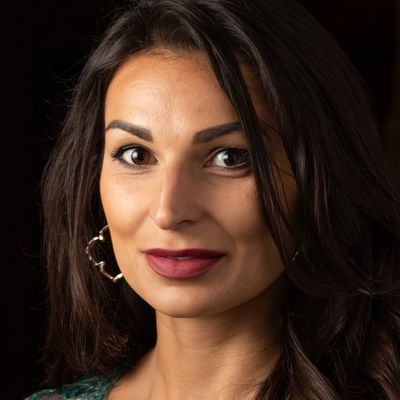
About
Pulitzer Prize-winning playwright Martyna Majok debuted her new play, Sanctuary City, Off-Broadway at New York Theatre Workshop in the fall of 2021. The drama follows B and G, two best friends, both undocumented immigrants. After 9/11, B’s mom decides to return to her country of origin, but the U.S. is the only home B has ever known. As he decides whether to stay or leave, G might be able to offer him a solution. How much are they each willing to sacrifice?
Sanctuary City puts U.S. immigration policy and the people it affects under a microscope and humanizes the stories behind the legalese. Host Ruthie Fierberg, along with Majok and experts Katherine Benton-Cohen (Author Inventing the Immigration Problem: The Dillingham Commission & Its Legacy), Carolina Canizales (Immigration Legal Resource Center), and Christian Pinochet-Paul (Presidents’ Alliance) discuss the evolution of immigration policy in the United States to present day, potential reforms to make policies more humane, where immigrants can find support, and more.
Create the change
- Support your local immigrant communities
- Create a warm and safe space at community centers
- Welcome them in the PTA and at school functions
- Become a patron of immigrant-owned businesses
- Assist in supporting refugees
- Dispel myths about immigrants (Read “The 14 Most Common Arguments Against Immigrants and Why They’re Wrong”)
- Donate to/partner with TheDream.US
- Donate to the International Rescue Committee
- Volunteer with/Join a campaign at United We Dream, the largest immigrant youth-led network
- Visit the State Policies map to see the policies of colleges & universities in every state
- Advocate for in-state tuition for all students with your state representatives
- If you work at a college or university, visit Presidents’ Alliance for resources, research, and tips to support international, immigrant, & undocumented students
- If you or someone you know is an immigrant, undocumented or otherwise, who needs support:
- Check your eligibility for DACA and apply (DACA toolbox)
- Apply for a National Scholarship or Opportunity Scholarship for higher education
- Seek support from United We Dream
- Reach out to Texas Organizing Project
- Contact the Workers Defense Project
- Find a Dream Center near you
Referred to in this episode
- Timeline of U.S. immigration laws
- What is DACA (Deferred Action for Childhood Arrivals)?
- What is DOMA (Defense of Marriage Act)?
- The Dillingham Commission
- Katie’s book Inventing the Immigration Problem: The Dillingham Commission & Its Legacy
- Chinese Exclusion Act
- 1907 Gentlemen's Agreement
- 1965 Hart-Celler Act
- What is the DREAM Act?
- Who are Dreamers?
- Paul Kramer TED Talk: “Our Immigration Conversation Is Broken”
- Section 1325 (Unlawful Entry….) and Section 1326 (Re-entry After Deportation)
- Business Insider article on inflation and immigration
- Presidents’ Alliance, Best Practices
- Gaby Pacheco scholarship (via TheDream.us)
- Julian Castro’s proposed immigration policies
- Libby Garland’s book After They Closed the Gates: Jewish Illegal Immigration to the United States, 1921-1965
- The number of immigrants and undocumented immigrants in the U.S.
About Our Guests:
Ruthie Fierberg, Host
IG: @whywetheater / T: @whywetheater
IG: @ruthiefierceberg / T: @RuthiesATrain
Martyna Majok, playwright
Twitter: @martynamajok
Katherine Benton-Cohen, PhD, professor of history and author
Twitter: @guprofbc
Carolina Canizales, Immigrant Legal Resource Center
Twitter: @the_ILRC
Christian Penichet-Paul, Presidents’ Alliance
Twitter: @donchristian92
Transcript
This transcript was automatically generated and might contain errors.
[0:00] Martyna Majok: Anytime it's like, well, let's go do let's talk about immigration. I'm like, I only know it from a personal level. What I have to offer is the stories of the people and myself of like what it was that anybody who's writing these stories is doing is like we're like get we're it's we're asking people to give a fuck by like presenting our presenting our narratives and like without it without it being like, oh, look at these exceptional people, you know, or this like this isn't but but just like humans is this so is this fair for humans? Is this fair for a human being in the world to have to go through this? If no, like what would we do?
[0:34] Ruthie Fierberg: I'm Ruthie Fierberg, and this is Why We Theater, the podcast that digs into the onstage works we love to make the offstage change we need. After all, that is why we theater. Today we welcome Pulitzer Prize-winning playwright Martyna Majok to discuss her newest play, SANCTUARY CITY. After COVID delays, the play bowed in September 2021, downtown in New York City, and I pray that it will reach many more stages and have continued life. The play follows B and G, two best friends who met in the third grade of their New Jersey elementary school. Now the two are teenagers, both undocumented immigrants, both living with their immigrant mothers, both juniors in high school. The play opens with G climbing B's fire escape.
She needs refuge from her own home where her mother's abusive man lives. B tells her that ever since September and the Towers, aka 9/11, things have gotten harder, and his mother has decided to return to their country of origin. B's mom gives him the choice whether to stay in the US or return with her. Thus begins B's trek to an impossible decision. Leave the place he spent more than half his life, the only place he's known as home, or stay and remain in limbo as an undocumented person in America. When G's immigration status changes for the better, the two consider getting married to help B. But what does that choice actually mean? Are they willing to take that risk? And later on, is B's partner willing to be part of this dynamic? It all comes to a head in SANCTUARY CITY.
[2:32] Ruthie Fierberg: Hi, friend. Martyna Majok, thank you so much for being here.
[2:38] Martyna Majok: Thank you for having me and for seeing the play.
[2:40] Ruthie Fierberg: Thank you. Oh my gosh. I was so excited when I read about this play. And then we had to wait a long time for it, but it was totally worth it to see it off-Broadway at the Lucia Lortel Theater. And it was just, it was magic. It really was. And it's a hard, it's a difficult play to read because you wrote it as such a very clear play. You know, this is something meant to be seen. And I hope that more people can see it someday. So I want to begin with the fact I know that you've centered immigrant stories and the topic of immigration in two of your other full-length plays. We have Ironbound, which was your mother's story, emigrating from Poland. We have Queens about women immigrants from all different countries living together in a basement in Queens. So, what led you to explore a story of undocumented immigrants, specifically to undocumented teens as the next part of that exploration?
[3:46] Martyna Majok: I think well, when I started writing plays, I would end up pulling from this from the stories of the people that I grew up with and my family and myself. And for me, it was just writing about my friends and family. And then when I would present it in classes or present it to in workshops, like other people from the outside would then label these as oh, they're it these immigration narratives or like low income stories or things that like would define what they were that wasn't necessarily what I was writing about. It was sort of a the first time that happened, I was like, oh wow, that's interesting. Like that's how these stories would be perceived. Whereas like immigration is just is just inherent to the life experience, like the issues of immigration and like what the limitations certain policy puts on like the possibilities for people's lives is just like inherent to the lives of the people that I grew up with and myself.
You know, when I like left North Jersey and went to other parts of America, I was like, oh, so I'm not necessarily everyone's default experience, like my understanding of America was everyone was from everywhere. And you know, I had my weird food, you had your weird food. Like we'd make fun of each other and also love each other, like like everyone's house was like was the country that they came from, and then outside of that was America. So it was all like these stories, stories like this were always what I had been writing about because those were the personal connections that I had, and there was usually something that a universal human experience that I was trying to understand also through these stories of my friends and family.
And for SANCTUARY CITY, I think it was like the idea of helping and being helped and these kind of the strains on relationships that happen when you're within a system that doesn't necessarily want everybody to thrive and particularly you and your community to thrive and how much strain that puts on the relationships that you have to do the caring work for yourself and other people that like the country or the whatever may not be doing for you. And so it came this SANCTUARY CITY about three days really quickly. That came from a bunch of if like if I had planned it, if I had stopped, I was afraid that I would lose it because a bunch of memories of other people of various people that I knew growing up like came kicking into my head one night, and the strain of those relationships that when so much pressure was put on caregiving to those.
So it was less, you know, I've written my mother's story, I've written this this story. Hmm, I haven't written about undocumented people, and that's actually a really big part of the narrative. I should do that. It's more I knew undocumented people when I was younger and saw you know the things that they were going through, and I want to explore those people. Well, it was I mean there's undocumented characters in Queens as well, like what the with Queens it was like people the various characters have various like different immigration status statuses, as well as like methods of coming into the country and reasons for it. So like it yeah, I definitely didn't like roll like go through the like Rolodex of trauma and be like be like I'll try this one now but but I hadn't written teenage I I'd only when I was writing Queens it was it there it was I remember it's like it was 2017 and the first and the the young young like dreamer character walked into that narrative that I wasn't sort of expecting and her entrance into Queens I think kicked up some other things for me that I that then that then made SANCTUARY CITY possible. I was actually I stopped writing Queens for a second so I could write SANCTUARY CITY and then return back to it to try to try to finish that play.
[7:55] Ruthie Fierberg: Wow and SANCTUARY CITY also you know it takes place between 2001 and 2006 which is a very specific set of years. You know you're right after 9/11 I think you know I didn't necessarily know this when watching the play you can feel that it's pretty soon after but in your script it's October of 2001. Um and it's also before marriage equality why did you want to examine these teens at that particular moment right after 9/11?
[8:15] Martyna Majok: That was the period that I grew up in and so the friends of mine, the friends that I knew that was their life that was that was their lives like that it took that long for marriage equality. It took that long for DACA. It's it's um it's weird for me to call it a history play because I'm just seeing the lives of these people who were teenagers, these people myself as well who was teenagers during 9/11 who are like in our 30s at the moment and I have seen the obstacles that they have had to go through that were specifically based on the policy that that you know that occurred after 9/11 and what but also like you know after 1991 like it's um I think I had that through the immigration policy 1991 and like and then 9/11 and that and the strain that that put on the community that I grew up in which was all you know multicultural.
People just decided to go back to their home countries and so it was it was really just wanting to show what the impact of that was like on a hum on a on a on a human life during during that time and after the after the play sometimes audiences would come up to me and go oh my gosh thank goodness like it's all it's 2000 almost 2006 at the end of the play like soon there'll be marriage equality because they were like oh Obama and I was like right but that was second term so right first of all no longer like right federally it wasn't until 2015 but also the characters in this play don't like yes we know that the characters in this play like they say in the second act it could be forever it could be never it could be never.
[10:39] Ruthie Fierberg: I'm curious if you're willing to share when did you come over to the United States because I'm just curious like how much time before 9/11 did you see of your your now American hometown and how much was really after 9/11.
[10:39] Martyna Majok: But I came over with my mom young and I you know I was pretty Americanized with my whole family still most of my with my whole family still stayed in Poland. I came to America with my mom after the fall of the Berlin Wall so in the early 90s when there was a large there was a the larger immigration of eastern Europeans who are coming in like the post in the post-Soviet era so then I was a teenager during 9/11 I you know this was in north I was in North Jersey where like across the water we were watching we watched the towers fall like I was in school I was in high school I was in lockdown and like through our windows across the water we watched the towers fall and I remember like the dream act being like the the godot of like well maybe but maybe the dream act as I remember from a lot of my friends just being like well yeah maybe the dream I made me the dream I mean the dream act and like you know I didn't know policy I was just seeing what what the strains that it was putting on people's families and the and the anxieties and at a certain point and the conversations that were happening when I when I went away to to college I was I I was I would constantly see stories of like homeland security cracking down on fraudulent marriages and it sort of felt like the the conversational landscape of my of within my like late late teens, I guess.
[12:19] Ruthie Fierberg: Act one unfolds in this incredible device of these rapid mini scenes that to me almost seem like a flip book, and like you keep going through it and you stop on a different page every time. And yet we're so able to follow this and really feel the depth of these characters, even with these like blink of an eye scenes, um, a lot of unspoken dialogue going on. Tell me about why you wrote it that way. What is the structure accomplish for you?
[12:56] Martyna Majok: It wasn't uh it didn't end up being like a conscious choice, I sort of, but that that night that I was writing Queens and the and the dreamer character walked in. I um I think it was like three in the morning when I finally went to bed and and um couldn't sleep because I kept thinking about what I that like these these memories. And um, so I got out of bed and decided like maybe I should just like write notes of this. So clearly I have to like there's something for me to to process the mind in this. I can't sleep. And um so I started writing notes, then realized I was actually writing dialogue, then realized I was just writing the play, and then I just didn't stop for three days. I just canceled all my shit and was like, all right, this is what's going on.
[13:41] Ruthie Fierberg: Wow.
[13:45] Martyna Majok: Yeah, it was all associative of like this this little this little bit of um information and relationship that then made me think of this this next one until the whole thing kind of formed it, you know, mostly like what you what ended up being like mostly like what you saw.
[14:02] Martyna Majok: You just gotta let it flow sometimes. There is a phrase that B repeats kind of over and over to G of well, because I don't belong here. Well, yeah, right, right, right, but because I don't belong here, and finally like screams it, because I do not belong here, according to here. And it was that idea of according to here that really struck me as like, yes, you have these themes of sacrifice and caring for one another, but there's also this huge theme of belonging. And for teens, I feel teens, even native born always are looking for that sense of belonging, lack that sense of belonging. And here it's told to him, you do not belong. It's not just this feeling, this subconscious, like, who are my people?
It's actually the place where you are is telling you that. And there was such a drive to that dialogue. And I also just thought it was so skillful the way you were able to be repetitive without being redundant. Um, and so I just wanted to call that into the room. You know, if someone is producing this play, if someone is directing this play, you have very detailed notes about um casting and where the characters should come from. And so I wanted to read, it says, No character, however, is of Western European origin or ethnicity or from a country of greater liberalism than the United States, especially as it relates to marriage equality in 2006 or earlier. And what I find fascinating is that I didn't even register B's sexuality until Act Two when Henry walks in.
And admittedly, it did not occur to me until reading your note that B doesn't just want to stay in the US because it's where he grew up, it's where his life is. Um, but it's also because going back to his country of origin would be at best unpleasant and at worst dangerous. So was that also just something from the people around you in your childhood experiences dealing with what their home, what their countries of origin were like, or was that something that came to you and said this would be a nice added layer?
[16:33] Martyna Majok: Uh I think those are I think they're most of the times they're they're afterthoughts of processing what ends up being on the page. So I'll so I'll I'll like in imaginatively live in another person's experience or like recall parts of my own. And then when I'm um uh like put uh processing what's there, I'm like, oh right, I should like indicate that this is uh um this is just something to consider. Mostly the note is like, you know, don't cast three people from France, like you know, like three white people from France who like I think they'll be fine. You know what I mean? If like they're raises it, like they'll be fine. Uh um, but but but um it also like I didn't I I left parts of it, I left parts of it open so that it left um more opportunities for different versions of the story.
Because it one can say that anybody can have a homophobic cousin like in their home. That anybody could have somebody who's like who they find is like uh is like a destructive presence if they return, or they may, you know, like uh expery just be dangerous to to be an out person in the in in the in one's home country. So I didn't want it to be this in general over there is bad, and in general over here is good, because I I don't bel necessarily believe that across the board it is. I mean, like the feeling of you brought up the um uh the the sense the the feeling of not belonging and like being told that being communicated that through um uh literal literally other people or the or the policy that that you're that you know that is kind of h hindering you and like that is that that is such a uh a difficult um space to live in, like moving through the world feeling unwelcome.
And that like so even after DACA or even after the abolishment of DOMA, that is still with you. That feeling that you don't you didn't they didn't want you here, you weren't wanted. And so, like, what does that do to somebody that that um throughout their then like continued adult life? The original production, um, you know, G was of Dominican descent and uh B was of Haitian descent, but that this can really open up. And what I found so incredible about your writing is that you really did leave those specificities of a specific ethnicity or nationality out, and yet these characters were still so specific. So kudos to you just for that accomplishment. Um I am curious though, because in terms of specifics, you slip in a lot of immigration laws and policies into the dialogue, like really stealthily, right?
Like where B will be like, if they knew how long we've been here, we wouldn't be allowed back for 10 years. And you're like, all of a sudden you're like, oh, okay. So that's the rule is if you get caught and deported, you can't come back for 10 years. Okay. Um, the whole dialogue around education, and I want to go to college, but I can't apply for financial aid because I am undocumented. How much of that did you know because you grew up around it? And how much of it did you have to research?
[20:09] Martyna Majok: I didn't research anything until the until after I've written I written the play. Um, just it was mostly like double checking that I had my facts right. I talked to two immigration lawyers after once we were like in production the first time in the 2020. Um just to be like, may I make sure that this is this is right. But it was it was I guess in entirely from like the the growing up, because these are just the terms. Like at a certain point, like uh for some for for some of the folks I grew up with, like they learned they were undocumented and they were like, what's that from their parents or whatever? Yes, it's expository for us, but also like they had to receive that information, like um as well, um, and then have to communicate the terms of their safety to their friends and family um in also like potentially coded ways um to like make to maintain safety. Uh so yeah, it was after it was after I I'd written it. I think if I if I had researched it, it's another thing that I would, it would have killed some kind of creative impulse.
[21:22] Ruthie Fierberg: And I want to get into the policy of it all, and we have incredible experts to welcome into the conversation with Martina and myself. So I'd like to introduce them now. Um, first we have Christian Pinochet-Paul, who is the director of higher education immigration portal at the President's Alliance on Higher Education and Immigration, which is an organization of American colleges and university leaders dedicated to increasing the understanding of immigration policies on students and communities and supports policies that welcome immigrants, undocumented, and international students into the university and college campus world. Previously, Christian was the policy and advocacy manager at the National Immigration Forum, and we're so excited to have him here today. Thank you, Christian, for coming.
[22:15] Christian Pinochet-Paul: Hello, thank you so much, and thank you for having me today.
[22:18] Ruthie Fierberg: Absolutely. Next, we have Professor Katherine Benton Cohen, who is a professor of history at Georgetown University. Her most recent book, Inventing the Immigration Problem, The Dillingham Commission and Its Legacy, looks at the history of this 1907 commission, which made recommendations on US immigration policy that still influence policy to this day. She also wrote Borderline Americans, Racial Division and Labor War in the Arizona Borderlands. She is incredibly accomplished in this field. Welcome, Katie.
[22:49] Katherine Benton-Cohen: Thank you. Thanks for having me.
[22:52] Ruthie Fierberg: Absolutely. And finally, we have Carolina Canizales, who is the senior Texas strategist at the Immigrant Legal Resource Center. In this role, she helps build organizing an advocacy capacity to fight the criminalization, incarceration, and deportation of immigrant communities in Texas. Previously, she led the deportation defense program at United We Dream, and she co-authored the reports Ending Local Collaboration with ICE and Deportation Defense, a guide for members of Congress and Other Elected Officials, which I certainly would like to read because we're gonna get into all of it about what we can ask of our elected officials. But thank you, Carolina, for being here.
[23:37] Carolina Canizales: Thank you so much for having me. So excited to join this uh group of people.
[23:42] Ruthie Fierberg: So the reason I wanted to have this discussion is because, quite frankly, of how infuriated I was after seeing the play, which um not at the play, but at the reality that the play demonstrates, of course. So all these rules about who can and can't be here, who can be here to study but not work, who can be here to work but not study, um, you know, how B has been in the US for more than half his life. And if he were straight and met and fell in love with a woman, could get a green card eventually, but instead B is gay and maybe will marry his best woman friend, which means he would face five years in jail and a quarter of a million dollar fine. And it just all felt so arbitrary to me. I wanted to tear my hair out. So I want to start with you, Katie, and just ask like, how did we get here?
[24:39] Katherine Benton-Cohen: I'm glad you asked me such a small question. Um, it's really a joy to participate in this conversation. How could I answer that briefly but but usefully? The field of immigration history has really transformed in the last couple of decades from one that was largely about, you know, our Eastern European and Southern European ancestors who came to Philadelphia and Little Italy and Hester Street and you know forged family bonds and we're good citizens and moved to the suburbs. And that was the product of a generation of historians who were the product of those families. And that makes sense. But a new generation of historians has really looked at the ways that exclusion have defined immigration, and that looking particularly at the history of Asian exclusion, the Chinese Exclusion Act of 1882, which was the first law that limited immigrants on the basis of their race being Chinese, not just their nation.
You could be of Chinese origin and come from, say, the UK, and you were still banned. And also by class, elite Chinese were still allowed to come. It was a ban on Chinese laborers. And that law, as historians like May Nai at Columbia have shown, and Erica Lee at Minnesota was really a turning point because it was the first time that the federal government actually felt like it had the teeth to have an immigration policy that was formally limiting people. And the commission that I mentioned to you was a federal commission that met from 1907 to 1910 and finished up in 1911. And they made a series of recommendations that not immediately, but eventually in 1917 and 21 and 24 led to the first quantitative limits on immigration.
And what I mean by that. And what I mean by that is prior to that time, almost all the illimitations on immigration were what we could call qualitative. They were about whether you had been a criminal, whether you were a prostitute, whether you had epilepsy, whether you were a moron, imbecile, or idiot. These were actual categories in the law. Now, these are horrific in many ways, but I think what is the most important aspect of them is that they weren't actually about limiting the numbers of people who came to the United States, right? And the quotas are really a turning point because they create this precedent that we're gonna have a set number of people that come legally to the United States.
So it essentially created the category of legal and non legal in ways that had not previously existed. Now, I won't take up all your time with all the ways that's changed. I'm just gonna point out one feature of it that's really important. And that is at that time, those quotas were targeting basically only Southern and Eastern Europeans.
[27:49] Katherine Benton-Cohen: They were based on a formula about how many people lived in the United States according to the census, and there was no limit on Western hemisphere. So this tells us something really interesting. One, that our idea about who are the immigrants we're supposed to keep out has changed unbelievably dramatically. There was no quota on Mexico in 1924. There was an overall cap, but it wasn't really, that was not sort of like the main issue. Um secondly, the consequence, of course, of that was a giant number of um Latin Americans, mostly Mexicans then began to come to the United States. Um, and so, in a sense, then it wasn't until then that anybody really noticed Latin American immigration as a potential problem in the United States.
And those are the people that start becoming identified, right, with new border patrol policies keeping people out. Meanwhile, last point I'll make at the same time, there's still Asian exclusion. We add Japanese exclusion through the gentlemen's agreement in 1907. Um, and so the consequence is that there are basically there's effectively almost zero Asian immigration to the United States until the Heart Seller Act of 1965. And then what the Heart Seller Act of 1965 does is it it looks fair. It's like such a good example to talk to students about equity versus parity or equality. It looks fair because it's like, oh, let's get rid of these exclusions and let's have the same quota for every country, because that's fair.
Well, how is it fair that Mexico, India, the Philippines, and Botswana and Ireland have the same quota? Obviously, that's insane. Just to name the first example, we share 1,500 miles of a border with Mexico, and something like a third of our land mass used to belong to Mexico. We can't have the same quota for Mexicans, right? And so the law created this category of the illegal alien that laws essentially invented, right? One day you could be in quota or there wasn't a limit, the next day there's limits and you're outside of it, but nothing about the economy or family migration or labor demands have changed. So it wasn't as brief as I wanted, but you can see that the law's moving the goalposts, basically.
[30:05] Ruthie Fierberg: Yes. No, that's a pretty thorough look at how we got here, particularly with the commission that the Dillingham Commission that your book covers. I guess my only follow-up to that is in terms of quotas and numbers, because we still have this to this day of you know, like a long line of people waiting, um, whether that's because of processing problems, but also because of quotas. What was the reasoning, whether it was accurate or not? What was the reasoning behind that? Was there an idea of like we don't have room for you? Was it was we don't have jobs for you? Was it we don't have houses for you? What was the logic?
[30:46] Katherine Benton-Cohen: Um that's a really good question. And um it's a combination of things, and this is something that I tried to be myself, right? I'm not not every historian agrees with me. But one of the arguments that I made in that book was that it was a combination of what we would call eugenics, basically, you know, scientific racism on the assumption that in this case, in that time period, that Eastern and Southern Europeans, Jews and Italians and Greeks and Poles were um actually biologically inferior. But but I actually make the argument that not everyone who was in favor of quotas thought that. That we we have it's an easy convenience for us today to say, oh, they were racist and that's why they did that.
They did, they did absolutely, Ruthie, have other concerns. They were concerned about wages. They were concerned about cultural change, which you can not like cultural change but not think it's biological, right? You know what I mean? You can uh not think that someone is biologically inferior but not want another Catholic parish in your small town or what have you, right? And so I think that if we want to look at the modern implications and what they the parallels might be for today, I actually think it's it's not so easy to dismiss these folks because I did these sort of like mini biographies of some of these policymakers, and I realized that some of them were not terrible people. Like I I really were human and they had concerns.
Some of them were horrible. Henry Cabot Lodge, the senator from Massachusetts is like the waspiest of wasps of wasps, and just like a parody. You can't even write about him and try to make him be, you know, a real character. But some of these people really struggled with their Christian ethics and how they felt about assimilation and change, and they were concerned that what they called the American standard of living was being undermined by new immigrants. And we can say, oh, you're wrong. And Ruthie, you mentioned you want to talk about economics later. People challenged them then and now on their math. But it it wasn't, it wasn't meanhearted. And I think that that's that's a tough pill for us to swallow.
Because what it means is like if we think we're complicated people thinking about a lot of stuff, we might make the same mistakes they made, right? We might step in the same puddles um thinking we're doing the right thing. And it's not so easy, like some sociologists and political scientists, frankly, have done to say, oh, those people they were just racist and they were wrong. You know, they were human and complicated like policymakers are today.
[33:20] Christian Pinochet-Paul: Sure. I think you can also be human and complicated and racist. Um that's true. No, fair, fair, fair word. Um and and also, you know, I I think part of what I struggle with is like the narrative around immigration, because I actually, you know, I obviously did some research before this discussion, and I learned that currently in the United States, immigrants make up 14% of the population, which is about 45 million people. And undocumented immigrants make up 3% of the population. So not 3% of that 14, but you know, 3% of the entire population was which is about 11 million people. And it's interesting because both percentages felt so low to me because of the rhetoric around immigration and undocumented immigrants.
And those numbers are big. But for the quote native-born people to be freaking out, I mean, you would to me, it's like I would have thought the percentage was above 50% that like the the reaction to it. And I want to know, like from Christian and Carolina, perhaps, like how we work to counter the narrative that you know, immigrants will take American jobs because we know that that's actually m many immigrants are attracted to growing regions where there is more um demand for for laborers and for work, and that immigrants do not lower wages, that immigrants do not uh drain welfare because they don't have access to welfare for five years, that immigrants are actually less likely to be incarcerated for violent and property crimes. And yet you would think the opposite of all of these things based on a lot of the predominant conversation. So, Christian, maybe let's start with you. How do we work to counter that narrative?
[35:37] Christian Pinochet-Paul: Right. I think we really have to go out there and provide the data, show the results of the contributions that immigrant communities make across the US. Because I think in politics, a lot of truth gets lost in the messaging and in the narrative and in the discussion. And so it's so important to go back out there day after day and highlight that immigrant communities make substantial contributions to their local state and to the national economy. To your point, Ruti, about the undocumented community being between, I think 10 and 11 million individuals. I think about 60% of those individuals have been in the US now for more than 10 years. So this is a long-established community. A community that has been in the US for many years, in many ways are American, except for this one big barrier, which is their immigration status.
So I think it's very important to keep that in mind when discussing immigration. It's very important to keep repeating that. Because often in politics it feels like you have to say the same thing more than once or twice. And those who oppose immigration are really good at having simple policy solutions, simple catchphrases, and they're very good at repeating it. And I think on our side, on the side of realizing the contributions that immigrants make to America, we have to continue to lead on that message to push those data points, those economic contributions through.
[37:25] Carolina Canizales: Yes. So I think you, Christian and everyone, I'm a little triggered because I I am undocumented, I've been here for 20 years. Um and I got arrested for uh Obama to actually pass DACA. We had to engage in a lot of civil disobedience and put our lives at risk for that to even become a reality for us. And at first, we would use um narratives that were actually exclusive, the youth when we when we engage in the dreamer movement, where we're like, we are 4.0 GPA students, we only want to go to college. You should accept us. We grew up here since we were young. And unfortunately, all of those narratives were very exclusive, and we didn't know the damage that we were we would be doing to generations of asylum seekers and refugees and recent arrivals that we now see today.
So we did it like a really high standard. Um so when I think of like, yes, we've been contributing, we've been part, we pay taxes, we go to school, we are forgetting about the other complex stories of immigrants and why they decide to migrate. So I do think that at least for us who've been in the movement for a really long time, and for us who are directly impacted, we have definitely tried to evolve our narrative so that we're more inclusive and that we recognize that migration patterns are so complex, and there's millions of reasons of why people decide to move. And I think for us, it's like migration should be a human right, and everybody should be able to move regardless of their level of contribution.
I think that's one thing we're trying to push the needle on. And but I do agree that with folks that are super anti-immigrant, with folks that still feel that they need to other people, like they're othering people, they are gonna use those arguments, right? The ones that the right wing always goes to. And honestly, it's always immigration, crime, and economy. We should actually try and be welcoming, but what we see right now is, and you see it in Texas, I'm in Texas, you know, um, what we see right now is this very dangerous rhetoric of we're being invaded, which then turns into really harsh policy, which then turns into really um violent acts, whether they're emotional violence towards immigrants or physical violence towards immigrants, right?
So that's in the moment that we are. So what we do, right, to counter a lot of these waves of dangerous rhetoric about immigrants is not only do we talk about our contributions, but we talk about the reasons that are so human of why people are coming, right? They are fleeing climate crisis, they are fleeing war, they are fleeing extreme political persecution, they are fleeing very dangerous conditions that no one in their in the right mindset would want to stay there and live through.
[40:45] Christian Pinochet-Paul: That's right.
[40:46] Carolina Canizales: So I think we're really just trying to humanize a lot of this by telling the unique stories and journeys of everyone, which are so diverse and complex and rich. Absolutely. And for us as dreamers and the youth movement, uh, we're really, like I say, we really have tried to include and include more and more youth. Right, that the term dreamer is, you know, controversial because it is dividing, you know, it was a convenience of language, but it is dividing people into quote, deserving and undeserving, and saying that, you know, this narrative of you can't um hold a child responsible for the decision that their parent made by making that dichotomy, you are saying that the child is innocent, and if the child is innocent, therefore the parent is guilty.
[41:45] Katherine Benton-Cohen: I want to credit another, a really innovative and important scholar named Paul Kramer, who teaches at Vanderbilt, and he did a TED talk actually on the ways that we should change the immigration narrative.
[42:01] Katherine Benton-Cohen: And I was so pleased, Carolina, to hear you say this, where he talked about, and Christian, I understand and I do the same thing you're doing, but he does this great TED talk where he says, Look, we’re not, we’re on the defensive every time we make that argument.
[42:16] Katherine Benton-Cohen: And it's ultimately probably not a winning argument because it's on the terms of the critics. And he pointed out, you know our immigration flows, I mean the people that I mentioned, the groups that I mentioned, are a consequence of the US's role in the world.
[42:33] Katherine Benton-Cohen: The US occupied and controlled the Philippines until independence in '46 and still of course has immense ties to the Philippines, military and otherwise. The US didn't recognize Haiti for decades after, you know, black independence there and occupied it several times throughout the 20th century, right?
[42:53] Katherine Benton-Cohen: Um, held up dictators, ditto Central America. Look at our relationship with Mexico. There is a reason why people come from those countries to the United States because the United States has a relationship with those places.
[43:08] Katherine Benton-Cohen: It isn't just about whether they're the worthiest person, the smartest kid in the class, the good doobie, the kid who joined the army, it's about that there was a pre-existing relationship that the United States government benefited from with almost most of the large home origin countries of immigrant communities in the US.
[43:28] Katherine Benton-Cohen: And I really felt like that's, I mean I get it, I'm in the Ivory Tower. That's a pretty controversial argument to take out there with US imperialism and US politics. On the other hand, I think it is actually something that people can kind of recognize as, oh wait a minute.
[43:45] Katherine Benton-Cohen: This is not like we're this island, and a bunch of people got in boats and they've never been here and they like rode over here. No, they had tremendous connections that were not just personal and familiar, but were political and military and economic to the US.
[44:01] Katherine Benton-Cohen: This is not a one-way street. And I think that's really critical to underscore. It's the same, it's an extension of the same argument I'm saying about the United States economy is totally dependent on Mexican labor.
[44:19] Katherine Benton-Cohen: Just in response, Carolina, to what you were saying and Katie, this idea that we're responding a little too much to the critics. I agree with you, Carolina, that migration should be a human right, no matter what.
[44:32] Katherine Benton-Cohen: But I think it is also comforting to know that the facts are also on my side, right? Like it's helpful to know that I believe in this as a human right, but also it's just good for the economy, but also it's just good for multiculturalism.
[44:50] Katherine Benton-Cohen: Um, but I absolutely hear that exclusionary narrative and how damaging it can be. I mean, speaking of things that are damaging, just the fear.
[45:03] Katherine Benton-Cohen: I mean, I think that that is something that we really understand through Martyna's writing is the fear of being found out, the fear of being deported. You know, there was a moment when B said, well, what if I am jaywalking and the next thing I know I'm back to my country of origin?
[45:19] Katherine Benton-Cohen: And his partner's response is, well, then don't jaywalk. And it's like, yeah, but there are only so many times you can, especially in New York, right?
[45:28] Carolina Canizales: Yeah, yeah, New York or not to jaywalk. That's like don't breathe.
[45:33] Carolina Canizales: Yeah, exactly. Um, so Carolina, I'm wondering from you, especially because you work with the Texas, you know, campaign and around incarceration and deportation. How do you help combat that very real fear in people?
[45:53] Carolina Canizales: And how do you also combat the threats that cause the fear to begin with?
[46:00] Carolina Canizales: Wow, huge question, but I'm gonna try to do that. I know I'm full, I'm full of the really unimportant today.
[46:06] Carolina Canizales: Yes, I know. Um, so in my personal experience, the way I got out of the fear was meeting other people going through the same situation, sort of like the characters in the play.
[46:21] Carolina Canizales: Uh, I started beginning to feel empowered and a lot more safer when I knew there were others and I wasn't alone because there will always be others, and you were not gonna be alone.
[46:32] Carolina Canizales: And I think that's why we started this immigrant youth justice movement in the United States almost 20 years ago. Um, and that's how we got to DACA because we all got together and we knew we weren't alone and we knew we had agency and power to raise our voices and say, Hey, we're here, we deserve something, like going to college, we deserve citizenship, we deserve our families to not be deported.
[46:58] Carolina Canizales: Uh, we deserve to be, uh, to have full human rights and our humanity to be respected. And I think, um, movement building has been a key into fighting not just the rhetoric, but also the isolation that everybody and the fear that everybody could fear.
[47:18] Carolina Canizales: So building community and being very strategic about building community and investing and building that community and those spaces for people to be able to be and exist.
[47:29] Carolina Canizales: So I think that's one thing that I've seen be successful in the 10. I mean, I've been doing this for 12 years. I've been here for 21 years, and that is what got me out of my fear, meeting others, being in community with others that were struggling, right?
[47:43] Ruthie Fierberg: And are there specific organizations that um either have chapters throughout the country that you recommend people can go to if they're feeling like that?
[47:53] Carolina Canizales: United with Dream Network, it is the largest immigrant youth justice network in the country. That's where I began my journey.
[48:00] Carolina Canizales: Um, we also have, uh, at least in Texas, for those who are feeling isolated in Texas, we have, uh, Texas Organizing Project, Workers' Defense Project.
[48:09] Carolina Canizales: We have tons of youth organizations and colleges of your student, if you're an undocumented student or undocumented youth. Tons of colleges have chapters now.
[48:17] Carolina Canizales: We even have things called dreamer centers now, right? Find, uh, resources, et cetera.
[48:29] Carolina Canizales: So I would definitely just search some of those names, you know, Google and try to find what is the closest community to you, but believe me they exist, even in places like Texas where everything seems like you can't stay here if you're an immigrant.
[48:43] Carolina Canizales: But we are right, there's a huge community here and we're resilient. Um, and then when it comes to Texas and the types of policies that they're doing, uh, it's a lot of education.
[48:56] Carolina Canizales: Like you have to do just like Christian was saying, we have to educate them on the facts. We have to educate them on the reality of everything, right?
[49:04] Carolina Canizales: And so I think not only it's educating politicians and voters on the facts about migration, why we're experiencing what we're experiencing, right?
[49:14] Carolina Canizales: At the border, et cetera. But it's also, um, educating people on the systems that are in place to handle situations of immigration and how racist they are and how exclusionary they are and how they're designed to punish people, right?
[49:32] Carolina Canizales: Like, and in the play, it comes out so many times, 10 years. We can't come back for 10 years. Why? Because the US decided to punish people for 10 years, right?
[49:41] Carolina Canizales: If you decide to go in and out of a border, right? For those who cross unauthorized. If you cross it once, you go to jail. If you cross it twice, you go to jail for more time, right?
[49:52] Carolina Canizales: It's called, uh, 1325 and 1326. It became a very familiar term during the last presidential.
[50:00] Christian Pinochet-Paul: Yes.
[50:00] Carolina Canizales: So, but it's because the US really takes extreme measures to deal with immigration problems.
[50:08] Carolina Canizales: And it's all about being tough and enforced and protect our borders. And the only way the US has known how to do that is like Katie said, is using military, using jails, using punishment, using very unreasonable and very harsh laws.
[50:25] Carolina Canizales: Um, so not only do we have to educate people on why are people coming and the complexity of that and the humanity of that, but we have to educate people on the systems that are in place that honestly are not working.
[50:38] Carolina Canizales: All of this, they do it, they do it to deter, right? We're tough. We jail everybody. Ah, but if you come here, we're gonna arrest and jail you, people from Latin America, right?
[50:49] Carolina Canizales: That rhetoric and insane and the way it influences policy, but we know it's not working because guess what? People are still coming, right?
[50:56] Carolina Canizales: Now you say to them, no matter how much you threaten them, the conditions that they're moving away from are far greater than any deterrence policy the US can implement.
[51:11] Carolina Canizales: So why not look at it from 180 degrees, right? Why not look into welcoming people, providing them the resources and support that they actually need?
[51:21] Carolina Canizales: Yeah, people actually thrive, I think. I mean, basic argument, basic economic argument. Business Insider just two days ago wrote an article about if we accept immigrants, our inflation percent is going to go down.
[51:35] Carolina Canizales: And we know that, and we know that's true. You know, so to me, it's like, why do we have to be so harsh? Why do we have to be continue this tone of politics and rhetoric around this problem when if we flip it and we start seeing the opportunities, we may just end up with better solutions.
[51:54] Carolina Canizales: Um, I'm not even going to address Abbott. Like, I think it's no, like we're just not even.
[52:00] Christian Pinochet-Paul: No, give him your face.
[52:01] Carolina Canizales: Yeah.
[52:02] Carolina Canizales: But I know, I know this.
[52:04] Carolina Canizales: In Texas, not everybody thinks like him. There's such a diverse and complex community that we go beyond what his mind is capable of thinking.
[52:15] Carolina Canizales: So I'm gonna leave it there. And I'm actually, I am, I feel so empowered to be in a place like Texas right now in this moment because I know that the movement that we're building and the resilience that we're building will hopefully eventually win against these actors that continue the same patterns that have not worked for the US when it comes around immigration policy.
[52:35] Ruthie Fierberg: Martyna, I'm actually I'm curious how all of this is sitting with you because you sat inside the heads of these characters and you worked with actors to play these characters to balance, you know, the very real fear with also the very real resilience.
[53:08] Martyna Majok: And people I grew up with as well, like had certain feelings and experiences, and like in many years later, um, sort of processing those and trying to understand them.
[53:18] Martyna Majok: And here I'm receiving these facts of like, ah, yes, like this is the why of those feelings from many years ago and the feelings of now that that is, uh, validating I'm also in awe of everyone's achievements and continued work.
[53:42] Ruthie Fierberg: Christian, I wanna I want to come over to you because um, education is a big part of SANCTUARY CITY.
[53:50] Ruthie Fierberg: Um, you know, both B and G are they're clearly like smart and resourceful kids. They're not always great students, sometimes they are, which I also just think is important to show in general, but both want to go to college and neither can afford it, but B cannot apply for financial aid because of his status.
[54:13] Ruthie Fierberg: So have those rules changed at all since this 2001, 2002 era? Um, and where are we now in terms of, you know, accepting undocumented students to colleges and universities?
[54:34] Christian Pinochet-Paul: That is such an important question. The rules have changed since 2001 and 2002, and they have changed for the better.
[54:44] Christian Pinochet-Paul: When B was talking or saying I can't go to college unless I can pay it for myself, that is a reality that a lot of undocumented students in the US face.
[54:55] Christian Pinochet-Paul: In some of our research, we found that there are 427,000 undocumented students in higher education. Many of them go to school at a private or public university in states where there's no access to institution for public institutions.
[55:15] Christian Pinochet-Paul: And what that means is that undocumented students in those states end up facing substantially higher barriers to higher education than their US citizen or lawful permanent resident colleagues or, um, students in the same states.
[55:35] Carolina Canizales: So in the case of New Jersey, back when B was trying to or thinking about going to college, there wasn't access to institution for undocumented students. And in fact, there was not. And that remained the case until 2013, when finally legislation was passed that allowed individuals without documentation who were also not DACA recipients to go to college and to access institution if they meet a number of requirements, usually graduating from their high school in the state and living in that state for a number of years.
[56:14] Carolina Canizales: In that same way, undocumented students also face barriers to financial aid, as you said, Ruti. Undocumented students cannot request any type of federal financial aid. And that is still. So we're in a situation where now about half of states across the country have looked at the issue and have decided to proactively expand access to institution and state financial aid for undocumented students, which I think is such a great and important policy. And talking about contributions in a way, that's one of the main reasons that they've decided to approach it that way. But also for tuition equity, it seems unnecessary to have a situation where some state residents have access to institution and yet others have do not and have to meet higher barriers, overcome higher obstacles to be able to access that.
[57:25] Carolina Canizales: And let me play devil's advocate for a moment, because I think that some would argue why does an undocumented student get to have to apply for financial aid when there are some native-born people who can't get financial aid? So what do we say to those people?
[57:48] Christian Pinochet-Paul: I would say that what we're asking for is just equity across the board, nothing less, nothing more. Individuals who are US citizens or permanent residents in the state can usually are able to request state financial aid. They are also able to request, as we just mentioned, federal financial aid. So they have that additional ability, that additional opportunity to be able to cover some of their costs. At the state level, we're just asking for the same opportunity for undocumented students to have the opportunity, not necessarily it's not a given that any student would receive state financial aid, but to have that opportunity to request and apply for it and to be at the same level, the same playing field as any other student in their state who has met the same requirements. And those are usually graduating from a local high school and being in the primary school system for a number of years.
[58:51] Ruthie Fierberg: Right. And as part of the president's alliance, as you as the organization reaches out to colleges and universities to try and get them to create more access, to welcome international students, immigrant students, undocumented students, what is what's the pitch, so to say, or what are some of the concerns of those universities and colleges that you address in order to get them to be part of the alliance?
[59:25] Christian Pinochet-Paul: Right. I think a lot of colleges and universities are familiar with the issues surrounding undocumented students. But because those student populations could be relatively small compared to the larger college or university student population, there's a lot of questions and a lot of interest in seeking information for how to support undocumented students in their college. What I mean by that is that for undocumented students, not only do they face obstacles in terms of paying for college or accessing financial aid, but also obstacles related to the admissions process. Historically, a lot of colleges and universities classified undocumented students who've been in the US for a number of years, more, many of them more than a decade, as international students.
And that complicates the admissions process. It complicates a lot of other things related to someone's experience as they go through the higher ed system. And so colleges and universities come to us with a lot of those questions, questions about how to support students related to immigration enforcement or making sure that they have advisors, academic advisors who can speak directly to the challenges that undocumented students face. And our goal at the President's Alliance is to be able to provide the resources and the information to help answer those questions.
[1:01:05] Ruthie Fierberg: Are there just problems? Like, do you have to identify yourself as undocumented or a permanent resident or what have you? And could are we do we want to advocate for that kind of question being removed from an application? Like what's what's the screening and what's the solution that we'd like to see?
[1:01:26] Christian Pinochet-Paul: You know, it really depends on the specific college or university, what the student classifications may be. I think mostly for undocumented students, they might fall under other immigrant or some type of category like that.
[1:01:42] Ruthie Fierberg: Got it. I think that's a very good question, though. And one that you have to really balance well. On the one hand, it's important for colleges and universities to know that they have undocumented students in their on their campuses, so that they can provide resources and invest in those resources to support those students. On the other hand, there are also student communities or students who are undocumented who may have reservations about sharing their status. Because of potential immigration enforcement at the federal level. Right, which is part of my question is like I imagine that colleges and universities, in order to supply certain support systems, but also in order to just, I mean, back end like file certain paperwork on their side and um, you know, who is on their campus, all of those things have to know, you know, certain questions about their student body.
And yet at the same time, if I I can only imagine if I were undocumented, I would be very nervous, not only to say that I am, but because perhaps that also signals like I'm just setting off like a big signal of like, here I am. So even if you're not gonna come after me, you're also that's signaling that, like perhaps my parents are undocumented and and me applying to college could end up, you know, putting my family members in danger. I I just don't even know how you navigate the practicalities of that and what the alternative, you know. How do you balance this? We we want to know who you are so we can serve you. We we need to know who you are for paperwork, but we also don't want to be putting you in danger.
[1:03:31] Carolina Canizales: Carolina, I see you nodding along.
[1:03:33] Carolina Canizales: No, totally. And Christian, thank you so much for all that you do to create that access for folks. Um, I went to college undocumented before DACA. So I had to go through all these fears. But I think sometimes just like GMB, like the dreams that we have, usually pushes to even if we have fear, but we have an opportunity in front of us to enroll. Most of the people that I know choose to enroll because we have dreams, right? Of higher ed and being able to have a career. But there are things that colleges can't do, right? So for instance, Christian was educating us on how there's not enough financial aid opportunities, but colleges have their own scholarship programs. So they could fundraise and have unique scholarships that are non-bound to status so that they're accessible for everybody to apply regardless of status, right?
[1:04:26] Carolina Canizales: I also think that the fear of enforcement is super real. But colleges can also choose not to share information or data with ICE or other enforcement agencies that could in a in an interesting scenario ask, you know, for that information. So there can be policies in place to protect that information so that that fear is reduced, but also there is a level of protection for students. And then when it comes to opportunities for financial aid, colleges can do their own scholarship programs, right? Um and then a good friend of mine, Gabi Pacheco, she actually started this national scholarship fund that you you partner, they partner with different colleges across the country and they designate specific scholarship for undocumented students or for DACA recipients so that there is more support out there, you know.
So I think to me is um a lot of it is the choice, right? Like, yes, you have a lot of questions and you want to help, but here are some active solutions that you should put in place policies, scholarship funds, um, and inform yourself whether you can be an advocate with your state legislature so that your state can be an institution state, right? So there that there are different roles like that. So just wanted to mention this opportunity.
[1:05:51] Carolina Canizales: I just want to say like a shout out to Georgetown, which has really been a leader. And Christian, I know you were here. Um, our president Jack DeJoya has been one of the most vocal university presidents, but is absolutely part of a consortium of university presidents that are committed to undocumented students. We have a staff member committed to them, activism, and in our case, um a venue for our students to advocate at Congress, right? No, we don't we don't have statehood, that would be great if we did. Shout out for DC Statehood, but yes, yeah, we have students testify in in Congress as well. Um, so I'll just put that out there. And um, what I think is interesting about it is that it's in the um I'm not Catholic myself, but it's in the Jesuit tradition of care of the whole person and dignity of every uh person.
And I think that dignity model, going back to the ways that we argue about worthiness of immigrants is actually a really powerful one that I like a lot. Yeah, it's not like I said, it's not from my faith tradition, but I think it has a lot of um integrity and relevance to this debate.
[1:07:00] Christian Pinochet-Paul: To Carolina's point, we've been lucky to see a lot of colleges and universities really step up and provide a lot of support for undocumented students, and I think that's great. And for those students in other colleges or universities that are looking for more support, I think it's always important to reach out to their institution and to um advocate for more support, and I know we're happy to provide some assistance in that.
[1:07:29] Christian Pinochet-Paul: I'll also say that um for access to state financial aid at the state level, I I agree. I think colleges and universities um can provide financial aid and a lot of them do, especially private colleges and universities. But state financial aid is so important because it's an amplification of those efforts. Um to your point, that's again, Carolina, I think students in states where there is no access to state financial aid should consider working with their college or university to push legislators towards that policy.
[1:08:08] Katherine Benton-Cohen: Yeah. I did want to rewind a little bit and and just remind everyone that you know, while we have the term dreamers out there, the DREAM Act that was proposed in 2001 did not actually pass, has not passed. Um probably will not. Yes, and that DACA was really designed as like a last ditch effort stop gap that and just technically what DACA provides is, you know, to those who came as as children, it is a two year deportation deferral. It doesn't stop deportation entirely and it can grant um you know access to work permits. But you know the question of education is is even separate from that, though of course DACA is helpful, you know, if you can delay um impending deportation for two years, but that also doesn't help at a four year college or university.
So I I also wanted to just go rewind to you know how someone becomes undocumented to begin with because Carolina you brought up um 1325 and 1326 which became these numbers that we were very familiar with particularly because of the Democratic candidate Julian Castro who um really brought that up a lot what those laws say is that it is a criminal offense simply to cross the border.
[1:09:35] Carolina Canizales: And when an adult legally crosses the border illegally crosses the border, which is to say crosses the border without prior authorization, um that's how the separation of families began because an adult who is awaiting uh a hearing for a crime who has to be detained cannot be with a child.
[1:09:59] Carolina Canizales: So it's first you criminalize that act, then it's like, oh, well, criminals can't be with their children. And you know, you have you have the situation that we currently have. But I'm curious of like if we were to abolish that and crossing the border is no longer criminal. What does that look like? I think we've been told that all of a sudden it looks like a mass influx that's uncontrollable and well, you know, all these things. But in practicality, what does it look like? Is there a way we go back to Ellis Island rules or pre-Civil War rules? I don't think it'll dramatically change the numbers because, like Katie said, there are other factors that drive just because again, right now we have massive numbers regardless of the deterrence policies that exist, right?
But even if you take this away, the factors that are driving migration are not a result of deterrence policies. They're a result of direct links that the US has with other countries plus climate crisis. And I don't see any of those factors going away just because we change our voter policies. But the way it would positively impact the US is that there will be, and sorry about my God, there will be a lot more um family reunifications. They wouldn't be, they wouldn't be any harmful and traumatizing separations that we've been dealing with for years. And also I think it'll be a lot easier for the immigration system, UCIS to keep track of folks. We wouldn't spend millions of dollars on detention, immigration detention, which would total is a total for profit complex. Immigration detention. So those resources would become available to help people adjust status and give the services that they need versus spending them all in jails and keeping them behind bars.
[1:11:59] Carolina Canizales: Right. So there could be a shift of resources that would be positive. Of course, it would be family reunification that would be positive. Um we wouldn't, we just wouldn't see those negative factors of detention, right? Or that much the tension would be great for many communities and for the economy of communities because we spend so much money on cages in this country.
[1:12:21] Katherine Benton-Cohen: Yeah. Yeah, so I think those are some of the things that would change. Um, I don't think we will stop people from coming, because again, those factors are beyond what we do at our borders.
[1:12:32] Katherine Benton-Cohen: Right. They're what the US has. But I'm more curious, and and maybe Katie, you you have a historical perspective on this. Like, can we handle can the country handle, can the population handle, can all of those things um handle not having the criminalization of crossing borders? Can we handle the the four million people that are in line if we were to actually process them in a timely fashion rather than keeping that line at four million people?
[1:13:06] Katherine Benton-Cohen: I mean, this is the moment to talk about it, right? We have inflation, we have the quote unquote great resignation, we have a historically low birth rate, we have an aging population, and we have a record number of open of job openings right now, right? We have I saw someone on Twitter put this so well, they're like, you know what, we keep talking about the supply chain problem. You know what that is? That's sick people all the way down the line. That's people who are sick or home caring for their children, and that's why we have a supply chain problem.
[1:13:36] Carolina Canizales: Okay. So if we want to talk about expanding numbers, this is the moment. Having said that, I just want to make one other point that I think is really important to emphasize.
[1:13:46] Katherine Benton-Cohen: Most of the people that, and and you all know this. I just want to put that out there on your podcast. Most of the people that are here, quote unquote illegally came legally. They overstayed a visa.
[1:13:54] Carolina Canizales: That's right. Yes, people do that. Okay. But no, but it's 62% of undocumented people overstate a visa.
[1:14:08] Katherine Benton-Cohen: Right. So, you know, we need to remember that the rhetoric about people crossing all these people that are crossing land borders, right, to get here is um an exaggeration and often a kind of racialized trope about who's undocumented. Um, there are proposals.
[1:14:25] Katherine Benton-Cohen: I mean, we could go on and on. I'll just throw out two ideas. There are proposals that we I mean, I have my own mixed feelings about commissions and quotas, and we that would be a whole other podcast. But there are proposals, for example, that we have a committee, we have a commission that is members of labor, business, and human rights or immigrant groups that determine a quota each year, a floating quota based on labor demands and other kinds of issues, and that would be better than what we have now, which is nothing in lies, right? Like I, you know, that would be better. Are there problems with it? Yes, but it would definitely be better, right?
[1:15:04] Katherine Benton-Cohen: And the key is that it would float and we would come up with some factors that would allow us to determine what the float is. I think that would be much better than this than the non system that we have now.
[1:15:15] Katherine Benton-Cohen: Um, there's one other thing that's kind of unrelated but related. I want to bring it up because it has a Texas connection. I don't think that any immigration historian, I think we lose our our license if we don't mention in public fora, right? This thing where people say, Well, why don't they just get in line? My grandparents came legally, my great grandparents came legally. And we referred to the we're all nodding our head because we've all heard it, okay. First of all, right, we know there were no quotas for great grandpa, okay. Secondly, there's a wonderful historian named Libby Garland who teaches um in New York at LaGuardia, I think. And she wrote a book about all the like Jews that came undocumented in the early 20th century, and the legislation passed to regularize their status because Jews weren't the bad guys anymore.
[1:16:03] Carolina Canizales: So I have been taught teaching immigration history. I'm sorry, I just have to include this, uh, for about a decade before I came across. I know your listeners can't see this, but an oral history that my grandfather did, who is the son of Eastern European immigrants who migrated to the Texas border. This is not the usual New York-y story.
[1:16:22] Katherine Benton-Cohen: Yeah. And I had PhD taught at Georgetown before I read this. And here's what he wrote. Um, my father must have emigrated from Poland. My father must have emigrated to the US in 1895 or so by jumping off a cattle boat at Montreal.
[1:16:43] Carolina Canizales: Hmm. What did he just say? He just said that my great grandfather was an illegal immigrant.
[1:16:49] Katherine Benton-Cohen: Right. Right. Moving on, no big deal, blah, blah, blah. Life goes on. No controversy, no policy, no sweat.
[1:16:56] Carolina Canizales: Right, which is why I I mean, when I refer to Ellis Island, it's not the literal Ellis Island. I'm just like, do we need quotas at all? Is really we might, but we don't not the ones we have now that not the ones we have now.
[1:17:08] Katherine Benton-Cohen: That don't even measure who comes in, right? Because most people come in out of quota through family reunification and visas that are outside of quota.
[1:17:15] Carolina Canizales: I didn't even get to the marriage question of it all because that that piece of it really was getting under my skin because I was like, you know, not so long ago, and even still sometimes today, people get arranged marriages.
[1:17:30] Katherine Benton-Cohen: Right. And that's not less valid in the eyes of the law between two native-born people.
[1:17:39] Carolina Canizales: So why should that be invalid in this case between B and G if they're going to commit to the same thing, you know? It's it just like I said, it feels so arbitrary.
[1:17:52] Katherine Benton-Cohen: Yeah. And there's like it all it only like opens up like um ways for other people to more ways for people to take advantage of each other, like, you know, potentially going into uh, you know, near the end of the play, like the ways that people are using things against one another, like um being able to extort somebody for something that may have begun like in a genuine in as genuine of a way in terms of like one person loves another person and and and like there's a desire to be with them or to help them, whatever, but then can can be flipped because of like, oh, I have this weapon that is policy, so I can hurt you.
[1:18:30] Carolina Canizales: So many people don't have to make that that choice.
[1:18:33] Katherine Benton-Cohen: Exactly. That like it does not put pressure on on, you know, additional pressure on like the difficulty of already just being in a love relationship with it's it's like it's it's heartbreaking the things that the the the potentials that were that may have been squashed because of because of that.
[1:18:48] Carolina Canizales: Like and and the story and the characters are so beautifully layered that none of these things about it feel artificial or like Jack Knights in there, it all feels a part of the story creative.
[1:18:59] Christian Pinochet-Paul: Christian I just if there is a policy that you want to advocate for that people should look up and uh if they're passionate about this.
[1:19:08] Christian Pinochet-Paul: Yeah thank you. I I think we can all agree that we need some type of reform to the immigration system. And that is so important and we spoke about how a significant portion of the undocumented community has been in the US for so many years more than a decade and yet efforts to pass immigration reform have not succeeded. I think what I'm thinking about is you know how do we get to that solution to that bill that can actually pass.
[1:19:38] Christian Pinochet-Paul: And there were efforts this last year in 2021 that could potentially still succeed but might likely not move forward. And as we discussed reforms to the immigration system to uh who we um invite to America how much border security to utilize I think it's important also to realize that there's an un undocumented community that remains in the US and that the current status quo for that community is not easy.
[1:20:16] Christian Pinochet-Paul: And I think Martinez play speaks to this the challenges that they face as policies and technology advance um we'll see the introduction of real ID which will make it harder for individuals who are undocumented to do simple things like fly in the country, go on an airplane.
[1:20:34] Carolina Canizales: Right. And yeah, I think that's important. My hope is, and my uh at least I guess my decision is to continue working on this issue and try to pass some type of legislation that will benefit not just undocumented students, but the broader undocumented community in the US.
[1:20:51] Katherine Benton-Cohen: Absolutely. And I think that you bring up essentially what Martina's play was saying is how much are we all willing to care?
[1:20:52] Katherine Benton-Cohen: How much are we all willing to care for other people? And I will just throw it to you, Martina, if you have any closing thoughts or what you want people to know who might see your play in the future, who might who might do your play in the future.
[1:21:14] Martyna Majok: This is such a huge conversation. Uh um all I can like the something that I can offer is like let's let's look at the ways that certain people have um not been able to live as full of a version of their lives as they as other people may have. And and if we if we find this to be a problem, which I do, what can we do?
[1:21:36] Ruthie Fierberg: Absolutely. Well, all of this and more resources will be in the show notes. I want to thank all of you for your extreme generosity and your time and your expertise. I could talk to you all for another three hours about this, but we will have to leave it at that for now. And uh we'll recommend how people can find your work, your books, support your campaigns, etc. Thank you so so much.
[1:22:03] Christian Pinochet-Paul: Thank you.
[1:22:04] Katherine Benton-Cohen: Thank you, everyone.
[1:22:05] Carolina Canizales: Thank you.
[1:22:10] Ruthie Fierberg: Why We Theater is a product of the Broadway Podcast Network. It's edited and mixed by Derek Gunther. If you like the show, subscribe at bpn.fm slash W WWT or Apple Podcasts, or wherever you get your podcasts.
[1:22:26] Ruthie Fierberg: And don't forget to leave a review and tell your friends. Our theme music is by Benjamin Velez.
[1:22:32] Ruthie Fierberg: WyWe Theater is recorded in part on the traditional lands of the Wapinger and Lenape peoples. I acknowledge this land was unjustly taken from them and pay my respect to elders both past and present.
[1:22:45] Ruthie Fierberg: Special thanks to Dory Berenstein, Alan Seals, Lee Silverman, Patrick Taylor, Tony Montaneri, Wesley Birdsall, Elena Mayer, and Suzanne Chipkin.
[1:22:55] Ruthie Fierberg: For more resources for change, info about our guests, and more, visit us at YWeTheater.com.
© Broadway Podcast Network, All Rights Reserved