

In all its forms, The Color Purple is a powerful account of generational trauma in the Black community. The novel by Alice Walker was published in 1982 and won the Pulitzer Prize for Fiction in 1983 before being adapted into a movie by Steven Spielberg starring Whoopi Goldberg and Oprah Winfrey... Read More
From the show: Why We Theater
Guests
Featured Shows

About
In all its forms, The Color Purple is a powerful account of generational trauma in the Black community. The novel by Alice Walker was published in 1982 and won the Pulitzer Prize for Fiction in 1983 before being adapted into a movie by Steven Spielberg starring Whoopi Goldberg and Oprah Winfrey. In 2005, the musical version opened on Broadway starring LaChanze with a book by Marsha Norman and a score by Brenda Russell, Allee Willis and Stephen Bray. Ten years later, the musical came back to Broadway in a 2015 revival and won the Tony for Best Revival of a Musical.
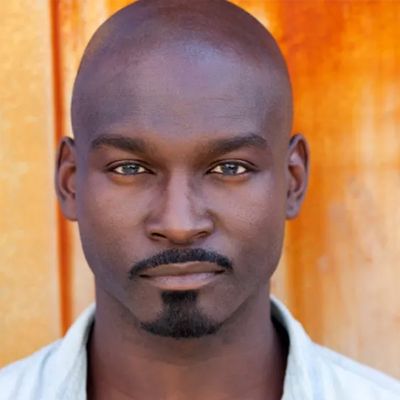
Actor Isaiah Johnson, who played the role of Mister in the original Broadway cast of the 2015 revival production, opposite Cynthia Erivo, joins us to discuss the musical as we look at the character of Mister and generational trauma. What does it mean to carry the trauma of your ancestors? How does this type of trauma affect people, specifically Black Americans? What tools are there to heal this trauma for those experiencing it? And how can non Black people support Black healing? Experts Curtis Smith, Cymone Fuller, and Dr. Schekeva Hall weigh in, as well.
Create the Change
- Begin or deepen your mindfulness practice (resources from Moment of Mindfulness here)
- Seek out a therapist with cultural competency training
- Search Therapy for Black Girls, Psychology Today, Alma, etc.
- Consider a restorative justice process to heal pain and trauma in lieu of punitive justice
- For members of the Black community:
- Build relationships and unify Black people
- Check out the youth organization Jack and Jill of America or any of the 10 on this list
- Discover the Black Feminist Project
- Tell your truths, your stories, express yourself
- For members of non-Black communities: LISTEN.
- Read Dr. Yael Danieli’s book International Handbook of Multigenerational Legacies of Trauma
- Find more research on generational trauma via the International Center for Multigenerational Legacies of Trauma
- Read “Breaking the Chains of Generational Trauma”
- Learn more about generational trauma
- Explore the work of Dr. Joy DeGruy
Referred to in this episode
- Michaela Angela Davis
- Clips from the Schomburg Center Color Purple panel
- “Lynching Memorial” aka The National Memorial for Peace and Justice in Montgomery, Alabama
- What is generational trauma?
- What is mindfulness?
- Moment of Mindfulness LLC
- What is restorative justice?
- Impact Justice
- Statistic: Children of Holocaust survivors over-represented 300 percent
- Generational Trauma in Indigenous communities and its impact
Ruthie Fierberg, Host
IG: @whywetheater / T: @whywetheater
IG: @ruthiefierceberg / T: @RuthiesATrain
Transcript
This transcript was automatically generated and might contain errors.
[0:00] Ruthie Fierberg: I'm Ruthie Fierberg, and this is Why We Theater, the podcast that digs into the onstage works we love to make the offstage change we need. After all, that is why we theater.
[0:16] Ruthie Fierberg: Today we welcome actor Isaiah Johnson to discuss the musical The Color Purple. Isaiah played the role of Mister in the original Broadway cast of the 2015 revival production, opposite Cynthia Erivo. For those of you who don't know, The Color Purple by Alice Walker was published in 1982 and won the Pulitzer Prize for Fiction in 1983, before the book was adapted into a movie by Steven Spielberg, starring Whoopi Goldberg and Oprah Winfrey. In 2005, the musical version opened on Broadway, starring LaChanze, with a book by Marsha Norman and a score by Brenda Russell, Allee Willis, and Stephen Bray. Ten years later, in 2015, the musical came back to Broadway and won the Tony for Best Revival of a Musical.
The story follows Celie from age 14 to 54. We first meet her when she's pregnant with her father's child. A victim and survivor of multiple kinds of abuse, Celie is then given to Mister, a widower in the community who needs a wife to run his house and raise his kids. Mister unleashes his meanness on Celie, and she endures more abuse at his hands. I wanted to look at the character of Mister specifically as we investigate generational trauma. What does it mean to carry the trauma of your ancestors? How does this type of trauma affect people, specifically Black Americans? What tools are there to heal this trauma for those experiencing it, and how can non-Black people support Black healing? Our experts today, Curtis Smith, Cymone Fuller, and Dr. Schekeva Hall, have some thoughts.
I want to add, The Color Purple is absolutely Celie's story, and a story of strong Black women. When it comes to patterns of generational trauma, however, Mister is a prime example of a person who has endured trauma and directly passes on that trauma, directly inflicting it onto others. So, we begin with the man who inhabited him, Isaiah Johnson.
[2:24] Ruthie Fierberg: I am so excited to have Isaiah Johnson on the podcast today. You guys may know him from Hamiltour as George Washington, or from Sideshow, or from The Merchant of Venice, but he will forever be Mister from The Color Purple to me. I'm so excited. Welcome, Isaiah. Thank you so much for being here.
[2:56] Isaiah Johnson: Thank you for having me. Thank you so much. I hope. I'm so glad that the number of people that will burn me in their memory as their forever Mister Small. I'm so glad it's just you.
[3:10] Isaiah Johnson: So glad. I mean it as the best compliment, though, and we will get to why. We will get to why. You're teasing him. I'm curious, when you heard that A Color Purple Revival was coming to Broadway, did you know you wanted to play Mister?
[3:29] Isaiah Johnson: I, you know what? I can't lie. I think I'm going to go ahead and say yes, only because every time I saw that in the film, and then I saw the original Broadway production, every time I came across this role of Mister, there was always something in the presentation of it that connected with me and also did not fulfill my experience. You know, the audience is always, subconsciously, they're always trying to look to get their own needs met. Like when we watch shows, it speaks to us in the way that we need it in that moment. And every time I came across that character, there was a part of me that needed to see something for my own healing. And the storytelling didn't necessarily lend that to me at that time. Not that it should, because I selfishly needed something, right? And so when that opportunity came around, I was like, okay, here's my opportunity to explore myself and see what is that aspect of me that is not getting fulfilled by this character.
[4:42] Ruthie Fierberg: And did you find that answer?
[4:46] Isaiah Johnson: I sure, you know what? I don't know. I actually don't know. That's a great question. I don't know if I found it. I definitely know that I tapped into parts of myself that I hadn't tapped into before. And I definitely know that I was able to reach my goal, which is I wanted to create a character that everyone in the audience who identified as male could see themselves in. I wanted to create a character that all of the women, those who identify as women in the audience could recognize. I wanted to create a character of... So the challenge that I put before myself was like, how can I, in two hours, show them a good guy, a charming guy, a bad guy, a guy that you can't trust, and a guy that, you know what I mean? How can I kind of touch on all of these different kind of masculine archetypes in one male and in one story?
[5:43] Ruthie Fierberg: And was that, do you think, what you were needing that you weren't getting was just that full range and that full breadth? Or what were you looking for that wasn't there previously in the iterations that you saw?
[5:58] Isaiah Johnson: To be honest, I was looking for the man that I knew. I could recognize Mister's behavior in various masculine figures in my life, in moments of their life, but I loved all those men. And I just wanted to see the fullness of that, the men that I knew.
[6:23] Ruthie Fierberg: I mean, your performance, like I said, of Mister, it's just, it's seared into my brain. And that 2015, 2016 Broadway season was insane, but I will say it here and now, I still think you should have been nominated for a Tony, neither here nor there at this point. But, you know, just to say, you created someone so present. And so his presence was so present, even when you were not on that stage, and so energetically real. How did you go about creating this person that you would recognize, that you wanted people to recognize?
[7:06] Isaiah Johnson: Well, I think first and foremost, I wanted to go through the given circumstances, you know, as actors, we're always looking at like, what is the basic foundation of information that I have about this character, about this story? And I love, one of the reasons why I love acting as an artistic art form is because I get to do, you know, journalism, I get to do research, and I love history, I will deep dive and get lost and try to find my way back out. But I think one thing that I needed to understand is that what was Black life, Black American life like at that time? And how did that affect his immediate environment and the environment of those around him?
[7:49] Isaiah Johnson: And for those who don't know, it's set in the early 1900s and goes forward for 40 years. So like about 1909 to 1949.
[7:55] Isaiah Johnson: Absolutely, absolutely. And then what I found in doing that research is that I was like, Oh, wow. Funny enough, there's a lot of kind of cultural normatives that are still that still exist today. You're dealing with an extreme lack of education and this particular person and preferably in this community, you're dealing with an extreme lack of education, you're dealing with an extreme lack of resources outside of trades that would learn during slavery that was passed down. And once again, you're passing down oppression, right?
[8:38] Isaiah Johnson: Yes. And so in so many ways, these people were traumatized. And their behaviors, their outlooks, their desires, for all intents and purposes, not without love, but with trauma, they're working from traumatized places. And I wanted to understand how does someone become a Mister? How does someone become a Mister in their community? And that took me down a lot of other roads, reading other works by the author. I happened upon, strangely, I happened upon the semi-autobiography of Charles Manson, read that down, that gave me a lot of information.
[9:34] Ruthie Fierberg: What'd you find in there?
[9:34] Isaiah Johnson: Well, I found from the words of someone who is looked at as a Mister, a Mister type, I was able to hear from his own words, the aspects of his life that led to his ultimate demise. And what I discovered was that I was like, oh, wow, you were actually quite interestingly self-aware. And I think that was part of his charm. He understood exactly the aspects of his life that led to where he was. He didn't necessarily agree with his final state. He didn't necessarily agree with everyone's opinion about him, but he understood how he got there. And I was like, that's fascinating because we kind of look at sociopaths as kind of this out of sight, out of mind presence, but they're not crazy. You know what I mean? They're actually very in tune with their own behavior.
[10:30] Isaiah Johnson: Exactly. It's just that the justifications that they have found to support their behavior are based on things that they don't realize may be unhealthy.
[10:46] Ruthie Fierberg: So in finding out what makes a Mister and what makes this Mister, what backstory did you discover? Did you create that made him this way?
[11:01] Isaiah Johnson: Well, at this particular time, one thing that kept coming back for me throughout the year-long process was that at this time, Black Americans are getting lynched on a regular basis.
[11:15] Ruthie Fierberg: That's right.
[11:15] Isaiah Johnson: And without just cause, without due process, and oftentimes without any information other than so-and-so didn't come home last night. So-and-so is still not home two weeks later. Oh, I heard through the rumor mill, so-and-so is no longer with us. And that's how we get the lynching memorial that we have in, what is it, Alabama, I think? The countless names of people that just didn't come home. And I'm thinking to myself, how would I feel if I was growing up in an environment where I literally would not know and had no control over whether I was going to come home? How would that affect the way that I love? How would that affect the way that I discipline my children? How would that affect the way that I saw the world?
How would that affect my idea of myself as a man? One of the first things you're told as a Black man in this country is you got to learn how to protect yourself. So what if I lived in a state where I didn't feel like I could? How emasculating is that? And how might I then exert that masculinity that I feel is lost in my own mind in other ways, on other people, in other environments? That kept coming back.
[12:36] Isaiah Johnson: And the sad part about it is while we were doing The Color Purple, that became ever more present in real time in our society. And I remember there was one performance. I can't remember what was going on, but I always try to read the news when I wake up just to, you know, that's where I get a lot of artistic information, to be honest with you. I might see a story of a person that I'm like, oh, wow, listen to the story. And I add that into the performance for that night. And I can't remember exactly what it was. It's sad because I probably intentionally tried to block a lot of that out. But I remember on this particular night, I had read something that day and I felt this deep, deep emasculation in the performance.
And then at the end of the show, when we got to that place where I had to tell Celie, you're poor, you're Black, you're ugly, I turned to the audience straight on and Celie was behind me. And I said those words. I couldn't look at her in that moment because I did not want to say these words on this night.
[13:50] Isaiah Johnson: And I found myself turning towards the audience to say it straight directly. And in my mind, I'm thinking, if, you know, as a character, I'm saying to the Black people in this audience, this is who you are, this is who we are in this moment. There is no hope. We are dispensable. And I'll never forget that performance. And we all felt it because we came in, we walked onto the stage with all of this information. You know what I mean? So it was a wonderful, wonderful labor of love. It sounds sad, but those are the cathartic moments. Those are the healing moments that we get back because now we're able to not only walk in the shoes of our ancestors, but we're also able to kind of build a bridge to first value where we are based on their sacrifice and then charge ourselves and challenge ourselves on how we can now, where do we take this torch that we've been given? If these things are still happening, where do we take this torch? What do we do? What shifts, adjustments do we need to make?
[15:09] Ruthie Fierberg: Yeah, first, thank you so much for sharing all of that because, I mean, I think we all need to just breathe and sit with that for a minute because it is, like you said, it is not just 1909 and it is not just then that lynchings were happening. It's not a rope nowadays, but make no mistake, you do not know whether you're gonna come home at night based on the color of your skin in this country. And that's actually what you bring up too about the oppression that Mister was carrying is really the impetus for this conversation today because it was a panel at the New York Public Library Schomburg Center where I saw you and Cynthia Erivo, who played Celie, and one of your producers, Scott Sanders, and one of your writers, Brenda Russell, in conversation with Michaela Angela Davis, who blew my mind.
[16:15] Isaiah Johnson: Yes.
[16:15] Ruthie Fierberg: And she drew that line of essentially the concept of generational trauma, which was brand new to me. And I learned it in that conversation where she said, well, Mister beat Celie because his father beat him because a slave owner beat him. And again, it's not condoning abusive behavior, but it is tracking where we learn these patterns from, where we learn maladapted coping mechanisms. And I'm curious, were you aware, you personally, Isaiah, were you aware of the concepts, maybe not the term of generational trauma before playing Mister, before, I know you also read The Third Life of Grange Copeland from Alice Walker for this role.
[17:08] Isaiah Johnson: That's right. So were you aware of it? And if so, how did that inform your life in this work?
[17:15] Isaiah Johnson: Yeah, absolutely. I was absolutely aware of it. And I think that's kind of what I was speaking to in the beginning when I said, I didn't see the men that I knew in this role yet. Because of my understanding of generational trauma, I love the men that I knew who might have been the misters in our community. Like I love them because I understood them in a way that they didn't understand themselves because I understand generational trauma. Now, the funny thing is that applies to all of us, right? Like we all have it, every single one of us in every single culture, we all have it. Even if it's, my wife says all the time, like part of her German heritage is the reason why she's a germaphobe and cleans and saves everything, right?
Even when it's completely illogical, right? Even when the dishes won't, they're gonna be there and they're gonna come back so fast, right? So we all have it. And I think part of our responsibility as adults and I'm sure Curtis will speak on this later is that part of our responsibility as adults is to track our story, is to track our journey. I'm a professor at Savannah College of Art and Design and one of the primary acting assignments that I assign in the beginning is this idea of a self-portrait. I pose the question, if you were to no longer be on this earth, if you were to pass away, if you were to die, what image or item do you think best captures who you, how you want to be remembered?
And I give them full reign on, they can take a photo, they can, I've seen people stitch things. Some people brought in something that they made carved through wood. Like what would be the thing that you could leave that you would say like, this in some way embodies the absolute truth of who I am? And we're responsible for our own stories, you know what I mean? And I think particularly in Black culture, we're responsible for the stories of our ancestors because we don't have the documentation. I don't have pictures of my ancestors. I don't have their birth certificates. I don't even have the slave records. So it's almost like you're living in this like, this world where, you know, you know it happened, you've been told it happened, you could read in books that it happened, but there's no way for like, but did it happen to me?
[20:02] Ruthie Fierberg: Right, right. And there's no proof.
[20:05] Isaiah Johnson: Yeah, we spoke about that with Griffin Matthews in our Witness Uganda episodes too.
[20:09] Ruthie Fierberg: Yes, love him.
[20:09] Isaiah Johnson: So yeah, there's all that. And I mean, and what you're saying too about understanding this traumatic past and this passing down of the trauma and the passing down of oppression, it being the way that you could love these men. I think that that is also what you brought to this role was that, yeah, there was no question he was doing bad things. There was no question, but you managed to make this person who could have only been bad, could have only been abusive into someone who I will speak for myself, I had compassion for particularly in that act two when like Mr. has his breakdown and it just wrecked me every time. Like what were the things that were going on in your head during that scene to be able to reach the audience?
[21:03] Isaiah Johnson: I think it was a culmination of my understanding of all of his shit, you know what I mean? For lack of a better term, because I feel like, you know, what I actually realized in the end, what I learned from Mr. is that, oh, actually Mr. and Celie are very much similar. They're very much on similar paths. Celie was forced into a situation that she didn't want to be in. Mr. was also forced into a situation that he didn't want to be in. Suge Avery was his great love and Suge Avery left, you know what I mean? I mean, both of these people were completely oppressed by their surroundings and in their immediate circumstance. You know, I think we forget that. Mr. didn't want Celie, you know what I mean?
That wasn't the arrangement. He needed a woman, he needed a partner, he needed a wife to help take care of his children. His father was ever present in his life as this kind of reminder that you are not a man. You are not a man. I gave you all of this. None of this you earned on your own. Right, and that scene is instrumental in understanding him as well.
[22:20] Ruthie Fierberg: Absolutely. So you have two human beings who are both longing for something else and stuck with each other as the representation of immediate oppression. And I saw two people kind of traveling the same road only because they were shackled together. Not because they chose that road and that helped me communicate that in that moment, but then it also helped me in the end with this acknowledgement that, you know, he never really said, I'm sorry. He never gave you the, I'm sorry, that you kind of wanted from Mr., but what you saw was two people who understood each other in that moment.
[23:05] Ruthie Fierberg: Yeah, and there's connection and understanding. Well, I wanna talk about all of these effects and all of these dynamics and zoom out a bit on, like you said, how this was your community growing up, how this affects so many African-American and Black people affected by this history today. So I'm gonna welcome in our experts. Get ready, drum roll. First, we have Dr. Shakiva Hall, who is a licensed clinical psychologist, anti-racist culture advocate and wellness coach. She offers DEI training experiences that foster a community approach to both learning and healing. She has practiced clinically for over 15 years in education, community mental health, interdisciplinary medicine and more, and we are so excited to have her. Welcome, Kiva.
[23:56] Dr. Shakiva Hall: Hi.
[23:57] Ruthie Fierberg: Hey. So happy to have you here. We also have Curtis Smith, who is the creator of Moment of Mindfulness, which is a mindfulness methodology and company committed to empowering communities in a culturally responsive and evidence-based way. He's also a former classroom educator who came to the healing properties of mindfulness through the loss of his mother, but he co-founded a Brooklyn middle school and developed a school-wide mindfulness program. He currently partners with the New York City Department of Education to host district-wide mindfulness sessions and workshops for the leaders in those schools. He works in many other settings as a mindfulness and wellness coach, and we are so excited to have him here today. Welcome, Curtis.
[24:39] Curtis Smith: Thank you, thank you. What's up? Appreciate you having me.
[24:41] Ruthie Fierberg: Absolutely. And finally, we have Simone Fuller, who is the co-director of the Restorative Justice Project at Impact Justice, which is a national innovation research center founded in 2015 that advances new ideas for justice reform. She's worked to introduce restorative justice in schools in our home state of Minnesota and has worked at the Vera Institute of Justice. Later, as part of Columbia University's Justice Lab, she worked to abolish the use of incarceration and promote community-driven justice alternatives. She's an adjunct professor at John Jay College. Welcome, Simone.
[25:17] Simone Fuller: Thank you for having me. Good to be here.
[25:20] Ruthie Fierberg: All right, so Kiva, we talked anecdotally, you know, with Isaiah just now about generational trauma, but from a more succinct definitional place, what is generational trauma?
[25:30] Dr. Shakiva Hall: So intergenerational trauma is a concept developed to explain years of generational challenges within families. And it's basically the sending or transmission of information down to younger generations from older generations, also known as intergenerational trauma, trauma that increases over the lifespan and generations. So basically, if you were a parent and you were exposed to something that was traumatic and for definition of what's traumatic, it needs to be sudden, uncontrollable, and extremely negative. So say you had something that was sudden, uncontrollable and extremely negative occur to you, what happens is the way that you respond to that, sometimes you actually teach your children the coping strategies to manage that, you might take on, you know, the style of the person who might've been traumatizing you, right?
So depending on where you are in terms of how you perceive what happened to you developmentally, if you were like young, old, how your mind kind of maps onto that trauma could get basically carried out through later generations and how you socialize. So a lot of times, even with trauma, you might see people do things that are like preventative, like they might have hypervigilance and you'll maybe talk with a child, for instance, and you'll learn that they actually have not had that experience, but the way that the mom or the father or the caretaker responds, that's a learned behavior. And so they end up, you know, kind of carrying on either coping specifically,
[27:38] Dr. Schekeva Hall: Generational trauma, also referred to as intergenerational trauma, sometimes referred to as historical trauma. Is it important to be able to name it?
[27:53] Cymone Fuller: Yeah, it's very important to be able to name it to first be able to get into a place where you might be able to do something about it. When it's not named, the effects are really quite covert sometimes and people end up carrying a lot more baggage than they might realize. So it's very, very important to name it. Places where that could happen is obviously in therapy, but a lot of times people may not know what the symptoms look like to be able to name it. So part of it is first getting educated around, hmm, might this be like a trauma response? And then usually going back, like, where did I learn that? Who acted similarly to me? Who's taught me that you can't trust people and that I have to kind of be super suspicious about things?
If you think even about what's going on a lot of times in society, racial socialization as an aside is one of the most obvious ways to kind of infer the fact that we as a generation and a society in terms of being Black people in America might have awareness of the trauma that's gone on historically. That we now socialize people to be prepared for racial bias, for cultural mistrust and having that and also not necessarily appraising it as something negative but really being in a place where we can understand why it's occurring and what the purpose of it is for.
[30:01] Dr. Schekeva Hall: Right, it seems that the why is really important. And I'm curious from you, Cymone and Curtis, just as I asked Isaiah actually, were you familiar with the concept, even if you weren't familiar with the term as you were growing up and as you started doing your own work both in restorative justice and mindfulness respectively? Cymone, maybe I'll start with you.
[30:25] Cymone Fuller: Yeah, I'm sitting here listening to Dr. Hall and just kind of revisiting some of the work that I've gone through. And I wouldn't say that that work started in childhood. When I was young, I don't think I had the level of awareness to kind of understand the patterns and the questions to ask to kind of deconstruct and understand my experience or the experience of those around me. But as I've kind of grown up and as I've become more acquainted with and connected with restorative practices, but also my own therapeutic journey and trying to understand and kind of process harms that have happened in the lives of loved ones that are close to me and how that's kind of impacted our family dynamic. It's so clear to me that there's so much about what Dr. Hall is saying about the kind of ways that somebody might respond to the trauma they experienced being passed down inadvertently to those that they care for, the ones that they love, their children, as a way sometimes to protect them.
I'm thinking about my own experience with my mother who I know has gone through some really traumatic events and the way that she coped was to really repress emotion, repress and move on, really not address. And that has shown up in ways that I process and understand. And I think that in restorative practices where so much of what we're inviting folks into is that level of questioning and processing has allowed me to kind of understand where the questions I wasn't asking, the spaces I wasn't going into and kind of tracing that back to where it came from. So as a child, I don't think I knew and had the awareness, but as I've grown up and become more familiar, I can certainly see where knowing that may have given me some clarity or a different way to process how I was moving through my life.
[32:17] Curtis Smith: Sure, Curtis, what about for you?
[32:19] Curtis Smith: Yeah, I can connect with what Cymone was saying. Growing up as a child, didn't really have a name for, or didn't really understand the term in terms of naming it. But as I grew and started my work in education, it just became more apparent that we're dealing with things that weren't necessarily ours and things could get passed down. And when dealing with kids, especially at an early age, I taught middle school, I would see that firsthand. Like there's no way that they could be carrying so much on their own. And through deep conversation, which I very much promoted in my class, you would find out that a lot of these things came from, you know, what was going on in their homes and it was passed down from their parents.
And these stories and even ways of thinking were things that weren't coming from them. They weren't their own thoughts. And so what I saw most powerful in addressing that was the practice of mindfulness. So that first that they could become aware and first understand that knowing that this is something that's possible or knowing that this is happening is really the first step towards being able to grow and heal from something. And like Dr. Hall said, if you're not able to name it, then a lot of the symptoms can be covert and you not know that they're having an effect on you and you not know that there could even be an issue going on inside of you or what that issue could look like. And so as I grew and as I grew with my practice and mindfulness and grew with the kids, really understanding that concept and getting down to being able to do something about it was really where I think the power lies.
And that's where, again, I leaned on the practice of mindfulness because number one, it makes you aware. And number two, it gives you an actionable tool to help with that trauma. So when you're focusing on your breathing, these are natural things that can help support you in calming down, natural things that can help support you in identifying what's going on inside of you, especially in today's world. I mean, we're so busy, we're on the go, especially in New York, kids are on the go. And so taking that moment to pause had a powerful just effect on them seeing things from a different lens.
[34:30] Curtis Smith: Yeah. And as Isaiah said, we all, all the cultures have different things. Generational trauma was actually first looked at because children of Holocaust survivors, so generally Jewish, were referred to psychiatric care overrepresented by like 300% as compared to the general population. And it was, so that's when researchers started investigating this. And we know that this happens in indigenous communities. You know, it's widespread. Kiva, I actually wanted to rewind also to the idea of the physical effects of what can be going on, how this actually, this trauma is not only passed down in socialization, it's not only passed down in coping mechanisms, that it also has a genetic and cellular component that it can change your DNA and it can change your biology. Can you tell us a little bit about how that manifests in what you've seen in your practice or in your career rather?
[35:43] Dr. Schekeva Hall: Well, yeah, in my career, I used to work with a bariatric pediatrician actually in Brownsville, Brooklyn. Nutrition actually begins, you know, in utero and how sometimes the nutritional deficits in utero could actually aid in children becoming like us. And how that could actually have some clinical implications later on for children who become adults in terms of their ability to metabolize food properly. And they're always kind of, although they're perhaps overweight and obese, they're still malnutrition. Everything that happens in utero, you know, if the mother is stressed, it's not just that it transmits some magical feeling onto the baby, it's that there are actually changes that happen in development to accommodate those stressors.
Right, and you see on an emotional level too, and a lot of times neurological levels too, where if the parent is also maybe undergoing a tremendous amount of stress, maybe a survivor of assault, you know, maybe home insecurity, those types of things, that starts to have a play on the outcome of the child in terms of their development. It's such a pivotal moment when people are needing a really great start to life. And, you know, if you're kind of starting out that way, it's just a deleterious effect of continuing.
[37:39] Dr. Schekeva Hall: Right, right. Specifically in the Black community, and particularly the Black community in the US, what I'm curious about is, you know, we're talking about sometimes there's trauma, something happened to your mother, and that can be passed down to you. But also there is this reality, like Isaiah said, of a history of slavery, a history of lynching, a present day of all of those things being reactivated. And I'm curious how, Curtis, perhaps working with kids, how can we approach it in a way to educate and to name, but that is healing rather than agitating?
[38:24] Curtis Smith: Yeah, I think the first step is having the conversations, and knowing that the kids are never too young to have that conversation. I know historically, even in the Black community, we're taught not to have, you know, the conversations of what goes on in the home. You know, I was taught growing up, whatever went down in the home, I wasn't to discuss it. You know, especially if it was something that was not so glorifying, I was taught to keep it to myself. And I had to keep things buried inside of me and just kind of figure out how to deal with it on my own. And so knowing that, going into the schools, having conversations and really just getting the kids comfortable, first off, in the classroom environment, and building a sense of community where they can trust each other.
And that takes time. And I had the opportunity to teach a class called DMP, decision-making period, where I would see the kids every day, and I knew that I had the most valuable thing, which is the time and consistency of their attention. And so when building their trust and when building sort of a class community where they could trust and open up to have those conversations, I think that's the first step. Now, you don't start the first day talking about the different trauma that they've gone through, but you do start off with, all right, let's just get comfortable with each other. Let's talk about how we're feeling. Let's talk about what's going on in our own sort of school environments. And from there, we're able to build.
And later on, when you've gained that trust and kids feel a sense of connectedness, then you're able to dive deeper into some topics that could be a little bit more challenging, or at the very least making them aware that these things exist. And that would then lead them to having conversations at home or having them do their own research and their own sort of journalism, so to speak, on what's happening in their family homes. And each kid was different. Each circumstance was different. But I think starting off with that conversation, having a consistent platform where we sat in a circle where it was normal to have these conversations, it was normal for people to open up. We deal with some different topics.
It was normal for people to express emotions. I think that's where you start is educating them on, one, what these emotions are, and them knowing that the platform exists was something even more powerful. Because you could have a kid that doesn't say anything all the way up until week or month 10 in the school year. They may sit in the back and listen, but just knowing that that's there, knowing that they have somebody, they have a class, they have classmates, and these conversations are going, I think that was the biggest thing that we did in the school.
[41:09] Dr. Schekeva Hall: So speaking of the healing and putting it out there, Isaiah, I'm also curious, because you were talking about how the role of Mister could be cathartic for you. But I imagine that maybe the first time, the second time, the tenth time, it's cathartic.
[41:27] Cymone Fuller: But after doing it for so long, how was that for you? How were you able to keep going?
[41:33] Isaiah Johnson: I hated it. I hated it. I hated myself in the end. I felt gross. No, I think, you know, Simone had mentioned repression and how that repression is kind of the key reason why these generational traumas continue. And, you know, the complicated thing about that is that on top of just living in a repressive culture, I personally, based on my experience, would describe American culture as extremely repressive. I think we have a lot more British Protestantisms passed down as a societal generation than we like to give credit for. That's right. And so what's interesting to me is, you know, repression, how do I deal with repression living and existing and operating in and assimilating to a predominantly white cultural lens and narrative? How do I deal with an authentic version of repression when I'm in an unauthentic space? Does that make sense?
[43:05] Cymone Fuller: Yeah. And this is where a lot of, you know, a lot of cultural aspects of Black America that could have looked more Afrocentric get lost. And, you know, I mean, even now, some of those stereotypes that we used to talk about when I was a child, we still talk about, you know, like the stereotypes of Black people aloud, of Black people, like it's some of these stereotypes actually that are the motivating factors behind a lot of these, some of these hoodlums with badges and guns, some of that is actually, they're still dealing with working through their stereotypes of us. And so that affects the way that they see Black life and Black bodies. And that's some of the root of their fear that leads them to pull the trigger so quickly is because they're operating from this place of stereotypes, right?
So I always question like, wow, like how do I deal with my own repression in an unauthentic space? And I feel like I'm very authentically myself, but I also feel like I live in a society where if I walk down the street crying, nobody's going to ask me what's wrong. You know what I mean? Or if I'm walking down the street praying out loud, they're going to be like, that woman's crazy.
[44:38] Isaiah Johnson: Yep. You know what I'm saying? So I just feel like, you know, but in other cultures, this is the norm. You know, you go to little Senegal and Harlem and you see men holding hands all the time and there's no sexual connotation associated with that because in Senegal where I've been, like the way that men express their love for one another, it doesn't look like what it looks like here. Do you know what I mean? And so I think all of those things continue this form of repression, but how do you see your way out when you don't live in a space that's going to accept your version of unrepressing yourself? Because that might look different for me. That might not lead me to a therapy room. That might lead me to a different type of spiritual practice that you might not understand.
That might lead me to a candle, an altar. That might lead me to talking louder than normal. That might lead me to aggressive language at the frustration of being pulled over that I am entitled to feel. And yet my emotional expression of that is of life and death threat to you.
[45:46] Cymone Fuller: That's right. That's right. We see it in the field of sports. Just what you're talking about is that the stereotype, not just informing the people who are stereotyping onto you, but informing the self-understanding.
[46:00] Isaiah Johnson: The editing.
[46:03] Cymone Fuller: Yes. Yeah. A lot of that is quite prominent and a part of a coping strategy that is also used. And we think about socialization, like efforts within American Black culture. There's cultural socialization, which was really coming out of a place of saying that our styles of being are actually pretty glorious. And that was coming as something directly in opposition to where you might be at any given moment when you're in white mainstream culture. And there's not a lot of space for you to be yourself or take up space. So socialization came as a way to really be a form of protection, but also definitely came out of, I think, again, intergenerational trauma. And sometimes having the combination of intergenerational trauma and vicarious trauma happening concurrently, which is essentially basically what we might see even in 2020 with the George Floyd and the Ahmaud Arbery and a lot of these cases where people are not just being traumatized or holding trauma and trauma responses from generations back. They're actually still having to manage traumas that are occurring on a current, very present basis.
[47:38] Isaiah Johnson: And I mean, some of the research I did, Kiva, in preparation for this conversation was about some of those coping strategies, too, and the socialization of, you know, even just the phrase, like, have to work twice as hard to get half as far. You could, there are some researchers who trace that back to the idea of enslaved people who worked from sunup to sundown, and that if they showed any sign of fatigue, that was a threat to your life. And so that can manifest in other ways. A Black mother might downplay their child's intelligence because in the times of slavery, you're not trying to get your child on the auction block. And so the behaviors iterate according to the time that we're in, but they are that harmful oppression coping that's still a thread through time, which is, I just want the listeners out there to be aware of this.
[48:48] Cymone Fuller: Simone, I wanted to come to you because I came to you through watching the documentary, The Prison Within, which had your colleague, Sujatha Baliga, practicing restorative justice within the prison system. And our listeners are familiar with that because I've mentioned it a few times on the pod that I really, I really learned so much from that piece. But one of the phrases that stuck out to me was the idea that hurt people hurt people. And I think that that, you know, directly ties back to Mr. and the Color Purple. So I'm wondering what you see in your work and how specifically the restorative justice process addresses that.
[49:33] Cymone Fuller: Yeah, I mean, I think one thing that we see in restorative justice that we're constantly trying to disentangle is even our understanding of who can fall under the category of a survivor or a victim, right? And the kind of idea that most of us hold is that a survivor is, and I think as we're talking about generational trauma and the idea of kind of who was allowed to be a victim back then, that has carried through and our archetype of what a survivor looks like is typically, you know, a white woman that still lands today as who we think about immediately when we think of survivors of harm. And what we are often working through is how much harm is present for those that have caused harm and how much of the roots of what has driven them to the moment that they were in or the kind of position they were in to cause harm to someone else was, you know, lives inside of their body as harm that happened to them.
And what restorative justice is an invitation to do is to ask those questions and be in a safe container and space to ask a question about what caused that cause and what caused that cause, right? And kind of really dig into an understanding of, you know, if our goal is to heal, if our goal is actually to move forward in a good way, then we have to ask those questions because the answer to what's actually going to provide healing might live at that third cause, might live at that next layer down.
[51:05] Cymone Fuller: And so, you know, in our work at the Restorative Justice Project, we are supporting restorative justice for young people that end up in the criminal legal system, the juvenile legal context. And so oftentimes the young people that we're working with that have caused some level of harm to somebody else are invited to think about that harm, not just that they caused to somebody else, but the harm that they've caused to themselves in harming somebody else and the harm that they've caused to their loved ones who, you know, are in direct relationship with them and are in some ways harmed by the harm that they've caused as well. And then the harm that their community has felt from the harm that they've caused, right?
So it's trying to really expand their understanding of the impacts of harm, but also give space to think about what are the harms that have existed in those relationships as well that have contributed to kind of the harm that has been put forward in a particular moment.
[52:06] Isaiah Johnson: Yeah. To be able to get a little bit more specific on like what a restorative justice process looks like, I'm actually curious about like, if this were accessible at the time of Mr. or if Mr. were here with us present day, like what would his restorative justice process look like? Obviously summarizing, but I'm curious.
[52:26] Cymone Fuller: Yeah, I spent a little time trying to think about this because, you know, there are so many factors that are important to consider about what would have been accessible. And I guess if we were to bring a present day and the circumstances that we know are present for Mr. and the harm that he's caused, I think one, Mr. has caused harm in a number of different ways, right? Mr. has caused harm directly to Celie. Mr. has caused harm to his son, right? And his understanding of what masculinity and toxic masculinity means and how he's expecting that to show up in his son. And so for us, a restorative process is typically kind of done at the direction of the person who's been most directly impacted by the harm.
So present day, Celie or Harpo or somebody who had felt harm or been harmed by Mr. would have been the one to say, I am looking for a space to really process this harm with him. And there would have had to start with a space for Mr. to be ready to take account for what he's done, right? That's kind of the starting place of a restorative justice process. And there's a lot of work that goes into preparing people to arrive at that moment where they're ready to kind of step into a processing space collectively. But it would have looked like, you know, preparing Mr. to start to ask those questions. What is it about your life experiences that you think have brought you to this harm that you've caused, right?
Have you ever been harmed? Where did that come from, right? A lot of preparation for restorative justice processes is one, to build the relationship as kind of the restorative facilitator to make space for trust so that somebody feels comfortable enough and trusting enough to answer those questions and go with you through that process. But it's also an invitation to invite, you know, as those kind of things are being uncovered, invite those folks in, right? If it had been known and if Mr.'s father had been accessible, you know, what would it have looked like to include Mr.'s father in that preparation? And on the same side, or on the other side, Celie would have been prepping Celie to be able to just name what happened to her, name what that experience was like for her, name the needs that had arisen for her as a result of being on the other side of that harm.
And, you know, once everybody had felt like they were processed enough to come into space to answer questions, right? Celie would have had to ask questions of Mr. Why did you do this to me? What about, you know, ask questions that maybe she was holding about herself. What about me made you feel like it was okay to do that?
[55:15] Cymone Fuller: And to name what she needs to move forward in the right way, that what can be done to make things right for her. And have Mister be able to take accountability through acknowledging, yes, this is what I did, and to be supported to directly take on the things that had been lifted up as the needs, right? How can I help to meet these needs? Because I am obligated as the one who caused harm to help these needs. And so, yeah, the restorative process is really, it's all of those things and it's complicated and it's wrong. It's powerful.
[55:53] Isaiah Johnson: Can I jump in here?
[55:55] Cymone Fuller: Yes, please.
[55:56] Isaiah Johnson: Yeah. Oh, Cymone, I'm so glad you were mentioning all of that. And I'm glad you asked that question because one of the things that I was speaking with Ruthie about was the way that we were able to see some aspects of what you just described, Cymone, in the story when Sophia had actually confronted Celie about her instructing Harpo to beat her, right? When she was basically being assertive. Right, Harpo is like, I can't control my wife's step-mama, Celie, what do I do? And Celie's like, well, obviously, this is what your father does to me, and I am controlled, I am reined in. So if you want a reined in wife, you should beat her. Right, and so that's almost kind of like a promotion to do it as well, because he could have asked his father, right?
But he now goes and asks someone that's being harmed, well, maybe if she says it's okay, or if she has an idea, and she has opportunity to say something different, but because she had feelings of resentment about her not being able to be as strong-willed and assertive and resolute like Sophia, she basically kind of instructed him to do that. And what was nice about that was that Sophia actually came to her, and it was only after she and Celie kind of spoke honestly about Celie's jealousy of her and her strong-willedness, and her being able to do the things that she wished she could where they were able to actually repair that relationship. And so just seeing that kind of like sparked that awareness that there was space in that time period and capability for restorative justice. But interestingly enough, it seemed like it came first from the women.
[58:03] Cymone Fuller: Yes.
[58:04] Isaiah Johnson: Doesn't it always?
[58:05] Cymone Fuller: Probably in a sense, yeah. Well, we get socialized to do that, but I think it can always come from a gentrified, stereotypical male as well.
[58:21] Isaiah Johnson: It's about basically being honest and open about like kind of what is on your heart, and it really illustrates exactly aspects of what you were talking about, Cymone. So when you were really going through the process, I was like, hey, this totally happened.
[58:38] Cymone Fuller: Yes.
[58:38] Isaiah Johnson: Yeah, that's really interesting. Isaiah, did you all, Cynthia, Danielle, the rest of the cast, were you having these kinds of conversations backstage about your characters, either early in the rehearsal process in like table work or later in terms of sustaining yourselves while telling the story?
[59:01] Isaiah Johnson: You know, that's a good question. I don't recall that, but I do recall us talking a lot about giving ourselves permission to be authentic, which is not common on a Broadway stage, which—
[59:17] Cymone Fuller: I was gonna say, that seems counterintuitive.
[59:20] Isaiah Johnson: Yeah. I know, but I think oftentimes, I think on a Broadway stage, I mean, with a story as authentic as this, I think the director was very interested in getting a group of people who could almost come across as non-performers, getting a group of people who were so in touch with themselves that they had the freedom and the comfortability to walk off the street onto a Broadway stage, and that process, that transition be seamless, which is not, you're not directed to that end. Often.
[59:56] Cymone Fuller: And that actually makes a lot of sense for even just the design of the show, to be so stripped back.
[1:00:01] Isaiah Johnson: Stripped down. Yeah, I mean, honestly, I think a lot of times on Broadway, you're encouraged, you know, that you see palatable aspects of blackness, you know, and I think this particular story necessitated something a little bit different. Obviously, that's not all the time. I think, you know, that particular year, we had a lot of wonderful, wonderful shows that showcased various aspects of black culture in various time periods, right?
[1:00:30] Cymone Fuller: Right.
[1:00:31] Isaiah Johnson: But that was a one-off. That was—
[1:00:32] Cymone Fuller: That's right, yeah.
[1:00:33] Isaiah Johnson: That wasn't pre-planned.
[1:00:35] Cymone Fuller: Right. And so I think oftentimes when you see black faces in shows that aren't necessarily about black stories, you often miss out on all that authenticity.
[1:00:45] Cymone Fuller: Yeah. It's not to mean that the actors themselves are being authentic. It's just that the way that the character's written—
[1:00:51] Isaiah Johnson: I see, I see.
[1:00:52] Cymone Fuller: It's not written from a black perspective, so it doesn't leave a lot of room for a full, well-rounded version of blackness. It's the blackness that the writer could intuit or saw.
[1:01:02] Isaiah Johnson: That's right, that's right. And then, yeah, I can't go in asking people to change lines and this and that.
[1:01:06] Cymone Fuller: You can't do that, and you don't want to. You wanna honor the artist who wrote the piece, and you wanna bring as much of yourself to it as you can, but I think he wanted to do that because he knew that we all had a different personal relationship with this community and with the stories more so than he could direct. So it worked to his advantage as a white Scottish man to say, hey, bring your—
[1:01:30] Isaiah Johnson: In your hand.
[1:01:34] Cymone Fuller: Bring, yeah, bring your stories to this story. I can only bring my story, and I brought as much of my story to it as I could. That's what led him to do the project, even though he refused to do it several times.
[1:01:44] Curtis Smith: Fascinating, fascinating. Curtis, I'm wondering what's going on for you, and also, similarly to how I asked Cymone, what would restorative justice look like for Mister, I'm curious, what would mindfulness healing look like, and what would a mindfulness practice look like for Mister?
[1:02:04] Curtis Smith: I mean, first it would take Mister to have the courage to sit in a room by himself with his thoughts, with his emotions, and that be that, and to do that on a consistent basis. It sounds simple, but a lot of us don't—
[1:02:19] Cymone Fuller: No, that's scary.
[1:02:22] Curtis Smith: —take the time, or we don't have the courage or willingness to do that, and so I think the first step is understanding the power that we all have inside of us, and being able to sit with that power, and listen, and not necessarily expect answers where you do it one time and expect for something to come overnight, but really developing a lifestyle of being reflective, a lifestyle of taking time to yourself, and I think that lifestyle, and that commitment to that lifestyle is what gets you to where you're eventually trying to go. You know, there's a lot inside of us that we won't find out unless we're able to sit with ourselves and truly get that understanding. I'm thinking about how, you know, Isaiah was saying they have permission to show up and authentically be themselves.
I can relate, because in teaching, and when we took on the project of taking over this school in East New York, Brooklyn, you know, we were asking the teachers to show up as themselves, because the kids that we were servicing, we're in a tough neighborhood, and the environment was already an environment that was deemed violent, and there were a lot of things going on, and so when we got into the space, we were encouraged to bring our stories, to be ourselves, and in doing that, I think that's where I was able to connect with the kids, and when my mom passed, it actually happened the first year of the school being open, and it really forced me to deal with it on a public stage, and we did something every single morning.
We did our morning meetings every 20 minutes, and I was leading them in the morning meetings, and when it happened, it became news, so everybody in the school knew what I was dealing with, and I still chose to show up, and I had to address it. It's not something that I could hide, and it wasn't something that I could just gloss over, and so that really forced me.
[1:04:24] Cymone Fuller: That opposite of repression.
[1:04:26] Curtis Smith: Yeah, exactly, and so that was new territory for me, and I dealt with it in a way where I began to seek answers, and that's when I began my mindfulness practice, and I began to bring it to the forefront of the school, but some of the times, I didn't have the words. It's, listen, y'all, we're gonna come. We're gonna sit. Let's be still. I'm gonna turn on this music. Let's just be with our breath, because we all need time to just focus, recenter, and be with this moment, because we all need it. I needed it to—
[1:05:00] Cymone Fuller: I was going to say, you all need it.
[1:05:02] Curtis Smith: Exactly, I needed it before I could go on and be at my best, and really putting myself out there and being vulnerable really gave other people permission to share their stories, like, hey, Mr. Smith, I lost my aunt, and it hurts, you know what I mean? And I'm dealing with X, Y, and Z, and so that's what I think jump-started the conversations and jump-started the trust is having someone who was visible to the school of public eye put themselves out there, and I circled back on the mindfulness practice, and I literally grew with that practice with our kids.
[1:05:37] Cymone Fuller: I was going to ask, how can our listeners at home begin a mindfulness practice, if that's something that they want to do to heal whatever's going on with them, generational, vicarious, present, maybe just some feelings of overwhelm. It doesn't have to be trauma. How can someone start?
[1:05:59] Curtis Smith: Yeah, I mean, I think in its simple form, you take time to connect with your breath, and I think that's where it starts, and I do a lot of workshops, and when I say that, people will take time, they'll breathe, then they'll say, all right, what else? I need more. And I have to take a step back and say, well, no, why don't you spend more time with your breath? Spend months focusing on your breath and see what comes up. So I think really getting into a condition where you can be with your breath in its simplicity and explore what's there, I think that puts you on the track because mindfulness is not a heal-all sort of remedy. Mindfulness is the first step towards understanding, A, what's going on, and B, what might you be able to do once you have that awareness?
Because that's all mindfulness is, is awareness of what's happening in this moment. And a lot of times, a lot of us don't want to face it. We want to stay stuck in the past. We want to jump to the future, not realizing that the vehicle to healing exists right here, right now. And the best tool that you can do to tap into right here, right now is connecting with the breath. And that's where the mindfulness practice is connecting with the breath. So I'd say start there.
[1:07:12] Cymone Fuller: Simone, for those who aren't necessarily coming to it through the justice system, how do you think those who are recognizing what we've been talking about, this sense of generational trauma, what's your recommendation for people who are experiencing it to root it out and heal?
[1:07:34] Cymone Fuller: I think just doing more to recognize the collective power in the relationships that we should have amongst each other as a black community, right? That there is so much that has been done intentionally to divide, to divest, to really separate folks' ability in the black community to connect with each other and connect with themselves. And that is not the fault of black people, right? It's not the burden of doing that work. Unfortunately, it is on our healing journey to be able to do that work, but the burden is not ours solely, right? That truth-telling is so connected to that because the oppression didn't come from us. It didn't come from us originally. And so, I think that there's just so much to be done to try and break down kind of the divisions in the walls that have been put up, not by our own doing, but recognize that they are there intentionally and really do what we can to take that extra look and take that extra step to connect and unify.
There's so much power in that. And I think that we would be in such a strong position if we recognize the power that can be built collectively instead of always trying to kind of be distracted by what's being put in front of us as kind of the...
[1:09:04] Curtis Smith: The first step, which is, you know, trying to fight against systems of oppression, trying to fight against kind of a system of justice that has never brought justice to Black communities. There's really a lot of power in just unification. If any of the listeners out there are feeling like this is resonating with them, are feeling like they recognize themselves in this conversation, what is a resource, an organization, a strategy that they can use to begin to heal?
[1:09:40] Curtis Smith: Well, my company, Moment of Mindfulness, you can check out my work on my website, momentofmindfulness.com. I have a bunch of guided meditations. I work with a couple of different companies where I do guided meditations. I have some classes that can give you a little bit more information about mindfulness and also do speaking engagements where, you know, if you have a community group or a school or a company that wants a workshop to dive deeper into the principles of mindfulness, I use my teaching background with music, art, and writing to bring mindfulness education to life so that people can have access to those tools. And it's really my mission to make them practical and accessible, especially for our people of color who, you know, a lot of people are sitting and don't realize the power that they have or they don't realize what they can do at home to help support their healing.
So my website is a good resource and, you know, anything that they connect to in terms of their own healing. You know, mindfulness is one way of meditating that may not speak to you, but there are different forms of meditating, whether it be, you know, writing, whether it be, you know, walking in nature, it could be your choice of art. Find something that speaks to you and do it with a sense of attention where you can be fully present. And I think that's one step that can help support people is be present with where you are, with what you're doing, and take time to develop relationships in your life that are happening right here, right now.
[1:11:22] Kiva Fuller: Beautiful. I think I will piggyback on what Curtis is saying about the importance of recognition. And so another way that you can kind of gain recognition, obviously, to me is going to be through therapy, being able to, you know, sit and have conversations and explorations with someone that is prepared to be able to talk with you and hold space for you to grapple with what, you know, has happened for you. What, you know, my practice might do is get them to really sit with what it means for them now, once they found out this information, and maybe grieving some of the loss of the experience that they once had. And so basically, I think if you can get yourself some therapeutic tools, there's tons of therapists that are out in this world right now that are culturally aligned. And we have websites such as Therapy for Black Girls and Psychology Today.
[1:12:44] Kiva Fuller: I am on that site.
[1:12:45] Curtis Smith: Yes, you are.
[1:12:46] Kiva Fuller: And I'm working on my website right now as we speak. But my name is the only name like mine on the internet.
[1:12:54] Curtis Smith: There you go.
[1:12:55] Kiva Fuller: You'll be able to find me. That's helpful.
[1:12:57] Curtis Smith: That's helpful. What about you, Isaiah? What are you thinking?
[1:13:04] Isaiah Johnson: I mean, honestly, these brilliant minds that are with me have said the best of what could be said. I will just, you know, repeat the necessary. I mean, presence is everything. I think first and foremost, I care deeply about the parents who might be listening. Simone had said something earlier about when you asked her about how do we help Mister in your spaces? And she had mentioned, you know, sometimes it might be helpful to then bring in the victims so that that person can see how their actions have hurt them. And then I was saying, I was thinking to myself about how that too is one of the big contributors to a continuation of trauma in the Black community is just the lack of presence. Obviously, us being present with each other, fathers being present with their children, present with their partners, dare to ask more questions about what you think you know.
Children are so open and susceptible to hearing genuine questions that you have about life that are completely unanswered. Like where does silver come from? Kids love questions like that. And they love to see their parents not know things. They love that. They love that so much. Like that is one, that is a way in. And whatever they say, say that sounds right to me, whatever they say, just be present with them. And that could be the start to wonderful, wonderful, wonderful healing within yourself. Me specifically, I'm coming from a place of, you know, trauma therapy and teaching art. And so honestly, you can find me on Instagram at Isaiah's Lament, and then I will then direct you to my online virtual school, the Creative School, I mean, the Freedom School of Creative Development, excuse me. Awesome.
[1:15:07] Isaiah Johnson: Or we can get some private sessions and group sessions and holler at me. What is your thought of how specifically when it comes to Black trauma and Black intergenerational trauma, how can non-Black people offer support for healing?
[1:15:27] Curtis Smith: You know, one thing that I think that could bring about just kind of a more collective opportunity for healing and addressing trauma is just a recognition that truth telling is so important, right? At the societal level and at the individual level, I think oftentimes, rightfully so, people are resistant at the idea that there is a level of truth that they are required to tell while recognizing the level of truth that hasn't been told in our society, right? There are so many ways in which our society has not reckoned with the harms that have been caused on entire populations of people, and how that has been embedded and continues to be systemically present in the oppression of Black folks, of Indigenous folks, of Latinx folks, of so many folks who are, you know, trying to reckon with the fact that that truth hasn't been told.
And so there's that level of truth that I think we would all benefit from uncovering to then encourage others to tell a different level of truth at the interpersonal level and at the individual level. You know, I was reticent to ask it of Simone, and I'm a little reticent to ask it because I don't know that it should be your job to tell us what to do. But if there are ways that you do feel that anyone outside of the Black community can help specifically support the Black community, I am all ears. If you don't feel like answering that question, that's all right too.
[1:17:02] Kiva Fuller: No, absolutely. It was mentioned earlier, truth. Truth is key, man. You know, I have had the fortunate pleasure of being the token in almost every environment that I've ever grown up in, whether it be a predominantly Black community or a predominantly white community. And what I can tell you, my tool for surviving those different environments has actually been storytelling and listening to people's stories. And what I have found to be true through it all is that there is a human heartfelt reason why people believe whatever it is they believe. But most of the time, as Curtis said, we don't sit with and seek out the truth of what that is. And when you get to the truth, I guarantee you'll get to something that is shared by every human being across the planet. And most of it, most of it is fear-based.
[1:18:03] Curtis Smith: Absolutely.
[1:18:04] Kiva Fuller: Yes to that. Kiva or Curtis, if you want to add anything, I invite you to. If you don't, all good.
[1:18:06] Curtis Smith: I kind of am hearing what Professor Isaiah J. Johnson was saying. And I was thinking about like just being in a place of remaining curious. And a lot of times with children, sometimes curiosity is really squashed really early. You know, children are very, very honest. They'll be like, you know, mom, dad, how come this person has no leg? And usually what happens is the parent, based on socialization and their social graces, decide to teach the child not to notice. And I think that's largely what happens in a lot of white mainstream culture, where there was a pandering to not notice. You weren't allowed to be curious and to kind of ask questions that would then lead to answer. You know, curiosity is the gateway to empathy. And if we were in a space of being able to remain curious, it'd be a lot of things that are taboo that would actually become more mainstream. You know, people need to be curious and to also suspend judgment.
[1:19:32] Kiva Fuller: That's right. That's the second part of being curious.
[1:19:35] Curtis Smith: Absolutely.
[1:19:37] Curtis Smith: Yeah, I mean, I'll just echo what I've been saying. I think the practice of mindfulness is, you know, observing without judgment. So if people are living mindfully, you are becoming aware of your thoughts. You're becoming aware of your biases. And you're becoming aware of some of the things that are happening, not only with yourself, but with the greater world around you. And I think if more people practice living mindfully, I think we'd be a better place for compassion for each other. What you don't know, you can't change. And a lot of people don't know what's happening in their own bodies, in their own minds, in their own thoughts, let alone able to help somebody outside their race. So when you start with the self-love and you start with a sense of just awareness with yourself, I think, you know, the world and things will balance itself out. Because I think deep in the hearts of all of us, we're connected to love. And when we connect deeper to ourselves, I think the love comes pouring out.
[1:20:41] Kiva Fuller: Yes. Well, thank you for that. And the only thing I will add is that, I mean, you should investigate The Color Purple, no matter who you are. Because I really do think that it's such, there's a reason that the story has gone from book to movie to musical. It speaks in so many ways. It creates a lot of understanding. It is, you know, though it is set 1909 to 1949, it feels the people are timeless. What they're dealing with is timeless. And so particularly, you know, the musical world speaks to me, the theatrical world speaks to me. Because when it's in front of you like that, and when it's coming through music, I think you feel it in a different way. So if there is ever a production of The Color Purple near you, I urge you to see it.
You can listen to the album on Spotify and all those places. And of course, the movie and Alice Walker's original book are available all over. Visit your local public library. And I just want to say thank you again to all of you so much for your energy and your expertise and your time.
[1:22:06] All: Thank you for having us.
[1:22:09] Ruthie Fierberg: Why We Theater is a product of the Broadway Podcast Network. It's edited and mixed by Derek Gunther. If you like the show, subscribe at bpn.fm slash wwt or Apple Podcasts or wherever you get your podcasts. And don't forget to leave a review and tell your friends. Our theme music is by Benjamin Velez. Why We Theater is recorded in part on the traditional lands of the Wapinger and Lenape peoples. I acknowledge this land was unjustly taken from them and pay my respect to elders, both past and present. Special thanks to Dory Berenstein, Alan Seals, Lee Silverman, Patrick Taylor, Tony Montaneri, Wesley Birdsall, Alaina Mayer, and Suzanne Chipkin. For more resources for change, info about our guests and more, visit us at whywetheater.com.
© Broadway Podcast Network, All Rights Reserved