

In this Season 2 finale, Ruthie recommends currently running Broadway and Off-Broadway shows that speak to Why We Theater. Paradise Square, now on Broadway. Alex Edelman's Just For Us. Ruthie Fierberg, Host. Ruthiefierberg.com. IG: @whywetheater / T: @whywetheater... Read More
From the show: Why We Theater
Guests

Featured Shows
About
In this Season 2 finale, Ruthie recommends currently running Broadway and Off-Broadway shows that speak to Why We Theater.
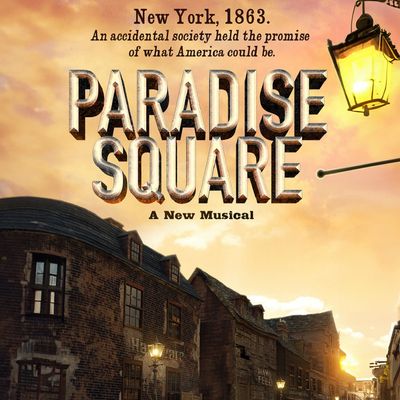
Paradise Square, now on Broadway
Ruthie Fierberg, Host
IG: @whywetheater / T: @whywetheater
IG: @ruthiefierceberg / T: @RuthiesATrain
Transcript
This transcript was automatically generated and might contain errors.
[0:00] Ruthie Fierberg: I'm Ruthie Fierberg, and this is Why We Theater.
[0:05] Ruthie Fierberg: The podcast that digs into the onstage works we love to make the offstage change we need.
[0:12] Ruthie Fierberg: After all, that is Why We Theater.
[0:17] Ruthie Fierberg: Hello everyone. Happy April. I hope you all are doing well.
[0:22] Ruthie Fierberg: I am revving up for the busiest month of the theatrical year.
[0:27] Ruthie Fierberg: You see, with the Tony Awards in June, any Broadway show that wants to be eligible must open by April 28th.
[0:34] Ruthie Fierberg: Off-Broadway shows have to meet the deadline for the Drama Desk Awards.
[0:37] Ruthie Fierberg: It's just an avalanche of theater. And I'm excited to be swept up in the storm.
[0:43] Ruthie Fierberg: In any year, I really have to thank my lucky stars that I get to see all this theater, but this year, after two years without a traditional spring season, it's exciting we are even able to have a busy month.
[0:57] Ruthie Fierberg: This episode marks the beginning of theater's busy season and the end of the second season of Why We Theater.
[1:05] Ruthie Fierberg: Which is insane. I can't even believe it.
[1:09] Ruthie Fierberg: This podcast was an ambition of mine for five years before I published the very first episode about Jocelyn Bio's SCHOOL GIRLS or the AFRICAN MEAN GIRLS play.
[1:19] Ruthie Fierberg: If you didn't join us from the beginning, I urge you to go back to that episode. It's one of my favorites.
[1:24] Ruthie Fierberg: First, Why We Theater was an epiphany, which morphed into an idea about conversations with playwrights to take the next step inspired by their work.
[1:33] Ruthie Fierberg: But would it be a blog or a website? It took a year to realize that it would be a podcast.
[1:39] Ruthie Fierberg: And then it took more years of needing the concept and researching the technical side of podcasting, and yet more years of getting artists on board.
[1:48] Ruthie Fierberg: There were so many days I thought I might die before the podcast actually became a reality.
[1:54] Ruthie Fierberg: More than once, I would beg and declare all at once that this podcast will happen if it's the last thing I do.
[2:03] Ruthie Fierberg: And I was really proud of season one. Ridiculously proud. And also relieved.
[2:08] Ruthie Fierberg: But this second season holds a different meaning because it feels like a commitment.
[2:14] Ruthie Fierberg: I didn't just launch, I stayed. And I was able to stay because all of you have listened.
[2:21] Ruthie Fierberg: And I plan to stay. To date, I've published 33 episodes, and I will be back with more in season three.
[2:29] Ruthie Fierberg: I'm already researching new shows and planning new episodes. So we will have a little hiatus, but we will return.
[2:35] Ruthie Fierberg: Again, I cannot thank you all enough for listening and for allowing me to experiment and try new things this season, like our mini episodes and the why we theater nows, which brings us to today.
[2:52] Ruthie Fierberg: I have to be honest, I haven't seen anything lately that has riled me up to the point of needing to fix things, of homing in on a problem and asking how the heck did we get here and how do we get out.
[3:06] Ruthie Fierberg: But I have seen a couple of shows that taught me new history and pushed me to ask new questions.
[3:13] Ruthie Fierberg: This past Saturday, I saw Paradise Square, the new musical from Tectonic Theater Project, which birthed the Laramie Project.
[3:21] Ruthie Fierberg: Tectonic's artistic director Moises Kaufman helms this original musical set in Paradise Square, a section of the Five Points neighborhood in downtown Manhattan.
[3:32] Ruthie Fierberg: I had never heard of this neighborhood. Apparently, it was founded in 1809 and persisted for about 70 years, and so I hadn't heard of its subsection either.
[3:42] Ruthie Fierberg: Apparently, the Five Points was the first slum in America, but much more notably, and as portrayed in the musical, it was a place where blacks and whites, mainly immigrants, mixed socially and even by marriage.
[3:57] Ruthie Fierberg: Imagine that. The musical Paradise Square takes place in exactly 1863, which may sound familiar as it was the middle of the Civil War and the year of the historically infamous draft riots.
[4:10] Ruthie Fierberg: The musical centers around the Paradise Square saloon, owned by a free black woman named Nellie, who was married to her love, a white Irish immigrant.
[4:21] Ruthie Fierberg: Nellie's white sister-in-law Annie married a black reverend, and the musical showcases this site, the saloon, as a site of interracial unity and as an explosive den of heat and dance and music and survival.
[4:39] Ruthie Fierberg: This is the musical that this season has been desperate for. The book balances a lot of storylines.
[4:48] Ruthie Fierberg: There is a runaway slave and his girlfriend, a young Irish immigrant trying to avoid the civil war draft, black men wishing they were allowed to serve, soldiers returning from war unable to find work, a white pianist appropriating black stories to write minstrel music, infighting over job shortages, all against the backdrop of a neighborhood where black and white folks actually already see each other as equals.
[5:15] Ruthie Fierberg: That to me was the difference. Every one of these storylines, every one of these beats speaks to the pathos and even the ethos of Why We Theater, and I could probably do an entire series just on the issues raised as part of the nuances of Paradise Square.
[5:32] Ruthie Fierberg: But what stood out most to me was the way that even in 1863, people could forgive a lot, they could understand a lot, they could have compassion for a lot.
[5:44] Ruthie Fierberg: But quote, taking someone's job. That was insurmountable. It's a story told over and over and over.
[5:54] Ruthie Fierberg: We saw it in Lynn Nottage's Pulitzer Prize winner, Sweat. We saw it in Dominique Morisseau's Skeleton Crew.
[6:01] Ruthie Fierberg: We hear it in the rhetoric of government leaders, of aspiring government leaders in countries all around the world today. They're taking our jobs.
[6:10] Ruthie Fierberg: This seems to be the line that constantly divides. And so I'm going to investigate that for myself and maybe on a future episode of the podcast, but gotta let it marinate a little bit.
[6:26] Ruthie Fierberg: Paradise Square just opened April 3rd at the Ethel Barrymore Theater on Broadway. Grab your tickets. Go. Please, please, please go.
[6:35] Ruthie Fierberg: I was moved to tears twice in Act One, pushed to sobs in Act Two. It's a story about what is kind of a blip on the great timeline of humanity, but such a significant story of people.
[6:49] Ruthie Fierberg: And I do feel better for having learned about this time, place, and community. And I'd actually be interested to hear which of these issues calls out to you the most. So hit me up.
[7:03] Ruthie Fierberg: Then there was a solo show called Just for Us. Alex Edelman is beyond brilliant and so funny. I laughed so much.
[7:15] Ruthie Fierberg: It's an ab workout in a solo show. I saw the show in its original run at the Cherry Lane Theater. It is currently running at the Soho Playhouse in an extended sold-out run, but there are often cancellations, so you can try showing up to the theater 30 minutes before showtime and snagging a seat.
[7:33] Ruthie Fierberg: Or get your tickets for Alex's upcoming second Encore engagement, which will take place from June 13th to July 23rd at the Greenwich House Theater.
[7:44] Ruthie Fierberg: Go to JustForUsShow.com. I'll put the link in the show notes.
[7:49] Ruthie Fierberg: Produced by Mike Birbiglia, Alex's show has a similar essence to those of the likes of Birbiglia and comedians like Jacqueline Novak.
[7:57] Ruthie Fierberg: The premise of Alex's show. Alex is a stand-up comedian and comedy writer. He became the target of an anti-Semitic tweet, which prompted him to follow a lot of anti-Semites and white supremacists on Twitter and play the cleverest joke on them.
[8:14] Ruthie Fierberg: You have to see the show to find out what it is. Then when he saw a tweet inviting people to quote, explore your whiteness in Queens, yes, Queens, New York City, Alex decided to attend this meeting of white nationalists.
[8:32] Ruthie Fierberg: Now, when I saw the show, I thought it was an incontrovertible account of how Jews are not white, as stipulated by the people who coined whiteness.
[8:41] Ruthie Fierberg: The show is about Judaism, about Alex's Judaism, about Jewish identity, about identity in general.
[8:49] Ruthie Fierberg: And I felt a huge validation for myself about how Jews are not really white when it comes down to it.
[8:57] Ruthie Fierberg: That we can, depending on our skin tone, benefit from white privilege, but make no mistake, we're not white.
[9:04] Ruthie Fierberg: And then I read what Alex recently told Peter Marks of The Washington Post. He said, The show is not about if Jews are white.
[9:14] Ruthie Fierberg: Personally, I think it's about a gray area where Jews are classically other in a way that this binary doesn't serve.
[9:22] Ruthie Fierberg: And it got me thinking, why is everything so binary? Why must it be either or? Why can't we accept multiple coexisting truths?
[9:34] Ruthie Fierberg: These questions are why we theater. So I hope you'll continue to see provocative theater during this hiatus, theater that makes you question, but also theater that makes you want to act and create change.
[9:47] Ruthie Fierberg: If you see something you think is right for an episode of the pod, please DM me at Y We Theater on Twitter or Instagram. But until season three, happy theatering.
[9:59] Ruthie Fierberg: Why We Theater is a product of the Broadway Podcast Network. It's edited and mixed by Derek Gunther.
[10:05] Ruthie Fierberg: If you like the show, subscribe at bpn.fm, Apple Podcasts, or wherever you get your podcasts.
[10:12] Ruthie Fierberg: And don't forget to leave a review and tell your friends. Our theme music is by Benjamin Velez.
[10:18] Ruthie Fierberg: Special thanks to Dory Berenstein, Alan Seales, Lee Silverman, Patrick Taylor, Wesley Birdsall, Elena Mayer, and Suzanne Chipkin.
[10:27] Ruthie Fierberg: For more resources for change, info about our guests, and more, visit us at whyweetheater.com.
© Broadway Podcast Network, All Rights Reserved