

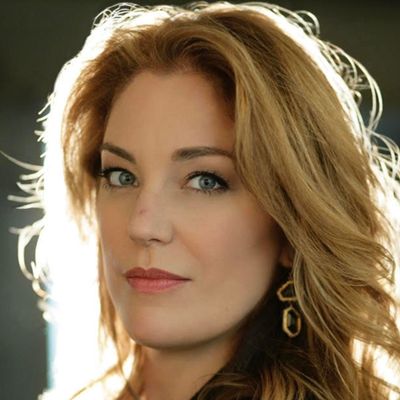
Meagan Miller is an Opera Singer, wife and mother Catholic converted to Islam. Come listen to her share her journey. Produced by Dori Berinstein and Alan Seales, edited by Derek Gunther, music by Cat Dail. A proud member of the Broadway Podcast Network... Read More
From the show: You Can't Say That!
Guests
About
Meagan Miller is an Opera Singer, wife and mother Catholic converted to Islam. Come listen to her share her journey.
Produced by Dori Berinstein and Alan Seales, edited by Derek Gunther, music by Cat Dail.
A proud member of the Broadway Podcast Network.
Transcript
This transcript was automatically generated and might contain errors.
[0:00] Tonya Pinkins: Hi, this is Tonya Pinkins, and you're listening to You Can't SAY THAT.
[0:04] Meagan Miller: My guest today is opera singer Meagan Miller.
[0:08] Tonya Pinkins: And we're gonna talk about her time right now in Pennsylvania and her journey from being raised Catholic to changing her faith to Muslim.
[0:36] Meagan Miller: So you were in Pennsylvania.
[0:38] Meagan Miller: I am currently in Pennsylvania. I'm in Chester County, PA, which is one of the Philadelphia suburbs, and so it's an important place right now.
[0:48] Tonya Pinkins: And you were saying your father-in-law is a little nervous.
[0:51] Meagan Miller: Well, my father, my actual father.
[0:53] Tonya Pinkins: Oh, your father.
[0:55] Meagan Miller: The man who made me.
[0:56] Tonya Pinkins: I thought you were at a father-in-law's house.
[1:00] Meagan Miller: You're at your father's house.
[1:02] Meagan Miller: My father-in-law's house is in Kosovo, but my father's house is here. And um, yeah, I grew up in this neighborhood, and um yeah, all my neighbors, I see the signs they have on their lawn. It's very interesting. Um, but yeah, we're at my father's house. My father is an amazing man, a former NASA scientist who has traveled the world, super interesting educated man, and he is a very strong Trump supporter and I think leaning libertarian at this point. Um, so we have amazing conversations.
[1:37] Meagan Miller: I mean, I reject the idea that anybody who votes one way in a certain election has the same agenda as all of the other people. I think everyone has their own beliefs, and there really is a spectrum of what issues people are interested in. Um, but I have just seen him get progressively more, I guess I would say hard in his positions interested in.
[2:06] Tonya Pinkins: What do you because of course I have a brother who's a Trump supporter and voter. So um I've asked my brother, like, what is that about?
[2:15] Meagan Miller: And he's like, because he's gonna be good for real estate. I'm like, okay, he's gonna be good for real estate, he's not gonna be good for black men. So I know, I mean it's a very interesting thing. What is it for your dad? Is it financial?
[2:24] Meagan Miller: Um, okay, on some level I think it is. And he says things like, I'll be able to leave you and the kids more, you know, if um if his policies stay in effect and he, you know, he has very specific things about the death tax or the estate tax, depending on how you want to see it. Um, and um he has really specific ideas about what health insurance should be and shouldn't be.
[2:50] Meagan Miller: Um so on that level, I think there's some of it, and then I think taxes, he feels like there's been improvement with um the tax structure. I could not disagree more, and it has really hit my family hard what he's changed. Um, and also for us, immigration is a huge issue.
[3:06] Meagan Miller: And so my father knows this because we're gonna be applying for green cards for my husband and his teenage son. And that process is getting harder and harder every day. October 1st brought a number of changes to the process. And you know, we've been talking about this with my father, and he knows about it, but he's like, I'm still going to vote for the person that I think will make your future better.
[3:29] Meagan Miller: Um, but you know, the other thing that he says when I ask him about why he wants to support Trump, um, because at the beginning of his candidacy, my father was very disturbed by his behavior. And because my father is um in some ways a southern gentleman. He was born in Little Rock and um, but also spent time in the Northeast, you know, so he has some influences, but I think um manners and comportment are very important to him, and I was amazed that he could ever cross over to this candidate.
[4:06] Meagan Miller: But what he says is for decades the media has wanted to call me and everyone who thinks like me racist and homophobic and full of hate, and none of the candidates were fighting against it, and Trump finally fought back, and I had to support that.
[4:26] Tonya Pinkins: And so I was like, So this is all about your ego, Dad. He didn't like that. But um, you know, and he's also my father's a very religious man, he attends mass every morning and he reads um to them, you know.
[4:41] Meagan Miller: And I went to Catholic school my whole life, but it taught me other things, you know. I feel like I learned a different version of that.
[4:49] Tonya Pinkins: Um I totally get the point of view, yeah. I totally get it.
[4:54] Meagan Miller: And there's uh I was raised Catholic too. And there's but and but I've you know dabbled in many other religions and tried so many different religions, and you know, I have my own practices, and there is disgust down out there, but there's a way in which I think that the man in the office right now is a master magician, metaphysician.
[5:24] Tonya Pinkins: Oh, yes, and uh I think, you know, it's I have some other things that are interesting. You know, my husband observes the world politics a lot. You know, he was involved in wars.
[5:40] Meagan Miller: Um, he has been part of a revolution, you know. Uh he still writes a lot. Uh he has his own Facebook page where he writes about world politics.
[5:51] Tonya Pinkins: What's his name?
[5:51] Meagan Miller: So we can follow.
[5:53] Meagan Miller: Okay, um, Shkumbin Murichi.
[5:55] Tonya Pinkins: Okay, well, you're gonna have to put that in the chat for me because uh I don't think I'm gonna be able to even pronounce it much less write it down.
[6:01] Meagan Miller: I'll just spell it. S H K. Wait a minute. When give me one second. S H K.
[6:05] Tonya Pinkins: Uh-huh.
[6:10] Meagan Miller: S-H-K-U-M. B-I-N. S-H-K-U-M.
[6:17] Tonya Pinkins: And that's his first name.
[6:19] Meagan Miller: And then uh last name is Murichi. M-U. R-I-Q-I.
[6:29] Tonya Pinkins: Okay, pronounce it for me one more time.
[6:31] Meagan Miller: Shkumbin Murichi.
[6:34] Tonya Pinkins: Skoombin Murichi.
[6:36] Meagan Miller: Good. The last letter of his first name is an N.
[6:39] Meagan Miller: Skumbin Murichi.
[6:41] Tonya Pinkins: Yeah.
[6:43] Meagan Miller: And then if you put an S H to the being like shh shkumbin.
[6:46] Tonya Pinkins: Sh Shun.
[6:47] Meagan Miller: You know, Shumbin.
[6:49] Tonya Pinkins: Shkumbin.
[6:50] Meagan Miller: Shumbin.
[6:52] Tonya Pinkins: Yeah. It's the name of a river.
[6:54] Meagan Miller: Okay, the Shum.
[6:56] Tonya Pinkins: Shumbin.
[6:57] Meagan Miller: I try hard because I feel like I just came back from Korea and I feel like putting your foot in your mouth and trying to say names.
[7:07] Meagan Miller: And, you know, my friends would just laugh at me trying to pronounce their Korean names, but I feel like that's part of how we connect. You know, they've had to, you know, silently listen to people change their names or uh, you know, just not even try.
[7:22] Meagan Miller: But for me to keep trying and messing up, they get to and laugh at me and me being comfortable with being laughed at is how we connect.
[7:31] Tonya Pinkins: Can I tell you?
[7:32] Meagan Miller: Okay, yes, that is it.
[7:35] Meagan Miller: That is it. Because my husband, I mean, I have to say, we um up until the first week of September, we lived in Austria.
[7:44] Meagan Miller: And people would just give up on his name. Basically, everybody else just says Dino for him. They just gave it, you know, his grandmother used to call him Dino, so they just call him Dino.
[7:55] Meagan Miller: Um, and they there are people who've actually told him that he's misspelling his last name because you can't have a Q without a U.
[8:04] Tonya Pinkins: So do you know what he says?
[8:05] Meagan Miller: What?
[8:06] Meagan Miller: You're right.
[8:09] Meagan Miller: You're right. Because if someone's gonna say that to you, it's beyond hope. You just don't have the fight.
[8:14] Tonya Pinkins: Yeah.
[8:16] Meagan Miller: And if they ever figure it out later, they'll be more embarrassed.
[8:22] Tonya Pinkins: It's a hard one, you know. I do have that pick my battles kind of thing.
[8:26] Meagan Miller: And I feel like if I do battle with you, it's because I'm invested in having a real relationship with you.
[8:32] Tonya Pinkins: And if I don't do battle with you, it's because I've dismissed you.
[8:36] Meagan Miller: That's very important.
[8:38] Tonya Pinkins: I mean, I have to say, you are right.
[8:41] Meagan Miller: We have to allow ourselves to be laughed at and uncomfortable.
[8:45] Tonya Pinkins: That's for me, what you just said is the basis of every conversation.
[8:50] Meagan Miller: We have to admit that we don't know something, we have to let people feel that we don't know it, and ask even the stupidest questions to try to get closer to the answers.
[9:01] Tonya Pinkins: And that's why I love what you're doing here, by the way, that you're just like having this conversation that we're not supposed to be allowed to have, right?
[9:08] Meagan Miller: Because I feel like it's important for people to get to, I mean, how else would you have it if you don't have like an ability to reach out to people that you would not come in contact with on a daily basis?
[9:18] Tonya Pinkins: So then people can be the fly on the wall of something they can't actually access.
[9:22] Meagan Miller: Well, and I have to say, so my husband is Muslim and I converted when we got married.
[9:26] Tonya Pinkins: Oh.
[9:27] Meagan Miller: Yeah.
[9:28] Meagan Miller: And my mother, um, and I'm kidding, like, I'm not kidding. She passed away two years ago, and she was talking with me about it, and she had known she had known my husband since 2011.
[9:41] Meagan Miller: And it wasn't until her last year of life that she finally said, okay, what do Muslims believe?
[9:50] Meagan Miller: And I just wish she had asked earlier and let me know that she really had no idea.
[9:57] Tonya Pinkins: So this is a really beautiful conversation.
[10:01] Meagan Miller: I would love to have. You know, you were saying your husband was from Kosovo, and in my movie Red Pill, I have a Croatian character.
[10:08] Tonya Pinkins: Ah, and you know, who goes at it with the white Americans about, you know, what it meant in Croatia to what it meant to uh, you know, the genocide that happened there.
[10:24] Meagan Miller: And um, and I have friends who are like, we were Christians, we were Muslims, we were friends, we didn't know any difference.
[10:31] So until someone came and said, you know, hate each other.
[10:33] So you're this beautiful, I'm gonna say you're blue-eyed, green-eyed, yeah, blue-eyed, yeah.
[10:39] Blue-eyed, blonde, and you're a Muslim.
[10:41] Nobody would expect it, but there's lots of blue-eyed Muslims.
[10:44] What did it mean for you going from Catholic to Muslim?
[10:47] Because many people think that's the opposite sides of the aisles.
[10:49] No way.
[10:50] But it's not, it's like the same, it's the same thing in some ways.
[10:52] In some ways, but also I must say that in between I had 10 years of Buddhism.
[10:59] So, like you, I've kind of journeyed, you know, looking for uh the things that felt truest to me.
[11:07] And um, and I have to say it was a really hard thing for me because I had a lot of fears about uh what Muslims believe and and what their culture is, and that's the other thing because what we believe in our religions is not the same thing as uh how our neighbors that are supposedly the same behave and what their expectations are as we grow up, and um you know, I I've had people say to me, How can you do that to women?
[11:38] And you know, the thing I want to say is that actually there's a lot in Islam that uh supports women wholeheartedly, and um there's less of it in the Christian teachings, much less.
[11:52] And um, you know, I mean, one of Mohammed's Friday, let's give peace be upon him.
[11:59] I I'm also translating between German.
[12:01] I conduct my my my marriage in German.
[12:04] Oh wow.
[12:06] So I'm I'm basically becoming slower because I had to keep translating no matter which language I'm speaking, because I'm just I don't I'm confused.
[12:14] But so peace be upon him.
[12:16] One of his wives was a businesswoman, you know, and that's a tremendous support.
[12:23] Uh if you think about it, that this figure um represented tolerance of of uh a businesswoman even way back then.
[12:32] So I don't know.
[12:33] I mean, I find that uh I had I had a lot of really visceral fears um that were taught to me.
[12:42] Um a lot of it about, you know, 9-11 and terrorism in general and um the depictions in media and especially in our entertainment, because you know, they don't look so different from my husband, these scary men that are blowing things up and taking hostages and you know, hacking people's body parts and whatever.
[13:06] And um, it's been very interesting because uh one of the big buggaboo words for me was Sharia law, you know, which I just think people, you know, losing their hands, you know, they chop off their hands.
[13:18] Um, but the interesting thing, which I think we in the US need to pay attention to, is that in Sharia law, first and foremost, there is no such thing as just throwing someone in prison for their life.
[13:31] I mean, I don't know if it's better or worse, but the if somebody's just been a repetitive problem and they've been found to be um very harmful to society, they'll just kill them instead of putting them like like a poor animal in prison to build more hate somehow or whatever it is.
[13:48] I mean, that seems to be against the kinds the entire concept of life anyway.
[13:53] And so when we think about the prison citizen system in the US, it's like so is that better?
[13:59] What's our system?
[14:01] I'm with you because in the Inuit and the Great Iroquois Confederacy, they had this concept that if someone was what they called a kunlangueta.
[14:10] Kun langeta.
[14:11] Yes, someone who just kept raping and stealing and harming the community, they felt it was irremediable.
[14:19] And that, you know, when the whole community agreed upon that, someone would kill them because that was not good for the community.
[14:30] I mean, there is amazing logic in this.
[14:33] And I think we know that there are crimes that seem to not be fixable.
[14:38] And these people that, you know, when we look at um serial rapists or um, I'm trying to think of the other one.
[14:45] Serial murderers.
[14:46] Right.
[14:47] Right and serial um pedophiles.
[14:49] Yep.
[14:50] That has been, you know, discussed a lot that it doesn't seem to get better, you know.
[14:55] So then um, what's the option?
[14:58] And and these are big questions in society.
[15:00] But you know, the other thing that's very interesting about uh systems, you know, Sharia law is a system that supposedly is if you believe in the transmission of the Quran from the angel Gabriel, then that is from God.
[15:14] So wait a minute, Gabriel's in our Catholic thing, so Gabriel is started Islam?
[15:20] Help me.
[15:21] So Angel Gabriel transmitted all of God's words to Muhammad, peace be upon him, and that is how the Quran was written.
[15:32] And the thing that most people don't understand is that uh Muslims believe that the Quran is the same book as the Bible and the same book as the Hebrew scriptures, just never ruined by human hand.
[15:46] The same religion, the same religion, the same creator.
[15:52] And so isn't that interesting?
[15:54] It's the same.
[15:56] But the Quran predates the Bible, right?
[15:59] Or no?
[15:59] No, it doesn't.
[16:00] It doesn't predate.
[16:02] And the whole premise is that Muhammad is the last prophet.
[16:07] And that every culture throughout history has had a series of prophets delivering the same message as fit the culture.
[16:17] And so it's very interesting.
[16:19] So they considered Jesus Christ to be an incredibly important person.
[16:23] And um and uh even Buddha.
[16:28] All every culture has had their prophet.
[16:31] And they just believe that human hands had and have corrupted the message throughout the time.
[16:37] Oh our time.
[16:38] I got to go read the Quran.
[16:40] Right?
[16:40] I mean, the thing that's also very interesting is that the Quran contains a lot of like daily wisdom about how to handle your family, how to handle your children, how to handle your wife and your relationships with other people.
[16:57] It's hard for me to deal with a text that isn't to be interpreted so much, and is supposed, you know, it's more fundamentally, you know, when we think of fundamentalists and the in the the Catholic and uh and um Christian faiths, you know, they don't change a word, they believe that everything is is not a symbol and not an allegory, but it's really how it is.
[17:41] Where I can't find something that relates to my life.
[17:44] You know, one of the hardest things for me is when I was talking with my father about uh preparing for my wedding with my husband.
[17:52] Um, he was my father, my husband's divorced.
[17:56] His first wife was Catholic as well, and is in Austria, not too far away from where we were with with two of his beautiful children, you know.
[18:05] And so uh my father was saying, is there any chance that the marriage could be annulled?
[18:13] Could be annulled, because um uh it's my understanding that Muslims do not see marriage as a lifetime thing, which is true.
[18:24] Um, not I mean it is, but there are ways, there are very wonderful ways actually to deal with relationships that aren't working.
[18:31] But um he really wanted it to be uh annulled because otherwise we were sinning no matter what.
[18:38] We would be sinning even if we were married, it wouldn't really be uh a way to get out of sin.
[18:43] And I just said, there's no room for me in that.
[18:45] What are you gonna do with me?
[18:47] You know, how do we come out of this?
[18:49] I'm not going to ask my husband, and he would never do this, to annul a marriage where first of all there are two children, and it was it existed, you know, these people were together and had many years together, happily.
[19:03] And you know, but the the when things are so uh hard and rigid, um, people feel like there's no room for circumstances.
[19:13] Uh, you know, we we all are living and there's no compassion in that.
[19:16] And so I was worried about Islam the same way.
[19:18] So I gotta know, okay, Catholic, like you know, they talk about recovering Catholics, like Catholicism doesn't ever get out of you.
[19:26] It's like there.
[19:28] Yeah, that's true.
[19:29] And you're still in relationship with your mother and father, so you have a good relationship with your family.
[19:34] Yeah.
[19:35] What was it for you?
[19:37] How did you make that decision to do to go to something that you know?
[19:42] Here's your father, you're gonna be living in sin forever.
[19:46] How did you wrestle with that?
[19:48] I mean, that's like burning some bridges and God gonna strike you down dead.
[19:54] How did you do that?
[19:56] Well, I just um I I nothing in my gut or conscience could believe what he was saying.
[20:07] And it seemed to me so clear that this man and this relationship were uh filled with positive light and warmth, and so um it seemed to me that the God that I felt that I knew wouldn't have done that to me, you know, and I I follow my gut much more than I follow my brain, even though I'm very analytical person.
[20:38] I just follow my gut for the important stuff, and I can't believe that that's the truth.
[20:43] Tonya Pinkins: I love that you say that you followed your gut and your conscience because one of the things that I'm often saying in my women's circle is that for us as women, our truth is in our body, and if we just listen to our body of feels good, doesn't feel good, I want to, I don't want to, that that should be the only authority on what we make decisions on, and that males have this ability to spin language.
[21:16] Meagan Miller: And if we bite on that hook, we lose contact with this body thing and we've lost.
[21:23] Tonya Pinkins: As soon as we engage with that language thing, we've lost, we've lost the whole battle.
[21:28] Meagan Miller: Yeah, I mean, I have to tell you, I think, okay, I believe that women and men have equal capabilities to do the same work, but I think that feminine energy and feminine function in the world is just a different thing.
[21:46] Tonya Pinkins: It's about building connection in a different way.
[21:49] Meagan Miller: Bridges, building bridges. That's interestingly enough, my husband and I describe our entire relationship as just keeping the bridges intact over what this enormous chasm that's between us. We just keep going over the bridges.
[22:04] Tonya Pinkins: But I think that's what women do.
[22:06] Meagan Miller: And I think they build relationships. I think that's also maybe my nature, how I was able to keep my family relationships. Because I don't know, I don't believe that God's gonna strike me down for doing something wrong because I think that he understands a lot more than we do.
[22:26] Tonya Pinkins: And that if we try to reduce him to our petty ridiculousness that we go through every day, then we're all really lost.
[22:34] Meagan Miller: I just think that that he, she, the force, that is God, um, is on a completely different dimension. And it's my hope that also after death that I will be able to approach some of that dimension myself and understand more, and that all of these details will seem unimportant.
[22:57] Tonya Pinkins: So points. What were the there had to be some stumbling blocks from your to your Muslim?
[23:04] Meagan Miller: What were some of those?
[23:07] Oh, well, I still have a lot of issues with some of the concepts of you know the world of genes, you know, this entire dimension of other creatures, you know, not just angels and and humans, but also there are these genes.
[23:27] Some people would say evil spirits, but they in in the as far as I understand in the Muslim world, they can be positive, negative, or I'm positive, neutral, or negative.
[23:37] And um, and they have more capabilities, but they can live among us. They can, in my opinion, if I were to look at that now with my belief as a person and the way I kind of resolve things in my brain. Um, I think that that's how they explain illness, mental illness, um, negative energy from people, you know, it's not that we would say, oh, that he that person has a uh a bad energy, or um, you know, for whatever reason I can't seem to have a conversation with this person, or um, this place feels bad to me. I don't like to go in this place, or this is an unexplained physical illness. This person always seems to attract bad luck, or this person always seems to have uh stupid accidents or whatever.
You know, I wonder if that's really what's going on in that belief, because I do think that there are some things that are allegorical in the Quran. I I may get a lot of responses for that if anybody is interested. But um, but I do believe that there are ways to explain things to humans that um will be seen later over time differently.
[24:52] Tonya Pinkins: You know, so yeah, and also cleanliness. The other thing is that it's how they deal with how when things are dirty and how like maybe it's bacteria, maybe it's viruses, maybe it's that sort of thing. So go ahead. Give me a more specific understanding of a gene.
[25:08] Meagan Miller: Oh, well, I maybe not I may not be the best person to explain this. And like I said, this is just what I understand, so I have to go from there. Um, that these are like we all have angels. We can maybe some some people really believe in angels, and um, and that they're uh creatures that sort of protect us or bring out our best nature, or um show us away sometimes. Other people would maybe consider the Holy Spirit to be part of that. Um and then there are in in the belief of Islam, there is this group of other creatures that have been tasked by God and Satan to test us and try to bring us over to the other side.
[25:55] Tonya Pinkins: See, this is I I love the synchronicity of things because I'm uh in the midst of reading a book called Ankaro Gwyn by Robin Ardison, and it's about the fairy world.
[26:08] Meagan Miller: Ah.
[26:09] Tonya Pinkins: And so that's in the djinn world and and the angel world, and the book is 900 pages, I'm maybe a hundred pages into it.
[26:19] Meagan Miller: But um cool. One of the things that uh they talk about is that, and I believe this, I've always said that if there's a devil, it's God's devil, and so you know, God, the devil, Jesus, it's all part of a continuum, and we in our humanness judge this good or that bad, or we like this, we're attracted to that, we don't like that, but it's all part of this one thing, and so I've always felt that everything is of the all, and so that there is the all, the consciousness that is in the all is in everything, it's in rocks, it's in the grass, it's in the flowers, and so in On Karo Gwyn, they talk about the consciousness, it is a non-human consciousness, but that exists in things that we call inanimate.
[27:14] Meagan Miller: I'm so I'm with you.
[27:15] Tonya Pinkins: I am with you completely.
[27:17] Meagan Miller: And this also dives a little bit with some of my Buddhist years, you know, where I was kind of looking, I was I think I was sort of like a pantheist at that point, really thinking that everything had its own spirit or that everything was all one spirit. And I I wonder how much it is how important it is how we understand it, as opposed to that we have an understanding that harmonizes the world around us, you know, because I feel that we can have a relationship with the air, you know, and um, you know, so I'm also a voice teacher and singer and things like that. Some of my younger students, some of my younger female students were often given sexy parts to sing, you know, and especially when they weren't quite, they weren't maybe even sexually active in that point and didn't know what to do.
And I was like, listen, I think sexuality is about showing pleasure, and if you think about the air being full of mink and just like caressing you the whole time, you're the sexiest thing that there is. You know, and that seemed to help them more than anything else. You know, and this idea that we can feel the elements around us, and that we can look at a rock and feel its strength or feel it's blocking us, or whatever these things are, and that sort of life and awareness. I think if someone has developed that, then it doesn't matter which religion they follow.
[28:52] Tonya Pinkins: That's maybe this is also, you know, not so in jive with Islam. But I think for me, anybody who is that aware is going to be uh an interesting, positive and present force in this earth. That's what I think.
[29:11] Tonya Pinkins: This is Tonya Pinkins. That was part one of my conversation with Meagan Miller. Come back for part two of You Can't SAY THAT on the Broadway Podcast Network.
[29:23] ♪ Musical number ♪
[30:00] This place is spooky. Some people like to live dangerously. Gas, why are you so jumpy tonight? You know what, guys? I'm gonna go back tomorrow. Did you hear about the creature woman that attacked a father and son hunting down here? I don't see the case. This place creeps me out. I think we should call the sheriff's office. The only people missing or dead are brown people. They're after all of us. What do we do, Amelia? We die. But we take some of them with us.
© Broadway Podcast Network, All Rights Reserved