

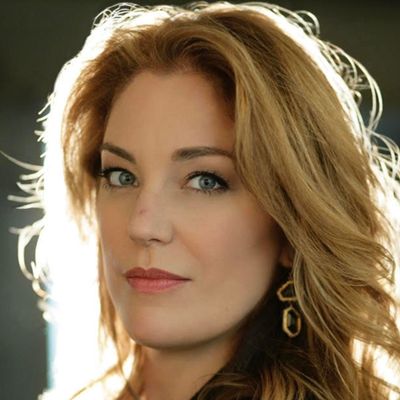
Meagan Miller is an Opera Singer, wife and mother Catholic converted to Islam. Come listen to her share her journey. Produced by Dori Berinstein and Alan Seales, edited by Derek Gunther, music by Cat Dail. A proud member of the Broadway Podcast Network... Read More
From the show: You Can't Say That!
Guests
About
Meagan Miller is an Opera Singer, wife and mother Catholic converted to Islam. Come listen to her share her journey.
Produced by Dori Berinstein and Alan Seales, edited by Derek Gunther, music by Cat Dail.
A proud member of the Broadway Podcast Network.
Transcript
This transcript was automatically generated and might contain errors.
[0:00] Tonya Pinkins: Welcome back to You Can't SAY THAT! I'm Tonya Pinkins, and this is part two of my conversation with opera singer Meagan Miller.
[0:13] Tonya Pinkins: We gotta say what you're doing. Now you were talking about the air, and I was watching you do a class, and I also have been a singer, and one of the things that in the early part of my career, it would be said that I never breathed, that I never breathed, but I always had enough air. And then I learned how to quote breathe, and I've never been able to get enough air to sing the way I used to sing. And I was watching you teach, and in this book, they were also talking about the spirit of the air, that own gin or angel, and that we borrow from that spirit to animate our bodies.
[1:04] Meagan Miller: Yes.
[1:05] Tonya Pinkins: So, you know, thoughts about that.
[1:09] Meagan Miller: Well, okay. First and foremost, I think that our throat has to yield to allow the air inside. Because if we don't do that, if we have a conflicted throat, we'll hear the breath when we inhale.
[1:33] Tonya Pinkins: So does that make sense when I do that?
[1:38] Meagan Miller: But that's tense. But if you have nothing con if there's no conflict in there and you just let it in, then it just comes in.
[1:53] Tonya Pinkins: I'm trying that now too. I'm liking this.
[2:01] Meagan Miller: Yeah, I think anything else than anything more than that is too confusing to take on stage. I think we have to have very simple and like you said, physical things. It doesn't have to be language. I think we have to feel it. And in my opinion, when I teach voice, if a student hasn't felt it, there's no way. It's my job to say the different things and do the things so that they have felt it and can come back to that feeling. And I think women, like you said, women have to be that way. If the gut isn't working, if the body isn't working, it's not gonna work either.
[2:41] Tonya Pinkins: I also have to ask you if you felt like you didn't have enough air to breathe. What happens between the in-breath and the out-breath?
[2:50] Meagan Miller: Well, this is a touchy little story for me. For most of my career, I just sang, and I knew it was this naked thing. I didn't know how I could do it, but I could do it, and I had this incredible range. And it was a sort of similar thing with the piano. I taught myself to play, and then I took lessons and I forgot how to play. And now I can read, but I can't play. That's like a tragedy to me, though. And that kind of happened to me with singing. I had this kind of effortless voice that could do all kinds of amazing things, and then I was sent to work with the best person around, and I've never recovered. Literally never recovered from it.
[3:39] Tonya Pinkins: Oh, I'm so sorry.
[3:41] Meagan Miller: Um, but I believe that you're gonna recover.
[3:44] Tonya Pinkins: I can still sing.
[3:46] Meagan Miller: Yeah. But the effortless, there's a work, and it's not joyful anymore. I don't enjoy it.
[3:55] Tonya Pinkins: Oh no.
[3:59] Meagan Miller: That if it okay, so I have to say I've gone through different patterns in my life too. And listen, hormonal changes, physical changes, and I've gone from singing light, light, light to the heaviest, loudest stuff that there is. I mean, I am, you know, if you see those exaggerated things of the opera singers with the horns, like that's the stuff I sing, and a lot of it is just about being loud enough to get over the orchestra, and that doesn't feel fun, you know? And so I had a really big breakthrough when I went back and listened to some of my old stuff because I just listened to myself and I thought, ah, I was playing. My voice was available to play, and I wept and wanted so much to get back to it.
And so what I started doing is just singing other stuff, like not classical music at all, and funny songs with my kids and pop songs that I listened to when I was in high school, you know, and that stuff started to help me a little bit getting away from all the stuff that I know.
[4:53] Meagan Miller: And I would say about the breathing, that when you switch from inhale to exhale, it's by the way, in some of the meditation training that I received as a Buddhist, that was the most important moment.
[5:30] Tonya Pinkins: Between the inhale and the exhale.
[5:41] Meagan Miller: And what is it in that moment? Well, that is supposedly the stillness where the thoughts will come up that most are affecting you, you know, that you can look at kind of like clouds going by in the sky, you know, the sky is always there. The thoughts and the thoughts are the cloud or the sun or the wind or the big storm, but the sky is always there. And so the thing is I found that when I was inhaling, I could be still be distracted. And when I was exhaling, I could go, oh, that feels good, you know, and in between, often some crazy Meagan thought would come. And I learned to laugh at a lot of them, and I learned to take some of the ones that were surprising more seriously. But a lot of times just, oh, that's thinking, oh, that's thinking, oh, that's thinking. But I find the inhalation and the start of the phrase for singing is the moment where the intrusive thoughts come.
[6:54] Tonya Pinkins: I'm gonna mess it up. Make sure you do it right. What's your tongue doing?
[7:00] Meagan Miller: As opposed to, this is my truth. This is what this phrase is about, this is the motivation, this is the beauty, or this is the yielding where it comes through me. You know, that stuff is hard to keep. But that is the space for me where I like to live. Like so much of pe we think of humanity as the ego. The ego has never worked for me. I've never been good at being an I. I feel very joyful at being an expression of something else. I don't matter. I'm just being breathed, I'm being sung, I'm being thought, I'm being lived. That for me is a place of joy and comfort.
[7:55] Tonya Pinkins: Beautiful. Does it okay? So that's why you're facilitating conversations.
[8:05] Meagan Miller: And I guess.
[8:07] Tonya Pinkins: And that's why, and that's why you make movies. And that's why you're an actor and singer, all of it.
[8:14] Meagan Miller: That is I'm a vessel for these things to come through.
[8:17] Tonya Pinkins: And yep, they just come through me. They're not mine. I can't take credit for them. It's the divine is expressing as me a song, as me as this. That feels good to me. I don't feel diminished by thinking of myself as a vessel. I feel more diminished by thinking, well, I better be good, and I better, and I'm like, I can't do nothing.
[8:44] Tonya Pinkins: Okay. Well, that yielding then is absolutely there for you.
[8:55] Meagan Miller: Sometimes.
[8:58] Tonya Pinkins: Sometimes. How many kids do you have?
[9:00] Meagan Miller: I have two kids.
[9:01] Tonya Pinkins: How old?
[9:01] Meagan Miller: I have a five-year-old daughter and a three and a half year old son.
[9:05] Tonya Pinkins: So they're little little. Because I, you know, so you haven't really hit. I wondered if your Catholicism, you know, would come up in the child rearing, because you know, we do get, they say get a little more conservative as we get older, like yeah.
[9:19] Meagan Miller: Well, I mean, I got married when my daughter was two.
[9:25] Tonya Pinkins: Oh, so you have a child from you only have one together.
[9:28] Meagan Miller: No, we have both of them together.
[9:29] Tonya Pinkins: Oh, but you weren't married.
[9:31] Meagan Miller: Yeah, they both came before.
[9:32] Tonya Pinkins: Oh my goodness, y'all just was living in sin in every way.
[9:40] Meagan Miller: Yes, you were modeling some new ways of being in the world.
[9:44] Tonya Pinkins: Well, listen, I mean, I guess I also to be honest, we were living in a very European way. Let's just say we were European.
[9:54] Meagan Miller: I love it. But you know, my husband is a very religious man. I would say that I'm very spiritual and I look for the way that fits in religion. If that makes any sense.
[10:14] Tonya Pinkins: Like, I still don't want my daughter to say pee-pee and poop. You know, I had to say make water and bowel movement.
[10:22] Meagan Miller: Okay. I mean, I mean, and I still can't believe that I and I have had an artistic career and somehow fought against all of these things, but I really followed those things. My mother used to have me read Emily Post when we were on long drives and stuff. I mean, honestly, I don't know. I don't know how I have any freedom at all in my body, but I do.
[10:43] Tonya Pinkins: And uh, okay, well.
[10:44] Meagan Miller: Well, my mother, my mother, who was 80 when she passed away two years ago, so we know which generation this is. She, upon graduating from college, the first college degree in her family, she took a job teaching English in Tokyo.
[11:03] Tonya Pinkins: In Tokyo by herself.
[11:06] Meagan Miller: Then she went to Spain and did the same thing, and then France and did the same thing and went all over the place. And then when she was finished with that, she came back to the US and then finally met some man and got married, but my wonderful father. But you know, that was the situation. And so I guess I come from that.
[11:25] Tonya Pinkins: Yeah.
[11:26] Meagan Miller: She gave that to me. And so that lives on. And my daughter is exactly the same. I mean, exactly. I don't know which country she's gonna be the dictator of.
[11:41] Tonya Pinkins: And so that's there. And so I think maybe it's even more ancient than religion, what's coming through.
[11:50] Meagan Miller: And um, and that's kind of great. And um, you know, my husband's culture is very, very different and also is very ancient. There's a lot of, you know, he is always talking about the difference between his culture, which had, you know, up until last generation, still blood killings and feuds, like actual feuds and this code of conduct that was very restrictive, actually. But also a very interesting society when a woman felt that she didn't want to go through the normal process of being a woman in that society, she could just dress up as a man, and everybody would know she was a woman, and but they would accept her in that role.
[12:33] Meagan Miller: What's that called? That's part of the Albanian culture. Wow. Don't you believe that? I love that. It's amazing. And she would just be except she could have business, she wouldn't have to have um a family to be considered in order, you know. She was just embraced in that society, living that way. And I mean, when my husband told me that, I almost fell over. And for him, it was like, yes, that happened. And I'm like, Don't you think that's amazing? But there are there have always been ways for people who loved each other and their family to find some way to make it work. Yes, you know, and they did it. You know, he is the youngest of 10 surviving children. His mother produced 12 children in her life, and um he they didn't have um running water at the beginning things.
They got their first washing machine when he was in college. So all of that stuff was, you know, outside with the well or at the river. I can't even imagine the situation. But in that society, family was the most important thing. And if somebody was, you know, the crazy uncle saying whatever, you listened with respect and didn't believe a thing, and just loved him anyway, and he would still come to dinner, you know, and that was the way it was. And you just found a way. My family has much more of the um disowning and all of that. And I do think one of the ways that I've been able to deal with the differences in my family and the points of view of uh my parents who have always been very traditional, was just from him, where he's like, ah, it's family, of course, you know.
But you have to go visit them. So then you just have to kind of figure out, well, okay, why? And and I I've had to learn to look at everything that I thought just was the way it is, and just okay, why is it that way? Why do I think it has to be? And then I had to take it apart.
[14:35] Meagan Miller: Yeah, I you know, I try to tell myself that everything I tell myself is a story. Am I willing to let that story go? And whatever the next story, like, am I always just willing to let whatever the story is, can I let it go? Well, you know, one of the things that I was so interested in when I heard you talking about the movie coming up was the rude awakening of people who just don't understand what conservatism is. And the fact it's not just about money, and it's not just about race, at least not on the, you know, we we talked about taking that beard off in the last discussion. There are reasons that people won't take seriously from the other side that need to be somehow examined. And the role of tradition and the role of fear and conformity and the comfort that that brings.
And I'm gonna add another layer. Uh I just started taking a course about um magic and hermeticism and alchemy and learning about the spells and the use of urine and ordure and uh the energy of the orgasm and how those things are uh powerful uh spells that people use to not have power but to have power over, yeah. They are powerful for having power over. So you were thinking about this a little bit when you were talking about Trump having this special power, he's a you know, there's this talk of him as King Cyrus, and it's gonna be the world before him and the world after him, and I kind of agree. Okay, I don't know that it's in the way that people think, I think it's much bigger than that, but he has been a force to like bring everything up, to bring everything up, and for us to see this big divide that is here in our country.
But Alistair Crowley, who you know made the Thoth Tarot, he said we're moving into a new Aeon, which requires the reconciliation of opposites. Well, I agree, and I actually think that that is the human condition and always has been. So we have to see both sides and love both of them. And if you can't do that, then you'll just be fighting forever.
[17:40] Meagan Miller: And you know what? And I say, if you've got to fight, then embrace fighting. Like for me, free will is you have the free will to embrace what is or to fight what is. But what is is always what is. And so I'm like, you know, I go with that Bible, this too shall pass. Embrace this pain. It's gonna pass. Embrace this abundance. It's gonna pass. Whatever it is, embrace it, be fully present to it, be fully present to it. Feel it fully. It's going to pass. Don't get caught up in believing it is always forever. It's not, it's gonna pass. Be with it. Well, right. But the other thing is I find that if I won't deal with something, then that's the thing that keeps coming back. Keep coming back. Absolutely.
It's like boom. Again, boom, boom. No, absolutely. But I I love that. So how should we embrace these things, these opposites? Well, the way I do it as a literally, it's a discipline for me. Okay. And what that means is, you know, I had to make some hard decisions with uh one of my children. Hurt me real bad. And that meant I I took a few hours on a couple of days to just grieve and mourn. I just had to be with that. Like there was no trying to justify it. It was like, no, this was a hard decision. It took me many months to make it, and it feels like a it felt like death. And to just let myself be in that kind of grief that is not fixable or explainable, it just hurts. And so I make space for myself to just hurt sometimes or to just mourn sometimes, or even sometimes to just be a fire breathing dragon, like I'm a fire breathing dragon today, and I'm gonna be that. And that's it passes. But if you don't be with it, it's gonna keep showing up.
[19:51] Meagan Miller: Well, and then also like what's being alive anyway, like is being alive being numb is like having these emotions and really uh living for me is also the part that hurts the most. But the minute you decide to love someone, you're deciding that it's gonna hurt sometime. Yeah. Uh yep, yep. I'm sorry, that's going on. Well, I'm not, I'm not sorry at all because in hindsight, for me as a parent, I think the hardest thing for me as a parent is looking back and seeing my mistakes. A lot of my mistakes are that I had it so hard that I didn't want my kids to have it that hard. And in hindsight, I realized that I'm as strong and powerful as I am because of everything I survived, and that I deprived them of that of strength, the possibility to develop that strength because they had to struggle with some things.
Well, now they'll struggle with something else. It's true, it's true, but it's like I wouldn't wish my childhood on anyone, and I wouldn't redo my childhood either. Right. I mean, because then, well, then you hate yourself, right? Like if you hate what made you. Yeah. Then what? Yeah. And I I just, I'm like grateful for everything. And that and I don't mean that in a in a in a Pollyanna-ish kind of way. It's like, you know, sometimes people say they're the people are afraid of me. And it's because there's literally people are always afraid of me. It's literally because there's not there's nothing you could do to me that I haven't already survived. Like, okay. What's okay? It's just I've really gone through some hard shit.
So when people want to use threats as a power, it's just like okay, let's do it. Well, I'll live through that too. Go ahead. And that's not an energy that, you know, our business, there are things like falling off of the roof in my apartment in front of me. It's a little scary. Um, but that fear is such a thing that is used on people all the time. Like, I'm gonna do this if you don't. And for me, as soon as you say that to me, you got to do it because I'm not living in fear. Yeah, call the bluff right away. Bring it on. Let's just get that out of the way. And it almost never happens, right? They never actually have the goods. But most people don't want to risk that, they don't want to risk that pain, which is big sensation.
[22:34] Meagan Miller: It's very interesting. My immediate response was, um, I'll take it from myself, but don't do it to the people I love. Interesting. I don't know why I need to come back to Mr. Trump again. I guess it's the same thing that you said. There is he's he is somehow a lightning rod. But I'm just remembering one of those early interviews that they gave. What should we do with the ISIS and the terrorists? And his first response was, you have to go after their families. And for me, that was one of the most chilling things. There are horrible, disgusting things about this person that we all have observed. There's videotape, there's you know, whatever. But that, because it was quick and it was routine. And I thought to myself, okay, we know exactly what this is.
And that is the truth that hurting you, it actually has this very limited amount of power. But going after people you love and knowing people you love are suffering because of you. That's a kind of torture that few people can live with. Well, and I mean, I guess, yes, wonderful, it's powerful. We all know what to do now, right? But uh, what are we about? What are we about? And uh that's that's the hard. I think that's the question, isn't it? That's I think the question that people cannot live with. This whole idea um agree to disagree, how that's becoming just not even an acceptable answer anymore. Because we all knew, I don't know where you didn't grow up and spend a lot of time in New York in your youth, right?
You came later to to New York and that whole area or different. I also came at 19 to New York, living in New York from 19 uh on until uh I went moved to Europe. Basically, I was very aware of the personality that was Donald Trump, and I think we all knew who this guy was. You know, so the thing for me is even if someone had only known of him as kind of a rich person that had real estate or whatever and had the apprentice.
[24:52] Tonya Pinkins: Beforehand, um, there was enough knowledge about this person that everybody knew what was being embraced. You know, this it's not just a funny guy who's on the television. Um, it's a man who reinvented himself as he was becoming less popular, I think, as he got older, and studied and studied and studied and studied ways to be powerful, ways to intimidate, and um, and ways to ingratiate himself with a specific demographic. And from what I understand, listen to talk radio that was popular with these people and started imitating and repeating phrases with a very specific intent. And so for me, that's been very menacing. And I think that the embracing of that by otherwise intelligent and um and and wonderful people, a lot of wonderful people I know, really, you know, who were so kind to me as I grew up and formed part of who I am.
Man, it's hard to think. I think that's why we can't agree to disagree anymore. And for me, it was in that one video where he was just saying, I am willing to commit the worst atrocity that I can think of to another human being. Now, listen, many people can talk about the role of retribution for terrorism. We can all talk about that, but it's still a level of violence that most of our leaders would simply not discuss in public, right? I'm here you. Now I I I gotta, I'm gonna, I'm gonna push to the other side. I'm gonna play advocate with you. Um, because we're wrapping up here. So I want to say this. This week, uh, November 5th, my podcast is with uh Camilla Elias, Romanian uh psychologist, uh PhD in English literature, but written about cartomancy.
And one of the things I asked her about is you know, power and power over. And if you know, two magicians or two metaphysicians are trying to do something, who's gonna win if they're working across purposes. And she said, the one who's clearest and who uses the most repetition and is persistent. And she said, people underestimate the power of repetition and persistence, and that is what this person in the White House does. I will say this that the way I want to go hard is if as I'm trying to embrace this idea that it is just a reconciliation of opposites, that there is no bad or good, there's just what is things, big sensations, and the person who can have the capacity to have the biggest sensation will have the greatest power over because they're not running away from things that are too big or that they've judged in a certain way.
There's a way in which this person in the White House is saying, Yep, I'm willing to be consummate evil. I'm willing to be, I'm willing. There's a whole series of meta prayers that is about I'm evil, I'm consuming evil, I'm devouring. You know, that there is a way to see him as the manifestation. And in that way, very powerful. The the repetition of words, the way that he has become the most famous person in the history of fame. And I and I don't say the name because I feel that saying the name is increasing the power. Um you know, I said if people had ignored him, that would have taken power away. Every time we say the name, we talk, we're increasing power. So it's like I mean, it's advertising at its core, right?
This is what advertising is, and that's a lot also of popular music. We have to acknowledge that. And when we think of the actors that are legendary, I think that you're right, the capacity to feel strongly and clearly, and to embrace the largest. And we admire that, and we love that. Because we think I couldn't do it. Yes, yep, I couldn't do it. Maybe we can't do it. And so, yeah, this is what we get. This is what that comes of. Yes.
[29:26] Meagan Miller: Well, and that comes full circle. That's exactly what my father said. He was the only one who was willing to fight back. So there's that admiration, you know, because then the next following question is well, why didn't you do it? That's wow. We're filming on November 5th. So do you want to give a prediction of how Pennsylvania's gonna go? No. Here's what I'm gonna say though. Um, I don't think it's gonna matter. Um in what sense? Well, first and foremost, I do think that mathematically, um uh the former vice president is is the winner. I think once mathematics don't matter. They don't matter because I think it's going to be about courts and lawyers and the court of public opinion. And I also hope, hope, hope that this is not the beginning of another civil war in this nation.
I hope, hope, hope, hope. I hope that we are um going to have some sort of smooth transition of power or continuation of power, however it goes. I I am concerned about the the opposites that are not able to embrace each other at this point. And so somehow something will go in the one way or the other. You know, we're it there's gonna be a change. But I think, like you said, it the mathematics don't matter. I think actually matter. And one of my nun friends says this, and I'm I'm gonna, this is me taking my position as we wrap up here. Yeah, if you can come to an agreement about it, then there's never any need for war. Right. And if you can't come to an agreement about it, then go to war. So I feel like war is on the table.
I agree. And uh we need to just clean it up. We need to get clear. What do we want this nation to be? You know, Lincoln wanted that cabinet of, you know, built with people. His vice president was a Democrat. Um, he said, let's not shame the South. Let's let them go home with dignity. Right. The South never conceded, the South never lost. America has to make a decision. Are we going to be the nation of the ideals of our constitution? And as someone said the other day, the French have had five constitutions, five republics since the French Revolution. Right. It's time for a new one here. Um, can I also just say one more thing? You can. I two more even. I think we need to investigate in our beings, if it is actually the worst thing that can happen if the other side wins.
Because one thing I will say, you know, I'm I started a point that I didn't finish. My husband pointed out to me, he's like, listen, the one thing I can say is that this current occupant of the White House has avoided war three times when maybe his opponent would have immediately gone to war. There is something so simple about money being the main issue, and just applying pressure until he gets what he wants, and somehow finding a way to get out of the bad deal.
[32:55] Tonya Pinkins: Agreed. Someone said that to me just yesterday. Absolutely. Absolutely. You know, maybe it's not the worst thing. And I have to say, the new people who may go into the White House, I I'm not convinced that that's the answer. No, no. And I mean, that's a lot of the existing system, right? That has understood understood. That got us where we are right now. Yes. So what do I know? I'm maybe it's great. But you know what I do know? Whatever it is, we're gonna have to embrace it or and and and embrace it could mean I'm embracing it. This is what is, and my task and embracing it is to do everything I can to change it. That's that's a part of embracing it. Like I'm not trying to pretend it's not, I'm embracing it and saying I'm working to make it different. Right. I'm oh I'm okay with all of that, but I agree that we have to be a little more realistic and um come to terms with what is. What is ooh, I'm so with that.
[34:01] Tonya Pinkins: Megan, it's been such a pleasure. I'm I'm so happy to meet you. I've never seen you in person, but I'd listen to you on YouTube and just a pleasure to have this conversation with you. Thank you so much.
[34:11] Meagan Miller: Thank you.
[34:11] Tonya Pinkins: It's awesome. And I could have talked for six more hours, I think. We'll do it in the in the new world when we can actually be in the same place with each other because there's so many more things I would have loved to talk to you about.
[34:21] Meagan Miller: Me too.
[34:22] Tonya Pinkins: Thank you so much.
[34:23] Meagan Miller: Thank you.
[34:24] Tonya Pinkins: Take care.
[34:25] Meagan Miller: Take care, you too, and watch those babies and yeah, yeah, keep building bridges.
[34:30] Tonya Pinkins: We need a lot of bridges.
[34:31] Meagan Miller: We need a lot of bridges.
[34:32] Tonya Pinkins: Agree.
[34:34] Meagan Miller: Keep letting all of these things go through you.
[34:39] Tonya Pinkins: Inshallah.
[34:40] Meagan Miller: Inshallah.
[34:43] Tonya Pinkins: You're listening to Tonya Pinkins.
[34:45] Tonya Pinkins: You can't say that on the Broadway Podcast Network.
[34:54] Tonya Pinkins: Thanks for listening to You Can't SAY THAT. The show where you can. I'm Tonya Pinkins, and You Can't SAY THAT is part of the Broadway Podcast Network. Produced by Dori Berinstein and Alan Seales. Edited by Derek Gunther, with music by Cat Dail. If you like what you hear, don't forget to subscribe and rate this podcast highly wherever you stream. Follow me on Instagram, Twitter, and Facebook at Tonya Pinkins. And to learn more, visit BPN.FM forward slash YCST. Stay safe. You is kind. You is smart. You is important. You is dead. Tonya Pinkins horror film Red Pill brings African American perspective to progressive movement. We are a majority in this country.
[36:19] Tonya Pinkins: This place is spooky. Some people like to live dangerously. Are you so jumpy tonight? You know what, guys? I'm gonna go back tomorrow. Did you hear about the creature woman that attacked the father and son hunting down here? I don't see the case. This place creeps me out. I think we should call the sheriff's office.
[36:58] Unknown speaker: The only people missing or dead are brown people.
[37:04] Unknown speaker: They're after all of us.
[37:08] Unknown speaker: What do we do, Amelia?
[37:10] Unknown speaker: We die.
[37:12] Unknown speaker: But we take some of them with us.
© Broadway Podcast Network, All Rights Reserved