

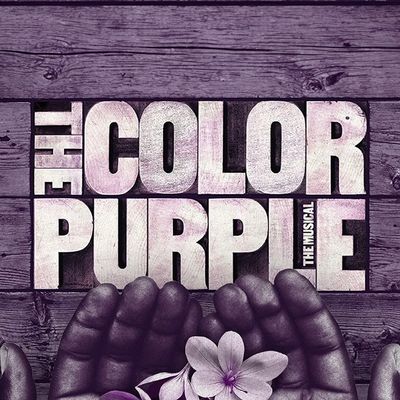
John Doyle’s production of The Color Purple inspired me to invite him to tea. We met shortly after he took of Classic Stage Company where I had famously quit a production of Mother Courage. We met and became fast friends... Read More
From the show: You Can't Say That!
Guests

Featured Shows
About
John Doyle’s production of The Color Purple inspired me to invite him to tea. We met shortly after he took of Classic Stage Company where I had famously quit a production of Mother Courage. We met and became fast friends.
Produced by Dori Berinstein and Alan Seales, edited by Derek Gunther, music by Cat Dail.
A proud member of the Broadway Podcast Network.
Transcript
This transcript was automatically generated and might contain errors.
[0:00] Tonya Pinkins: Hi, my name is Tonya Pinkins, and you're listening to my podcast.
[0:04] Tonya Pinkins: You can't say that on the Broadway Podcast Network.
[0:24] Tonya Pinkins: My next guest, I reached out to him and invited him to tea because I was so impressed with his work. And when we met for tea on the Lower East Side, he shared with me, we both have Stephen Sondheim horror stories.
[0:47] Tonya Pinkins: I'm gonna tell mine first because his has a happy ending. Join me in welcoming director, artistic director, John Doyle.
[0:59] John Doyle: Hey, Tonya.
[1:00] Tonya Pinkins: Hey, John, lovely to talk to you.
[1:03] John Doyle: Absolutely lovely.
[1:04] Tonya Pinkins: So I'm gonna tell you my Stephen Sondheim show. It actually starts good and then it goes bad. But isn't that how life is? Like the best possible thing becomes the worst possible thing becomes the best possible thing?
[1:15] Tonya Pinkins: So my very first Broadway show was Merrily We Roll Along, and I was a freshman in college, and I went and auditioned in New York for Hal Prince and Steve Sondheim and got to come to New York and do a Broadway show. And Steven Sondheim always terrified me. And I would try to figure out ways I could connect to him.
[1:36] Tonya Pinkins: And so I had been listening to Cleo Lane sing his music. And he had never didn't know who she was. And so I made him a cassette tape of some Cleo Lane singing his music. And it was, he said it was an abomination. Like only he died. And I thought, oh dear, that's the end of me. And Stephen Sondheim.
[2:05] Tonya Pinkins: And then years later, some friends of mine and I were thinking about trying to do a Sweeney Todd with me and Chuck Cooper. And they were young, and I said, let's set it in the South. You know, how cool would it be to have Mrs. Lovett? You know, she's just a very good cook on some plantation, and the Barker is, you know, the thing, and then they start killing people. I thought I said that is great.
[2:33] Tonya Pinkins: So the young director wrote Steven an email because he wanted Steven's blessing for it, and he didn't get it. Stephen said, it sounds like you want to do 12 Years a Slave, the musical. I wouldn't recommend it. But he'll always give you something, it'll always be honest, whatever it is.
[2:58] John Doyle: Yes. Now you have a story that sounds bad and it goes good. What's your story?
[3:04] John Doyle: Well, I was doing a production of Sweeney Todd in London, and it was going pretty well, right? It had been nominated for an Olivier Award and all that stuff, and the producers of the show wanted Sondheim to approve it going to come into New York. Without ever asking my opinion upon the matter, like these people do, they filmed the show from back of the auditorium with a single camera and sent it to Steve Sondheim.
[3:40] John Doyle: I knew nothing about this, but they also gave him my telephone.
[3:44] Tonya Pinkins: Oh my god.
[3:46] John Doyle: So on a Saturday night, and the reason I remember it was Saturday night, it was gin and tonic time, six o'clock in the evening. And I get this call from this voice that said, Hello, this is Stephen Sondheim. And I thought, oh yeah, oh sure. Well, he said, No, this is Stephen Sondheim. I thought, oh, you better back off, John. And I was terrified.
[4:13] John Doyle: And he started to rip me apart about the things that I'd done for the show. And like, you know, why did you cut this bit? Why did you do that? And it was all everything he had to say was completely fair. I had had a four-week rehearsal period in a tiny regional theater. Never thought anybody would see it. The rest is history. And I was so upset that I'd upset my hero.
[4:43] John Doyle: But I think I got became tearful on the phone. And in fairness to him, because as you know, not only can he be terrifying, but he can also be kind and generous and warm. That's the real man. And he said, I've you've been put in a position that you shouldn't have been put into. I'm going to come to London and I'm going to see the show.
[5:06] John Doyle: So he showed up and he saw it and he said to me afterwards, he said, I had no idea that it was what it is. I had you couldn't tell from that camera. And then it came to Brooklyn. So it had a very, very happy ending. And you know what? I'm still scared of him. So it doesn't go away. He's so smart.
[5:31] Tonya Pinkins: Oh, so much. I remember Elaine Stritch saying to me that and she didn't drink anymore, so she said, and she said, I need two drinks just to phone Stephen Sondheim.
[5:43] John Doyle: Yeah.
[5:44] Tonya Pinkins: Just from his lyrics, you feel like he sees your soul and he's gonna write a monologue about it.
[5:51] John Doyle: Oh my god, yes. And isn't it incredible too with his material that you can listen to it? And every time you think, oh, I've never heard that before. Even something as famous as Send in the Clowns. You know, you start and think, what does maybe next year mean? Or what does what do the clowns mean? I mean, like, really, when you get the it's poetry.
[6:13] John Doyle: I mean, I think the thing about him, Tonya, is he's a playwright, as well as a you know, as well as writing music, everything, and as well as being an extraordinary lyricist. There is playwriting and character material at the heart of every word that comes out of his songs. Extraordinary.
[6:30] Tonya Pinkins: Yes, he's kind of the Edward Albee of musical theater.
[6:34] John Doyle: No doubt about it. There's just no doubt about it.
[6:38] Tonya Pinkins: And the funny thing is, I mean, I can see him say that about, you know, 12 Years a Slave. Actually, probably knowing him as well. If he'd met your director, he might have and liked him, he might have said yes. Do you know? I mean, there's my friend Marianne Elliott doing a production of Company about to be on Broadway, hopefully, with a woman playing Barbie, and you know, that's a big shift from what they wrote, but not only has he allowed it, he's given it, you know, all his approval.
[7:10] John Doyle: That's a fantastic thing, really.
[7:13] John Doyle: I remember when I was doing Pacific Overtures, and I met with John Weidman, and we agreed that there was one song of Pacific Overtures that should be cut, the song Chrysanthemum Tea. And really for many reasons, but one of which was, you know, you really couldn't quite believe that Japanese people would sing that song. And not only that, but they only make Japanese chrysanthemum tea in China, not Japan. So it didn't actually make any sense.
[7:39] John Doyle: And we but it's a wonderful, wonderful song. And we went to Steve Sondheim's house, John Weidman and I, and he said, we told him, and he said, Well, yeah, I think you should try it without it. And we did it without it, and it was very successful, except, of course, all the people who wrote online about the cutting of Chrysanthemum Tea, who blamed me, and it was all John Weidman's fault.
[8:02] Tonya Pinkins: It was your fault for having that idea.
[8:09] John Doyle: Exactly. You know that.
[8:12] Tonya Pinkins: Yeah, I do love how he has grown over the years because at that point, that was the 80s. I mean, I remember Eartha Kitt telling me that she had changed a word in I'm Still Here to make it more personal, and she got a cease and desist letter.
[8:29] John Doyle: Oh, I'm sure.
[8:31] Tonya Pinkins: Oh, I'm sure.
[8:32] John Doyle: Oh, yeah, yeah.
[8:33] Tonya Pinkins: I also I don't blame him, but like it's a way of saying, Look, I am still in control of my work, you know. But he's also he is a great, great collaborator. I mean, there's just no.
[8:45] John Doyle: I wanted to you just said in control of our work. I want to I want to talk about that because I don't ever really feel I'm in control of my work. And as I've ventured into directing, I definitely don't feel that theater directors get to be in control of their work.
[9:02] Tonya Pinkins: And I have to say, as an actor, when I'm teaching actors, I always say the bear's gonna do what the bear's gonna do. That director can tell you a whole bunch of things, but when you get out on that stage, you can do anything you want to do. So what is it like as a director?
[9:18] John Doyle: You know, do you let go of control? Do you feel you have to have control? Or you're like, I there's only so far I can go.
[9:25] John Doyle: And you know, I don't have a big control. I think when I was younger, I had more of a control thing in me. But I don't have it anymore, thank God. I hit a point in my 40s where I thought I've either got to let I've either got to stop this job or let this need for control go.
[9:46] John Doyle: And I decided to continue doing the job, but to try to find a different way in and to try to find my way in, not to being one about my having the answers, but one about my having the questions, and to ask only questions to which I don't know the answer. Otherwise, what did it look like when you wanted to have control?
[10:07] John Doyle: What was that version of you like? Well, you know, I mean I was you know, I was really good at you know, come in the French windows and don't bump into the furniture, and everything was very structured, and the actress would go home feeling very secure at night, and you know, and I and I they did it, they did it my way is a little too strong, but you know that's what it used to be like 30 years ago, that's what ex directors were expected to tell people where to stand and how to be good, you know. The system has thank God the methodology, not always, but many times has changed. And I'm very I'm much much more interested in the collaborative experience. And you asked about letting go of it. I love change.
I don't like to go and watch the same thing every night. I was very struck when I came to this country in the stage management room, there would be those books on a shelf that said it's you know, so Tonya's track and Patty Le Pone's track. And I said to them, what does that word track mean? Because in Britain we don't use the word. And they said, well, you know, it's what they're what they're supposed to do every night. And I thought, God, I mean, the thought of saying to somebody this is what you're supposed to do, to me is shocking. Now, if I do believe that if you rehearse thoroughly, properly in a shared experience, then a truly shared experience, then the actor is not going to change it because they fancy changing it. They're actually going to believe in the choices that you made together. And it's the word together that matters most.
[12:04] Tonya Pinkins: Now, for me, what I saw your Color Purple, I don't know, 10 times maybe. And um, I brought so many people there, and um one of the things that, you know, as an actor and as an educator and going into the universities, one of the challenges I find for black American actors is that I feel like um their teachers who are not black try to train their blackness out of them. And so a lot of black American actors come out with this kind of neutral human being. The life is out of them. And though they become very successful because they are behaving in a way that makes dominant culture very comfortable with them. They're not, quote, scary, but they also lack an authenticity. And in both your Color Purple and in your Carmen Jones, I was struck by the fact that I was like, how did this white guy be comfortable with letting black people be black people? Like, you know, wasn't he scared? He's, you know, from the GB.
[13:19] John Doyle: You know, I yeah. Yeah, I was I was scared about it all, you know. I mean, I did it first of all, as you know, in Great Britain. And the issues are different there. I mean, the integration, if you like, the working together has a much longer history. And black actors have played major roles at the Royal Shakespeare Company and the Royal National Theatre. You know, they've not only played the maid, you know, they've been integral to the work. And so, and when I was asked to do that piece at the chocolate factory, I turned it down uh three times in total. Um for lots of reasons. One being British, one being male, one being white, uh, and and also I felt a little old to tell it for some reason.
But the male, the brick, the white man bothered me, and the man bothered me as much as the white, to be honest, at that point in time, because I thought this is a really, it's a woman's, it's it's told from a woman's point of view. I but I've made myself go back and look at the novel. Uh I thought, you know what? I went to university in Georgia, Athens, Georgia, in the 19th, early 1970s, and I certainly therefore knew more about the culture that the play is set in, that the pieces set in than did any member of the cast that I was working with in London, because they're not African Americans, right? They're they're British actors. Uh and and the so the questions really never arose. The production did well.
Ben Brantley gave it a rave review, and god damn it, it came to Broadway. And I thought, oh, now I am in shit, right? I'm in trouble now, because how am I going to justify those same questions with with not only for the audience but with a company of African American actors? And I sat down with I sat the actors down with me, sitting on the floor, like I would do with them on the first day and said, listen, I there are many, many elements of this story that I understand. I understand the church of the story, I understand the poverty of the story where I come from in the Highlands of Scotland. I understand some of the aggression and the violence of the story is. Um, but I'm not African American, as is obvious.
So we're gonna tell you we have to tell this together. You have to tell me when I'm wrong or inappropriate. Not only appropriateness in terms of the actual telling of the story, but I may use a phrase that to you is inappropriate and I don't know it is in the way we're working together. So you're gonna have to constantly pull me up. And I will do the same with you, but you're really gonna have to do that. And that's what happened. And they were all they were wonderful. I mean, they were a wonderful company, and they were uh they were very, very sharing with me. But the one thing I did say to them all the time was, you know, I know we're doing a musical, but I don't want you to be doing your normal African American black musical theater performances.
I don't want to see any big butts wiggle to get a laugh. You understand what I'm saying, Tonya? I don't want to see cliches, I don't want to see those tropes. And I was so struck by we we opened, as you know, it did very it had great reviews, blah blah blah. Um one of the actors in the company, one of the more senior actors of the company was sitting backstage with me one day, and she thanked me. I said, What for? And she said, and I'm gonna quote a word that I would not normally use, but I want you to see it in context. She said, Thank you for not asking us to do any cooning. I said, What? She said, That's what's asked of us, John. You don't know that, because you've not been in those rooms, but that's what's asked of us.
And you didn't want that from us. You wanted authenticity from you wanted us to be us. You didn't want us not to be black. You didn't want us to be a Eurocentric version of ourselves because you wanted it to be authentic to Georgia, Putnam County, at the time that Alice was writing about, but you didn't want us to do that schlepping around that we're normally asked to do.
[18:17] Tonya Pinkins: So you talked about growing up in the Highlands, Scotland. Now, I this is gonna sound so crazy, but this call you can't say that, so I can say anything. I think of the Scotsman as like the black people of Great Britain. I don't know why, but I always, whenever I meet a Scots person, I'm like, these are the these are the black people.
[18:36] John Doyle: You might have something. You might have something in that, you know. There's look anything we say is like a cliche, isn't it? But there is an openness, there's uh a love of music, of course, there's a love of song, there's a love of church, family is important, food is important. Um, you know, you might be right, and also to it at the at the core of it, the Scots feel oppressed by the English. Don't forget that we were cleared out of our country, right? I mean, you know, the the rich English people cleared the highlands and sheep in the place of where human beings lived, and we were all sent. We weren't, I wasn't, but my ancestors were sent on ships to Canada and to America with no sense of where they were going.
So there is a connection in that, actually, and and there's a stuff to do with identity, and it's so fascinating because I I've been thinking a lot recently about, you know, people talk about what's appropriate in the theater. You know, is it appropriate for a white director to direct a black play? Is it appropriate for a black actor to be in a white all of those questions? And I've been thinking about the questions about as a Scot, you know, is it appropriate for English actors to play Scottish parts? I mean, I don't have an answer, but it's a really interesting question.
[20:13] John Doyle: And I was in a call one day not so long ago with somebody I didn't know. This is not with you. You can be you can put on a Scots accent, and I'm perfectly happy because I love you and I'm comfortable with that. But I was in a call with somebody that I didn't know, and they spoke back to me with a Scottish accent. And I didn't say anything, but I thought, you know, if I did that to you, like, and I pretended to be you as an American, you wouldn't like it. So let's be respectful. But and also as Scots, we think of it, we think of ourselves as a race. The English don't think of themselves as a race, but the Scots think of themselves as a race. What does that mean? I suppose it means a deep family.
You know, we are c we are we're a country made up of clans, right? And the clans are families, you know, the McDonald's, the sons of Donald, the Mackenzie's, the sons of Kenzie. You know, we are that's who we are. Now we all fought with each other constantly. His family does. There are tribes inside that, if you know what I'm saying, right? There are various tribes in it. You know, Glencoe was a famous battle in Scotland in the 18th century, 17th century, actually. The McDonald's and the Campbells. I too, when I was at high school, there were Campbells and McDonald's in my class. They would not sit on the same side of the room. Three centuries after that battle was fought. So there's deep stuff inside that.
I suppose that's what I mean more than anything by race. It hasn't obviously to do with color, but it has to do with, you know, we're Celts. It's a very particular thing. It's a very particular thing.
[22:10] John Doyle: I want to think we're wrong. I want to know more about that because strangely, I have always had a kinship for Celtic things. I don't know why, but I have an attraction to Celtic things. I that not to my knowledge that I have any Scottish people, but there's a, you know, I feel like whatever makes this thing that we are, we're all parts of it and we keep moving. So I'm sure I got some Celtic genes or cells in me from somewhere because I feel it. Well, well, that's probably true. You also carry wisdom. And I think a lot of the Celts, the Celtic mythology, if you like, is about the celebration of wisdom, uh, the celebration of the story, you know. We have a big festival in the highlands where I come from, uh a Gallic festival for of the original language of the country, where we crown the bard, we crown the storyteller at the end of the play.
Uh so the storyteller is important, and the and and holiness is important, spirituality is important. Um so there are connections. It's not surprising to me that you would be drawn to things Celtic musically. There's a there's a sense also in the Celt of being comfortable with your own melancholia, being comfortable comfortable with your sadness, that your sadness is a part of your happiness. And and I think I think that's probably something in who you are. I could I can understand.
[23:45] John Doyle: And you know, when we we did when you asked me to go out for a cup of tea, we'd never met, but we connected immediately, and that's that's not to do with being famous Tonya Pinkins and famous John Donald in the theater. That's to do with some spiritual connection. So that what you're saying makes sense. I want to get that the thing you talked about, being comfortable with your sadness. Like, I feel like that's my power, and I feel like that's been lost in the world right now, in Western civilization. You know, people get their will is frustrated and they go out and kill a bunch of people, or cancel culture. What what is can you say from your point of view what it's like to grow up in a culture that is comfortable with the sadness and the melancholy?
Like, yeah, I mean, you know, there was it often that come that sadness often transferred itself into anger, particularly from men who weren't so comfortable with that sadness, maybe. And of course, it can transfer, it's a cliche, but it can transfer itself in Scotland into drinking a lot of alcohol. Um but there was also, you know, our music is sad, our songs are sad, beautiful and sad. And and maybe, but it's sad it's sad, not in a self-pitying way. It's something to do with being comfortable with nostalgia, uh comfortable with sentimentality. I was very surprised when I came to America, and people would uh criticize actors for being sentimental, and I would think, wait a minute, sentimental in Scotland is good.
Now it doesn't mean that it has to be schmalzy. That's not what I'm talking about. But but it has to, it's a deep, it's to do with deep feelings. And uh I think the other thing that you're you're absolutely right about we're not comfortable with enough with our own sadness, and goodness knows we should be because we're surrounded by it at this moment in life. Um, but also we are uncomfortable with our silence.
[26:06] John Doyle: And I'm I'm always saddened by how I go to the theatre more and more as time is going on, and I think nobody stops for a pause, nobody takes their time, nobody's, everybody's afraid of silence. As much as I love this country, it's worse in America than anywhere else I know. And you think, why can't it's okay that we can be quiet? It's okay that we sit and say nothing. It's it's I did a musical that Harvey Farstein wrote that Faith Prince was in, and there was a moment quite near the end of it. Uh uh it was called a catered affair. It was on Broadway for a short time, and there was one minute of silence that she she was supposed to go out onto her um fire escape and be by herself. And I said, I want this to last a minute.
Everybody thought I was completely mad. You can't do that, it's a musical job. I said, let's just this woman does this woman no longer knows how to scream and shout. She's done. All she knows is the silence of the night. And we did this minute every night, and you could within the minute, you could hear people sob inside the auditorium more than any song could ever do, right? Because the silence made them afraid. And I think we we have to regain some of that. Now, look, you know, we've just endured four years of such noise and agony, uh with the president of the United States, that it's going to take us a long time to refine calmness, let alone silence. You know, and and it's it seems a shame to me that every single thing in the world in the world is about uh uh short bursts.
You know, one of the things that I love about the notion of podcast is that it's asking people to listen. And in the listening, we imagine, you know, I was raised on the radio with listening to the radio on a Saturday night because we didn't have a television. We sat round and we looked at the radio. And coming out of it. And imagined. And without that ability to imagine, we're done. And to me, there's so much imagining being done for us.
[28:27] John Doyle: It's being imposed upon us that we're not taking enough time to be still.
[28:35] John Doyle: Yeah.
[28:35] John Doyle: How come you say it will?
[28:39] John Doyle: How come we say it will when you will break me?
[28:47] John Doyle: You is kind.
[28:48] John Doyle: You is smart.
[28:49] John Doyle: You is important.
[28:51] John Doyle: You is dead.
[28:53] Tonya Pinkins: Tonya Pinkins's horror film Red Pill brings African American perspective to progressive movement.
[29:02] Tonya Pinkins: We are a majority in this country.
[29:05] Tonya Pinkins: And we're gonna win the election.
[29:10] John Doyle: Do you know what the red pill is?
[29:12] John Doyle: A red pill is someone who infiltrates a group and then destroys them from the inside.
[29:21] John Doyle: This place is spooky.
[29:23] Tonya Pinkins: Some people like to live dangerously.
[29:25] Tonya Pinkins: Yes, why are you so jumpy tonight?
[29:28] John Doyle: You know what, guys?
[29:29] John Doyle: I'm gonna go back tomorrow.
[29:31] Tonya Pinkins: Did you hear about the creature woman that attacked a father and son hunting down here?
[29:36] John Doyle: I don't see the case.
[29:37] John Doyle: This place creeps me out.
[29:43] Tonya Pinkins: I think we should call the sheriff's office.
[30:00] John Doyle: The only people missing or dead are brown people.
[30:05] John Doyle: They're after all of us.
[30:09] Tonya Pinkins: What do we do, Amelia?
[30:11] John Doyle: We die.
[30:13] John Doyle: But we take some of them with us.
© Broadway Podcast Network, All Rights Reserved