

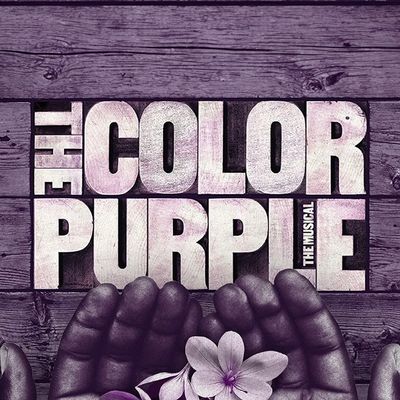
John Doyle’s production of The Color Purple inspired me to invite him to tea. We met shortly after he took of Classic Stage Company where I had famously quit a production of Mother Courage. We met and became fast friends... Read More
From the show: You Can't Say That!
Guests

Featured Shows
About
John Doyle’s production of The Color Purple inspired me to invite him to tea. We met shortly after he took of Classic Stage Company where I had famously quit a production of Mother Courage. We met and became fast friends.
Produced by Dori Berinstein and Alan Seales, edited by Derek Gunther, music by Cat Dail.
A proud member of the Broadway Podcast Network.
Transcript
This transcript was automatically generated and might contain errors.
[0:21] John Doyle: I grew up with five generations under one roof.
[0:24] Tonya Pinkins: Wow.
[0:24] John Doyle: And so there was a lot of grown-ups around, and I was just sitting and listening to them. And I think of podcasts that way. It's like you get to be the fly on the wall in the grown folks' conversations from all over the world. Any you could be that little kid in any community you want to be in, just listening in.
[0:42] Tonya Pinkins: Isn't that wonderful?
[0:43] John Doyle: It's also interesting in this pandemic that you know there was such a lot of understandably desire at the beginning of it from the theater community to put stuff out there. You know, we've all got we all had to suddenly be doing readings and we all had to be doing, you know, whatever. But the thing of all of these things that's gained in popularity is the podcast. I mean, people are wanting to sit and listen. They're not wanting to watch anymore. I mean, I find that really fascinating and very hopeful. Uh very hopeful. And we hadn't been listening anymore because everything has been sound bites.
[1:21] Tonya Pinkins: That's correct.
[1:22] John Doyle: You know, every interview is a soundbite, and every show you get the same set of sound bites over and over and over again.
[1:28] Tonya Pinkins: That's correct.
[1:28] John Doyle: And in the course of an hour, you know, you run out of sound bites. You finally have to say something you haven't said before.
[1:35] Tonya Pinkins: That's right.
[1:36] John Doyle: I remember I remember doing uh, I think it was when we were doing Sweetie Talk on Broadway, and David Loud, who I think would have been in Merrily, we roll along with you.
[1:44] Tonya Pinkins: He was, yes, he was.
[1:45] John Doyle: David was the musical director, and one day he somebody asked him something about me, and he said, Oh, John doesn't speak in thoughts or even sentences, he speaks in paragraphs.
[1:58] Tonya Pinkins: I wonder his meaning was unafraid of words, right? You know, like not wanting to do, you know, you know, we listen to sentences now as as people who love words, because why we be in the theater? And they're not even complete sentences anymore. People don't even finish their thoughts anymore.
[2:18] John Doyle: And as people, and you must have seen this with actors on stage with you. What's happened is that instead of people listening to each other, they're thinking, What can I say next? If you don't listen, you'll know what to say next. And I'm sure you've sat opposite an actor on stage and thought, you're not listening to a word that's coming out of my mouth because you're busy thinking about your next intention.
[2:43] Tonya Pinkins: And it that's a there's a sadness in that too that we're not listening to each other enough. But maybe, maybe the one of the good things of this time is that we'll regain some of that.
[2:54] John Doyle: I think so. I also say that when you're working with an actor who is that present with you and listening and responding. For me as an actor, they give me my performance. I just put my attention on them and just being with them. The performance is happening. I'm with them.
[3:11] Tonya Pinkins: Right.
[3:12] John Doyle: That is what acting is. It is about listening and responding.
[3:16] Tonya Pinkins: Exactly.
[3:17] John Doyle: It's so I love what Judy Dench says that the hardest thing about acting is to realize how easy it is. And she doesn't mean simple. She means, you know, that it's we can we all do it's natural to us all the time. We just have to make more greater access to ourselves in that greater vulnerability of ourselves.
[3:37] Tonya Pinkins: People are afraid of their vulnerability.
[3:40] John Doyle: Well, it's kind of trained out of us. I'm reading this book, Sand Talk, and he's talking about how kids learn so much in the first six years because they're curious and they're and then we put them in a school and they're in an institution that trains all of that curiosity out of them.
[3:56] Tonya Pinkins: Yeah.
[3:57] John Doyle: But when you took let me ask you, Tonya, when you trained as an actor in this country, when you were learning, well, you're still learning, but when you were actually going through your training, did they want you to really be a white actor? I mean, were they taking the blackness out of you?
[4:12] Tonya Pinkins: I am so fortunate that my first professional acting class, I was 15 years old, and William H. Macy was my teacher. And then uh the St. Nicholas Theater, they were developing their version of Meisner's technique. So I was the only, I was a young person, John Mahoney was 45. It was his acting class. I was training with adults, and so they were just training me like another actor in the room.
[4:43] John Doyle: And what I remember most about it, because after I did the adult class, I did a summer with the teens, and they would always put me with the person who had something obviously wrong with them, because they knew I had been trained enough that I was going to tell the truth, that all the other actors were going to be polite, and I was, you know, you you got a big mole on your nose. The repetition, you gotta say what you see. You know, I got a big mole in my nose.
[5:15] Tonya Pinkins: And I had gotten comfortable enough with the discomfort of other people that it made for good acting from even those other people. Because when no one's being honest with them, then they're sitting in the tension of, I know they're thinking it, I know they're feeling it. And so it's just a fake thing for everybody.
[5:34] John Doyle: Sure, sure, sure, sure. Mind you, you've never been afraid of telling the truth.
[5:39] Tonya Pinkins: Um I don't I don't know that that's true, but I certainly I think that because I grew up with a um a mother who was, I didn't know at the time, mentally ill, having to hold on to my truth was critical to my sanity. So if I was in spaces and people were saying something that did not match my reality, I had to call it out because then if it's like, whoa, I don't know what reality is.
[6:14] John Doyle: So it definitely was about holding on to reality. Like I don't know what y'all talking about. I didn't I miss that.
[6:20] Tonya Pinkins: Yeah, yeah, yeah, yeah. Got it.
[6:25] John Doyle: Interesting. Yes, uh my father was uh an alcoholic, and I a dear man, but uh, but things could get very, very out of control. And I, you know, I would take control of the family. Uh I was an only child, and I would take control of them and parent them really. And in so many ways I'm so grateful because that gave me my job. I mean, that gave me the training to be the daddy in the room.
[7:00] Tonya Pinkins: Now I've spent my career trying to let go of being the daddy in the room in order to let everybody else into the room.
[7:08] John Doyle: Uh that's a life journey. But it was really very interesting. I think also being an only child, you know, we had a in my uh because I come from the highlands of Scotland, it can be very cold. And uh there was a sandbox in the corner of the room where we were the children could go in and play in it uh as little children, um uh because it was too cold to go out to the to the yard to play.
[7:39] Tonya Pinkins: I never ever wanted to go into the sandbox, but I always wanted to help the other children to climb into it.
[7:46] John Doyle: It's exactly what I've done for a living.
[7:49] Tonya Pinkins: Now exactly is that because you don't like to get dirty?
[7:53] John Doyle: No, it was because I think because I at that point in my life didn't really know how to play, being an only child, and also I was the eldest of 17 cousins, and we all lived within three streets of each other, and I was like seven years older than any of them, you know, there was a seven-year cat after me. So I kind of looked after all of them, and I took care of their playing, and I taught some of them how to read, and I, you know, I was the big brother, if you like, but big cousin to all of them, so I didn't allow myself the playing, and even I have some little black and white photographs of myself as a child with other cousins and children on the beach, and they'd all be in, they're all in one part of the photograph building a sandcastle, and I'm over here on the on the way to this to the right of them building my own sandcastle.
[8:48] Tonya Pinkins: So it was in me from the beginning to be on the outside a little bit.
[8:53] John Doyle: Did you get to like for me, because I'm also the oldest of all the cousins, because my mother had me when she was 14. So her uh brothers and sisters had to grow up and become adults before they had kids. So I'm also older. But that also meant that when they were playing cards and they needed a fourth, I, you know, at eight years old, I'm the fourth. So I was doing all these playing these games with them. Did you have stuff like that?
[9:20] Tonya Pinkins: Sure.
[9:21] John Doyle: Yes, I did. I was, and I was always with the grown-ups. And I was able from a very small age to have, I hope not pretentious ones or inappropriate ones, but to have grown-up conversations. I I always was. I and I never found it frightening to talk in public or anything like that. I was always able and very comfortable with um almost, I mean, none of them would this certainly none of them were intellectuals, but comfortable with having difficult conversations with them.
[9:55] Tonya Pinkins: Um, I had a very uh powerful grandmother.
[10:00] John Doyle: I mean, I not I say powerful, she was very important in my life and always listened to me. Maybe because she knew I was all wasn't always being listened to, and uh in a very caring way, and I I I still think of her a lot, and I still I learned a lot from her ability to listen.
[10:18] John Doyle: Now you said that the Scots were shipped off away from the Highlands, so how'd your family get back?
[10:25] John Doyle: Well, my the Scottish part of my family didn't leave.
[10:30] John Doyle: Um, my but my name, of course, is Irish.
[10:34] John Doyle: Doyle is an Irish name, it's the name of the Irish Parliament, and uh the Doyle, and my great grandfather on my father's side of the family, um, was the youngest, he was the youngest of 14 children, so that can tell you which side of the church they were on.
[10:52] John Doyle: And he was from County Wicklow in the south of Ireland, which is incredibly beautiful.
[10:57] John Doyle: And he ran away to sea as a stowaway on a ship when he was 11.
[11:02] John Doyle: Never went back to Ireland.
[11:04] John Doyle: I know.
[11:05] John Doyle: But you know, the people were running away from poverty, weren't they?
[11:08] John Doyle: I mean, and uh, if you if if your parents couldn't afford to bring you up, you your uh their aunt your auntie brought you up or something, and so he ran away, never went back, and that was the beginning of the Doyle side of the family in Scotland.
[11:25] John Doyle: My mother's side of the family actually come from Norway.
[11:29] John Doyle: Uh so the they came in through the very top of Scotland through uh through Caithness, which is the most northerly county of Scotland, they came in from there.
[11:40] John Doyle: So a very interesting Celtic mix.
[11:43] John Doyle: It's not only Scots, you know, it's it's kind of the Northlands.
[11:47] John Doyle: It's Northlands by living, lived Northlands, like the Native Americans often say the bloodline doesn't really matter to be indigenous, it's lived lived experience.
[11:57] John Doyle: So your Scots lived experience because you've got the Norway blood and the Irish blood coming to Scotland and having the lived experience of that culture.
[12:07] John Doyle: That's correct, and and an experience of living in an environment that was extraordinary, you know, you've been there, it's extraordinarily beautiful, and I didn't know, didn't know that at the time.
[12:19] John Doyle: I mean, I couldn't wait to get out, of course.
[12:21] John Doyle: But but I I go home now, and it's that's home.
[12:26] John Doyle: That and not all of Scotland, not Glasgow, not Edinburgh, but that bit up there amongst the mountains under Lochs, the lakes, um is so it's so in my soul.
[12:39] John Doyle: It's so home to me.
[12:41] John Doyle: And it's very interesting that my even my the nature of the circle and the nature of the figure of eight are part of our dancing, right?
[12:41] John Doyle: The figure of eight reflects water, of course, you know, it's a water movement.
[12:58] John Doyle: And the whole Celtic notion of in my beginning is my end.
[13:02] John Doyle: Uh, you know, you you end where you began.
[13:05] John Doyle: You see it's cyclical, right?
[13:08] John Doyle: Stone circles that we have up there.
[13:11] John Doyle: Um now my staging of my work is always cyclical.
[13:17] John Doyle: If you were in a play from me, you would find that you were walking in a in a figure of eight shape to get in the next place, not on a straight line, and you would find that the image that I start with is usually the image that I end with.
[13:32] John Doyle: And so there's something Scottish in my work.
[13:36] John Doyle: And an audience isn't gonna know that, they're not gonna understand that.
[13:40] John Doyle: But they may be even.
[13:41] Tonya Pinkins: Is it a choice you made, or is it a discovery you made?
[13:44] John Doyle: You discovered that about yourself.
[13:46] John Doyle: It's not a choice.
[13:48] John Doyle: Absolutely.
[13:49] John Doyle: I learned that about myself over time.
[13:51] John Doyle: Took me a long time, you know.
[13:53] John Doyle: I I was, as I said to you, you know, I was a sort of journeyman jobbing director for a long time.
[14:00] John Doyle: Uh, and actually it was a production of I did a production of Sweeney Todd, not the one that became known here, but uh uh one of the the done the normal way, you know, a small scale version of Hal Prince's original production.
[14:15] John Doyle: And having done it, I felt depressed.
[14:18] John Doyle: I am not somebody who feels depressed.
[14:20] John Doyle: I don't, or if I ever do, I'm perfectly okay about it.
[14:24] John Doyle: But I didn't feel good.
[14:25] John Doyle: And I thought, why am I not feeling good?
[14:27] John Doyle: And I realized that what I'd done was copy, you know, there was a barber's chair up above, and there was a shoot that people came down when their throats were cut.
[14:37] John Doyle: And Mrs. Lovett had a little red wig like Angela Lansbury, and you know, it was a copy.
[14:42] John Doyle: It's perfectly good, but it was, and I thought, I don't want to do this.
[14:42] John Doyle: I don't want to be, I don't want to copy Howl Prince.
[14:50] John Doyle: How Prince has the right to be himself.
[14:52] John Doyle: You know, Hal Prince was his own genius.
[14:55] John Doyle: Uh and I'd never up to that point been able to call myself an artist.
[14:59] John Doyle: I called myself a director.
[15:01] John Doyle: But the word artist embarrassed me.
[15:04] John Doyle: Now that's a very Presbyterian thing.
[15:08] John Doyle: And I started almost after 20 years of directing shows and plays.
[15:14] John Doyle: I I went back to the beginning.
[15:17] John Doyle: I spent a little bit of time in Moscow at the Moscow Art Theatre.
[15:22] John Doyle: And I really took time to look at my work and to look at what I was trying to say with my work.
[15:29] John Doyle: Not just putting things on, not just putting it up there, but what was I trying to say?
[15:34] John Doyle: And that led to my demand always for longer rehearsal periods than I used to have, for uh collaborations in the room that uh were challenging to me as well as making me feel comfortable, all sorts of things.
[15:48] John Doyle: And that was the beginning of the second half of my career.
[15:52] John Doyle: And at that point, I could start calling myself an artist.
[15:55] John Doyle: I saw that, oh no, you're John, your need to begin an end that way is okay.
[16:02] John Doyle: It's not wrong.
[16:04] John Doyle: It's who you are.
[16:05] John Doyle: And bring yourself to the storytelling.
[16:08] John Doyle: Always remembering as a director that you were telling somebody else's story when I did the color purple.
[16:13] John Doyle: My job, my primary job was to honor Alice Walker, right?
[16:17] John Doyle: That's why I was in the room.
[16:19] John Doyle: Uh if I could help everybody else to honor their parts of themselves that led to the communal honoring of Alice Walker, then that's wonderful.
[16:30] John Doyle: And I think that's probably what happened.
[16:33] John Doyle: Um but I I could only do that by being mean.
[16:38] Tonya Pinkins: It's interesting because when you talk about copying, I feel like so much of my singing, um, most of my career was copying.
[16:49] Tonya Pinkins: And I and I also did not like to have to sing if I wasn't a character.
[16:53] Tonya Pinkins: Uh-huh.
[16:54] Tonya Pinkins: I didn't like to do benefits and cabarets and things because for me, singing is so naked and vulnerable.
[17:04] Tonya Pinkins: Uh that I actually don't even do it much anymore because I only kind of can enjoy it privately when I safe enough to just let whatever's gonna happen, happen and can be with that.
[17:17] Tonya Pinkins: And so much of what I see in the world that people are applauding about singing can be um, I don't even know what it is, but it doesn't, it it just feels like a circus, a circus thing.
[17:31] Tonya Pinkins: And I'm like, I I don't do the circus thing, so what I do do isn't gonna be valued, so I I just rather not do anything.
[17:39] John Doyle: Yeah.
[17:40] John Doyle: Well, yeah, I think that also comes to so as you're talking there, I was makes me think about, you know, a realization that I had that I say to actors all the time is that you are enough.
[17:53] John Doyle: You don't have to be somebody else, you don't have to sing like Cleo Lane, you know, or whatever it is.
[17:59] John Doyle: I don't have to direct like Hal Prince or Peter Brook or whoever else my heroes are.
[18:04] John Doyle: I can only be John Doyle, you can only be Tonya Pinkins, and we are enough.
[18:09] John Doyle: In fact, we're probably too much.
[18:12] Tonya Pinkins: So, you know.
[18:14] Tonya Pinkins: Yeah, kids just don't believe it.
[18:15] Tonya Pinkins: I mean, I had a student calling me the other day, and they want to know what is it, what do I have to be, what do I have to do?
[18:20] Tonya Pinkins: What's the secret?
[18:21] Tonya Pinkins: What's the and I mean, I remember being that young and just trying to figure out what is it they're looking for?
[18:27] Tonya Pinkins: How can I be it?
[18:28] Tonya Pinkins: What's the hair?
[18:29] Tonya Pinkins: What's the dress?
[18:30] Tonya Pinkins: What's the you know, uh capitalism feeds that?
[18:30] John Doyle: Capitalism feeds that.
[18:36] Tonya Pinkins: I mean, the question that actors will say all the time about what do they want?
[18:40] Tonya Pinkins: Honey, the realization is they probably don't know what they want.
[18:43] Tonya Pinkins: So you have to let them know that you are what they want.
[18:46] Tonya Pinkins: You're enough for them.
[18:47] John Doyle: That's that's a a big, it's a big hurdle, and it's a particular hurdle in a prize-giving society where, as you know, I mean, we can look at, you know, I'm older than you, but we can look at our careers and realize that we're still learning and that we've done enough to be deemed successful, um, whatever that means.
[19:13] John Doyle: But for so many young actors, their thinking is if they haven't made it in the first year, they're dumped.
[19:20] John Doyle: I I was with a big London agent who we he came to see a show of mine one night.
[19:25] John Doyle: We went out for a cocktail and we were talking, and I and I said, Uh, Do you how do you nurture your young actors?
[19:32] John Doyle: And he said, if they haven't made it within the first six months, we dump them.
[19:41] John Doyle: And I said, Well, you know what?
[19:44] John Doyle: You just dumped me because I'm dumping you, because I don't want to be in the same space as somebody who does that to other human beings.
[19:54] John Doyle: Somebody famous, this was a big old agent.
[19:56] John Doyle: I thought, no, no, no.
[19:57] John Doyle: This is we shouldn't be doing that to each other.
[19:59] John Doyle: People can people can grow in all sorts.
[20:02] John Doyle: Some plants take many more years to grow than others, and they can then be with us for hundreds of years.
[20:09] John Doyle: That's fine.
[20:11] John Doyle: That's fine.
[20:12] John Doyle: Uh, but I think there's a real sadness in, you know, if I haven't won my Oscar by the time I'm 24, I'm done.
[20:19] John Doyle: I'm sorry. No. And then I say to them, and what are you gonna do with the rest of your life? Yes. Okay, you're not Oscar Twin for now. You got 50 more years to live. What are you gonna do? And you know, all those television programs with sort of you know, I don't know, uh the voice or whatever all those things are. I mean, I don't watch any of those. I don't either, but all that notion of you know, public auditioning, uh, what's all that about? And also, it doesn't like what there's no value, it's almost like there's no value in being trained anymore, right? And I know some of the producers and the music people and the backup singers on their shows, and this is what they told me. The best people never get chosen to be on the show.
Because they have to make a narrative arc for a season, and if there's anybody who's really good, it would mess up the story. Isn't that trash? So you got people feeling like I didn't make it on the voice. I suck. And actually, you were too good. You were too good. You were too good. And also, look, the casting and stuff that goes on nowadays are around, well, you know, I've been in rooms with producers who will say, oh, well, you know, they've got uh a million followers, so we better book them. And I'm saying, what does following mean? I don't do social media, so I don't even know what you're talking about. Well, I'm not having somebody in the rehearsal room because they have followers. I mean, please, but that's what we're doing.
That's what we're doing to our profession. And we have to be uh people like you and me have to shout and holler and stop it from happening because it it's gonna stop, it's gonna stop craft and it's gonna stop class, and that would be very sad.
[22:11] John Doyle: It has been so lovely talking to you. I could talk to you forever. I could talk to you all evening. Yes, we'll have to have tea again. My last question to you. I'm you know, it's September, which is the Scorpio, which is, you know, I I we're at the point where I I contemplate my mortality on a daily basis because I feel like the next moment is never promised to any of us, and most people don't want to live with the knowing, but I do. I think about what today, what do I need to do? Because the next moment's not promised. Yeah. If you if you don't, you know, what's what's what's what's left that you want to do before you go?
[22:54] John Doyle: Well, complicated answer to your question. Um you say you're a Scorpio. No, no, no, it's this is the month of Scorpio. I'm a Gemini. But this Scorpio, which is, you know, we you contemplate death, that's what the Scorpion is. So yes, my star sign is Scorpio. Uh I I had an interesting experience that happened to me for no five years ago now. Uh I have uh a relatively controllable heart condition, but I was misdiagnosed with uh a medication that slowed my heart down too much. And I uh came into John F. Kennedy Airport, and my husband was with me. He would testify, and I dropped dead. And I actually died four times in six, and I have no worry about telling you this because I think it's important to share these things.
And I I was very lucky that I was at the airport, and they are of course trained in CPR, so they were able to keep me alive, and they took they took me to uh the hospital there. I've forgotten the name of it this moment in time, and for four days of my life, I was not with the world. I I woke up there uh four days later. Um they'd kept I'd been on life support and they took me off life support. They thought I would be mentally damaged because my head hit the marble uh of the airport floor, and also I had been without oxygen for up to half an hour in totality. As you can tell, I'm perfectly. This is the brain damage, John Doyle, we've been getting all these years doing this brilliant. Can you imagine what the other version was like?
So I I woke up in the hospital in Queens, and I was told that I had not been uh with the world for a period of time, and they were completely shocked that I was still alive when I woke up, and I it made me change my everything about my life. It made me value my life in an entirely different way. Because I can tell you that I didn't see a long tunnel with light at the end. But whatever happened, it was okay. Right. Even if it was nothing, it was okay, and I didn't know about it. And there's an enormous gift in that. Now I didn't my death, uh my mortality time change didn't come with pain. So I'm very I was very fortunate. And I realized uh the reality of it hit me one day when I had to go to my cardiologist and he had to sign in a form and it said cardiac death.
And I thought, oh my god, I've heard of cardiac arrest and death. And he said, What happened? I said, okay. And it made me realize that I love being in a rehearsal room, but it would be okay if I was never in one again. Uh I love actors, and yet it would be okay if I never directed another one. I adore telling stories, Tonya. As you can probably tell just the way we're speaking. I'm a natural storyteller. I love to tell stories, but it would be okay if I didn't ever tell another one. Because I don't need another prize. So you asked me what I would I do. I would I would like to keep working. I'd like to do less. I'd like to take less responsibility in that environment. I'd like to take more time to be responsible for my family and my the rest of my life.
Um, because that's always challenging. But uh as long as whatever I do has got beautiful words, I'll be happy. I don't want to do stories that aren't well written. You know, I've been lucky. I've worked with Steve Sondheim, Trans McNally, you know, John Cander. I mean, I'm a very fortunate man, and I've been in the room with remarkable people. But I I want to only do good words because I do believe that words are precious, and I I love the soul that the Solzjanitson when he won his Nobel Peace Prize at the end of his speech, it says one word of truth can change the whole world, and I believe that our art form can be part of that truth because we've been told an awful lot of lies of late, and it's time for more truth, and if I can be any part of that truth telling, I'll be a happy man for the next time I die.
[27:47] Tonya Pinkins: Thank you, John Doyle. This is Tonya Pinkins. You're listening to You Can't SAY THAT on the Broadway Podcast Network.
[27:58] Tonya Pinkins: Thanks for listening to You Can't SAY THAT, the show where you can. I'm Tonya Pinkins, and You Can't SAY THAT is part of the Broadway Podcast Network. Produced by Dori Berinstein and Alan Seales, edited by Derek Gunther. With music by Cat Dale. If you like what you hear, don't forget to subscribe and rate this podcast highly wherever you stream. Follow me on Instagram, Twitter, and Facebook at Tonya Pinkins. And to learn more, visit BPN.FM forward slash YCS T. Stay safe. You is kind. You is smart. You is important. You is dead. Tonya Pinkins horror film Red Pill brings African American perspective to progressive movement. We are a majority in this country. This place is spooky. Some people like to live dangerously.
Yes, why are you so jumpy tonight? You know what, guys? I'm gonna go back tomorrow. Did you hear about the creature woman that attacked a father and son hunting down here? I don't see the case. This place creeps me out. I think we should call the sheriff's office. The only people missing or dead are brown people. They're after all of us. What do we do, Amelia? We die. But we take some of them with us.
© Broadway Podcast Network, All Rights Reserved