

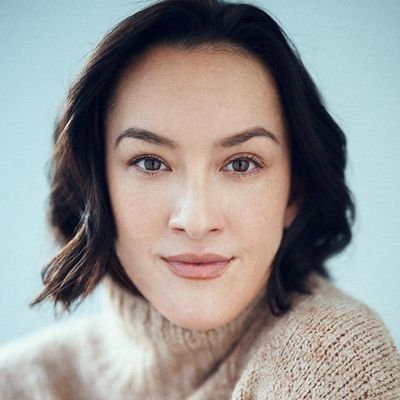
Artist, Activist, Athlete, Joanna Carpenter on Spotlight: The Redpilling of America. More about Red Pilling America: A thought-provoking series, featuring stellar guests, discusses democracy, American politics and our current socio-economic climate through the lens of Tonya's new socio-political horror film, RED PILL, which has received national coverage on Deadline, Playbill, and more... Read More
From the show: You Can't Say That!
Guests
About
Artist, Activist, Athlete, Joanna Carpenter on Spotlight: The Redpilling of America.
More about Red Pilling America:
A thought-provoking series, featuring stellar guests, discusses democracy, American politics and our current socio-economic climate through the lens of Tonya's new socio-political horror film, RED PILL, which has received national coverage on Deadline, Playbill, and more. Guest stars include Metropolitan Opera star Meagan Miller, acclaimed actor Jay Armstrong Johnson, American civil rights leader Rashad Robinson, Hamilton stars Nik Walker, Paul Oakley Stovall, Jon Rua, Aladdin stars Telly Leung and Michael James Scott, actress and activist Joanna Carpenter and many more.
Red Pilling Of America takes place through Marissa Lynn Daniel Studios on Zoom. Proceeds will go towards the funding of Red Pill and to supporting actors during COVID-19. For more information and to enroll, visit, www.marissalynnstudios.com.
You Can't Say That is produced by Dori Berinstein and Alan Seales, edited by Derek Gunther, music by Cat Dail.
A proud member of the Broadway Podcast Network.
Transcript
This transcript was automatically generated and might contain errors.
[0:00] Tonya Pinkins: Hi, my name is Tonya Pinkins, and I'm the host of the podcast You Can't SAY THAT on the Broadway Podcast Network.
[0:07] Tonya Pinkins: This fall, I have a special treat for you.
[0:11] Tonya Pinkins: In honor of my debut feature film RED PILL, Marissa Lynn Daniels Studios been hosting weekly conversations with my fellow Broadway colleagues and co-host Sierra Renee about the red pilling of America.
[0:26] Tonya Pinkins: These conversations create a safe space for us to talk about the things that are on our mind with an election and a global pandemic.
[0:37] Tonya Pinkins: So join us for The Red Pilling of America, a spotlight series every Saturday at 5 p.m.
[0:45] Tonya Pinkins: Or on the Broadway Podcast Network, You Can't SAY THAT, BPN.fm forward slash YCST.
[0:54] Tonya Pinkins: Join the conversation.
[0:57] Tonya Pinkins: We gotta speak live.
[1:01] Tonya Pinkins: We gotta say what's true for you.
[1:15] Tonya Pinkins: You is kind.
[1:17] Tonya Pinkins: You is smart.
[1:18] Tonya Pinkins: You is important.
[1:20] Tonya Pinkins: You is dead.
[1:22] Tonya Pinkins: Tonya Pinkins' horror film RED PILL brings African American perspective to progressive movement.
[1:30] Tonya Pinkins: We are a majority in this country.
[1:33] Tonya Pinkins: And we're gonna win the election.
[1:39] Tonya Pinkins: Do you know what the red pill is?
[1:41] Tonya Pinkins: A red pill is someone who infiltrates a group and then destroys them from the inside.
[1:50] Tonya Pinkins: This place is spooky.
[1:51] Tonya Pinkins: Some people like to live dangerously.
[1:54] Tonya Pinkins: Yes, why are you so jumpy tonight?
[1:57] Tonya Pinkins: You know what, guys? I'm gonna go back tomorrow.
[2:00] Tonya Pinkins: Did you hear about the creature woman that attacked a father and son hunting down here?
[2:04] Tonya Pinkins: I don't see the case.
[2:06] Tonya Pinkins: This place creeps me out.
[2:11] Tonya Pinkins: I think we should call the sheriff's office.
[2:28] Tonya Pinkins: The only people missing or dead are brown people.
[2:34] Tonya Pinkins: They're after all of us.
[2:38] Tonya Pinkins: What do we do, Amelia?
[2:40] Tonya Pinkins: We die.
[2:42] Tonya Pinkins: But we take some of them with us.
[2:46] Tonya Pinkins: We call this the red pilling of America.
[2:49] Tonya Pinkins: And red pill has so many meanings, depending on what room you're in.
[2:54] Tonya Pinkins: Um, one of the things it can mean is the matrix.
[2:57] Tonya Pinkins: Are we gonna take the blue pill? Are we gonna take the red pill?
[3:00] Tonya Pinkins: Um, it also can mean um in some of the uh Reddit circles or 4chan, it can mean to um infiltrate a group and destroy it from the inside out, or to infiltrate a group and turn it into a white supremacist group.
[3:15] Tonya Pinkins: It has a whole lot of meanings.
[3:17] Tonya Pinkins: Or it can mean a red pill guy is a competing, conquering, controlling guy, and a blue pill guy is the beta.
[3:24] Tonya Pinkins: So there's all these meanings, and we are open to exploring them all with my guest Joanna Carpenter, who, you know, has stepped away for a minute to go get her gingerbread.
[3:34] Tonya Pinkins: You know, she's like telling us she's got like dozens of loaves of gingerbread in there.
[3:38] Tonya Pinkins: I'm like, where's mine? Like, can I give you my address so I can get my gingerbread sent me? Like it's my favorite kind of cookie is a gingerbread cookie, but I've never had gingerbread.
[3:48] Tonya Pinkins: So, you know, I'm I'm like, you know, on the list begging for some gingerbread.
[3:51] Tonya Pinkins: Welcome, Joanna.
[3:53] Joanna Carpenter: Hi.
[3:54] Joanna Carpenter: Oh my gosh, I will I will absolutely send you some gingerbread.
[3:58] Joanna Carpenter: I'm just kidding.
[4:00] Joanna Carpenter: I'm not.
[4:01] Joanna Carpenter: Okay. I'll admit that.
[4:05] Joanna Carpenter: Um, where are you in the world?
[4:08] Joanna Carpenter: I'm in Astoria Queens.
[4:09] Tonya Pinkins: Okay. Cool, cool, cool.
[4:11] Tonya Pinkins: I was saying to Joanna, she looks like she's in a theater that looks like a theater dressing room. You know, it's got lots of light, and it's, you know, there's it seems like their posters and art and the mirror there.
[4:22] Tonya Pinkins: Um reminding everyone that we are in this fabulously interesting time where um there was an election, and um we don't know what's gonna happen.
[4:35] Tonya Pinkins: I'm telling people talk to me February 1st. I was surprised yesterday to find out that there have been, I thought, you know, the one gift of the pandemic was no mass shootings.
[4:46] Tonya Pinkins: But I found out that and mass shooting means four people have been killed, that there have been 538 up to October 30th, 538 mass shootings.
[4:56] Tonya Pinkins: So uh what's been on your mind, Joanna?
[4:59] Joanna Carpenter: Oh, I mean, you mentioned the election. Uh I it's interesting because I was um rested for the first time since mid July.
[5:07] Joanna Carpenter: Once the, you know, like at the beginning of this week after the arrested no rested, like I've slept for the first time since July.
[5:15] Joanna Carpenter: Okay. I mean, you know, anything's possible.
[5:19] Joanna Carpenter: Um, I, you know, I was doing a ton of work on the election, and it's so fascinating to see uh both the the mental state of America, both on the left and the right right now and everywhere in between, um, and the chasm that seems to separate uh reality where like science and math lives and facts live, and uh emotionally augmented reality.
[5:49] Joanna Carpenter: Um and it's you know, the election has been kind of politics in general has been pretty much like my life the entire pandemic.
[5:56] Joanna Carpenter: Um, but also, you know, looking at the state of our industry and what an absolute trash fire it is.
[6:04] Joanna Carpenter: And you know, I your career is far more illustrious than than mine. Um, you know, but I feel like it's always been a trash fire, and now people are just acknowledging that it's a trash fire.
[6:17] Joanna Carpenter: You know, I come at this from the perspective of a Chinese American woman.
[6:20] Joanna Carpenter: So it's like when you say Chinese American woman, which parents Chinese, which one's American?
[6:26] Joanna Carpenter: My birth father is Chinese.
[6:28] Joanna Carpenter: Um my Chinese family fled China to South Korea um during the war.
[6:33] Joanna Carpenter: My birth father was actually born in South Korea.
[6:36] Joanna Carpenter: Um they landed in California and then somehow I ended up in Michigan.
[6:40] Joanna Carpenter: I'm still very confused.
[6:41] Joanna Carpenter: I don't know why they got to Michigan, but here I am.
[6:45] Joanna Carpenter: So Chinese, French, and Irish.
[6:47] Tonya Pinkins: You speak those languages?
[6:51] Joanna Carpenter: I don't, you know, I I grew up pretty well ostracized from the Chinese side of my family.
[6:58] Joanna Carpenter: Um there was a lot of there was a lot of really rough family dynamics, a lot of uh ethnic shaming, a lot of erasure that I grew up with.
[7:07] Joanna Carpenter: Um, and it wasn't until I was older that I decided to re-establish my own relationship, particularly with my grandmother, who is an extraordinary and powerful woman.
[7:19] Joanna Carpenter: Um, she's she's a warrior, you know, all five feet of her.
[7:23] Joanna Carpenter: Um, but it was, you know, it's been an interesting exploration over the last decade or so to figure out what about my identity I claim, what I should feel like I should claim, what's missing, where there is like shame attachment there.
[7:41] Joanna Carpenter: Um, so that's been really, especially working in like uh, you know, diversity and inclusion education spaces in the arts when there's really not a place for Asian American artists in many ways.
[7:52] Joanna Carpenter: Um, that's been it's been uh it's been a ride, Tonya.
[7:57] Tonya Pinkins: So tell tell tell me about it. Like what is first of all, tell me what is diversity.
[8:02] Tonya Pinkins: Tell me say that sense again.
[8:04] Joanna Carpenter: Diversity, equity, diversity and inclusion.
[8:07] Tonya Pinkins: What is diversity, equity, inclusion, education?
[8:10] Joanna Carpenter: So it's interesting because now there's a title attached to it when there wasn't a title attached to it before, because now uh diversity is trending and people are paying attention to it and really wanting to make sure that they're on top of the script.
[8:23] Joanna Carpenter: Um, you know, for me, it is doing the thing that I have been doing for years, which is uh an equal mix of screaming from the rooftops about everything that is wrong that uh marginalizes communities that are not um cishet white.
[8:41] Joanna Carpenter: And uh it's a mix of that, and it's a mix of finding solutions to uh low-hanging fruit problems and trying to collaboratively build solutions to the longer term problems.
[8:53] Tonya Pinkins: Now, what's a low-hanging fruit problem?
[8:56] Joanna Carpenter: So a low-hanging fruit problem could be, for example, uh telling your one racist friend that they can't use certain terminology.
[9:05] Joanna Carpenter: Like, you know, or that they should not touch someone's hair.
[9:09] Joanna Carpenter: That's a low-hanging fruit problem because it's right in front of you.
[9:12] Joanna Carpenter: And it's like, oh, this is a thing that I can address in the moment.
[9:15] Joanna Carpenter: Um, I kind of see those as like little blip opportunities that you can just be like, hey, it's fucked up. Don't touch that person's hair, please.
[9:24] Tonya Pinkins: Um, and then in terms of solutions or people you're working with come up with any solutions.
[9:31] Joanna Carpenter: Uh, I think, you know, I think it depends on what you define as a solution.
[9:35] Joanna Carpenter: And I'm really interested to hear your take on that, because uh I think solutions are subjective, depending on who is uh who is on the receiving end of harm.
[9:35] Joanna Carpenter: I think solutions are oh my god, shut up, gingerbread.
[9:50] Joanna Carpenter: Um, I think uh pick up the computer, go get the gingerbread.
[9:54] Tonya Pinkins: We don't want no burnt gingerbread.
[9:55] Joanna Carpenter: Okay, I don't want any burnt gingerbread.
[9:57] Joanna Carpenter: You're gonna get it.
[9:59] Joanna Carpenter: I don't want you're getting the full tour of house.
[10:05] Tonya Pinkins: Me either.
[10:06] Tonya Pinkins: Me either, especially especially if I'm sending you something.
[10:08] Joanna Carpenter: Um, I always feel like um people look to find solutions too quickly.
[10:17] Joanna Carpenter: Yes.
[10:18] Joanna Carpenter: Part of uh actually coming up with a solution involves sitting in the sensation of discomfort.
[10:28] Tonya Pinkins: Yes, ma'am.
[10:29] Joanna Carpenter: And then everybody has to really get into the discomfort until everybody's in the discomfort together.
[10:38] Joanna Carpenter: And from that space of the big sensation of discomfort, when we're all there together, then we can mutually start brainstorming about possibilities.
[10:52] Joanna Carpenter: And from that mutual discomfort, this pot of solutions comes.
[10:58] Joanna Carpenter: And when the pot has the right things in there, the feeling of the group will change.
[11:05] Joanna Carpenter: It's not an intellectual thing. Clarity is a clearness in the body. And when solution is clear in the body, it is felt, it is embodied. And I've just not been in any group that is even interested in investing in that kind of process, which is long term, which is deep, which is transformative. I have only experienced people wanting bandages that they can put on a checkoff on a piece of paper. Yes, they made the statement, they put the social media post out, they said the words, they checked the boxes. And this is what's kind of driving me crazy, especially about the entertainment industry right now. Is you there's a there's such a stark difference between the people who very clearly want to do the work and are sitting in that discomfort, and they are still very much in the minority, um, and people who are doing, as you said, slapping a band-aid on it.
Lip service is lip service. You know, you see, you see large casting offices putting out these statements and saying, you know, we have done harm and we acknowledge it, and like this whole big fucking thing. And it's like, I'm sorry, this is low risk, high reward right now because there's no arena for you to jump into because we don't have an industry right now. So, like lovely cis white gay males, like you can you can say whatever you want to say, but actions speak louder than words.
[12:35] Tonya Pinkins: I have a question for you.
[12:37] Joanna Carpenter: Yeah.
[12:37] Tonya Pinkins: In terms of the the physicalization of because I talk a lot about like trauma carried in the body and peace carried in the body and and these things. Um when you talk about the physicalization, the of sitting in the discomfort, and then you know, when you find a solution, it does manifest in your body. Can you tell me what your experience has been in terms of what that has felt like for you?
[13:01] Joanna Carpenter: Um I can't tell you I've been in in many situations where the problem's been solved in a group, but I can talk about it in my own lived experience, and that is that um clarity is uh it has a weight, and um I would ask everybody who's listening in today to think about the meaning of these words. What is the difference in your instinct, your intuition, and your knowing? What are the differences in those three things? Like, really sit down and and maybe journal about that. But clarity is knowing, it often does not have words, it doesn't have reasoning attached to it, it's just uh like that's right, it just yeah, um it's grounded, it's solid. Um yeah, it it just is uh it's a knowing, it's a knowing in in the body.
And um whenever I get that bodily sensation, I take that action. But I can tell you it's not in my head. I can't give you uh a justification and explanation. It is a I just know. I just know let me think of some things I know. Um I know that life has to be in balance. In the way the Hindus, the Balinese talk about it. You gotta have good and you gotta have bad, and they gotta be in balance. You don't want too much of either one. It's imbalance. So for me, that is a discipline of going, oh, there's some uncomfortable stuff coming. Come on, uncomfortable stuff. Let me be uncomfortable. Woo! I gotta, I gotta make as much peace with that as I want to make with the oh my god, this feels really good.
Ooh. And I know, I know in an embodied clear way that no matter what I'm feeling, it's gonna pass. It's gonna pass. So while it's here, let's be with it. Oh, okay, that's gonna pass. Um, you know, I may be clear right now, but I could walk into a space where my clarity is gone because now this is some different kind of ground. Whatever I'm in, it's gonna pass. And so I try to embrace it and feel all of it. Feel it as it's happening because it's gonna pass. I only get this a little bit of time to feel it, you know. What is it to be a human and to be sentient if it isn't to feel everything we get to feel that no other creature gets to feel?
[16:02] Tonya Pinkins: Has that become a practice for you? This this uh this mechanism of choosing to sit in the feeling, choosing to feel and welcome it in rather than try to uh exit stage left, numb it, ignore it, whatever. Because it seems like that for most of us, uh, it seems like that must be a practice.
[16:23] Joanna Carpenter: It's not something that's necessarily instilled in us. It's completely a discipline, and it's a discipline that you know developed from uh an earlier habit of dissociating because the pain was so bad that it felt that I would die. So I had to just leave my body. I just had to leave my body and literally have experienced watching myself from on the ceiling, watching myself do things because you know have you felt that?
[16:53] Tonya Pinkins: Yeah, I have yes, and it's it's interesting because I think we get I I'll just speak for from my personal experience. Um, I got conditioned to pain. Um mostly emotional, but also physical pain at a very young age. And it's it kind of oh god, yeah. I mean, listen, I was an asshole growing up, like I was a problem child, but like, you know, it's I'm gonna say what would be make you a problem child?
[17:27] Joanna Carpenter: Uh I acted out a lot because I felt unseen and unheard, and I did not have the skill set or the safe space to put those feelings into words. So until I got to middle school and high school where I was channeling that energy into athletics and music, um, I would just, I was a Tasmanian devil of a child. And even in high school, like I stole a car when I was like 14, you know, which is dumb to do in a small town. Don't ever do it because your mom will catch you driving and then drag you to the police station herself.
[18:03] Tonya Pinkins: Um it sounds like you were bored.
[18:07] Joanna Carpenter: It sounds bored bored and you were not challenged, and you were in an environment where it was just like not interesting.
[18:15] Tonya Pinkins: Was that in terms of the academics?
[18:17] Joanna Carpenter: I was I was very unchallenged. I was I was very bored, and I was just kind of like, what is the point of all this? But there was there was a lot of uh there was a lot of tumultuous happenings from like the moment I was born to the moment I left home.
[18:30] Tonya Pinkins: But you gotta tell us what that is because we don't know what.
[18:35] Joanna Carpenter: My my family's very, very uh disjointed, very, very broken family. Um, and it's one of those families that's like very good at pretending that everything is fine. Um, and we don't we don't talk about things.
[18:46] Tonya Pinkins: Acting out what you were feeling. You were watching it being repressed, and so you were like, There's an elephant in the room. Let me show you the elephant.
[18:55] Joanna Carpenter: Well, and you know, go back to what we were talking about in terms of shame. There was a lot of shame tactics, there was a lot of manipulation coming from, you know, uh people very, very close to me who should have been my best support structure. But a lot of shame, a lot of just like really deeply rooted brokenness that then translates to your children because the things that are broken in you, if you don't heal them, they translate to your children. And that's exactly what happened. So I was just like I was in so much pain as a kid, and we were super poor. Like I'm a professional poor person, I'm very good at it.
[19:31] Tonya Pinkins: Me too.
[19:32] Joanna Carpenter: But yeah, it's a you know, you just real good at doing that. It's my superpower. It's like you can't buy me, and you can't make me unhappy by telling me that I'm not gonna get it. I can be really happy poor.
[19:48] Tonya Pinkins: You have to be some more than you figured it out, yeah.
[19:53] Joanna Carpenter: Um, but it was like, you know, growing up that poor, it's like I there was a lot of shame attached to that as well.
[20:02] Tonya Pinkins: I gotta stop before you jump ahead. Because I absolutely believe when I see some of these, you know, I travel a lot, and you go to countries and kids just grow, they're alive, they're with their friends, they're with their family, they're happy. Poor is a judgment that somebody outside puts on them. They don't know they're poor, they're just alive, and life is living and expressing, and that's it. And whatever they have, that's what they have, and they don't know that that they're supposed to or not supposed to have anything else.
[20:31] Joanna Carpenter: So poor is something that comes from outside.
[20:35] Tonya Pinkins: Yeah, yeah. And it's it's interesting because uh I think because my parents were always very aware of it. It was like my mom tried to get ahead of it and be like, Well, we're poor, so you suck. And I was like, Okay, you know, I don't this the I don't know what to tell you. Um, I'm not the moneymaker in the family, I'm eight. Um, so it's it's interesting just to see the reflection of that in um in a grown adult who chooses to also sit in discomfort and sit the weight of these feelings and go, you know, we we all have our triggers, right? Like every single one of us has a list of triggers, and some of them are more obvious and visible, and some of them are not so obvious and visible. Um, but it's it's so fascinating to have gone through the process of like investing in therapy and investing in self and investing in in self-care and choosing to go.
[21:30] Joanna Carpenter: I'm deeply uncomfortable right now, and this is causing me pain, and this is reminding me of other moments that have caused me pain. But I'm going to choose to breathe and treat this as an opportunity to learn something. It doesn't mean somebody has to hurt me in order for me to learn something. It just means that I'm supposed to be here in this moment right now. And then when it's time for the moment to pass, it will pass.
[21:52] Tonya Pinkins: So, what's one of your triggers?
[21:55] Joanna Carpenter: One of my triggers is uh violence for sure, which is interesting because I'm a boxer.
[22:00] Tonya Pinkins: Or verbal violence.
[22:02] Joanna Carpenter: Uh both, both.
[22:04] Joanna Carpenter: Um, like loud yelling is very, very triggering for me.
[22:08] Joanna Carpenter: Um, but physical violence, you know, I'm a survivor of domestic violence and sexual assault and you know, all of that. And um, there are things that uh have stuck with me, you know.
[22:21] Tonya Pinkins: Yeah.
[22:22] Joanna Carpenter: Because you just said some heavy shit.
[22:25] Tonya Pinkins: Yeah.
[22:26] Joanna Carpenter: This is like the head space I live in. So I'm like, let's go.
[22:29] Tonya Pinkins: Absolutely.
[22:30] Joanna Carpenter: I live in that head space too.
[22:32] Tonya Pinkins: But that's some heavy stuff.
[22:34] Joanna Carpenter: And yes, when you survive that, you um you get you get some tough skin.
[22:34] Joanna Carpenter: You get some tough skin, but it doesn't mean that um like my trigger is um I've only ever been um harmed by someone who presented as caring about me.
[22:58] Tonya Pinkins: Oh yeah, those are the ones that get me like someone presents as caring, I let them in and they dig the knife in.
[23:08] Joanna Carpenter: Because if you present me with hostility, I know how to meet hostility. But the people who present as I I love you, I care for you, in goes the knife.
[23:22] Tonya Pinkins: Yeah, that sneak attack kind of vibe is like not.
[23:26] Joanna Carpenter: I hate that.
[23:28] Tonya Pinkins: That's most of the ones that I've experienced. It's always been someone who I've invited in because I felt safe and trusted them, and those were the ones that have always gotten me.
[23:42] Joanna Carpenter: Yeah.
[23:43] Joanna Carpenter: Yeah, I've experienced the same. I think my issues with those were like those people were, you know, borderline sociopathy on on their side of things.
[23:54] Joanna Carpenter: You know, like you when you call a sociopath into your life, and then the pattern starts to repeat itself, it's like, oh, this is not fun.
[24:03] Tonya Pinkins: I I used to say I had psycho radar. If they were a if I was calling for them, they were definitely a psycho.
[24:11] Joanna Carpenter: Maybe that's why I'm still single.
[24:12] Tonya Pinkins: Oh my god, Tanya.
[24:14] Joanna Carpenter: That might be it.
[24:16] Tonya Pinkins: That might be it.
[24:17] Joanna Carpenter: When I feel certain bubbly bubbly, like whoo, bubbly bubbly, I know stay away.
[24:25] Tonya Pinkins: Shit.
[24:27] Joanna Carpenter: Definitely for me. I even often try to date people that I don't feel that bubbly bubbly for.
[24:34] Tonya Pinkins: Uh-huh.
[24:34] Joanna Carpenter: Uh-huh. You're like, there might be normal tucked under this skin campaign.
[24:35] Tonya Pinkins: There might be normal.
[24:40] Joanna Carpenter: Because I'm not all bubbly bubbly where my brain doesn't work anymore because I just go like belly up, like I just turned into mush.
[24:48] Tonya Pinkins: That's a sign.
[24:49] Joanna Carpenter: Psycho.
[24:51] Joanna Carpenter: And if they weren't a psycho, the fact that I just become a puddle is gonna turn them into one.
[24:56] Tonya Pinkins: Yeah, yeah.
[24:57] Joanna Carpenter: There's there's something about it. There's there's something about it.
[25:01] Tonya Pinkins: Um that's so legit.
[25:03] Joanna Carpenter: Oh dear lord. Especially in the middle of like a casual global pandemic where the loneliness factor is like real real.
[25:12] Joanna Carpenter: And I think coming hard on the heels of the loneliness factor is the I Marissa, I hope I'm allowed to curse because I curse like a sailor. Like coming on the heels of that is the fuck it mentality, where it's like I'm lonely and I've watched my world crumble around me and my industry crumble around me, and I don't know what the light at the end of the tunnel is, and I feel the bubbly bubbly, but I'm also gonna say fuck it because life is too short.
[25:19] Tonya Pinkins: Life is too short, and then what happens?
[25:41] Joanna Carpenter: And then you use COVID and maybe some other things, and we're gonna die, but hey, fuck it, the world's gonna end anyway.
[25:50] Tonya Pinkins: I know many people who have made new relationships in the middle of the pandemic on dating apps.
[25:57] Joanna Carpenter: How I know many.
[26:00] Tonya Pinkins: How?
[26:01] Joanna Carpenter: How are you on any dating apps, Tanya?
[26:04] Tonya Pinkins: No, I did that. I found my sociopaths on my dating apps no more. Single for life, single for life.
[26:15] Joanna Carpenter: I'm old.
[26:15] Tonya Pinkins: You got a lot of time left. You need to go out and have some fun.
[26:20] Joanna Carpenter: Risk the COVID.
[26:21] Tonya Pinkins: Make them friends, see what happens.
[26:23] Joanna Carpenter: Risk the COVID.
[26:24] Tonya Pinkins: Don't tell you what I'm saying. Because we don't know what long COVID's gonna do.
[26:30] Joanna Carpenter: My daughter happens to be a COVID trecker. That's her job. And she said on an average day, today is November 20th. On an average day, she makes about a hundred calls a day, and she's finished in like three hours. Today, for the first time, they had over a thousand calls.
[26:51] Tonya Pinkins: No way.
[26:52] Joanna Carpenter: I mean, look at the numbers.
[26:54] Tonya Pinkins: Yeah.
[26:54] Joanna Carpenter: And the holidays have not begun.
[26:57] Tonya Pinkins: The holidays have not begun, but the stupidity has never stopped.
[27:01] Joanna Carpenter: Well, I think that we have the challenge of misinformation. I was looking at an article today that had a headline that there's no guarantee that masks work. Most people are only gonna read that headline. If you actually read through to the entire article, it said they don't work if everybody doesn't wear them.
[27:24] Tonya Pinkins: Well, for me, it's irresponsible to put a headline like that because most people only read a headline.
[27:30] Joanna Carpenter: Well, and that's the thing. That's the thing about the era that we live in and the America that we live in now, because everybody uh, you know, everybody serves on the court of public opinion, and nine times out of ten, people are reading the headline and assuming they know the contents of the article and making judgments and behavioral choices based on that.
[27:49] Tonya Pinkins: So we have millions of just uninformed people running around thinking that they know things without like when did we stop reading?
[27:58] Joanna Carpenter: I blame Facebook, but when did we stop reading and actually looking for the information, vetting sources, or have we ever done that?
[28:07] Tonya Pinkins: Well, yes, there's I mean, there's there's cultures of reading, and that is a lot by design that um this idea of moving towards a bookless society is all part of um build building compliant citizens. Um there's a book called The Deliberate Dumbing Down of America by Charlotte Iserby, who was the head of the Department of Education under Ronald Reagan, and she actually looked into the records to see what was the purpose, and the purpose was to build compliant citizens.
[28:42] Joanna Carpenter: And part of building a compliant citizen means the things she discovered was defreezing values. We could not have absolute rights or wrongs or black or white because the government needed to be able to set them and then tell you what they were in each situation.
[28:59] Tonya Pinkins: So it was always a moving target.
[29:01] Joanna Carpenter: So it's gonna always go against your sense of clarity. Um, indigenous wisdom and knowledge that has to be wiped out because if you have something that you are clear about and you answer to that's not the government, then you are a problem. You have to be removed.
[29:16] Tonya Pinkins: Yeah, yeah.
[29:19] Joanna Carpenter: It's very Orwellian.
[29:22] Tonya Pinkins: Very Orwellian, which is a trip.
[29:25] Joanna Carpenter: Oh my God. And it's you know, I was so up to my eyeballs in in political work for the last few months.
[29:34] Tonya Pinkins: What were you doing?
[29:36] Joanna Carpenter: Political work were you doing specifically?
[29:38] Joanna Carpenter: It was it was a combination of stuff, uh kind of an evolution. Mid-July, I started hosting phone banking sessions to scream at the Senate for relief legislation. Um when they decided to take recess and not pass uh any sort of updated legislation, um, I pivoted my group and started um looking ahead towards the election.
[30:01] Joanna Carpenter: So it was making sure that everybody in my group was registered to vote and had a voting plan. We had a we had a gigantic database that we built that was just how to vote in every state, vote by mail, vote in person, early voting, registration deadlines, mail-in deadlines. Can someone else drop your ballot off for you? What does this do to my unemployment benefits if I'm filing in New York, but I'm living in Tennessee now? And it became a gigantic movement to get our networks across the country organized to make a voting plan and get people registered.
[30:35] Joanna Carpenter: Especially, you know, there's been such an exodus from New York City and people were moving to swing states. They were moving back to family homes in Oklahoma and North Carolina and Pennsylvania and Arizona. So it was a lot of that and then I ended up taking a team down to Atlanta for election day because I had been speaking with some organizers on the ground there for months and I was like, you know, what what do you need? And they were like, we need supplies for voters online. These lines are so long and they they move slow and people do not have the time and they're frustrated and they're hungry and they're thirsty.
[31:10] Joanna Carpenter: So there were eight of us that went to Atlanta for election day and basically like stocked up on like masks and bottled water and you know fruit snacks and hand sanitizer and granola bars and we covered 12 different precincts across like from north to south in Atlanta and just, you know, tried to try to be of service if we could. Um, we were able to also stock up uh a big community fridge there, which was really exciting. And uh some of the team members had a whole that had like a big stack of N95s that they were able to donate to a hospital down the road from our hotel.
[31:46] Joanna Carpenter: Um, so it was it was pretty rad.
[31:49] Tonya Pinkins: Yeah, but like it's just incredibly powerful, and Georgia went blue for is it the third count we've done now? It's uh yeah, it's like remember when Biden won Georgia twice. Like, how how many more do you need?
[32:02] Joanna Carpenter: Somebody posted yesterday, sex is good, but watching Biden win twice is better.
[32:10] Tonya Pinkins: Honestly, it's facts.
[32:11] Joanna Carpenter: I saw one the other day too that was sure sex is good, but have you ever thought about beating the shit out of Mitch McConnell? And I was like, me, it's me, who is pandering directly to me.
[32:28] Tonya Pinkins: This is Tonya Pinkins, and you're listening to Spotlight the Red Pilling of America, a weekly conversation I have focused around my debut horror film RED PILL. This is part one of my conversation with actress, activist Joanna Carpenter.
[32:48] Tonya Pinkins: It's not you know.
[32:50] Tonya Pinkins: Hi, I'm Tonya Pinkins, and I would love to hear from you. You can text me at 917-724-8998. Tell me what you're up to, and I'll let you know what I'm up to. Text me.
© Broadway Podcast Network, All Rights Reserved