

Christopher Oscar Peña - ABC/Hulu, Promised Land, Jane The Virgin, Writer/Producer, Playwright - sits down for a kiki on the state of BIPOC artists today. Connect with Tonya via her community phone number at +1 917-724-8998! Produced by Dori Berinstein and Alan Seales... Read More
From the show: You Can't Say That!
Featured Shows
About
Christopher Oscar Peña - ABC/Hulu, Promised Land, Jane The Virgin, Writer/Producer, Playwright - sits down for a kiki on the state of BIPOC artists today.
Connect with Tonya via her community phone number at +1 917-724-8998!
Produced by Dori Berinstein and Alan Seales. Music by Cat Dail.
A proud member of the Broadway Podcast Network.
Transcript
This transcript was automatically generated and might contain errors.
[0:00] Tonya Pinkins: Welcome back to part two of You Can't SAY THAT! My conversation with writer and producer Christopher Oscar Peña of *Promised Land* on ABC/Hulu. We gotta say, we'll see you understand John Ortiz, by the way, who is not only an incredible actor, but one of the kindest, most generous people I've ever met.
[0:38] Christopher Oscar Peña: He is the number one on the call sheet. He comes on days that he's not working just to watch the young kids work because he knows that they look up to him and that they value his work, and he just wants to be there to say, "I'm with you," you know? How many actors do you know who show up not even on their own days, you know, barely show up on their own days? But so John really reminds me of my father. I mean, their energies, what they look like, and I really, really wanted to write the "as far as I can take it, fuck you white people" monologue. And there is a story in my episode that you find out a couple episodes before that these bones are found on the vineyard. Somebody's dead body, right?
And there's all these whispers about who the bones belong to. My episode is called "The Whispers." And everybody is whispering that it was Joe, John, who killed this person. And in the episode, there's a big party where all these older white men who are his colleagues, right? The other CEOs, the other vineyard owners, the people around him, who are his friends. But you know how those white people talk to people of color. Okay, you know.
[2:00] And let me pause right here and tell you the basis for the story. My dad, a couple years ago, called me and said, "I'm gonna buy a new car. Should I buy a Toyota Corolla or a Jaguar?" I said, "Dad, 16-year-old high school girls drive Corollas. You, a corporate CEO, you fucking buy a Jaguar. What are you doing?" And he said, "Well, if I buy a Jaguar, I can't drive it to work." And I said, "Why not?" He said, "Because I can't take it to my meetings with my white clients." And I was like, "I don't understand." And he said, "Well, they'll think I'm making too much, they'll think I'm making more than them, so they won't want to pay the prices." And I'm like, "I don't understand." He's like, "You don't, I'm like, they're middle management, you're a CEO."
And he said, "Yeah, to them, so the janitor." So that has been in my brain for many years. And so the last play that I'm gonna have a production of this year is about that moment for me. And so I took it to the TV show, and I basically wrote this monologue where everybody's talking, whispering about Joe, and his daughter, who I wrote sort of in this episode is me. She basically was like, "What are you doing? Like, why do you let people talk to you this way?" And he says, "It doesn't matter, let them talk, let the whites talk. It makes them feel better, and at the end of the day, it costs them millions because I take their money and I walk away, and they got their joke, they got their laugh, I got their business.
So who wins? I win." And I'm like, "But you shouldn't have to do that. They don't have to do that. How come the white people get to take the millions and stand tall and win? Why we gotta bend over?" So then he gets on stage, and the monologue is basically looking at all the white people and saying, "We're done bending our backs for you." Girl, I have never been this proud. I wrote this monologue, I brought it to my boss. He loved it. He was like, "Okay, let's try to do this." We thought the network would say no. They were all sort of nervous. They kept it in. Word for word, it is the entire monologue as they wrote, they never touched it.
[4:09] Tonya Pinkins: But tell me, come on, come on. There was the process. It wasn't that easy. Tell the question.
[4:10] Christopher Oscar Peña: I really, really think, well, but it was easy for my boss. I think the network was nervous.
[4:18] Tonya Pinkins: Nervous about what? What was their nervousness?
[4:19] Christopher Oscar Peña: Well, because I think here's why they were nervous, and here's why I think it was allowed. It is still a show that is broadcasting to middle America. You know what I mean? So, and I'll give you sort of a quick pivot. Apple, when they started buying Apple TV, started buying all these TV shows. Everyone thought that they were gonna make HBO quality shows. But if you look at their shows, they're all sort of like got cool ideas and a lot of money, great actors, but they're all kind of like CBS narrative, CBS writing. Because Apple is not interested in winning Emmys, they're not interested in awards, they're interested in selling hardware, they want to keep selling more iPads, right? So they quickly realized if we go too far, we're gonna piss off Middle America and we're gonna lose sales.
So, which is to say, on my show, ABC is still not trying to piss off their viewership, right? However, this is the big Latino show, and they were trying at the Latinos. So I think at the end of the day, after the back and forth about this monologue, the reason it stayed in is it kind of felt like, well, the whites who are gonna hate this monologue aren't watching this show anyway because they're racist. They're not trying to see these Latinos succeed. You know?
[5:38] So that was, I mean, it's really proud. He gets on stage, he looks at these white people, and he basically says to them, "You believe that I'm a murderer, because if you don't, then why am I so much better than you? Like, why do I have a better business? Whatever money, like if you don't think I'm a murderer, then you're a fool because I've taken everything that you had." And it's really like, we're tired, we're tired, we're better than you. We're not gonna make you feel like you're, we're not, we're not gonna make ourselves smaller, we're not gonna bend over. It's our time. And the last line is, and watching John do it, he says, "We're not taking a slice this time, we're taking the whole fucking pie." And it is truly for me, was the reason, the dream of being on the show. Who knows if anybody will watch it? Who knows if people that need to watch it will watch it, but at least I know that I got to write it and put it out there.
[6:32] Tonya Pinkins: I'm gonna watch it. I can't wait. I can't wait to see it.
[6:38] So tell me the truth. You know, the one white person in the room, how do you get in the room?
[6:44] Christopher Oscar Peña: He was actually the best, and almost it's almost because he doesn't need to try. His name is Mark Wilding. I remember the first day when I got the job, my agents knew he was in the room, and I kept being like, "Who is this guy?" And they're like, "Oh, he's amazing, he's amazing." And I walk in, and he's this older guy, and he just basically, the reason he was there is he has been, I want to say a 13, maybe 17-year veteran of Shonda Rhimes. So he was on *Private Practice*, he was on *Scandal*, he was on *Grey's Anatomy*, he ran *Grey's* for a few years, he ran *Scandal* for a few years, so he knows how to make ABC TV. So he came into that room to basically help my boss steer the ship. And I think, you know, honestly, he could have been like, "I'm the baddest white guy who's got the best career in this room," but I honestly think he didn't care. He's like, "I could have any show I want, I respect the show, I value what you're saying, and it's important." So he was just such a good, good guy.
[7:45] Uh, but also this motherfucker has so much money. There was one day we all joked about going to the vineyard in Sonoma for the weekend, and he said, and we were like looking up, you know, hotel rooms, and he said he would pay for everybody's rooms. And I look at the websites, every hotel that weekend, because it was like high season, was $2,000 a night. And you have to remember there's like six or seven of us, plus the assistants. So we're talking about 40 grand for the weekend. And we're like, "Mark, Mark, ha, you can't do that." And he's like, "No, we'll do it." We're like, "Mark, it's 40,000." And he goes, "Trust me, when you have 17 years of broadcast money like I do, it's a drop in the bucket. And I want to take you guys out." And literally every time we take this to dinner, he pulls out money for our to tip the valet. He's just like a good, he's a good guy.
[8:39] Tonya Pinkins: Wait a minute. Okay, Matt, I gotta understand something because you would know this, and I don't know anything about it. So, someone who has that kind of money, why is he writing on a show? What's the point for him?
[8:51] Christopher Oscar Peña: I don't think he needs to. I think he really loves it. I think it's fun. And I think I will say in our case, so we are on the show, most of the writers are on the show five days a week, you know. He, when he got offered the show, he told my boss he had plans to go to London and then a bunch of other places. So he has a cool consulting job. He comes in three times a week and he gets paid a shit ton of money and it's a good time.
[9:15] Tonya Pinkins: Oh, so he doesn't, he's not in the room with you all every day.
[9:18] Christopher Oscar Peña: No, he's not in the room all the time. But he, I mean, he's certainly like a part of the room, he just comes in half the time, you know. But he wrote, he wrote an episode, actually, his episode airs next. Um, and he is really, really, really smart. And I think truly, and to your question, he has the money, he's there because he likes writing and being around other writers, and he believes the show. And he was great. He was the one who never once said something racist or stupid, and he knew when it was this time to shut up and listen and ask questions, and he was great.
[9:50] Tonya Pinkins: Wow. Because you know, I heard a lot of things about the, um, what's that, the *Watchmen* room where they had all these different people of color and had the two white people and that it was just a nightmare. Like the white people would just be like, "I don't understand that." Like they didn't ever get anything that the people of color were saying about how characters should be or what people's lives were like, and that it was really a nightmare of a room.
[10:14] Christopher Oscar Peña: I 100% have heard that from all those same writers. Uh, and yet, you know, the white creator showrunner got all his awards, you know. He gets to do whatever he wants. He's getting awarded having been in that room and survived.
[10:29] Tonya Pinkins: Yeah, that's exactly it. I, you know, in my room, when I was in this room, so I have a big gay narrative, a gay story in my episode, and there was this moment, um, a sex moment actually, and I turned it into my boss, and he said, "I don't really understand this moment yet, but I don't think I'm the one who's like, I don't think that I have..." This is what Hollywood doesn't know. Hollywood thinks if they don't understand something, it's bad. They don't understand that not everything is for them, right? So instead of saying, "I don't get it because it's not for me," they assume it should be for them. So I wrote this thing, and my boss was like, "I don't really get it, but I trust that you know what you're doing."
And we went through the network said that the room said that. People were like, "We like it, we don't really get it, but we like it." And then it got to the actor, and the first day on set, in front of everybody came up to me and he said, "Thank you for writing this. I totally understand it." And everyone realized it was like specific gay trauma that only the gays really knew. And all those people could have said stop, which most of them would have, but thank God our boss was like, "You know, we're gonna keep going and we're gonna push to be honest."
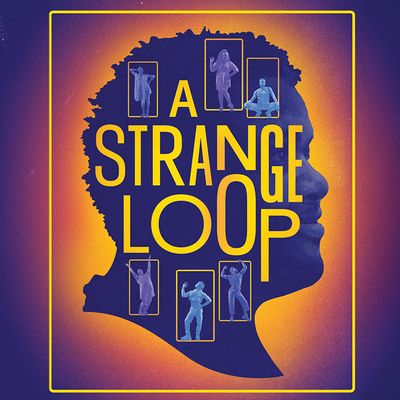
[11:40] Tonya Pinkins: Speaking of that, I want to talk about a show that you really loved and I didn't get. And I love the creator. He's brilliant and wonderful. And talking about Michael R. Jackson, Pulitzer Prize winner now on Broadway with *A Strange Loop*. I know that you said you wept. It was so powerful for you. And I was like, I guess I'm too old, but this is just too much for me. I mean, I didn't think the music was good and the T-board town, but I was like, look, this on a stage, like there's someone calling someone a nigger and fucking them. I can't not per not on the stage. And it would come back to the trauma of *Jelly's Last Jam* when Gregory Hines wanted to do anal sex and have me suck his dick, and I was like, "Uh, I don't think that's musical theater." Like that's where I went.
[12:27] Christopher Oscar Peña: Yeah. Well, why can't we push it to be musical theater? I mean, well, it is musical theater, it's Broadway now. I mean, but truly, like listen, I, it's not only if that moment on stage where he is on his knees getting fucked by that white man doing drugs in like Queens or something. I listen, he's about to lose his bed there is what I'll say, and I just sat there and I was like, this show here. But here's the other thing that I'll say, that show is not just about being black, it's about being black, being queer, and being fat. Really, I think that something that people didn't really talk about, and there's a reason that that character is cast as cast, right? He didn't cast a twiggy black actor, you know?
He cast a big black actor. And I think talking about oppression and how Latinos are oppressed and we turn on each other and other people of color when we rise, right? Gay people have been oppressed by everyone, and they are the most oppressive force within our community. If you are not a fucking skinny white boy with abs, you might as well be dead. And not only dead, you are hated. You are looked at as the bottom of the barrel, right? So that's who that person is. That person has been had to be black, right? I mean, I love the way he called out Terrell when he, you know, when he talked about *Moonlight*. You know, I love, I was like, yes, it's not beautiful. You know, Terrell is a fucking six-foot-four ballet athlete, you know? You think you got a heart in the gay world? You might have it hard as a black man, you know, but you still got a fucking 12-pack out here.
[14:14] Um, and so I think what I, I never seen that specific of a moment in the story of, you know, it's like, and truly what it was sad is look, I'm, I have a really attractive boyfriend, smart, talented, sweet.
[14:32] Christopher Oscar Peña: Um, I've had a lot of attractive, smart, sweet people. But there's a point in your life when you really do feel like you don't deserve anything. You know, that the best you can do is a drunk out married man in Queens. And so watching that happen and for him to put that on stage was so painful because it was so true. And I think, is it musical theater? Should it be on stage? I don't know. What I liked is that like it gave people a glimpse into something that maybe they don't know or yes. No, I mean, but I was thinking about it in the thing of like a moment, like it isn't that I didn't understand it because I love the movie Stranger by the Lake. You know that movie, right? The French movie. I mean, I love Stranger by the Lake, but it was just like it was so naked.
It was just it was a level of naked that I just was like, ah I love the fact that Tanya begins to get scandalous, that is that is a moment. You know, I watch Euphoria, I love it. I think it's a separate thing. That's just just sexy and fucked up. But what I will say is that Euphoria feels like it's trying to push the buttons, it's trying to do a thing, right? When I sat at a strange loop, I think the moment that you and I maybe stop at is that I don't know if you thought it was trying to, but it was a lot, right? For me, it just felt like it felt so real that it didn't feel like anybody was trying to push a boundary. And I think that's how we felt experienced it differently, you know. I think it was like my trauma.
Like if I had seen that at Joe's pub, I would have been like, yes. But it was like, this is the theater. We don't do it in the theater. Well, what about Slave Play? And you know, I love Slave Play. I thought Slave Play was like my life story. Well, what about the end of that play? See, I mean, did we do that in the theater? You know, for me, I would like to direct that play because the end did not get to where I needed it to go. Like I had the vision of where that end needed to go, and so I was living in how I needed it to go, because I knew that. And I actually talked to Jeremy about that. Like, what is the ending? He said, I really left that ending open that any director, any actor can do what they want.
So I was like, okay, because I know how I would make the end of that play. But I think, well, I think that's a cheat. I think it's a cop out. Because as a writer, you need to know what your ending is. Like I feel, I feel like I'm very collaborative and I am like design acting, like I'm very open. But like that kind of ending, if you are if you you can be open and still clear, and if that's not the ending that he wrote, then that's on him, you know, because there is something being said or questioned, and a director needs to get there with you, especially in the world premiere. So if that ending didn't work for you, it's a failure on the director's part. It's also a failure of the writer's part.
No, no, no, I think he was open to many interpretations. Like for me, it could have pushed way further. Like for me, for what that play was, that ending was tame. I see, I see. You want the Strange Loop ending? Yes. Yes. We should go see it together when he comes back with the new cast. I hear there's a new lead, which I'm very curious about. A new lead man? Yeah. It's not Larry Owens, it's somebody else. Well, you know, what was so great about him in that part was he was so pathetic. Yeah. And it was perfect. It was perfect. Have you met Michael R. Jackson? Yeah, I know Michael R. Jackson. So I don't know him. Okay, so here's the other thing. Oh yeah, I know him well. Yeah, on the podcast. I love him.
He's brilliant. So I don't know him. And obviously I'm a fan, right? Huge fan. But at one point I walked into the lobby and I saw him. And I saw him in his like jean shorts and his like he like his shirt was tucked in, he had a backpack on. And I was just like, oh boo, we can't be doing this no more. Like, we're famous now. We gotta put in some nice pants. Like, what are you doing? And it's funny because look at me be judgmental, right? But I was like, oh, like this is not, you know, like he's still doing the gay judgment thing on him. Yeah, I'm putting the gay judgment on him. But it was interesting because I don't know if it's I mean, he's writing about it, so obviously he knows what like he's experiencing, you know.
But it's like, is he so is he just like I'm brilliant? I don't give a fuck, I'm gonna keep living. Or you know, like I but I was really surprised when I saw him. I was like, oh, he is you know, not trying to be more than any than he is. He is a very well adjusted human being. You know, you should listen to my podcast with him because he grew up with I think his dad was a cop. Oh, and his parents were very accepting of him, so he grew up around a lot of police officers, and he just has this really unique perspective for a black gay man. Yeah, yeah, yeah, yeah. The life that he's lived. Yeah, I can't wait to see his next show. What else are you excited about or seeing or not excited about? Well, you know, you don't know that I have been living down in Panama.
Oh, wait, before you sorry, I want to say to you also, you know, I saw every episode of Emmett Till. So I mean, you can't call it beautiful, but it's so painful. But what a like study portrayal of those women. And I mean, I knew that story. I always I obviously knew that story, and I still watched it, just you know, knowing what it was gonna be like. And I was glad that you know, I will say this to you. I thought everyone was brilliant, and I and I was in the writer's room, it was on ABC, and I came to the room one day and I said, it's really unfortunate that nobody's gonna watch that show because it's so extraordinary. And they were like, Oh, it's the viewership on it. And I went home, and you guys actually had a huge viewership, and I only say that because it's like it's so rare that people will show up for a show that that is that hard to watch.
Um yeah, I mean, so congratulations to you, it was really fantastic, you know. Um, and yeah, but you know, and I also was like, maybe the end will be different this time, but of course it never is, right? You keep hoping that you like forget something, but well, you know, there's a novel that I read that kind of gives a different ending to Emmett Till. It was it's a very good novel, it's very strange novel, but yeah, I mean, there are those stories where that's the beauty of being a writer that you can make the world anything you want it to be. I think that as I've gotten older, I'm getting a little more compassionate about weakness as I you know I'm getting weaker and seeing my body falling apart and you know in the last chapter of my life.
So I'm a lot more compassionate for weak things. So what do you ultimately want? I mean, you're super I this is something I think my guest would be um interested in. I know a little bit about it because I have some friends who are writer producers. So my understanding, and you straighten me out writers, the the head writer creator always gets paid on every episode, but writers get to write an episode and they get their weekly salary, but the the episode fee goes to the head people. But when you become in the different kinds of producers, you now get more. So explain to us where you are in the hierarchy of um of writing. Basically, the the simplest way to do it is that there's lower level writers and upper level writers, and lower level writers get paid weekly, and then they get paid by their episodes.
And upper level writers kind of have like a minimum, so you get paid way more, and then when you write episodes, you get paid even more. But the the reason you get paid more is you have the title producer or producing in your in your title. The difference is that, and this doesn't mean that they don't all do it because a lot of younger writers do, but the idea is that younger writers do not have experience on set yet. So you know, you're you've been on set, right? You're on set. Let's say let's say you have there's two scenes left, and the day's gone, and it is up to that writer to decide we can only shoot one of these scenes. Which one do you want to pick, right? This is this is like literally like a hundred thousand dollar problem.
And that means that when you turn your episode in, does your episode work without it? Do you have the information you need? Can you cut that scene and move the lines you need to another episode, right? Right. It's hard when you're on your first year to make that decision in front of a hundred people knowing you could piss on your boss of the network and fuck up, right? So the idea is that once you're at the producing level, you have the experience to be able to make those decisions and you're and you're on set really making those calls. So that's why you get more money, truly. Um I have been lucky the last three years. I've sold a lot of TV shows. I developed a show with Netflix, one with Apple.
I just turned in a show to ABC. Um the hope now is truly that I'll just have my own show. And just just go back a little bit to race a little bit. One of the things that I have noticed, even on Promised Land, which I've talked about and I love Promised Land, is that Promised Land is a Latino show, right? Insecure was the Black Show. Looking was the gay show. And I keep kind of being like, like, why can't there be uh why are like Vida was all Latinos? I really am excited and believe in my friends who are making Latino shows or black shows and only hiring black and Latino artists. That's great because they've been marginalized forever. But for me, it's like I grew up in San Jose. My first boyfriend was Filipino, my best friend was Hawaiian.
You know, like, where, like, why don't we have those things? So the pilot that I just turned in that got killed, I basically sold uh Big Little Lies for people of color. So I created it with my friend who's a black woman. She's a black woman in her 50s, who um 40, sorry, 40s, who had started a career as a writer and director on The Wire. She is a black woman married to a white man. She has a trans daughter, and she and I are very, very, very, very close. We met on Motherland and we worked on Motherland together. And so we were like, we're gonna make shit together. And so we sold this show um about which is Big Little Lies for people of color because it's about a rich community, but the community is mostly people of color.
So the main family was a black, white family that really represented her family. It was an upstart Latino family with a gay son that was my family. Then you had like a Japanese cop, then you had the white family. Because we were like, it's so rare that our narratives are put together and that we are front and center. And if we are together, it's still the white family, white creator, white director, and we're their friends, right? In this case, the two leads were a black woman and a Latino woman, and then everyone else was around them. And so what I'm really striving for is to create shows where nobody can say it's a black show or the Latino show or the Asian show, and yet it's not the white show.
Why did it kill? So, I mean, listen, I don't I don't have any, I mean, people be lying all the time. Supposedly, so as you know, so Promised Land is being moved from ABC just onto Hulu, and what we have what people don't know about broadcast is most broadcast TV these days is reality shows, and um launching a serialized hour show like Promised Land is nearly impossible because people watch on their own time on streaming, and so the only things that are succeeding are procedurals because you can watch them, you know, you don't have to you can skip seven and still get to eight, right? Or half hour companies because you can watch the first three, skip four, five, see six. So you the viewership stays up.
Whereas if you're watching Promised Land or you know, another show like that, if you miss two episodes, you're fucked so peep the real feeling in in Hollywood right now is that we're in the last five years of broadcast TV being a place that you watch uh serialized shows it's basically going to be just reality shows in the next few years um so all the stuff that we really care about is going to be on streaming or cable uh and that's gonna be Bachelor and football for the rest of the time you know and a show like Grey's for instance because you know Grey's had their Station 19 or whatever spin off people were like why does that work and you're like well Grey's had 18 years of viewership so when it was spun off those viewers went with that show right any new show doesn't have 18 years of viewership so that's the complicated time about making shows now.
[26:22] Tonya Pinkins: Thank you so much Chris and everybody watch Promised Land and let's hope that some of these other shows that Chris has sold were pitched so that the next time I'm talking to Chris he will be the showrunner on I guess it's gonna be a series on a streamer where it'll be a limited series or something like that because he said that's where the business is going. So you are listening to Tonya Pinkins on You Can't SAY THAT on the Broadway Podcast Network. I was speaking with Chris Peña, the supervising producer and one of the writers on Promised Land which is on ABC.
[28:06] ♪ Musical number: "How Come" — performed by Tonya Pinkins ♪
[28:15] Thanks for listening to You Can't SAY THAT, the show where you can. I'm Tonya Pinkins, and You Can't SAY THAT is part of the Broadway Podcast Network, produced by Dori Berinstein and Alan Seales, with music by Cat Dail. If you like what you hear, don't forget to subscribe and rate this podcast highly wherever you stream. Follow me on Instagram, Twitter, and Facebook at Tonya Pinkins. And to learn more, visit BPN dot FM forward slash Y C S T. Stay safe.
© Broadway Podcast Network, All Rights Reserved