

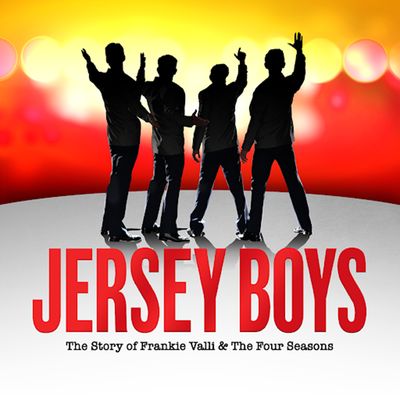
Stage Management, Celebrity, Pandemic, Blog, Author of HOLD PLEASE. Richard Hester’s career as a stage manager and production supervisor spans forty years. His credits include everything from the off-Broadway premiere of Harold Pinter’s MOUNTAIN LANGUAGE to the hit Broadway musical JERSEY BOYS... Read More
From the show: You Can't Say That!
Featured Shows
About
Stage Management, Celebrity, Pandemic, Blog, Author of HOLD PLEASE. Richard Hester’s career as a stage manager and production supervisor spans forty years. His credits include everything from the off-Broadway premiere of Harold Pinter’s MOUNTAIN LANGUAGE to the hit Broadway musical JERSEY BOYS. For the latter, after serving as its original Production Stage Manager in La Jolla, CA and in New York, he spent sixteen years staging and maintaining productions of it both in the US as well as all over the world. After more than two decades, he continues to tour with Patti LuPone as well as with Mandy Patinkin for their concerts, both nationally and internationally. Twenty-three years ago, with Bernadette Peters and Mary Tyler Moore, he helped found and produce Broadway Barks! an annual animal adoption event that ever since then, has helped thousands of dogs and cats find forever homes. HOLD PLEASE is his first book.
Connect with Tonya via her community phone number at +1 917-724-8998!
Produced by Dori Berinstein and Alan Seales, edited by Justin Payne, music by Cat Dail.
A proud member of the Broadway Podcast Network.
Transcript
This transcript was automatically generated and might contain errors.
[0:00] Tonya Pinkins: Welcome back to part two of my scintillating conversation with Richard Hester, the author of "HOLD PLEASE," Stage Managing a Pandemic.
[0:10] Tonya Pinkins: I'm Tonya Pinkins, and you're listening to You Can't SAY THAT on the Broadway Podcast Network.
[0:17] Richard Hester: We gotta stay to live.
[0:21] Richard Hester: We gotta say what new.
[0:44] Richard Hester: We're in New Jersey, because New Jersey is a lot of different countries.
[0:48] Richard Hester: The whitest part of New Jersey, the like Wykoff up in Bergen County.
[0:53] Richard Hester: Okay.
[0:53] Richard Hester: You know, upper middle class, there enough money, not Newark.
[0:58] Richard Hester: I mean, like Newark in 1983 was basically like a war zone.
[1:04] Richard Hester: It was just horrific.
[1:06] Richard Hester: Um I I don't know how anybody survived living in Newark in in those years.
[1:11] Richard Hester: But so we would.
[1:12] Richard Hester: So the last time I went back, I was 17 or 18.
[1:17] Richard Hester: We went back for the summer.
[1:19] Richard Hester: And by then, I knew what was going on.
[1:22] Tonya Pinkins: Well, hold up. How do you get to know what is going on? You were you're raised in a country where you're called master. You then go to another white enclave in New Jersey. How do you at 17 know what's going on rather than just going and getting an AR 15 and killing, shooting up a bunch of people? How did you get to know what was going on?
[1:40] Richard Hester: Well, because but by that point, there was a lot of anti-apartheid demonstrations going on.
[1:49] Richard Hester: Okay. I was, and I was aware of them probably more than my classmates were because of my connection to South Africa.
[1:50] Richard Hester: I was aware of what was going on in South Africa.
[1:58] Richard Hester: And so I followed it. I knew what was going on. My friends, Jablani and Nkozen Kulu, and uh Nkosankulu's younger brother Marva, all three of them are dead.
[2:08] Richard Hester: Two of them by gun violence, Chablani by AIDS.
[2:11] Richard Hester: And Chablani was maybe 20, 22, and Nkosukulu and Marva were like 16 or 17.
[2:20] Richard Hester: So it all of that very much touched me.
[2:24] Richard Hester: I was aware of the gun violence that killed Nkosankulu and Marva were from them demonstrating.
[2:31] Richard Hester: And in a weird sort of way, my mother and grandfather put all three of those kids through school.
[2:39] Richard Hester: And the in a way that they probably without that support never would have been able to do.
[2:46] Richard Hester: They went to university. They were smart. Part of that education made them active.
[2:52] Richard Hester: And they fought the good fight, and they personally lost it, but they helped that country become what it is now.
[3:01] Tonya Pinkins: So my question is: you speak about them with a with a feeling, with a sense of feeling that is very different than your five-year-old self, because a five-year-old they're just sort of objects, but by the time you're 17 or so, you have another kind of feeling with them. Tell me about that.
[3:18] Richard Hester: I don't, you know, this is this is sort of weird. Like we always wonder like what black women raise little white children who grow up and are cruel to them. So tell me what what was the shift in you that this from the five-year-old you two actually experiencing them as humans, family people.
[3:35] Richard Hester: I don't know what shifted. I I don't know where that shift happened. We would write back and forth occasionally. I became fascinated by that struggle. I am always interested in history happening as we're living it.
[3:49] Richard Hester: I mean, you and I, in our years, have lived through some sort of monumental historical times.
[3:54] Tonya Pinkins: Yeah.
[3:55] Richard Hester: And you know, my parents, on top of that, go back through even more monumental historical times. You know, black women being able to vote just didn't happen that long ago.
[4:06] Tonya Pinkins: Yeah.
[4:07] Richard Hester: It's remarkable. And so I became aware of all that. And I think I started looking at my friends in South Africa as friends and not as objects.
[4:16] Richard Hester: It wasn't until really later on, I think, that some of those episodes came back to me and I started really facing up to the kind of what my life was.
[4:27] Tonya Pinkins: And was it painful for you? I ask you, because we, you know, we had the anti-CRT movement. Was it hard for you to recognize that you had been a colonizer and you know, cruel and abusive? Did you suffer for that? Or was it what was that like?
[4:44] Richard Hester: I I mean, it it it was looking at that, realizing what the legacy I had been born into was. I will never be able to apologize for it because they've died. I will never be able to make amends to that, and that's my own fucking problem. I I'll carry that, and that's fine. Whatever.
[5:05] Richard Hester: Yeah, but what I I first of all, this is all like new history to me. I would never, if someone had like asked me to bet like what was your background, this would not have been it. But I feel like, you know, in the same way that you staged managed a pandemic, you might have a future in stage managing the future of young white children who are not getting to learn the truth because they're being told that they're it's they're too sensitive to know the truth, you know.
[5:35] Tonya Pinkins: Yeah, I I I the the snow flaggedness of our society is just kind of making me insane. By the way, your movie is spectacular.
[5:44] Richard Hester: Oh, thank you.
[5:45] Richard Hester: When you all drive up to that town with that sign on the edge of the town, it's just as bad as the woman in the Friday the 13th movies who's like alone in the house.
[5:56] Richard Hester: And you're like, get out.
[5:59] Tonya Pinkins: Exactly.
[6:01] Richard Hester: Don't drive any further.
[6:03] Tonya Pinkins: But they're not going to be able to do it.
[6:05] Richard Hester: This is the first scene in the movie, it's not getting any better.
[6:08] Tonya Pinkins: Exactly.
[6:09] Richard Hester: Exactly, exactly. It's like everything that we all do all day. Like, there's the sign, don't go any further.
[6:16] Tonya Pinkins: But they do.
[6:17] Richard Hester: But they do every single time.
[6:22] Tonya Pinkins: But they do.
[6:23] Richard Hester: But they do.
[6:24] Tonya Pinkins: Yeah.
[6:25] Tonya Pinkins: And I I, you know, and then I I I'm now making this up. But it seems to me that in your career, you have always been cast as an incredibly strong woman.
[6:40] Richard Hester: And sometimes those women are, I don't want to say not people, but the I I'm thinking of like your character in Madam Secretary, who's who's sort of in charge. What I loved about what you did in the movie is you presented yourself as a person, as an ordinary vulnerable person. And I don't know that the industry has allowed you to be that very much.
[7:06] Tonya Pinkins: And I really was moved by that. I thought I thought you took care of yourself in that movie so beautifully.
[7:23] Richard Hester: Well, thank you for that, Richard. You know, that's very that is a very high compliment. And it's an interesting thing because making that movie changed my life.
[7:36] Tonya Pinkins: And you sort of think you get better and you show people how good you are, and now they're going to give you opportunities. But then I think of have you worked with George Seawolf?
[7:46] Richard Hester: No.
[7:47] Tonya Pinkins: Never?
[7:47] Richard Hester: No.
[7:48] Tonya Pinkins: You have that to look forward to.
[7:50] Richard Hester: It will ruin you forever. George says people don't want your brilliance. They want you to put your brilliance on their stupidity. And I think, like, oh, oh, people see how good I am. And then they're like, can you do put your goodness on my thing? But no, we're not gonna help you do your goodness.
[8:08] Richard Hester: So there's this place of me going, okay, if I want to do things that are exciting to me or interesting to me, I really do have to do it for myself because nobody else is thinking of me in any way other than as a tool for them.
[8:21] Tonya Pinkins: Absolutely. I'm in a lot of ways in that place with stage management. I I know I'm good at what I do, and I know I can save anybody a lot of trouble and a lot of money if they hire me.
[8:38] Richard Hester: But I'm kind of in the place now, well, that's great, but if I'm going to invest in your project, you're gonna have to pay me.
[8:48] Richard Hester: You're gonna have and not even payment in terms of cash dollar amounts, but you're gonna have to, you know, I I'm gonna need to be a royalty participant. I'm going to need, and if you don't want to do that, then I just don't need to do your project.
[9:03] Tonya Pinkins: I understand because you put so much into the project. You're building someone else's castle, and at the end they have a castle.
[9:11] Richard Hester: Yes. And you're looking for the next person to let you build their castle.
[9:16] Tonya Pinkins: Yeah. And I I kind of, you know, when someone asks me what is my job, if you think of Downton Abbey, my job is to be Mr. Carson, the head, the person who runs the downstairs. I can have opinions about how things are run, I can run everything down there, but at the end of the day, not my house.
[9:36] Richard Hester: It's just not my house. And I think, and I'm sure you felt this on your film too. The book was my house. I could do whatever I wanted in it.
[9:46] Richard Hester: And it feels to me in a way that you and I had a similar experience with making that. I'm well aware of, I've followed your career, even though we haven't actually worked together. I'm well aware of all of the what you've tried to do in terms of sticking up for yourself and how that's been perceived sometimes and all of that.
[10:08] Richard Hester: And there's an enormous freedom in just kind of going, okay, then I'm gonna do it myself. And here it is. So do you want to direct?
[10:19] Tonya Pinkins: Uh weirdly, I I directed a lot of companies of JERSEY BOYS, even though it was Des Makanoff's direction, I kind of restaged everything. Uh, I I enjoyed doing that. I'm much more interested in editing than directing.
[10:33] Richard Hester: In other words, I'm much happier. The karate kid that I'm working on now, the director's Amon Miyamoto, who directed the revival of Pacific Overtures that was on Broadway like 12 or 13 years ago. He's a Japanese director. He's not worked in New York very much at all. He's fascinating. He's really good. He is truly kind.
[10:55] Tonya Pinkins: And I'm like, well, I'm not sure. I've I've worked with a lot of directors that I really respect, but kind, I'm not sure I've ever worked with one that I would say is kind.
[11:04] Richard Hester: Bratziella Danielle is kind.
[11:06] Tonya Pinkins: Yes.
[11:06] Richard Hester: I I will give Brazi kind. But but it's it's a rare, rare thing. And so I I'm happy to do that, but I don't need to sage manage anymore.
[11:18] Richard Hester: And so I I and I don't know if I'm going to come into New York with it at all, um, because I don't know if they're gonna agree to what I'm gonna ask for. And that's fine.
[11:28] Richard Hester: I ran into a stage manager friend of mine who's our age, and uh, we were rehearsing at Open Jar in New York, and I said, you know, I used to think I wanted to like have a heart attack and drop dead at the call desk. And he looked at me and he said, six years, five months, 27 days.
[11:45] Richard Hester: It's like retire. And I'm like, I'm right there with you. And and I'm I have no interest in stopping working, but uh but for me, what the work will look like might be writing, and that doesn't necessarily pay enough, but I'm fine with that.
[12:03] Tonya Pinkins: Yeah, but you should probably have a good pension by now.
[12:06] Richard Hester: Yeah, yeah, I on my pension's fine. I'm not worried about that.
[12:09] Tonya Pinkins: Yeah. So you love the writing, and I bet you got a whole lot more stories because you had to reduce 1400 blogs into 500 pages. So I bet you have a lot more stories to tell.
[12:22] Richard Hester: I I think I do. And I'm the the the project. When my father ultimately retired, and he didn't retire until well into his 80s, he needed something to do. And so my sister and I told him to write his memoirs.
[12:38] Richard Hester: And he wrote everything that he was doing. He he went, he wrote a kind of an essay on each family member that he could remember. And he was in World War II, he fought in the Battle of the Bulge.
[12:53] Richard Hester: He I I'm in the middle of reading what he wrote about that. So I've got about two or three hundred pages of what he wrote. And what I think I want to do is write about what my father wrote about, but in terms of my own personal experience.
[13:10] Richard Hester: And to give you an example, my father fought in the Battle of the Bulge, and his infantry division was one of the first divisions that went into the Bergen Belsen concentration camp at the end of the war. He was 21 years old.
[13:25] Richard Hester: And you look at history, and you I don't think you think about the fact that the people who were fighting in that war were babies.
[13:38] Richard Hester: I've got a cast of 21 year olds in Karate Kid, and I look at them and go, wow, you could literally be in a foxhole watching your friends get blown apart.
[13:49] Richard Hester: And I think what I want to write about is the history of my father and everything that he went through, but in terms of making it understandable in a real way.
[14:01] Tonya Pinkins: So is that your next book? I mean is your father still alive?
[14:04] Richard Hester: My father passed.
[14:06] Richard Hester: He passed about 10 years ago.
[14:07] Tonya Pinkins: Okay.
[14:08] Richard Hester: I'm still trying to figure out how to do this, but I think I'm gonna do the same thing that I did with the first book and write a bit each day and publish it.
[14:17] Tonya Pinkins: I like it.
[14:18] Richard Hester: And see what, and you know, of course, going back to Charles Dickens, he wrote a chapter each day and published it in a magazine.
[14:25] Richard Hester: And then once he finished the story, then he made the book, and then he sent it out. There's something about being accountable for getting something out every day that I think I like, and certainly it all gets edited at the end and rearranged and all of that.
[14:44] Richard Hester: But I think that's what's been percolating in my head.
[14:51] Tonya Pinkins: Wow. Now, how long have you been married?
[14:54] Richard Hester: Michael and I have been together for 16 years and married for six.
[14:54] Tonya Pinkins: Married for six.
[15:04] Richard Hester: Oh, we're living in a strange time.
[15:06] Tonya Pinkins: We are really living in a strange time, and I look at what's going on, and I don't know how much longer the government is gonna let us do that.
[15:16] Richard Hester: Right.
[15:16] Tonya Pinkins: That's very real. The interesting contrast that I see in the world right now is you've got this generation of young people who are like, you know, I don't want to be an intern, I want to give an I want a title, and you can't touch my shoulder, and you can't touch my leg, and you get fired, and oh my god, you're traumatizing me. You can't talk about this.
[15:35] Richard Hester: And I'm of two minds. I'm like, no one should ever be mistreated. I think that, you know, that's important. And then on the other hand, I'm like, uh, you all need to toughen up, and when the Republicans take over in the midterms, all of that stuff, you will get locked up.
[16:01] Richard Hester: Talking about stuff like that. You're just gonna get locked up, okay? They're not playing. They're not playing. They genocided thousands of people to take this country. They are ready, willing, and able to do it again.
[16:16] Tonya Pinkins: That's what your movie is about. When you drive down the street and you see a whole bunch of crazy looking people standing out in front of their houses with weird t-shirts on, believe them. Believe people when they show you who they are.
[16:31] Richard Hester: There are definitely, we are in for a lot of hurt. And that is why I started making some optional plans because I get it. I get it. I don't have that kind of optimism. Like, I'm clear that all my intellects and my science and my facts will not stop a bullet from an AR-15.
[16:52] Tonya Pinkins: Absolutely. I wish they would show us the pictures of those children's bodies. I would like one parent to do that for us. I think that that would be the end of them forever. That, I will say that that girl who smeared the blood of her friend over herself, uh, is something that I will truly never get over.
[17:20] Richard Hester: I will never, and I think of myself not getting over it, and I think, what is the rest of her life going to be? She's gonna be strong, she is a victorious personality. That's a victorious personality right there. She didn't go, oh my god, I've been traumatized! She was like, okay, let me play Digga.
[17:40] Tonya Pinkins: Yep, you're right, you know, and you know, it's funny you said that because I've been sharing this um video of a little girl, beautiful little white girl who's taken in to see some adults and to give them lockdown training. And it's really sad and painful. And I thought, hold up, Tanya. It's sad and painful because it's a little white girls doing it. But black people, indigenous people, they gotta do that every day.
[18:04] Tonya Pinkins: Not just to go to school, just if you gotta counter a police officer. If you're walking down the street, and I thought, this is what colonization has done. Yes, it is terrible that children have to go to school and prepare to die. But there are people all over the world who that's their every day. People in Syria, people in Gaza, their every day is prepare to die. Every day.
[18:26] Richard Hester: I worked on the Donna Summer musical.
[18:28] Richard Hester: I love that musical. It was fabulous. Well, and the cast was spectacular. I had never been around that many black women before in my entire life. And one of my, one of the other stage managers that I was working with was of color, and of course, that's ridiculous cast. So Ari Groover, who you know was Wiggate in Tina, she's five foot tall, she's an inch.
[18:54] Richard Hester: Ari Groover got stopped by the police in Port Authority. We were working right down at Signature, we were rehearsing down there, got stopped for nothing except being Ari Groover. My, the assistant stage manager, Dee Daniels, was late to rehearsal one day because she was rushing through Port Authority and got stopped by the police because there was a black woman rushing through Port Authority.
[19:22] Richard Hester: I have that everyone in the cast had stories like that. Ari got stopped at least twice during that rehearsal. That was four weeks of rehearsal, as far as I know. Ari Groover. There is nothing in Ari Groover but love. There is, and there's nothing indeed about love either. There's all they saw was a rushing black woman that can't have been good in their eyes.
[19:48] Richard Hester: And that was a truly eye-opening experience. I, tall white guy, never stopped ever in my life. Ever. And that's, I am so aware that when I wrote this book, it was very much my story, my point of view. I have enough, I had enough money to get by. I was comfortable. I lived on the Upper West Side. I'm a tall white guy. I guarantee that my experience is in the incredible minority of people that went through that pandemic.
[20:21] Richard Hester: I don't even question it. More than anything, that's kind of what I worried about. It's like, oh, why is anyone gonna care what the old white guy has to say? I tried to express what I thought and leave room for the discussion around it. It's always my opinion and never what I'm throwing out there as fact. And my opinion over the course of the book changes as the world changes and as I kind of figure out things that I thought, I kind of go, oh, I get it.
[20:48] Richard Hester: Like the whole idea of defund the police. My initial reaction was that's crazy. That's, that's crazy town. Then when you actually hear what you listen to what the arguments for defunding the police are and what that actually means, you go, well, that's just a marketing problem because that's a terrible thing to say. It's absolutely what's being advocated for in there is long overdue.
[21:08] Tonya Pinkins: Yeah, and I'm gonna abolish the police, which I know is just so radical that that's just thought of as insanity, but it's the Overton window. You gotta go abolish the police to even get to defund the police.
[21:20] Richard Hester: Absolutely. I feel the same thing about guns. Absolutely repeal the Second Amendment. That's what we should be fighting for. It's not gonna happen, but then we'll at least get some of it.
[21:29] Tonya Pinkins: Right.
[21:30] Richard Hester: It's like, it's like a negotiation. Start out with as much as you can possibly get and be willing to come down. And the Republicans know that, and they work that better than anybody, and they're really masterful at taking the language of the left. The left has moved pretty right, but taking that language and weaponizing it against the very people who came up with it in the first place.
[21:53] Tonya Pinkins: So yeah, I'm like, I'm defund the police. I mean, Uvalde, 40% of their town budget is police. If every single one of those police officers, except for the one man whose wife died inside of there because they wouldn't let him go in, if they don't all lose their jobs, there's just no, there's just nothing right in the world. And I know they're not gonna lose their jobs, and there is nothing right in the world.
[22:16] Richard Hester: Absolutely. That was such a failure of what the people who are pro-guns, you know, guns in the hand of a good person. If the police officers couldn't do it, what would arming the teachers have done? Not couldn't do it, chose not to do it. It's not that they couldn't, they had on vests. That story needs to be replayed over and over and over because everything that the Republicans say, that story proves that they were wrong.
[22:47] Tonya Pinkins: They were wrong. Absolutely. They were wrong. They were wrong. There's this beautiful quote I found yesterday that I want to share, and it says, on the other side of the wall, it seems that there's another sort of toxic masculinity. A platoon of armed and trained men who had evidently come to rely so heavily on guns and armor in lieu of courage and strength that they found themselves bereft of the latter courage and strength when outdone in the former.
[23:20] Richard Hester: Instead, they were beset by cowardice, evidently as evidenced that the shooter was that the gun really does make the man, and that outgunned, they were as good as outmanned.
[23:35] Tonya Pinkins: Wow.
[23:37] Richard Hester: Yes.
[23:39] Tonya Pinkins: That's fantastic.
[23:41] Richard Hester: And sad.
[23:42] Tonya Pinkins: And a remarkable indictment against everything that we're currently living with.
[23:49] Richard Hester: It is so lovely to talk to you, Richard. I think we could do this forever and ever and ever, and we must just do it again just for the sake of doing it. But you're in St. Louis.
[23:56] Richard Hester: You know, I own land in the Slowzarks.
[23:59] Tonya Pinkins: Oh, do you really?
[24:00] Richard Hester: I do down in Miller County. Oh, it's co-own about 70 acres down there and spent a lot of time down there. I've been able to drive around during our days off and stuff like that. And some of the land around here is just truly beautiful.
[24:16] Tonya Pinkins: It's beautiful.
[24:17] Richard Hester: Where we are is about four hours out of St. Louis, so you know, you'd have to go and probably stay overnight, do it on a, you know, a day off, but it's real beautiful. It's beautiful country.
[24:27] Tonya Pinkins: It's beautiful, beautiful country. So the book again is HOLD PLEASE, Stage Managing a Pandemic. It's got great stories in it. I mean, I've learned so much from you today, Richard.
[24:40] Richard Hester: It is, you know, it's so funny. Every time I see you, it puts a smile on my face. I put you with just say no, but it's A, my name is Alice, and your whole history has been a revelation to me. I would have thought you were raised by some, you know, some hippies.
[24:59] Richard Hester: I didn't know you were Master. Master Richard.
[25:02] Tonya Pinkins: Oh my god, that is just a great. Did you see that little bit of the little prince? Whatever one of the little prince demons hates little prince. She was, he was smacking her in the face and covering her mouth the other day. I think that child shouldn't be taken out.
[25:22] Richard Hester: Okay. Well, thank you so much for coming on and talking to me. And everybody needs to get HOLD PLEASE, Stage Managing a Pandemic by Richard Hester.
[25:31] Tonya Pinkins: You're listening to Tonya Pinkins. You can't say that on the Broadway Podcast Network.
[25:40] ♪ Musical number: "How Come You Don't Say No" — performed by Tonya Pinkins ♪
[26:08] Tonya Pinkins: Thanks for listening to You Can't SAY THAT, the show where you can. I'm Tonya Pinkins, and You Can't SAY THAT is part of the Broadway Podcast Network. Produced by Dori Berinstein and Alan Seales, with music by Cat Dail. If you like what you hear, don't forget to subscribe and rate this podcast highly wherever you stream. Follow me on Instagram, Twitter, and Facebook at Tonya Pinkins. And to learn more, visit BPN. Stay safe. This is Tonya Pinkins.
© Broadway Podcast Network, All Rights Reserved