

Strange Loop, Intimacy Coordinator, Actress, Educator, UNC, Kaja Dunn is an assistant professor at the University of North Carolina-Charlotte Department of Theatre and affiliate faculty for Theatrical Intimacy Education, and she is an actor, director, and activist... Read More
From the show: You Can't Say That!
Featured Shows
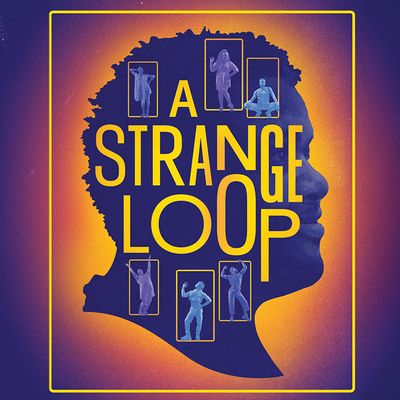
About
Strange Loop, Intimacy Coordinator, Actress, Educator, UNC, Kaja Dunn is an assistant professor at the University of North Carolina-Charlotte Department of Theatre and affiliate faculty for Theatrical Intimacy Education, and she is an actor, director, and activist. She has performed nationally and internationally in over 40 productions.
Connect with Tonya via her community phone number at +1 917-724-8998!
Produced by Dori Berinstein and Alan Seales, edited by Catherine Devine, music by Cat Dail.
A proud member of the Broadway Podcast Network.
Transcript
This transcript was automatically generated and might contain errors.
[0:00] Tonya Pinkins: Hello, guests of the Broadway Podcast Network. My name is Tonya Pinkins, and you're listening to You Can't SAY THAT.
[0:14] Tonya Pinkins: We gotta say one for you. Can't tell us real.
[0:39] Tonya Pinkins: And it was actually kind of interesting. I liked it. But for whatever reason, I have some resistance to the whole idea of it, some of the stories. I hear about how it's going in practice and people getting in trouble. But whenever I'm, you know, resistant or don't understand something, I always try to go to the experts. So today we're going to be speaking with a professor, an actress, but what we're going to be talking about is her work as an intimacy coordinator. So join me in welcoming Kaja Dunn, whose recent work as an intimacy coordinator is on the Tony Award-winning musical A Strange Loop. Welcome, Kaja.
[1:25] Kaja Dunn: Thank you so much, Tonya. And it's always a joy to talk to you. I appreciate that about you.
[1:38] Tonya Pinkins: So, you know, what is this intimacy coordination?
[1:41] Kaja Dunn: Sure. And it goes by many different names. I recently wrote an article and I use the term intimacy professional because often intimacy coordinator is used in film. On Strange Loop, I'm an associate intimacy director. And that's because Chelsea Pace, who I worked with, and I did a lot of a certain scene. Often in theater, it's referred to as intimacy choreographer. So I think some of the confusion around it is like, wait, what is it called? What is this name? Basically, at its most basic, an intimacy professional coordinator, choreographer, whatever they're doing in that moment, comes in and helps stage moments of usually physical sexual intimacy. And that can be violence, or it can be intimacy, you know, any sort of touch or intimate moments.
More recently it's broadened to also include helping people set consent and boundaries around heightened identities. So things like race or gender or religion for some people, right? And some people bring in a separate consultant. But the idea is the same as you would use for a fight choreographer in some instances that we would never give to people swords, particularly men would not give each other swords and be like, go at each other's groins, have fun, right? But for a long time, including in my own training, it was like, well, there's a sex scene, go make out in the corner and get comfortable with each other, right? That was literally part of my training. Um I want to be clear that in its current form, it's fairly new.
We started seeing the term around 2014, 2015. But the most recent work I did talks about the fact that a lot of these ideas around consent and boundary practice trace back to the 60s with black feminist thought and black feminist directors. For instance, people like Dr. Barbara Ann Tyr, right? And so I think some of the resistance and some of the resistance I've encountered is black directors and particularly black female directors going, we've been doing this forever. And I think that's because people in marginalized identities have always been aware of the power dynamics and the need to create a space where people can feel free to create. And one of the things that's happened, and we can talk about this more, but I don't want to jump too far ahead.
But one of the things that I think happened in intimacy is, you know, when I got brought into theatrical intimacy education, the company I work with, 98% of the choreographers doing the work were white, most were white women. So it suddenly created this space where people were commodifying and codifying something that we see first appear in texts and black feminist work. And people were like, now wait a minute, right? So I don't, but I don't think we throw the baby out with the bathwater. So some of the reasons I do the work, and I love the work, is intimacy professionals can put counts to movement, right? So something that happens sometimes is people will get a kiss, right? And so maybe it's about three counts that you're kissing your partner.
Well, then once the audience starts applauding, suddenly by week four, we're doing an eight-count kiss or a 12-count kiss, and that tells a different story, right? So I think also people think of intimacy professionals as almost being the sex police, right? They come in, they make sure no harm is done. And one of the things I really encourage people to think about is what are the ways in which this actually helps facilitate better storytelling. We get more precise and we think of this as work, right? So for a long time, also I think scenes of any sort of physical or intimate contact were sort of put in a separate category. And it is part of our work, actors' work, directors' work. And so one of the things that I think the intimacy profession is working on is making um intimacy a more professional environment, right?
So desexualizing the language. To various success, right? Some people are better working with certain people than others. You know, as you describe it, I think, wow, I wish I'd had that, you know, when this actor was grabbing my breasts and my crotch, and this actor was shunning me for refusing to do the specific sex acts that he wanted, or this actor where the director told them to just basically come on stage and beat me up. Um, I, you know, have truly experienced being violated in the professional process. And I guess my resistance a lot has to do with, well, I survived this, you know, why are you worried about somebody touched your damn shoulder or your leg. Right. And I think again, I'm trying to have this conversation broadly, but I think also let's acknowledge that we're both coming from a place as black women, right?
So there's always been a higher requirement. And again, one of the reasons that I entered the field is I didn't see race entering into the conversation. And I think when I hear you describe what you're describing, one I think all performers, not all, many performers have experienced this. I think it is more common with female identifying people. And I think because of scarcity dynamics, it's especially common with people who have been marginalized or easily replaced in the theater, right? So we know that there's racial differences in value because we can look at paychecks. We have data. That's not my opinion, right? We have data about how people doing the same job are valued. And I find it interesting that the entertainment field is one of the few areas in which that's still allowed, right?
We can have a black actress and a white actress starring in a movie with approximately the same lines, and the white actress generally is gonna get paid more unless she puts a writer in her contract. You know, speaking of a recent incident. So for me, this field is actually especially important to put boundaries and professionalism around the way that people of the global majority are treated, and particularly for me, black people, right? Because I've experienced being told to take my clothes off or being told I wasn't a good actor because I wasn't being obedient. We're literally trained to say yes and, right? As we're going through training, yes and.
[8:14] Kaja Dunn: But with intimacy, I take a different approach because I spend so much time again in Black feminist thought, that I think as a choreographer, I tend to be more dramaturgical in my approach and think about how are people seeing bodies on stage. But to go back to your point of, I always find it fascinating when you say this because I also know the advocacy work that you do and I know how you stand up for people. So when I hear come out of your mouth, well, I survived this, right? Maybe that's where my resistance is coming from. I don't hear it the same way that I would from certain people because I have personally witnessed you advocate, right? Um, and I think we're both mothers. We all know we want better for the people who come after us than we had, right?
We can look at those things, and I've had several older, mostly female, but some male actors tell me, geez, I wish this had been around 25 years ago. There are some people who are like, I did fine 25 years ago, but often those are people who had positions of power. Um, but I think I look at my students, and I in the rehearsal room, look at how people are speaking up, and it's not perfect, right? I think anytime we have a movement to change, it's messy. It's messy, but I also appreciate there are certain things that are intolerable that people are no longer tolerating.
[9:36] Tonya Pinkins: Oh, I love that. That's that spectrum. Like I'm so glad that people aren't tolerating certain things. I certainly cried many a tear, and you know, was really, you know, to use the word that I even hate now, traumatized by some of my experiences. And yet I also still have that sense of like, oh, stop being such a baby about things. Uh, I happen to be watching the show Hacks now, which I'm loving because the sort of generational thing between the writer and the comedian so mirrors this thing of like, oh, everything is so precious. And one of my mottos that I'm really liking right now is that tough times make strong people, strong people make good times, good times make weak people, and weak people make tough times.
And I do think that we have a kind of uh generation of some rather weak people, and we're going into some tough times. I think it's also the lens of who's teaching people how to advocate, right? So, depending on what body you're in and what identity you carry, you can advocate from a place of you have hurt me, you've hurt my feelings, I'm going to cry, right? And I think some of the resistance that I see, particularly in black or immigrant or communities of color, is hold on, people are gonna come after you. You need to be tough, right? So I again am going to take a moment, and it's not that intimacy coordinators are maternal figures or mothers, but this is a lens through which I can articulate this.
[11:01] Kaja Dunn: I was raised, I had a great community, a great family, but I was raised a poor black child and I'm raising middle class black and black identifying mixed kids, right? It's a different, I said, I suddenly feel the same way that I've heard immigrant parents express raising kids. This is a different culture that I am raising these children in. But they also, there's a sense of entitlement that I actually want them to have because I've observed it in my students and in actors and in creatives that I see do well. I don't mean entitlement by rudeness, but someone was talking about Title IX and they said, I see young girls have an entitlement to be able to participate in sports. They cannot imagine that we were kept out.
And that is the entitlement that I want for the people coming behind me, and I want for my children, and I want for the creative class coming up. It's not one of rudeness or weakness, but I also think, you know, Toni Morrison said racism is a distraction. People tell you you can't or you fight, like you spend all your time fighting instead of creating or proving people wrong. And so there's a sense in which when I watch young actors speak up in a room and go, this is bullshit, right? That I go, yeah. And then we don't have to spend the next two months arguing about why it's bullshit, right? Like it's an accepted fact that what you just did is not acceptable.
[12:20] Kaja Dunn: And here's the other thing. We've always had these rules, right? So let's say I'm an A-list, I'm working with an A-list star actor. When I go onto a set, there are certain actors I can't touch. There might be certain actors I'm not supposed to look in the eye. There have always been people who have had protections around them. The difference is many of us were not in that group. So now people are saying, wait, wait a minute, why does everybody have but there for time immemorial, people with power and money have had protections around them. We would have never gone on set and grabbed Tom Hanks's crotch. You would have been fired day one and nobody would have had a discussion about it. And that's the other thing that I find really interesting about this discussion.
Because I think the resistance comes in that even if we share the identity, we have been taught to value people as less than. We've been taught to value ourselves as less than. I've had my breast grabbed in a rehearsal room in an audition, right? And I was supposed to get over it. And it's like, hell no, if you grab Meryl Streep or Patti LuPone's breast, the woman will stop the show and yell at you, and we will all go good for you, Diva.
[13:27] Kaja Dunn: Well, you know, it's interesting that you would say that because one of the, you know, when I was in some of the early times up rooms, one of the issues that many of the big A-list stars were having with is that the majority of sound people are men, and that they didn't like the fact that they had to have men reaching in their bras and under in their underwear to put the sound equipment in. They didn't like it. So, you know, there's a certain kind of power that they had, but at the same time, it's like, well, this is just the factual technical reality that men do this job, and so you have to make the exception for them to stick their hands in your underwear so that you can be heard in the movie.
Right. But also, why is that there? So systematic structures, let's break them. And it was a systematic reality that white humans sold other people. Things change and change is hard and change is messy and change has a spectrum. And I, while there are times, I mean, I teach, right? So I have seen the full span. I teach apologies and I've still had to apologize. I've had to explain to kids, I've seen reactions, but I also think this is a normal part of a changing field that has been, I know you don't love the word, but I watch beautiful, talented people who share marginalized or global majority identities doubt themselves because of years of abuse, right? So I see them and I see the way that they see themselves. I see the casting calls that come out, I see the way people, certain people are treated on set.
[15:01] Kaja Dunn: And the only conclusion I can come to, and I was talking to Nicole Brewer about this, this historically has been a very abusive field. It is a field that is predicated on not making people in power upset and people being able to control things. Now here's where the issue comes in. There are some people who go, oh, I have the power to get people in trouble, or what we might be seeing, I'm going to yield anything can be yielded as a weapon. But I also think those are the cases. Like you will never read about, not in the same way that you'll read about the sort of weaponizing in the New York Times. You'll never read about the way that I thought about black queerness and black boyhood and help tell the story through choreography.
That's not gonna make the New York Times the same way. Way, well, this choreographer came in and tore up this thing. Right. And so it's like, well, what are we talking about? What stories are getting lifted? And I'm not saying the weaponizing isn't a problem. This is where I think it's important to have people who are competent culturally dealing with whatever story they're telling.
[16:01] Kaja Dunn: So the same way we have, you know, a lighting designer, perhaps, who doesn't understand skin tone, that happens far too often. And there's no excuse for it. Or the way we've had discussions around, hey, my makeup artist looks at my kinky hair and then paints me orange because they literally can't see my skin tone because they weren't trained to do black hair, black skin, South Asian skin, right? Who is in the room? What historical knowledge do they carry, what lived experience do they carry, what critical analysis do they carry, and how are they helping tell that story? It's not just a matter of put a hand here, lean here, kiss here. There are tropes in every culture. There are colonized tropes in every culture, and there are levels of respect in every culture and people who've been disrespected, and all of that needs to be taken into consideration. We don't consider that a skill set.
[16:53] Kaja Dunn: Yeah, because we don't value the perspective and experience of the global majority in this colonized settler criminal enterprise that we live under. It's interesting that you talk about black women as really beginning to set these boundaries and create what we now call intimacy coordination back in the 60s. And it's not surprising to me because black women's bodies have had no boundary since we were kidnapped and enslaved here and raped and had our children taken away from us and forced to nurse other people's children. Um, I was reading an article about decolonization is not a metaphor, and how the very nature of colonization is about the personhood of the chattel has to be that's an excess that has to be gotten rid of so that the colonist can use all of your labor, your body, uh all of that has to become property, and it is your very humanity and personhood that is an excess that has to be destroyed.
And so, of course, black women and indigenous women have the greatest experience of that. So, of course, that would be where we would begin to create boundaries and forms, and white women may know that to a certain extent, but they can't really know that.
[18:20] Kaja Dunn: So I wanted to really talk to you about the fact that in this area, which is Gloria Steinem would say that the person who's experienced the oppression most should be the leader of the movement to change that. But once again, we have white women who are in control of this movement. And you know, I have my movie Red Pill, which is that you know, talking about how white women get to be both prize and they get to be victim and they claim both the fields and they sort of take up the room of everything.
[18:50] Kaja Dunn: Yeah. I mean, I there's two things. I'm looking at this book as you're talking. They Were Her Property, which is by Stephanie E. Jones Rogers, white women as slave owners in the American South. And you know, I want to lift up Ann James, who does intimacy coordinators of color also the company I mentioned that I worked for, Theatrical Intimacy Education, and they've told this story. When they called me a couple years ago, they said, Hey, we want to offer scholarship because we're noticing that the rooms are not diverse. And I said, Well, what are you offering that people of color would be interested in, right? Like there's a whole curriculum here around how sexuality and race intersect. To start and to truly have consent, we need to understand racial dynamics and the fact that white women had a perverse form of slavery in the breeding of slaves, that they were allowed to keep their slaves when they lost their land.
And so they developed newsletters and social circles around how to best breed young black girls. Like there's all this literature around this. And so there, and I'm not saying white women can never be choreographers in the room, but I'm saying we're not having the discussion about how these things get, we are having the discussion, it's not being amplified about how these power dynamics and networking is shifting so that people are being kept out of the field, right?
[20:09] Kaja Dunn: So there's a couple things. One is that SAG-AFTRA, which I'm a proud member, a proud union member of, developed an accreditation. And a lot of people protested against this because they hired private companies to help develop the accrediting guidelines. So I'm not an accredited intimacy choreographer, even though I've given classes to most of the people who are. And when we were having this discussion, I was in a meeting with leaders of SAG, other people have been in meetings with leaders of SAG and said, we are recreating an equity in the field as it is being developed. Because people worry about like how do we make sure people are qualified to do this? And instead of having more nuanced discussions, they're like, well, we can certify where we can accreditate.
Well, part of the problem with that is there are companies that charge 15 to 20,000 for that. When you have people, before I ever became an intimacy coordinator, in 2011, I had a consent clause in my acting syllabi that said, This is your body, and you are allowed to tell people what you will and won't do with it, and we will change your scene, right? So when I talk about, if people are wondering what I'm talking about with black women and consent in the 1960s, go look up Dr. Tier and Soul Tier Technology, where she said Stanislavski is harmful to black bodies that are forced to perform servitude and trauma on stage. So what I'm saying is the seeds of this idea are planted in black feminist thought.
There are several great practitioners who have brought the field forward, and a lot of those are white women, and I don't want to take away from that. But we have unions that are supposed to be protecting people that are actively participating in the disenfranchisement of small independent intimacy coordinators from global majority backgrounds, because they're doing things like accreditation and certification.
[21:52] Kaja Dunn: And in order to build a large company, you need resources and you need time and you need access. And that is where we're seeing people being kept out. And that is why, and it's nothing new, right? Like this happens over and over and over again. But it's about who has access and who is advocating. And when you have playwrights or producers saying, "Oh, there aren't any qualified people of color," or "we're training them, they're emerging artists." If I hear the word emerging one more time, I'm gonna scream, right? They're emerging or they're training under people. One of the reasons I started teaching with a company that is widespread is I talk about hidden white women history in every intimacy class that I do, to say, if your history is that of controlling black bodies, just like I know what my body says in a room, just like I know if I raise my voice, I'm gonna be seen as aggressive or emotional.
You need to know that your body can read a certain way, because while you may not know that history, other people have had that history passed down. So you saying you're protecting bodies or having control over bodies is actually really problematic in a room if you're not setting things up in a safe way. And again, I'm not saying nobody can do it, but when we look at the disproportionate number of who has work and who's working on what projects, and who's getting hired to do everybody's work and who's only getting hired for very specific projects where they share an identity, these are all things that we have to think about, and they're all things that are leading to people being kept out of the field.
So this is a place where I feel like I want more attention focused here rather than on you're not using my pronouns. The fact that people who have a factual history of oppression and abuse are now being put in charge of policing themselves. It's like we have the foxes guarding the chicken house. How would anyone ever think to put people who are descended from enslavers as the accreditors for intimacy training that's going to be over a global majority of people that we know they do not have an understanding of, that they have mythological misconceptions about, and that a union would get on and condone this. This for me is one of the things that makes me want to go financial core because I feel like these unions are becoming, um, you know, corporations that abuse their members.
[24:19] Kaja Dunn: So there's a couple things I think practically that we can do. It's it's who's being protected. I find things about the union problematic, and I also would not unjoin the union because going non-union was super problematic, right? Like there were also cases for abuse, and as an intimacy person right now, I'm not unionized. And there are real problems I'm running into that make me long for a union. I don't think it has to be an either or, and this goes back to what you were saying about well, I well, non-union, financial core, different things. Yes. Yes, yes, yes. Absolutely. I'm saying, especially in this field, sometimes to get further, I don't want to throw the union out, but I want the union to be called out for what it is doing right now with this field.
For one, SAG should not be in the business of accrediting a completely different field. Like that, those are two separate things, right? I don't think we have to do either or, right? It's like, do we protect Asian American women from being exoticized, or do we talk about black women's oppression? I think in the times where people can all come together and see where the through lines are, that all of this stems from the same place in history, we can do both. I can be identified however I want to, right? But what you're saying is like certain stories are being lifted up all the time and other stories aren't. And I think that's also because then you look at the media rooms and you go, well, who's in charge of the media rooms?
There's a this is a little different, but like there was a 60 Minutes report with Trevor Noah, and it was an older white woman who was asking him really basic questions about like, well, so you're both black and white. And that's a conversation that was, you know, when I was a little kid, and I'm not that young, right? And I was just like, why is this woman doing this interview with this man who talks in such a nuanced way about race, right? And so when we think about like what things who's in charge of institutions, including media, and what stories do they see? What do they see as progressive? What do they see as the line of intimacy? That's also where we get in trouble. And it's doing things like this, right?
Doing a podcast and having this discussion. Um, I listen to one A a lot now because there's a black woman who's doing it who's asking the questions. I remember listening to NPR and being so frustrated with the questions that are being asked. And we're starting to have a few more um black female hosts who are asking the questions that I want to have asked. Because otherwise it's like you're at math one the whole five years that you're right. So, what are the discussions that need to happen outside of the white gaze? Is one thing. So, again, when I teach, I have a class that's just for the global majority because things come up like people see me as white, but I was raised in a global majority family.
The word most people use is white presenting. And I've actually had people ask me, can I come to this class? I have, you know, indigenous parents or Latinx parents or black parents, but people see me as white presenting. And I'm like, first of all, who sees you as white presenting? Because I know I can look at a black-skinned library, a light-skinned black person and be like, oh, that's a light-skinned black person, right? So white people are telling you. Did you say people see you as white? Not well, I've had I've had a lot of like, what are you? I can't tell, but I'm saying I have all these choreographers or intimacy professionals come to me wondering if they can join their people because white people have labeled them as white presented. So I'm like, first of all, you are always empowered to not Rachel Dolezal, right? Like if you can't find the relatives, please stay in your own space.
[27:49] Kaja Dunn: Well, so you don't want to mention Rachel Dolezal to me because I was not on the I hate Rachel Dolezal side. I was like, I I don't why I why can't she decide she wants to be black? People get to decide they want to be women, they get to decide they want to be men. Why not? You know, all skin folk ain't kin folk. So we that's a whole nother discussion. That's a whole other discussion, but to weaponize an identity that you don't contain or to lie about it, right? But what I'm talking about is people who are parented and raised and born to people of the global majority who sometimes people can't recognize, right? Because I mean, it was funny. I had a student from Japan who came in and told me when I was teaching in California, he's like, I get all these students confused.
And he was talking about the white students. And I was like, oh, if you're not used, which is, you know, he was laughing because he's like, I know people say this about Asian students, but I can't tell all these white students apart. And so if you're not trained, and this goes back to what you're saying, if you're not trained to see people, you literally can't see them. When I learned Mandarin, it took me forever, and I had to go to a country where nobody was speaking English to me to be able to hear tonal differences. So I don't even think some of the issues you're talking about come out of a place or a sense of malice. I think sometimes they do, but I don't think they always do. But I think people are unaware and they're allowed to be unaware about the fact that there are some things they literally cannot see because they've never had to.
So some of the things that I talk about in my work are like, do you know the tropes that people exist under? For every global majority classification, male, female, non-binary, there are really problematic tropes that exist. And if you don't know them, sometimes you think, oh, I'm just casting this person because they seem sassy. Well, why do they seem sassy? Do you know the colonial history of how that was developed? You talked about the dehumanization of black women. This isn't an accidental process. This was a very intentional storytelling process about not recognizing any of the sexual practices or courting practices or familial structures of these other cultures that people were colonizing and telling stories to say that they had no sexual memoirs people literally there's research that talks about the fact that girls as young as 12, they worked to socialize them to want multiple partners so that they would be more profitable.
But when we look at enslaved communities, they actually participate, and this is a whole other discussion about monogamy versus polyamory, but when able to, enslaved people were actually monogamous on a whole. But the story being told about them was that they had no sexual mores or practices. We see that repeated in the movies and television shows and theater that we see now, right? You can give me almost any trope, and I can trace it all the way back to enslavement, to chattel slavery. Yeah, to settler colonialism. Let's just call it settler colonialism and this idea that whiteness doesn't actually have to have a phenotype. You know, a settler colonialist can be any phenotype. And this will be actually the first time I'm saying it on this podcast, but my phrase is white savagery.
I want to make it the new thing to say because to me the phrase white supremacy, that's complimentary. I think that people of the phenotape white, they like the idea. I'm a supremacist, I'm supreme, I'm the best. And I think words have power. And in any case where we're people use that other phrase, what we're really talking about is people being abusive, being savages. So white savagery is my phrase. I've never experienced white supremacy, I've not ever met anyone, period, who was supreme or superior to me.
[31:25] Tonya Pinkins: Hi, this is Tonya Pinkins. That was part one with my conversation with Kaja Dunn, associate intimacy coordinator of Strange Loop. Come back for part two.
[31:37] ♪ Musical number: "How Come You Don't Say No" — performed by Tonya Pinkins ♪
[32:05] Tonya Pinkins: Thanks for listening to You Can't SAY THAT, the show where you can. I'm Tonya Pinkins, and You Can't SAY THAT is part of the Broadway Podcast Network, produced by Dori Berinstein and Alan Seales, with music by Cat Dail. If you like what you hear, don't forget to subscribe and rate this podcast highly wherever you stream. Follow me on Instagram, Twitter, and Facebook at Tonya Pinkins. And to learn more, visit BPN dot F M forward slash YCST. Stay safe.
© Broadway Podcast Network, All Rights Reserved