

2020 pulitzer prize winner in drama talks growing up around the Police and the current calls to abolish the police force. Produced by Dori Berinstein, edited by Alan Seales, music by Anthony Norman. A proud member of the Broadway Podcast Network... Read More
From the show: You Can't Say That!
Guests
Featured Shows
About
2020 pulitzer prize winner in drama talks growing up around the Police and the current calls to abolish the police force.
Produced by Dori Berinstein, edited by Alan Seales, music by Anthony Norman.
A proud member of the Broadway Podcast Network.
Transcript
This transcript was automatically generated and might contain errors.
[0:04] Tonya Pinkins: Hi, this is Tonya Pinkins speaking to you from Manhattan, the epicenter of the COVID-19 pandemic.
[0:13] Tonya Pinkins: And we are living through Uprising 2020. And my guest today on You Can't SAY THAT is the 2020 Pulitzer Prize winner in drama, Michael R. Jackson. Welcome, Michael.
[0:27] Michael R Jackson: Hey, Tonya. Glad to be here.
[0:29] Michael R Jackson: I'm eating food.
[0:31] Michael R Jackson: I forgive anyone on this podcast. It's been a long day.
[0:39] Tonya Pinkins: I appreciate you taking the time. I'm sure you're very busy becoming a Pulitzer Prize winner. What does that mean? You became a Pulitzer Prize winner. How does your life change when that happens?
[0:47] Michael R Jackson: It means that you're always on the phone or on a Zoom. Or what? Like what would people are people offering you things, wanting you to do things? What's happening?
[0:56] Michael R Jackson: Well, people are wanting me to talk to, like, I did I've done everything from like I just did an NEA podcast this morning, and I also talked to like a fifth grade class like last week. I mean, so it's a real gamut of stuff. Um, and like I'd have to figure out how to become like my own videographer all of a sudden by like recording myself playing songs and this, that, and the other, which I'm not good at at all. So it's been a real education.
[1:26] Tonya Pinkins: Are you enjoying it?
[1:28] Michael R Jackson: I am. I mean, this whole period of like forced, you know, solitude or I mean I have roommates, but like a forced quarantine, like it's been like emotionally up and down and up and down. So like I feel very blessed and fortunate that like this award came and it's like giving me something to sort of, you know, to do and like to feel useful in what I do.
[1:53] Michael R Jackson: Having never been up for a Pulitzer, did you know you were even being considered, or is it all a surprise?
[1:58] Michael R Jackson: No, the only thing that I knew is like that I had been submitted for it because like Lared Horizons like submits people to be even be considered.
[2:08] Tonya Pinkins: Okay.
[2:09] Michael R Jackson: Um, and then from there you don't know, like I'd even forgotten that it was even a thing, and I had assumed that I wouldn't even get it, you know. So I thought at a certain point, and then it's like somebody told me this and I think you're gonna be shortlisted for it, and I was like, Oh, really? And I hadn't thought about it up until that person said that. And then I was like, okay, well, maybe I'll make the shortlist. Who knows? You know, the show is well received, but and that's an honor too. The show and that'll be like that'll be amazing, you know. Um, but I just was like, no, they'll never not this, you know. But then when it did, I was like, oh yeah, they made the right decision.
[2:48] Tonya Pinkins: So do you remember how we met?
[2:52] Michael R Jackson: We met through the Black Lives Matter concert at 54 Below that was canceled.
[2:59] Tonya Pinkins: Yes, 2016. Guess what? What guess what happened last night?
[3:05] Michael R Jackson: What?
[3:05] Tonya Pinkins: 54 Below tweeted Black Lives Matter on their Twitter account?
[3:13] Michael R Jackson: Yeah, well, you can still go on Google and see.
[3:15] Tonya Pinkins: I know the title of the concert.
[3:17] Michael R Jackson: I know. So what I so what I so like a friend of mine responded to them, how what does this mean since you canceled this concert four years ago? And then I retweeted um them being like, What's changed? Are you to the left of the reasons why you said you couldn't do the concert in the first place? Or are you now just doing this for optics? You can't have it both ways.
[3:39] Tonya Pinkins: Exactly.
[3:40] Michael R Jackson: Exactly. And Google remembers.
[3:42] Tonya Pinkins: Google remembers.
[3:43] Michael R Jackson: So Google just last night they did that.
[3:46] Michael R Jackson: Yeah, it came it came up actually on Google that they canceled because uh Black Lives Matter supports Palestinian rights.
[3:54] Tonya Pinkins: That's right.
[3:55] Michael R Jackson: That's right. You know, because we uh the movement for black lives supports all marginalized and oppressed people, no matter where or how they are situated. We do not uh you know limit it to just people who are black and in America, right?
[4:10] Tonya Pinkins: So I of course you've been getting all these emails. I mean, I had a whole bunch of things I wanted to talk to you about, but we cannot not talk about the world we're living in right now. And from my perspective, I feel like my generation, our time is gone. It's your generation, it's your time. You've got to lead this movement, you gotta tear it down and make something new. Where's your head about it?
[4:31] Michael R Jackson: Well, I mean, I think it's really complicated because I feel like there's lots, there's multiple um agendas happening at once. I don't feel that there's like a unified agenda, and my sort of place for it right now is like when everything sort of start to really go down, I posted this thing on Facebook where I said my rage is not free. And the reason why I posted that was because I felt like I felt like some there's like it's like remember, there's a still a global pandemic happening, and I support Black Lives Matter, but I also but my life, my Black Life Matters, and so I and we've been through so many cycles of this through social media, so like that's this other component of tech that we already know is sort of like problematic with the way Mark Zuckerberg runs shit on Facebook and how Jack Dorsey runs shit on Twitter and just all these platforms and all these cycles of people telling everybody what to do and where to go and where to be and when to be, and like, but then the government is also now on the Knicks and they're telling us to stay home, but then the streets are starting to come out.
And I'm just like, you know what? This is for me personally now a moment of self-preservation, and I don't judge anybody what anyone does. I just hope that people are safe. I like I see the people at the protest, and I'm like, are you gonna are you okay? Like, I just I don't know, you know. So I'm just very much like I'm not I'm not just like a doll that you can when you when something happens that you can press me and like get my pain and get and get my outrage. Like it's just it's happened too many times. So I'm very much on a self-preservation mode while trying to be helpful where I can be helpful.
[6:22] Michael R Jackson: Yeah, I feel like the energy that I'm experiencing right now is not really the energy of change yet. It's the energy of people who are uncomfortable trying to move away from discomfort. And for me, real change comes when people are moving towards something they love and believe in and want to they vision and want to see happen, and we just haven't gotten there yet.
[6:46] Tonya Pinkins: That's beautiful.
[6:47] Michael R Jackson: Yeah, I mean, what has been your like my experience of this has been crazy. If I tell you the things that have happened just me sitting in my house for the last couple of days, tell me Tonya Pinkins.
[6:58] Tonya Pinkins: Let me cute a sausage real quick.
[7:03] Michael R Jackson: Is it good? Is it a pork sausage or a beef sausage?
[7:05] Tonya Pinkins: Um, I think it's a pork sausage.
[7:06] Michael R Jackson: It's like Bob Evans.
[7:07] Tonya Pinkins: Oh, okay.
[7:09] Michael R Jackson: Okay.
[7:11] Tonya Pinkins: I have gotten $1,200 in my Venmo from guilty white people and one guilty Asian person for my rage.
[7:26] Michael R Jackson: I gave my mother $500 two days ago, and that made me feel so good.
[7:30] Tonya Pinkins: I'm happy for you.
[7:31] Michael R Jackson: Because my mother's on a fixed income living in Detroit, Michigan. So they just were like, I'm so sorry if I can make you feel better with some money. Like no, nobody said that. They were just, it was because it was this mix of like for since I posted that my rage wasn't free. That like they interpret that very broadly. And I had to deny them though. Because like what it happened was there was this white lady who follows me on Twitter who I don't really know, but she did this weird thing where she's like, I've learned so much from black people over the year, from black writers over the years, playwrights, and more than I ever could learn in a book. And I'm I'm gonna forget some of their names.
And she like tags like me and Jeremy O'Harris and Jackie Siddharth and a bunch of people. So you know, I forget some a lot of their names, but how about you follow and listen to them? And so I retweeted that again with my statement. My rage is not free. My Venmo is Michael at living.
[8:25] Michael R Jackson: I love it. So anybody out there in podcast land, my Venmo is at Michael-Living.
[8:32] Tonya Pinkins: Okay.
[8:32] Michael R Jackson: So and so when I did that, then all of a sudden I just did that as a sort of rhetorical flourish. But then people started sending like five dollars, twenty-five dollars, fifty dollars, then somebody sent me three hundred dollars. Then Tanya, somebody slipped into my DMs on Twitter and was like, Oh, I just love and care about you so much and you're writing and blah blah blah blah blah. And I just I'm worried about you, and and I don't the only thing I can think of is can I buy you a bulletproof vest?
[8:58] Tonya Pinkins: Oh yes, I mean that might sound silly, but I just care more about your life than my own.
[9:04] Michael R Jackson: And then I just said, no need for a bulletproof vest, but if you'd like to donate the cost of that bulletproof vest to my Venmo, my Venmo is at Michael Living.
[9:14] Michael R Jackson: And they sent me 400.
[9:16] Tonya Pinkins: Wow.
[9:17] Michael R Jackson: And what else has happened? Um, just like all these like, how are you? How are you? Are you okay? Sending my love. Send like, hey friend. And it's and it's here's the thing like I actually don't. I'm not mentioning this to like clown anybody.
[9:36] Michael R Jackson: Of course, or to make fun of them, really. Because some of these people are like friends of mine, white friends of mine who like I care about deeply, who have been collaborators who who I will continue to love after all of this and through all of this. But like, I the thing that I started doing is so one thing I started doing is sometimes the people when they send me the how are you or checking in or what's going on or whatever, I just send them a screenshot of the person who asked me if they can buy me a bulletproof vest. Because I want them to see a reflection of whiteness back at them. And like in their and and make them interrogate their own initial impulse for reaching out to me because I have signaled nothing to say that I am in like a great distress.
And yet, when I when people ask me how am I and I say I'm okay, they look shocked or disappointed. Why do you need for me to not be okay? I have a roof over my head, I have food in my belly, I have relative, weirdly, financial stability right now, and I have my health.
[10:39] Michael R Jackson: A lot of people don't even have one of those. And yet there's this idea that like I'm a I'm in danger. I'm a target. And I know where that comes from. I don't even think that that's what it is, though. I honestly don't. I think people's thoughts revolve primarily around themselves. I know, but that's what I'm saying. The idea to the idea to the idea of me as like in their brain, in their strange loop. In their strange loop, their perception of themselves. There's this person named Michael R. Jackson, and he needs me or it or something. Where he's black, and I never really thought of him as black. And does that mean that these things that are happening in the world are happening to him? Right.
Oh, I guess I better reach out to him so he knows I care. Yeah, yeah. And I've been talking to so many of my friends who are like having like the same experience in whatever their world is. Like my one friend Tisha told me this hilarious story about like, because she owns a daycare center and like this hilarious story about the like white moms who like have been reaching out to her, even though they had been like since the beginning of this pandemic, very responsibly dealing telling the parents what they're what they can do in SARS maintaining their programming and so forth. And one of the white women like emailed her and was like, not to be a Karen, but I actually would like a refund for my, you know, like stuff like that. And it's like it's just like very crazy. Um and it's like we're all living in like a black mirror episode or something.
[12:16] Michael R Jackson: Yeah. Yeah. I posted that, you know, all these people who were saying black lives matter today, I was like, where was it yesterday, last week, last year, all your life? I don't believe it. It's not, it's disingenuous. Right. You know, it's about your brand. And I want to see your actions working to build an anti-racist society.
[12:38] Tonya Pinkins: Yeah, but can I just offer something maybe controversial?
[12:42] Michael R Jackson: Yes, do that.
[12:43] Tonya Pinkins: Is that I also I I think that for some people it's it it quote unquote is real, but it's real because there is a class of black folks that have just beat this into them as a sort of bourgeois um politic, and that these people have taken it in without really thinking about the material uh conditions of blackness or of uh or or being someone who doesn't come from like a certain income bracket that like they and they but they take in like this sort of bourgeois con individualist sort of uh identity-based concept without looking at the material underbelly of it.
[13:31] Michael R Jackson: And what's the material underbelly to you?
[13:33] Tonya Pinkins: Well, that like you know, black people have not we have not gotten what we are due. We haven't gotten reparations. We we don't like we don't our the wealth gap is what it is. Like there's been more educated than white people, we still have less income and we're exactly we don't plunder land like we don't own as much land, we don't like all those things. Um those to me are like the material, like a lot of the material undervalues. I I wrote a you know, I wrote a movie really addressing a lot of these issues, you know. You know, I think that and I a character sort of says, I'm just I'm happy to be on this side of the equation this time, you know. You know, I think that there is that sense of just being happy to be on on this side of the equation.
And and of course, then there's that little narrow group of people who believe that if you have that was God's will for you to have, and if you don't have it was God's will for you to have, and don't at all look at their own actions that contributed to their having or your not having.
[14:32] Michael R Jackson: Amen.
[14:34] Tonya Pinkins: So I read an article, uh, interview that you did with someone, and you were talking about this sort of black queer identity and erasure. And I really wanted to talk about it because it's something I don't personally experience kind of thing. But I have my sort of own thing. I sort of feel like my thing is like as a uh uh attractive, successful, talented, powerful black woman, that's an erasure because we aren't supposed to exist.
[15:02] Michael R Jackson: Right, right, right, right.
[15:04] Tonya Pinkins: So if you're not that, they're waiting for you to cuss them out and be that, but there's no space to recognize you in any other way, like that you don't need them, that you're powerful in your own right. You're they're not doing you favors, you're not grateful for what's happening. That is a space that is, you know, I I have so many white people saying, You're angry or I don't want you to be mad at me. It's like like you think so little of me, like that you have such value in my life that there's that much energy going your way.
[15:34] Michael R Jackson: Right. That's right.
[15:35] Tonya Pinkins: Yeah, no, I well, it's funny, like you mentioned that because I've been thinking a lot about there's a new another musical that I'm working on developing called White Girl in Danger. And the more I've like been developing it, because it's it's it's about the same thing it's always about, but like it's deepened in a lot of ways the more workshops and stuff I've done on it. And I actually did one Zoom workshop of it during this pandemic. And the thing the con the last rear I did of it, the sort of idea that came out of it for me had to do with like consciousness and like white consciousness versus like black consciousness.
[16:08] Michael R Jackson: And the thing that I have been thinking a lot about is that like I am a black writer. I've always been a black writer since I was like a little kid. And so I always had my and I came from like I went to I grew, I grew up in a black family, I went to black schools, I went to a black church. Um the first boys I kissed were black, the first dicks I sucked were black, my whole consciousness is black. I've never been in third person looking at like being like, oh, blackness on the side. And as a as a creator, that's even more amplified in me. This idea that my blackness is universal. I don't see whiteness as universal thing that I have to explain to other people. I mean, I get it because I exist in it, but not in my mind.
[16:55] Tonya Pinkins: And see, I don't have that at all.
[16:57] Michael R Jackson: Right.
[16:58] Tonya Pinkins: Because I grew up in Chicago, I grew up in a black family. I'm a civil rights baby, you know. I return got to go to school in 68. So I was in the first schools where we were, you know, they were letting black people move into the Jewish neighborhoods. And my school was integrated. So, and my family really thought white made right. And so I had to learn to do etiquette when I was three years old, and I learned to articulate and be proper and all of that, which of course got my ass kicked in school with all the black kids that were there. And I I've spent a lifetime trying to navigate that, you know.
[17:37] Michael R Jackson: That's that's my thing. Because I feel like I don't get accepted in the black world.
[17:42] Tonya Pinkins: Yeah, so it's interesting because I had a somewhat mirrored experience of that. Is that like I try to explain this to people? I was talking to Brandon and Jacob Schenkas about this a long time ago. That I grew up in such a black context, a universal black context, that there was a period in my life when I rebelled against it. Because it was so universal to me. It was different than like those newties where like the white girl runs to the bad side of town. You know what I mean? And so like I I was like, I have to get out of Detroit. And so I moved to New York for college into the melting pot. And like, and it was there that I was like, okay, now I'm free. I can do like what my white friends can do. But like I ran into that was where I really ran into these experiences of racism that like my dad had been warning me about in my black context since I was a little kid.
[18:37] Michael R Jackson: Like my dad used my dad used to sit me down, me and my brother down. He would like have a few of his little his drinks, and he would sit us on the couch and he would be like, Michael, the white man is not your friend. And he would tell us about like his experiences growing up in Detroit. And what's his sort of story is that like he my dad grew up in um Highland Park, Michigan, which is like a little city sort of within Detroit. And he had lots of negative experiences with the police as a kid. Like he told us one time about him being rounded up with a bunch of other black boys when he was like eight years old and thrown into like a jail cell. And yet he also grew up and became a police officer.
And he went back about well, because he went to Vietnam and then he came back and it was like the 70s, and that was like a stable, good job. And so he like built a whole career. He was a police officer for 26 years and he like became a police lieutenant. And the thing that he always expressed to me was that um the white man is not your friend. Right. Even while he was policing, and but he also was like extremely proud of the fact that in 26 years of police work, he never had to use his weapon once, or he never chose to use his weapon. You know, uh against somebody. And so like, but then and then with so then within that, I grew up in police stations. My whole childhood, police cars would pick me up from school.
My dad would send his officers to get me, they would come to our house. I knew them. I would walk through police stations, seeing people being arrested and taken away. And I thought nothing of it because the A, most of the police officers I saw were black, B, the ones that were white were um my father's, they they were my father was their superior. And so I had this whole thing, I for me, it wasn't until you know, like Mike Brown is killed, and all these police killings are come up later that I like had to really understand that my childhood was extremely unusual, even as like we would see things like Rodney King or or in Detroit, Malice Green was like a big shooting in on I think '92 or '91.
And so like that was, but like I had to I rebelled against that when I came to New York and like experienced like the whiteness of like going to NYU to study playwriting as an 18 year old. And re li and like realizing that some of the teachers like had no use for me. That AI was just like a cash cow for them because I had to take out a big fucking loan to go to the city. And then they didn't care about whether I learned about playwriting. They didn't care about how my creative or artistic imagination and also at that particular time we didn't have the language that a lot of the this generation has I didn't know shit of I didn't think I'd learned what intersectionality was until like four years ago.
[21:33] Michael R Jackson: Uh-huh, I mean yeah me too. All those things that will happen, like one time Kenneth Lonergan did a master class when I was an undergrad where you have to do a lottery to get into the class, and then you get into the class and then you read 10 pages of your play and he gives you feedback and he brings in actors to read it. So I get in the class, I bring in 10 pages of my play which is about a black police officer and his wife and they're like from the South and they're having like a domestic issue. And here's the thing, this play was not good. These 10 pages weren't good, but I was a student, I was learning. But I go into this class with Ken Lonergan and he brings in not these actors, but it might as well have been Adam Driver and Scarlett Johansson from a narrative story to read everybody's plays.
So then I had to listen to Scarlett Johansson and Adam Driver essentially read like in dialect my characters, which thankfully because I have a dark sense of humor I was able to find the dark humor in it. But it also was like deeply humiliating because there was no language to talk about why this was a problem, why he had just assumed that Scarlett and Adam Driver could just read it, were universal. They could read anybody's plays. They could do that and that would be educational to like a black student sitting in a program at a university that doesn't care about him and is just sucking him out from the money that he borrowed from a bank. Right. And so those things then like, you know, going into like going from being in high school and like having all the black dicks I could suck to going to New York and like I couldn't find nobody black that would fuck me for nothing.
And all the and then the white men were even worse. But then there were the white men that would fuck me, but they were usually older and they like were fetishizing me in a certain way and I felt like I had to play into that because they were the only ones who like quote unquote wanted me. And I had to unlearn, so there was so much I had to unlearn in my 20s into my early 30s.
[23:40] Tonya Pinkins: That's, I can relate to that. I have so wanted to be with a black man my whole life and they just don't want me.
[23:46] Michael R Jackson: Well, I finally found, I find, well for me, I didn't find a black man that wanted me until I admitted to myself I want a black man.
[23:54] Tonya Pinkins: Well, I've admitted and I've chased him down and yeah, no, I'm too much work. They can get a white girl and that's so much easier than you can do with me. I'm gonna require them to have to live up to with their potential.
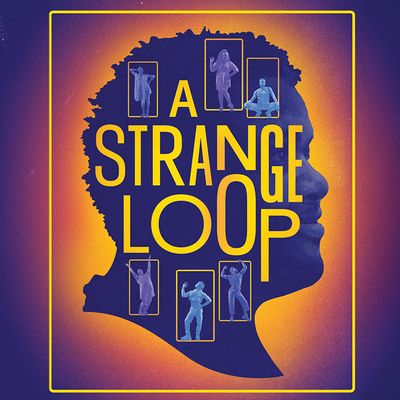
[24:07] Michael R Jackson: So, you know, but it was just like, it was a whole, it was a real journey because I just had just horrible sexual experience after another, mostly with like these white men and I would just be like, why the fuck did I do that? Which is like there's a song in A Strange Loop that's sort of about the worst of those experiences or at least drawn from the worst of those experiences because I did fictionalize what I need to fictionalize.
[24:30] Tonya Pinkins: So let's talk about that because that was a moment for me that was just, it was triggering, it was really hard for me, Michael. Okay, after my round always says everybody is welcome but no one is safe.
[24:43] Michael R Jackson: Okay.
[24:44] Tonya Pinkins: Oh, right. So it was like, you know, when I did Jelly's Last Jam and we were working on Loving is a Low Down Blues since 1990. And Gregory was like, okay, so this is gonna be the moment where she sucks my dick, and this is gonna be the moment where I fuck in the ass, and then I just was like, I need to get out of the room and get out of this show.
[25:05] Michael R Jackson: Oh my god.
[25:06] Tonya Pinkins: And I literally, when the break came, I was like, I called my agent, I said, get me out of the show.
[25:10] Michael R Jackson: Right.
[25:10] Tonya Pinkins: I'm not having a musical where there are people are sucking dicks and fucking in the ass on Broadway. No, no, no.
[25:17] Michael R Jackson: And now here we have a Pulitzer Prize-winning play where someone is getting fucked in the ass and singing a song, being called like a nigger by his boss. I just said apoplectic.
[25:30] Tonya Pinkins: Okay, I was apoplectic.
[25:36] Michael R Jackson: Look, but that's, that was, I mean, here's the thing, A Strange Loop is not an autobiographical show. It's emotionally true. It's like that's what it felt like.
[25:47] Tonya Pinkins: Yes, that's what it feels like.
[25:47] Michael R Jackson: Like I was like, I'm watching it.
[25:51] Tonya Pinkins: Right.
[25:52] Michael R Jackson: Oh my god. This is what the thing I spent my whole life trying to never have it happen.
[26:03] Tonya Pinkins: Oh my god.
[26:08] Michael R Jackson: So talk to me about the emotional experience of that. Is it like, you know, I've been trying to write this piece, which is called The Angry Fat Black Woman Who Devours the World.
[26:18] Tonya Pinkins: Oh, nice.
[26:19] Michael R Jackson: And it's about a woman who this, you know, her white boss says one stupid thing too many, and she literally bites his head off, chews it up, and shits it out and says, anybody else.
[26:29] Tonya Pinkins: Okay.
[26:30] Michael R Jackson: That's real. So you know, that doesn't literally happen, but it captures the emotion.
[26:35] Tonya Pinkins: Yeah, so I mean, so I guess like what I can say again by just saying that like what I did draw from personal experience to write A Strange Loop, but there are certain things that were just different. So the truth is, the truth is if I just talk about, so I'm for people listening. I have a song in my show called Inwood Daddy, that is about Usher, the main character. A Strange Loop is about a black gay musical theater writer who works as an usher at a Broadway show, who's writing a musical about a musical theater writer who works in the usher at a Broadway show, who's writing a musical about blah blah blah, on and on and on.
[27:10] Michael R Jackson: And in this song, very meta, very meta. And this song, in this song moment, Usher, the character, is going to Inwood to this white man's house to have sex that he met on, so on like Grindr or something like that. So the, and the song goes, Inwood Daddy sucking cock on Saturday morning, which if anybody who wants to know, I base that the feel of that off of My World is Empty Without You, Babe. My world is empty without you, babe. And I came to that tune and that song, that hook when I, one like years and years ago, somewhere in the development of A Strange Loop, when I was on Craigslist back in the Craigslist days when I used to go on Craigslist and answer sex ads on there. And one guy had a headline that said Inwood Daddy sucking cock all Saturday morning.
And it just immediately sang to me, and I said it immediately without knowing what I was gonna do with it. And then like years later, I put that song, I developed that song in the show. But then also years later, after I did that, after this one night I met this guy on like, I think it was still Craigslist, but it might have been Grindr, who I was sitting at home and I was feeling a lot of like self-loathing. And I just, and I, there was nothing I could call, there was nothing to eat. There's nothing, I was, I just need to get out of my body. I was sitting home feeling very antsy, and I went on Craigslist, and this guy, this white man basically was like, come on over. Because what I had been used to was like, don't be scared of some go to some Jeffrey Dahmer shit.
No, I was always scared, and I didn't do it very often, but like, cause it was, but prior to that, it was always to be like too fat, too ugly, dick too small. Like that was what it usually was. But this particular night, it was like, yes, you're cute. Come over. And so I itching to get out of my skin. I get on the train from my apartment in Washington Heights from this very bedroom that I'm recording in. I go wait for the train. And since it's late at night, even though Inwood is only two stops away from my house, or like three stops away from my house, the train only comes like every 30 minutes or whatever. So I told him I'd be right over, but it ended up being like an, it took me like an hour or like 45 minutes just to get to the stop.
They don't pay for no taxis. No, not back then, and not for no crack boy who like didn't have a big dick and was fat and all this stuff. So, like I went to, I finally get off the train, and then it takes me like another like 30 minutes to figure out where his apartment is because I don't know Inwood that well, and I kept on like being confused by all them side streets up there, and so I finally get to his apartment and he like answers the door in his like blue bathrobe and his glass, he's like a little nerdy white man. And like, and he's like, well, God, like I have to work tomorrow. Like, why'd it take you so, he was like, was like very aggressive? And I'm like, sorry, sir. I'm sorry. I like anyone, it's just so far. And like I just was totally subservient, like in every way. And so like he like takes off his robe, he has no clothes, he's like just wants to get right to it because he has to work tomorrow.
[30:21] Tonya Pinkins: Oh god.
[30:22] Michael R Jackson: And so like he's like asking me, do I want to use poppers? And I'm like, no, poppers is trash. Like so, like you can read the scene, and like a lot of that is true. He was not smoking meth, but you know, might as well be, might as well have been. And like he like, we have sex, it's like totally painful. He in the middle of it is like, you like my white cock? And you, and then that moment I was like, fuck, I like got got and I was just remember laying there and just being like, this fucking white man's dick is inside of me, and like he's basically calling me a nigger, and I didn't sign up for that, and yet I completely left myself open to it. And like then he finishes, and like I'm like bleeding, and so I and he goes and he wants me to leave, and he like goes to the bathroom, so I like wiped my like bloody butt on his curtains, and then I'm so mad and I was like, I'm gonna get revenge somehow. And then I like and I like took the train home and I was remember having deep regret and being like, why did I do that? Like, what talk about self-loathing?
[31:28] Tonya Pinkins: Yeah, because that's when I, that comes up for me all the time.
[31:30] Michael R Jackson: Right.
[31:31] Tonya Pinkins: Deep, deep self-loathing. Like, whenever I do mushrooms or anything, like I go through hours of just self-loathing, and I don't try to resist it, I just go into it, you know.
[31:42] Michael R Jackson: You know, what is it for you?
[31:46] Tonya Pinkins: This is Tonya Pinkins. You're listening to You Can't SAY THAT. That was part one of my podcast with Pulitzer Prize winner Michael R. Jackson.
© Broadway Podcast Network, All Rights Reserved