

On Red Pilling America, Tonya Pinkins and Ciara Renée host a weekly conversation on politics and entertainment. We create a safe space to talk about the issues keeping everyone awake at night... Read More
From the show: You Can't Say That!
Guests


Featured Shows
About
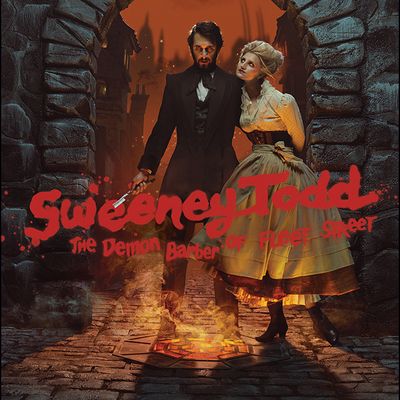
On Red Pilling America, Tonya Pinkins and Ciara Renée host a weekly conversation on politics and entertainment. We create a safe space to talk about the issues keeping everyone awake at night. This week's guests are Jay Armstrong Johnson of Quantico and PBS Sweeney Todd and Meagan Miller, acclaimed Opera singer.
More about Red Pilling America:
A thought-provoking series, featuring stellar guests, discusses democracy, American politics and our current socio-economic climate through the lens of Tonya's new socio-political horror film, RED PILL, which has received national coverage on Deadline, Playbill, and more. Guest stars include Metropolitan Opera star Meagan Miller, acclaimed actor Jay Armstrong Johnson, American civil rights leader Rashad Robinson, Hamilton stars Nik Walker, Paul Oakley Stovall, Jon Rua, Aladdin stars Telly Leung and Michael James Scott, actress and activist Joanna Carpenter and many more.
Red Pilling Of America takes place through Marissa Lynn Daniel Studios on Zoom. Proceeds will go towards the funding of Red Pill and to supporting actors during COVID-19. For more information and to enroll, visit, www.marissalynnstudios.com.
You Can't Say That is produced by Dori Berinstein and Alan Seales, edited by Derek Gunther, music by Cat Dail.
A proud member of the Broadway Podcast Network.
Transcript
This transcript was automatically generated and might contain errors.
[0:16] Meagan Miller: Speaking of the debate, do y'all see that fly? I just had to say it. I had to say it. All the memes that immediately came out after that, and the fact that Biden had, uh, uh, what is it? Something against the flies or fly swap. It was, it was, I also just saw something today. Um, and I have a deep love for Obama, not a perfect man by any means, but have a deep love and respect. Um, he was in an interview and a fly kept landing on him, and so he stopped the interview and he killed it on himself. Smacked it off, right? But he wasn't gonna let a fly just walk around on him. Like, that's all I'm saying, okay? Obama didn't do it. He was clearly alive and felt things. That's all I'm saying. Like, right? Like, I don't, is he the undead? I don't know. It's October. Weirder things have happened this year. Is he the undead? I don't, you don't even see.
[1:20] Meagan Miller: Um, okay. So yes, I just getting back to voting for two seconds. There are absolutely a lot of blocks to it. And like my mom and I actually, we both got, uh, ballots. When I, I always do absentee, um, because I never know where I'm gonna be, and I still vote in Pennsylvania, and sometimes I live in New York and sometimes I live in LA, and sometimes I live in Vancouver. Who knows? Um, so I got absentee, my mom got mailing. We filled them out and we sat there and we checked each other's things just to make sure. Like, did I sign everything? Is everything good? Like double triple check, make sure that we put it in the secrecy envelope because that's a big thing too. I guess people forget and send in naked ballots and they get squashed.
So don't do that. Tell your friends. Um, but after we did that, we actually just took it in person just to make sure, just to drop it off. And it's so great. And PA, I don't know if this is true everywhere, but in PA, uh, we get an email saying your ballot has been received and recorded and it's all good. So I don't have to sit here like wondering. But I was like refreshing every day to be like, when are they gonna send it? When are they sending it? Send it already. Cause I feel also that pressure and nervousness of I want to make sure that it gets in there, right? I don't, we've heard all this talk about the USPS. They were attacking it, clearly, 150% attacking it, trying to dismantle it so that it wasn't able to do the job necessary in order to have everybody's voices heard. So I feel that.
[2:50] Meagan Miller: Um, another thing. So I wanted to kind of go back around to, um, just kind of again the divide and, um, where we all sit on it. So Jay had talked a little bit about his, um, background, and again, I thank you for sharing all of that. Um, about, you know, southern conservative, um, I think Christian, right? Yeah. Tanya, are there people in your movie that represent that, um, demographic?
[3:19] Tonya Pinkins: Absolutely.
[3:21] Tonya Pinkins: Okay. And I think that was the fun for me is that I wanted to, if I didn't have a character that did it, I wanted to mention as many groups as possible. Now, my editor is, is, is, uh, South Korean, and she was like, Where's the Asian person in my movie? I was like, Oh, I didn't do it. Yes, yes.
[3:44] Meagan Miller: Um, so okay, here's my question though, you probably can't tell me. Are they the good guy or the bad guy? Are they mentioned in any way that would put them on one side or the other?
[3:57] Tonya Pinkins: Um, I guess I don't look at the world in good and bad. Um, and I tried not to make a judgment of the people in my storytelling. So, um, yeah, I mean, it's, you know, it would be really up to you. And honestly, I feel like very much this story was my attack on progressives. Me going, come on, progressives, like y'all are ineffective. And you know, really that's what I made it for to say, uh, you're delusional and ineffective.
[4:35] Jay Armstrong Johnson: Yeah, the cancel culture nature around what the progressives are doing, I think is detrimental to finding a middle ground. I mean, like a friend of mine has been pretty much canceled because of some things that he said and did in the past, and he is, he's aware of it and he's doing everything that he can to educate himself and to fight back what he's done. And I've been called out for some racist rhetoric of mine online, and thank God it's not gotten as much media coverage as my friends has, but it's, um, I think we, uh, I'm trying to hold space for those that have made mistakes and not cancel them and give them the opportunity, you know, the Christian thing to do, the forgiveness thing, the, uh, the come back into the fold thing that we are taught as Christians, um, to do.
[4:57] Jay Armstrong Johnson: That's, I'm finding myself, uh, really, uh, I'm being, uh, being challenged really hard right now with cancel culture. I agree with you completely. I think it's just not so smart. I mean, if anything, it can recruit for the other side, you know? It's like, well, those people don't embrace me, you know, look what they did to me. They're not as nice as they say. Maybe I need to look at other groups of people to support me, right? So then, you know, what are we doing exactly, right? And we are communal beings. We are created that way. It's in our biology. We are not islands. We even if we wanted to be, there's no way in our society unless you lived completely off grid and were self-sustainable in your own little space, like you are going to affect other human beings, right? Everything that you do is going to do that.
[4:57] Tonya Pinkins: Jay, I see you. I I'm not asking anybody how they're voting, but I like to point this out a lot, um, because I think it's a fact that most people don't know. I didn't know it until I read Isabel Wilkerson's book Cast this year, and it is that since the, uh, Johnson signed, um, civil rights in 1968, no Democrat has gotten the majority of the white vote in America, period.
[4:57] Jay Armstrong Johnson: Wow.
[4:57] Tonya Pinkins: Yes, there's your sign to make an idea of what a one issue election is. Is this really the one issue?
[7:03] Jay Armstrong Johnson: Right. That's always an interesting concept to me of like there's one thing in my heart as a Christian or as a, it's whoever, whatever demographic I'm in, that I just like can't abide. And so I'm gonna let all this other bad stuff or stuff that I don't agree with come in because of this one issue, right? And Jay, you were just talking about like practice what you preach and like what is actually Christian. And I know that you had expressed concern over the kind of what you feel is the false representation of what Christianity is and the, you know, Republican regime. Um, can you talk about that a little bit?
[7:46] Jay Armstrong Johnson: Yeah, I mean, what's funny is, uh, my dad is a Trump supporter. He voted for him in the last election, and we hopped on the phone the other day, and I was like, So, um, how we feel, and dad, Trump has COVID now, huh? And he's like, Oh, it's all fake news. I'm like, okay, dad. You're one of the more Christian people that I know, and now you were saying the deliverer of it's all fake news is now fake news. You're gonna have to come to terms with that. So, are you voting for him now? Is like, who is the fake news? Is it Fox? Is it, so it's just this, the Christian thing has me freaked out?
[8:28] Jay Armstrong Johnson: I saw a lovely article that was about, um, conservative evangelicals that are pro-life or supporting Biden, and I was like, I'm gonna reshare that. I'm gonna read it. You know what I mean? It's like I'm trying to find anything and everything that is Christian related because I know that I have so many Christian friends and family back home in Texas that will be voting for Trump because they're holding Bibles in front of churches after they tear gassed peaceful protesters. You know, so I'm trying to find anything and everything that I can to like convince them that Trump is not the evangelical Christian way. He's simply not.
[9:04] Jay Armstrong Johnson: And I want to end that about that. I was just reading an article this morning about how when Roe v. Wade was passed, none of the Christian and evangelical leaders cared. Their issue had always been Brown v. Board of Education. But that was considered racist. And so after Roe v. Wade, and it wasn't for six years after Roe v. Wade that they actually jumped on pro-life. But this article was saying really the issue is integration, but that's not PC. So we can stay on pro-life, and that's more PC to be the beard for what we really are upset about. It's an amazing strategy. Amazing.
[9:59] Meagan Miller: Wow, wow, wow.
[9:57] Tonya Pinkins: That's disconcerting.
[9:57] Meagan Miller: Something so important just now. Thank you for that.
[10:01] Jay Armstrong Johnson: Yeah.
[10:01] Meagan Miller: So many friends and family of mine, females, friends, family. I know a lot of women in my life that have had abortions and they have them to make their lives better and then shit on everyone that has, you know, it's like it's the practice which you preach thing. It's the get the abortion so that your life is not upturned, but then let's talk badly and not support it going forward in life. And that's, it's this weird disconnect.
[10:30] Jay Armstrong Johnson: Yes.
[10:30] Meagan Miller: But you know, but when there is such a just good disconnect, maybe it's time for us every time we feel that disconnect, maybe look to tear off a beard. Because then it means actually that's not it. Actually, that's not it. Snatching beards over here.
[10:48] Tonya Pinkins: Okay, my goodness.
[10:50] Meagan Miller: Yes, honey. Take it off.
[10:53] Tonya Pinkins: Um, we need to mean that. I, uh, you know, when we were talking about this, Jay, just about like how can conservatives be so on the Republican side. I started doing a little bit of research into it. And, you know, again, it's hard to do any research now, especially using Google. Um, but I did find some books, and I feel like if it's a book, like maybe, maybe No, I'm gonna have to stop now with the Powell manifesto in 1977. Um, I think his name was Alan Powell. He became a judge on the federal judiciary, and he wrote, uh, this manifesto to all of his Republican conservative friends.
[11:39] Jay Armstrong Johnson: And what the complaint was that was that American universities were graduating all of these students who were anti-American and that they were anti-Vietnam.
[11:50] Jay Armstrong Johnson: And so they said we have enough money, we have enough power that we must use that to write books that promote our values to make sure that we have a news media that promotes our values and to for every book that they write, for every commenter they have, we need to put two out there espousing our values and our point of view.
[12:14] Jay Armstrong Johnson: Well, let's take this with a grain of salt, then as we do with almost everything these days. But I did find it was interesting. I was like, okay, are our conservative Christians like really mostly for Trump? And what I was finding in my research is that so it says while 52% of lower income white conservative Protestants voted Democratic in the 1990s, 90% of lower income Afro-American, which why are we Afro-American? Anyway, Afro-American Protestants did.
[12:45] Jay Armstrong Johnson: So the distinction there is that it's white conservative Christians, not conservative Christians, because as a whole, right? Like the race then is the other dividing factor within this demographic, because it was 90% one year and then 96% the next year, and the white people dropped from 50 to 22 percent voting for Democrat, right? So that's even another like further divide that's been growing and growing based on race.
[13:23] Jay Armstrong Johnson: And to me, that was just interesting because here's an example of people who believe we would think a similar thing, read the same text essentially, and yet politically are super divided, right?
[13:44] Meagan Miller: I never understood why my church was all white people and the church down the street was all black people. It really, this like red and yellow, black and white thing, or she's saying this like songs I was singing were not matching my experience. So that makes complete sense to me.
[14:01] Tonya Pinkins: Right, right, right. What were you gonna say, Meagan?
[14:04] Meagan Miller: Well, I was gonna say, like, you know, I don't know how many people you know, because I grew up Catholic. And how many people do you know that have read the Bible all the way and have actually studied it? It's not a major portion of the believers, right? So then is it about the book or is it about who's talking to them every Sunday? Is it who's talking to them every dinner that they eat around a table? I think so much is about influences. I think a lot of it's about the television these days and about the internet, you know, it's really just I don't think it's about the book. I don't think it's about the religions at all. I don't think the influences are coming from there.
[14:46] Jay Armstrong Johnson: Agreed. I agreed. I mean, I have read that book and you know, I have people in my family like I have an aunt that I love who's a Jehovah's Witness and their Bible is very specific. And so I sometimes want her to look at my Bible, but her religion doesn't allow her to read my Bible. She can't even look at my Bible to see how I'm getting something different from hers.
[15:13] Meagan Miller: Wow, wow. Sounds like America. Like if you like Trump, you can only like Fox News and you can't get it from CNN. I've had so many people jump in my comments if I repost something from like MSNBC or whatever and they're like, that's a fake news thing. And I was like, is it the whole network really? Or like is this one segment maybe have some truth to it? Could you maybe look at it? And they're like, well, I didn't watch it. And I was like, okay, like could you actually take a second? Do you know what I mean? Like if we can actually start hearing the other side, we might maybe find that there's more that connects us than not.
[15:53] Jay Armstrong Johnson: I don't know. It doesn't want to connect us.
[15:59] Meagan Miller: I mean, you know, what they're saying is that the algorithm just likes things that make you irritated and annoyed and sort of aggressive. So the algorithm is just trying to keep us posting and attacking and attacking and attacking.
[16:14] Jay Armstrong Johnson: And you know, in one of those documentaries, the people who created that stuff said that they found themselves becoming addicted and that they do not allow their children to use any of the platforms that they participated in making because they realize this addictive quality and this addictive quality to our worst impulse. And that there's really no guidelines on how social media works or the algorithms work. We haven't gotten to that place yet.
[16:44] Meagan Miller: Like there's really guideline for the algorithm is what is going to get my third-party advertiser more attention. No ethical guidelines. Like there's no, there's no across the board, like the government isn't in any way saying, like, hey, because this is overwhelmingly bad for people.
[17:01] Tonya Pinkins: I gotta say this. I started thinking this week that capitalism is a god. I don't know if anybody's read Neil Gaiman's American Gods, but capitalism is a god. And like I believe all gods are neutral. The god of capitalism doesn't care if you're good or bad or conservative or Baptist or Christian or Muslim. All it cares about is are you upholding the principles of my religion, which is make more money, extract more money, make more money.
[17:31] Jay Armstrong Johnson: So no matter who you are or what you believe, or what's your gender or what your race, if you're upholding that, then you are upholding capitalism. And I think if anything, capitalism is the religion of America.
[17:44] Meagan Miller: I would agree with that. And I have to say, I have had a major education since meeting my husband who grew up in communism. And he is always talking about how he thought it was great that they censored everything when he was growing up. And I was like, Whoa, whoa, what? Censor system is against the arts. You know, and I could we have these horrible discussions about it. But in some ways, the regulation at that time was trying to protect people from these negative impulses. There are other reasons for it. There was a lot of propaganda, and we all understand. But he said, listen, you know, the experiences that I had in my life nourished so many of my positive sides, you know, and I wasn't exposed to any of these things. And he watches the kids going through so many terrible challenges with, you know, this irritation and aggression that is nurtured. You know, we don't want censorship, but what would those regulations be if we were going to regulate the algorithm?
[18:46] Tonya Pinkins: You know, what is what is the opposite of making money the goal? Because that's what capitalism is. So that's like what's the next system? You know, is that about morality and who decides? That's the who decides. That's really important too.
[19:02] Jay Armstrong Johnson: And I think, you know, as you were saying, Tonya, about capitalism being a god, it's like, okay, the Christian God, right? Like in the Old Testament, I always find this interesting because I have read the Bible, it's been a minute, but the Old Testament is just so stunningly different than the New Testament. Like in that the Old Testament, they talk about like the fear of God and in a vengeful God and like those kinds of words that I was like, whoa, whoa, whoa, this is like, and I guess it depends on your translation as well. But I do remember even when I was younger being taught about, you know, this powerful God that he loves you, but he's also gonna like send you into the desert for 40 years or whatever, you know what I mean?
[19:48] Meagan Miller: See, like, and like he's God, okay, so I guess he should be able to do that. But then it's like, who are we mean God in our political system? Like, are we really saying that any man at all ever, or woman or any human in general, is infallible enough to be made a God that we don't question them, right? And that we allow them to rule in the way that the fearful, the God that we are to fear should do, right?
[20:16] Jay Armstrong Johnson: So it's like the difference between ruling as a fearful God with an iron fist, like you know, a dictator or an authoritarian or whatever is trying to do, or ruling like Jesus who did everything by example, right? Yes, he said like you should or should not do these things, but in general, he was like, I'm showing up, I'm physically informed to show you like this is the example, this is how things should look, this is how things should be, you should be kind to each other, we are including people now.
[20:47] Meagan Miller: Where you know, like it feels like a to me, it feels very different, you know, and it's like, are we then creating because I've heard people say, like, well, whoever the leader of America is is chosen by God. And I was like, But there are people there are religions that believe that, and not only do they believe that, but they believe that the father of the house is also an emissary of God, and that you know, he his word is the law, and so that if you are a poor or an addict or something, then you clearly didn't have the right father figure in front of you. And so whatever happened to you, you deserve it because you did not receive the correction that came directly from God through that father figure.
[21:29] Jay Armstrong Johnson: Which I don't I don't feel matches what we learn in the New Testament of, hey, let me don't stone this whore. She deserves to live. You know, like don't don't hurt this person who can't walk, or like, you know, like Jesus' example was very different, I feel like than maybe what's being glommed on to right now is the concept of like ruling with an iron fist and that there are appointed leaders from God on high.
[21:57] Jay Armstrong Johnson: Do you have thoughts about this?
[21:59] Meagan Miller: Yeah, I think fear mongering is like how the Republican Party thinks they're gonna win, is that if they can stoke as much fear into the American people that like the Black Lives Matter movement isn't about police, it's actually about they want to come in and tear down your cities, they want to loot and they want to pillage and they're like they're skewing us away from the actual matter that like lives are at stake and that we have a system that is very based on racist ideals, and the white people don't want to do that because the military-industrialized complex is a thing that's been going forever.
[22:36] Meagan Miller: We go into other countries, we loot and we pillage, we kill their people, we take their land, capitalism, you know, it that's that's what it's been. And then our soldiers come back on to our own lands and they are uneducated and they've only been taught how to be in battle, and so now they're on our police forces. So they were they were in our other lands raping and pillaging and killing, and now they've come back here, and the only way that they can survive is to then be on our own streets, and instead of protecting and serving, they're actually treating our citizens like the enemy, and so that's that's where we are right now, and so there's just fear stoking, it's fear-mongering.
[23:17] Jay Armstrong Johnson: And the mainstream media makes this point of trying to make you afraid of black people. For instance, we hear more news about gun violence in Chicago than any other city. Chicago is not even in the top 30 most violent cities for gun violence, but you get all this news about it because it's a predominantly black city, and you hear very little about quote unquote white on white violence. Violence is a function of who's in your community. People rob, kill people that they live near. We are a segregated nation, so 85% of white people are killed by white people because they live in the same community. And because violence by white people against white people or police against white people is not elevated, white people don't realize the danger that police are causing them. They're killing white people too. They're not just killing black people, they're killing white people too.
[24:20] Meagan Miller: Right. And I just I just always go back to like mass shootings, which like, oh my god. I get like I know I'm thinking about like what's the news cycle been like? Have we heard of any recently? That's not in the news cycle is that they just disrupted this um this to overthrow state governments. And no one has said anything about that. They were going to overthrow state governments. Yeah, it's been silent on that. It's unbelievable. Except it's not just like your movie, Tanya. It was far-fetched at one point, and now it's just actual reality.
[25:05] Jay Armstrong Johnson: Woo! Okay. So okay. I want to end this on some kind of positive note. Look, there are there is massive upheaval right now, but I think I always believe that with the upheaval, with the discomfort, with stepping into the gray and into the unknown. And in the end, okay. We all now have the opportunity to create something better, different, new, whatever, you know, or to mend something or to whatever it is. I think we have that opportunity, or it's coming. It might not come in the nicest way, but it is available to us, perhaps. Um, so Jay, Meagan, do you have any final thoughts? What, you know, what helped you not feel overwhelmed, hopeless, helpless, whatever it is in this very crazy tumultuous time.
[26:01] Meagan Miller: Um the only thing that I can do on most days is simply be kind to everyone around me and seek out interactions with people that I have never met before and offer the same.
[26:17] Jay Armstrong Johnson: Love that. That actually I think will be the most powerful source is just opening my own doors more and more and more and continuing to have interactions that I think help.
[26:29] Meagan Miller: Yeah. That's it. I love that.
[26:31] Jay Armstrong Johnson: Yeah, uh that's really great, Meagan. Um and it's true. And and you guys have provided that for us here today. I mean, thank you, Marissa. Thank you, Tani, thank you, Sarah, for giving us this platform to have these like hard conversations and like really dive deep into what it is to be an American in today's world. Um, I'm just trying to be an artist, and I know that our industry right now is also um being torn apart a bit, um, especially by our black friends that are saying actually this hasn't worked, and this hasn't worked, and this hasn't worked. And um, I'm I'm trying my best to not only uh listen sit back and listen and learn, but then to to be active. Um, and so uh instead of giving in to what my family usually does, which is stay quiet and be nice and just uh sit back and don't do nothing, you know, that's not that's not getting us anywhere.
And so um to to create us somewhere because I don't know if it's where we want to go. There you go. So to create art and to elevate voices that are underrepresented. That's that's where I that's where my uh energy is right now, and I feel like that that's the only way to go forward.
[27:54] Meagan Miller: Um, Marissa and I have had that conversation a lot uh in the last nine months about what it means to elevate and amplify underrepresented voices, and so that that's my task, and it's keeping me positive and it's keeping me um energized. Fantastic. And uh I did want to say one quick thing, if that's okay. Um, I I sat in on um Stuart K. Robinson had an amazing webinar um the other day, and he talked about race in America and how a lot of our school systems from the get-go, literally from pre-K started just you know, not implementing what really occurred in our history in those textbooks. And he did a really interesting um thing where he asked us questions, and the whole entire webinar would vote on the answers, and you saw just how little people knew.
And one of the questions that was I mean, it it was very surprising for me was how many US presidents at one point or another had owned a slave, and they gave us a list of numbers, and a lot of people picked one, two, four, and it was really 18. And he said, let this show you that everything that you learned middle school, high school in your textbooks were coming through those point of views. They were coming through the point of views of people that did it themselves that did not think that what they were doing was even an issue. They thought this was just the way to life.
[28:51] Jay Armstrong Johnson: And one of the questions that I asked Stuart was, well, then what can I do when I send my son Jesse Daniel to school? Because right now, of course, I know how to implement non bias and teach him about microaggression and things that maybe I realize, like Jay said, like there's a lot of things that you don't even realize, right? But when you start opening your eyes even more, it's like, wow, okay, now I can turn this corner, I can recognize this. Now I can teach my son this. But the question is, is what about when they go to school? Who's gonna change these things in the textbooks? Who's gonna make sure that when we put our kids in first and second and third grade when they're a sponge, that we don't have the same type of teachings? And I just thought that that question within itself may just strike a lot of positivity if we can get more parents on board to really be more active in what their child is learning in school.
[30:34] Meagan Miller: And Stuart gave us a list of textbooks that we can go out and purchase and start implementing when they do go to school. And it's like, okay, well, how many parents have that? How many parents have this list? Right. And that gets us back to capitalism, because the largest group of textbooks in the nation are purchased by Texas. And so the education we get is the education that has been approved and is purchased in large quantities by the Texas educational system. And in some of the Texas textbooks, they in some of them they list the slaves as you know assets on a thing, but in some of them they talk about these happy employees, employees who they don't mention didn't get paid. No, that's not how that works.
[31:22] Jay Armstrong Johnson: Yes. Well, one thing I can say about who is gonna change the curriculum, it won't be Bessie DeVos. So let's get someone new in there, guys, you got to vote. Use your voice. We need to do it. It starts with the kids. It starts with your school systems. And like, even if you guys like speak to your high school friends or college friends, and you guys see something in your textbooks, like say something. My sister's a New Jersey school teacher, and she's already reported several things to her commission because she's noticed things in the textbook that shouldn't be there. Like that's where we need to speak up. We need to speak up in the school system. See something, yeah. See something, say something.
[32:00] Meagan Miller: Yeah. I also will just say one thing. You know, I have a very good friend, and he's his whole, he's from Tennessee. And his whole point of view is hey, I know that we're all focused on the national election, but most of the changes to regular people's lives happen at the local level. So do you know what's going on locally? And who to choose local elections? Don't forget that either, because the most likely changes to the textbooks will be from local government.
[32:29] Jay Armstrong Johnson: This is very true. You can be on your school board if you have a kid in the school system.
[32:33] Meagan Miller: Yep. Exactly. Get active. I love that. And I I just want to say to uh Marissa and Jay and Meagan, I loved your responses to this question just because there was an active component to each of them, right? And that is really the difference, I think that I'm seeing with a lot of um my liberal friends and also just like my white friends who are like, oh, like I'm not mean, I don't think these things, I don't do these things, but but it's about action. You have to actually participate in the things that you feel or believe or think, right? Or the things that you've learned. You have to participate in them. Like, even just saying, like, you know, I I try to be kind to people, but I go outside. What you said is I'm going outside of the people that I normally would interact with because I want to be kind to everyone.
I want to be intentional about reaching out to people outside because that's what it takes. We have been intentionally divided in this country, in my opinion, and also facts. But um, we have been intentionally divided. And so it's going to take intentional action to mend that divide.
[33:42] Tonya Pinkins: So thank you all so much for joining us. This has been a lovely, lovely conversation. Thank you all for coming back. Some of you, I love that. We appreciate you. Um, we will be on again next Saturday at 5 p.m. Who do we got next week, Marissa?
[33:58] Marissa Lynn Daniel Studios: Kally Liang and Jon Rua.
[34:01] Tonya Pinkins: Oh, yes, yes, yes. Come on. It's gonna be a really interesting conversation. Look, we do have an Asian person, Tanya.
[34:11] Jay Armstrong Johnson: No stop.
[34:12] Tonya Pinkins: I love Telly. I love Telly. Okay, um uh thank you all again, and we will see next week. Thanks for coming. Thank you with us and sharing your lives and stories with us. Thank you, Sierra, and thank you, Marissa. Thank you. Welcome, you don't say no when you meet no. When you meet no.
© Broadway Podcast Network, All Rights Reserved