

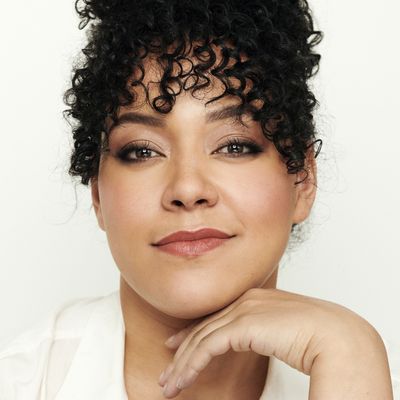
Chuck and Lili Cooper are father and daughter Broadway Icons. Here they join Ciara Renee and me to continue our conversation inspired by my debut feature RED PILL on the “redpilling” of America... Read More
From the show: You Can't Say That!
Guests

Featured Shows

About
Chuck and Lili Cooper are father and daughter Broadway Icons. Here they join Ciara Renee and me to continue our conversation inspired by my debut feature RED PILL on the “redpilling” of America.
More about Red Pilling America:
A thought-provoking series, featuring stellar guests, discusses democracy, American politics and our current socio-economic climate through the lens of Tonya's new socio-political horror film, RED PILL, which has received national coverage on Deadline, Playbill, and more. Guest stars include Metropolitan Opera star Meagan Miller, acclaimed actor Jay Armstrong Johnson, American civil rights leader Rashad Robinson, Hamilton stars Nik Walker, Paul Oakley Stovall, Jon Rua, Aladdin stars Telly Leung and Michael James Scott, actress and activist Joanna Carpenter and many more.
Red Pilling Of America takes place through Marissa Lynn Daniel Studios on Zoom. Proceeds will go towards the funding of Red Pill and to supporting actors during COVID-19. For more information and to enroll, visit, www.marissalynnstudios.com.
You Can't Say That is produced by Dori Berinstein and Alan Seales, edited by Derek Gunther, music by Cat Dail.
A proud member of the Broadway Podcast Network.
Transcript
This transcript was automatically generated and might contain errors.
[0:00] Tonya Pinkins: Hi, my name is Tonya Pinkins, and I'm the host of the podcast You Can't SAY THAT on the Broadway Podcast Network.
[0:07] Tonya Pinkins: This fall, I have a special treat for you.
[0:11] Tonya Pinkins: In honor of my debut feature film RED PILL, Marissa Lynn Daniels Studios has been hosting weekly conversations with my fellow Broadway colleagues and co-host Ciara Renee about the red pilling of America.
[0:27] Tonya Pinkins: These conversations create a safe space for us to talk about the things that are on our mind with an election and a global pandemic.
[0:37] Tonya Pinkins: So join us for The Red Pilling of America, a spotlight series every Saturday at 5 p.m.
[0:45] Tonya Pinkins: Or on the Broadway Podcast Network, You Can't SAY THAT, BPN.
[0:54] Tonya Pinkins: Join the conversation.
[0:57] Tonya Pinkins: We have a speaking live.
[1:01] Tonya Pinkins: We gotta say what news for you.
[1:15] Unknown speaker: Obviously, I don't think she makes it. That's my assumption. But she's like, I think I'm gonna go. This doesn't feel right, right? Um, and then there's another quote, which I think it was maybe by Ruben, and he says, I'm gonna call the sheriff, right? Which is like I probably wouldn't call the police. Like, not necessarily. Like, hey, I maybe, but probably not, especially in a place where I don't feel already comfortable by like the inhabitants, right? So, like, even just in that, like seeing the responses to what's going on in the movie through these different lenses, based on you know their demographics and who they are, racially, you know, identity and such, I think it's really fascinating.
[2:03] Unknown speaker: Um I think I I think uh discovering that um instinct is really important too, which is what I think uh us as as black people face on a day-to-day basis is having an of is this faith, is this safe? Can I stay here? Do I need to leave this situation right now? And I I love that that was represented so well just in the trailer, and you feeling and that vibe in the movie, which I think is something that parallels really beautifully with Get Out. And you know, you were talking, Tanya, about um get out being uh a horror film, and I kind of think of it as like a thriller, but there's a fine line between the two. And would you consider red pill to be horror thriller both? Where would you sort of categorize it?
[2:55] Chuck Cooper: My daughter would say it's not a horror film because there's just not enough blood and kills. But my daughter, when we watch horrors together, she's happy if people are being chased by something and screaming, which I can care less. Being chased by something and screaming and then people get killed. I don't care. Um I want to have something that I'm trying to figure out. Um, or it's like how's it? I want to be trying to figure out where what's gonna happen. I need at least that. I mean, like I said, horror to me, you know what the monster is, you may not see the monster, you know the monster is probably gonna win. Um, but what is there some reason or some motivation, or is there something that they're gonna try to do to stop the monster?
Like a shark, jaws was fantastic, but it wasn't that the shark was the scary thing, the people's response to the shark was the scary thing. And so for me, in a sense, red pill is kind of like that. It's um it's definitely about how people don't listen to the black woman's instinct, and um how we as quote on the left just keep thinking that everybody's on our side and we're gonna win because we're the majority.
[4:16] Chuck Cooper: I mean, that's literally like a line in the movie. And I want to say that I just learned this fact in the past week, and I keep repeating it everywhere I go that no democratic president has won the majority of the white vote since Johnson signed the Civil Rights Act.
[4:39] Unknown speaker: Wow.
[4:43] Chuck Cooper: Right, right. So I feel like for people who are white who are thinking their friends are on their side, I think that they mostly think of the people who are rapidly talking about Republicans and MAGA. There's a whole bunch of quiet ones who are saying nothing, and they're still not voting the way you vote. And because it's more than 50%. It's something like 56% of white people vote Republican, like that no Democrat has ever had. And so it's actually in their hands to decide if we're gonna have a democracy.
[5:22] Unknown speaker: Right.
[5:22] Chuck Cooper: But then it always comes down to the question of what do they get out of democracy and what do they get out of stifling democracy, right? Well, like Isabel Wilkerson, who wrote The Warmth of Other Sons and won the Pulitzer, her new book cast, um, one of the sections, she talks about how what the current president, occupant of the white house offers is a return to white sovereignty. And so where politicians seem to think that um, you know, people in quote red states are voting against their interests, they are actually not voting against their interests because they're saying, I will take a short-term loss for the interests of maintaining white sovereignty over the long haul. That that is their number one priority.
[6:16] Unknown speaker: Do you feel like you explore the theme?
[6:24] Chuck Cooper: Yeah. Um, well, I was just gonna say, do you do because Chuck and Lily were and I were actually talking about like the fear of like white genocide, right? Like this like kind of made up mythical fear that people of color are out to destroy white people, right? And which is like the base, which people say is like the basis for the foundation of a lot of the like the racism and biases, prejudice, whatever we're dealing with. So there is the fact that melanin is the dominant gene.
[7:01] Unknown speaker: Right.
[7:03] Chuck Cooper: Right. So, like, maybe it's even like inbred in us a little bit, you know, or in in them, or you know, whatever. Like, what is what is it actually? Is it is it societal? Is it mythology? Is it, you know, actually a part of our biology? That we want to, of course. It's tribal, it's animal, it's we're animals, okay. People just forget that we're fucking animals, okay? We're animals.
[7:29] Chuck Cooper: Eat, we fuck, we sleep, and that's what animals do. Procreate try to procreate and make sure that their shit make sure they have their shit, and if they don't have their shit, they'll go and take someone else's shit. And that's let's go ahead. Finish us, sir. And and that is where we are, and we're we'll always be, because that's just how it is. Um, and so the nuance of that in terms of uh governments and societies is that those in power want do everything they can to keep it and will not and very reluctantly give it up. It has to be wrenched from their cold bloody hands. That's just how it is.
[8:14] Unknown speaker: I want to go back to you saying about eating and fucking. I was reading a book called The Evolution Woman's Evolution, and um she has this theory that she posits in big long book to explain it, that she does not believe there is an incest taboo. She thinks that's a modern day invention, and her theory of that is that uh, you know, pre-Columbian Paleolithic, Neolithic man did not know anything about DNA. So how could they have a uh a um a taboo incest prohibition about that? Um, but when they look at you know, when they've been able to interview um tribes that are still living closer to the land and sort of hunter gatherer tribes, what they found is what they did have is that fully 75% of the women in their tribe were off limits to most of the men in the tribe on pain of death.
[9:19] Unknown speaker: Okay.
[9:19] Unknown speaker: So since they don't know anything about genetics, you know what could make them say these people are off limits, you don't do that to them. And her theory is that what the primitive uh species of humans did recognize is two very fierce hungers the hunger for food and the hunger for sex. And whenever they interviewed these tribes, they found that when they talked about themselves, they described themselves as man. Everybody else was an animal.
[9:56] Unknown speaker: So you could have sex and eat people from other tribes. Didn't do it to your own, because you all were man, they were animals.
[10:08] Unknown speaker: Oh wow, and so I feel like we kind of have that happening right now where there's people who feel like we're the humans and the rest of you all are not, and we can do anything we want to you because we're the only man, right?
[10:23] Unknown speaker: Right. But of course, but of course, there there isn't any like even scientific basis for the separations that we've created societally, right?
[10:35] Chuck Cooper: Like culturally and society, like just the fact that some people were on this continent versus this continent. Like literally, there aren't we're all so much more genetically similar than we are disparate. So that's that's the thing that always is so infuriating about it, you know. White was invented not more 100 years ago. I mean, white is real new. And Jefferson, Jefferson for you. It's like, look, you know, somebody said, you know what? Let's make some of us white. And then we can consolidate our power, and we'll make these rules that you know favor us. And if you're not white, you're fucked. Right. Well, and and Noel Anaktiv, um, who just recently passed, he talked about um I think it was called anti-whiteness or or anti the concept of whiteness because he's like it's not real and it doesn't exist.
And his proof of that was that um in the olden days, uh, you know, Irish people were not considered white until the Irish were uh collaborating with black folk who were moving to the cities, right? And they were saying, hey, we we we're coming together, we're all gonna have live together, and then we'll be more than the people who are oppressing us are not allowing us to have what we want. And so the people who were oppressing, all white people in America, they were saying, Hey, uh, Irish people actually, you look like us enough. So you are actually also white too now. We're gonna stop treating you like crap. We're gonna stop putting out signs and saying, you know, no potatoes and no, you know, whatever they said to people back then.
But there's that thing about the race, capitalism is the cause of all of this. Right. Because capitalism racialized people. It didn't racialize people in terms of their melanin, but it racialized people. That's what allowed the Brits to starve six million Irish people. They dehumanized them. Right. You know, they just were like, you aren't like us. And for the sake of how we can use you. And people forget that capital requires labor. Labor makes capital. And so, but labor never gets the benefits of their capital. So the people at the top racialize any group of people to say, you are the mudsill, you are the bottom of this society on which all of the rest of it is built. And we need somebody at the bottom so we can build our castles to the top.
Absolutely. Just like termites. It's kind of human nature and animal nature to create hierarchy in any way, right? Create levels that can allow one group to feel more important and powerful, which means another group has to feel less important and less powerful. And the easiest thing is to say, you look, you don't look like me, so you're lesser than. And then so, but once let's say the Irish people were like, wait a minute, we can be a part of the white group. Cool. How about it? That's great. We're white now. And there's there's also something universal, uh uh, let's not forget, about every tribe needing a nigger. The nigger is a very convenient word and place uh places people in a uh in a specific light.
And and everybody, every group of people, generally speaking, it's uh it's it needs a nigger it it it's it's the the Dalit people of India, that's what their place is. They're the bottom of the cast. And you know, one of the things Wilkerson talks about in Germany is once they made the Jews the bottom and once they had you know killed off so many Jews or the Jews had run away then the Germans started turning on one another and looking at people who had brown hair or brown eyes and going where did you what's your ancestry can you be sure you know yeah it's it's you know it's all about our lack we we we haven't the evolution of our of our societal habits and mores and rules and whatnot are way way way unevolved to what what is possible in our hearts and and what is possible in in our higher aspect we we some some people we know about it we we feel it but it it's unachievable with with the tools that we have uh and and you and using the the the path that we have chosen to take it's just you can't get there from here it's like einstein said you can't you can't solve tomorrow's problems with with today's tools you got to come up with with with better ways you get you we first of all we have to teach empathy if we don't if we don't begin to to understand the importance of teaching empathy we it's that's all it's a waste of fucking time because that is that is the the key to unlock potential and and and to end suffering and and and all these things that plague us.
[15:59] Chuck Cooper: It's it's all about empathy and and love. And you know, as it sounds woo-woo to say it, but it's the goddamn truth. I know. Oh, but I there's science. I didn't answer your question, Sarah, because you asked me about why this thing. So I feel like I'm really good at empathy. Um, I have friends from every walk of life, and I the movie's called RED PILL because I went deep into red pill communities, unbeknownst to me. I had a red pill therapist. You know, people know red pill from The Matrix, but RED PILL has a whole, like there's the red pill women and the red pill men and the red pill communities and red pilling somebody. And I spent a lot of time inside those subreddits, and as I said, I had a therapist who was doing that.
So I feel like I hope that I told this story from a from a perspective of empathy for both sides. I don't make a judgment in the storytelling, I just show you how I think it plays out in the world in the story. But I don't think that I I don't I don't paint anybody as as a bad person. Of course, depending on your perspective, you're gonna pick one, but I don't think I as the storyteller do really, you know. Which which I I always find those kinds of pieces to be like whether it's movies or theater or just books, it doesn't matter, those are the ones that always interest me the most because then it it leaves me with all this self-reflection of like, wait, I chose this, why did I choose this? Or why did I think that this character was like the one that I associated with the most versus this one or you know especially when you get to hear the creator say like oh no I'm just showing you what's here and you made that judgment and then you're like what does that say about me which I I think that's the best kind of stuff right it's holding up the mirror that's what that's the job that we're all hopefully doing is hey this is this is a a part of humanity look at it what's it mean to you how's it make you feel what are you gonna do about it right you know self-reflection and curiosity are perhaps the two most important tools for evolution or personal evolution and I when I think one of the most frightening things about 45 is not only his racism and being a neighbor is lack of empathy and I think having a of the free country being lacking in any form of empathy whatsoever is one of the things that truly scares me the most yeah I I agree go ahead what scares me the most is how um, you know I love it that we've had a hundred consecutive days of uprisings in the country and they're getting no press at all and 93% of them have been peaceful.
But still when I talk to some of my friends, it's not on their uh, it's not in their news feed. Like the things that are getting me upset all the time, they they didn't they don't even know that it's going on. And I just finished watching The Social Dilemma, which is a new documentary on Netflix, and it's talking about how the algorithm is designed in such a way that it just wants to make money, so it needs more people to do something. So the algorithm has actually been growing these red pill communities. Yes. It's been growing them by saying, well, maybe these kind of people would would like this. And so it's inviting people into these radical communities to say, well, let's put the anti-vaxxers and the QAnons and the this and let's see.
And and and it's just because it's trying to spread its web out to make more money for third parties that we don't know about, it has made these communities bigger than they could have ever been had the technology not existed.
[20:17] Tonya Pinkins: My initial understanding of red pill is like what you said is from the matrix. And I've done a little bit of research into sort of you know the uh underpinnings of all the different meanings and worlds that it encompasses, but can you speak a little bit more about red pill communities?
[20:32] Chuck Cooper: Sure. So if you like were to go into a subreddit um for the red pill women, um, they are women who um in their home life they have to be submissive. There's a set of rules that they have to follow that the man is the dominant person and they have to submit to his rule, etc. Um, the red pill men are competing, conquering, controlling, aggressive, that that's you know, that's an aspect of red pill communities. Then, if you go into the manosphere, whoo, there's like so many ridiculous different variations of what that looks like.
[21:14] Chuck Cooper: Now, red pilling has meant anything from, um, like white supremacists or KKK people getting a job in a community, and over time getting rid of everybody in that community so that everybody in there is like them. I mean, like there's a slogan, uh, police and KKK, you know, all the way. Um, these groups have infiltrated the highest levels of our authority in our country so that they are running things. And we see it with the gentleman in Washington that was executed by the federal government. They executed somebody. Um, you know, we're talking about the red pilling of America. So much of our authority, uh, in the United States has—I'm gonna back up. Because Lincoln chose to let Robert Lee go home with quote dignity, and because most of America was not for freeing the slaves, they were for keeping the union together.
Um, the South rising, the South has been slowly rising again forever, ever since the end of Reconstruction. So they've been waiting for this moment and the signs and the prophecies, it's all there. You know, in those communities, uh, the current occupant of the White House is called King Cyrus. Um, we're gonna have a new time period, the time before 45 and the time after 45. So as we see all this climate change and, you know, tornadoes and typhoons, this for the Dominionists and the Evangelicals, this is biblical prophecy. This is not something they want to stop. This is the coming of the Messiah. This is, you know, this is supposed to be like this.
[23:14] Unknown speaker: Wow.
[23:15] Unknown speaker: Yeah.
[23:16] Unknown speaker: Yeah.
[23:17] Unknown speaker: That's what they believe.
[23:20] Unknown speaker: Yeah.
[23:22] Unknown speaker: Which is really tough to dismantle. Just seeing the comments all over Instagram and Twitter and, you know. What's needed in America is gene splicing, okay? Because racism is in the DNA of America. So we gotta, we gotta find out which X, which Y, and which Q is in that double helix that is racism and expunge. Well, one of the lines of the movie, it's one of my favorite lines of the movie is, uh, Ruben Blade says, and this is a fact, that the, uh, Haitian Revolution is the, uh, one successful, uh, uh, enslaved uprising that, that, that they won. And so, uh, what Ruben says is, um, when the Haitian people created their constitution, the constitution of Haiti says that you must renounce whiteness in order to be a citizen.
Didn't have anything to do with the color of your skin, but you cannot have identity as white in order to be a citizen of Haiti. And then the white character says, and Mother Nature's been punishing them ever since. Mother Nature and all the other countries, all the other European countries and us. So it is when they had that revolution, the Americans came down on them, the French came down on them, the world came down on them. So it's this identity politics that's just a little over 200 years old. That, um, is the is what the red pilling is. That, that whiteness is a form of property in these United States. It entitles you to do what you want to do, it entitles you to kill people, it entitles you to call the police to terrorize people. Once you get that card, you get a set of rights, and people don't want to give those rights up.
[25:35] Chuck Cooper: It's your social and the Irish and the Italian were invited in because actually the communist party came in and organized the sharecroppers and the poor whites. And because they were the majority and they were gonna take over, it was like we're gonna give you access to the white card. So now you can be above these people that you were joining with, because now we're gonna give you access to those privileges.
[26:02] Unknown speaker: Right.
[26:03] Chuck Cooper: So it is something that is used to divide and conquer people, even who have the same interests. The value that's placed on the white card is so great that people will often vote against what we think is their immediate interest because that card carries such a high value.
[26:21] Unknown speaker: Right.
[26:22] Chuck Cooper: It's a card and a weapon.
[26:24] Unknown speaker: Right.
[26:25] Chuck Cooper: Yes. Class and wealth comes into play there too, because you can have the white card, but you could be lacking the class and wealth card, but you still think that that vote is for you when it's not. It's for the rich white people. But because you have a white card, you think that that is the best choice to go for when you're in the club.
[26:49] Unknown speaker: Why?
[26:49] Chuck Cooper: Because you're just temporarily poor.
[26:52] Unknown speaker: Yeah.
[26:53] Chuck Cooper: You're eventually, you know, there were two Supreme Court cases that happened with a South Asian man who, um, his country is very close to the Caucasus Mountains. And so he said, I can actually claim direct ancestry from the Caucasians, and a Japanese man who had extremely fair skin, and they both took separate cases to the Supreme Court to say we should have been entitled to this white card. And the Supreme Court said, nope, everybody knows Asian oriental people are not white. And everybody knows South Asian people aren't white.
[27:30] Unknown speaker: Man.
[27:31] Chuck Cooper: I guess like, you know, it's like being a card-carrying member of a group is like really one of our strongest desires. Like we need to make like the liberal group like more fun. So we need a, we need jackets, we need like cool fonts on our cards. Like what the thing that the distinction I always find interesting, at least it is to me, is that the left has something that the right does not have.
[27:58] Unknown speaker: And that's humor.
[27:59] Chuck Cooper: Sense of humor.
[28:00] Unknown speaker: Yep.
[28:01] Chuck Cooper: The left can be funny in a lot of different ways. The right, they don't really have humor.
[28:09] Unknown speaker: But do you think that they think that they have humor?
[28:14] Chuck Cooper: Basically, they're nerds. Have you seen it? They have humor.
[28:18] Unknown speaker: They think they have humor.
[28:20] Chuck Cooper: They think they do. I—that's what I'm saying. Because I—the Reddit things that I've seen, the scary Reddits I've been on, I feel like they really do believe like shooting this guy. Ha ha, that's hilarious.
[28:30] Unknown speaker: Yeah, the way that you teabagged him.
[28:34] Chuck Cooper: You know what I mean? Like what like that said.
[28:38] Unknown speaker: Let me say this.
[28:39] Chuck Cooper: They lack wit.
[28:41] Unknown speaker: There we go.
[28:43] Chuck Cooper: But they would say that about leftists.
[28:45] Unknown speaker: I know.
[28:46] Chuck Cooper: It'll always be, it'll always be the projection game, right? It's just like, which is exactly what Trump does, which is like the narcissism borderline personality bull crap that he does, which is projecting all of his own things onto someone else. And as long as you do that, you are in some way creating like a little bit of a barrier of like, well, you got all these problems to fix, don't come after me, you know, even though they're all actually your problems.
[29:09] Unknown speaker: Well, but we gotta work together because democracy is based on the consent of the loser, and what we don't have anymore right in this moment in time is we will not get the consent of the quote minority in America right now.
[29:23] Chuck Cooper: Right, and that is why our democracy is going to fall. It is going to. You know, the Civil War, they talk about Fort Sumner as being the first place the shots were fired, but skirmishes have been going on for years before that day, and we are in the midst of the second civil war right now.
[29:42] Unknown speaker: Oof.
[29:43] Tonya Pinkins: Lily, what do you think about that?
[29:46] Lilli Cooper: I was interested in what Papa was gonna say. You were very animated about something.
[29:52] Lilli Cooper: Uh, I submit to you this that this polarization that you see in society and in the world is the polarization of humankind. Humankind and human mind. And then I submit that those on one side are one half of that humankind brain, and those on the other side are the other half of that humankind brain. And it is a hive mind, if you will, seemingly at odds with one another, just as yin and yang seemed to be at odds with one another. Each side contains a little bit of the other one, just like yin and yang does. And so what we are witnessing in the minutiae is suffering, is conflict, is all of that. But in the larger picture, we are watching something evolve.
[31:06] Chuck Cooper: Agreed.
[31:21] Tonya Pinkins: That was part one of our conversation with Chuck and Lilli Cooper. Come back for part two and join us for other episodes of Spotlight. We'll be speaking with Paul Oakley Stovol and Nik Walker.
[31:38] Unknown speaker: Doesn't count if you don't.
© Broadway Podcast Network, All Rights Reserved