

Chuck and Lili Cooper are father and daughter Broadway Icons. Here they join Ciara Renee and me to continue our conversation inspired by my debut feature RED PILL on the “redpilling” of America... Read More
From the show: You Can't Say That!
Guests

About
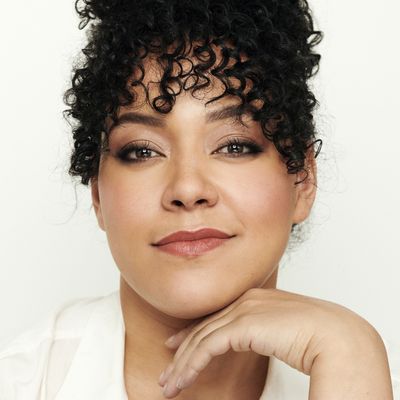
Chuck and Lili Cooper are father and daughter Broadway Icons. Here they join Ciara Renee and me to continue our conversation inspired by my debut feature RED PILL on the “redpilling” of America.
More about Red Pilling America:
A thought-provoking series, featuring stellar guests, discusses democracy, American politics and our current socio-economic climate through the lens of Tonya's new socio-political horror film, RED PILL, which has received national coverage on Deadline, Playbill, and more. Guest stars include Metropolitan Opera star Meagan Miller, acclaimed actor Jay Armstrong Johnson, American civil rights leader Rashad Robinson, Hamilton stars Nik Walker, Paul Oakley Stovall, Jon Rua, Aladdin stars Telly Leung and Michael James Scott, actress and activist Joanna Carpenter and many more.
Red Pilling Of America takes place through Marissa Lynn Daniel Studios on Zoom. Proceeds will go towards the funding of Red Pill and to supporting actors during COVID-19. For more information and to enroll, visit, www.marissalynnstudios.com.
You Can't Say That is produced by Dori Berinstein and Alan Seales, edited by Derek Gunther, music by Cat Dail.
A proud member of the Broadway Podcast Network.
Transcript
This transcript was automatically generated and might contain errors.
[0:03] Tonya Pinkins: Welcome back to part two of my conversation with Chuck Cooper and his daughter, Lilli Cooper, Broadway icons.
[0:14] Tonya Pinkins: We gotta speak to life. We gotta save our rules for you. We are moving into what Alistair Crawley would call the next the I freak, it's the new Aeon. And in that new Aeon, it's going to be a reconciliation of opposites. I think it's why we're seeing such a rise of gender nonconforming. In some of the great Iroquois nations, there were 26 genders. We all contain in us masculinity, femininity. Yes, when we can, but my sort of position about the left is we don't know how to reconcile our shadow. And so you know, we're so busy judging the right that we are not recognizing that everything that's in them is in us too.
[1:15] Tonya Pinkins: And 100%. When we can reconcile that shadow side of them that is in us, we will be so much more powerful, and we will be able to meet them. But as we are trying to claim that we are like higher, we have a moral hierarchy or something, or we're smarter, or we're more this, we're not gonna work. We have to reconcile the opposites inside of us. And I think I think that's I think I'm finding in my circles that that is the overwhelming like want and desire. Why people struggle so much with voting for Biden, because they're like, okay, we see you like saying you're gonna do good things, but we've also known you to do bad things, and you like haven't really caught to those things.
[2:01] Tonya Pinkins: And when you don't do that, then you get you put us in this position where we have to choose the lesser of two evils, and it's like, well, how about we just come out and say, Hey, I did some bad things and I'll learn from them, and now I want to be better. Like, if someone said that to me, I mean, if I feel like if Trump did that, like we would have him again for sure, because it is such a powerful powerful statement. That is true power, I feel like to say, I did a bad thing, I did a thing that hurts people, I I didn't understand, I didn't have the knowledge, I have there was a failing or a flaw, and I see it, I recognize it, I apologize for it, and here's how I'm rectifying it. And if we could start doing that just across the board for just everybody, it would really change.
[2:49] Tonya Pinkins: I mean, I think it separates the people who are truly powerful and truly like within themselves and standing upright, and you know, like it from that gives me a lot of hope when someone's able to do that, which is why I love like AOC, because she is someone who is consistently like, Oh, I said something wrong, let me fix it. Here's what I meant, or this, you know, that kind of you have a face, Lilli. What is it?
[3:11] Lilli Cooper: No, so as a storyteller, I'm gonna play devil's advocate with you. I think that what the red does is they go, Yeah, I did a bad thing, and I don't care. And that to some people is a lot of power. Like said to him, Do you have empathy for black people's pain and suffering? And he was like, You you drink in the Kool-Aid, man. You believe that? No, I I don't feel that.
[3:40] Tonya Pinkins: Right.
[3:40] Lilli Cooper: Yeah.
[3:40] Lilli Cooper: Um, so we've got a power to some people.
[3:43] Tonya Pinkins: Right.
[3:44] Tonya Pinkins: Well, then we need to have some conversations about what power really is. But go ahead, Lilli.
[3:50] Lilli Cooper: There's been this allowance recently, right? Of admittance and acceptance of uh hatred and it being okay, and people being able to come out of the woodworks who have been there forever, and the hatred has been there forever. But this allowance to say, This is who I really am, and I'm actually okay with it, and now I can raise my racist flag high because the president tells us that that's okay, and so there is this level of admittance.
[4:20] Tonya Pinkins: Um agreed, and we just need to get to the rectifying part. No, no, no. This isn't this isn't right, and we should change it. You know, I as I said, for me as a storyteller, I try to be on everybody's side, and it's like for me, it's great when people tell the truth. Honestly, I've always felt like I'm more comfortable with a southern white supremacist than I am with a northern liberal, right? White supremacists is clear, you can count on them to do certain things. The northern liberal is not even clear with themselves, and when push comes to shove and they have a choice that's about self-preservation, they're going to choose themselves.
[5:02] Tonya Pinkins: That's just normal human nature, and because they aren't even aware of it themselves, you can't trust them. They don't even know themselves. And there's a beautiful podcast now called Nice White Parents, New York Times.
[5:17] Lilli Cooper: Oh, good.
[5:17] Tonya Pinkins: And it talks about how all of these quote progressive parents are why New York City schools are not are not integrated, that New York is the number one or number two most segregated school system in the country because the school system caters to these white parents saying this is what I want. And they speak all of this. I want this and I want this integration and I want diversity. I want this. And then when the choice comes for them to do it, they don't.
[5:50] Lilli Cooper: So right.
[5:51] Lilli Cooper: It makes me think of like, you know, if I see somebody with a confederate flag on the back of their truck, I know I'm not going to go over to them and ask them for a favor. But Karen is pops on a bird watcher who you think maybe you can trust and is a quote unquote liberal who actually wants to cause harm to us in a public park during the day in New York City. Those are the people that scare me the most.
[6:20] Tonya Pinkins: Yeah.
[6:21] Tonya Pinkins: Yeah. And I think, you know, it's I I just was gonna go um walking with a friend in her neighborhood back here in Pennsylvania, and I hadn't been there in years. Um and it's a wealthier neighborhood. And I I went, I drove up and I just start seeing signs on everybody's line, not just like one or two, and also a Biden, no Biden, only Trump pens, and we uh, you know, like we trust our police officers, you know, like all Blue Lives Matter, like all sorts of stuff. And I was like, oh, okay, we fundamentally disagree on some things, which would be fine if it didn't endanger me, but it endangers me, and so I'm not going to be here. And we had to go someplace else. I was like, we gotta go. I'm not, I don't want to put myself in that position, but I'm glad that I knew so that I didn't, you know, like you said, uh, there's no wolf and sheep's clothing in that situation. It's just there's the wolf. And I said, okay, no, thank you, wolf.
[7:20] Tonya Pinkins: So I gotta play devil's advocate again.
[7:22] Lilli Cooper: Uh-huh.
[7:23] Lilli Cooper: A hundred and a hundred and sixteen people, I think don't vote every year. Right now, we're in the greatest shift of uh of wealth in in in history. Um the poverty. There are companies, there are individuals in the world who could fund every American's salary for life. People are so desperate. People are homeless, they are sick, they have no medical care. Just because you see a Trump thing on somebody's lawn does not tell you anything about their politics.
[7:59] Tonya Pinkins: Right now, with people with no unemployment and no money, Trump pins could go $50. You can put this on your lawn. $50 is a lot of money for people right now.
[8:10] Lilli Cooper: Right.
[8:10] Lilli Cooper: Wow.
[8:11] Lilli Cooper: See, I would have never even thought that.
[8:13] Lilli Cooper: That's how they they send out, you know, even for the the the rallies, they pay people to show up at those rallies. Not even paying them very much. But that's how we are already in a feudal society. We are a failed state. People cannot support themselves, they don't have the food, they don't have the work, they don't have the houses. We have as a nation have failed. We are not a first world nation anymore.
[8:38] Tonya Pinkins: No, yeah, yeah.
[8:40] Tonya Pinkins: Well, I mean, I will say though, that I think that this very rich neighborhood that I was in, like, they probably weren't taking the $50, but maybe, I don't know.
[8:48] Lilli Cooper: They're they're not they're not needing the $50.
[8:51] Lilli Cooper: My uh response to you uh in in your in in your telling of the story.
[8:58] Tonya Pinkins: Yeah.
[8:58] Tonya Pinkins: What what springs to my mind is why were you afraid. I and and I guess I guess what actually springs to my mind is what am I afraid of? And I don't think I'm afraid of anything. There are things that I dislike. There are things that that uh that um I know are uncomfortable.
[9:22] Chuck Cooper: But I in terms of people and situations, I find that I'm never afraid. I find that, you know, I really, you know, there's some cowboy movie where I wish I could remember the movie where the Native American person says to the soldier, "Today is a good day to die." And I really kind of live that way because first of all, I'm a black man in America. And I gotta know that when I go out, it could be a good day to die. Yes. And so that is how I greet the world. That is how I greet assholes who I know are fucking racist and who hate my guts. I don't go up and, you know, try to kiss them or nothing, but I'm not afraid of them, motherfuckers, and I'm not gonna stop doing anything because of them that I want to.
There are times that, you know, I say, well, you know, I'm just not gonna submit myself to that or whatever. But it's never fear. It's never—I would look a motherfucker straight in the eye as he pulled the trigger and spit in his eye. Because I just don't have—I can't afford to have fear. I can't.
[10:46] Lilli Cooper: I want to respond to that in a few ways. I live my life that way too. I'm like, it's how I perform. It's like every time I go out there, I'm giving it all out there. I could just die. That is, I think what's my greatest power is that I'm willing to die in every moment. And I really have thought of that as a very powerful place. And then I watched this horror movie the other day called One B R. And in this, it's very good. It's kind of, to me, I describe it as like it's kind of like America in a way right now, what I hope my movies can be as well. And death wasn't on the table. You were gonna go along with their group, or they were going to cause you severe pain. You didn't have a choice about being in their group. They were gonna make sure you could not kill yourself, but they were going to cause you so much pain to psychologically surrender to what they want. Now, that for me was the first time in my life where I went, oh shit. That would get me.
[11:51] Chuck Cooper: Yeah.
[11:51] Lilli Cooper: And I think the privilege you have is that you're a man. And for us as women, we know that there are many things that men will do to us that we wish we would have died. Because what they will do, what I'm—what the fear we walk in, because they're men is much greater.
[12:15] Chuck Cooper: Lady, any thoughts about that?
[12:17] Lilli Cooper: Look, the living torture is real. Okay. Been there, done that, don't want to do it again. So yes, I agree. I totally hear and embrace and accept that.
[12:30] Chuck Cooper: Yeah, I used to tell my children, if somebody grabs you, tell them to kill you now. Because if they take you away, it's gonna be much worse. Don't go nowhere with nobody, make them kill you right there on the spot.
[12:46] Lilli Cooper: I think women in America, I have a pretty constant fear. It's not disabling, but it's what protects me. My fear is important because I don't feel invincible. I feel very fallible. And knowing that is important. It helps me make the right decisions. It helps me know I can't walk down that dark alley at night. It helps me know I should come home biking at a certain hour. You know, for me as a woman, as a black woman, is something is a survival mechanism. Gavin De Becker has an amazing book called The Gift of Fear. And how fear is an instinct that does tell you don't go down that alley. He even says it works in our humor. He says there have been so many times when, you know, like the postal worker who got fired last week sends a package and someone goes, I wouldn't open that. That's probably a bomb. And it's a bomb.
[14:02] Chuck Cooper: Like when I first wrote this movie, you know, a year ago, you know, some people who read it were like, "Yeah, that's a little far-fetched." And so when I was thinking of how we were gonna score it, Peace Goal, who scored Selma is scoring the movie. And we were gonna do this string quartet, you know, he's getting, you know, all this kind of, you know, the scary sounds of strings, but also just kind of playing counterpoint because at the time people thought what I was saying in my movie was far-fetched. Now what I'm saying in my movie is everyday life. It's not—it’s like I might—it’s a documentary, it's literally a documentary. And so it's like now we're changing the score to be much more intense, and you know, in this sense of the urgency and the revolution of it, because the world has changed in the years since I wrote this and made it. It's no longer people thinking of it as a dystopian future, it is what we're living right now.
[15:04] Lilli Cooper: Yeah, yeah.
[15:06] Tonya Pinkins: All right, guys. Well, we're actually over time at this point. Um, we're probably not gonna ask any questions because we're so over time, but um, I want to thank you all for joining us. Uh I've learned a lot in this conversation. I always do anytime I'm talking with Tanya, and I want to say thank you to Chuck and Lilli for joining in. And also, just like lots of pearls. Um, you know, Tanya, do you have anything that you want to say as a closing as a sign off for this?
[15:36] Tonya Pinkins: You know, please follow us on Instagram and Facebook and YouTube. Um, hopefully we'll get out this fall. RED PILL movie 2020 are the handles for the film. And uh I can't wait to bring it to you. Uh, um, I want to say to Chuck, who I know is going off to do a movie, be safe.
[15:54] Chuck Cooper: Thank you, sweetie.
[15:55] Tonya Pinkins: Okay, that's no—people gonna lie when they say they're practicing safety. Because I'm gonna tell you that as I was coming here to do my thing, you know. You start, I had not left my house. I've not had a COVID test in four months, and I was about to get on a plane for 15 months. A car to the airport, in the airport on a plane. And I started thinking, you know, I just started feeling sick just because I was doing things I hadn't done. And then I started thinking, what you know, because they're asking you, do you have a fever? Do you have a—well I'm not gonna tell the truth because then they're gonna send me back, and then I gotta do it again. And I started thinking, if I'm just feeling that and I'm not sick, what about people who are really sick? I mean, how did that guy on Batman, Robert Pattinson, who was playing Batman come down with COVID? Somebody wasn't telling the truth about what they were doing.
[16:41] Lilli Cooper: Right, right, right, right, right.
[16:44] Chuck Cooper: He was having a party or he brought something, somebody wasn't telling the truth. They wasn't in their pod or their bubble, because for the lead to come down with COVID, just—you know what I'm saying?
[16:53] Lilli Cooper: Right.
[16:53] Tonya Pinkins: I hear you. Don't trust the honor system. I'm not thrilled about leaving my bubble because I've been in the bubble since all this, since the pandemic, joined the rest of the shit show that's going on. So uh I'm not thrilled about getting on anybody's plane. I'm not thrilled about being on set with a bunch of motherfuckers I don't know. I'm not thrilled about that at all. But they made a motherfucking offer he can't refuse.
[17:16] Chuck Cooper: And oh damn, like that.
[17:19] Tonya Pinkins: Like that. And uh, but your point is well taken. I am going to be safe.
[17:27] Chuck Cooper: Yeah, going to be extremely safe.
[17:32] Tonya Pinkins: Uh, I may not even take my mask off to do the scenes. I'm gonna say, you know what? My character would wear it.
[17:38] Lilli Cooper: Right in.
[17:40] Tonya Pinkins: I think.
[17:42] Lilli Cooper: Uh-huh.
[17:43] Tonya Pinkins: Right then. We gotta have a talk about this.
[17:46] Chuck Cooper: Right.
[17:47] Tonya Pinkins: Um, well, I'm wishing all of you health and safety and everything that you do. Thank you, thank you so much to everyone who joined us. Um, just blessings and light to everybody. And we will be doing these conversations with new guest artists every Thursday. Might be a different time. We're talking about that in a second. Um, we're gonna have a conversation about that. But um, thank you again, and uh hopefully we'll see you on the next one. Bye bye.
[18:14] Lilli Cooper: Thanks so much for coming on.
[18:17] Chuck Cooper: How come you don't say no when you mean no?
[18:17] Lilli Cooper: When you mean no.
[18:27] Chuck Cooper: How come you say it will?
[18:31] Lilli Cooper: How come you say it will when you will know.
© Broadway Podcast Network, All Rights Reserved