

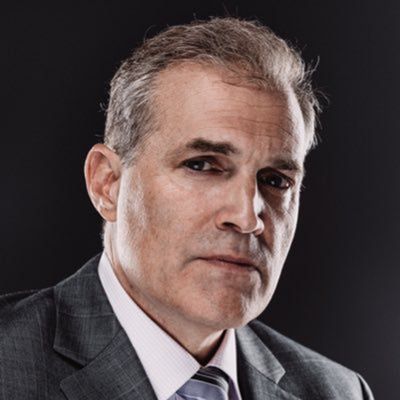
Part 2: Three time Tony Nominee and current star of Girl From the North Country, Marc Kudisch and I shared the broadway stage in George C Wolfe and Michael John LaChiusa’s Wild Party... Read More
From the show: You Can't Say That!
Guests
About
Part 2: Three time Tony Nominee and current star of Girl From the North Country, Marc Kudisch and I shared the broadway stage in George C Wolfe and Michael John LaChiusa’s Wild Party. Catch us reminiscing about the good , the bad and the ugly of theater, Gen Z’s and what it’s like to be Jewish but look like a Wasp Patriarch.
Produced by Dori Berinstein, edited by Alan Seales, music by Anthony Norman.
A proud member of the Broadway Podcast Network.
Transcript
This transcript was automatically generated and might contain errors.
[0:00] Tonya Pinkins: Welcome back to part two of You Can't SAY THAT. My conversation with Marc Kudisch continues. My name is Tonya Pinkins, and you're listening to the Broadway Podcast Network.
[0:13] Tonya Pinkins: You've got to give me a story of a time you were in a room and people were looking at you as just a white patriarch, but they were not liking Jews. Tell me about a moment in your life and what that's like. Because I think people do assume that it's only women, well, it's only people of color, but that you, because of your coloring, your hair and your eyes, exactly. You can walk into rooms and people can assume you were one of them. So tell us about a moment like that.
[0:40] Marc Kudisch: Oh God, so many.
[0:42] Tonya Pinkins: Give me one.
[0:42] Marc Kudisch: All right. Well, it's particularly hard for you. All right, I'll give you a past and I'll give you a present. Okay. Because it has to be in two parts. Past. I was in Kansas City. I was doing Forever Plaid out at Kansas City at this new theater out there. We were like maybe the third or fourth company that was being opened outside of New York City. So it was still connected to New York, right? And we were putting it up, and I was out in Kansas City. I was in Overland Park, Kansas, which is gorgeous. And I actually love Kansas City, both Kansas and Missouri. Great town. And you know, I was single and I was meeting people, and I was meeting local people, and there were some really cool people there.
And I started dating this girl, and it was great. And then I remember one day I happened to tell her that I was Jewish, and I watched her face literally just go white. She's like, "You didn't tell me that." And I said, "Well, I didn't know I was supposed to." And she's like, "I I I I don't know how I'm supposed to." And she said, "I've never met a Jew before." And I looked at her and I laughed, and I said, "Sure, you have. Me. Of course you have." No, but I was like, and I could tell. And that was the end of that relationship.
[1:55] Tonya Pinkins: How did she end it?
[1:57] Marc Kudisch: She just said, "I don't, I can't do this. I didn't know, and you didn't tell me." And I just was I didn't know what to say. And again, it's like tough thing of like this is why I don't like okay. Did it make you feel like, man, I'm not gonna tell anybody that again?
[2:15] Marc Kudisch: No. I just went, well, better to know now. Look, I grew up with it as a kid, so there's a certain numbness to it. I just was like, all right, people are gonna have issue. You know, I remember when you know, I was in middle school and Roots came out. We had riots in our middle school, and then the mini-series of Holocaust came out, and we had more riots, and like that's how it was. And but I don't know, there was a different kind of communication to things.
[2:41] Tonya Pinkins: You said you had a recent story too about being Jewish, telling someone you were Jewish, because they wouldn't know by looking at you.
[2:47] Marc Kudisch: But again, just even in like doing Great Society, for me, one of the challenges was just like to have this younger generation look at me and call me white privilege when I'd never considered myself to be that, or like a colonist, I was called once, and I just literally went. Yes, yes, definitely you're a colonist. And I was like, "Yeah, my people were in the ghettos. My people were being like enslaved in their own way. Thank you very much. When the colonists were coming, trust me, no Jews allowed." And that's where it becomes a challenging conversation. Because I want to say, like, I get it, I have lighter skin, I get it, but just like in your black culture, there's reverse discrimination against lighter skin. I've gotten reverse discrimination my whole life because of the way I looked.
[3:40] Tonya Pinkins: So you're saying Jews discriminate against because you don't look like a Jew?
[3:45] Marc Kudisch: Oh are you kidding me? I'm not Jewish enough. Okay. And I am. This is what we look like. My one of my first auditions in New York City was for one of the revivals of I swear, like Fiddler, which I always wanted to do because I'm like, that's me. Those are my people. I could every time I walked, mmm, uh, Fiatka. No. I'm I'm and literally I there, and I was young, right? But I don't I was like 21 or something, 22. And like literally I said to one of the casting directors, I said, "This is what we look like. Take a good look. My grandparents are from like maybe 30 miles away from where Anna Tefka's supposed to be from. And this is what we look like." And it drove me nuts because I wanted to say, my God, in World War II, they used to have charts about this is how you can tell what a Jew looks like because their eyes are closer together and their nose is a certain size and their chin is like this, and they had charts to show those things.
And like we so I think all ethnicities deal with these things in different ways. And yes, my skin is light. I'm not gonna say that that doesn't have an impact and an effect. And yes, in my particular case. But I remember like, you know, when early on in I came here, moved here, I had no money, I was freaking out, I was stressing, and so I just wanted to go like across the street to the nearest temple and just sit down and like give it a minute. You know what I mean? So I knocked on the door because the temple doors were closed and locked and everything, and a little guy comes and he opens the door and he's like, "Can I help you?" I said, "Yeah, I just want to come in for a minute and just sit and you know, like pray."
And he was like, "Yeah, for what?" And I said, "No, just sit a minute." And he literally said to me, I'm not kidding you. This really happened. He's like, "There's a church three blocks down the street." And I said, "No." And I pulled out my chai. I said, "No, I'm Jewish." And he looked at me and he literally said, "Not so much."
[5:43] Marc Kudisch: Oh.
[5:45] Tonya Pinkins: Oh.
[5:46] Marc Kudisch: And I was like. So I went to the church.
[5:51] Tonya Pinkins: That had to hurt.
[5:52] Marc Kudisch: You know what? Maybe it did, because I still talk about it today.
[5:59] Tonya Pinkins: Yeah.
[6:00] Marc Kudisch: But then that's like you don't have a place.
[6:02] Tonya Pinkins: Yeah, but you know the place.
[6:04] Marc Kudisch: Then we gotta find what the place is now. Instead of like holding on to whatever the emotions are, instead of holding on to our sensitivities, I'm not saying you shouldn't have them, but then let's talk about it. That's the thing that's I think. That's what I say to the Gen Zs. They're always like, "Well, I don't want to do that because I don't want to offend this one, and I don't want to offend them." And I'm like, you know what? What you really need to do is risk offending someone so you can actually get into the deeper conversation and go deep with them. So then you're building a relationship. Avoiding stepping on a toe is avoiding relationships.
[6:35] Tonya Pinkins: No, I agree. And what it also does is it creates a pause. It creates a stall of forward movement. You know, it's like a self-awareness. This is, and this is what I say about sociopathic behavior. Self-awareness does not help us that way. It just doesn't. You gotta move forward. Just move forward. Make a choice. Yeah. You don't like me, fine. Just tell me that. Just tell it to me. Be straight up because we can have a conversation about it. You don't have to do it. And we can feel it anyway. Even if you don't say it, I can feel it. Right. Especially as actors. We're sensitive to all of that stuff. I will have more respect and admiration for you if you just be honest and say, "I don't like you." And I maybe that's a judgment, but I guess I'm I'm judgmental.
[7:15] Marc Kudisch: Okay.
[7:16] Tonya Pinkins: That's honest.
[7:18] Marc Kudisch: Yeah, people aren't brave enough to do that. You know, and I whatever. That can be a good idea. And then look, I don't know. And authenticity. Maybe some of my people were colonists, right? I mean, I don't know. Maybe there had to be some Jews on those ships. Maybe. But you know. Maybe they weren't acknowledging it, but you know, come on. I'm sure smart people figuring some shit out. There ain't no doubt. My own people I have issues with.
[7:40] Tonya Pinkins: All right.
[7:40] Marc Kudisch: I have problems with my own people. So yes to all of that.
[7:47] Tonya Pinkins: Yes.
[7:48] Marc Kudisch: But I guess the thing that really bothered me is. And then it's that weird thing of it's a religion. You know, it's it's it's a religion. It's not like, you know, come on. Like Palestinians. And I had this conversation about it. I mean, come on, Israelis, Palestinians, but you know what's weird they look alike, they look alike. They do. Look. First of all. In that part of the country. Certainly in Russia, you look different. But you in the Middle East, you look as you look the same. You're the same people. There's there's no difference between Shalom Alechem and Salam Alechim. It's the same word. I have friends that are Arabian. I have or you know, Saudis, I have friends that are Jordanians.
I have friends that, you know, Salam Alekim, and then I'll say Alechem Shalom. It's the same word. You're the same people. It's like War of the Roses. It's literally that. It's like what brought, like, you know, we're going off of Abraham here. You know, I I I I get it. Who's more closely related? We're it's the same family. We're all the same family. Yes, we are. Every one of us comes from the same place. We just had cousins and nephews that decided my cut my skin color and your skin color are different because our, you know, our relatives decided to live in different places.
[9:00] Tonya Pinkins: Yep.
[9:00] Marc Kudisch: That's it. The dirt, the food we ate, the dirt, all the time. All it is, which is why I don't like I have a problem with with what saying African American. I don't know. I'm not, I'm black. Right. But also like I grew up with like Haitian friends. I grew up, I had a Jamaican girlfriend. I had friends that were from Trinidad. I would never say they're African American. Right. I wouldn't. They wouldn't be able to do it. You're Jamaican American. I mean, it's like, what is that? I I I don't get that. Because my deal is that's like looking at a white person and saying you can't be African. Lots of white people in Africa. Sure are. I have friends that are African. And it's like, I don't get it. I I I Well, I do get it because I think it's about people who are at the top and who are interested in hierarchical structures.
They don't want to have to think about people that are not meaningful to them. So they just put you all in a group. And it's because you're not really worth me taking the time to notice your differences. We'll just throw you all in that little lump sum over there, and that takes care of you. Them.
[10:01] Tonya Pinkins: But I also do. I want to understand. I want to understand, particularly with the Gen Z's mentality, the sensitivity of it, and where it comes from, so that there can be that conversation. Because they're the ones that are going to be given this when we go. They're given it. They got it. They're gonna they I mean, I can see some power in them and that they are going to make a better world. And I remember my youth and doing things clumsily. I just think they're clumsily going along. I was talking to a director the other day, I won't say their name, but they were talking about how they said to one of their young Gen Z actors, uh, why don't you try this? And the actor said, "I think I'm willing to do that." I know. And the director was like, "Well, this young you got a damn job."
[10:45] Marc Kudisch: No, I know.
[10:45] Tonya Pinkins: There is that. It's your damn job, okay? This is what you're getting paid the check for. Or he said he had uh uh one come in and they told the person their call time, and they were like, "Oh no, I need to come in at two." And then they were like, "Well, no, you need to come in at 11," and they came in 11 and they wouldn't sing, and they're like, "Are you okay? Like, is there is there a problem?" "No, I just, you know, I sang yesterday, so I I don't talk again until two." And I'm like, what? What is this? It's just it's just different.
[11:15] Marc Kudisch: It's just different.
[11:17] Tonya Pinkins: It's just like different in a way that I I'm I'm I'm glad I'm not doing it because I know, but it's I don't have the tolerance for it. But but that's just it as well. I mean, you know, we came up in a different time where there was a different there was there was a different approach, technique, disagree.
[11:30] Marc Kudisch: You came in and the people behind you. If you didn't step up, they made you feel terrible. You were tested by the cast themselves, the old timers. Like, you better bring it. Don't come out on the stage and ruin my show. But I there's no doubt that, but I'm finding whatever the Gen Z, there's a talent and there's an awareness and there's a drive to Gen Z that I never actually felt like with millennials. To me, there was this thing in millennials that sort of got laid back and sat back and just sort of was like, do you know, like it just but then the Gen Z sort of feel more active, they feel more they're sensitive, but there is an activity to it that is very different to me than just being like slackery.
Honestly, I can't tell the difference between a millennial, a Gen X, a Gen Z. I'm like anybody that's my children's age, which would put you about like 32 and under, you know, you all fall into that. There's a huge difference to me. I'm telling you, mid-20s right now. I'm fascinated by that. I got a 20 and a 23, and then I got a 29 and a 32. And you know, they're kind of in the same package.
[12:46] Tonya Pinkins: Yeah, but you're their mom.
[12:48] Marc Kudisch: That's true.
[12:49] Tonya Pinkins: So how they're gonna relate to you and how they're gonna relate to everyone else in the world is gonna be a completely different thing.
[12:54] Marc Kudisch: It's so true. It's so true. All right. It's so true. So where did we meet? I always forget where I meet people, but I think I know where I met you. Was it we didn't meet first on Wild Party, did we?
[13:07] Tonya Pinkins: I think we did. That was the first time we met?
[13:10] Marc Kudisch: Yes, you were engaged to someone else.
[13:12] Tonya Pinkins: Well, yeah.
[13:13] Marc Kudisch: And I remember something about like we were having, was it an opening night or something, and she wasn't coming, and I was like, oh, that's over.
[13:21] Tonya Pinkins: Yeah.
[13:25] Marc Kudisch: I remember you called that one hard.
[13:27] Tonya Pinkins: That was hard.
[13:28] Marc Kudisch: I'm not gonna lie to you. That was a tough one.
[13:31] Tonya Pinkins: Really? Well that I said that to you?
[13:33] Marc Kudisch: You said you like people to be honest.
[13:35] Tonya Pinkins: No. It's like she's not here for y'all opening.
[13:36] Marc Kudisch: Hold on, hold on. Well, first of all, all right, so that was Wild Party was it was great and it was hard.
[13:45] Tonya Pinkins: Oh, yes.
[13:46] Marc Kudisch: And there were amazing people in that company. It's funny because Girl from the North Country reminds me a lot of the Wild Party in that both were very ensemble shows. There's very little ensemble, like there, there's there's no choral real parts in this. Everyone is essentially a principal. So there are all of these multiple storylines that are happening, and everyone has these great juicy characters, a lot like what we did in the Wild Party. And so, but with big personalities comes a lot of energy. And I remember I was made the equity deputy. Do you remember this?
[14:25] Tonya Pinkins: No, I don't.
[14:27] Marc Kudisch: We don't. Because you weren't in the room, we were like, White boy, white boy got to be the equity deputy. But then I came to you and I said, I can't do this by myself. I need you to help me.
[14:36] Tonya Pinkins: What'd I say?
[14:37] Marc Kudisch: You did.
[14:38] Tonya Pinkins: I did.
[14:38] Marc Kudisch: The two of us were the deputies together.
[14:40] Tonya Pinkins: Oh no, no, no. You were great.
[14:41] Marc Kudisch: No, you were great on that show. You were really great. Cause like I could always talk to you about it. Because we had a lot of equity deputy stuff. And yeah, when my Wild Party. And when my engagement broke, you were the first person I came to at the theater to tell. And you just looked at me and you're like, oh, we all knew that was coming. Like that was it. That was it straight up. And I remember I was like, why would you say that? And then you just laid it out. She ain't here. There ain't no reason she can't be here right now. And I mean, it was painful. Of course it was painful. But better to hear that, because honestly, there was a part of me that was just like, wow, wow. This ain't an like, how did I miss this really? Or why was it?
[15:30] Tonya Pinkins: Because you were in love.
[15:32] Marc Kudisch: I know, I know. And we forgive people and they have a good reason and a good story for why they're doing. But as an outside person is like, this is a really important moment in this person's life. And this person who's like so saying they're their partner. I mean, look, all things happen. They were doing any.
[15:45] Tonya Pinkins: Of course.
[15:45] Marc Kudisch: You're married now, and oh yeah. They're not married now. We're not saying their name.
[15:48] Tonya Pinkins: We're not gonna be able to do that.
[15:49] Marc Kudisch: No, we're not a secret. We're gonna say their name. We can say their name. It's not that big a deal.
[15:53] Tonya Pinkins: Oh, okay. Well, go ahead. You can say their name.
[15:55] Marc Kudisch: Well, so we're talking about Kristen Chenoweth, who I was, you know, I was engaged to and I was with for a long period of time. And I didn't even know her then. I just was like, she didn't show your opening, but you know what? And I and she's she's really I um she's I think she's in a really good place right now, and she's really happy, which makes me super happy.
[16:16] Tonya Pinkins: She's not, but she's with a really cool dude.
[16:17] Marc Kudisch: Good.
[16:18] Tonya Pinkins: And it he's it's it seems really awesome.
[16:21] Marc Kudisch: So you all are still in touch.
[16:22] Tonya Pinkins: Yeah, yeah, yeah.
[16:23] Marc Kudisch: And I'm really happy for her that she's happy.
[16:25] Tonya Pinkins: That's awesome. And you're gonna be able to do that. My wife is Shannon Lewis, who I've been with for 17 plus years, and all things happen for the right reason.
[16:33] Marc Kudisch: Absolutely. I like strong, strong women with strong personalities, man.
[16:40] Tonya Pinkins: I do. I love it.
[16:41] Marc Kudisch: And I got because you have a strong personality. But I mean, like, you know, I never wanted to be in a relationship that was just gonna be yes all the time, you know. I mean, you want a partner who's gonna challenge you. A little grist for the mill.
[16:56] Tonya Pinkins: Well, but just you know, come on, man. If this is someone you're gonna spend your life with, and I really believe that that's what it's about. A lot of men want a pillow, they want to come home and they want it to be easy, don't ask me no questions, don't challenge me, cook for me, lay down, and be quiet.
[17:10] Marc Kudisch: No, I appreciate the fact that my wife is smarter than I am.
[17:14] Tonya Pinkins: Excellent, excellent. So let's get back to the Wild Party and the strong personalities. We had the late great Eartha Kitt.
[17:22] Marc Kudisch: Well, you know, Eartha loved her very much.
[17:25] Tonya Pinkins: Yes, Eartha Kitt.
[17:26] Marc Kudisch: We had it's great. I talk about her often, especially to the younger generation. Um, just because she was, you know, wasn't she amazing to be a good one? Grand Jam, just like I remember they choreographed a number for me and Tony Colette, and Eartha got up and danced, and I was like, and I'm not gonna even follow that because first of all, there's the miracle that she 80 years old and she can dance like that, and then that she dances that well. I can't dance that well, so it just cut me out of another.
[17:52] Tonya Pinkins: No, she was the best, she would be doing squats, wearing weights on her ankles and the weight vest, the walking. And the wings when we'd be on breaks in tech. She was just always going.
[18:04] Marc Kudisch: Yep. She never complained.
[18:07] Tonya Pinkins: Never.
[18:08] Marc Kudisch: Ever. Grateful for everything.
[18:10] Tonya Pinkins: Everything.
[18:10] Marc Kudisch: She loved being around everybody.
[18:13] Tonya Pinkins: She was amazing on stage.
[18:15] Marc Kudisch: Yes. She could be so still, and you could forget she was there, and then she'd just turn her head, and you'd be reminded not only is she there, but she never left. And that drove somebody else crazy. That is a kind of command that for me is like old school command of I mean, you know, Andre de Shields right now. Patrick Page, you know, that that command of every eyebrow, every wrinkle, every thing that I don't know. I'm not seeing this this generation love that.
[18:48] Tonya Pinkins: What's interesting though about Eartha was she never asked for it, and she never, she never, she never did anything that felt like even she never did anything that felt like, all right, now it's time for you to look at me. Even as a generous actor, which she was, and as a generous person, which she was. Even when she was performing, I never got the sense that all right, now I'm going to capture you.
[19:15] Marc Kudisch: No, she didn't have to.
[19:16] Tonya Pinkins: That's what I mean, though. She had the magnetism, like she made you come. She just did it.
[19:23] Marc Kudisch: Oh, we got stories for the Wild Party, and I do have the photos of the final Wild Party. I was thinking that for the you know, when we put out the poster for this, maybe I'll put some of those jet real Wild Party posters for it. Do you remember the Wild Party that we had on the roof in the 50s at Gwen's place? You know, if everybody was wet and the wet t-shirts, it was that it was a wild after party when the Wild Party ended.
[19:50] Tonya Pinkins: Oh, it was good.
[19:51] Marc Kudisch: But I mean, there was a part of me that was rough. I even said to George, you know, like when we were closing when they announced our closing numbers. I said, you know, I said, I I being a loser in this show and then feeling like a loser when I go home. Oh god. I said, I can't be a loser 24 hours a day anymore. I just can't do it. It was tough. Like the show was tough.
[20:14] Tonya Pinkins: I and I can't I can't imagine any Gen Z could have done our Wild Party.
[20:19] Marc Kudisch: No, they couldn't have done they wouldn't have lasted a day. I mean, what I what I had to do every day on stage in Black is a Moocher. We would have had lawsuits. It would have been over. What I had to do with more, what I had to do with Brooke, yeah, yeah. That wouldn't have happened. I mean, no, I don't know that you could do it today. And unf and that's sad.
[20:42] Tonya Pinkins: It is sad, it is sad. I mean, for me, I remember going and asking them to just cut my number because I was just like, I can't do it. Like, I that Black is a Mutual is an extraordinary song. I thought I should get a Tony nomination for this song until I had to play it on stage and realized that I was not gonna be able to do my job because I was gonna be punching somebody for the whole song.
[21:03] Marc Kudisch: I know.
[21:04] Tonya Pinkins: So, you know, yeah, that was what that was what we did, and we did it, and we bucked up and we didn't complain, and we did our press, and oh my god, I don't know. I mean, I do I feel I feel strong. I do I feel was it horrible for me every day when I was doing it? Absolutely. But I feel like I survived it, didn't kill me.
[21:23] Marc Kudisch: No, I know. I look it was it was tough. I remember, you know, I remember the nights because I always said to like the box office and stuff like, are you guys not letting because I remember kids were coming to see our show in previews and early on, and I'm like, I get that it's called the Wild Party, but are you informing the audience about what they're actually coming to see? Because this ain't for kids, man. Like, even today, if we were doing it, I'd say, ah, you gotta put an age thing on this. And I remember, like, after, you know, more. They get much more explicit on television and on YouTube. But there's a difference between that's my point about social media. There's a distance and a separation.
It's one thing if it's happening in TV on a screen, any screen. It's another thing when it's happening in front of you with people in front of you. Nudity all over the place. You know, like on film, on even on television. The language on television and when you're podcasting or when you're going on, you have the privacy of it. But when you're at a theater, it's a shared experience. So if you're seeing somebody naked on stage, you know other people are seeing that, and given the mentality today, you think everybody's watching you look at that. One of the greatest things about doing Hand of God, which I love. I love that play. I love that play. Was a puppet sex. Because it made the audience so extremely self-conscious and uncomfortable.
[22:52] Marc Kudisch: And we're talking about two socks on people's hands. And people didn't know how to react. And it was just socks. It was so funny. But I had friends literally say to me, I'm embarrassed. I was feeling things. I didn't understand it. I wanted that sock. Do you know? And it was like, and that's that Puritan thing that we've never gotten rid of. I don't know what it is. And yes, now we're in a very sensitive time where, you know, we're trying to be politically correct and we want to be respectful of each other. And have we gone too far in that direction with some things? Maybe. You know, because I do think we have to have a sense of humor, and I do think that we need to be able to talk about everything.
And we got to make fun of everything. Everything. We gotta make fun of everything. But it was even like, um, uh, Dave Chappelle. Did you see, um, both of them? I watched two of his this weekend. I love Chappelle. I love Chappelle. He's a brilliant man. Yes. But did you see his acceptance of the Mark Twain Award? No. It was amazing, and he gave the greatest speech, and he talked about how we can't censor people. That especially in our industry, it was really interesting to hear him talk about being a comedian and how he holds it as an art form. And he talked as an artist, and I was like, it was beautiful to hear him talk about it that way because, you know, he talked about why he left, he talked about why he came back, but he talked about being a father and wanting to just be a dad, and then he talked about how there was a comedian one night he was watching give these really racist jokes, and he was crushing, and he said, and the whole time I was watching, I'm like, this man is funny, and this man is not joking.
This man is a racist, he means every word he's saying right now. And he said, but okay, man, I respect that. Because he ain't hiding it. And he's bringing it. And he knows that he could get repercussion for doing it. And he said, so I support him, and I would not censor that. And I just thought, there you are, and there it is.
[25:05] Tonya Pinkins: Agreed. Right? Agreed. Agreed. I think we're in the place we are in now because of this political correctness and censoring people. Like it is okay, call me a nigga as much as you want to, but you don't get the job of deciding whether I get a job and how much I get paid.
[25:19] Marc Kudisch: I agree. Okay. You know, for me, racism is an action. Bigotry, prejudice, that's a whole nother thing. I don't care what you think, but you don't get to use your thinking to make decisions about other people's lives.
[25:30] Tonya Pinkins: I agree. You can have feelings. This is what I say all the time. You can have all the feelings you have right now. And this is where we are, right? Feel everything you're feeling. Have your emotions. But know this. The universe doesn't give a shit. Climate change, you agree with it, you don't agree with it. Don't agree with it. Don't agree with it. When your house is underwater, keep not agreeing with it. Have your emotions about it. But nature doesn't care how you feel. It's just going to be.
[26:03] Marc Kudisch: Exactly. End of story. Yeah. Yeah. You can argue with reality. It's why I love looking at the night sky. That's why I wanted to be a cosmologist when I was a kid. Because it's so big and so vast. To me, it's incredibly comforting to know how truly tiny we all are. And that all of our deep emotions really amount to shit when it comes to actuality. Feel what you want to feel. I'm not saying not to do it. But in the end, what will be will be what is, is there's really nothing.
[26:39] Tonya Pinkins: Well, there is stuff we can do about it. I mean, like this whole idea of climate change is just cracking me up. I mean, and I'm from Florida, right? So I'm like, for a lot of people I know down home, I don't know if Florida's gotten so damn weird. But like, I'm just like, how can you not believe it? Now they a lot of them do believe in climate change. It's like Alaska. They all believe in climate change. You know, they're not for those left-wing progressives, but oh, they believe in climate change. So that's selective, but that's because they're immediately affected by it. You know, and I have friends down in Florida, and I'm like, dude, I know you have a condo in Miami. You want to keep it? Like, if we're gonna go to that place of self-interest, it's in your best self-interest to believe in climate change.
[27:23] Marc Kudisch: It's a whole thing, like women's rights. First of all, no man should be making laws about a woman's health. That is the dumbest fucking thing I've ever heard of in my life. But you, but I'm gonna take the other side because I'm so good at that. We have to remember that until about 50 years ago, women and children were property. And there are people who are still alive who grew up in a time when women and children were property. We need them to die off so that we have a new generation of people who have come up.
[27:57] Tonya Pinkins: But it's not like it's not personal.
[27:59] Marc Kudisch: It's not personal, it's just they have some habits, they have some really bad habits.
[28:03] Tonya Pinkins: Oh no, it's personal.
[28:05] Marc Kudisch: Right. And they liked that time. That time worked for them.
[28:08] Tonya Pinkins: You bet. But you know, that time has passed.
[28:10] Marc Kudisch: Right, but it's still personal.
[28:12] Tonya Pinkins: Yeah, it is personal. I don't know why people think that they have to have that kind of power and control. I don't understand why men think abortion or this, or anybody for that matter. Any man, look, if a woman has a feeling about it, at least y'all experience this stuff straight. No man, you know, women are on the side of these men too. I mean, 24% of college-educated white women are presidents. And a lot of those are coming from those households where there is a white, where there is a male privilege. And it's not just white. I mean, I got Syrian friends. No, and I got it. You know, you get in a, you get in these Ubers and taxis, these immigrants, they hate immigrants. No, I get it.
[28:46] Marc Kudisch: Okay. Well, but isn't that how it always is? You're the immigrant until you create a space for yourself. And then you hate everybody like you. And then whatever else, because you've settled and you've put your roots down and you've created it now, and so it's your right now. And we, I saw that. I saw that when I was growing up in South Florida, you know, when we had the whole refugee thing come in and the Cuban population from Cuba, and you know, they were living under the highways, and now the Cubans are the hierarchy of South Florida, and Venezuelans and Argentinians beware. You know, and it's like, but I think and that to me is a human nature thing. But what I'm talking about is, well, I hope the miscellaneous and the Gen Zs like evolve out of that nature aspect of human nature.
[29:33] Tonya Pinkins: Listen, I hope we evolve out of all of this horse shit, like because really it's more about control than anything else. Men have. I'm sorry. I ain't sorry. I've never experienced what a woman experiences. I get angry now when I see tampon commercials and they're like apologizing for this shit. And I'm like, I'm every time I watch it, I'm like, I'm fortunate that I don't have to deal with that on a monthly basis, but this is a completely normal, natural thing that happens all the time, everywhere. To more than half the population. Get over it. There's nothing wrong with it. Like, just shut up and like support the fact that, you know.
[30:14] Marc Kudisch: That's how you came into the world.
[30:15] Tonya Pinkins: But it's stupid. And just anything. Like we are stupid. All of these creatures.
[30:21] Marc Kudisch: Yeah. Well, because men are, you know.
[30:23] Tonya Pinkins: Last gasp effort.
[30:25] Marc Kudisch: They're just trying to hold on. I mean, hold on.
[30:27] Tonya Pinkins: Well, I'm so grateful for you to come. I wanted to have you at BroadwayCon because I was like, me and Marc could have a good juicy conversation every day. Those kids would not know what to do with that conversation.
[30:39] Marc Kudisch: Well, but it would have been juicy, I told them. I tried to say it didn't happen. Next Broadway con. You and me, Broadway Con. Those kids, well, we'll slap them upside the head.
[30:50] Tonya Pinkins: We need to slap them upside the head. Me and you. We invite all Gen Zs to a conversation.
[30:55] Marc Kudisch: No, I'm serious.
[30:57] Tonya Pinkins: That's right. Slapping upside the head. But here's the thing. And I welcome a good slap upside my own in return.
[31:05] Marc Kudisch: Agreed. So we've come back for a coda with Marc Kudisch, you know, after our invitation to Gen Z to slap us down. There's no such thing as bad publicity. Get in those chat rooms and talk about how awful we old people are, daring to say we would slap some Gen Zs. But for our coda, Marc is going to do an homage to someone who was dear to both of us that we both had the privilege of working with in The Wild Party, the great, late Eartha Kitt, activist, artist, genius. And Marc did a show with her, and he's gonna tell us about it.
[31:37] Marc Kudisch: Well, we did this workshop together where I played, um, I want to say like a bad guy. Um, you know, I kidnapped, she played this French chanteuse, and I kidnapped her, and I was holding her hostage. And so my character would, um, it was in the script that I had to, uh, make fun of this female chanteuse to her face. Uh, now I always enjoy doing an impression of Eartha because she was obviously quite distinct and unique. And so I literally looked at Eartha and I said to her before I actually did it, I was like, Eartha, don't get mad at me. I have to do this. And she just looked at me with that, you know, that just very dry look of hers, and she was like, I hear you do a very good impression of me anyway.
[32:32] Tonya Pinkins: And so, I mean, I did. I don't know. I think maybe I actually did her song.
[32:37] Marc Kudisch: Let's hear it.
[32:38] Tonya Pinkins: Let's hear the song.
[32:39] Marc Kudisch: Go for it. You're looking at the woman who invented the walk. Do you know the walk? I invented that. You are looking at a female who's driven into harm. Just look at these beautiful legs. These legs that would drive man wild. Would you like to find out?
[33:13] Tonya Pinkins: Thank you, Marc Kudisch!
[33:17] Marc Kudisch: Yes, yes, we love you up in heaven.
[33:20] Tonya Pinkins: Damn that woman sold it. We love you up in heaven, Eartha. Oh, I love her. Thank you, Marc Kudisch, for coming in and talking to me. Um, don't miss Marc in Girl from the North Country. Please come and see us.
[33:30] Marc Kudisch: Yeah, when do you open? When do previews start?
[33:33] Marc Kudisch: We start, uh, previewing February 7th. We open March 5th, and I promise you it's unlike anything you've seen. It's beautiful. And it's a real conversation.
[33:41] Tonya Pinkins: Yeah. And it is about how we are all together. Thank you, Marc Kudisch. You're listening to Tonya Pinkins. You can't say that on the Broadway Podcast Network.
[33:57] Tonya Pinkins: Well, that concludes part two of my engrossing conversation with Marc Kudisch, who is currently appearing in Girl from the North Country. Uh, come back for more of You Can't SAY THAT, the show where you can on the Broadway Podcast Network. I'm your host, Tonya Pinkins.
© Broadway Podcast Network, All Rights Reserved