

Shakina and dive deep into identity politics. This is a conversation you won't want to miss because we do not mince words AND Shakina is offering a birthday Zoom Butto Class on December 8th. Produced by Dori Berinstein and Alan Seales, edited by Derek Gunther, music by Cat Dail... Read More
From the show: You Can't Say That!
Guests
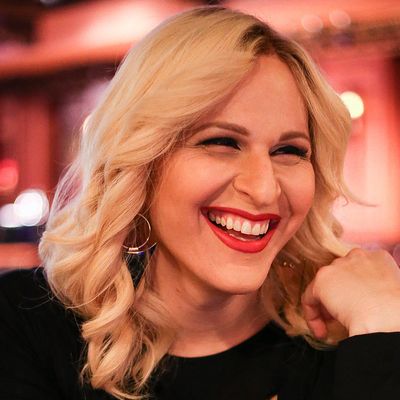
About
Shakina and dive deep into identity politics. This is a conversation you won't want to miss because we do not mince words AND Shakina is offering a birthday Zoom Butto Class on December 8th
Produced by Dori Berinstein and Alan Seales, edited by Derek Gunther, music by Cat Dail.
A proud member of the Broadway Podcast Network.
Transcript
This transcript was automatically generated and might contain errors.
[0:00] Tonya Pinkins: This is Tonya Pinkins.
[0:01] Welcome back to You Can't SAY THAT.
[0:03] This is part two of my conversation with my good girlfriend Shakina Nayfack.
[0:13] We gotta say we'll see you.
[0:25] And I mean, I remember I was doing a play out in California and I just saw this movie. It's fantastic. It's called The Shakedown. If you can see it, I don't know. Have you ever been to the Catch in LA?
[0:35] Uh in off Pico.
[0:36] Okay, so the Catch is a club, and different nights are different things. Like one night I showed up looking for one thing and it was like neo-Nazi night, and people were there with gas masks on.
[0:45] And you know what? I stayed and played because I'm that girl.
[0:49] But when I first went there, I went there, it was B-O-I night.
[0:54] And I did not know what a B-O-I was, but I was playing a B-O-I in a play.
[0:59] And so I went into this club and was like, I was told that it was um women who identify as men, and they do not want a lesbian, they want a woman.
[1:10] They're not looking for a lesbian, they want a woman.
[1:12] And so it was like, you know, the video vixens and the boys, and I just went in and let myself get picked up, and I was like, oh yes, oh yes, oh yes.
[1:23] Um so I got it. Like, I am so about having a spectrum of identities and being able to, you know, I think we all should just be able to suck and fuck whatever we want whenever we want.
[1:36] Yeah.
[1:38] Right.
[1:39] And wear whatever clothes we want to wear and use whatever pronouns we want to use because honestly, it's not doing any harm to anyone.
[1:45] Yes.
[1:46] It's just people who are sort of, you know, obsessively puritanical about archaic gender roles and and you know, sexual binaries who fear that because we exist as transgressors and expose the fallibility of those binaries that we will totally disrupt the moral order of things.
[2:10] I know I got a lot. I don't know. I have a uh yeah, I have a PhD in an MFA.
[2:15] And so we go we don't go in, we don't get intellectual, because you know, I just came back from Korea where you know, all the BTFs people, they wear lipstick, they wear eyeshadow, they are beautiful, and ain't nobody even questioning what is their gender.
[2:28] They, you know what I mean? They they look good.
[2:30] Makeup makes people look good.
[2:32] Less, you know, I I understand when people get the religious, you know, God said, Muhammad said, Allah said.
[2:43] There was something in the paper the other day that talked about um people who go to cults and how it is a need to not have to deal with the complexity of thinking.
[2:56] That's right.
[2:58] That's right.
[2:59] I mean, look at the look at Trumpism, you know.
[3:02] I mean, authoritarianism in in general, you know, thrives off the simplification of social problems with a clear enemy and a clear alliance and one person who has the solution to everything.
[3:16] And yeah, so I, you know, I mean, that's why I I love being trans, and why I think transness is so radical is because the male female binary, one could argue is the primary social divide upon which all other social divides are built.
[3:34] And you could also say that black and white is the primary, you know, uh social divide.
[3:39] So there are that you could look at these different sort of um ruling binaries as the source of all the other oppressive social systems that kind of spill down from there because once you split people into these two groups and you have one over the other, then you can continue to do that down and down and down until everyone's divided and set against each other.
[3:57] And the possibility of you know achieving liberty or um social equality becomes harder and harder and harder the more of these power imbalances you create in society.
[4:10] And what transness does is it just and and also non-binary identity, also it just says sorry, you were wrong.
[4:19] Like there's more to do, it's not a binary.
[4:22] Yes, and you know, I just this year have been learning about the the Alice DeCrawley Toth Tarot.
[4:29] Do you know anything about the Toth Tarot?
[4:31] So it's new for me this year, and I'm in a program where we're reading about it and we pull a card every day, and I am fascinated by the fact that he redid the art of the Toth Tarot because he believed we were coming into this new Aeon where there was going to be a reconciliation of what are called opposites, a reconciliation of the binary.
[4:55] And I have this just knowing inside of myself that the what appears to be opposites are just the way on this plane we experience we experience things, that there is no opposites, and so I've been like learning a little Kabbalah and how the two is the three, which is the unity and the one, and so to me, transness is a greater reflection of the truth of what this species is.
[5:28] I totally agree.
[5:29] And also it's, you know, transness is not new.
[5:33] It has, it's having a new moment, you know, thanks to trans liberation, which owes its existence to queer liberation, uh, women's rights and civil rights.
[5:42] You know, we we couldn't have gotten to this point of visibility without all these other social movements showing us how it's done and making headway so that we could do it in a much faster and grander way.
[5:53] But um, but trans people and and gender nonconforming people, people existing outside of the binary have existed for thousands of years.
[6:01] And in many indigenous cultures all around the world, those people have been uplifted as healers, as saints, as seers, you know, because they are able to bridge a divide that most people can't fathom bridging.
[6:16] And the fact is, we can actually, I think, heal ourselves if we can embrace more of those.
[6:22] I mean, because we all are everything, you know.
[6:25] Yeah, I got so much masculine energy in me.
[6:28] You got a big dick, Tonya.
[6:30] I do have a big dick.
[6:30] Sometimes I have the biggest dick in the room.
[6:32] And there's only people with biological dicks in the room.
[6:38] It's true.
[6:41] Now, I know that you were gonna have a play that happened.
[6:45] Uh it was gonna be a, you know, that play.
[6:48] So yes.
[6:50] And is there, I mean, talk about this play, because I love this play.
[6:54] I love it.
[6:55] I'm glad you love this play.
[6:56] I love this play.
[6:57] The play is called Shawnburi International Hotel and Butterfly Club.
[7:01] And it's um based off the um the true story of my journey to Thailand for gender confirmation, where I stayed in this hotel with a bunch of other women who were also going through gender confirmation.
[7:15] And it was this hotel right alongside the clinic where we all stay post-recovery.
[7:20] And I wanted to write like a love letter to them, but also a love letter to the great American theater.
[7:26] And so I looked at um Stage Door, this iconic play from the um, you know, early mid-19th century, and uh and thought, like, wow, you know, instead of a bunch of like chatty actresses living in a hotel in Chelsea, can like what if it was a bunch of chatty trans women staying in a hotel in Thailand while their new pussies heal?
[7:46] And so it's sort of this like um sepia-toned kind of um homage to that that great American hotel comedy, uh, but with really contemporary characters and social issues, uh, because I was trying to unpack not only the dynamics between this international community of trans women, but also the Thai um healthcare workers and sex workers that I met and engaged with when I was over there, and um a really sort of lovely temporary community that constantly recycles itself as new people come in and out.
[8:22] And thankfully, uh Mandy Greenfield, the artistic director of Williamstown Theater Festival, is a hustler like none other.
[8:30] And she um, when um the shutdown began, she coordinated with Audible to bring the whole summer season to Audible.
[8:40] Oh my god!
[8:41] Yeah, so this December, um, the first four of the eight plays set to premiere at Williamstown are now gonna be on Audible, including Audra McDonald's Streetcar, which is just gonna be so crazy and cool.
[8:55] But my play, Chombury International Hotel and Butterfly Club, comes out on December 29th.
[9:00] So it's a great way to out with the old and in with the new, you know, get that pussy.
[9:07] Thank you.
[9:07] And it's so great on.
[9:10] Will it be an all-trans cast?
[9:11] Because I saw a reading when the whole cast was trans.
[9:14] It's not all trans.
[9:15] There are cis actors in the play, but there are nine of the 13 actors are trans.
[9:21] Um, and including one cis role played by a trans woman.
[9:26] Okay.
[9:26] Now you mentioned sex workers, and I don't know a lot about that.
[9:29] And there's, you know, in some of my friends who work in activism and stuff in community, they have a problem with this idea of sex work.
[9:36] Can you also like edify me more on this concept of sex work?
[9:40] Because for people who work in trafficking, it's like, whoa, whoa, whoa, what is this sex work?
[9:45] You know, these people are, you know, talk to me about that.
[9:47] Sure.
[9:48] Well, I mean, I think human trafficking and sex work are two different things.
[9:54] There's um, and and maybe where they had the Venn diagram where they connect is exploitation, but um, not all sex work is exploitative.
[10:04] Um, sex work is work, a blowjob is a job.
[10:07] And it's like they call it the oldest profession for a reason.
[10:10] And especially in today's day and age where I would venture to assume that 95% of people over the age of 12 have engaged with pornography in some way or another.
[10:23] Uh that it's time for us to acknowledge that the entertainers um, you know, bringing us that entertainment deserve the right to unionize, um, deserve, you know, protection in the workplace.
[10:37] Um, and uh, you know, I come from a background in um harm reduction, which asks like how can we look at um high risk behaviors in society and do um things to lower the risk involved.
[10:56] And so legalizing sex work, um, unionizing sex work are great ways to ensure that the people who engage in sex work have the protections that everyone else has at their jobs.
[11:10] But what would you have any thoughts about how do we also protect people who might be being trafficked into sex work and like their their, you know, their passport's been taken away.
[11:22] They actually don't have a choice about it.
[11:25] Sure.
[11:30] Well, I actually think that legalizing it and unionizing it gives strength to sex workers to um to take care of themselves.
[11:41] Um, and it's different than people who've been kidnapped and forced into prostitution.
[11:45] And so I and and I think like having more um, you know, legitimizing um folks's uh choice to go into sex work will then expose in a different way the people who aren't going and buying it in a legal way versus people who are going and I mean, we we've got to acknowledge that there are people who have some crazy, you know, not healthy kinks that are into violating children.
[12:11] And so that's never gonna be legalized.
[12:13] That's never gonna be unionized.
[12:14] That's never gonna be okay.
[12:15] Yeah, like, you know, there are, and and and and we need to kind of tease tease those things apart because um it's like it's the it's in a in a in a strange way.
[12:25] It's almost like the same logic behind, oh no, if we let trans women into women's restrooms, then rapists are gonna come into women's race rooms.
[12:33] Um rapists are not trans women and trans women are not rapists for the for the most part, you know.
[12:38] And so we need to remember that we're having two different conversations.
[12:42] Then there's the conversation about human trafficking, which is really important and needs more resources and needs more attention.
[12:48] I actually um donate regularly to an organization called Truckers Against Trafficking, which is a um a nonprofit organization that teaches um truck drivers who go across the country how to recognize signs of human trafficking and report them because oftentimes it's at places like rest stops and truck stops where you know someone's being let out to use the restroom or someone's being prostituted out and it's clear that that they don't have consent in this situation.
[13:14] Um so, you know, we need more uh tools for combating human trafficking.
[13:21] Um, and if we just allowed sex workers to thrive in their business, then we could actually devote more resources toward um hunting out and finding these human traffickers because we wouldn't spend so much time like arresting women who are giving hand jobs for 20 bucks.
[13:39] Right.
[13:39] And I think this takes us back to thinking.
[13:41] You know, there's the the all of the things about equating apples with oranges is this these logic fallacies.
[13:49] Shakina Nayfack: And you know, I I I went to law school, I took the LSAT. Logic fallacies are really hard to distinguish from truths. That's right. And and and I'm I I I think I'm a pretty smart person, and I could not do it. And so I am always having to constantly study the various kinds of logic fallacies, which lawyers use all the time to convince juries, to convince people that things that actually make no sense make sense. And what you're talking about is a lot is called a straw man argument. And so you know so much of capitalism is about extracting the most out of things and actually investing in the failure of humanity for the purpose of some people getting a lot of wealth. That's right. And our need to be able to think.
And yes, thinking is a is a labor, but our capitalist system doesn't even train us to do that. No, they actually uh, you know, capitalism insists on the eradication of critical thinking, which is why you can see in the late capitalism, which is where we are, um, that uh that our educational institutions are under attack because people don't want to raise critical thinkers in a society that depends on a sort of placated and obedient worker. And and just being a consumer, just consume, consume, consume, consume, numbing mind-numbingly cons consumption. That's right. Yeah, and it is it is addictive. Consumption is an addiction and a drug, and you know, it it literally operates in the brain the same way that uh heroin operates in terms of like dopamine triggers.
So, you know, we um in our society are perpetually intoxicated, you know. Um, and and and the idea of I just saw, I just saw an ad um, because you know, we're coming up on all the Thanksgiving sales. Um, and I saw this ad that was like, buy more, save more. And no, that's just not true. It's just not true. Because it's you know, and but we we are like trapped in that sort of hamster wheel, you know, of uh yeah, the logical fallacy. And our brains actually like feed on that thing. Well, it's propaganda, you know. It's it works though, but it works. It works. And and the thing is that there is, you know, it's not just happenstance. There, there is, you know, there are research companies and think tanks that have been doing this kind of uh capitalist propaganda for you know at least a hundred years now to figure out how to like draw attention to the masses and disassociate the exploitation behind the system so that you can like go to Target and get your like $20 top and not have to care about the children in China who made it in a factory, or use your iPhone and the same, you know. Um so that separation, and you see that also in the meat industry, you know, it basically and and and all of these things, uh, you know, without question, just continue.
[17:11] Shakina Nayfack: I knew we would have a lively conversation. We've gone so many good places. We have. Um there was something that just came up in my mind I wanted to ask you about. Oh, tell me something that was the worst thing that ever happened to you that turned out to be one of the best things that ever happened to you. Wow. That's great question. Um my mind goes to my first job in New York. You might remember this from my first solo show, One Woman Show, which you came and reviewed. So I was observing Michael Mayer on a clear day you can see forever and the pre-Broadway workshop. And I had also reached a point in my life where I realized that I no longer wanted to be taking psychopharmaceuticals because I saw next to normal five times and realized that like, oh, I'm not, there's nothing wrong with me other than the fact that I'm trans and people don't know how to deal with it.
And so it was the summer of 2010. It was my first job in New York, and I was coming off of these meds, having a total manic episode while trying to be an uh an unobtrusive observer in this Broadway rehearsal room. Um, but at the same time, I had just come to New York and said, like, all I want to do is wear sundresses and go to Central Park and Broadway shows. And I like, it was like the summer that like hair and American Idiot and um I don't remember what else and next normal and uh, you know, I I and I did it. I had this glorious, like coming into myself New York moment where I went to backwoods in Port Authority and I bought some sundresses and I was wearing them out and just having the time of my life, and then I had to go sit in the rehearsal room in like a button-down shirt and slacks and be professional.
And um, and it was uh terrible and terrifying, and also I had no self-control because of like the mania of coming off of these drugs. And so I I was like, you know, behaving erratically and inappropriately and like couldn't be small in the corner. I kept taking up space and was aware of it, but also felt uns it felt unstoppable. And um, and then I moved back to LA after that that workshop, and I thought, like, oh, I'm I'm never gonna work again. Like, no one's ever gonna hire me in New York. And the one ally that I had in Michael Mayer is like for sure gonna be totally ashamed of me. And um, and then he ended up writing me a letter of recommendation to that fellowship at Barrington where I met you when I was in the Thomas League, and it really unlocked, you know, it really gave me the um the courage to come back to New York and be my true self and come out as trans in the Broadway community and really lead that charge. So um it was super painful and super hard, but then it it really laid the foundation for the rest of my life.
[20:08] Tonya Pinkins: So let me ask you this, because I always wonder about people who were taking medication, you know. I and were you being medicated because you wanted to be trans? Were you being medicated because you were depressed because the world wouldn't accept you as trans? Helped me understand why you were taking these medications, why you decided to get off of them. Are you off of them?
[20:28] Shakina Nayfack: I am off of them. It's been 10 years. Um, and I still struggle with anxiety and depression. Uh it's sometimes feels, especially this year, like an uphill battle. Uh, but it was really important to me because when I was 15, I dropped out of high school and was institutionalized. I talk about this in Manifest Pussy. Um, and and not because there was anything wrong with me, simply for the fact that I was like a young, queer trans kid that no one knew what to do with. And um, and so I I uh I was put on all these medications and then spent the next 10 years of my life going on and off of them. And and did the medications help you in any way?
[21:11] Shakina Nayfack: Well, they numbed me out. They did prevent me sometimes from feeling too depressed and sometimes from feeling too anxious, but other times they would make me, you know, feel super manic or make me feel numb and unable to create. Did they make the other people around you feel better about you around? I mean, I'm trying to did this solve anything for anyone.
[21:28] Shakina Nayfack: Yeah, no, it didn't. It didn't at all. It didn't at all. And um, and I I want to be clear for for your listeners that I am a total advocate for the use of psychopharmaceutical medication in cases where it's warranted and needed. Um, I just feel like what happened to me was that instead of learning how to cope, I was just like ripped from the situation and numbed out. And so then what happened is I spent the next like 10, 15 years of my life, you know, facing difficult situations and only knowing the way out was to either was to was to cut and run, which is like the name of a song in my show. But like to literally just flee the situation or numb out. And it's taken a long time for me to actually confront that and learn how to work through and breathe through difficult situations in a in a healthy way, in a way that in which I'm engaging with my reality and the people around me rather than just escaping. And um, and it's really challenging. It's an active practice, you know.
[22:35] Tonya Pinkins: Do you have some specifics about because this is something that I do as a discipline? Do you have some specifics about what your discipline is?
[22:43] Shakina Nayfack: I call it, you know, embracing what is sure. You know, I've had a few really wonderful spiritual teachers that I'm very grateful for who have I guess shown me different ways of of um resting in the present moment. And sometimes, sometimes that um that comes in the form of meditation and a more you know conventional understanding, but also um for me it can involve singing and dancing. Um those modes of expression are very soul unifying for me. They like put me back in touch with my body in a way that is calming. Um, so you know, I don't have like one specific discipline, but I trained for years beneath um Master Diego Pinon in Mexico, who's the founder of Body Ritual Movement, and um it's a it's sort of a dance ritual practice that draws from Japanese Bhutto and indigenous Mexican uh ritual dance, but um it's very it's a very like um it's about alchemy and it's it's not so much about any specific form as it is take in everything around you and make some fucking gold because you need to be able to offer something to other people, you need to be able to present a gift.
Oh you know, if if you're not ready to present a gift from your heart at any given moment, then you're really wasting your life, and so that's the challenge is like in these terrible circumstances. How do you pick up the pieces and say, like, I'm committing to gathering all of this and transforming it into something that is useful, into something that that has value to be shared.
[24:32] Tonya Pinkins: Oh. I don't think we can go any further than that. Will you teach me that kind of thing? Will you teach me that?
[24:41] Shakina Nayfack: Yeah, I would love to. You know, I used to do like a free Bhutto class every year on my birthday.
[24:45] Tonya Pinkins: Which is coming up.
[24:46] Shakina Nayfack: Your birthday's coming up. I think it needs to be on Zoom. I think we need to have the Zoom class.
[24:52] Tonya Pinkins: December 8th, you gotta do it. That's your gift to the world, your birthday gift to the world.
[24:57] Shakina Nayfack: Okay, well, it's also my um 40th birthday, and Daniel and I are going to Disney World in spite of COVID. But I will do, I will do a Zoom Bhutto class in the morning from my hotel room for you and whoever else wants to come. I'm gonna make sure that this gets out before then. I'm gonna change my tracker so this gets out so everybody can have this Bhutto class so we can learn to alchemize this moment that we're living in and give some gold back to the world.
[25:26] Tonya Pinkins: Oh my God, I love you so much, Shakina.
[25:29] Shakina Nayfack: I love you too, Tonya. This has been such a gift.
[25:31] Tonya Pinkins: It has been a gift for me. Like I was nervous. I was like, you know, I was telling a friend this morning before I got on the phone, I was like, I want to ask about turf. And they're like, Tonya, I don't want you to do that because you know that community could come down and they could destroy you. And I was like, just because you said that I gotta go in, I gotta go in. I can't be living in fear. I gotta and I don't tow the party line. You know, that's one of the things that I love about both of us is that we do not tow the party line. We are not here for respectability politics. We can talk about the shit. And just I wanna be clear, like for your listeners to get the real deal is that like this is all we talk about when we hang out anyway. So now we're just doing it on a podcast. But these are the conversations we always have, and it just fills me with hope and excitement. And uh, I love you, and I I feel really honored to be a guest.
[26:17] Shakina Nayfack: Oh, I'm so happy that we have this. I feel like a burden lifted because this has been sitting on me for as a burden for a while. And I'm sorry that you and MJ, like I had put a burden on you guys. So I'm glad that's all right. We got to do this because I know I'm not the only person feeling this.
[26:32] Tonya Pinkins: That's right. Well, I can't wait for this to come out and so we can share it with people and be like, listen, get the details you need here. Yes. Yeah. Shakina Nayfack, we did mention that she's also the founder of the Music Theater Factory. I'm gonna be on the Music Theater Factory. Uh, I don't know, probably this won't come out before then. Um, you're listening to Tonya Pinkins. You can't say that on the Broadway Podcast Network.
[26:54] Tonya Pinkins: You don't say no when you need no. Thanks for listening to You Can't SAY THAT, the show Where You Can. I'm Tonya Pinkins. This is part of the Broadway Podcast Network, produced by Dori Berinstein and Alan Seales. Edited by Derek Gunther, music by Anthony Norman. Available wherever you get your podcast. And visit me on Twitter and Facebook and Instagram, and let me know what you'd like to hear me talk about. For more information, visit bpn.fm forward slash YCST. It's not a gift if you don't give it.
© Broadway Podcast Network, All Rights Reserved