

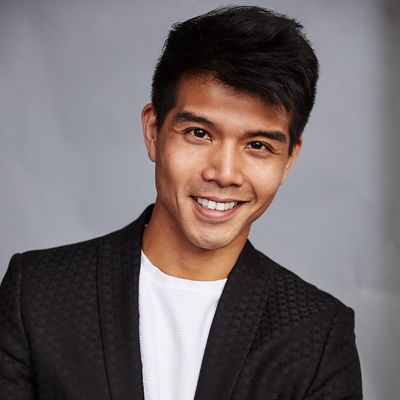
This week's Spotlight the Red Pilling of America features Broadway stars Telly Leung and John Rua!.. Read More
From the show: You Can't Say That!
Guests
Featured Shows

About
This week's Spotlight the Red Pilling of America features Broadway stars Telly Leung and John Rua!
More about Red Pilling America:
A thought-provoking series, featuring stellar guests, discusses democracy, American politics and our current socio-economic climate through the lens of Tonya's new socio-political horror film, RED PILL, which has received national coverage on Deadline, Playbill, and more. Guest stars include Metropolitan Opera star Meagan Miller, acclaimed actor Jay Armstrong Johnson, American civil rights leader Rashad Robinson, Hamilton stars Nik Walker, Paul Oakley Stovall, Jon Rua, Aladdin stars Telly Leung and Michael James Scott, actress and activist Joanna Carpenter and many more.
Red Pilling Of America takes place through Marissa Lynn Daniel Studios on Zoom. Proceeds will go towards the funding of Red Pill and to supporting actors during COVID-19. For more information and to enroll, visit, www.marissalynnstudios.com.
You Can't Say That is produced by Dori Berinstein and Alan Seales, edited by Derek Gunther, music by Cat Dail.
A proud member of the Broadway Podcast Network.
Transcript
This transcript was automatically generated and might contain errors.
[0:00] Tonya Pinkins: Hi, my name is Tonya Pinkins, and I'm the host of the podcast You Can't SAY THAT on the Broadway Podcast Network.
[0:07] Tonya Pinkins: This fall, I have a special treat for you.
[0:11] Tonya Pinkins: In honor of my debut feature film RED PILL, Marissa Lynn Daniels Studios has been hosting weekly conversations with my fellow Broadway colleagues and co-host Sierra Renee about the red pilling of America.
[0:27] Tonya Pinkins: These conversations create a safe space for us to talk about the things that are on our mind with an election and a global pandemic.
[0:37] Tonya Pinkins: So join us for the Red Pilling of America, a spotlight series every Saturday at 5 p.m.
[0:45] Tonya Pinkins: Or on the Broadway Podcast Network, You Can't SAY THAT, BPN.fm forward slash YCST.
[0:54] Tonya Pinkins: Join the conversation.
[0:57] Tonya Pinkins: We gotta speak to live.
[1:01] Tonya Pinkins: We've got to say what's news for you.
[1:12] Tonya Pinkins: Yes.
[1:13] Tonya Pinkins: Hello, Brad Pitt.
[1:19] Tonya Pinkins: Brad Pittman.
[1:21] Tonya Pinkins: Brad Pitt's here.
[1:23] Tonya Pinkins: My God, I'm so excited.
[1:28] Tonya Pinkins: It just happens with the names, you know.
[1:34] Tonya Pinkins: Uh well, hello, everyone.
[1:36] Tonya Pinkins: Are we good, Marissa?
[1:38] Tonya Pinkins: Oh, we're just waiting for two more to clear in, but I hit admit all.
[1:42] Tonya Pinkins: So we should we should be.
[1:44] Tonya Pinkins: Okay.
[1:44] Tonya Pinkins: Joining in shortly.
[1:46] Tonya Pinkins: Yeah, okay, great.
[1:47] Tonya Pinkins: Well, I just want to say thank you all to everyone who's here.
[1:50] Tonya Pinkins: We're very grateful for you guys for joining us on this next.
[1:55] Tonya Pinkins: Oh, here we go.
[1:56] Tonya Pinkins: We got some new new people coming in.
[1:57] Tonya Pinkins: Um, conversation.
[1:59] Tonya Pinkins: We're here to talk about my new socio-political horror film, which uh I've mentioned several times now.
[2:07] Tonya Pinkins: You know, when I first wrote it, people would read it and go, oh, this sounds crazy.
[2:12] Tonya Pinkins: And now it sounds just like reality.
[2:15] Tonya Pinkins: So here we are in 2020 in a very strange time.
[2:19] Tonya Pinkins: Um so, as you may or may not know, I am the winner of all of the awards, including uh Tony, a Drama Desk, Clarence Derwent, Obi Monarch, Lucille Lortel, LA Drama Critics Circle, Audience Choice Award, and so many more nominations.
[2:36] Tonya Pinkins: I'm an outspoken activist.
[2:38] Tonya Pinkins: I'm writing and creating and producing and currently editing this film.
[2:43] Tonya Pinkins: Um, I've got a podcast, You Can't SAY THAT on the Broadway Podcast Network.
[2:48] Tonya Pinkins: I just do all the things.
[2:49] Tonya Pinkins: Um, so if you don't know, you oughta know.
[2:53] Tonya Pinkins: Now you know.
[2:54] Tonya Pinkins: Okay.
[2:56] Tonya Pinkins: Um, and we are so grateful to have her here and your wealth of knowledge.
[3:00] Tonya Pinkins: Thank you, thank you, Tanya, for all that you do.
[3:02] Tonya Pinkins: Um, and then of course, this week we have the amazing Telly Leung and John Rua.
[3:08] Tonya Pinkins: So Telly is a TV and stage actor.
[3:11] Tonya Pinkins: You may know him from Glee, Instinct, Law and Order, Godspell, Aladdin, In Transit, Wicked, Rent, Allegiance.
[3:19] Tonya Pinkins: And now he's even producing um a new Christmas musical, which we'll talk to him about in a second.
[3:25] Tonya Pinkins: Um, and then we've also got John Rua from Hamilton, In the Heights, Hands on a Hard Body, SpongeBob SquarePants.
[3:33] Tonya Pinkins: Have you guys heard of Hamilton?
[3:34] Tonya Pinkins: Did you like Hamilton?
[3:35] Tonya Pinkins: No, I'm just kidding.
[3:36] Tonya Pinkins: Um he's also an incredible, incredible dancer and choreographer.
[3:41] Tonya Pinkins: Um, he actually choreographed a show that I did at the Muni, Jesus Christ Superstar, as well as Aida.
[3:46] Tonya Pinkins: And um, he just recently uh choreographed for Fish at the Garden.
[3:52] Tonya Pinkins: Whoa, huge stuff, and also uh West Side Story at Milwaukee Rep.
[3:56] Tonya Pinkins: And now he's actually been commissioned by Milwaukee Rep to create his own show.
[4:00] Tonya Pinkins: So we've got multi, multi-talented artists and um just an interesting panel of people here who are very diverse and I love it, which is also a big uh point about my film.
[4:12] Tonya Pinkins: I always talk about that you want to but we yes it I have to introduce Sierra Renee.
[4:18] Tonya Pinkins: Oh, seeing the spotlights um every week, these wonderful comments.
[4:25] Tonya Pinkins: Um Sierra is uh an incredible singer, she's also a filmmaker.
[4:32] Tonya Pinkins: Um, she was most recently on Broadway in Frozen.
[4:35] Tonya Pinkins: I I'm not gonna remember the name of your character, but you're a superhero on The Flash and Arrow and Legends of Tomorrow.
[4:45] Tonya Pinkins: See, I don't have my crows down.
[4:48] Tonya Pinkins: Sorry, it's okay, it's all good.
[4:50] Tonya Pinkins: You've been tearing it up on TikTok doing duets.
[4:55] Tonya Pinkins: She sings her ass off.
[4:57] Tonya Pinkins: Um, I also had the pleasure of seeing her in The Hunchback of Notre Dame, and she's just a multi-hyphenate, incredibly talented woman who um has been kind enough to co-host these talks um in support of my film RED PILL, which is all about what's going on in America, and um, you know, you gotta laugh no matter what's going on in life.
[5:19] Tonya Pinkins: So this is a horror film, and we gotta laugh.
[5:21] Tonya Pinkins: And who was it that said that history repeats itself first as a tragedy and then as a farce?
[5:26] Tonya Pinkins: I think we got all of that going on right now.
[5:28] Tonya Pinkins: So um, yes, Sierra, what are we talking about this week?
[5:32] Sierra Renee: Well, I just wanted to talk a little bit about the diversity of uh characters in your story.
[5:38] Sierra Renee: So uh essentially actually give everybody the log line and then we'll we'll bounce off from there.
[5:38] Tonya Pinkins: Um, the log line of RED PILL is that it's the weekend of the 2020 election, and a group of progressives ride into Red Country armed with heart, humor, and naivety.
[5:56] Tonya Pinkins: They should have brought heavy artillery.
[5:59] Tonya Pinkins: Oh man, what's gonna happen?
[6:02] Tonya Pinkins: Um, happen when the Proud Boys hit the polls to do their poll watching on November 3rd.
[6:10] Sierra Renee: Yes, that is a big question.
[6:13] Sierra Renee: And uh honestly, it's not really a new question here in America.
[6:16] Sierra Renee: We've seen this many, many, many, many times.
[6:19] Tonya Pinkins: Um, but uh so the characters in your piece, I think what I'm really interested in, and I can't wait to see, you said that you like to make uh tell stories uh that represent the world that you actually live in, right?
[6:32] Tonya Pinkins: It's not just you know, a bunch of white people or a bunch of black people or a bunch of whatever you like try to bring in uh different ethnicities, um uh different socioeconomic, all sorts of things.
[6:44] Tonya Pinkins: So can you tell us a little bit about kind of the variation and the characters and the diversity that you have in this piece?
[6:50] Tonya Pinkins: Well, you know, I just I know that I'm a kind of person that I like all kinds of people.
[6:56] Tonya Pinkins: And often when I get my own friends together, they wonder how I'm friends with each of them because everybody imagines me to be a certain kind of person because I'm their friend.
[7:07] Tonya Pinkins: And when they see the other kinds of people that I hang out with, it's like, huh?
[7:10] Tonya Pinkins: Well, where how did you guys meet?
[7:12] Tonya Pinkins: Um, so Ruben Blades, um, international recording artist, he's um covering the Latino indigenous community and representing that perspective in um this story about the fight for um freedom and equality and democracy.
[7:30] Tonya Pinkins: Um uh Lubba Mason, who is uh Rubin's wife in real life, she is representing the immigrant population in America.
[7:40] Tonya Pinkins: Um Jake O'Flerty, good Irishman, is representing the Jewish population and the white male patriarchal population in America.
[7:53] Tonya Pinkins: He is representing the Afro-Caribbean British population.
[8:00] Tonya Pinkins: Um my character is of course the African American woman, and then Catherine Irvy from Law and Order: Criminal Intent is representing the white American version, and then we have a lot of other uh Catherine Curtin is in it and Colby Minifee, but um, you know, issues of, you know, what side of the wall are you from, um, Muslim perspectives, transgender perspectives are brought up.
[8:29] Tonya Pinkins: And I found in telling this story, depending on who's um viewing the cut of the film, what people think is unimportant is so centered around um, you know, people's thoughts revolve primarily around themselves.
[8:44] Tonya Pinkins: So I find that when people give me notes on the cut, it usually tells me more about them than it tells me about the movie that I've written.
[8:53] Sierra Renee: Interesting, interesting.
[8:54] Sierra Renee: Yeah, we talked a lot about that, like the audience, you know.
[8:57] Sierra Renee: So, did you write this piece with a specific audience in mind?
[9:02] Sierra Renee: People that you were trying to reach.
[9:04] Tonya Pinkins: Um, and has that shifted?
[9:08] Tonya Pinkins: I really wrote it so people could have fun.
[9:12] Tonya Pinkins: I like to be scared and I like to laugh.
[9:15] Tonya Pinkins: So, how could I talk about the political world we live in right now and have it be funny and scary and just a really fun ride?
[9:24] Tonya Pinkins: And then, you know, you always want anything you make to be something that people will go back to and watch more than once, so that the first time through, you could just have a really fun ride.
[9:34] Tonya Pinkins: But then if you watched it the next time, you'd be like, oh, I mean, oh, I didn't know that there was that level and that level.
[9:39] Tonya Pinkins: I mean, there's a lot of political history in it, there's a lot of metaphor symbolism about cults, about some of the founding things of America.
[9:48] Tonya Pinkins: Um, but you don't have to get that on the first time, but it's all there.
[9:53] Tonya Pinkins: So uh obviously, my first audience is the black woman.
[9:57] Tonya Pinkins: I've never seen this particular black woman perspective in in a film.
[10:03] Tonya Pinkins: And I play a character named Cassandra, and in mythology, Cassandra is the character is the woman who was doomed to tell the truth and never be believed.
[10:15] Tonya Pinkins: And so that is what happens in RED PILL.
[10:18] Tonya Pinkins: Cassandra is clear that they are in danger and they need to get out.
[10:22] Tonya Pinkins: This is the black woman, and nobody believes her.
[10:27] Tonya Pinkins: And it didn't work out too well for them or for all of us as well.
[10:32] Tonya Pinkins: I always thought that was one of the funniest parts of like scary movies.
[10:36] Tonya Pinkins: It's like the trope that like the black person dies first, and you're like, but I feel like they're the ones that are like, actually, we should go.
[10:42] Tonya Pinkins: Like, I'm a go now, actually.
[10:45] Tonya Pinkins: I was always confused by that.
[10:47] Tonya Pinkins: Did you guys see Halloween? The last one with um the new one that was last year, John Telly. Did you guys see that Halloween? The best part for me was the little black boy who was like, "There's something in my room," and the babysitter's like, "Let me look." And he's like, "No, send it in. I'm going to get help." That was the best part of it all.
[11:08] Tonya Pinkins: Yes. Um, okay. So I want to dive in with uh John and Telly. I'm really interested to start kind of talking about um just being different, feeling othered in this um in our society, and especially in a time such as this when we have an administration that seems to sort of base everything that they do on making everyone feel other or divided from someone else.
[11:37] Tonya Pinkins: So um, I know we had uh spoken about in our call earlier, just about immigration and how that factors into who you are and your identity and your family and community and what that means, what it kind of means to be an American for you. So um, John, can you kind of take it away?
[11:57] John Rua: Yeah, uh, you know, it's interesting when I think about the feeling of being other. The first thought that comes to my mind is um it's not I can't tangibly give you examples because first fortunate, and this is weird to say fortunately, I'm white passing. So because I'm white passing, I don't suffer the consequences, the repercussions that um others would not. And yet the lifestyle with which I live has not felt as one of white passing. Because it's sort of socioeconomic uh economic background. Um, it's from uh the issues that I feel as if I've inherited inferiority. I feel as if the anxieties and the traumas that my parents have lived and come through, uh, because they very much immigrated, uh permeate through their existence and their lifestyles and their way of being.
Very isolated existence in the country, since none of my family's here, they're all in uh in Colombia. There's an occasional person here and there, but even then we're so independent because of how we came up. I mean, my mom had 13 or 15 brothers and sisters, my dad had 22.
[13:03] John Rua: Um I don't know. Yeah. Uh and so I grew up here very isolated, and the Colombian community is scarce. It's I mean, if I were growing up in Miami, maybe it'd be a little different, but I'm not. Uh so uh I feel othered in this situation that there I felt very alone, very isolated, no one to relate to. So uh immediately I related to the more impoverished background to sort of a socioeconomic class. Um, and in that not being Colombian enough and still not being American enough, especially what's delivered to you by the identification of America. So whatever we grab, which is commercialism, very high, high commercialism, uh, does not this does not uh permeate or display me.
[13:43] John Rua: Uh, I sometimes joke around and wonder what would life be like if Selena never got murdered, if Selena kept living, uh, would would Mexican identity be completely different than the United States of America? Would would music sound more like cumbia? Would things be too completely different because they would have commercialized it? That being said, um, I also feel othered in the way that the representation of Latino Latinx to America is not me. And so I'm othered simply for not being representative of how they identify me in my career. And also just in life, I'll walk around and someone will not believe that I'm of Latino origin.
[14:25] John Rua: So it's and yet I'm the one that speaks Spanish.
[14:28] Tonya Pinkins: Yeah.
[14:30] John Rua: The funniest part about it is I'm the one that actually fluent.
[14:32] Tonya Pinkins: Yeah.
[14:32] John Rua: I feel I feel you so hard on that. And just like just the idea of representation is so important. And I think like shifts in our um industry have been, they're being made, right? But they're also the decisions about how the shifts are made are being made by the same people who have the problem in the first place. And so it's like really interesting because I have absolutely zero Latin uh in me at all.
[14:56] Tonya Pinkins: And yet every time I walk down the street, I have more people speaking Spanish to me than not.
[15:01] John Rua: Uh people are confused when I tell them that I have no Latin like heritage whatsoever. And it's also become right, and it's also become this thing in in you know the entertainment industry. It's like, so I am seen a certain way by the people at the top, right? Generally white males, I am seen as Latin.
[15:21] John Rua: And I've actually played Latin roles before. I do not get seen as a black woman. So when I go in for a black woman roles, they're like, uh no. And then I can't go in for Latin anymore because it literally I did my DNA test and I have none of it in. So I and it's like I don't want to lie, you know, but we've gotten to this place where we're overcorrecting a little bit, and also everything's sort of based on the factual accuracy of whether or not you're Latin.
[15:48] Tonya Pinkins: And I'm like, I feel that because I want, like, I there have definitely been times where they're like, this character, it's so important that she like understand the truth being from Colombia or being from wherever. And I'm like, okay, like I think I could absolutely act that, but there's someone out there, I bet who fits that and is super talented and could take that role, right?
[16:07] John Rua: So it's kind of like the balance of like, but also I want a job. Do you know what I mean?
[16:13] Tonya Pinkins: I agree.
[16:13] John Rua: No, I mean, and it even comes back to like sensitivity. Like, for example, I've played Mexican, I've played, I played everything but Colombian. I've played Polish, I've played Italian, I played Mexican, I played Puerto Rican, I've played them all, but I say I'm ready to play them. And yet at the same time, I'm conscious of, you know, we're being very sensitive to the uh I think the entertainment industry is attempting to be more uh aware of and sensitive, and in doing so, isolating people who could actually play more aware of or it's trying to be politically correct.
[16:44] John Rua: My point is like bigger errors in political. So, like, even now, like if I were to go, it's also uh a depiction of how they see someone. I don't see myself as uh, you know, I'm not Menudo by any chance. I don't come off like like I'm not Enrique Iglesias or or or you know what I'm saying, like Ricky Martin. I've come off like I've lived life a little bit, and so it depends on the project. But my point is, you know what I'm saying?
[17:12] John Rua: So what I what I've noticed is it's how they want to present people. So even when I go in for Puerto Rican and Dominican, and when you see how they cast it, you go, Oh wow, like they're really identifying how they want Latino to look or or whatnot, they can't really open their the grass to their minds, which is fine. That being said, you create your own work, that's what we do, and also things come and go, and you do what you gotta do.
[17:33] John Rua: And that's what's mine is. I'm not too worried about it. The West Side Story this year was so beautiful to me because everybody on that stage was, you know, different shades of brown and black and beige, and they came from all over the world. And it was not a white black story anymore. It was like uh an American versus immigrant story, but everybody looked exactly the same.
[17:57] John Rua: It sort of reminded me of the battle between Israelis and Arabs. Did they look alike? You're the same people, you have the same DNA, and you're hating each other. I'm here in all Korea right now, and there's racism here, even between the Asian people. And it's like, you know, how do we have such love so much more love for our hate than for our humanity?
[18:16] Tonya Pinkins: Ooh, so there's two love.
[18:20] Tonya Pinkins: I have two things I want to say before I lose it. Number one, I feel like um uh how can uh as an American what we do see is that you know, as you say, the people in power want to create products, and when they create products, one thing I've recognized and I feel for those who have immigrated, especially um uh that's why I'm a big fanatic and supporter of John Leguizamo because he makes it very clear uh that you know, the indigenous and the sort of Latin Latinx makeup, um, we're not existent in the culture that they're telling the stories about.
[18:56] Tonya Pinkins: So, what I mean by that is say they come out with some uh musical about a famous artist, and there is none for for the Latinx. There's no shows for there's no one they're gonna tell a story about that America identifies to. Salina's coming out on Netflix, that's about it. La Bamba, you might have seen the movie. There's nothing they what I'm saying is it's not even in the makeup.
[19:23] Tonya Pinkins: So I Lion X don't even know who to identify with, if not displayed by whatever the American pop culture is displaying, which is generally a caricature or stereotype. So it's there's I'm remiss to if I'd be remiss to not say that because one would say, okay, we're pointing at all the things, and yet we're not being aware of all the minor things that hit us every day.
[19:44] John Rua: It's an everyday thing that you go, oh wow, we're literally not in the makeup. I don't even see myself. But if you're not in the makeup responding to me, the Asians are even less in the makeup.
[19:55] Tonya Pinkins: And that, let's pop it over to Telly.
[19:57] Tonya Pinkins: Um, you know, how how do you feel like, you know, your experience has been different in being American? You know, like what is what is being American to you?
[20:10] Telly Leung: Sure. So I I grew up in New York City. I have immigrant parents. My mom and dad, uh, they actually grew up in Guangzhou, China, which is in communist China during the 60s, during Mao, and they actually escaped communism by swimming to Hong Kong, which was seven hours, which is seven hours by the water. It's and they tell the story to me like it's like, you know, that's like, well, that's what everybody did, you know, because you if you stayed in China where you weren't you didn't have an education, there was no opportunity.
[20:39] Telly Leung: So everybody just took the risk, they jumped in the water and they tried to escape. So my both my parents made the swim. They got to Hong Kong, which at the time did not belong to China, it was a British Commonwealth at the time. So they were political refugees, and they met in China, they dated, and they knew that they wanted to come to America. They came to New York City because this is where the work was in the 70s for them. My dad worked in Chinese restaurants, my mom was a seamstress, so blue collar parents, and I grew up in Brooklyn. That's so that was sort of my upbringing.
[21:09] Telly Leung: And it's interesting, you know, when you talk about being othered from a very young age, you know, I think every person of color who grew up in America or is a child of an immigrant has this conversation with their parents that they pull you aside and they go, so you live in America. And I know that in school when you say the Pledge of Allegiance and you learn about what it is to be an American, it says liberty and justice for all.
[21:32] Telly Leung: But you don't look like you don't look American. And we are not from here. So even though you're born here and you are American and this is your country, you look a certain way and people will judge you by the skin color that is on you. And it doesn't matter if you grew up in Brooklyn and you're the most New York kid ever, that's not what they know. They're gonna judge you by your skin. Just so you know, you have to know that going through life that might mean you have to work harder, that might mean you have to not always speak up all the time, that might mean, and this is a conversation, this might mean that you know, that things are not always fair to you. And that, you know, so as a little kid I had this conversation with my parents, right?
So growing up, that was sort of in my DNA now. I think that's in the DNA of a lot of Asian kids who grew up in America and I don't think we're honestly, I don't think we are seen so much because so much of, you know, the Asian history in America from us coming here, building railroads, Chinese exclusion act, Japanese internment, all of that has been about how do we not stay active and political? How do we just make sure that we can, you know, make enough money to keep our business, feed our kids, raise our families, not make waves, not cause trouble. That's sort of been, and now it's, I'm happy to say I think that's turning. I'm happy to say that I think that's also turning with this election, but not my generation.
Me, I just turned 40 this year. My generation still has that. That's still in my DNA to think that way sometimes, you know. And so, and when I tell my Caucasian friends that, they go, "Oh, my parents never had that conversation with me." And I was like, "Right." So that's what it means to be othered, because your parents never had to have that conversation with you. My parents had to have it since I was a little kid. It's the same conversation that my Black friends have when they go, "Okay, when you get pulled over, this is how you act," right? It's this, it's that same conversation. Uh, it's just, you know, uh, but to me, when people ask me, "How does that feel to be othered?" that's sort of the way I can describe it in a way where my Caucasian brothers and sisters can understand it.
[23:45] John Rua: Sure, sure.
[23:46] Telly Leung: Oh, you know, that, oh, right, that conversation was never had with me. And I said, "Well, that's I think that's what it means to be othered." Same thing, same thing being a gay person too. You know, being gay is that it's the same, you know, that I don't have to think about, you know, my street friends don't have to think about holding hands in public. I do, depending on where I am. I do have to think about that. That extra step is the other, right? The extra step that you have to take to think about what's going to keep me safe every time I walk out. And there's lots of extra steps. You know, Kimberly Crenshaw in talking about intersectionality says that human normal in Western capitalism is white, hetero Christian.
And every step away from white, hetero Christian is another intersection in which you can be discriminated against. So you go, you're gay, that's one. But then if you're gay and you're Jewish, that's two levels of discrimination. And then you're gay and you're Jewish and you're non-white. Now you got another. And so the layers and layers and ways in which people get othered, and the layers of ways in which you don't get the same access or rights, or you have to think about all these extra things to just make it through the day, are compounded by this idea of some kind of human normal that doesn't match the majority of people on the planet.
[25:22] John Rua: Yeah, that idea of dual consciousness, right? Or just triple quadruple consciousness, right? All the different layers that you have to be aware of all the time, right? Did you and I have to say, you know, I now that we're having these conversations, which I think it's great in 2020, that we're having these conversations. I tell my, you know, my white friends when I have these conversations, it's not like it's a bad thing, you know, it's not, it's not bad to be white. Like I know sometimes you might feel that there is all of the, there's this conversation might make you feel bad or might make you feel uncomfortable. I just said it's just, it's just that that is the way the world has been built, and in a way I was a talk.
[26:03] Tonya Pinkins: I'm stopping you right there, Telly, because you're trying to help some people feel better who've made a lot of people feel bad for a really, really long time. Are you married to someone white?
[26:13] Telly Leung: I am married to someone white.
[26:15] Tonya Pinkins: So what's that like right now?
[26:18] Telly Leung: Like now, in this moment, we have a lot, we have a lot of these conversations, you know. Like I remember actually of a theatrical experience. We went to go see Slave Play together on Broadway, and we had very, we walked away with very different reactions to that play. And it caused a lot of continued conversation between us, even before the pandemic, before George Floyd, that play, sitting in that play together, you know, and whenever we see theater together, we hold hands, right? Like we hold hands, and all of a sudden, in the middle of that play, I felt this happen. We stopped holding hands. And we had very, we had very different, we did. We just had very different reactions to it. I heard a different story than he heard, and it began this conversation.
It helped me in a way have this conversation with my Caucasian friends and my husband, who is Caucasian and people that I love who are Caucasian in a way that helps them understand it without feeling attacked. And I do feel that that is important.
[27:21] Tonya Pinkins: What is this conversation? You keep talking about this conversation. What is the conversation you had to have?
[27:27] Telly Leung: That my experience as an other person is something you're not, you have never had to live with or understand. And that is not a good thing or a bad thing, it's just a different experience.
[27:38] Tonya Pinkins: It's just you identify with in Slave Play.
[27:42] Telly Leung: Pardon?
[27:43] Tonya Pinkins: Who did you identify with in Slave Play?
[27:46] Telly Leung: I mean, I, it's interesting. I think I identified with, as an actor, I feel like I sort of like identify with all of them, right? Like in a way, I try to find empathy and compassion with all characters when I watch a play, I don't really pick a side. And I think that's my training as an actor. We don't pick sides, we don't judge our characters when we play them, right? So like you receive it and you hear it, you know, but like I just know that I, you know, his level, his level of discomfort watching that play was very high. My level of recognition of that experience was, oh, I felt like, oh, they're saying this thing that has been so hard for me to say, right? And like they're saying it in a play, and there was like a my reaction to it was this. And I think his reaction was like, oh I didn't know. I didn't know, you know.
[28:40] Tonya Pinkins: Right.
[28:41] Telly Leung: But I think what's interesting about, you know, what you were saying just about the discomfort opened up the possibility for a conversation in a new way, right? It's finding the balance, I guess. I don't know who it falls to to find that balance, right? But you know, any person can get defensive. Any person when they feel attacked, which certain people feel attacked at different times depending on what the thing is, right? It's a sliding scale for everybody. But when anybody feels attacked, they want to survive, they want to put up their walls, they want to get defensive, they don't hear things, it's all about their perception. Then, you know, that's and that's a practice thing that we all do to varying degrees.
It's like, how do we, and this year I think has been a really interesting, you know, intersection of like people getting uncomfortable and learning from it, people getting uncomfortable and shutting down, you know, like we're seeing all of the different reactions to it. But the discomfort, I feel like is maybe the best thing that has happened over the last couple of years, and especially in this year, because getting outside of our comfort zone and our normal, then we are forced to confront things, we are forced to start having awkward conversations, we are forced to, you know, to start having these kinds of things. So as much as like, you know, we don't want our friends to feel like they're being attacked or whatever, right? We also recognize that the, or I do at least, that the discomfort also has to exist. Otherwise, we're just gonna keep going as static status quo, right?
[30:13] John Rua: I'm gonna say I want my friends to feel attacked, I want them to feel into the disease. I want them to feel like, you know, there was a certain point I wrote something to someone and they were like, "Wow, that really hurt." It was like, you know, it hurt. And I was like, "Uh-huh." And you, I could feel them wanting me to make it better for them. And I was like, "Yeah, but that's how I feel every day."
[30:37] Tonya Pinkins: Well, it's awful. You shouldn't have to feel that way.
[30:39] John Rua: And I'm like, "But I do feel that way." And I don't feel like I shouldn't have to feel that way because not only do I hurt, lots of other people hurt. I don't have, it's hurt comes to everybody that one group of people have set up the world so that they get to avoid most of the hurt by putting it on other people. Yes, you should bear some hurt. Hurt is part of life. Life is good, it's bad, and you should bear some of it too. So I don't feel bad that I'm the gift of bringing it to you. I feel like I am a gift to you because as you expand your capacity to have these big sensations, then you will expand your humanity. And as long as you stay in an avoidance of this feeling, what you call bad, you are allowed to deny humanity. You're allowed to deny the existence of other people's experience, and you're allowed to continue to perpetrate these delusions and this fraud that are destroying the entire planet.
[31:41] Tonya Pinkins: Right, right. And this actually is, I think, a great stepping off point for us to talk about cancel culture.
[31:48] Tonya Pinkins: You don't say no when you mean no. Hi, I'm Tonya Pinkins. You're listening to Spotlight, the Red Pilling of America on the Marissa Lynn Daniels studio. My conversation with actors John Rua and Telly Leung. Come back for part two of You Can't SAY THAT on the Broadway Podcast Network. It's not enough to just say it.
© Broadway Podcast Network, All Rights Reserved