

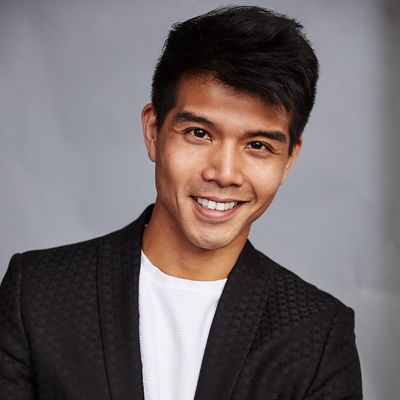
This week's Spotlight the Red Pilling of America features Broadway stars Telly Leung and John Rua!.. Read More
From the show: You Can't Say That!
Guests
About
This week's Spotlight the Red Pilling of America features Broadway stars Telly Leung and John Rua!
More about Red Pilling America:
A thought-provoking series, featuring stellar guests, discusses democracy, American politics and our current socio-economic climate through the lens of Tonya's new socio-political horror film, RED PILL, which has received national coverage on Deadline, Playbill, and more. Guest stars include Metropolitan Opera star Meagan Miller, acclaimed actor Jay Armstrong Johnson, American civil rights leader Rashad Robinson, Hamilton stars Nik Walker, Paul Oakley Stovall, Jon Rua, Aladdin stars Telly Leung and Michael James Scott, actress and activist Joanna Carpenter and many more.
Red Pilling Of America takes place through Marissa Lynn Daniel Studios on Zoom. Proceeds will go towards the funding of Red Pill and to supporting actors during COVID-19. For more information and to enroll, visit, www.marissalynnstudios.com.
You Can't Say That is produced by Dori Berinstein and Alan Seales, edited by Derek Gunther, music by Cat Dail.
A proud member of the Broadway Podcast Network.
Transcript
This transcript was automatically generated and might contain errors.
[0:00] Tonya Pinkins: Welcome back. I'm Tonya Pinkins. You're listening to part two of Spotlight The Red Pilling of America, my conversation with actors Telly Leung and John Rua on the Broadway Podcast Network.
[0:19] Tonya Pinkins: We've got to say one rule for you. I can't understand you. This actually is, I think a great stepping off point for us to talk about cancel culture, which is something that came up in our conversations, John and Telly. Just, you know, look, there are repercussions for our opinions. There are repercussions for our thoughts, right? So I just recently read that um JK Rowling, Rowling, JK Rowling. I don't know. Anyway, we all know who she is, right? The woman who wrote Harry Potter. So she uh I suppose is writing new things, and she uh got in some controversy about her opinions on trans people and has kind of since doubled down on saying I'm allowed to have my opinion, which is true. It's very true.
And in free society, you are allowed to think the things that you think. However, there are consequences for your behavior. So she recently wrote uh like a letter, an open letter about um, you know, conversation or confrontation or something like that. Um, and it essentially was saying that she feels that canceling someone socially, right? Or not participating or in their brand or buying whatever they're putting out there is is too harsh a punishment for essentially disagreeing with what they're putting out, right? Even if it's toxic, harmful, dangerous, whatever. You know, like she should be able to say what she wants, as should everybody. Um, and I think that kind of goes hand in hand with this concept of like, can we feel pain and be okay and move on and learn from it, right? How do we do that? And is cancel culture the way to kind of help people do that, right? To learn something or move forward. Um, John, do you have thoughts?
[2:18] John Rua: Uh you know, for well, okay, I'm gonna use a topic to segue into it. I because I'm realizing something as I talk to you guys. So there are times that I like Tonya's so passionate and she speaks her truth and it's resounding, and I I completely understand it. If she weren't even here, I'd probably say the same thing. And then I would look in the mirror and be like, wait, I look mad white though. So, like what I'm trying to say is I have the lens of someone who is more colored than he is, and I ask myself why. Who was I surrounded by? What did I experience? What am I a stand for? The reason I'm saying this is because some of my words I think responds to a lot of people who feel like they don't know where to go, because their experience internally is of their family, which is of all colors, which is of the other.
And so they're like, well, to the society, they don't see me that way, and then I don't know how to express myself any other different way. So you you carry this weight, but one thinks that you don't understand it. You one thinks you don't they don't think you understand it, but they realize that you're still another, but they don't classify you that so you're confused. You're carrying all this stuff. Why am I saying this? Because then there are times that when I communicate and I iterate what I'm thinking, I might be the one who's gonna get canceled. You think they're gonna straight up cancel me because I'm just gonna say what I think, whether you like it or not. That might serve people. They might be like, yes, he's speaking truth.
However, someone else might cancel me. I think cancel culture is dangerous, depending on the integrity of the individual. So what I'm saying is like you can't be two faced. Like you, you you you can't pose yourself to sell yourself and then operate a different way. Like if she's you know I mean, like if someone in my mind working for that man in the white house, I was gonna say, I think I think yeah, it's working for quite a lot of people at the top of the food chain, right? Right, right. But this is why I'm saying like I'm saying if my man is doing like I don't ride with him. That's not even a thing. Like there, he in my mind, you can smell that from a distance. Like, if it's an instance, if someone makes a mistake, as a human being, do you have forgiveness in your heart depending on the mistake?
If someone's a walking mistake, like my man in the office, then you go, I'm I'm done with this situation. Do you see what I'm saying? So, like, to be honest, you honestly know about cancel him. We have not canceled him. Yeah, we haven't figured out how to cancel somebody in a political sphere. November, but you'll cancel them in November. Yes, but my point is the the issue is this cancel culture affects people who who are powerless. I don't I think people with a lot of power get away whatever they get away with. That's they can get away with whatever they get away with. It does not even matter. They could be matter of fact, they might cancel themselves on purpose just to get more in the news.
They don't care. They don't really care. So what I'm saying is like I I think cancel culture is and when I say dangerous, I just mean um it depends on who's grabbing onto it. Like if there's very naive, ignorant, and like uneducated people who just want to expose hate on someone for whatever reason, then cancel culture may not be a very good tool in that. If there's someone who's like, you know, I'm ready to claw uh clear the air on the situation, then cancel culture can be a sign of like, yo, regulate yourself because we're gonna find like you you're not permissible of everyone's humans, uh uh the sort of agreement that we all have nonverbally, if that makes any sense.
[5:51] John Rua: But we don't have someone let me say something I say to my daughter about how she dresses. I say dress for as much sex as you can handle because is going to attract certain kind of attention, and in this era of social media, you should speak and post for as much hate as you can handle. Okay, you can't handle the hate and the hate, then shut up and stay out of the kitchen because that is what this technological online culture is. So post for as much hate as you can handle. And also that that being said, and I don't mean to take up the time, but I want to tell you to say something. What I'm trying to say is that we're conditioned, right? As human beings, we have a nervous system, we're conditioned, we have a societal agreement of how do we talk to each other.
We have things that we grew up to. So there are jokes that people say. I mean, I could be joking with Telly and Tonya, and as people uh and and Ciara, and it's people like Sierra, and it's people who like have color in their in their in their group, their growth, their their DNA, their cellular resonance. We have color. We might say something, it's it's comical to us, and yet in today's society, we not we might not be able to say that. So it's about conditioning your awareness that like certain things now are in a sensitive skew than they were before. It's just it depends. I'm not gonna let someone censor me. I mean, I get a lot of that in this movie because I got a lot of jokes. I got incest jokes, I got race jokes, I got trans jokes.
And I'm willing to meet people because let's engage, let's have a conversation about it. Would you would you prefer me just go, I don't want to have a conflict with you, so I'll just erase you from the narrative. Right. Right. That's why that's why if she did that, I'd be like, why would I ever cancel Tonya? Like I would never even do that. Someone else might do it just because they want to feel heard in some way. Like it's it's nonsense. It depends on who's the purpose for it being done, technically.
[7:50] Telly Leung: Telly, in the case of JK, right? Uh uh here's the thing. I I believe in grace, I believe in forgiveness, I believe in the human capacity to learn from one another and grow. That's why we are here. We are having a conversation so that I am hearing a point of view that is not my own, and so that I can expand what it is that I know. For JK to hear time and time again from the trans community, this is hurtful. This is this hurts me. And to double down on that when you when when there was an opportunity for you to learn, knowing the platform that you have to to a general to a young generation of people, uh, I don't listen, I I am not, I don't I don't know who you believe in, if it's Ga, if it's Buddha, if it's Allah.
It's not my place to cancel anyone, but it is my place to not buy your books anymore. It is my place to not support you anymore. I can't, I I can't get behind that. So I'm not, I'm not gonna cancel you and that I don't believe in I and that I don't have the grace to go, okay. I hope one day you learn that your actions are hurting people. I I, you know, I I hope one day that your your you as a human being will do that one day and understand that. But uh until that point, I I can't in my heart of hearts dig into my wallet and buy another Harry Potter book. I can't do it.
[9:13] John Rua: Now let me push back because it's my favorite thing to do. I think that is your power. I think we need to exercise our power with our dollar, with what we're gonna buy and what we're going to support. Absolutely. We're supposed to do that. And if quote unquote JK hurting your feelings is what made you do that, good. I'm grateful to JK for making you actually take some action. Like what is happening in this world right now is lighting a fire under us to take some action. I believe it was Eleanor Roosevelt who said, nobody can hurt your feelings without your uh without your consent. Okay. We are not here to walk around taking care of people's feelings. As I'm gonna tell you, if it's between your happiness and mine, I'm gonna choose mine.
Okay. If everybody was sitting here having to be responsible for themselves, we'd have a better world. If we got our minds and our thoughts out of other people's beds and other people's relationships, it would be a better world. So everybody here, if we're gonna treat people like adults, you're responsible for your own feelings. If I have an opinion or say something that you disagree with, let's agree to disagree. But people saying things to make people feel good is just lies and delusions. And that's why liberals are in so much trouble because they're in such cognitive dissonance. They speak all this politically correct stuff that does not resonate in their bodies as authentic feelings. So they're not in, they're they're just inauthentic with themselves because they're saying what you're supposed to say, but it isn't their truth. So I'd rather have a racist tell me I hate niggas than some liberal say, oh, yes, it's so delightful to have you here when really they aren't comfortable. Because at least at least it's authentic.
[10:59] John Rua: Yeah, I mean, and I'm so glad I never I don't I don't even know who Harry Potter is. I could care less. I never even seen a thing. I've never seen uh Harry Potter. Where are you, John? Where you been? I mean I've been not with, I've been not with her. I've been trying to realize something. You said I've been hustling. I've been hustling. I'm not trying to Harry Potter her, but I will say I will can't, I will cancel the hell out of people. When I've been in various rooms, and once again, for whatever reason, the not for whatever reason, for beautiful reasons and for because of the uh who they are as individuals, the black African American community has embraced me and has given me so much in my life that I don't think I would be who I am if it weren't for them.
[11:43] Telly Leung: And so I honor them as much as I can. So when I'm in rooms where they're being appropriated and no one's speaking up, they feel it in my energy. And so when I see artists, when I see basketball teams, when I see all these owners and these creators and all these people not saying something during the time that matters, I'm gonna cancel the hell out of you, whether it's with my spirit or with my words, it's be you you're being canceled. So I do believe in that for sure, because you could just see it. You're like, that falsehood is so real, it is so real. And here's another thing like I don't like Trump, right? But when I first met the guy, I didn't meet him, thank God. But when I first, you know, I was like, yo, this guy is crazy.
He's just coming off like off the cuff. I was like, a part of me liked that he was being himself like he was being the idiot that he is. I was like, Oh, he's just being himself. What an idiot. I like that. Since every other politician, I can't tell what the hell they are. I can't tell who they are or what is going on. That doesn't mean I'm a vote for Trump. I'm just saying, now we know he's crazy. Well, he's nuts. Whatever. The point is like, all I'm saying is authenticity is key. And if you're not authentic, if you're not authentic. He is not crazy. He is not crazy. He's just he's just horrible. He is a master at what he is doing. Gaslighting. Machulation. He understands the game. He understands chaos.
He understands destroying other people's expectations, keeping other people off balance. He's a hell of a negotiator. And people are fall for it. And he is working it. And if we don't educate ourselves and come to understand what he's doing rather than going, oh my God, and just you know, that doesn't do anything. Right. Well, the one thing I will say is basically cancel culture for me is if it's about authenticity. And I think that's echoing Tanya's saying. If you if you're not authentic, then you can be then. Well, I also just find it interesting that like we're very good at no, we're not even very good. Let's be honest. We're not even great at cancel culture because everybody feels a million different ways.
There's so many different opinions, so many different people, you know. And I understand that social media will blow things up at certain points, so it feels like, oh, we've canceled this person. But like all of the schmucks who have raped people and whatever, um, they've been back. They're back. They're back. Like, they're not gone. You know what I mean? All the people who have said racist things, they're back now. Uh, don't know if you know, you know, all of the and it I think we're so much easier to cancel a single entity and then like have we feel like we have zero power against like corporations or like the NFL or or obviously, you know, anything happening in politics. I feel like a lot of people feel pretty helpless.
But it's like it's kind of the same thing. It's just like we would have to all kind of work together to agree that we're all canceling Jeff Bezos and Amazon, right? Like I've talked to so many people about this, and I'm super passionate about it because I think that I do believe that there needs to be some kind of cap on how much money you're allowed to just like have, but that's just me. Um, and or at least at the very least, like you gotta be like paying your taxes and giving it to people. Um I'm sorry, I think the law of your land says you don't have to. And that's why ATT and Exxon and all those corporations don't. And if you want it to be different, then you've gotta get the work in your government and work to make those laws be changed, which is not gonna happen because this president has put more judges on the bench than the last two presidents did in their entire two terms.
So he's not done anything illegal. They didn't impeach him for that. Right. Well, right, but I I'm also of the um opinion that like our whole system is fucked and needs to be completely damned. So because all of this should be gonna get up and turn when are we gonna cancel the whole damn government. We need to cancel it. When are we canceling the whole all of this? All of this is canceled. France has had five constitutions, five republics since the French Revolution. It is time to throw this constitution out. Yes. And never lived by it anyway. No, we never have. No. And we put band-aids on things and yada yada yada. And maybe the ideals that under which it was constructed at the very beginning were like nice sounding.
But you know, the truth is we've come a long way since then. Things have changed on in the makeup of who we are. You know what I mean? And therefore, our system needs to reflect that, yes. And here's the sham of it. So uh whatever that woman's name is, the handmaiden lady, the people of the praise lady, she said on her testimony last week that she is an originalist. She goes for the constitution being exactly the words meant exactly what the framers said. Well, you see, here's where I know it's a sham. So some senator should have said, then why are you sitting here? Because as the constitution was written, you were property and you couldn't vote. So carry your ass back home and clean some toilets.
Thank you. Thank you. Yes, honey. Um okay. I just on the the uh kind of our last question, I think here, and then we'll wrap up. Um, but just on the idea of like, you know, community and social community, right? Because that's all of what cancel culture is. It's our social community coming together in order to make some kind of change one way or the other. Um, Telly, you were talking about um, as your experience is like, you know, an other, that all POC people have had some kind of conversation about with their parents of like, you know, this is what you're gonna experience that's gonna be different than these people who are the norm, right? And so in that way, we uh people of color, we have this kind of baseline understanding for each other, and yet there is uh a lot of times a huge lack of intersectionality and understanding each other's plight, right?
As the other. Um, can you speak on that a little bit? Um, maybe things that you feel like in the Asian community or you know, just the people that you know specifically, just you know, you're proud of how they are uh being intersectional or disappointed in ways that they're being they're not being intersectional.
[18:21] Telly Leung: Well, you know, and within my community, uh it's uh, you know, the conversation that was had, especially after the events of George Floyd happened this year, where our communities um the the model minority myth in our community, which is that at the end of the day, you know, we we have stayed not political and we have stayed not vocal, and we have not gone out to vote. It's it's a terrible, it's a terrible statistic, but 49% of eligible Asian voters did not vote in the 2016 election. 49% of us. Now that number is getting better, and yet we are a growing electorate. There are more and more Asian people in America in places that really, really count. We're like places that are turning more and more purple, Texas, Arizona, Wisconsin, there's more and more Asian people in those places.
We we don't vote, we're not active. So much of that is because there is a power structure in this country that says, ah, these are the good minorities that are smart and go to Harvard and become doctors. These are the not good minorities. And like, and I think everything that happened this year, there was an awakening in my community, and I'm encouraged by it that hey, we have to stand, we have to stand alongside that fight. We have to be at that protest with them at this time. Because and and that model minority myth, as much as it has protected us for so long, as much as our political apathy has protected us for so long, it doesn't do anybody any good. And it wasn't, and it's not something that is ours.
It was given to us by a by the people in power that and it's not ours. So you know, it's interesting. I feel a turn, I feel more and more Asian people grappling with that, with that sense of, oh, well, I mean, we're we we are people of color, but we're not, you know, but but you know, we're we're we're not we're not the people that that riot or loot, you know what I mean? And you're like, wait, and you know, and that's and and knowing, oh gosh, that's not that's a that's a portrayal of myself that's not give that I didn't create. Somebody placed that on me to divide and conquer us as people of color. So it is it's an incredible it's something that is um that we are working on, I think, as a community.
We are working on it and having those difficult conversations of where that came from, coming from immigrant. Listen, my my mom and dad being a Broadway actor is not what they wanted for me. They wanted me to go to Harvard and become a doctor. That is exactly what they wanted for me. And so, and now looking back on that and going, why did they want that for me? Even then coming to this country, they were like, Oh, the smart Asian kids go to Harvard and become doctors. That's what they do. They don't become, they don't become artists and activists and people who speak out. That's not what they do. They like they become doctors and they go live in the suburbs with their family, you know, marry a nice Chinese girl and have a lot of Chinese babies.
That's what they do. Right. And so you sort of have like this, and that too is in me. And I I fought and I fought it. I fought that inside me for a very long time of going, but that's not me. So all of that, you know, being gay, being an artist, being an actor, being loud, all of those things are I was like, that's anti-sort of everything my parents told me I should be, you know, and then realizing oh, right. When they immigrated here, that's what they were told. Right. That in order to succeed in this country, that it that's fall in line. That's where you belong, right? And then they go, right. This is where black people belong. This is where Latinx people belong. This is and but that categorization is not self-determined.
That is determined by an echelon of people at the top that are making those decisions. And that system doesn't work. So, in a way, what Tanya's saying about throw it out. I there's a part of me that's like, you're right, throw it out, because the system at the end of the day, you know, is not built to be equal for all. It just isn't, even though that's what it says, even though that's what it says. It's not built for self-determination, it's built for who it's built for, and then everybody else over there. Um, we're I'm very glad, and I think everybody else is glad too that you uh fought to be exactly who you are. Thank you so much for that. You are lovely and talented, and we're so blessed to be uh blessed by your talent in that way and and speaking up like this.
[22:42] John Rua: So, John, uh I just want to throw it to you and then and then we're gonna wrap up here. Okay. Uh what was the original question again? I got lost in Telly's journey. I love you. Um honestly, I kind of got lost in Telly's journey. That's what I'm like, what are you saying? No, no, no. It was it was just the intersectionality. So, like, you know, it with your experience in the in the Latinx community. Is it okay? Is it Latinx or Latinx? I think it's Latin. I mean, you I'm new to the game, so like Latinx. I just you know I mean Latinos, whatever, Latinx. Yes, I think it's Latinx. Carolina, Carolina.
[23:22] Telly Leung: I feel like she has an opinion on this.
[23:24] John Rua: Uh hey, uh uh I l hi everyone. Um uh about Latina uh is uh the X is actually not um accessible for a lot of people with dyslexia or um for blind people or any icon for because of the readers they use on Sorry for Betty Ghost guys, sorry, but the X is actually not actually a real um is not actually an a good letter to use for the end of the words well because not accessible for actually a lot of people for people with dyslexia with uh some mental illness, some um even the H D A D I heard about So do you do you recommend just saying Latino yeah I mean or just Latin?
[24:16] Telly Leung: I mean I guess I would say Latinos Latinas just because it is uh just doing both.
[24:21] John Rua: What's Hispanic though?
[24:23] Telly Leung: Hispanic is uh I know optimally Hispanic is used as something because of the Hispanolis, it's something that was given as opposed to um what is uh it's like sometimes I even call myself Spanish, but I'm not fully Spanish. Do you see what I'm saying? There's Spanish and I'm actually Creole. Like we're actually all Creoles, really what we are. And then there's Tainos and then there's mestizos and there's all that. So um, but in short, the intersectionality, right? Uh you're saying thank you, Carolina. Thank you, Carol. So were you saying finish the question, please here?
[24:59] John Rua: Yes, yes, yes. Just uh within the Latin community, we'll say that uh, and that'll just be our catch-all for today. Uh, I clearly need to Google some more. Um, you know, do you are there things that you're disappointed in the Latin community for kind of not engaging with uh you know civil rights and you know LGBTQ rights or things that you're you know excited about also to speak to that, I I I think it look, right?
[25:29] Telly Leung: So when you when we're speaking specifically um to particular groups, and or you then have to recognize everyone's individual journey. But if I'm gonna speak with an umbrella term, I think a lot of Latinos, I mean, to this day, my mom is afraid to drive because she might get pulled over, and if she gets pulled over, the financial repercussions and also the anxiety that builds maybe because she was you know immigrated to Central America, like all this congestion, all these ideas, Latinos keep their head down, they bust their ass, they go to work, they do what they gotta do.
[25:59] John Rua: I don't even think they dream big. I don't think you know what you mean that that's not what happens, they do what they have to do. So that's why I live the way I do as a as to to be the evolving, to to to be the passion tool, to be the thing that that they wanted to have, to be that and not forget. So when I think about Latinos, I go, man. My only thought is I get this, I don't I get disappointed when they I'm not I get saddened not disappointed at them when their life force has been diminished because of the journey that they had to take and so therefore they don't even feel like their words matter they don't feel like they actually have they just have to worry about the house that they're in can how do I uphold this house how do I uphold this this this community I can't really worry about all these people deep down like even me I'm white passing I'm like I'm not white that's that situation I gotta handle what the hell I gotta handle.
[26:55] Telly Leung: Does it make sense and then you take power into your own hands but that being said I also get thrown off right because we're they're a very religious community too so I think the extra the extreme nature of our government right now in regards to to left and right has a lot of people in the middle feeling lost and sometimes Latinos are in that place. My only disappointment I would say that I do feel is in the Republican aspect of the Latinos not because they're Republican but because there's a lot of people who suffered a lot in in Cuba there's a lot of people that suffered in the communist Cuba.
[27:30] John Rua: So any remnant or possibility of of a phrase being socialism and the way that our Democratic party is operating is freaking Latinos out where they're already going no no we're going red they're going red because they can't deal with what they've dealt with so us blue going to the left to the much it's throwing Latinos who've dealt with a lot of socialist and communist issues off. And that's I mean and that that that supersedes even the very clear rhetoric from this administration that immigrants are not wanted they are not good people they we want to it becomes a person with them that's what what ends up happening is the Latinos forget about the community and they fend for themselves they have to fend for themselves right and that and we've talked about this before on the show it's just that the concept of keeping the plebs right like most people in society in a in a constant state of survival mode therefore incapable of thinking for a greater cause a greater purpose the greater good the community right it it makes everybody insular insular insular so everyone's essentially kind of working at cross purposes you know um and like you said divided then and easily conquerable which is unfair because in the in the end in the end financially we're like well who's gonna uphold all these things for their greater good sure the rich people are gonna find a way out of it I mean clearly Trump's paid 750 bucks right so we know who's it gonna fall into our backs as it always has been as we created this country and so the people and so Latinos I'm I'm disheartened because they're in circumstances that they're just trying to survive.
[29:15] Telly Leung: Right they're just trying to so it's really hard it's really hard when you notice that that's that's the constant battle they have every day.
[29:21] John Rua: Yeah and it feels a lot for the Mexican border because in the Mexican border everything's separated by social class. I mean we're talking about first second third fourth generation Mexican Americans who are separating each other based on whether they want to learn the language or not because if you know the language then you're less than interesting like it it comes through this sort of thing like you know it maybe telly speaking well this speaks to tell you like the the the the wiser the more um accomplished that uh if you go to Harvard and stuff like that, then you're associated with a different social class that that doesn't diminish who you are in regards to your minority and to your ethic makeup.
[29:56] Telly Leung: And so I wonder if that happens for a lot of Latinos as well. I do notice that I didn't come from a lot, and a lot of Latinos who came who are a little more comfortable in their up uh upkeep. We we don't we don't I mean, we might be able to talk deep if I break through them, but it's generally a surface conversation. They're not really gonna get into it with me.
[30:14] John Rua: It's your proximity to that structure that Tanya is talking about that the world was created. Cis, male, white, Christian. So, like the closer you get to that, like is that equals success. And I and so much of that hasn't has been just inbred in us, especially if you're a kid of an immigrant.
[30:34] Telly Leung: That's like been inbred in you, you know. The the rich folks living in the suburbs, you can be that too if you go to Harvard and be a doctor.
[30:43] John Rua: So, like that means don't speak out, focus on yourself. It's all of those things.
[30:48] Telly Leung: Like, there is there is no community. You are fending for yourself, you know.
[30:52] John Rua: But you start wondering, is the American dream yours? Who dreamed that up? You know, you're supporting the structure that is a you're supporting the structure that's oppressing you and keeping you from being able to dream and get out of it.
[31:05] Telly Leung: You're supporting a structure that says it's not enough to want to be a school teacher or a fisherman and support your family and and be happy, like this structure that says you have to constantly be in a state of wanting more, of not having enough, of not being happy with what you have.
[31:23] John Rua: Whereas we've got these people at the top running it who have more than they could spend in their lifetime, life in 50 lifetimes.
[31:31] Telly Leung: We have enough money to pay all of our salaries for the rest of our life.
[31:35] John Rua: And we're aspiring to that. Why?
[31:37] Telly Leung: Why can't we aspire to have enough to meet our needs? And that be enough and that'd be a happy, successful life?
[31:44] John Rua: And so I would encourage people to say, Sierra, I would encourage people that if you're being conscious that this is a bigger war than you think because it's a nervous system war.
[31:55] Telly Leung: This is your own vessel. Your body's gonna uh uh adjust and absorb as it it when as it came up, however how old you are, how many how many years you've accumulated.
[32:06] John Rua: It's a nervous system thing. You can't just switch it like that. You gotta be consciously working on yourself to to help the greater good and to serve yourself so that you can be a vessel for it.
[32:16] Telly Leung: It's a shift, it's a shift for sure. This is not gonna change overnight, it's not even gonna change on November 3rd. Should something change on November 3rd, hopes and praise.
[32:25] John Rua: Um, but you know, uh, yeah, it is.
[32:28] Telly Leung: I think that that's a great point that it's gonna take practice, it's gonna take intentionality, it's gonna take action.
[32:34] John Rua: And again, I just want to just say because I am on this all the time. Jeff Bezos doesn't deserve all that money.
[32:42] Telly Leung: Um, and if you want to support the system where people have so much money that they could pay all of our salaries, except we don't have any salaries, then keep buying Amazon.
[32:54] John Rua: If not, stop.
[32:55] Telly Leung: Okay, thank you all so much for joining us for this conversation. John Telly, we are so grateful for you.
[33:02] John Rua: Obviously, we are grateful for Marissa for producing this and Tanya for your incredible work and everything and your activism.
[33:09] Telly Leung: We can't wait to see RED PILL. Please join us.
[33:12] John Rua: Uh uh, we'll be it's going for the next couple of Saturdays, essentially at 5 p.m. Eastern Standard Time.
[33:18] Telly Leung: Jen, you might change, but just check out any of our uh Instagrams.
[33:22] John Rua: We'll we'll all be posting about it. Thank you, thank you, thank you for being a part of this conversation, Tanya.
[33:27] Telly Leung: God Robinson is brushed out Robinson next week.
[33:29] John Rua: Rashad Robinson is is it next?
[33:33] Telly Leung: No, no, no. he's the oh, yes, he is.
[33:35] John Rua: Wow, I don't even know what day it is.
[33:39] Telly Leung: Rashad Robinson. Great conversations about how color of change is changing the entertainment industry.
[33:45] John Rua: Um, these uh spotlights are going to be on bpn.fm forward slash ycst, which is my podcast.
[33:54] Telly Leung: You can't say that on the Broadway Podcast Network.
[33:57] John Rua: If you heard something interesting or intriguing and you want to hear it again, you can hear it again on the podcast.
[34:03] Telly Leung: Thanks to Sierra for um gathering these guests and these amazing conversations.
[34:08] John Rua: Thanks for Marissa for hosting this platform, and thank you to you for coming in and being open and willing to have your own thoughts challenged, to be uncomfortable, to sit with us and listen to difficult conversations and be willing to sit with your own discomfort and to be willing to throw out every story you have about yourself because they're all stories, it's all a story.
[34:33] Telly Leung: And what's tell yourself you know that's gonna create the future that you desire.
[34:39] John Rua: Yes, and that is all your choice.
[34:41] Telly Leung: You have choice and you have power.
[34:44] John Rua: Go vote.
[34:44] Telly Leung: Okay, love you all.
[34:46] John Rua: Bye.
[34:48] Telly Leung: Don't say no in the when you mean no.
© Broadway Podcast Network, All Rights Reserved