

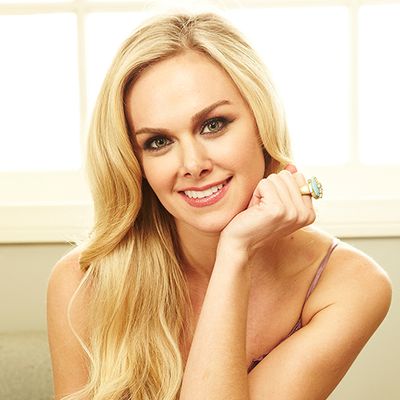
Multi-hyphenate Laura Bell Bundy on motherhood and health and the Red Pilling of American. Laura even has a song in my movie RED PILL. Make sure to listen to LBB's new musical podcast, Women of Tomorrow, that explores issues women are facing today via BPN.fm/wot... Read More
From the show: You Can't Say That!
Guests
Featured Shows
About
Multi-hyphenate Laura Bell Bundy on motherhood and health and the Red Pilling of American. Laura even has a song in my movie RED PILL. Make sure to listen to LBB's new musical podcast, Women of Tomorrow, that explores issues women are facing today via BPN.fm/wot.
Produced by Dori Berinstein and Alan Seales, edited by Derek Gunther, music by Cat Dail.
A proud member of the Broadway Podcast Network.
Transcript
This transcript was automatically generated and might contain errors.
[0:00] Tonya Pinkins: Welcome back to part two of my conversation with Laura Bell Bundy.
[0:03] Tonya Pinkins: I'm Tonya Pinkins, and you're listening to You Can't SAY THAT.
[0:08] Tonya Pinkins: We gotta speak to Ly.
[0:12] Tonya Pinkins: We've got a sending one news for you.
[0:24] Tonya Pinkins: So Bundy. You got you're born with a hole in your heart, but you got all this energy. Were your parents freaking out of all that you wanted to do? Tell me about this growing up with all this energy. But you know, you also came in seeming like maybe they didn't even know you were gonna make it.
[0:42] Laura Bell Bundy: Well, I think I didn't find out, they didn't find out until I had a hole in my heart. Uh, that I they didn't find out I had a hole in my heart until I was six, six to eight weeks. And every baby is born with a hole in their heart, but most of them close at that point, and mine did not. Okay. Yeah, it's a ventricle septal defect. And mine didn't close. And so, of course, my mom was terrified. As most women are, they go through this uh pregnancy and they give birth to what they think is a healthy baby, and then they get news that something's wrong with them, and she was all by herself when she found this news out, and there weren't cell phones. She couldn't, you know, it's hard to get a hold of my father.
So um, yeah, so they're very nervous. And in time, they did their research. We I was born in Ohio, even though I was raised in Kentucky, and I was born near Cleveland, so they went to Cleveland Clinic and they had access to great doctors. And there was uh a woman once when we moved to Kentucky, a doctor there named Jackie Noonan, who is a pediatric cardiologist who watched me my whole life, even into my 30s. This woman was taking care of me. Because how you approach a congenital heart defect is very different than how you approach someone who has a heart condition because they have high cholesterol or bad or blood pressure. It's just very different. Um so um, so yeah, I mean, at in time I just got I would get two EKGs and ultrasounds a year, and then it became one, the hole started to close.
And when I got into my 30s, it became one of those things where you know my heart had was working very hard and had worked very hard my whole life, and there was a slight bit of expansion in the heart. And if I were to continue going at the rate I was going without fixing that hole, more expand uh the heart could enlarge more, and I would be facing congenital, I'm sorry, excuse me, um congestive heart failure in my 40s. So that's why I had it fixed.
[2:50] Tonya Pinkins: Um, but when did you have it fixed? Didn't it fix as a child?
[2:54] Laura Bell Bundy: No, I had it fixed in uh October 2015.
[2:59] Tonya Pinkins: Whoa.
[3:00] Laura Bell Bundy: Yeah. I actually did Legally Blonde with a hole in my heart.
[3:05] Tonya Pinkins: Whoa.
[3:08] Laura Bell Bundy: Yeah. I did every Broadway show. Not just Legally Blonde. You did a lot of Broadway shows and TV shows and wrote songs and music videos. I did I did it all with the condition. I was actually okay. It just got to the point where they noticed the enlargement and and much of you know, care, you know, heart disease related care uh is all about prevention. And so they were look taking a look at seeing the rate of enlargement and going, all right, by this time, you probably want to get this fixed by this date.
[3:41] Tonya Pinkins: And so Laura Will, you're being so cavalier about this. There are people who, you know, uh, they have an allergy and they're like, oh no, I can't do that. Oh no, I can't do this, with far less of a condition than a hole in their heart. Come on, tell me what is what fuels your spirit. Where are you sourcing the kind of courage and energy to just keep creating and to keep living life every day? What's the source?
[4:10] Laura Bell Bundy: Well, I think I get a high from inspiration. Um, you know, and if you break down that word in spirit, it's that moment where you've set this stage to where you can be a channel for a creative thought. And so if we're gonna get spiritual, yes, um, we are creative beings, just like the force that created us. You want to call that the universe, you want to call that source, you want to call that God, that's fine. You want to whatever you choose. You want to talk about things written in the Bible that were made in the image of God. Well, I believe that is because God is a creator, so are we. So that is my purpose here. My purpose here is to expand. Hopefully, I'm making expansion for good. And then also my soul has a journey as well.
I don't know why I was born and was drawn to the arts. I was singing at five, six years old and winning singing competitions. And then I also had training, but there was something that was given to me that I'm quite grateful to have. And a lot of energy, right? I've always I have a lot of energy, but I'm inspired. I see, I think energy is so interesting to examine. We can talk about energy that we get from our food or that we get from sleeping, and we wake up and we feel full of energy. But we can also talk about energy and fuel as like our divine.
[6:17] Laura Bell Bundy: Yeah. For me, I feel like people find me so intense, but when I just get out of the way and like let the energy come through me, I just have more energy than most human beings have, but I'm just getting out of the way and allowing myself to be used by the divine. It's just flowing through me. It's just doing what it's doing, and it's creative and it's always creating. I I that's exactly how I feel. It's like you can block your energy by not allowing. And so I think it's interesting and it's kind of an adventure to see where how I'm going to be used. Uh, I don't really think that I'm fully responsible for any of the songs I I've written or any of the choices I make on stage. That is, I'm just a channel.
And I my job is to leave myself open to make those things happen. And you know, like I was saying, the energy is very interesting. Energy also is about your thoughts. Like your thoughts can cut off your energy. You can have a debilitating thought that makes you feel depressed, which gives you no energy and makes you not want to get out of bed. You know, you have a breakup and you can't get out of bed, and you know, you're ordering pizza and eating ice cream in bed. And the second that person calls you and says, Hey, I made a mistake, I still love you, you're out of bed in two seconds, you got some clothes on and you're down the street making out. You know, there is something about the way that we think, which provides energy for us, and the way that we think that takes our energy away. And I think that the lens through which you view life sets the stage for how you experience it.
[8:02] Laura Bell Bundy: So I can view these things as bad things that happen to me, or me being a victim, but I am not. These are opportunities for me. The conflict that I have in my life, meaning the negative things, the you know, the disease, the neck, whatever. This is an opportunity for me to expand. There is no expansion without a problem. People are uh, okay, let's talk about this. People were shitting in the woods, they were getting eaten by bears, and at some point they're like, we need to build an outhouse. And then at some point, this is just so I can poop in private and protect it. And even the outhouse, that didn't work. Wouldn't it be nice to have some indoor plumbing? Then two guys named Crapper and John literally, literally they came up with the toilet bowl in the house and indoor plumbing.
They did that because a problem was posed in front of them. And you know this. Anybody who works in any industry, what happens when there is a problem? Well, you figure out how to solve it. And that you're using your creative energy, right? You're figuring you're you're an artist of that particular, you know. Whatever it is, that there's an artistry to the solving of every solution, is is creativity. Solution is creativity.
[9:29] Laura Bell Bundy: Yes, now we're gonna we've played a song of yours, um, American Girl. Do you want to tell us about that inspiration?
[9:38] Laura Bell Bundy: Sure. Um, so I wrote American Girl with um my great friend Shay Carter and uh Jeremy Edelman, who I wrote the rest of our album, Women of Tomorrow and Woman of Tomorrow um explores that each song explores uh issues that women are being faced with. Um, whether that be um over apologizing, equal pay, uh breaking the glass ceiling, pitting ourselves against each other, uh reaching unattainable beauty standards, obsession with social media, blah, blah, blah. But American Girl is a song, you know. We when we talk about um, it's so hard to be an American girl, it's so hard to live in a first problem world. There's kind of a wink at you there. Uh, because we really know by comparison, it isn't that hard. Uh you're not living in a third world country. There are people going through there are refugees that are going through far worse. But we still have we still have our own problems and pain relative to our experience.
[10:51] Laura Bell Bundy: And as American women, we are sold a lot of things about how we should look, how we should act, these products we must have now, these shoes that we must have. Our life will only be good if we are seen on this boat, you know, with this lap in living in the lap of luxury. We've come into this Instagram, like that's setting the standard for how we live our lives. And if we don't reach that Instagrammable standard, we are not enough. And as women too, we're told, like, hey, do it all. We can do it all. We can go to school and get the degree and have the job and have the kids and have the family, and we can do it all. Yes, we can.
[11:42] Tonya Pinkins: It seems like you're doing it all.
[11:43] Laura Bell Bundy: It seems like you're doing it all. Are you not doing it all?
[11:46] Laura Bell Bundy: I'm doing it all, but I cannot tell you whether I'm doing it all really well. I cannot, because I'm trying to do it all, which means at some point I am sacrificing something. When I work, I sacrifice time away from my family and my child. When I'm with my child, I can't get my work done. You know, I mean, it's all kind of a balance. It's like this kind of juggling act all the time. But you know, with this American girl, this song is less about being a woman and more about being a girl who sold a lot of images of how she should look, of beauty, material wealth, and you go to college, you take a loan out from Sally May, it's gonna take you forever to repay it. You're gonna have to be in the workforce for at least 15 years.
And if you are, well, you should probably freeze your eggs. Because if you start a family before you've paid back those loans, you'll have those loans for the rest of your life plus your house loan. Well, actually, you probably won't be able to get a house because you're trying to still pay off those loans. Now you have to come for the college, but you could not get a job after you graduated.
[13:04] Tonya Pinkins: Yes. Now you got another song on there about passing laws, right? About women, and you got a whole bunch of other people doing that song with you.
[13:13] Laura Bell Bundy: Oh, I'll get it, girl, you go. Yeah. Get it girl go. That's the celebration of being the woman, doing it all, and breaking the glass ceiling. And the song is really about these different women who are, you know, getting the degrees, getting another degree, raising the kids, still getting a meal on the table, you know, speaking in the way that they will be heard. And it does include as well. We sort of paint the picture of a woman who is raising her child and going to her child's basketball game, but at the same time she's running for Senate on the side, and she's trying to make change for good. And you've got some real candidates in that, don't you?
[14:02] Tonya Pinkins: Yes.
[14:02] Laura Bell Bundy: So our video, which thank you for making a cameo. So amazing. We have, so that the song is being sung by me, Shoshana Bean, and Annika Noni Rose. And then we have cameos from a bunch of different Broadway stars, television stars, comedians, and musicians. And then it's also featuring all of the Democratic women who are running for national office in 2020.
[14:35] Tonya Pinkins: You want to name some names?
[14:37] Laura Bell Bundy: Well, like Amy McGrath, who is running against Mitch McConnell for Senate. And then, of course, you have people that are running again, like AOC and then other women that are coming up this, Teresa Tomlinson in Georgia. It's so it's, we have a lot of women running. I mean, there's so many women that I can't list them all. But yeah, it's impressive. So I, and here is the other thing, it's like who knows how these elections are gonna go if we are still in quarantine, and obviously these women cannot campaign right now or campaign in the way that they thought they were campaigning. I mean, I'm trying to figure out how to be involved in like a private Zoom fundraising event, you know. So hopefully that this video can also bring some awareness to people.
[15:35] Tonya Pinkins: When will the video be ready?
[15:39] Laura Bell Bundy: I'm thinking it should be finished in about two weeks.
[15:44] Tonya Pinkins: Oh, so it's gonna come out soon.
[15:46] Laura Bell Bundy: Well, it's gonna be finished in two weeks, and we were hoping to drop it when Biden announces who his VP is gonna be, because he said that his VP is going to be a woman. Now I don't know who, so it's gonna be like a quick edit, like the whole video is gonna be done, and then we're gonna just like plop the image of the woman, whoever that is, in there.
[16:10] Tonya Pinkins: Awesome.
[16:10] Laura Bell Bundy: Yeah. We gotta figure out how we can have your this podcast ready for go with the video drop and have it all happen like you predicted it. Who do you think it's gonna be?
[16:19] Laura Bell Bundy: Well, I was really thinking it was gonna be Stacey Abrams. But I, you know, I've heard different opinions. I mean, I think some people think it might be Klobuchar, some people may think it's the, I believe is it this governor that's from Michigan? I've heard a couple of different things. I really like Stacey Abrams personally. And I kind of hope it's her, but you know, it may be somebody that I'm not even thinking of.
[16:53] Tonya Pinkins: Well, this has been really delightful, and I appreciate your honesty and vulnerability. As we're wrapping up, I got a couple questions for you. Who inspires you? You said it's inspiration. Who are the people who were the mentors' inspirations to you in all that you do because you do a lot of things.
[17:11] Laura Bell Bundy: Hmm. He would say, well, my father.
[17:22] Tonya Pinkins: Okay.
[17:23] Laura Bell Bundy: Well, I guess definitely a mentor and an inspiration. He was a businessman and an entrepreneur. And his philosophy was "ask" is the most powerful three-letter word. And he was a person who really encouraged me to, like, he asked me what the meaning of life was when I was five. And he continued to ask me that question. So I would say that my father was the person who gave me a desire to have meaning and purpose in my life, which has made all the difference. And so just by the nature of that encouragement and that relation, he encouraged me to appreciate that which was inside of me than on the outside. And the beauty is from within. But yet he was also like the fiercest negotiator. And he would help me negotiate my contracts and things.
So my father is the real deal inspiration for me and mentor to me. And my mom too. My mom is just like, you know, my mom is just, if you want to look for a definition of drive in the dictionary, there's a picture of my mom. And both of my parents worked really hard. And I think that my philosophy in life is, you know, talent only gets you to one point, and hard work gets you the rest of the way. And hard work and learning and having a commitment to learning is really, really important. But I, you know, there are other people that I've worked with that I admire and that I've seen just be totally inspired. You know, like when I worked alive.
[19:39] Tonya Pinkins: What'd you say? Are your parents still alive?
[19:41] Laura Bell Bundy: My father passed away almost two years ago. My mother is still alive.
[19:47] Tonya Pinkins: So he didn't get to see his grandson, your father?
[19:50] Laura Bell Bundy: No, not on this plane.
[19:54] Tonya Pinkins: Okay.
[19:55] Laura Bell Bundy: But my son looks just like him. It is crazy. I look at my son and I see my father, and it is such a gift because I still get surprised that my father isn't here. And I get to see him every day when I look at my son. So it's like it's a gift, it's a real gift. My son also has his spirit and like his laugh, but I mean he just looks so much like him, it's so crazy. He looks more like him than I look like my father.
[20:39] Tonya Pinkins: Well, you made me think of one more question, but I had another one. But right now in the world, what do you think is needed?
[20:53] Laura Bell Bundy: Compassion. Compassion is tricky because compassion almost always requires experience and suffering on the part of the person who has the compassion. And when we have charmed lives like our president, we miss the lesson of compassion, which is also, you know, listen, this is why we have to be embracing of our pain and the experiences that happen to us that aren't necessarily positive because those are providing us with a connection to the human race through compassion. And as artists, it's providing us the understanding of emotions that we wouldn't understand without those experiences and that we couldn't give truthful performances. But yeah, I believe we need compassion and understanding and empathy.
And my very last question, this has been so inspiring and you are just, you're really a beautiful soul, that's what I say, a beautiful, beautiful soul. I've loved listening to your album, and is there some failure that happened in your life that set you up for success but you didn't know it at the time?
[21:08] Laura Bell Bundy: Yes, there's been many. I think, you know, it's like I said, I gained compassion from my failures, right, and my mistakes, and I would not be who I am without those. So I have much gratitude. Can you share one?
[22:45] Laura Bell Bundy: Well, it's kind of silly. But it did it. That's what matters. It's silly. It has to do with work. I went on a dance call, a danced audition, an open call when I was 17. And it went horribly. Horribly. It was terribly embarrassing. I auditioned for this something with Grazia Danielle. And I couldn't get the steps. And I, you know, and I was a trained dancer, but it takes me a second to like, I don't learn quickly. I have to get it in my body. I kind of need to sleep on it. And then it's there the next day. So like going to an audition call where there's all these moves I have to learn very fast, I cannot survive. And it was so bad that I swore I would never go on another dance call for the rest of my life.
And because I made that decision, I only went on singing calls or acting call auditions. And so I bypassed. I just simply, I just like started auditioning for principal characters because I was so terrified to be in that position again. So that huge failure was like this is the decision I'm making. And the other thing is I remember making a decision to leave New York after I did Wicked. And I don't know if it was a failure, but it was a moment of decision, and I was like, I'm not coming back here until I'm starring in an original musical on Broadway, and that's exactly when I came back, you know. But I don't know. I let my failure at a dance call led to me getting a principal character in Hairspray because I just refused to do it.
[24:43] Tonya Pinkins: With you because you just hit it for me. I came out of school out of Carnegie Mellon and I was dancing every day, and I went on these dance calls, and I was like, oh my God, they call them boys and girls forever. I don't think they're working harder than anybody and getting paid less. I'm not doing this anymore. So it was a similar sort of thing for me of like this is too hard. And I'm gonna be called boys and girls for the rest of my life. I'm gonna try to be the person in front of the dancers. Well, I couldn't do it. Here's the thing. I couldn't do it. I still do it either. I look at these, I mean, my best friends are people who are swings and dance captains. And I'm like, that is so much harder to me than playing a leading role that is way harder.
That is a skill set I do not have. And my recognition of the fact that I did not, I don't have it. I mean, that is just no fucking way I could do that. But you know, I think the question that you have about the failure, I would really have to actually think upon it. Like I think about that because it's like my worst audition experience that led to something, but in terms of failures, I think that's it. There isn't a single failure I haven't learned from that hasn't served me. So that I will say, and whatever the biggest one is, I don't know. I'd have to think about it.
[26:19] Laura Bell Bundy: Well, I thank you for spending some time with me and being open and vulnerable with me. I want to say one last thing that is when I left here after doing The Wild Party, I lived in California and I also said I'm never coming back to New York until I'm starring in a Broadway show. And the next time I came back was Caroline, or Change. So I do know that thing about setting an intention and sort of manifesting that thing that you desire.
[26:51] Tonya Pinkins: Yeah, it's interesting. I think you know, at the time too, I, you know, there was just like an inner knowing. I think sometimes even like youth allows you to stay there a little bit longer. Um yeah, it's amazing. I think when you make decisions, you're telling the universe very clearly what you want. A lot of the time, you like go back and forth and back and forth. I want this, I don't want that, I want the, you know, and we were giving mixed signals.
[27:24] Laura Bell Bundy: Yeah. I think that that to me is the piece in the Bible about where two or more are standing together, there I will be also. I feel like often we need a partner in believing that if you can share a dream with someone and they will hold the space for that, that even when you lose your faith and hope, that friend who is your partner in believing can hold it. And so that signal stays strong even when you lose hold of your belief in it.
[27:53] Tonya Pinkins: Oh my god, you've just struck a chord with me. So yes, because here's the thing I think that I do. When I have an idea, I share it. I don't know, I can't help it. I share it. Do you know what I think I want to do? I'm gonna do this. And when I share it with someone, it becomes real for me. And then I feel like I've been held accountable to following through. I believe that is the difference than if I just had a series of dreams or that I'm taking action to having them become a reality. It's sharing. I remember even a life coach at one point said to me, what's your five-year plan? And I said, this is what it is. And he said, have you shared that with anyone? And I said, no. And he goes, well, is there someone that you'd like to do that plan with that's a part of that plan?
And I'm like, well, yeah, actually there is. He said, well, why don't you go have lunch with this person and see, tell them about your five-year plan, see what their five-year plan is, and see if maybe there's a way that you guys can be a part of each other's five-year plan and make your own plan together. Well, God, it took a concept, an idea that I was just sort of maybe mulling around with. And it set a time frame to it. It made it real, it made it definitive, it made it become the goal of two different people. I very much think that is a piece of the puzzle between having a dream and making a dream a reality.
[29:40] Laura Bell Bundy: Well, let's you and I right now set something that we can be partners in believing in as we close out this podcast. What is a dream you want me to hold for you? And what can I, and I'll share one that I want you to hold for me.
[29:55] Tonya Pinkins: I would like this project that I'm doing, The Women of Tomorrow, to be the beginning of being an advocate for women and setting women's voices to music. I would like, and my goal, as you know, is to have Women of Tomorrow be a show on Broadway where we maybe will be the first one to come back to Broadway for real. Yes, but as a way it is. We do a show about the experience of being women. So that's my, I mean, that's what I'm gonna put out right now. And I'm gonna hold it for you. I'm gonna hold the sacred space for that to be true, that that is law in the universe. And I'm gonna ask you to hold the space for my film RED PILL to just internationally touch minds and hearts and activate a movement on the planet.
[31:00] Laura Bell Bundy: You got it. RED PILL.
[31:03] Tonya Pinkins: Thank you, Laura.
[31:05] Laura Bell Bundy: Thank you so much.
[31:06] Tonya Pinkins: Thank you, and that's my thank you. I'm Tonya Pinkins, and you are listening to You Can't SAY THAT on the Broadway Podcast Network.
[31:20] Tonya Pinkins: Thanks for listening to You Can't SAY THAT, the show where you can. I'm Tonya Pinkins, and You Can't SAY THAT is part of the Broadway Podcast Network, produced by Dori Berinstein and Alan Seales, edited by Derek Gunther, with music by Cat Dail. If you like what you hear, don't forget to subscribe and rate this podcast highly wherever you stream. Follow me on Instagram, Twitter, and Facebook at Tonya Pinkins. And to learn more, visit BPN. Stay safe. This is Tonya Pinkins. We gotta say one drill for you.
© Broadway Podcast Network, All Rights Reserved