

Actor/singer Jay Armstrong Johnson on his 2020 Wake-up call and how that has impacted his family. Produced by Dori Berinstein and Alan Seales, edited by Derek Gunther, music by Cat Dail. A proud member of the Broadway Podcast Network... Read More
From the show: You Can't Say That!
Guests
About
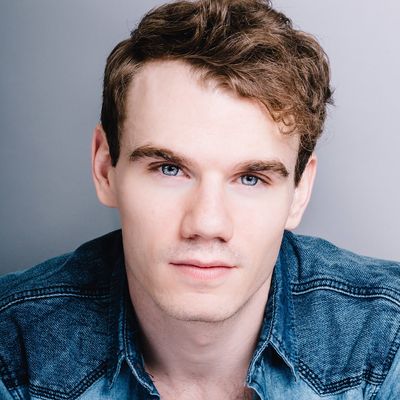
Actor/singer Jay Armstrong Johnson on his 2020 Wake-up call and how that has impacted his family.
Produced by Dori Berinstein and Alan Seales, edited by Derek Gunther, music by Cat Dail.
A proud member of the Broadway Podcast Network.
Transcript
This transcript was automatically generated and might contain errors.
[0:17] Tonya Pinkins: Hi, this is Tonya Pinkins, and you're listening to You Can't SAY THAT! The show where you can.
[0:22] Tonya Pinkins: My next guest said he is charged the fuck up. So, you know, welcome Triple Threat, Jay Armstrong Johnson.
[0:29] Jay Armstrong Johnson: What's up?
[0:30] Jay Armstrong Johnson: There's so much up right now, Tonya. I mean, I quite literally just got off of a phone call with my sister. Um, and I was essentially told that my brother-in-law voted for Trump, um, and that my cousin, who has a husband on the police force in Texas, would like for me to apologize for causing my family grief in this time for believing that black lives matter and that we should defund the police. So it's so crazy that that was the conversation that I actually had not 10 minutes ago before stepping onto this platform with you, because now I just gave a whole half-hour spiel to my sister about how I will not be apologizing to my cousin and how I am very much taking offense to the fact that her husband voted against my rights as a gay person. So that's why I'm feeling charged the fuck up right now.
[1:24] Tonya Pinkins: And what did you ask her how she voted?
[1:27] Jay Armstrong Johnson: She voted um uh for Biden, actually, because she does believe that I should have rights and that she does believe that underrepresented voices should be continuing to be represented. So um, you know, that there, I guess there's absolutely a disconnect within my own family that is being mirrored by the disconnect that is in this country right now.
[1:46] Tonya Pinkins: And how's that like? Are you gonna get like excommunicated from the family?
[1:51] Jay Armstrong Johnson: Yeah, right now it seems like my cousin is in a is in a mood where, like, if I don't come groveling at her feet and apologizing for how I feel and how I've been acting over these past nine months, that there's not really a way forward for our relationship. So that that's a bit disconcerting and and sad, seeing as that I'm hoping to travel home to Texas soon to see everyone. Um but yeah, I I I am I'm kind of a bit at odds because I wasn't really ready to have that conversation with my sister today. And I guess I didn't realize how many people in my family truly voted uh for Trump, even though my hometown of Fort Worth actually turned blue in this election, which is really kind of exciting.
[2:34] Tonya Pinkins: Where is Fort Worth?
[2:36] Jay Armstrong Johnson: I was looking, like I know it's called like Dallas Fort Worth, but I couldn't find Fort Worth on the map. Yeah, it is just west of Dallas. So um, yeah, so it's it's what they call the heart of Texas. Um, and so it's it's um oh god, I don't even know how to tell you. It's like North Texas, but not the panhandle. Um, the part that um where Oklahoma kind of dips down into Texas, it's like just south of where Oklahoma is.
[3:01] Tonya Pinkins: And are your parents still alive?
[3:03] Jay Armstrong Johnson: Um they are. Um, mom is in Fort Worth, dad is in Dallas.
[3:07] Tonya Pinkins: And how'd they vote?
[3:09] Jay Armstrong Johnson: Um, I mom voted for Biden. Um I I really have kind of uh my conversations with my mother have been really kind of brilliant over the last few months, or I guess since really the resurgence of Black Lives Matter after George Floyd, um, I really have kind of changed my mom's mind on it all. Um and it has to do with the education that I was given by watching 13th, Ava DuVernay's 13th on Netflix, and by reading White Fragility and kind of doing the educational work that I needed as because I thought that I was this woke white boy that understood it all, and I really um didn't even scrape the surface of what it actually means, um, what race relations mean in our country. So um my mom has been on that journey with me and she's been listening.
Um, and she uh was really kind of taken back by 13th specifically on Netflix, and she even began to cry on the phone when I was when we were talking about it and kind of uh rehashing it and having hard conversations about it. And as she was crying, I had to kind of tell her about this book, this chapter that I had just read in White Fragility called White Women's Tears. And so then I had to do a re-education again with my mom being like, your tears are actually not helpful in this, it's your action that we need, not your tears. So that so it's it really with my mom, it's been really kind of lovely and um hard, but uh uh I've I've found some solace in it, and that she is one of the only people in my family that's really kind of taking that journey with me when everyone else is kind of coming to a head.
[4:50] Tonya Pinkins: Now, you know, I'm gonna have to challenge you. I mean, mama might love you and say all the nice things to you, but when she went in that booth, we know that it was something like 86% of white women went for Trump. So that means every time you when you see three white women, two and a third of them voted for Trump. So we can't even listen to what people say, as we know.
[5:10] Jay Armstrong Johnson: It's true.
[5:11] Tonya Pinkins: And you know, I I really hope that I'm not just being like completely lied to.
[5:20] Jay Armstrong Johnson: You probably are.
[5:20] Tonya Pinkins: I'm gonna tell you that she loves you and she's your mama, and she wants you to have your rights. But when she got in that booth, she she voted Trump. I would put some money on it. I mean, who knows? She loves her baby and she don't want anything to happen to you, and she will fight for your rights. But I think she voted the way she's probably always voted.
[5:40] Jay Armstrong Johnson: Yeah, well, let's hope not, but you never know, you never know.
[5:44] Tonya Pinkins: It would be surprising because so far, if we go through your family, we know that like 90% of white men voted for Trump. So, you know, if we take 10 people in your family, that you would be kind of the only person out of 10. You would be the one in 10.
[5:59] Jay Armstrong Johnson: Yeah, it's true. Well, it was kind of weird to hear my sister kind of back her husband up about his reasoning for voting for Trump, and yet she voted for Biden. And it's just like I don't believe her. I don't know how there can be such a disconnect within us in the same household, and how you can be okay with his reasoning for voting for Trump. I mean, it really I don't believe her. I think her husband would have fought her and screamed at her, and I don't think she has that kind of sovereignty.
[6:27] Tonya Pinkins: Yeah, it's a it there's a disconnect that I am just not quite understanding. And but I think what you're saying is happening with people telling you they're doing something which the polls clearly reflect did not happen, you know.
[6:40] Jay Armstrong Johnson: That is correct.
[6:41] Tonya Pinkins: Yeah. Um, and it goes this whole idea of me needing to apologize to my cousin for you know, believing that black lives matter and for believing that the police should be defunded. Like, I I'm not gonna apologize for that. You're either racist or you're anti-racist, and most people in my family just want to keep quiet. And that's actually just helping the other cause.
[7:06] Tonya Pinkins: But let me, I'm gonna just I'm gonna keep doing this because I think it's a very important thing to do for white people because the world gets made so pretty for them all the time. That your cousin felt she could tell this to your sister. Meant she felt sure that your sister was on her side, and because she keeps in touch with you, she could convince you. She would not be saying for your sister to tell her that if she thought your sister was not in agreement with her.
[7:34] Jay Armstrong Johnson: Wow, that is so true. I haven't even thought about that, and that's terrifying and stupid. And I I've was really kind of taken back that she was asking me to apologize because it and I had to I had to lay it out for her that I will in fact not apologize. I will I will push and push and push to create change because that's what my friends of color are asking me as a white person to do. It ain't about just being quiet and letting shit happen, it's about being anti-racist, it's about creating the change, it's about saying fuck the system. The system's not worked for all of us. The system's lying to you and to you. You're a female, you're losing your right to own your own body if you vote for this man.
[8:17] Tonya Pinkins: Yeah, oh, you want your guns? Well, uh so I'm so my heart is beating so fast right now.
[8:25] Tonya Pinkins: When's that trip scheduled? Did you buy the tickets already?
[8:28] Jay Armstrong Johnson: Oh my god, I haven't yet. It's really because I'm wanting to go home because my two best friends are having a baby together, and I know that they voted for Biden and they're lovely, and we did theater together growing up, and I officiated their wedding uh last year. So I really want to be there for their baby shower, their outdoor socially distanced masked baby shower. Um, but yeah, it's when is it? It's supposed to be um November 14th is the baby shower.
[8:53] Tonya Pinkins: Soon, and where would you stay if you went?
[8:55] Jay Armstrong Johnson: That's another question that I don't actually know the answer to because my mom is uh she's high risk. Um she has lung issues already. And so if I were to by some chance carry this virus from here to there, I know that I can't come within six feet of my mother without a mask on. So I don't know if I should stay actually in my mom's house. I don't want to stay in my sister's house because her husband voted for Trump and they sleep with guns in their bed. Um I don't uh, you know, it's really probably staying at one of my friends' houses and seeing if they're okay with me being in their houses in the middle of a pandemic. So it's either spend money on an Airbnb or a hotel, or you know, see if I can sleep on a friend's, you know, guest bedroom.
I did do a rapid COVID test today. I did both of them. I was like, I want this, the whatever the more efficient one, but let's do the rapid one. And my rapid one, you get the results in like 15 minutes, right? And then the next one it takes three to five days. So I did both of them today. So maybe just even to do the rapid one before you get on the plane, and then you at least have some assurance that even if you if it's a false positive, it's not a high enough, you know, quantity of the virus in you. You know what I'm saying?
[10:06] Tonya Pinkins: Totally.
[10:08] Jay Armstrong Johnson: And then the gloves and the masks and the the shields. Yeah, I I just spent two months in Korea and everyone wears them all the time. And in 50 million people, only 400 have died.
[10:20] Tonya Pinkins: That's unbelievable.
[10:21] Jay Armstrong Johnson: Actually, it's so believable. You know, I I always wondered why I saw mostly Asian people wearing masks like on the train. And now I understand. They're not protecting themselves. They're protecting me. They probably woke up with a tickle in their throat and they said, you know what, I'm gonna wear a mask today. And now I feel like that's how I'm gonna live my life for the rest of time. Like masks will be how I live forever now.
[10:44] Tonya Pinkins: So you I know you just raised a whole lot of money for Broadway Cares.
[10:50] Jay Armstrong Johnson: Couple hundred thousand dollars.
[10:51] Tonya Pinkins: Yeah. Tell us what what was going on.
[10:55] Jay Armstrong Johnson: Um every year I've been doing this Halloween concert extravaganza downtown.
[11:02] Jay Armstrong Johnson: At first it started at 54 Below, just as like an album release party. I just love Halloween. So I got dressed up like a witch and I sang songs for my album at 54 Below as an album release party. But then we started, we did it again the next year, and we added more of a narrative to the evening, and then we moved it to a venue that actually has space for choreography and for some blocking. So then we're now in our fifth year, and it's been my dream to partner with Broadway Cares because I love them so much as a company. I love doing Broadway Bears, I love doing Broadway backwards. I think they produce fun things for great causes. Um, and they always have like underrepresented voices being very represented in everything that they do.
So I just love that organization. Um, so they said yes to us this past January, um, to be our presenter and our benefactor. Um, and then COVID hit us and shut down all our performance spaces. Um, but my co-producer Danny Marin of Cone Limone Productions and I decided to innovate because in phase four of New York reopening, they were allowing television and film production. So we translated our live cabaret show into a virtual visual album. So instead of live performances, it was music videos.
[12:11] Jay Armstrong Johnson: So how'd you do that? We, God, how did we? We raised um a pretty good amount of money up front so that we could at least pay the venues that were going to let us shoot um our videos to pay some of our technicians, some of our camera operators, um, some of our DPs. Um, we fed all of our artists when they were on set. We um, we paid for our artists' travel expenses to and from set. So we had to have some money up front. And so when Broadway Cares said yes to this version of our show, then we had to raise money to just pull off their production in general. And really, it was just about reaching out to friends and fellow artists in the theater and in the television film world to be like, hey, you've been probably sitting on your ass for the last six, seven months.
Do you want to work on something crazy? Um and try to help us pull off this piece of art um for a good cause. And most everyone said yes, and they showed up and goddamn their work was good. At every turn, everyone's work from hair to makeup to camera to pre-production to editing to uh I mean uh to the artists, to the technicians in the studio, um, all of our musicians, um, our vocalists, everyone's work was unbelievably good.
[13:30] Jay Armstrong Johnson: And every step of the way I realized that we had something really special um that I didn't quite recognize when we first started. It was just we had a bunch of hungry artists wanting to create, and they all came together um for a common goal and created something really kind of mind-blowing and beautiful. And we raised almost a quarter of a million dollars for Broadway Cares.
[13:52] Tonya Pinkins: Wow. And can we see this still? Is it available somewhere to be seen still?
[13:55] Jay Armstrong Johnson: Yes, it is.
[13:56] Tonya Pinkins: Tell us where.
[13:57] Jay Armstrong Johnson: Um you can actually go to, I'm gonna actually find it because it used to be uh, it used to be a link uh that they've since taken down, but now you can see it somewhere else. So I'm gonna find this link real quick.
[14:11] Tonya Pinkins: Yeah, before we get done here, let's find that link because people can still see it and they can still donate. Cause you made like 15 music videos, right?
[14:18] Jay Armstrong Johnson: Yeah. Um we made about 14 of them, and Toddra Call actually produced his own music video.
[14:26] Tonya Pinkins: I love Toddra Call.
[14:27] Jay Armstrong Johnson: I've known Todd since I was 15 years old. He was my first gay kiss. We grew up in Texas together. He is he's one of my favorites.
[14:35] Tonya Pinkins: Oh my god, I love Todd Rick Hall.
[14:38] Jay Armstrong Johnson: Isn't he the best? Oh my god, just just everything.
[14:42] Tonya Pinkins: The lyrics, the words. Now, do you write all your own songs or are you doing a lot of covers?
[14:46] Jay Armstrong Johnson: Um there are mostly covers, but we do some like parody lyrics. Um I I had a whole writer's room. We started we started a pr we started pre-production back in June. And so when Broadway Cares gave us the thumbs up, I made sure to get five or six of my most brilliant friends, one from the music department, one from a writing perspective, one from a producer's perspective, to like be in these writers' rooms every Friday at around noon. And so we kind of constructed this show as a group. Um so yeah, that's that's kind of how how it all came together. So uh a lot of a lot of the ideas are mine, but they are they are group ideas that then I um had to like execute as the writer with a lot of help.
[15:28] Tonya Pinkins: Awesome. So what is the having you know done this extravaganza production, what did it inspire you to next?
[15:35] Jay Armstrong Johnson: Um it kind of um showed me uh what I can actually accomplish as a producer. I've always considered myself an actor, um, because it's what I've done my whole life. Um, and then I started producing concerts a few years back at 54 Below and then the Halloween show every year, but um, I didn't realize what what I could actually pull off with uh with other artists in terms of film. Um, it's a world that I don't know much about. I studied dancing, singing, and theater my whole life. So to be able to kind of pull off um the production of a film uh in the middle of a pandemic, um I surprised myself. We as a producing team surprised ourselves. Um so yeah, uh I and I and I'm excited to do more. And now that I know that I can do it, now I want to do more, you know.
[16:31] Tonya Pinkins: I so get it. I'm producing my first feature film in the midst of this pandemic. I just came back from two months in Korea editing my first feature, Red Phil. That should be coming out soon.
[16:42] Jay Armstrong Johnson: So I can't wait.
[16:44] Tonya Pinkins: I can't wait either. It's like, you know, when I it it's it's you know, I we thought we were gonna get it out in March, and I am accustomed all of my life of being ahead of the times. That's just what I'm accustomed to. And if I had come out in March, which is when I thought it was supposed to, it would have been kind of dismissed as like, oh, that's so far-fetched. Now it's just the zeitgeist, it's just exactly everything that's going on. So I'm like, okay, so it wasn't supposed to come out in March. It's supposed to come out and be like, oh, this is our life. We didn't know, you know.
[17:22] Jay Armstrong Johnson: So yeah, way to go. You you did it.
[17:24] Tonya Pinkins: How scary is that though?
[17:26] Jay Armstrong Johnson: You know, for me, it isn't scary. For me, it's a sense of like my eyes are clear. I'm seeing very clearly. And that it gives me a sense of confidence. Like, trust your instincts. If your instincts say, run, go run, you know. You know, don't that's how it feels for me. It isn't a scary thing for me. Like people are like, aren't you nervous or nail buttons? I'm like, no, I'm not, because I saw that this was what was coming. And we're gonna we're gonna get through it.
[17:54] Jay Armstrong Johnson: Yeah, I felt that same kind of energy with this Halloween project. Uh a lot of synchronicity has been happening in these few months leading up to it. Um, a white feather has always been like a symbol of keep going. And I don't know how many white feathers I've seen on the sidewalk in the past four months, but it's actually crazy. Now I need to get like a white feather tattoo on my arm or something.
[18:15] Tonya Pinkins: Well, collect those white feathers and have a feather box.
[18:17] Jay Armstrong Johnson: Oh my goodness. And start, you know, that that that if that's like a totem for you, then you can start to have an altar and a ritual. If that is a spirit of energy that is is coming talking to you.
[18:29] Tonya Pinkins: Oh my god. I would start collecting those.
[18:31] Jay Armstrong Johnson: How very witchy of you.
[18:33] Tonya Pinkins: I'm obsessed.
[18:34] Jay Armstrong Johnson: Yes. When I go to other countries, I often ask that a feather be given to me, and it doesn't always happen. And Korea, I got lots of feathers in for Korea.
[18:46] Jay Armstrong Johnson: Oh, wow, wow.
[18:47] Tonya Pinkins: Oh, I love that.
[18:49] Jay Armstrong Johnson: Yeah. Yeah, that may be a totem for you.
[18:52] Tonya Pinkins: It sure is.
[18:53] Jay Armstrong Johnson: Yeah. I'm gonna start collecting these damn feathers.
[18:58] Jay Armstrong Johnson: So, you know, Texas, uh, whether no matter who's in the White House, we're gonna end up with uh we've got a court that's gonna, you know, elevate religious freedom, which already started happening. Um what I'm gonna say, I'm gonna I'm like making you for the next 30 minutes, you're the spokesperson for the gay community. You're a producer now. What is your community? What are you, producer, gonna do to make sure that the rights of transgender, same-sex, because it's a I mean, I don't know that they can reverse the statute, but what they can do is extend the right of people to say, Well, my religion doesn't allow me to serve you. Right. My religion doesn't allow me to treat you.
[19:47] Jay Armstrong Johnson: Right. Well, I what was really, really important, especially in doing at least this Halloween film was um my partnership with Conley Mone Productions. My friend Danny actually started out as an errand runner, my first Halloween show. Um he was going and getting us coffee and going and getting us dinner while I was getting my nails and my eyebrows blocked. Um, and then he stuck with me. Um, and he helped me produce the bigger show at Le Poisson Rouge in our in our third and fourth year. And then he became my co-executive producer right after launching his production company, Cone Limon Productions. And his production company, um, their mission statement is to amplify and elevate underrepresented voices.
And so that that was like he can't and he kept me so diligent that every single person behind the camera in front of the camera, on our technician team, on our design teams, to really make sure that we're reaching out to those artists um that are underrepresented so that we can represent them in this way.
[20:50] Jay Armstrong Johnson: Um, and so that me partnering with his company was was huge. And Danny in particular kept my finger on that pulse to make sure do we have um a non-binary representation? Do we do we have um Asian representation? Um and uh really I I had a lot of my white friends that I wanted very much to be a part of my show that I love and adore and are great humans and brilliant artists that I kept putting their names out there, and Danny would take those names off and said, No, actually, we need to find someone that's underrepresented. I love that, I love that artist, but we need to go here. And so just to make sure that I'm surrounding myself with those like-minded people to keep me diligent. Because it's easy to dip into my white pool of friends that have been privileged enough to be able to study the arts and do the arts in ways because of hashtag white privilege.
So that that really is uh Danny's gonna help me keep keep diligent about that. And because of his continual reminder, even when I don't work with Danny on projects, I'm gonna make sure it stays at the forefront of my mind as well.
[21:56] Jay Armstrong Johnson: Yeah, but I was also thinking about like once I remember, I think it was Jim Nicola told me that a company that he, you know, used their products had some anti-gay stuff that they were putting out. And so a bunch of his friends bought up like enough stock so that they could show up at a board meeting and basically vote to change the policy of that company. I'm like, you know, a lot of white men can be patriarchs and not be in the closet and wield a lot of power. So it's like I always think that the white gay male community can have a lot of power if we don't have like the Roy Cohens and the McCarthy, these closeted gays who are self-hating and trying to destroy everybody. I keep thinking, how do we get this community that has power because of its ability to pass to use that power? I mean, can you believe Lindsay Graham got re-elected? I mean, Miss Graham got re-elected. Talk about a closet case, for fuck's sake. And so clearly it ain't even about that.
[23:13] Tonya Pinkins: Right.
[23:14] Jay Armstrong Johnson: Clearly, they don't even care, really. They surely don't. I mean, and because of this pandemic, you know, I love gay pride, I love going out to the clubs on Pride, I like wearing crop tops and rainbows. But this pandemic made me sit for the first time during Pride, and it made me watch the documentaries and made me learn about Marsha P. Johnson. And like so I had to re-educate myself about what it meant to be queer. And the fact of the matter is, trans women of color were the reason why I have the rights that I have today. And so, like when I'm talking to my friends and family back home in Texas that can't get on that trans train because that's like it's against God, they're playing with gender.
That you know, like that now I realize, oh no, I've actually got to shove this in your face and say, No, this is not about God. Your version of God is actually a translation of a text over the course of thousands of years, and it's been translated in not so great of a way. So to really amplify and elevate those voices, the ones that gave me a voice that I didn't realize they gave me a voice, of course, because I thought that it was just like all the pretty gay white boys that fought for my rights. Nah, it actually wasn't. So that's been quite an education for me as a gay man who's been out and proud since I was 17.
[24:34] Tonya Pinkins: How did you do that in Texas?
[24:36] Jay Armstrong Johnson: I didn't do it in Texas. I got into New York University. And the second I got in, I said, I'm gay, and then I ran. Like now, come on now. Okay, he was home for 17 years, nobody knew. Come on now, come on. I mean, that's the thing. Did you have girlfriends?
[24:55] Tonya Pinkins: I did have girlfriends.
[24:57] Jay Armstrong Johnson: And did your girlfriends know? And were they like just okay, I'll be your beard, or were they believing? The thing is is that I was taught at a very young age that homosexuality was a sin and an abomination. And because I was a straight A student and I went to church twice a week, and I was an upstanding citizen of the United States, that I couldn't possibly be gay, even though I had weird itches and I would like crane my neck when I would watch like softcore porn to see if I could catch a glimpse of that dick. But I didn't understand that that was homosexuality then because I would still masturbate to girls. I would still date girls, I would have sexual relations with girls, and I felt like that was who I was until I actually started doing theater professionally, and I was meeting gay men in the industry who were nice and who were talented and who were lovely and who taught me that like gay is not an abomination, it's actually beautiful.
And so at age 15 was when I caught that taste of what it meant to actually be a homosexual and that it wasn't against God. And so I was leading a double life there for a while. When I was working professionally as an actor, dancer, I was gay. When I was home and at school and at church, I was straight. And when those worlds started to kind of collide, and my girlfriends just started to hear about what I was doing in Dallas with Toddrick and all my other gay friends, that's when shit got real. And that was when I like got into college and got the fuck out so that I couldn't get the repercussions of that double life.
[26:33] Tonya Pinkins: Did anybody give you a read, like just you just low down, dirty lying to me? Did you get any of those?
[26:41] Jay Armstrong Johnson: I got it a little bit probably my senior year of high school when we were all in Acapulco on our senior trip, and when things kind of hit when shit hit the fan in a major way. I mean, my girlfriend Lauren at the time, she gave me a mouthful on that beach. It was pretty devastating. Although Lauren and I are fantastic friends now, but yeah, I was a low-down, dirty little two-faced whore.
[27:11] Tonya Pinkins: But you and Lauren made friends. How did y'all get back to be friends again?
[27:15] Jay Armstrong Johnson: I mean, it took a while, you know. I mean, I broke her heart. But then time heals everything.
[27:23] Tonya Pinkins: That's so interesting to me because for me in Chicago, I always knew my boy, my guy friends were gay before they did. They just thought they were in love with me.
[27:34] Jay Armstrong Johnson: And I was like, yeah, I like, yeah, okay. That's that's all right. That's my friend Mary Michael. Mary Michael was the same exact way. I tried so hard to get into Mary Michael's pants, and she would just look at me and be like, You're gay.
[27:51] Tonya Pinkins: For sure.
[27:52] Jay Armstrong Johnson: Did that make you mad?
[27:53] Tonya Pinkins: Of course it did, because like I truly didn't believe that I was. I mean, because if I believed that I was, then you know, I prayed every night before I went to bed when I started feeling those gay things. When it started becoming a reality in my head that I could possibly be gay, I tried to pray that gay away so fucking hard, Tonya. It just didn't work.
[28:16] Jay Armstrong Johnson: But that feel that makes me just it makes me hurt. It makes me think of Hannah Gadsby and Nanette and growing up, you know, in Tasmania and it being, you know, considered this heinous deviant crime. And like I can't, I can't like I know what it is to be black in America, but I can't know what it is to I would love you to try to describe what it is to have the ability to pass as a white male hetero Christian and to know you're not. What is that conflict?
[28:51] Jay Armstrong Johnson: Um it was one that was pretty numbing, really, because anything that I did feel I had to pretend didn't exist, and the harder I felt it, the more that I had to cover it up. It was this weird internal struggle that was totally fucked up because it was also about me going to hell at the same time. Because I was such a devout Christian. My sister was the godchild because she was the representative of our church youth area, you know. I mean, like we really were kind of like so involved in the church that yeah, I don't know. I found myself numb a lot of times. And my parents split up when I was about 13 years old. So the theater raised me. Like the theater was my escape. It was my way of dealing with my broken family. And so to even not really have a father figure for those really important years of puberty and transition and finding myself into, you know, manhood.
[30:01] Tonya Pinkins: Um, that might have made it easier for you, though.
[30:03] Jay Armstrong Johnson: I think it might have, because I didn't have that really kind of scary father figure there looking over my shoulder, and every time I would cry, he would ask me, Do I need to go get you a bra and panties? You know, this like very misogynistic rhetoric that I would hear that kept me so in the closet for so long, you know. I don't know, but what a place of privilege it was that I could actually pull off being straight, and I could be okay because I was white, and because I was white, I was kind of lifted up by this whole church community and theater community, and you know, I really do count my blessings in that way, and know that now I've got work to do to create a world that is better for everyone.
[30:51] Tonya Pinkins: I don't know. Well, you're famous now, but before you were famous when you just were gay, what did that church community say?
[31:00] Tonya Pinkins: This is Tonya Pinkins. That was part one of my conversation with Jay Armstrong Johnson. You're listening to You Can't SAY THAT on the Broadway Podcast Network.
[31:15] ♪ Musical number: "You was kind, you was smart, you is important, you is dead" — performed by Tonya Pinkins ♪
[31:22] Tonya Pinkins: Tonya Pinkins' horror film Red Pill brings African American perspective to progressive movement.
[31:39] Tonya Pinkins: Do you know what the red pill is? A red pill is someone who infiltrates a group and then destroys them from the inside.
[31:50] Tonya Pinkins: This place is spooky.
[31:51] Tonya Pinkins: Some people like to live dangerously.
[31:54] Tonya Pinkins: Yes, why are you so jumpy tonight?
[31:57] Tonya Pinkins: You know what, guys? I'm gonna go back tomorrow.
[32:00] Tonya Pinkins: Did you hear about the creature woman that attacked a father and son hunting down here?
[32:04] Tonya Pinkins: I don't see the keys.
[32:06] Tonya Pinkins: This place creeps me out.
[32:11] Tonya Pinkins: I think we should call the sheriff's office.
[32:28] Tonya Pinkins: The only people missing or dead are brown people.
[32:34] Tonya Pinkins: They're after all of us.
[32:38] Tonya Pinkins: What do we do, Amelia?
[32:40] Tonya Pinkins: We die.
[32:42] Tonya Pinkins: But we take some of them with us.
© Broadway Podcast Network, All Rights Reserved