

Actor/singer Jay Armstrong Johnson on his 2020 Wake-up call and how that has impacted his family. Produced by Dori Berinstein and Alan Seales, edited by Derek Gunther, music by Cat Dail. A proud member of the Broadway Podcast Network... Read More
From the show: You Can't Say That!
Guests
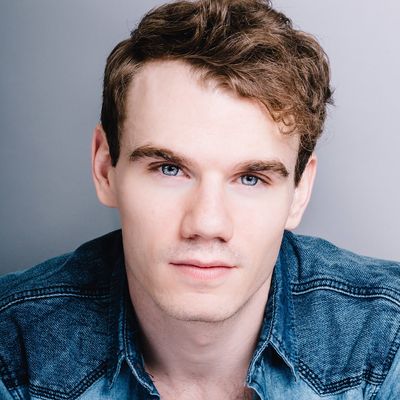
About
Actor/singer Jay Armstrong Johnson on his 2020 Wake-up call and how that has impacted his family.
Produced by Dori Berinstein and Alan Seales, edited by Derek Gunther, music by Cat Dail.
A proud member of the Broadway Podcast Network.
Transcript
This transcript was automatically generated and might contain errors.
[0:00] Tonya Pinkins: I'm Tonya Pinkins.
[0:01] Tonya Pinkins: Welcome back for part two of my conversation with Jay Armstrong Johnson.
[0:05] Tonya Pinkins: You're listening to You Can't SAY THAT on the Broadway Podcast Network.
[0:14] Tonya Pinkins: You gotta say what moves for you.
[0:18] Tonya Pinkins: Can't tell us real.
[0:25] Tonya Pinkins: Well, you're famous now, but before you were famous, when you just were gay, what did that church community say?
[0:33] Jay Armstrong Johnson: You know, my church was pretty liberal when I'm looking back on it. Um, they allow gay pastors. Um, they, uh, I, I'm, my actually my favorite youth minister growing up just came out as bisexual on Facebook a few months ago. So it's, um, I think it was more my Baptist upbringing, because that was the first half of my life when I was younger. It was, it was that Southern Baptist um mentality that kind of poured over um into my more liberal church life. Um, so really I think it was more of my what I would hear from my family. Because you know, my, my family's very racist. They're very Christian, very racist, very white. I grew up in a community called White Settlement, for fuck's sake. I mean, actually, that's where I was.
[1:28] Tonya Pinkins: What does that mean?
[1:29] Jay Armstrong Johnson: Apparently, the person that settled White Settlement, their last name was White. Um, but that was just it just happened to be the community that I was born into. So it's, it's just funny.
[1:43] Tonya Pinkins: So when was your first encounter with that person of another thing that wasn't white?
[1:49] Jay Armstrong Johnson: Um, it was probably pretty early because White Settlement was technically like one of the worst parts of town in Fort Worth. It's like...
[1:55] Tonya Pinkins: So you all were poor white people.
[1:56] Jay Armstrong Johnson: Yes, ma'am.
[1:58] Tonya Pinkins: Oh, that's a whole nother thing.
[2:00] Jay Armstrong Johnson: Oh yeah, because the racism is even deeper in those poor white communities. And so I remember very distinctly the first girl I had a crush on in the first grade, her name was Danielle, and she was a female of color, and I had such a crush on her. Um, but I also remember something very vaguely that like that wasn't right. I kept hearing that's not what we do, you know. And the further my dad found himself in the business world, um, the further we got away from that White Settlement. We went to the better part of town where all of a sudden I went to the school district where there was a whole bunch of white people and just like a little sprinkle of black and brown, you know. And so the richer we got, the further we got away from the minorities in our Fort Worth area, which is something that I kind of have hindsight about as an adult that I wasn't quite aware of.
And the wider that it got, the more racist that it got, and um, the more, um, the more, uh, anti-homosexual, anti-anything, and not heteronormative. I mean, I wasn't made fun of for being gay until I found myself in that new very white school district. I didn't even know what gay was until someone could kind of smell it on me at that very white school, you know.
[3:19] Tonya Pinkins: What was that like?
[3:20] Jay Armstrong Johnson: That sounds just, I mean, I cried myself to sleep most nights, you know. I mean, when you're told that homosexuality is an abomination and you're a third grader and you have this guy and that guy and that girl calling you gay Jay, and it's just so funny because your name rhymes with the goddamn word as well. You know, it just, it rings over and over again in the world.
[3:40] Tonya Pinkins: Right, right.
[3:41] Tonya Pinkins: Um, so yeah. Does that heal? Does that ever heal?
[3:44] Jay Armstrong Johnson: Um, I'm really not quite sure. I think that because I have a sense of humor, I can kind of flip it. Like I, I love using the word faggot to mean cool. Like, oh yes, faggot. You know, I like taking words back. I feel like a lot of females take back the word bitch. Yes, bitch, you know, like I, I like to just reframe things and you know, yes, oh that was so gay. Like, you know, in the third grade, so gay meant just the worst. But here I am, a 33-year-old man, and gay means the best. It means happy, actually. Yeah, I don't know. But there's definitely still hurt there for sure.
[4:28] Tonya Pinkins: Um, but I don't know. Um, do you think you're a role model?
[4:36] Jay Armstrong Johnson: Um, I, I think that I am. Um, mostly because of this social media thing. Um, because I have kids reaching out to me, slip sliding into my DMs, thanking me for creating a world where they could live. You know, I didn't have social media growing up, and so, uh, I didn't have gay mentors until I actually like saw one for the first time at age 15. But I'm now having the 15-year-old find me on a YouTube video of me kissing another boy and singing a musical theater song about being gay, and all of a sudden I've created a world for them that feels inclusive, uh, and, uh, and harmonious and happy and something to look forward to. So yeah, um, I, I, I do feel like, uh, at least for the LGBTQ plus community, um, I'm a bit of a role model.
[5:29] Tonya Pinkins: Now, I mean, you know, it's still very difficult to be gay in the world.
[5:34] Tonya Pinkins: Sure. Do you still encounter, are there specific places that you travel where you have to be in fear or you still have to cover it up?
[5:45] Jay Armstrong Johnson: Yeah, I even sometimes fear I'm fearful here in New York City every now and again. I, uh, I think twice before I hold my partner's hand on the street, which sucks. Um, I've had ice cream cones thrown at me from a window in Utah. Um, you know, that I, I know that that it's, uh, and the vote that we just saw is a sure indication that you know the gays aren't necessarily the most uplifted um people on the planet. So yeah, I, I don't feel necessarily a hundred percent safe everywhere I go. Um, so it, it, it yeah, I, I do I feel myself kind of, um, hide a bit. I kind of go back to that 13-year-old boy, you know, closet myself for, for safety's sake.
[6:41] Tonya Pinkins: What is you think like people always say, why do the black men vote for Trump? Why do the gays go for Trump? Women and men, what's that?
[6:49] Jay Armstrong Johnson: Oh my god. It's, uh, this whole misinformation Fox News just spreading pure falsities, just like I think that's what it is. Um, my father only watches Fox News, it's the network of the Christians. It's, it's the only one that they'll listen to because they'll quote a Bible verse before they tell you bullshit.
[7:17] Jay Armstrong Johnson: Oh my god. It really is, it's this misinformation thing. And I think that when you are brainwashed in such a way that that's really all that you can think. It's like when I was a kid, and I really truly didn't think I could possibly even be close to being gay because I was told the gay is this and I'm not that. You know, it's, it's a, it's a brainwash thing. So I, I really do feel like it's just society and media, um, and religion that really keeps people um on a certain track, one one one way track in their minds about what is what, and it's usually because they want to enter the gates of heaven.
[7:57] Tonya Pinkins: The art in your house looks spectacular.
[8:01] Jay Armstrong Johnson: Oh thanks.
[8:02] Jay Armstrong Johnson: I mean, I can just see behind you, and it's like obvious prints, and it looks like some antique stuff and in gilded frames.
[8:11] Tonya Pinkins: Is that yours? Your partners?
[8:13] Jay Armstrong Johnson: Yep, most of it is mine. Um, this is actually my caricature made by Justin Squiggs, who's like Broadway's caricature artist. My boyfriend got that for me for Christmas last year. That's that's my damn face. Um, Will and I got this when we went um to uh Indonesia. Um, what's the big one that looks like a octopus?
[8:36] Jay Armstrong Johnson: Yeah, um, Will's favorite animal is actually an octopus.
[8:40] Tonya Pinkins: Um really, how do he like that?
[8:41] Jay Armstrong Johnson: My octopus teacher thing.
[8:43] Tonya Pinkins: Oh, he have you have you watched the octopus teacher thing yet?
[8:46] Jay Armstrong Johnson: He hasn't even watched it yet.
[8:48] Jay Armstrong Johnson: It's on our list of things.
[8:48] Tonya Pinkins: Do you did you write?
[8:49] Jay Armstrong Johnson: I didn't, I didn't like it.
[8:50] Tonya Pinkins: Didn't like it?
[8:52] Jay Armstrong Johnson: No, I thought that man was crazy.
[8:55] Jay Armstrong Johnson: He was like, he was having a relationship with an octopus, and I was like, you're just rejecting all your craziness on that octopus.
[9:01] Jay Armstrong Johnson: That octopus is not thinking about you.
[9:04] Tonya Pinkins: Oh my god.
[9:06] Jay Armstrong Johnson: The first trip that my partner and I took was to Hawaii. And I remember Will specifically liking this particular artist's um version of Octopi that she would create. And so um for Christmas, I think last year, I researched the artist online and had her do a print of the octopus.
[9:23] Jay Armstrong Johnson: It's beautiful.
[9:24] Tonya Pinkins: You know, I just came from Korea, and I have to tell you that I was still affected by seeing that octopus show because I did not enjoy eating octopus anymore, and they eat it live there.
[9:34] Jay Armstrong Johnson: I, I didn't, I didn't try.
[9:36] Jay Armstrong Johnson: Yeah, they eat it live.
[9:37] Tonya Pinkins: Wait, how do you do that?
[9:39] Jay Armstrong Johnson: They take the little baby octopuses and they put the whole live thing in their mouth.
[9:43] Jay Armstrong Johnson: They do have a way where they cut it up and it just keeps moving, and you gotta chew it really fast because they say it'll suck on your insides of your throat.
[9:51] Tonya Pinkins: I can't deal with that.
[9:52] Jay Armstrong Johnson: No, no, no, no, no, no, no.
[9:53] Jay Armstrong Johnson: Yeah, they eat a lot of octopus in Korea, live octopus.
[9:56] Tonya Pinkins: Wow.
[9:57] Tonya Pinkins: Yeah.
[9:58] Jay Armstrong Johnson: Oh, that's terrifying.
[9:59] Tonya Pinkins: I didn't, I didn't do it.
[10:00] Tonya Pinkins: I was not that adventurous.
[10:02] Jay Armstrong Johnson: I wanted to, but I was like, I can't, I can't do it.
[10:04] Tonya Pinkins: Yeah, I don't, I don't like octopus in general, even when they grill it, you know.
[10:08] Jay Armstrong Johnson: It's not for me, really.
[10:09] Tonya Pinkins: I don't know.
[10:10] Tonya Pinkins: Well, I want to hear about that octopus show because I was like, this man needs some therapy.
[10:16] Tonya Pinkins: And everybody's like, oh, at the end he was healed and he developed a relationship with his children because of the octopus.
[10:22] Tonya Pinkins: And I was like, the man had problems if he needed an octopus to help him under love his child and his wife.
[10:27] Jay Armstrong Johnson: I don't, I can't learn anything from him.
[10:33] Tonya Pinkins: Oh my god, we have to watch it now.
[10:34] Jay Armstrong Johnson: Now I'm intrigued.
[10:36] Tonya Pinkins: Now you are so talented.
[10:38] Jay Armstrong Johnson: Thanks, Sonia.
[10:40] Tonya Pinkins: Tell me what is in your heart.
[10:43] Jay Armstrong Johnson: Like, like what is your spirit saying, I gotta do, I gotta make.
[10:47] Tonya Pinkins: What is the thing in your spirit that's like I gotta do this?
[10:52] Jay Armstrong Johnson: I don't know how I'm gonna do it. But the spirit is like, this is this thing I gotta do. You may not know when you're gonna do it, but there's this thing that you've been dreaming of. What's it what's it what is it? Um really uh I kind of get versions of this question from like young artists. Um and I keep coming back to this lyric from Hamilton actually, which is uh I will never be satisfied. I will never be satisfied. And uh my dream was to be on Broadway and I did it. And then my dream was to be on a television show and I did it. And then my dream was to, yeah. So the dreams just keep piling. Um I believe I was called to be an artist. Um, like my sister was called to go into ministry, I was called to go into art.
Um, and I thought it was at first to sing, and then I realized it was to dance, and then I realized that it was to act, and I could do all three, and so I and then to produce uh I don't know, um, the art that I create, I wanted to create change. Um I remember playing Peter Pan at age 13 and having this little girl come up to me with tears in her eyes saying that I changed her life.
[12:06] Jay Armstrong Johnson: And as a 13-year-old, to hear that come at you because of something you did, you had some play practice, and then you pray practice went well, and you became Peter Pan and you did the whole theater thing and it was fun and everyone clapped for you. But I realized in that moment that what I could be doing is creating change, that I could touch lives, that I um that what I what I did wasn't just like to entertain and to get pictures taken of me and to have red carpets, but that like art does create change, it opens up communication, uh, it starts conversation. Um, and so that that's what I want to do. Um is it your ministry?
[12:47] Jay Armstrong Johnson: I think so. Um I never considered myself a writer until a few years ago when I just started fucking writing. I never considered myself a producer until I realized that I didn't have any theater spaces to do anything. So I produced my own work because I wasn't getting the work myself. So uh my dad always told me to have a backup plan. Um, and every time I became unemployed over the last 15, 17 years of my life, he would call me and say, Well, son, you want to come work for me now that your Broadway show's closed?
[13:23] Jay Armstrong Johnson: And I had to finally put my foot down about three years ago and be like, Dad, I'm an artist, I'm an actor, and that's what I'm gonna do. I'm not gonna have a fallback plan, and I'm not gonna come work for your company because this this is my life. This is my calling, and this is what I'm gonna do regardless. Sometimes it's gonna be feast, sometimes it's gonna be famine. And uh, that's just what I'm doing.
[13:48] Jay Armstrong Johnson: So he finally got, he finally got the picture, and he stopped calling me every time I'm unemployed now. Um, but yeah, it I do think it's my calling. I do think it's my ministry. I want to create so much more. I I I want to reach so many more people. I mean, the Halloween show that we just did is almost reached 60,000 people. 60,000 views on YouTube, which blows my mind because when we do the show live in New York City, it's 300 people in the audience, and we do two shows.
[14:22] Jay Armstrong Johnson: And so it's like, you know, 600 people get to watch the show. Oh, congratulations. You raised a few grand for Broadway Cares. But when you get to put it on a screen, um, you get to reach so many more people. And so I I'm really wanting to lean in to this art form. Um finding creating art within a frame. Um it really can create more change, which I'm sure Red Pill is just gonna like already.
[14:51] Tonya Pinkins: I can't wait.
[14:52] Jay Armstrong Johnson: Yeah, I I'm with you with it. It isn't that I'm never satisfied, but I just I like expanding. And expanding means risking and failing, and like my motto is brilliance lies in the moment that might not work. So, you know, making this movie, it was like, oh, oh, I need to be running a studio. I need to be running a country. I have that much energy. Like people are like, you have so much energy. I do, and I fail all the time.
[15:16] Jay Armstrong Johnson: And it's like, oh, okay, well, I know how you don't do that. Okay, let me go try some more ways. And that excites me. Failing isn't just not, I mean, it's not fun. Right. But it's like, okay, now I know what you don't do. Let me keep going, you know. And I think that lot not everybody has that.
[15:34] Tonya Pinkins: That's amazing that you just said that because when someone asks me what's my biggest fear, I always say fear of failure. And so the fact that you are using failure, it's like flipping the word gay to mean something better now, or taking the word faggot and taking it back. You're taking the word failure, which is the scary word to me, my biggest fear, and you're showing me how to flip it on its ass and work work for me as opposed to against me.
[15:56] Jay Armstrong Johnson: Oh, honey, the most successful people have failed the most.
[16:00] Tonya Pinkins: There it is.
[16:00] Jay Armstrong Johnson: If you haven't failed, you ain't trying hard enough.
[16:03] Tonya Pinkins: That's right.
[16:04] Jay Armstrong Johnson: That's right. Okay. Because if you're gonna do something brilliant, it means you're doing something nobody did. So you got to avoid all the things that have been done.
[16:14] Tonya Pinkins: Yeah, like fear has no place.
[16:18] Jay Armstrong Johnson: Well, no, fear is when I know, oh, I'm working at the level I need to be working at.
[16:23] Tonya Pinkins: There it is.
[16:23] Jay Armstrong Johnson: Oh shit, I might really fuck shit to bed this time. Let's go.
[16:28] Tonya Pinkins: Let's go.
[16:30] Jay Armstrong Johnson: Right. Okay. That's that's that's the edge I'm looking for. Like when people offer me stuff, I'm like, hmm, did that before? No. Oh, oh I don't I don't know how.
[16:42] Tonya Pinkins: Oh, I don't know how.
[16:44] Jay Armstrong Johnson: Okay, let's go. Okay, we're gonna find a way. We're gonna find a way, or we're not.
[16:50] Jay Armstrong Johnson: We're or we're gonna find out that that wasn't what we do.
[16:53] Tonya Pinkins: Right.
[16:53] Jay Armstrong Johnson: That's true too. And we'll we'll know that that was when we don't do.
[17:04] Tonya Pinkins: Tell me a failure that turned out in hindsight to be one of the best things that ever happened to you.
[17:11] Jay Armstrong Johnson: Something that was the worst thing. And when you look back, you're like, actually, that was a really good thing that that happened. Um is probably the first time I had my heart broken.
[17:24] Jay Armstrong Johnson: Um back in my early 20s. I was so in in this relationship. It was um, I thought for sure I had found my husband. Um, I was just as in love with his family as I was with him.
[17:41] Jay Armstrong Johnson: Um, just in my early 20s and thinking I had it all figured out until he told me that I actually didn't. And it broke me in a way that I had never experienced um depression before.
[17:57] Jay Armstrong Johnson: I'd never experienced uh that kind of low. And because of that moment, that's when my art really kind of took off. Um, when I found myself alone and sad and fearful.
[18:14] Jay Armstrong Johnson: Um, that's when I really first started journaling. And when I first started um really uh finding strength within myself and not within others.
[18:24] Jay Armstrong Johnson: Um, I think I often would latch out for codependent relationships to help get me by. Um, and that was the first time that that that relationship failing was the first time that I actually had to learn how to stand on my own two damn feet.
[18:42] Jay Armstrong Johnson: Um, and that's when my career really took off too. I found a focus that was inside of myself um and not outside of myself, I guess.
[18:55] Tonya Pinkins: Yeah.
[18:56] Jay Armstrong Johnson: I hope you listen back to this. That was kind of profound.
[18:59] Tonya Pinkins: I just felt it.
[19:00] Jay Armstrong Johnson: I like this calm come over me in a weird way.
[19:05] Tonya Pinkins: Yeah.
[19:06] Jay Armstrong Johnson: And what's even better is that uh I've come back to be his friend.
[19:11] Jay Armstrong Johnson: It's been over a decade since we broke up, and we talk a lot on social media and we support each other in our artistic endeavors.
[19:20] Jay Armstrong Johnson: And uh it it took it took a decade for me to be able to actually be friends with him again, but now that we are, um, it feels right, you know.
[19:35] Tonya Pinkins: Feels good.
[19:38] Tonya Pinkins: What is your message to your family in this moment where some people are biting their nails. I'm sure that your family is biting their nails and going, Trump better win it, or the Supreme Court better give it to them.
[19:52] Jay Armstrong Johnson: And the Supreme Court may well give it to them.
[19:56] Tonya Pinkins: Ain't that the truth?
[19:57] Jay Armstrong Johnson: My message to my family is I'm not looking back. Um I left Texas at age 17 and I didn't look back.
[20:11] Jay Armstrong Johnson: I have called my family out publicly on how racist we are, and I am not looking back. Um I I am I'm here to push shit forward.
[20:26] Jay Armstrong Johnson: Um that makes them uncomfortable, and they want me to apologize and to appease and to be quiet. Um that's I'm not in the business of doing that.
[20:37] Jay Armstrong Johnson: Um I can't be. Um, I won't be. Uh and if it means that relationships in my family falter because of it, then that's them stuff, not me stuff.
[20:49] Jay Armstrong Johnson: Um I know I know that they will be on the wrong side of history when all is said and done.
[20:56] Jay Armstrong Johnson: When all of these old racist white people die off, um, the young Gen Zs of this world are gonna rise up. They're already creating change. Um, they get it way more than we do, and that's because they have this phone that's teaching them things that we didn't get to learn about. So yeah, it's uh it's either get on the train or uh I don't know. I'm I'm not looking back, I guess is really.
[21:24] Tonya Pinkins: And what's your message to the next little third grade gay Jay?
[21:33] Jay Armstrong Johnson: My message to the next little third grade gay Jay is oh have fun. Uh I he's crying himself to sleep every night. I know he might be. Um, but he didn't he has that he has that phone. He's got RuPaul's Drag Race. He's got Todd Ricall. You know, he has so many more mentors than I could even have possibly imagined. I think the only mentor that I really had was the villain in Silence of the Lambs.
[22:21] Jay Armstrong Johnson: That is crazy right there. I'm looking up. What was his name too? Uh no, no, no. The character was uh Buffalo Bill. Buffalo Bill. So, you know, uh I'm feeling good about the new GJ in the third grade. Um their future looks bright to me because my future looks bright to me. I mean, I've always lived life thinking positively. Um, and so uh I I'm feeling good about this new generation. They're pushing me for sure.
[22:58] Jay Armstrong Johnson: I mean, uh, I love hearing the kids here in New York City. You know, you're not cool if you consider yourself any gender or sexual orientation. You know, they're like, you're too young to even know what you like. Like, how dare you say that you're straight? You don't know that yet. Like, that's how lit these kids are these days.
[23:20] Jay Armstrong Johnson: Yes. I just watched a movie yesterday called Shakedown. Find it. It is about the women in the clubs in LA who were way before Megan Thee Stallion, where they are dancing, but for women. So it's the BOI culture, the women who consider themselves men and they don't want a lesbian, they want a woman. And the freeness and the natural bodies, it's so worth seeing because it's that 70s, 80s, 90s music and the day.
[23:56] Jay Armstrong Johnson: It's so inspiring. Okay, you know, of what safety can look like when a community gets together and makes a sacred space for them to do their thing. You know, of course, the police are harassing them and shutting them down and all of that, but what they created for themselves to celebrate, you know, their lives and sexuality.
[24:18] Tonya Pinkins: Here's a question I want to ask you because you've been on, you know, you've as you said it's feast or famine. You've been on a TV series, a very successful TV series. So that's a big money gig. Broadway's a big money gig. How do you uh do how do you live your life financially? Is it like I got a lot of money, I'm gonna spend a lot of money. I don't have a lot of money, I'm gonna how do you do that?
[24:37] Jay Armstrong Johnson: Um, I kind of take it day by day but the fact of the matter is is I've got five Broadway shows a really great television show under my belt and I'm still in student debt so um oh my God and and people kind of freak out when they hear that because they think that I probably own an apartment in New York City and that I'm rolling in the dough and that you know I have to that's actually not true. But uh you know I'm collecting unemployment right now that's how I'm getting by um and teaching gigs is really kind of um my way of making extra money on the side getting some money in my Venmo account by you know teaching acting or teaching voice um to the young artists of tomorrow you know um that's that's how I make money when I'm not actually working is teaching I really love teaching.
[25:07] Jay Armstrong Johnson: Yeah I think people really want to know how are how are we going on like people want to know how do we and I and for me I feel like my power place has been to find a standard of living that I can always live and if there's more that comes in I use it to invest in things I want to create so I'm not having to go ask for money. But my standard of living is so simple that I could live on unemployment and and pay my bills so that I'm not uh forced to be a wage slave because I have a lifestyle I have to maintain.
[26:10] Tonya Pinkins: Right.
[26:10] Jay Armstrong Johnson: Yeah I I kind of feel the same way what when especially when Quantico happened I was finding myself with lots of money that I had not really ever been used to. Um, and I was also finding that I wasn't getting any other jobs when we were in between shooting seasons. And so I was I used the money to create to live and to create. Uh that's when I started producing concerts, and that's when this Halloween thing came to fruition, because I had a little bit of money to pay a wig artist and a costume artist and a makeup artist to do me up for fun one night, you know.
[26:45] Jay Armstrong Johnson: It has been such a pleasure.
[26:48] Tonya Pinkins: Such a pleasure. You're gonna have to hook me up with Tyler to call because I gotta talk to Todd Ricall. I'm such a fan, so I gotta talk to Todd Ricall. So I'm gonna hit you up about that.
[26:56] Jay Armstrong Johnson: Absolutely. Um, is there anything I didn't ask you that you wanted to say to the people of you know on the Broadway Podcast Network? Anything I didn't ask.
[27:03] Jay Armstrong Johnson: You're so damn good at this. No, there's nothing that you didn't ask. Um, I'm just happy to have these conversations with you and and that you reached out to me to have these kinds of conversations. Um I I look to you as uh one of the smartest people that I've ever come across. You challenge me in ways that I have and I've been challenged a lot this year, but you're continuing to push it. So I just want to thank you for having me.
[27:29] Tonya Pinkins: Oh, thank you so much. So excited about Red Pill.
[27:32] Jay Armstrong Johnson: Oh, Red Pill. You know, I might have to sneak you a little rough cut to let you just see what is that.
[27:39] Tonya Pinkins: Now you're speaking the language.
[27:41] Jay Armstrong Johnson: I might just sneak you a little actually. I sneaked a little one to Jeremy O'Harris off in Europe right now. I was like, Jeremy, look at this this week and tell me what you think. So I might have to sneak you a little rough cut. You know, the music and color and all that isn't done, but uh I can't it's it's it's kind of exciting. You know, because I love horror, but my horror, my daughter and I'm horrid victory. If they're screaming and people are getting slashed, she's happy. I'm like, no, I gotta be thinking about something. I gotta have something I'm trying to figure out. I gotta be learning something, you know, wondering, wondering.
[28:13] Jay Armstrong Johnson: Cause you know in the horror movie, there's a monster, everybody gonna die, and you're rooting for the monster. So that that's a foregone conclusion.
[28:20] Tonya Pinkins: That's right.
[28:20] Jay Armstrong Johnson: What else is keeping me staying here? So I think I did that. I call it the black woman's get out.
[28:27] Tonya Pinkins: Cool.
[28:28] Jay Armstrong Johnson: And uh, yeah.
[28:30] Tonya Pinkins: Yeah.
[28:30] Jay Armstrong Johnson: Yeah, okay. I'll I'll sneak you a little rough cut to look at.
[28:34] Tonya Pinkins: Yes!
[28:37] Tonya Pinkins: Thank you so much, Jay. This is Tonya Pinkins. You are listening to You Can't SAY THAT on the Broadway Podcast Network with my guest Jay Armstrong Johnson.
[28:52] Tonya Pinkins: You is kind. You is smart, you is important, you is dead.
[28:58] Tonya Pinkins: Tonya Pinkins' horror film Red Pill brings African American perspective to progressive movement. We are a majority in this country. And we're gonna win the election. Do you know what the red pill is? A red pill is someone who infiltrates a group and then destroys them from the inside.
[29:26] Tonya Pinkins: This place is spooky. Some people like to live dangerously. Yes, why are you so jumpy tonight? You know what, guys? I'm gonna go back tomorrow. Did you hear about the creature woman that attacked the father and son hunting down here?
[29:41] Tonya Pinkins: I don't see the case. This place creeps me out. I think we should call the sheriff's office.
[30:05] Tonya Pinkins: The only people missing or dead are brown people. They're after all of us. What do we do, Amelia?
[30:17] Tonya Pinkins: We die. But we take some of them with us.
[30:30] Tonya Pinkins: Thanks for listening to You Can't SAY THAT, the show where you can. I'm Tonya Pinkins, and You Can't SAY THAT is part of the Broadway Podcast Network. Produced by Dori Berinstein and Alan Seales. Edited by Derek Gunther. With music by Cat Dail. If you like what you hear, don't forget to subscribe and rate this podcast highly wherever you stream. Follow me on Instagram, Twitter, and Facebook at Tonya Pinkins. And to learn more, visit BPN dot F M forward slash Y C.
[31:13] Tonya Pinkins: Stay safe.
© Broadway Podcast Network, All Rights Reserved